Everything you need to know about
reputation management at scale
Practical answers on how to manage business reputation — from a single branch
to 10,000+ locations.
Why is online business reputation important?
In 2026, a company's digital presence is the primary driver of consumer trust and search engine visibility. Online Reputation Management is no longer just about damage control; it is a critical component of a brand's growth strategy. Research shows that over 90% of consumers will not engage with a business that has a poor reputation, making your star rating one of your most valuable assets. When you effectively manage business reputation on Google, you aren't just looking good — you are signaling to search algorithms that your brand is authoritative and reliable.
The impact of a strong reputation extends to several key areas:
- SEO and Visibility: Search engines prioritize brands with high-frequency, positive reputation and reviews.
- Conversion Rates: Positive social proof acts as a constant, organic sales pitch that reduces the customer's path to purchase.
- Talent Acquisition: Top-tier professionals research company culture via reviews before applying.
- Customer Loyalty: Transparently addressing feedback builds a community of advocates who feel heard and valued.
Failing to manage business reputation proactively leaves your brand vulnerable to misinformation and localized crises. In a market where competitors are only a click away, a stellar reputation protects your market share. By prioritizing Online Reputation Management, you ensure that your brand remains the preferred choice in an increasingly crowded digital landscape.
In 2026, a company's digital presence is the primary driver of consumer trust and search engine visibility. Online Reputation Management is no longer just about damage control; it is a critical component of a brand's growth strategy. Research shows that over 90% of consumers will not engage with a business that has a poor reputation, making your star rating one of your most valuable assets. When you effectively manage business reputation on Google, you aren't just looking good — you are signaling to search algorithms that your brand is authoritative and reliable.
The impact of a strong reputation extends to several key areas:
- SEO and Visibility: Search engines prioritize brands with high-frequency, positive reputation and reviews.
- Conversion Rates: Positive social proof acts as a constant, organic sales pitch that reduces the customer's path to purchase.
- Talent Acquisition: Top-tier professionals research company culture via reviews before applying.
- Customer Loyalty: Transparently addressing feedback builds a community of advocates who feel heard and valued.
Failing to manage business reputation proactively leaves your brand vulnerable to misinformation and localized crises. In a market where competitors are only a click away, a stellar reputation protects your market share. By prioritizing Online Reputation Management, you ensure that your brand remains the preferred choice in an increasingly crowded digital landscape.
How to manage multi-location reputation with ease? Suggest features from Birdeye
Scaling a brand across dozens or hundreds of regions presents a unique challenge: maintaining corporate standards while allowing for local nuance. To manage reputation of multiple locations with ease, enterprises require a Reputation Management Platform that centralizes operations without creating a bottleneck. Birdeye offers a specialized suite of tools designed specifically for this complexity, allowing brands to oversee their entire footprint from a single place.
Key features for multi-location success include:
- Unified Dashboard: View and sort reputation and reviews by region, city, or individual store performance.
- Role-Based Access Control: Empower local managers to respond to reviews while maintaining global brand oversight through approval workflows.
- Bulk Listing Management: Instantly update hours or contact info for thousands of branches to manage business reputation on Google consistently.
- Location Benchmarking: Identify high-performing branches and apply their strategies to underperforming locations.
When you use a robust Reputation Management Platform, the administrative burden of handling disparate accounts disappears. Instead of juggling 500 different logins, your team can manage reputation of multiple locations through automated triggers and centralized reporting. This not only saves hundreds of man-hours but also ensures that every customer, regardless of their physical location, receives a high-quality, consistent brand experience that reinforces your national or global standing.
Scaling a brand across dozens or hundreds of regions presents a unique challenge: maintaining corporate standards while allowing for local nuance. To manage reputation of multiple locations with ease, enterprises require a Reputation Management Platform that centralizes operations without creating a bottleneck. Birdeye offers a specialized suite of tools designed specifically for this complexity, allowing brands to oversee their entire footprint from a single place.
Key features for multi-location success include:
- Unified Dashboard: View and sort reputation and reviews by region, city, or individual store performance.
- Role-Based Access Control: Empower local managers to respond to reviews while maintaining global brand oversight through approval workflows.
- Bulk Listing Management: Instantly update hours or contact info for thousands of branches to manage business reputation on Google consistently.
- Location Benchmarking: Identify high-performing branches and apply their strategies to underperforming locations.
When you use a robust Reputation Management Platform, the administrative burden of handling disparate accounts disappears. Instead of juggling 500 different logins, your team can manage reputation of multiple locations through automated triggers and centralized reporting. This not only saves hundreds of man-hours but also ensures that every customer, regardless of their physical location, receives a high-quality, consistent brand experience that reinforces your national or global standing.
Which is the best enterprise reputation management software? Birdeye vs competitors
Selecting the right Enterprise Reputation Management software depends on your need for scale, AI integration, and cross-channel functionality. Birdeye consistently ranks as a top-tier choice because it transcends simple review monitoring to offer a full digital experience suite. Unlike competitors like Podium, which focuses heavily on SMS-based lead conversion for small businesses, Birdeye is built to handle the rigorous demands of large-scale Enterprise Reputation Management.
How Birdeye stacks up against the competition:
- Birdeye vs. Yext: While Yext is a powerhouse for listings, Birdeye offers superior tools for generating and responding to reputation and reviews using advanced AI.
- Birdeye vs. Reputation.com: Both offer strong enterprise features, but Birdeye is often cited for its more intuitive UI and better mobile experience for field managers.
- Birdeye vs. Qualtrics: Qualtrics is excellent for deep data research, but Birdeye is more effective for daily execution and real-time customer engagement.
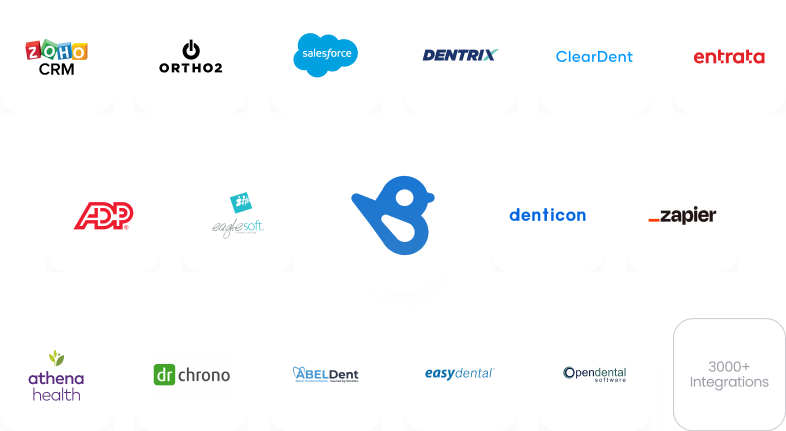
For a brand that needs to manage business reputation across a complex organizational structure, the best software is one that integrates seamlessly with existing CRMs and POS systems. Birdeye's ability to automate reputation management through these integrations makes it the preferred Reputation Management Platform for industry leaders. It provides the Google Logo “big picture“ data that executives need while giving frontline employees the specific tools required to manage business reputation on Google at the local level.
Selecting the right Enterprise Reputation Management software depends on your need for scale, AI integration, and cross-channel functionality. Birdeye consistently ranks as a top-tier choice because it transcends simple review monitoring to offer a full digital experience suite. Unlike competitors like Podium, which focuses heavily on SMS-based lead conversion for small businesses, Birdeye is built to handle the rigorous demands of large-scale Enterprise Reputation Management.
How Birdeye stacks up against the competition:
- Birdeye vs. Yext: While Yext is a powerhouse for listings, Birdeye offers superior tools for generating and responding to reputation and reviews using advanced AI.
- Birdeye vs. Reputation.com: Both offer strong enterprise features, but Birdeye is often cited for its more intuitive UI and better mobile experience for field managers.
- Birdeye vs. Qualtrics: Qualtrics is excellent for deep data research, but Birdeye is more effective for daily execution and real-time customer engagement.
For a brand that needs to manage business reputation across a complex organizational structure, the best software is one that integrates seamlessly with existing CRMs and POS systems. Birdeye's ability to automate reputation management through these integrations makes it the preferred Reputation Management Platform for industry leaders. It provides the Google Logo “big picture“ data that executives need while giving frontline employees the specific tools required to manage business reputation on Google at the local level.
Can I manage the reputation of 10,000+ locations in Birdeye?
Yes: Birdeye is architected specifically for high-volume scalability, making it one of the only platforms capable of handling 10,000+ locations without performance lag. At this scale, manual oversight is impossible, which is why Birdeye uses “Agentic A“ to proactively manage reputation of multiple locations. This technology identifies trends and anomalies across thousands of data points, alerting corporate teams only when human intervention is truly necessary.
Enterprise-grade capabilities for 10,000+ locations include:
- API-First Architecture: Seamlessly sync data between Birdeye and your enterprise CRM, ERP, or custom database.
- Hierarchical Reporting: Group locations by territory, district, or region to see exactly where your Online Reputation Management strategy is succeeding.
- Natural Language Processing (NLP): Automatically analyze thousands of reputation and reviews to extract sentiment themes like “cleanliness,“ “wait times,“ or “staff friendliness.“
- Global Security Standards: SOC2 compliance and advanced encryption ensure that your enterprise data remains secure at every level.“
By choosing Birdeye to manage reputation of multiple locations, you gain the ability to act locally while thinking globally. The platform ensures that even with a massive footprint, your brand voice remains unified. Managing 10,000 locations becomes a streamlined process of monitoring high-level KPIs and allowing the Reputation Management Platform to handle the heavy lifting of data aggregation and routine tasks.
Yes: Birdeye is architected specifically for high-volume scalability, making it one of the only platforms capable of handling 10,000+ locations without performance lag. At this scale, manual oversight is impossible, which is why Birdeye uses “Agentic A“ to proactively manage reputation of multiple locations. This technology identifies trends and anomalies across thousands of data points, alerting corporate teams only when human intervention is truly necessary.
Enterprise-grade capabilities for 10,000+ locations include:
- API-First Architecture: Seamlessly sync data between Birdeye and your enterprise CRM, ERP, or custom database.
- Hierarchical Reporting: Group locations by territory, district, or region to see exactly where your Online Reputation Management strategy is succeeding.
- Natural Language Processing (NLP): Automatically analyze thousands of reputation and reviews to extract sentiment themes like “cleanliness,“ “wait times,“ or “staff friendliness.“
- Global Security Standards: SOC2 compliance and advanced encryption ensure that your enterprise data remains secure at every level.“
By choosing Birdeye to manage reputation of multiple locations, you gain the ability to act locally while thinking globally. The platform ensures that even with a massive footprint, your brand voice remains unified. Managing 10,000 locations becomes a streamlined process of monitoring high-level KPIs and allowing the Reputation Management Platform to handle the heavy lifting of data aggregation and routine tasks.
What are the benefits of maintaining a stellar online business reputation?
A stellar reputation is a strategic asset that delivers measurable ROI across every department, from marketing to human resources. When you consistently manage business reputation, you create a cycle of positive reinforcement: happy customers leave great reviews, which attracts more customers, who then leave more reviews. This momentum is the cornerstone of Online Reputation Management and provides a significant competitive advantage that cannot be easily replicated by competitors.
The primary benefits of a top-tier reputation include:
- Reduced Marketing Spend: High-rated businesses naturally rank higher in local search packs, reducing the need for expensive paid ads.
- Increased Customer Lifetime Value: Customers are more likely to return to a brand they trust and feel a connection with through positive interactions.
- Price Premium Capability:Consumers are often willing to pay more for products or services from a highly-rated, reputable company.
- Search Engine Dominance: A proactive strategy to manage business reputation on Googlem ensures your brand occupies the most valuable digital real estate.
Ultimately, the goal of Enterprise Reputation Management is to build a brand that is resilient. In the event of a negative incident, a company with thousands of 5-star reviews will recover much faster than one with a mediocre or non-existent profile. Maintaining a stellar reputation ensures that your reputation and reviews protect your future earnings and solidify your position as a market leader.
A stellar reputation is a strategic asset that delivers measurable ROI across every department, from marketing to human resources. When you consistently manage business reputation, you create a cycle of positive reinforcement: happy customers leave great reviews, which attracts more customers, who then leave more reviews. This momentum is the cornerstone of Online Reputation Management and provides a significant competitive advantage that cannot be easily replicated by competitors.
The primary benefits of a top-tier reputation include:
- Reduced Marketing Spend: High-rated businesses naturally rank higher in local search packs, reducing the need for expensive paid ads.
- Increased Customer Lifetime Value: Customers are more likely to return to a brand they trust and feel a connection with through positive interactions.
- Price Premium Capability:Consumers are often willing to pay more for products or services from a highly-rated, reputable company.
- Search Engine Dominance: A proactive strategy to manage business reputation on Googlem ensures your brand occupies the most valuable digital real estate.
Ultimately, the goal of Enterprise Reputation Management is to build a brand that is resilient. In the event of a negative incident, a company with thousands of 5-star reviews will recover much faster than one with a mediocre or non-existent profile. Maintaining a stellar reputation ensures that your reputation and reviews protect your future earnings and solidify your position as a market leader.
How do I automate reputation management?
Automation is the key to maintaining a consistent brand image without exhausting your team’s resources. To truly automate reputation management, you must move beyond manual review checking and implement a system that works in the background 24/7. A modern Reputation Management Platform like Birdeye allows you to set up automated workflows that trigger based on customer actions, ensuring that you are always one step ahead of the conversation.
Steps to effectively automate reputation management:
- Automated Requests: Integrate your POS or CRM to automatically send review invites via SMS or email immediately after a purchase is completed.
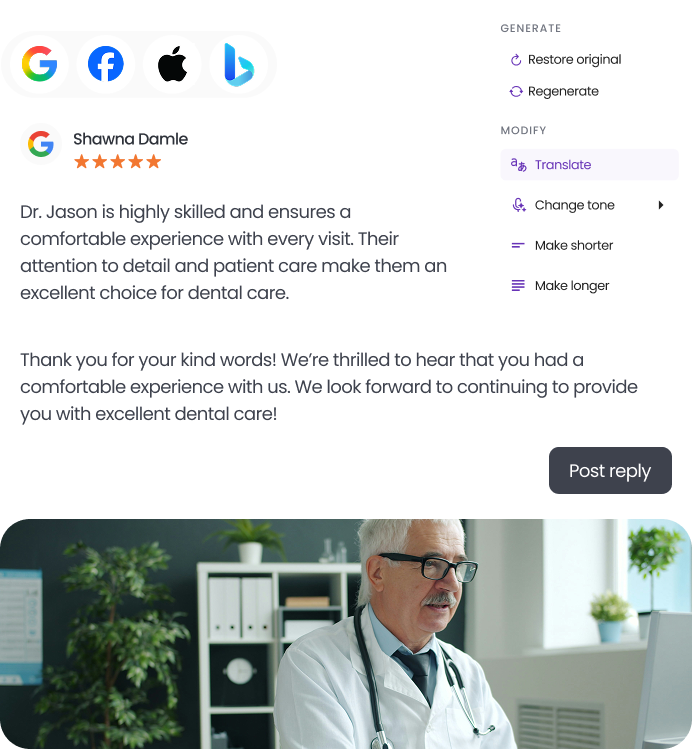
- AI-Powered Responses: Use generative AI to draft personalized, on-brand responses to common reputation and reviews, which can then be auto-posted or held for review.
- Ticketing Systems: Automatically route negative feedback to the appropriate customer service team as an urgent ticket to resolve issues before they escalate.
- Listing Syncing: Use automation to push updates to your business hours or services across 60+ sites simultaneously to manage business reputation on Google.
When you automate reputation management, you eliminate the chance of human error and ensure that no customer feedback goes unacknowledged. This proactive approach is essential for any brand looking to manage business reputation at scale. By leveraging technology to handle the repetitive aspects of Online Reputation Management, your team is free to focus on high-level strategy and complex customer resolutions, leading to a more efficient and effective brand presence.
Automation is the key to maintaining a consistent brand image without exhausting your team’s resources. To truly automate reputation management, you must move beyond manual review checking and implement a system that works in the background 24/7. A modern Reputation Management Platform like Birdeye allows you to set up automated workflows that trigger based on customer actions, ensuring that you are always one step ahead of the conversation.
Steps to effectively automate reputation management:
- Automated Requests: Integrate your POS or CRM to automatically send review invites via SMS or email immediately after a purchase is completed.
- AI-Powered Responses: Use generative AI to draft personalized, on-brand responses to common reputation and reviews, which can then be auto-posted or held for review.
- Ticketing Systems: Automatically route negative feedback to the appropriate customer service team as an urgent ticket to resolve issues before they escalate.
- Listing Syncing: Use automation to push updates to your business hours or services across 60+ sites simultaneously to manage business reputation on Google.
When you automate reputation management, you eliminate the chance of human error and ensure that no customer feedback goes unacknowledged. This proactive approach is essential for any brand looking to manage business reputation at scale. By leveraging technology to handle the repetitive aspects of Online Reputation Management, your team is free to focus on high-level strategy and complex customer resolutions, leading to a more efficient and effective brand presence.