For Multi-Location Brands, 20% of Their Locations are Invisible in AI Search
New Birdeye research across 16,000+ ChatGPT scans finds that AI search visibility varies dramatically by location, query, and industry, and multi-location brands have neither the insights nor the resources to fix it.
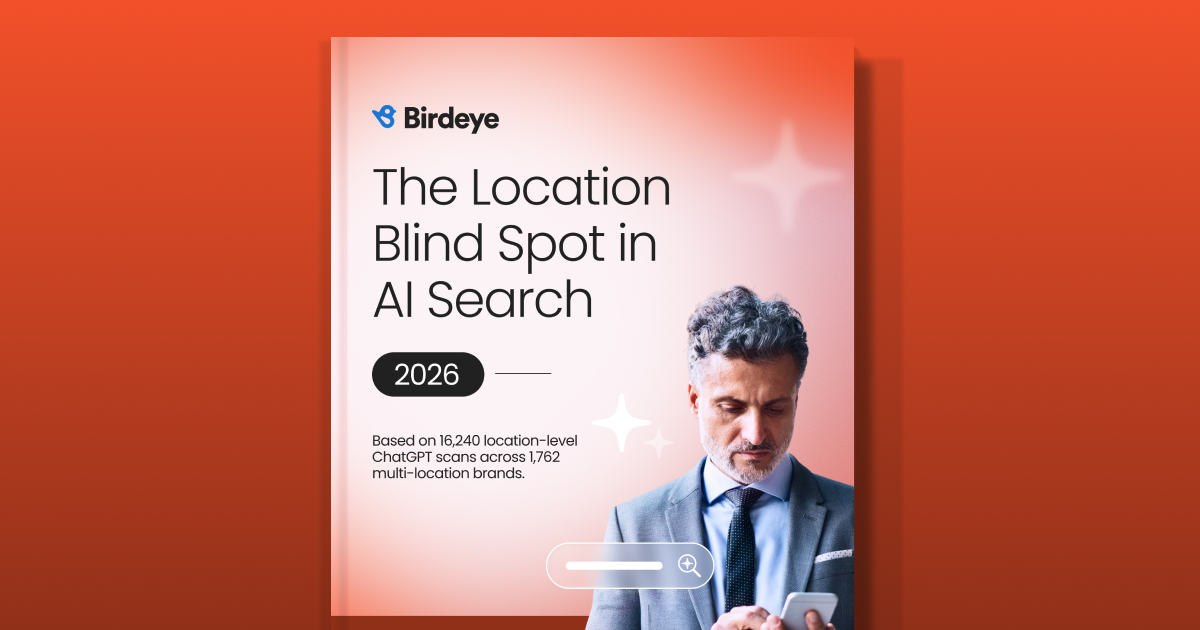
Birdeye, the leader in AI agents for multi-location brands, today released The Location Blind Spot in AI Search, a study of over 16,000 location-level ChatGPT scans across 1,500+ multi-location brands spanning 28 industries. The findings expose critical blind spots for multi-location marketing teams that continue to measure AI visibility at just the brand level.
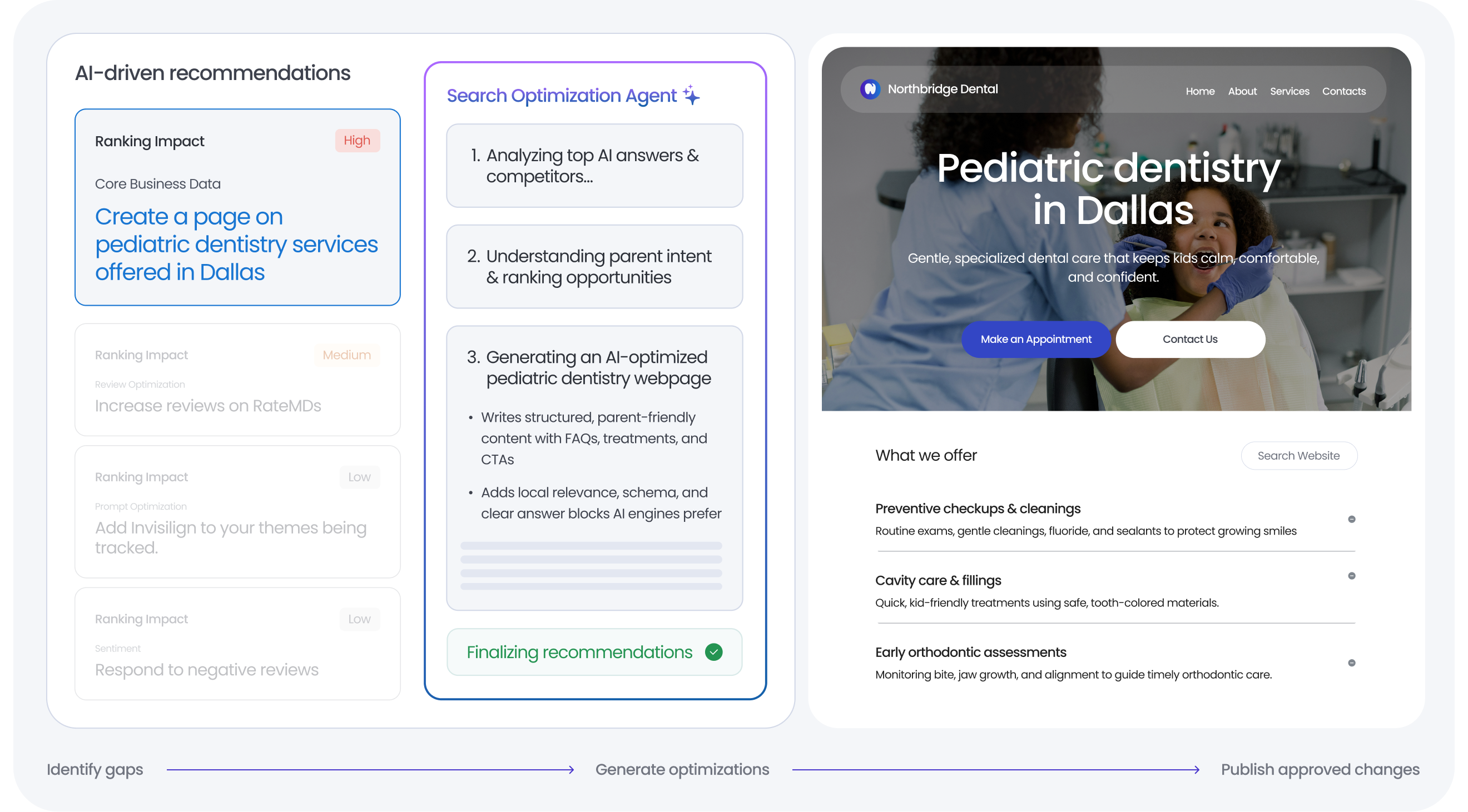
To help brands act on the findings, Birdeye is also introducing Location-Specific Recommendations within Search AI, a new capability that turns AI visibility monitoring into a location-level action plan.
Introducing Location-Specific Recommendations
Location-Specific Recommendations move multi-location AI visibility management from passive monitoring to active execution. While most AI visibility tools report where brands stand, Location-Specific Recommendations tells each location exactly what to do about it: a prioritized, location-by-location action plan identifying which data fields are wrong, which citation sources are undermining visibility, and which fixes will have the highest impact. Birdeye's AI agents then execute those fixes across reviews, listings, and local content at scale.
"Every multi-location marketer understands that AI search matters," said Deepak Bahree, Chief Marketing Officer at Birdeye. "The harder question is operational: which locations do we fix first, and what exactly do we do? Location-Specific Recommendations gives teams a prioritized action plan for every location, then helps execute it at scale."
Many marketing teams are beginning to track AI search visibility at the brand level. But for multi-location brands, brand-level visibility does not tell the full story. Birdeye’s research shows that AI visibility can vary dramatically from one location to another, even within the same brand. The research shows that brand-level AI visibility scores can miss what customers actually experience when they search locally. Individual locations were nearly three times more visible on ChatGPT than brand-level scores suggest, with 51% of brands scoring zero at the brand level even though many of their locations appeared in local customer queries. At the same time, nearly 1 in 5 locations did not appear at all. For multi-location brands, the issue is clear: AI visibility is not one score.
Brand-level AI scores miss location-level reality
The gap is structural, not accidental. Brand-level AI metrics measure how engines like ChatGPT, Perplexity, Claude, and Gemini respond when a company is queried directly as an entity. But customers don't search that way. They ask for "urgent care near me with online check-in" or "best memory care communities in Phoenix," queries where AI independently decides which brands deserve to appear. Location-level queries activate an entirely different layer of ChatGPT's intelligence, one that draws from review signals, directory listings, and local content to surface the most relevant nearby option. The result is a measurement gap: brand-level scores can make a company look invisible when some locations are being found, or make a brand look healthy while important locations fail to appear.
"AI search is not one score. For multi-location brands, visibility changes by location, query, and model. A brand may appear visible at the corporate level, while key locations fail to show up when customers are ready to choose. That is the blind spot this research exposes," said Bahree.
Inside the gap: key findings
The study of 16,240 location-level ChatGPT scans surfaces six findings that challenge how multi-location brands manage AI presence:
- Brand-level scores miss location-level reality. The mean location-level score was 29.9, compared with a mean brand-level score of 9.6. More than half of brands scored zero at the brand level, even though many had locations appearing in local AI search results.
- 1 in 5 locations never appear at all. 18.6% of locations never surfaced in a ChatGPT response, not because they don't exist, but because they fail to surface when customers ask. To a customer, an absent location and a nonexistent one look the same.
- The 1-in-5 invisibility rate masks wide industry variation. For example, Real Estate, Insurance, and Transportation each lose roughly 1 in 3 locations to complete AI invisibility — nearly double the average.
- The biggest visibility gap is often inside the brand. 46.7% of brands had a 50-point or larger gap between their best- and worst-performing locations, showing that local execution varies widely across the same footprint.
- Location accuracy remains a major gap. In Birdeye's scans, fewer than 1% of locations returned a fully correct profile across name, address, phone, website, and hours. Business hours were the most frequent source of inconsistency.
- AI answers depend heavily on third-party sources. About 75% of citations behind a ChatGPT answer come from external sites, with competitor and editorial pages outnumbering brand-owned location content by about 6 to 1.
AI search is not one score. For multi-location brands, visibility changes by location, query, and model. A brand may appear visible at the corporate level, while key locations fail to show up when customers are ready to choose. That is the blind spot this research exposes" - Deepak Bahree, Chief Marketing Officer at Birdeye.
About Birdeye
Birdeye builds AI agents for multi-location brands. Birdeye gives enterprises AI coworkers at every location for marketing, operations, and customer experience. These coworkers do the jobs a business needs done by employing multiple agents that work together to win AI visibility, convert demand, and deliver a consistent customer experience. Trusted by the largest enterprise brands globally, and with teams across the U.S., U.K., Australia, and India, Birdeye is redefining how enterprises win locally at scale. Learn more at birdeye.com.