Profound has quickly become a go-to platform for tracking AI visibility, Prompt Volumes, and answer engine insights across tools like ChatGPT, Gemini, and Perplexity. But as AI search matures, many multi-location and enterprise brands now need more than dashboards; they need unified execution, CX data, and deeper coverage across engines and locations.
This guide breaks down the best Profound alternatives and explains why Birdeye Search AI is the most complete, enterprise-ready option for long-term AI visibility and AEO growth.
What I really like about Profound is how much data they provide and how often it's updated. The platform provides a really comprehensive view of AI model visibility and citation mix across a wide range of AI models. Anytime I have a question or need help, they’re quick to respond on Slack. Verified G2 reviewer
7 Reasons why you might need a Profound alternative
Profound has earned its reputation as a sophisticated AI visibility platform, offering enterprise teams deep insights into how brands appear across answer engines like ChatGPT, Perplexity, and Gemini. Its Prompt Volumes, Agent Analytics, and Answer Engine Insights modules help track citations, monitor AI crawlers, and identify prompt gaps.
However, while Profound excels at diagnosis, acting on those insights requires manual coordination across separate tools for listings, reviews, content publishing, and local SEO. For brands managing dozens or hundreds of locations, this fragmented approach slows progress, inflates costs, and limits real-time action.
The limitations below highlight the most common friction points that prompt teams to evaluate Profound alternatives.
1. Content-focused execution, not full CX automation
Profound pairs its dashboards with Agents that can research, draft, and optimize content for AI search across blogs, product pages, and other assets. Agents use Answer Engine and crawler data to generate briefs, create AI-optimized articles, refresh existing content, and even publish to CMSs like WordPress, Sanity, and Contentful or notify teams in Slack.
However, Profound’s execution layer is still centered on content and AEO tasks, not on reviews, listings, messaging, or end-to-end CX workflows. Teams that need an agentic system to update business profiles, manage reviews, or run multi-location campaigns will still rely on other platforms or a CX suite such as Birdeye.
This is the most widely recognized AEO tracker tool. It simply doesn't work. I began their free trial on October 15th and attempted to add a topic to track, but the page remained blank. I also reached out to their support team, but I haven't received a response yet.– Nicolas B., Growth, Small-Business Verified G2 reviewer
Profound's analytics aggregate performance at the brand level, making it difficult to pinpoint which individual locations appear in AI responses and which are being overlooked entirely. For franchises, healthcare networks, and retail chains, AI discovery happens location by location, not as a single corporate entity.
Without location-level diagnostics, marketing teams lack the granular insights needed to prioritize fixes, allocate resources, or measure local performance against regional competitors.
One piece of feedback: since I’m on a Squarespace-hosted platform, I can’t get live data directly into Profound and have to rely on Google Analytics. That creates a lag in tracking real-time AI visibility and impact.– Ritu R., Artist and founder of RituStudio, 4/5,Verified G2 reviewer
3. Fragmented tools for CX and AEO create silos
Profound focuses exclusively on AI visibility and answer engine optimization, which means teams must maintain separate subscriptions for reputation management, listings distribution, review automation, messaging, and social publishing. This fragmentation forces marketers to toggle between dashboards, reconcile conflicting data, and manually connect insights from one platform to actions in another.
The platform can be a bit buggy at times, and fixes have sometimes taken several weeks. While the data on the platform is really interesting, they don't provide a lot of support on how to optimize based on it. There aren’t many resources or best practices available to help turn those insights into an effective GEO strategy. – 4/5, Verified G2 reviewer
4. Manual workflows slow time-to-action
Profound surfaces actionable recommendations through its content optimizer and Agent Analytics: update this page, fix this schema error, strengthen that citation, but execution beyond content creation remains entirely manual.
Brands competing in fast-moving verticals or managing high location counts need agentic automation that executes at scale.
I used to really like using Profound but lately, it’s become unstable, slow, and tedious, making it hard to use even for basic daily work. Profound has become extremely unreliable over the past months. Every time we request a plan upgrade or any change to our account settings, it duplicates old prompts, restores deleted data, and breaks our tracking setup — this happened three times in under a month! - Polina U., Head of Department, Information Technology and Services 1.5/5, Verified G2 reviewer
5. Limited engine coverage and prompt capacity on standard plans
Profound's Starter plan tracks only ChatGPT with 50 unique prompts (12,000 monthly runs), while the Growth plan expands to 3 engines—ChatGPT, Perplexity, and Google AI Overviews with 100 prompts tracked. Full coverage across all 10 major answer engines (including Gemini, Copilot, Claude, Meta AI, Grok, and DeepSeek) requires upgrading to the Enterprise tier with custom pricing.
For multi-location brands, limited engine coverage creates visibility blind spots, while restricted prompt tracking makes it difficult to capture the full range of queries.
Limits on base account: only one site, only a few AI tools for visibility tracking, and more prompts. Citations section: Wish this were just a part of the overall visibility tab– John T., Director of SEO, Verified G2 reviewer
6. Advanced features gated to the enterprise tier
Key capabilities that multi-location and scaling brands need—such as API access, multiple company tracking, tailored prompt plans, SSO/SAML, and dedicated Slack support are available only in Profound's Enterprise plan with custom pricing. Even Prompt Volumes, the proprietary dataset that reveals what millions of users ask about AI engines, is limited to the Growth and Enterprise tiers.
Alternatives offering API access, multi-location architecture, and flexible integrations at mid-tier pricing enable faster scaling without enterprise-level commitments.
The platform has two significant limitations that impact its value. First, the model coverage is incomplete - it's missing several major AI models, including Claude, Mistral, and Grok, which limits our ability to get a comprehensive view of our AEO performance across all relevant platforms. Second, and more concerning, is the unresolved Cloudflare integration bug that's been affecting our account for over a month despite being a paying customer and reporting the issue multiple times.– Alvaro R., VP, Acquisition, Growth Marketing Verified G2 reviewer
Profound is positioned as a premium, specialist AEO platform for AI visibility. For teams that also pay separately for reviews, listings, messaging, and social, the total stack cost can outweigh the benefits of a visibility-only system, especially when alternative platforms blend AEO insights with execution, automation, and CX outcomes in one place.
I find the overall user experience and the Profound dashboard confusing. It is not clear what is working and why. While I can improve our content, I don't know if it is being found in AI search or how it is performing. The data provided is currently inconsistent. Additionally, with constant changes, it's hard to know what new features may be helpful.– Keri R., Verified G2 reviewer
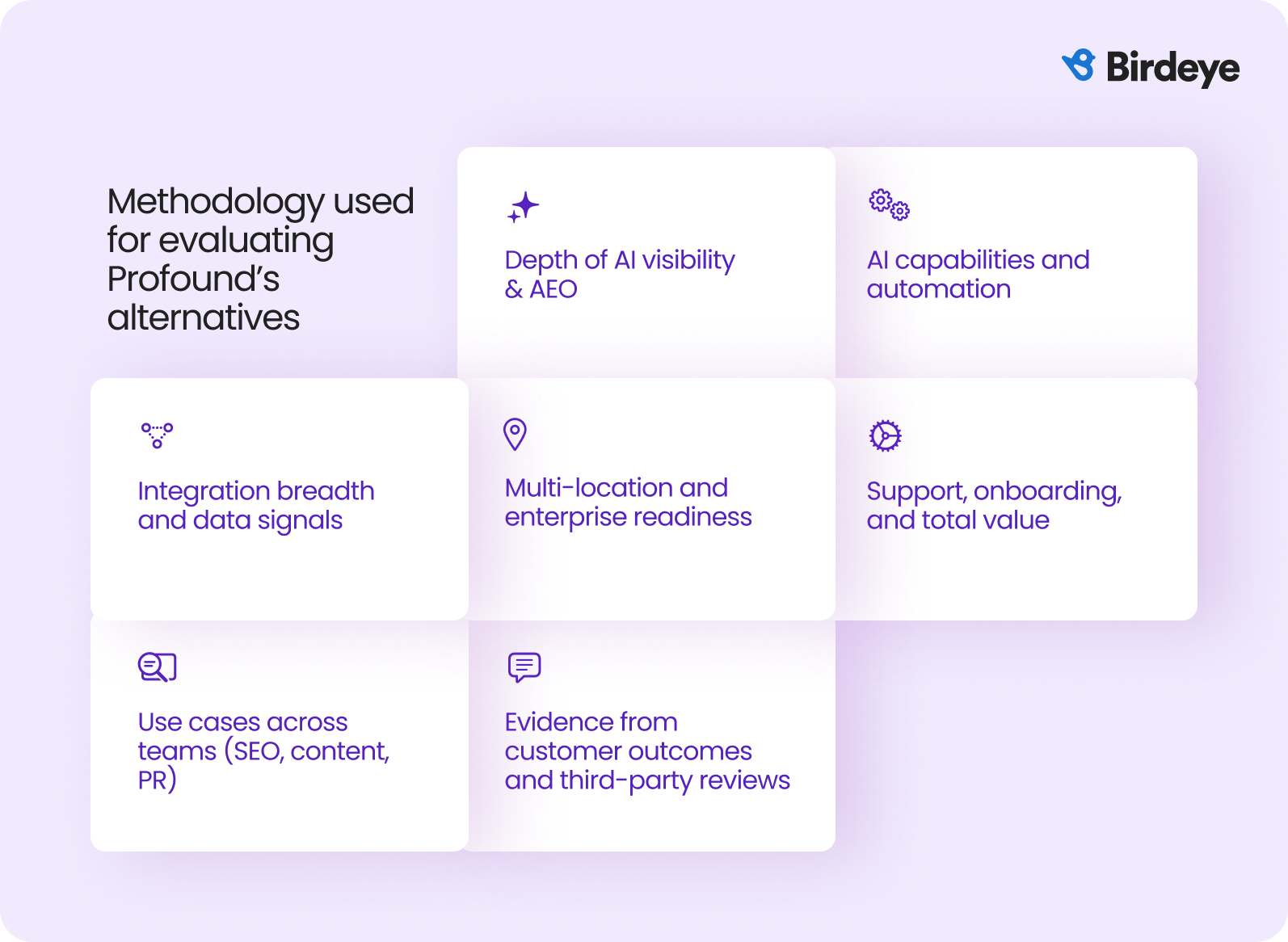
Methodology used for evaluating Profound’s alternatives
Choosing a Profound alternative isn’t just about matching AI visibility features; it’s about finding a platform that can sustain AI search growth across engines, teams, and locations. This guide uses a structured, research-driven framework to shortlist tools that can genuinely replace or surpass Profound for modern AEO programs.
Depth of AI visibility & AEO
Each platform was evaluated on how well it tracks visibility, share of answer, and citations across major answer engines like ChatGPT, Gemini, Perplexity, Copilot, Claude, and Google AI Overviews. Tools limited to a few engines or shallow prompt coverage were deprioritized.
AI capabilities and automation
Beyond dashboards, platforms were compared on their ability to automate optimization—content, listings, and CX workflows versus simply flagging issues. Extra weight was given to tools that use AI agents to execute changes, not just generate reports or suggestions.
Integration breadth and data signals
Solutions were assessed on how well they connect AI visibility with core CX signals, such as reviews, listings, NAP accuracy, and web analytics. Platforms with deep native integrations and unified data models scored higher than those requiring multiple disconnected tools.
Multi-location and enterprise readiness
Particular focus was placed on location-level reporting, permissioning, and scalability for franchises and distributed brands, not just single domains. Tools without robust multi-location support, role-based access, and location-specific diagnostics were treated as partial fits.
Support, onboarding, and total value
Finally, each alternative was vetted for onboarding quality, support responsiveness, and pricing transparency, recognizing that AI search is a long-term investment, not a short-term test. Priority went to platforms that balance enterprise-grade capabilities with clear, scalable value for 2026 and beyond.
Use cases across teams (SEO, content, PR)
Alternatives were scored on how well they support AEO teams, content marketers, and PR/brand teams with dedicated workflows for prompt research, content optimization, and narrative control in AI answers. Platforms that only served a narrow SEO use case, without PR and content alignment, were considered less future-ready for cross-functional AI visibility programs.
Evidence from customer outcomes and third-party reviews
Vendor claims were cross-checked against case studies, G2/Capterra reviews, and independent write-ups comparing AI visibility tools. Preference went to platforms with documented lifts in AI visibility, local discovery, review growth, or revenue impact, and not just feature lists or marketing copy.
Top 7 Profound alternatives comparison at a glance
Platform
Best for
Core strengths
AI features and engines
Pricing*
Birdeye Search AI (Recommended)
Multi location and enterprise brands
Unified AI visibility + 3,000+ CRM integrations, reviews, listings, NAP, messaging, social, surveys in one platform.
AI agents for AEO, listings, reviews, social; tracks ChatGPT, Gemini, and Perplexity.
Custom, scalable plans based on locations and modules.
Local Falcon
Agencies and local businesses that need geo‑grid local and AI visibility around specific locations
Visual geo‑grid heatmaps with Share of Local Voice (SoLV) and Share of AI Voice (SAIV), plus clear reports on where locations win or lose in maps and AI experiences.
Tracks local and AI visibility across Google Maps, Google AI Overviews, AI Mode, Gemini, Grok, and ChatGPT.
Credit‑based plans starting around the mid‑20 USD/month range, scaling by the number of scans and engines.
AthenaHQ
Fast-growing teams needing unlimited scale
Unlimited responses and seats; focuses on sales pipeline and bottom-line impact with certified GEO specialists.
Tracks up to 8 major LLMs; AI content optimization, competitor monitoring, citation intelligence, and action center.
Starting at $295/month with flexible credit purchases.
Peec AI
Global brands needing multi-language coverage
Industry-leading 115+ language support with competitive benchmarking at the entry tier; accessible pricing.
Tracks ChatGPT, Perplexity, AI Overviews, Claude, Gemini, DeepSeek, Grok, Llama; 3 platforms at base.
Starting at €89/month; 7-day free trial.
Goodie AI
Teams needing attribution and content execution
Tracks 11 AI models with an attribution dashboard connecting visibility to revenue; built-in AEO content writer and optimization hub.
ChatGPT, Gemini, AI Overview, Claude, Perplexity, Grok, DeepSeek, Meta AI, AI Mode, Copilot, Amazon Rufus.
Starting ~$495/month; custom enterprise pricing.
Nightwatch
SEO teams adding AI visibility to existing workflows
Unified traditional SEO rank tracking plus AI and LLM visibility, 15 plus AI engines tracked with prompt-level focus.
Tracks ChatGPT, Claude, Gemini, Perplexity, includes sentiment analysis, share of voice, and citation tracking.
Tiered plans starting at mid-market rates scale to millions of keywords.
Scrunch AI
Brand perception management and journey mapping
Focuses on how AI portrays brands with hallucination detection, knowledge hub features, and discovery-to-decision journey mapping.
Tracks ChatGPT, Perplexity, Meta AI, Claude, Gemini; maps user paths and competitive positioning.
Starting at $250/month; free trial available.
*Pricing is indicative and varies by seats, locations, and feature mix.
Top 7 Profound alternatives (detailed reviews)
1. Birdeye Search AI (Recommended)
Birdeye Search AI is built for multi-location and enterprise brands that want a single, agentic platform to understand AI visibility and automatically fix what’s holding locations back across prompts, citations, listings, and reviews.
Star Rating:
G2: 4.7/5 (3,900+ reviews)
Capterra: 4.7/5 (701 reviews)
Standout features
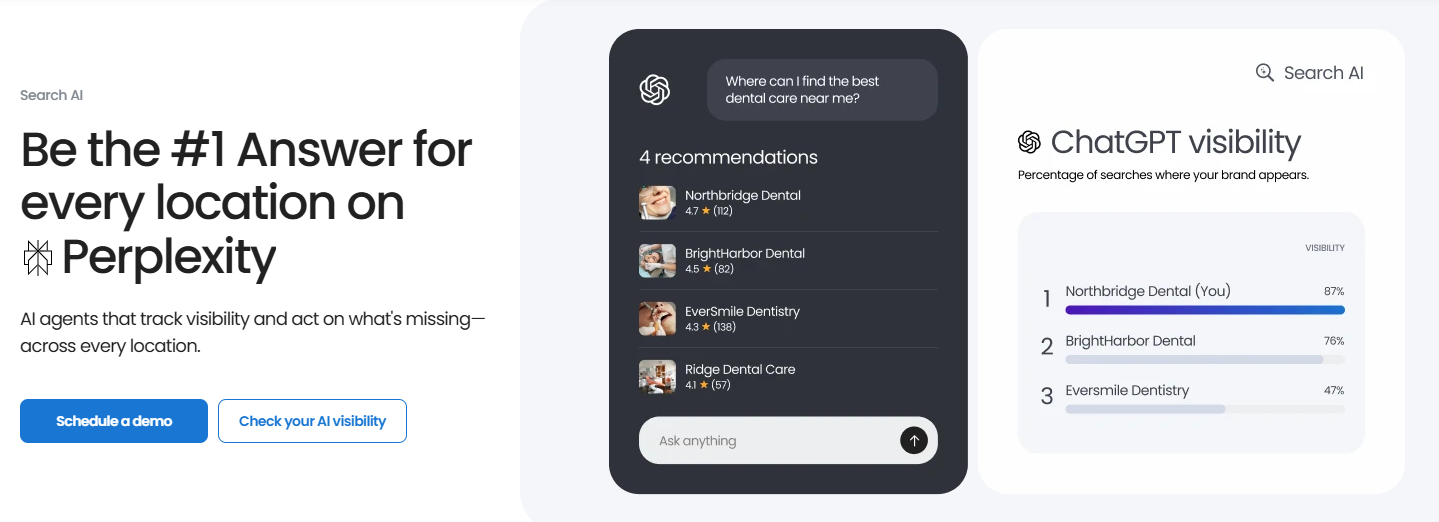
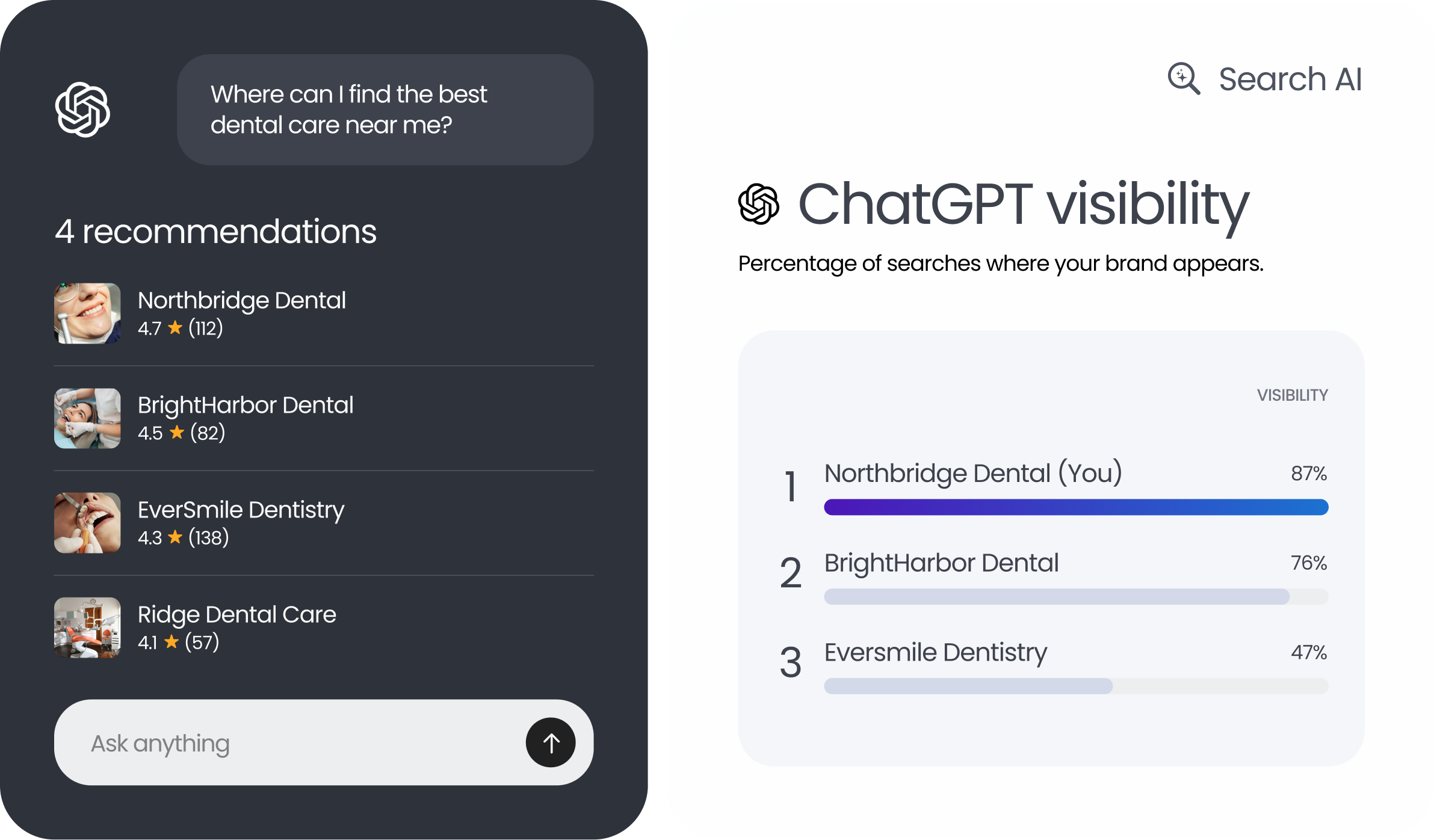
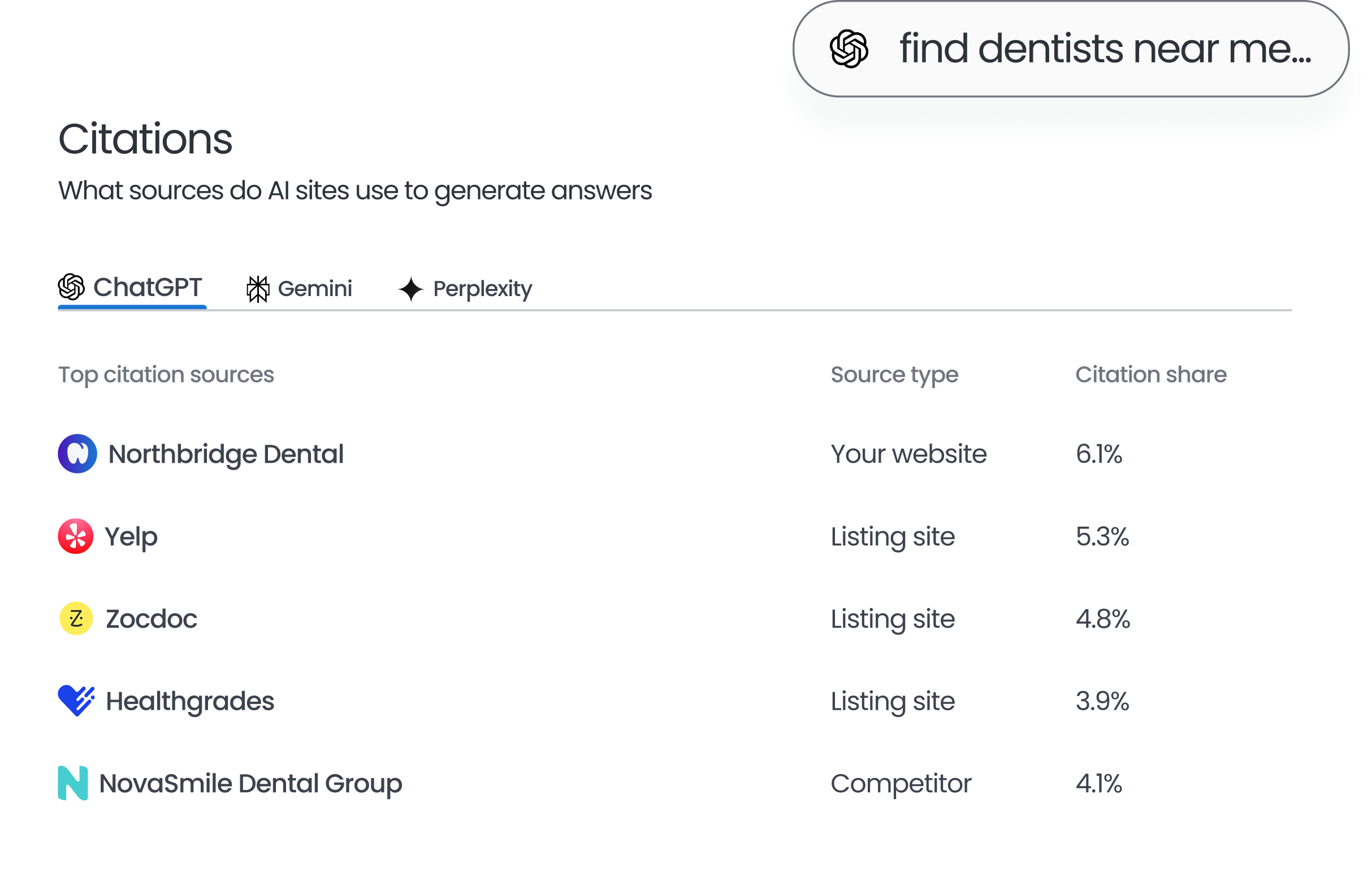
Birdeye Search AI gives brands a clear, location-level view of how often they appear in AI answers, for which themes, and against which competitors across platforms like Gemini, ChatGPT, Perplexity, and more. It links that visibility to the prompts people actually use, the sources AI trusts, and how accurately each location’s data is represented, so teams can focus on the inputs that truly move AI-generated results.
Location-level AI visibility - See which locations appear in AI answers, how often, and for which themes, rather than only brand-level rollups.
Theme-based prompt intelligence - Uncover the actual questions customers ask across ChatGPT, Gemini, Perplexity, broken into searchable themes.
Rankings and share of voice - Track positions and share of voice by theme and platform to understand where you lead, lag, or are invisible.
AI sentiment and narrative – Analyze how AI engines describe your brand’s strengths, weaknesses, and risks in each market.
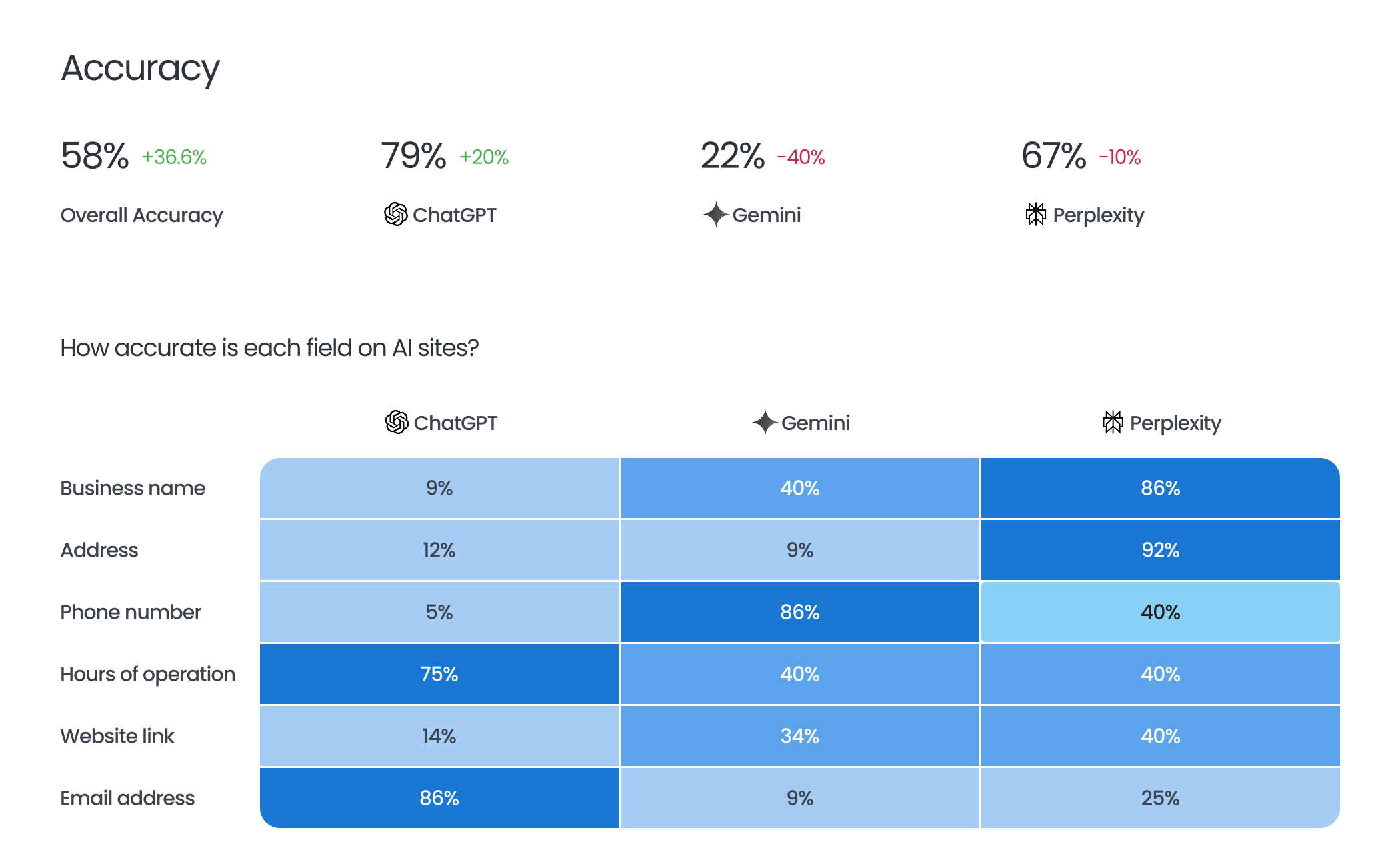
Citation and data accuracy insights – See which domains AI leans on and where your hours, phone, address, or links are wrong or incomplete.
Prioritized recommendations – Get a clear, ranked list of actions (update data, add FAQs, expand content, grow reviews) for each location.
Unified CX + AEO view – Connect AI visibility to reviews, listings, social, messaging, and surveys inside the broader Birdeye platform instead of juggling point tools.
Agentic marketing advantage
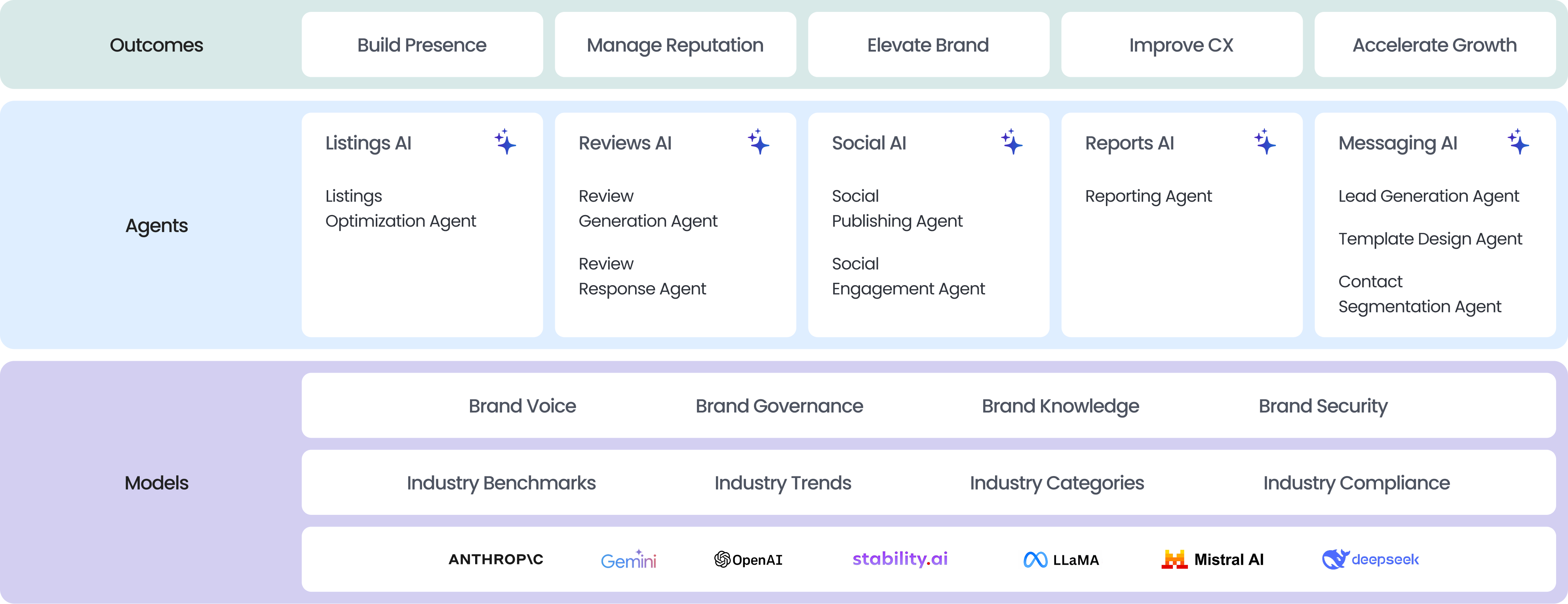
Birdeye is positioned as an agentic marketing platform, so AI agents don’t stop at analysis, but they execute. When Search AI detects inaccurate hours, weak themes, or negative sentiment, those signals can automatically drive actions with Listings AI, Reviews AI, Social AI, and Messaging AI. This turns reports into coordinated campaigns that update business data, launch review pushes, publish FAQs, and refresh local content at scale.
Pros
Only platform designed specifically for multi-location GEO, with location-level diagnostics and automated execution.
Connects AI visibility directly to reviews, listings, NAP, and content—showing why locations appear or don't.
BirdAI agents act on recommendations automatically (updating profiles, triggering review campaigns, publishing content), cutting manual effort for teams.
AI sentiment and narrative insights help ops and CX teams understand recurring issues that shape AI answers, not just rankings.
Scales seamlessly for brands with 10 to 10,000 locations, with centralized command and location-specific insights.
Cons
Best suited to teams that treat AI visibility and CX as strategic; it can feel more robust than necessary for brands only seeking a lightweight monitoring widget.
Real value comes when Search AI is paired with other Birdeye modules.
Awards and recognition
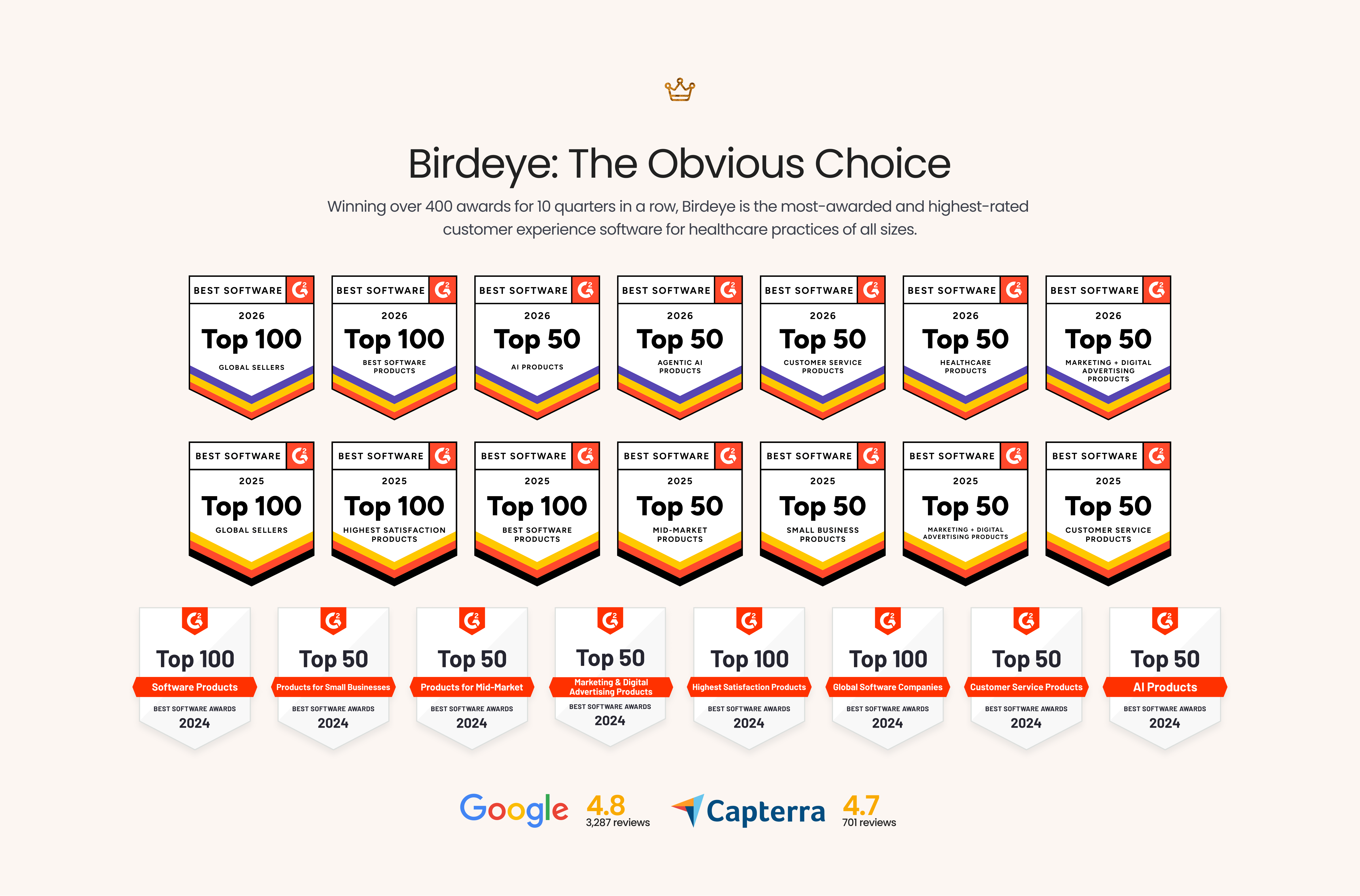
Birdeye continues to earn recognition across the software and marketing industry for innovation, product performance, and customer satisfaction.
G2 2025: #1 in "Reputation and Customer Experience Management"
Forbes Advisor: "Best AI Marketing Platform for Multi-location Brands."
Capterra: "Leader in Reviews, Messaging, and Social Integration 2025"
Google Premier Partner Program: Recognized for enhancing brands' local search performance.
Pricing and value
Birdeye’s plans are tailored to meet each customer’s unique needs. Contact us to learn more about pricing for your business.
Birdeye Search AI vs Profound
Category
Birdeye Search AI
Profound
Core focus
AI visibility + execution tied to reviews, listings, NAP, social, and messaging (CX + AEO together).
Dedicated AI visibility/AEO platform focused on prompts, citations, and content-level optimization.
Primary users
Multi-location and enterprise brands that need location-level insights and automated fixes.
AEO, SEO, content, and PR teams at larger brands needing deep AI visibility analytics.
Visibility granularity
Brand and location-level visibility, rankings, sentiment, and recommendations.
Primarily brand/domain-level visibility across prompts and answer engines.
Prompts and themes
Groups real prompts into themes by location and competitor to guide local strategy.
Tracks unique prompts and Prompt Volumes to show demand and gaps by topic.
Sentiment and narrative
Interprets how AI platforms describe the brand, linked to CX levers (reviews, ops, content).
Analyzes AI descriptions and sentiment around brand and competitors for messaging and PR.
Citations and data accuracy
Maps citation sources and business data accuracy, then routes fixes through Listings AI and Reviews AI.
Shows citation sources and suggests where to earn or improve mentions; execution handled in other tools.
Automation model
Agentic marketing: AI agents update listings, launch review campaigns, and publish content from insights.
Insight-led: provides recommendations and AEO workflows; teams execute via separate systems.
CX stack integration
Natively integrated with reviews, messaging, surveys, social, and listings in one platform.
Focused on visibility, reputation, listings, and messaging typically live in other products.
Multi location readiness
Designed for multi-location—with location filters, local rankings, and per-location recommendations.
Supports multi-brand reporting but is less focused on store/clinic-level CX execution.
Engine coverage
Tracks leading AI search platforms like Gemini, ChatGPT, Perplexity, and more (exact list evolving).
Starter: ChatGPT only; Growth: 3 engines; Enterprise: up to 10 engines, including Gemini, Copilot, Claude, etc.
Content workflows
Uses insights to inform FAQ, page, and profile content, then pushes updates via connected Birdeye tools.
Built-in AEO content generation and optimization for a set number of articles per month on Growth/Enterprise.
Best fit
Brands wanting AI visibility, CX levers, and automation under one roof for faster, location-level impact.
Teams wanting a specialist AEO analytics engine, with execution handled in a broader SEO/content stack.
What Birdeye customers say
Birdeye is a valued partner for our business listings consistency and integrations. Their Listings AI, Social AI, and Reviews AI are integral to our overall marketing and brand strategy. The team is professional, and the support is best-in-class! The dashboard is easy to navigate, and our implementation and integration were seamless. Our team utilizes Birdeye daily for our social strategy and reputation management. Highly Recommend!– Patti M., Vice President of Marketing 5/5, Verified G2 reviewer
Why Birdeye stands out
Birdeye stands out because it unifies AI visibility and CX execution in one platform, so teams can see which locations appear in AI responses and immediately act on the listings, reviews, and content issues driving that performance.
Unlike other Profound alternatives that only report on AI visibility, Birdeye’s agentic marketing approach uses AI agents to push changes live—updating profiles, launching review campaigns, and publishing content —based on the same insights Search AI uncovers. This tight loop between insight and action makes Birdeye especially powerful for multi-location brands that need AI search gains to translate into measurable, on-the-ground results.
2. Local Falcon
Local Falcon is a local SEO and AI visibility platform built around geo‑grid scans and Share of Local Voice (SoLV), designed for agencies and local businesses that want to see exactly where they appear on maps and in AI local results. It has recently added AI search visibility tracking across platforms such as ChatGPT, Google AI Overviews, Gemini, Grok, and AI Mode, so teams can see both map rankings and AI presence in a single tool.
Star rating:
G2: 4.7/5
Key features
Geo‑grid heatmaps show rankings for target keywords around each location.
Measures Share of Local Voice and Share of AI Voice.
Trend reports show how local and AI visibility change over time.
Identifies the top sources and citations that influence AI responses about locations.
Pros
Great for agencies needing visual grids to explain local performance.
Easy to show clients the before‑and‑after impact of local SEO.
Cons
Focuses on visibility; does not manage reviews or listings.
Credit-based pricing discourages constant scans for very large portfolios.
Limited brand‑level AEO and CX workflows compared to broader platforms.
Pricing and value
Local Falcon uses credit-based plans starting around 24.99 USD per month for 7,500 credits, with higher tiers and enterprise packages offering more monthly or annual credits. It delivers the most value for teams that prioritize geo‑grids and local AI visibility and are comfortable budgeting scans rather than paying a flat fee per location.
3. AthenaHQ
AthenaHQ is a Generative Engine Optimization platform focused on turning AI visibility into pipeline and revenue, with unlimited responses and seats on many plans. It’s built for teams that want deep analytics and competitive benchmarking across multiple LLMs.
Star rating:G2: 4.8/5
Key features
GEO visibility dashboards across major LLMs (e.g., ChatGPT, Perplexity, Gemini).
Competitive benchmarking and share-of-voice analysis.
Content and prompt recommendations to improve AI answers.
Unlimited users and generous response quotas on core plans.
Pros
Analytics depth for brands serious about GEO benchmarking.
Scales well across teams due to the unlimited-user model.
Clear positioning around commercial impact and pipeline value.
Cons
Analytics-heavy; requires internal resources to act on insights.
Limited direct connections to listings, reviews, or messaging tools.
Less tailored for location-level CX execution.
Best suited for mid-market/enterprise budgets, not small teams.
Pricing and value
Mid‑$200s+ per month; strong value for teams needing deep GEO analytics and unlimited users.
4. Peec AI
Peec AI is a GEO platform known for its global footprint, offering strong multi-language and multi-region coverage for brands competing across markets. It tracks how brands appear in AI-generated responses and highlights prompt and content gaps across engines like ChatGPT, Perplexity, and Gemini.
Star rating:
G2: 4.6/5
Key features
Multi-engine tracking across leading AI platforms.
Support for 100+ languages and multiple regions.
Daily prompt, citation, and competitor monitoring.
Content-gap and underperforming-theme reporting for AEO.
Pros
Excellent fit for global and multilingual brands.
Accessible entry pricing relative to enterprise tools.
Clear, focused dashboards for prompts and AI visibility.
Cons
Limited built-in automation or execution; insights must be actioned in other systems.
Less emphasis on local NAP/listings and review ecosystems.
Early-stage ecosystem; fewer third-party integrations than older platforms.
Ratings volume remains low across major software directories.
Pricing and value
From ~€89/month; affordable entry into multi-language AI visibility for global and regional brands.
5. Goodie AI
Goodie AI is an AEO/GEO platform that combines AI visibility tracking with content generation and optimization, aiming to be a one-stop shop for AI search improvements. It’s best suited for teams that want AI to both diagnose visibility issues and help produce the content needed to fix them.
Star rating:
G2
Capterra
Key features
AI visibility monitoring across multiple AI engines.
AI-generated content and on-page optimization recommendations.
Sentiment and narrative analysis for brand mentions in AI answers.
Reporting that links visibility changes to traffic and conversions.
Pros
Integrated “detect + write” model reduces tool sprawl for content-led teams.
Helpful for marketing teams without large in-house writing bandwidth.
Focus on narrative quality, not just appearance counts.
Cons
Less mature for multi-location data hygiene (NAP, listings) compared to CX-focused suites.
Execution is still primarily content-centered; CX and ops integration is limited.
May overlap heavily with existing AI copy tools in some stacks.
Positioned at a premium price point for smaller businesses./li>
Pricing and value
Quote-based, premium; suits mid-market/enterprise teams replacing separate GEO + AI writing tools.
6. Nightwatch
Nightwatch is an established SEO monitoring tool that has added AI search and LLM tracking on top of its rank-tracking and visibility capabilities. It’s ideal for SEO teams that want to extend an existing SEO stack into AI visibility without adopting a completely new platform.
Star rating:
G2: 4.9/5
Capterra: 4.8/5
Key features
Traditional SERP rank tracking with strong localization.
AI/LLM visibility tracking across 10–15 engines, including ChatGPT and Gemini.
Share-of-voice and competitor tracking across search and AI.
Customizable dashboards and reporting for agencies and brands.
Pros
Natural extension for teams already focused on SEO monitoring.
Flexible, highly configurable reporting for complex accounts.
Competitive pricing versus some enterprise-only GEO tools.
Cons
AI tracking is an add-on, not a GEO-first architecture.
Limited CX or reputation capabilities; relies on other platforms.
Not focused on location-level NAP or review data.
Still requires manual coordination to turn AI insights into content or CX changes.
Pricing and value
Tiered SEO-style plans start at #32/month for 250 keywords and go up to 500 prompts at $495/month.
7. Scrunch AI
Scrunch AI focuses on how brands are portrayed in AI-generated content, with strong emphasis on narrative quality, hallucination detection, and competitive positioning. It’s particularly useful for PR, brand, and comms teams that care about what AI says, not just whether the brand appears.
Star rating: G2: 4.7/5
Key features
AI visibility dashboard across major AI platforms.
Brand narrative and sentiment analysis for AI-generated summaries.
Hallucination detection and factuality checks for brand mentions.
Competitive and persona-based analysis of AI responses.
Pros
Unique approach connecting social proof with AI visibility.
Monitors brand mentions across AI platforms, news, blogs, and social media.
Helps identify brand misrepresentation quickly.
Cons
AI search tracking is not as deep as dedicated AEO platforms.
Not designed for multi-location businesses.
Analytics-heavy; teams still need separate tools to act on insights.
Early-stage product with fewer long-term case studies than mature platforms.
Pricing and value
The Explorer plan starts at $100/month with 100 prompts and ChatGPT with only 1 user license. The Growth plan offers 700 prompts, monitoring all LLMs, 5 user licenses at $500/month. They also offer a custom Enterprise plan upon request.
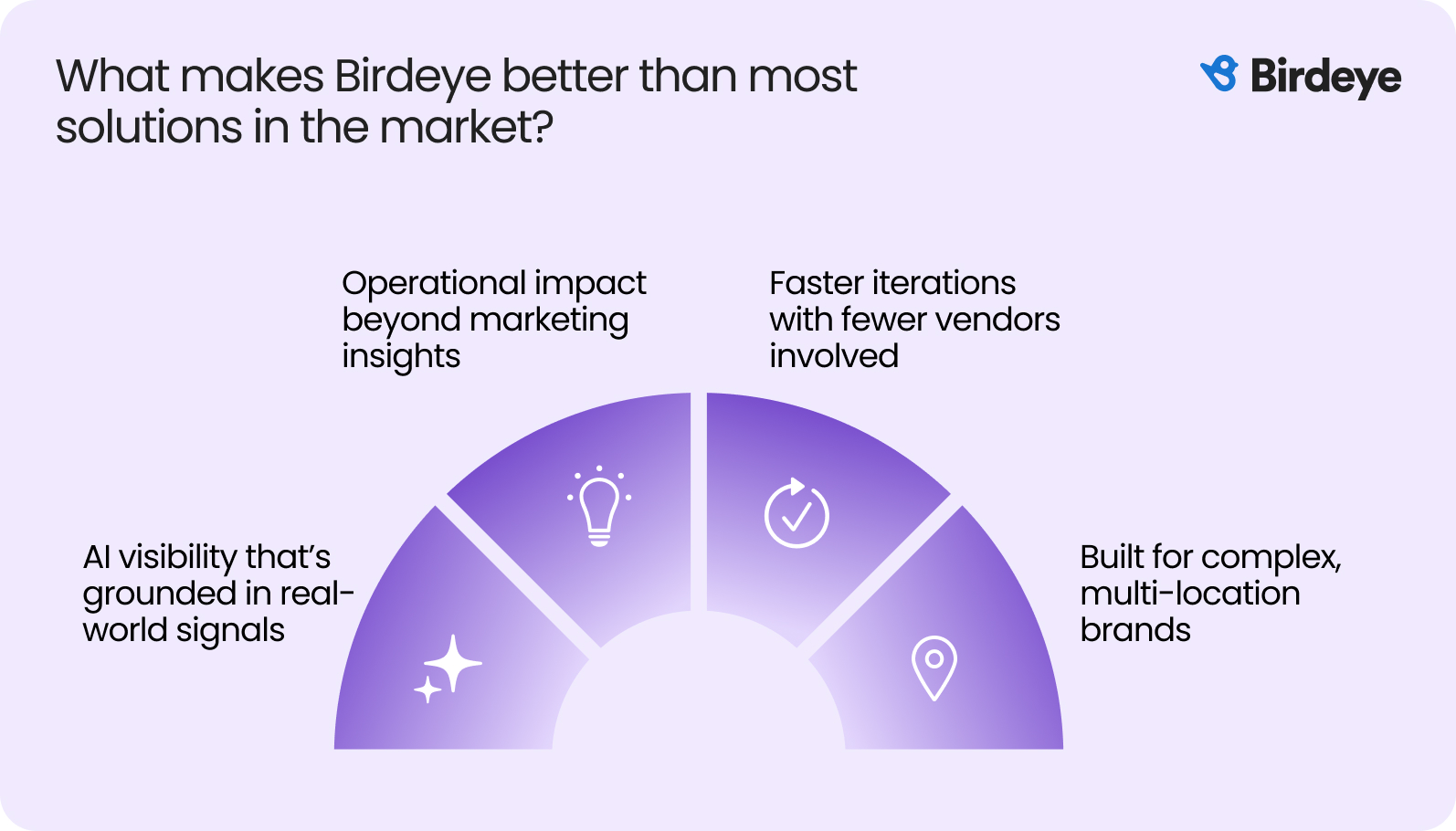
What makes Birdeye better than most solutions in the market?
Birdeye differentiates itself by uniting AI visibility, reputation, listings, messaging, and social into one agentic marketing platform, so brands see both where they stand in AI search and which CX levers to pull to improve it. Most alternatives either specialize in GEO analytics or in CX, forcing teams to stitch together multiple tools and manually connect AI insights to execution.
AI visibility that’s grounded in real-world signals
Most GEO tools stop at prompts, rankings, and citations. Birdeye overlays those signals with review volume, star ratings, NAP accuracy, and local engagement, so teams understand which on-the-ground factors AI is responding to, location by location.
Operational impact beyond marketing insights
Search AI doesn’t only help marketing adjust content—it also surfaces operational issues that show up in AI narratives (long wait times, inconsistent experiences, missing services), giving ops and CX teams a clear, prioritized backlog to fix. This makes AI visibility a driver of service improvement, not just a reporting metric.
Faster iterations with fewer vendors involved
Because Search AI lives inside the same ecosystem as Listings AI, Reviews AI, Social AI, and Messaging, teams don’t have to coordinate across multiple providers to implement changes. One insight can cascade into updated profiles, fresh FAQs, new review campaigns, and localized content, helping brands respond to AI trends much faster than competitors reliant on stitched‑together stacks.
Built for complex, multi-location brands
Birdeye’s location hierarchies, role-based access, and location-level dashboards mean national, regional, and local teams all get the AI insights that matter to their footprint, something many single-domain GEO tools struggle to deliver.
I use Birdeye in my role managing negative reviews across more than a dozen platforms, and it’s been a game-changer. I love how streamlined it is — I can view all my reviews in one place and connect multiple platforms, seeing updates in real time (though some platforms take about 24 hours to sync).– Shannon S., Negative Review Social Media Specialist 5/5, Verified G2 reviewer
How to choose the best Profound alternative for your needs
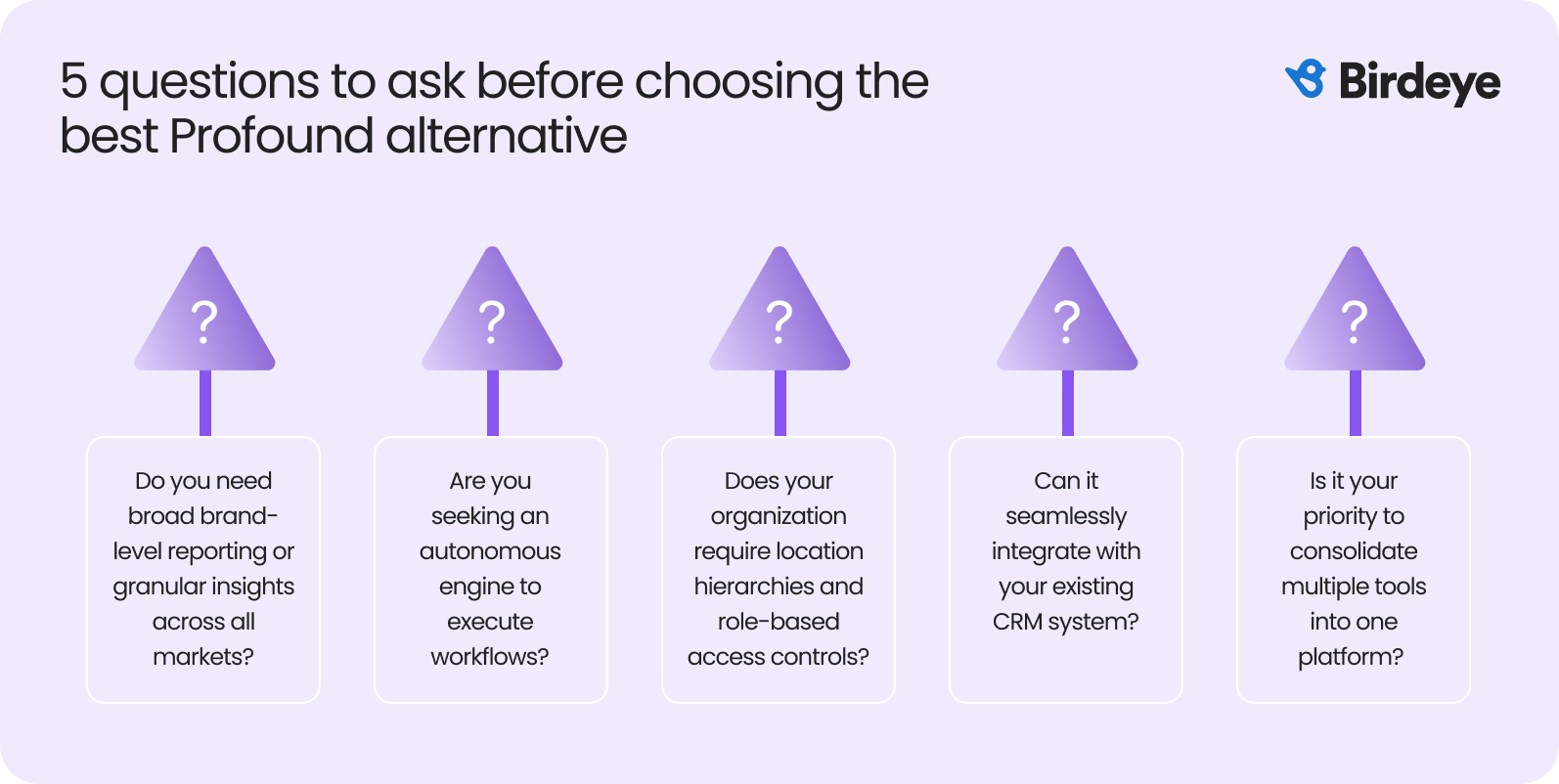
Finding the right Profound alternative starts with clarifying how deeply AI visibility needs to connect to your broader SEO, content, and CX stack. Different platforms specialize in analytics, automation, or multi-location execution, so the best choice depends on your footprint, team structure, and appetite for change.
1. Clarify your AI visibility scope
Decide whether you need brand-level reporting only or location-level visibility, rankings, and sentiment across all markets. If AI discovery directly impacts local storefronts or clinics, prioritize tools that can segment by location, region, and service line.
2. Decide how much automation you want
Some platforms focus on dashboards and insight; others offer agentic workflows that update profiles, launch review campaigns, or generate content automatically. Choose whether your team wants analytics to feed existing processes or an engine that can execute changes with minimal manual work.
3. Map your multi-location and governance needs
If you operate across dozens or hundreds of locations, look for role-based access, location hierarchies, and clear ownership between corporate, regional, and local teams. Platforms that treat everything as a single domain will struggle to support franchise or network-style governance.
4. Check integrations with your current stack
List your core systems (CRM, marketing automation, listings/CX platform, analytics, data warehouse) and confirm which alternatives plug in cleanly. Strong native integrations reduce the risk of data silos and ensure AI visibility insights flow into campaigns, reporting, and revenue attribution.
5. Balance specialization vs. consolidation
Specialist GEO tools may offer deeper prompt and citation analytics, while unified CX + AEO platforms reduce vendor sprawl and make it easier to act on insights. Weigh whether your team prefers “best-of-breed analytics” or “fewer tools that can do more, faster” over the next 2–3 years.
Migration checklist: How to switch from Profound to Birdeye in 7 easy steps
Migrating from Profound to Birdeye is structured, efficient, and fully supported, so your teams can move from insight to action without disruption. Birdeye’s onboarding specialists manage the complexity while you gain an end-to-end AI visibility and local growth platform.
Step-by-step migration from Profound to Birdeye
Step 1: Align on migration goals
Define success with key stakeholders—AI visibility control, local SEO execution, review management, and multi-location scalability.
Step 2: Audit your Profound environment
Review Prompt Volumes, Agent Analytics, Answer Engine Insights, tracked queries, and reporting workflows to identify what needs to be retained.
Step 3: Connect data sources and locations
Link Google Business Profiles, Apple Business Connect, Facebook, and other sources, then import all locations, categories, services, and NAP data into Birdeye.
Step 4: Migrate reviews and historical data
Sync existing reviews, ratings, and response history to preserve benchmarks and reporting continuity.
Step 5: Configure automation and templates
Set up AI-assisted review response templates, auto-responses, alerts, and escalation workflows with human oversight.
Step 6: Set access, security, and reporting
Apply role-based permissions, enable SSO, and build executive and operational dashboards for AI visibility and local performance.
Step 7: QA, train, and go live
Validate data and integrations, then launch with guided training and hands-on support from Birdeye experts.
Why migrating from Profound to Birdeye is easier
Action, not just insight:Birdeye turns AI visibility insights into execution across listings, reviews, content, and engagement in one platform.
No tool sprawl:Replace separate tools and manual workflows with a unified system built for multi-location brands.
Enterprise-ready onboarding:Dedicated migration and QA support ensures zero disruption and faster time to value.
Faster adoption:Intuitive workflows and built-in training help local teams act immediately, without relying on technical specialists.
Birdeye is an excellent way to drive patient reviews to the review sites of your choice. The dashboard offers several useful features to help you manage reviews and gain insights into your business. The customer service is outstanding.– Verified G2 reviewer 5/5 rating
FAQS about Birdeye Search AI, the #1 Profound alternative
1. How is Birdeye Search AI different from other Profound alternatives?
Birdeye connects AI visibility directly with reviews, listings, messaging, and social in one platform, so the same insights that show where you’re weak in AI answers also trigger concrete actions to fix data, grow reviews, and improve content across locations.
2. Does Birdeye Search AI only work for large enterprises?
No. While it’s built for complex, multi-location brands, Birdeye can support regional and mid-market teams that want location-level AI visibility and CX execution without building a custom stack themselves.
3. Can Birdeye track how competitors appear in AI answers too?
Yes. Search AI benchmarks your visibility, rankings, sentiment, and citations against named competitors, so you can see where they’re winning in AI answers and what levers you need to pull to close the gap.
4. Will Birdeye replace my existing review and listings tools?
In most cases, yes. Birdeye includes Reviews AI, Listings AI, and other CX modules, so brands can consolidate reputation, listings, and AI visibility into one agentic platform instead of maintaining multiple disconnected vendors.
Ready to switch from Profound to Birdeye?
Profound alternatives can show where you stand in AI answers—but Birdeye goes further by tying those insights to the reviews, listings, and content that actually move visibility for every location.
Birdeye is easy to navigate, and I love that it consolidates all review channels into a user-friendly dashboard. I also appreciate how it automatically updates listings across multiple platforms, allowing me to edit and publish directly within the dashboard. The platform offers a wide range of tools and consistently keeps up with industry trends, recently providing solutions for how businesses can be discovered through AI chat functions. – Caitlin P., Marketing Director Verified G2 reviewer
f you want AI visibility and CX execution in one agentic platform, Birdeye Search AI is built to turn AI search insights into measurable, multi-location growth.
Disclaimer: The content on this page is based on research compiled from publicly available information. Birdeye does not warrant the completeness or correctness of the information and cannot be held liable for its use.
Start growing with Birdeye today
See what makes Birdeye the clear choice for today's leading enterprises. Get a firsthand look at the capabilities of the all-in-one Birdeye Platform.