Answer engine optimization (AEO) helps brands surface inside AI-generated responses across tools like ChatGPT, Gemini, Perplexity, and voice assistants. As more people ask conversational questions instead of typing keyword searches, visibility within these direct answers becomes increasingly important. Forbes notes that brands already optimizing for answer engines are seeing nine times higher conversion rates, a strong indicator of how user behavior is shifting toward AI-guided decisions.
Summary

AI tools now deliver concise answers, product suggestions, and local recommendations without requiring users to click through multiple results. This shift opens new opportunities for brands to appear inside AI-driven responses, and tools like Birdeye Search AI help businesses optimize their content to show up in the most relevant AI-generated answers.
This blog post explains how AEO works, why it’s essential for organic discovery, and how brands can prepare their content for AI-led search experiences.
Table of contents
- What is Answer Engine Optimization (AEO)?
- AEO vs SEO: What’s the difference?
- AEO vs GEO (Generative Engine Optimization): How they differ
- Why AEO matters for brands in 2026
- How AEO actually works
- How to build an effective AEO strategy in 2026
- Major AI models/engines to optimize for in 2026
- The future of AEO in 2026 and beyond
- How Birdeye Search AI helps with AI visibility readiness
- Frequently asked questions on Answer Engine Optimization
- Conclusion
What is Answer Engine Optimization (AEO)?
Answer engine optimization (AEO) organizes content so AI systems can interpret it quickly and provide reliable responses to user queries. While traditional SEO focuses on ranking webpages, AEO prioritizes delivering information that answer engines can pull, cite, and present in the moment, across search summaries, chatbots, voice assistants, and conversational interfaces.
Core principles of AEO include:
- Providing clear, direct answers: Give precise responses to specific user questions in concise, natural language.
- Optimizing for AI-driven features: Target formats like featured snippets, “People Also Ask,” and Google’s AI Overviews.
- Using structured content: Apply defined headings, short sections, and schema so AI systems can easily extract information.
- Focusing on question-based queries: Write in a way that mirrors how users ask questions across chat, voice, and conversational tools.
- Strengthening SEO foundations: Build on existing SEO best practices while making content easier for machines to interpret.
AEO supports several content surfaces, including AI summaries, conversational search, voice assistants, knowledge panels, in-app search, and local recommendation engines. In short, AEO positions your content as a trusted source that answer engines can confidently use.
AEO vs SEO: What’s the difference?
SEO and AEO both play key roles in online visibility, but they operate differently. SEO helps webpages rank, while AEO helps answers get selected by AI systems. This breakdown highlights the core differences so you can apply each approach effectively.
| Factor | SEO (Search Engine Optimization) | AEO (Answer Engine Optimization) |
| Primary goal | Increase organic traffic by ranking higher on search results pages. | Provide direct, reliable answers selected and cited by AI systems. |
| Output format | Users browse multiple links and choose what to read. | Users receive a single, instant answer without needing to click. |
| User intent | Users exploring a topic or looking for detailed insights. | Users seeking quick, specific answers through AI or voice search. |
| Platform alignment | Optimized for human reading and browsing. | Optimized for AI interpretation and machine-readable structure. |
| Content approach/style | Informational, long-form, keyword-rich, and comprehensive content. | Conversational, short, structured, and focused answers to specific questions. |
| Optimization method | Relies on keywords, backlinks, metadata, and technical SEO. | Uses schema markup, structured data, entity clarity, and semantic organization. |
| Target formats | Blog posts, landing pages, guides, and search listings. | Featured snippets, AI Overviews, voice answers, and knowledge panels. |
| Success metrics | Rankings, traffic, click-through rates, and engagement. | Answer visibility, featured snippet placement, and direct citations. |
In short, SEO ensures people find your site. AEO ensures AI systems understand it and select it. Both are essential and complementary rather than competing strategies.
AEO vs GEO (Generative Engine Optimization): How they differ
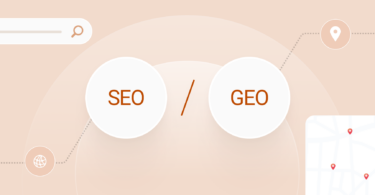
As AI-generated answers continue shaping user discovery, Generative Engine Optimization (GEO) has emerged alongside AEO. While AEO focuses on helping AI systems pull answers directly from your content, GEO focuses on optimizing for generative search engines that create blended, synthesized responses.
Here’s a clear breakdown of the differences:
| Factor | AEO (Answer Engine Optimization) | GEO (Generative Engine Optimization) |
| Primary goal | Ensure AI systems can extract and cite direct answers from your content. | Improve visibility within AI-generated summaries, blended results, and synthesized search outputs. |
| Output format | AI pulls a direct answer or snippet from your page. | AI produces a multi-source synthesized response using your content as part of a larger narrative. |
| Content style | Short, precise, question-focused content. | Context-rich, well-rounded content that supports deeper synthesis. |
| Optimization method | Schema markup, Q&A formatting, structured headings, and entity clarity. | Topic authority, semantic coverage, depth, and quality signals across clusters. |
| Target placements | Featured snippets, AI Overviews, voice answers, citations in chat tools. | Google AI Overviews, ChatGPT Search summaries, Perplexity syntheses, and multi-source generative panels. |
| Success metrics | Direct citations, answer inclusion, and voice-search placement. | Share of generative summaries, mention frequency, and authority in topic clusters. |
| User intent match | Immediate, answer-seeking queries (“What is…”, “How to…”). | Exploratory, research-oriented queries needing broader context. |
| Platform alignment | Ideal for conversational and voice-driven searches. | Ideal for AI search engines building blended, long-form summaries. |
| Dependency on structured data | High — schema, markup, and machine-readable signals. | Medium — structure helps, but topic depth and semantic quality matter more. |
| Ideal for | Businesses that need direct visibility in quick-answer environments. | Brands that want visibility in synthesized, research-heavy responses. |
In short:
- AEO helps your content become the answer.
- GEO helps your content inform the answer.
Both approaches work together, and brands that maximize both gain the strongest presence across AI search experiences.
Why AEO matters for brands in 2026

As AI-driven tools become the primary way people search, AEO helps brands ensure their information appears in answer-led experiences.
Key reasons why AEO is vital:
1. AI-first search is becoming the default
By 2026, a major share of searches is expected to happen through AI chatbots and answer engines. Traditional SEO alone no longer guarantees visibility. AEO ensures your content can surface within these new, answer-led formats.
2. Visibility across emerging result types
AEO increases the chances of appearing in Google’s AI Overviews, “People Also Ask” sections, and voice search responses. These formats often appear before traditional links, becoming the first place users discover brands.
3. Stronger brand authority and trust
Consistently delivering precise, helpful answers positions a brand as a reliable voice in its space/industry. This clarity builds long-term trust and reinforces industry authority.
4. Higher-intent traffic & conversion
AEO content addresses specific user questions, attracting visitors with more apparent intent. Even if broad traffic fluctuates, the users who arrive are more likely to be potential customers.
5. Improves performance with structured content
AEO favors information that is easy for machines to interpret. Using schema, structured data, and Q&A formatting helps AI systems pull accurate, verifiable details from your content.
6. Opportunities for smaller & emerging brands
AEO creates room for newer or smaller businesses to be recognized alongside established players. When content provides precise, reliable answers, AI tools can surface it regardless of domain size.
7. New measurement and zero-click visibility
With AEO, success is not just clicks or page rank. It’s about being featured, cited, or referenced in answer engines, even when the user never clicks. Brands must monitor mentions, AI citation share, voice-search performance, and “zero-click” exposure.
Hence, brands that prepare their content for answer engines now will be better equipped to maintain visibility and credibility as AI-driven search continues to evolve.
Answer Engine Optimization: The Complete Guide (2026)
Want to see the impact of Birdeye on your business? Watch the Free Demo Now.
How AEO actually works
Answer engine optimization is shaped by how AI systems read, interpret, and prioritize content. Unlike traditional search crawling, answer engines focus on how easily your content can be turned into a direct, conversational response. They rely on LLMs, NLP, and structured cues to identify pages that offer precise, reliable, and context-aware information.
Below is a breakdown of the core elements behind how AEO functions:
1. Advanced crawling and parsing
Answer engines scan pages for structure, clarity, and completeness. Clean formatting, strong organization, and consistent topic coverage help AI understand and extract information more accurately.
2. Semantic and intent understanding
Modern LLMs interpret intent, relationships, and context, not just keywords. Content that explains topics clearly, anticipates follow-up questions, and provides contextual clarity is more likely to be selected as an answer.
3. Structured data and schema signals
Elements like FAQ schema, HowTo markup, and well-defined headings give engines concrete cues. These signals make it easier for AI to lift precise answers from your content.
4. Entity & credibility verification
Answer engines map entities, knowledge graphs, facts, and E-E-A-T signals (experience, expertise, authoritativeness, trustworthiness) to verify accuracy. Content that uses clear terminology and consistent references performs better in these evaluations.
5. Real-time user response feedback
Feedback loops examine how users interact with AI-generated responses. High-performing content is surfaced more often, while unclear or incomplete material is downgraded.
6. Multimodal readiness
Answer engines look for content that can adapt to chat interfaces, voice queries, and visual formats. Short paragraphs, skimmable layouts, and scannable structures help across all modes.
7. Human + AI accessibility
The strongest pages are easy for people to read and easy for AI systems to interpret. Clarity, hierarchy, and predictable formatting help both audiences.
AEO works best when your content communicates clearly and gives answer engines everything they need to choose it as the most helpful response.
Key challenges in AEO

Despite its promise, Answer Engine Optimization presents formidable challenges for brands and content strategists:

Limited performance tracking as tools for measuring visibility and citations are still developing
Opaque retrieval systems that offer little insight into how answer engines select, rank, or cite content
Internal buy-in challenges as traditional traffic metrics lose influence in zero-click environments
Constant model and algorithm updates that require ongoing learning and refinement
High technical complexity around structured data, schema, semantic clarity, and site architecture
Dependence on external AI platforms and answer engines outside of brand control
Reduced engagement, as AI responses may resolve queries without driving clicks

Facing these obstacles head-on demands a proactive, research-driven approach and a willingness to adapt as the space evolves.
How to build an effective AEO strategy in 2026
To excel in AEO, a strategic, multi-faceted approach is essential:
1. Define user intent and top questions
Start with audience research. Identify the top questions, pain points, and conversational triggers within your market. Map these micro-intents to content opportunities, consider both informational and transactional queries relevant to your niche.
2. Structure content for direct, contextual answers
Format your content to deliver answers clearly and succinctly. Use headings, lists, and paragraphs that directly address each question. Include context, but avoid unnecessary fluff. AI engines prefer precise, well-structured responses.
3. Strengthen the technical framework
Implement advanced schema markup (e.g., FAQ, HowTo, and Product), maintain clean metadata, and ensure all essential information is machine-readable. This significantly improves your eligibility for an answer citation.
4. Build authority and credibility signals
Encourage brand mentions, reputable backlinks, and external citations. Authority signals, such as being referenced in news media, industry portals, or academic sources, increase your chances of being trusted by answer engines.
5. Audit existing presence across AI answer engines
Check how your brand appears in leading AI assistants and answer engines such as ChatGPT, Gemini, Perplexity, Claude, and voice interfaces. Review citations, accuracy, and gaps in coverage across these platforms.
6. Monitor answer performance and refine continuously
Utilize available analytics and AEO monitoring tools. Track where and how your content appears in answer engines and adjust strategies as you identify what drives the most citations and visibility.
Combining these tactics, brands can meaningfully increase their likelihood of being chosen as definitive sources by emerging AI ecosystem players.
Major AI models/engines to optimize for in 2026

As answer engines diversify, understanding how different AI models operate and present information is crucial:
1. Google AI Overviews
This feature delivers synthesized answers at the top of search results, pulling from multiple authoritative sources. Optimizing for AI Overviews means ensuring your content provides concise, clearly structured answers and includes relevant schema markup.
2. Google Gemini
The Gemini model specializes in multimodal search, combining text, images, and context for more intuitive results. To appear, prioritize content that is rich in context and multimedia.
3. Microsoft Bing Copilot
Integrated into Windows and Edge, Bing Copilot leverages knowledge graphs and LLMs to answer user questions directly within both browsers and OS environments. Clear, authoritative, and up-to-date content is crucial here.
4. OpenAI ChatGPT Search
ChatGPT’s search-powered chats draw from recent, reputable web sources. It values conversational, natural language and rewards sources that engage users with highly relevant, up-to-date facts.
5. Perplexity AI
Perplexity’s real-time answers rely on citation mechanisms. To be featured, ensure your content is deeply factual, well-referenced, and accessible for instant context extraction.
Knowing how to tailor your approach to each engine ensures maximum potential visibility across the evolving answer ecosystem.
The future of AEO in 2026 and beyond

As digital experiences accelerate, answer engine optimization (AEO) is becoming indispensable for any brand striving for visibility in an AI-driven search environment. The way users discover and interact with information is transforming, and AEO adapts to meet these shifts head-on.
1. AI-driven search dominance
By 2026, industry experts predict a major shift from classic search engines toward AI chatbots and generative platforms. This means brands must align their content strategies to suit machine-driven answers, rather than just traditional search results.
2. Rise of zero-click and voice search
Voice assistants and AI-powered interfaces are fueling more zero-click searches, where users receive instant answers without navigating away. Competing to be the featured response in these scenarios is increasingly strategic for brands.
3. Importance of structured data
AI tools rely on clearly organized content to interpret information accurately. Implementing schema markup, such as FAQPage and HowTo, helps define relationships within your content and improves selection for AI answers.
4. Focus on E-E-A-T signals
AI models favor credible sources: demonstrating experience, expertise, authoritativeness, and trustworthiness (E-E-A-T), via author bios, citations, and first-hand content, significantly improves the odds that engines will cite your material.
5. Optimization for conversational search
Content must now support multi-turn interactions, moving beyond isolated snippets. Addressing likely follow-up questions and adding depth to your answers help your material become part of an engaging, ongoing dialogue with users.
6. Integration with traditional SEO
Technical SEO fundamentals, such as site performance and user experience, still support discoverability. Harmonizing AEO and conventional SEO strategies is essential to maintain effectiveness in the changing digital landscape.
7. New metrics for measuring success
Classic analytics like click-through rates no longer capture the whole story. Metrics such as answer inclusion rate are key for understanding how often AI selects and surfaces your content directly.
AEO’s future calls for structured data, trustworthiness, and conversational depth qualities that help brands stay visible and relevant as answer engines shape the next phase of online information discovery.
How Birdeye Search AI helps with AI visibility readiness

As AI-driven search becomes a primary way people find information, Birdeye Search AI helps brands optimize for visibility, accuracy, and authority across all major AI platforms, including chatbots, voice assistants, knowledge panels, and AI-powered search engines.
Know where you stand
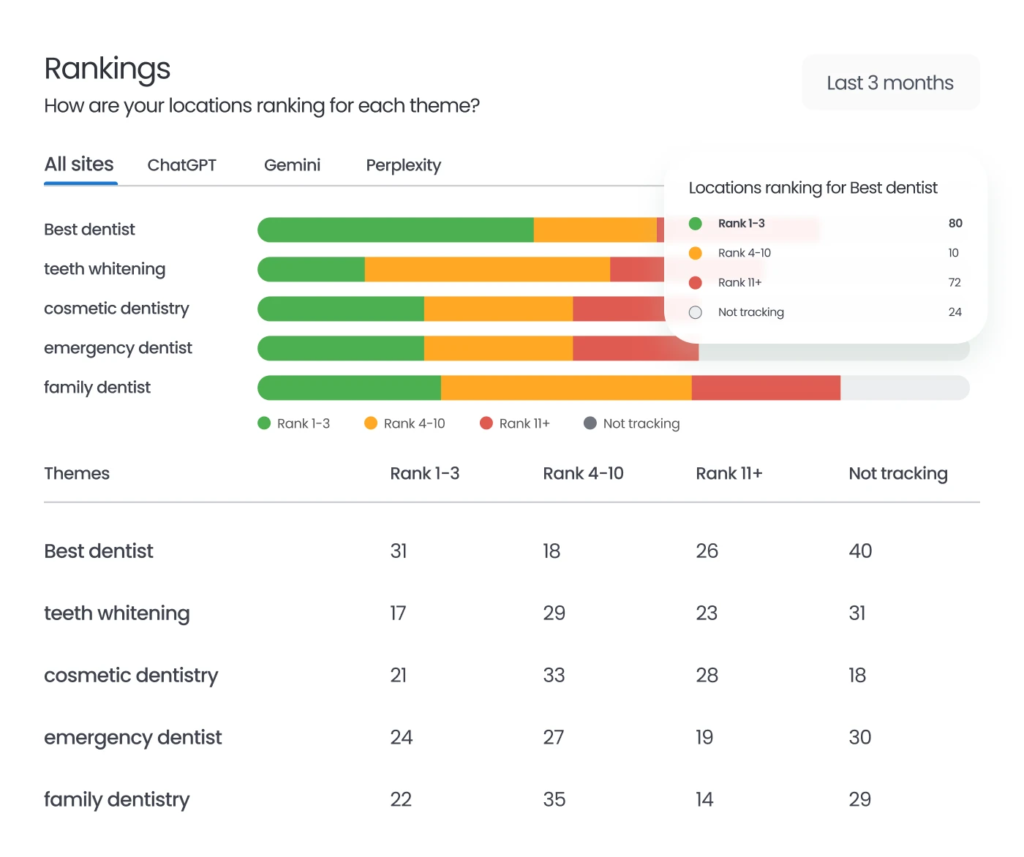
Search AI helps your brand understand how it appears across AI search tools such as Gemini, Perplexity, Bing Copilot, and ChatGPT. It tracks visibility, brand perception, and rankings, and compares performance against competitors to identify opportunities for improvement.
Discover high-value prompts and queries
Search AI identifies the questions and themes consumers use to find businesses like yours. It monitors trends, tracks high-opportunity topics, and ensures your content aligns with how AI systems interpret queries.
Measure visibility and rankings
Search AI enables you to see how frequently your brand and locations appear in AI-generated answers. It compares visibility by theme, platform, location, and competitor performance, and monitors category rankings globally and locally.
Track sentiment and brand perception
Search AI understands how AI engines describe your business, including strengths, weaknesses, and overall sentiment. It uses these insights to improve operational decisions and influence how your brand is represented in AI-driven results.
Strengthen citations and authority
Search AI access AI-suggested, high-impact citation sources tailored to your industry. Accurate citations increase credibility and improve the likelihood that AI systems select your content as a trusted source.
Ensure accurate business information
Search AI verifies essential details like addresses, phone numbers, hours, and websites are correct across AI platforms. It corrects inaccuracies and protects visibility, trust, and discoverability.
Turn insights into action
Get prioritized, platform-specific recommendations for improving content, citations, and listings. BirdAI agents can execute updates automatically, making optimization efficient and scalable across your entire brand footprint.
Maintain a competitive edge
Compare your brand to competitors and get actionable guidance to improve rankings and visibility. Birdeye Search AI ensures your business remains authoritative and easy to find across the evolving AI search landscape.
Birdeye Search AI prepares your brand for the future of AI search, helping you surface in the correct answers, build trust, and maintain visibility across all AI-driven platforms.
Frequently asked questions on Answer Engine Optimization
AEO helps AI systems quickly find and deliver precise answers from your content in conversational responses.
SEO ranks pages for users, while AEO structures content so LLMs can select and cite answers directly.
No. AEO complements SEO by making content machine-readable for AI-driven answers.
Short, structured, question-focused content with clear headings and schema is preferred by LLMs.
Results vary, but clear, structured content can start appearing in AI answers once LLMs index and reference it.
Birdeye Search AI helps monitor AI citations, brand mentions, category rankings, sentiment, and competitor comparisons, all in one dashboard.
Conclusion
Answer Engine Optimization is essential for brands aiming to appear in AI-driven search results, voice assistants, and conversational interfaces. By structuring content for clarity, context, and machine-readability, businesses can deliver precise answers that AI systems trust and cite. AEO complements traditional SEO, focusing on direct relevance and high-intent engagement.
Leveraging tools like Birdeye Search AI helps track visibility, optimize content, and strengthen authority across platforms. Brands that embrace AEO now are better positioned to stay discoverable and credible as AI-guided search becomes the primary way users find information.
Request a demo of Birdeye Search AI today to see how your business can dominate AI-driven search results.

About the Author

Vanjana Sharma
Originally published
![[Feature image] How to Get Your Law Firm Found in AI Search](https://birdeye.com/blog/wp-content/uploads/Feature-image-How-to-Get-Your-Law-Firm-Found-in-AI-Search-375x195.jpg)