Search impressions are dropping for many multi-location brands, but qualified customer actions are holding much steadier. That gap points to a measurement problem: the dashboard many leaders still use was built for a click-first search journey, not an answer-first one.
Summary of the blog
Search impressions are becoming a weaker measure of customer demand. AI Overviews, zero-click behavior, richer local results, and changing customer journeys are shortening the path between discovery and action, enabling customers to find and choose a brand without leaving the same impression or click signals that marketers used to track.

For multi-location brands, the risk is misreading the dashboard. Leaders need to look beyond impressions and CTR, and measure whether the brand remains visible in AI-generated answers, is cited by trusted sources, and turns high-intent searches into calls, directions, and visits.
This article explains why the old measurement model is breaking, where the reporting gap shows up, and which signals matter more in an answer-driven search environment.
Table of contents
- Summary of the blog
- Search reporting used to be easier to explain
- What does the data actually show?
- Why did impressions fall without taking customers with them?
- What is the measurement gap costing marketing leaders?
- Why reviews are now a search signal, not just a trust signal
- What leading multi-location brands are measuring instead
- How Birdeye helps you control your brand narrative in AI-generated answers
- The window that’s open right now
- FAQs about AI search and search impressions
Note: This is Part 1 of Birdeye’s AI Visibility series, which explores the measurement problem and the decline of traditional search metrics. Parts 2 and 3 will address the optimization and execution gaps that impact brand presence in AI-driven discovery.
Search reporting used to be easier to explain
There was a time when more impressions usually meant more visibility, and more clicks usually meant more chances to convert. For years, those numbers gave CMOs a reasonably clear way to connect search performance to customer demand.
That connection is weaker now.
Customers are still finding brands, calling locations, requesting directions, and visiting websites. But many of those journeys no longer create the same impression and click signals that dashboards were built to capture.
The result is a reporting issue that appears to be a demand problem. If leaders misread the signal, they may cut investment from channels that are still influencing customers or chase traffic that no longer represents the best opportunity.
What does the data actually show?
Birdeye’s State of AI Search 2026 report analyzed performance across hundreds of thousands of brand locations in North America and found a sharp split between visibility metrics and customer actions, such as calls, direction requests, and website visits.
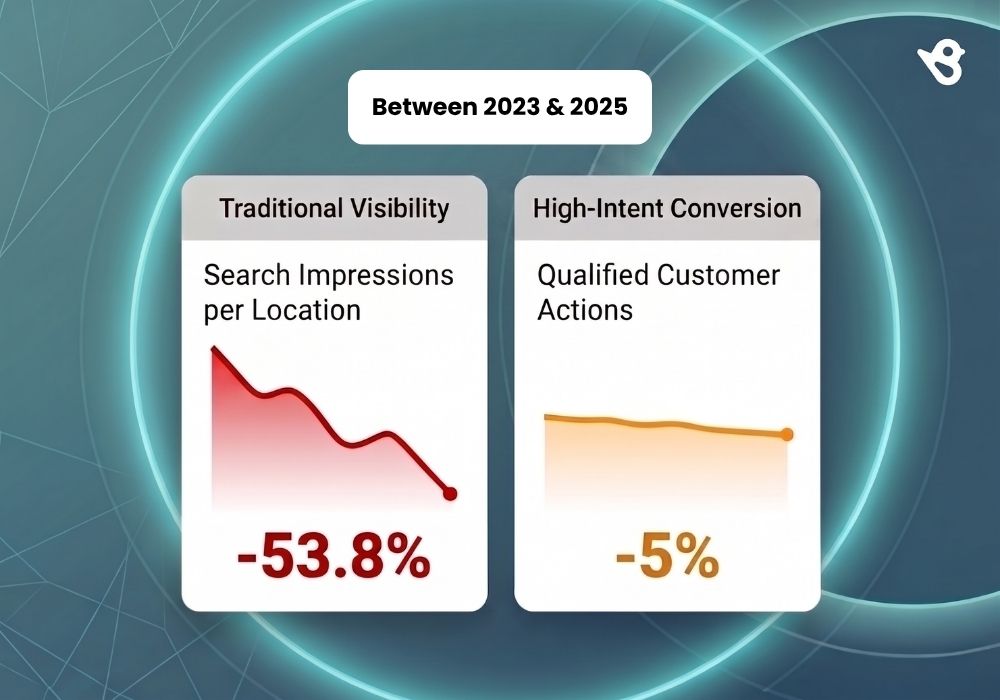
- Search impressions per location fell 53.8% between 2023 and 2025.
- Qualified customer actions declined only 5% over the same period.
The top of the search funnel appears to be shrinking much faster than customer intent.
This data reflects multi-location brands actively managing their presence, optimizing profiles, generating reviews, and maintaining structured owned content through Birdeye. It doesn’t represent every brand in the market. That makes the finding useful in a different way: even well-managed brands are seeing traditional visibility metrics break away from customer action.
For marketing leaders, the takeaway is practical. A decline in impressions should trigger investigation, not panic. The better question is whether high-intent actions are falling at the same rate. If they are not, the issue may be measurement rather than demand.
💡 What this means for your reporting: If your impressions dashboard is down but your calls and direction requests are stable, you are not losing customers. You are losing a metric that no longer maps cleanly to customer behavior.
Why did impressions fall without taking customers with them?
Several forces are widening the gap between visibility metrics and customer action. AI Overviews are one of them. More information now appears directly inside the search experience, including business hours, service details, directions, phone numbers, and review themes.
This is not only an AI Overviews story. Local packs, AI-enhanced map results like Ask Maps, knowledge panels, voice answers, and other zero-click experiences have been compressing the search journey for years. AI-generated answers make that compression more visible and, in many cases, more pronounced.
A study by researchers at Carnegie Mellon University and the Indian School of Business supports this direction. The research found that Google AI Overviews reduced outbound organic clicks by about 38% on queries where they appeared.
The same study found no meaningful decline in user satisfaction when summaries were removed, which suggests many lost clicks were replaced by faster answers rather than weaker intent.
The performance of multi-location brands must be re-evaluated based on this change. A customer who once clicked into a profile to check hours may now get the answer on the results page. One who once visited a location page to compare options may now see review themes summarized before making a choice. The brand still influenced the decision, even if the dashboard captures less of that influence.
What is the measurement gap costing marketing leaders?
Traditional search reporting was built around visits. It assumes customers see a result, click a page or profile, and then take action. That model still matters, but it no longer covers the full journey.
AI search and zero-click experiences create influence before the visit. If a brand is cited in an AI Overview, summarized in an AI answer, or presented with accurate local details in the search interface, it may shape the customer’s decision before a click happens.
The measurement gap is simple: legacy metrics track click-based visibility, while more customer decisions are being shaped in answer-based environments.
The gap creates three risks for senior marketing leaders:
- Missed visibility credit: A brand can be cited in ChatGPT, Perplexity, Gemini, or Google AI experiences without that moment appearing in standard analytics.
- Misread performance signals: A drop in impressions may reflect more queries being resolved at the search layer, not a collapse in customer interest.
- Misallocated investment: Brands may spend more time chasing impression volume while competitors improve the signals that help AI answer engines cite, verify, and recommend them.
The fix is not to abandon impressions or CTR. They still provide useful context. The fix is to stop treating them as the full scoreboard. In an answer-first search environment, leaders need to measure where the brand appears, how it is described, and whether that visibility turns into qualified action.
Why reviews are now a search signal, not just a trust signal
The measurement model has to expand because search visibility now depends on more than rank, impressions, and clicks. AI systems and answer interfaces draw from a wider set of signals when deciding what to summarize, cite, and surface.
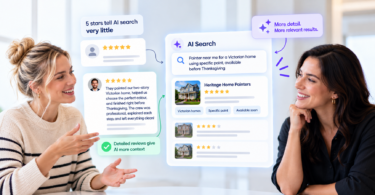
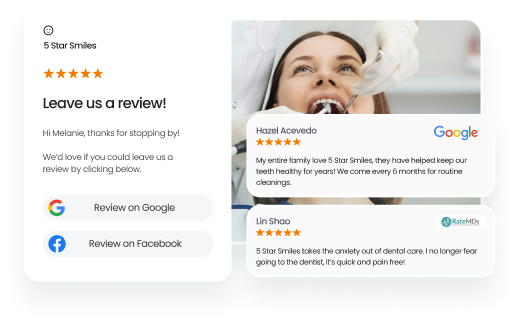
Review content is now one of the primary inputs AI engines use to verify and differentiate brands when generating answers. Reviews are the voice of customers that give answer systems fresh, customer-written language about what a location is known for. A star rating alone says less than a recent review that mentions wait time, staff, service quality, pricing clarity, or a specific location experience.
This does not mean that every AI search engine uses reviews in the same way, or that any single review metric guarantees citation. It means review content has become part of the evidence layer that supports visibility. Brands that measure reviews only as reputation are missing their role in discovery.
Data from Birdeye’s State of Online Reviews 2026 report shows why this matters. According to the report, review volume grew 30.7% year over year in 2025, the fastest rate since 2021, and roughly 80% of those reviews included written comments rather than just star ratings. That written detail provides both customers and AI search engines with more context for evaluating the brand.
A stronger dashboard should show whether review content is recent, specific, and consistent across locations. It should also show whether the locations with stronger review signals are more likely to appear in AI-generated answers.
What leading multi-location brands are measuring instead
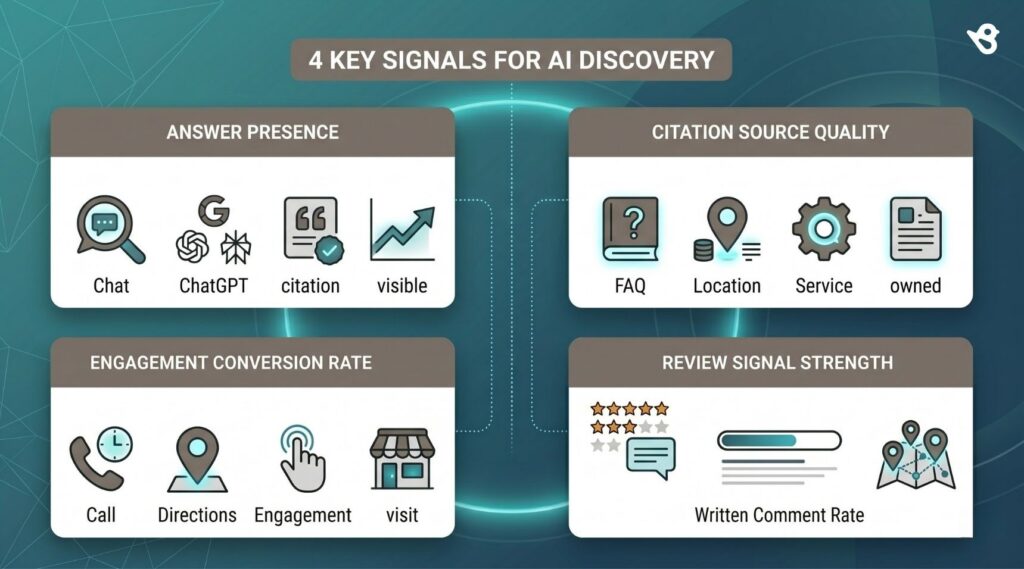
The strongest marketing teams are not replacing every old search metric. They are adding new ones that reflect how discovery now works. A useful measurement model should connect answer-layer visibility to local action through four key signals.
1. Answer presence
Are you cited when a high-intent customer asks an AI engine about your category, service, or location? This is the clearest signal that your brand is visible in answer-based discovery.
Birdeye Search AI tracks citation presence across ChatGPT, Gemini, and Perplexity so brands can see where they appear, and where they don't, before a competitor claims that ground.
2. Citation source quality
When AI answer engines describe your brand, are they drawing from your owned content (location pages, FAQ content, service details, pricing clarity, etc.), your local profiles, or third-party sources? If third parties explain your brand better than your own site does, you have a content clarity problem.
3. Engagement conversion rate
How many qualified actions are you earning relative to profile exposure or search visibility? This helps leaders separate low-value visibility from high-intent engagement.
4. Review signal strength
Are reviews recent, descriptive, and consistently managed across locations? Review signal strength should include volume, written comment rate, response activity, and location-level gaps.
Birdeye’s AI search analysis reinforces why source quality matters. While 80% of brands appeared in AI answers at least once, only 15% owned the top citation position through their own content or controlled brand sources. The gap shows that appearing in AI answers is not the same as controlling how the brand is represented.
For CMOs, this is a better reporting conversation than “traffic is down.” It asks: Are we visible where customers are asking questions? Are we being cited accurately? Are our locations eligible to appear? Are customers still taking action?
How Birdeye helps you control your brand narrative in AI-generated answers
AI visibility is not shaped by one signal. It depends on how consistently your brand appears across the trusted sources AI answer engines read—from reviews to location pages.
Birdeye Search AI helps multi-location brands see where they appear in AI-generated answers across Google, ChatGPT, and Perplexity. Instead of guessing based on clicks, brands can identify the specific visibility gaps preventing their locations from being the top answer.
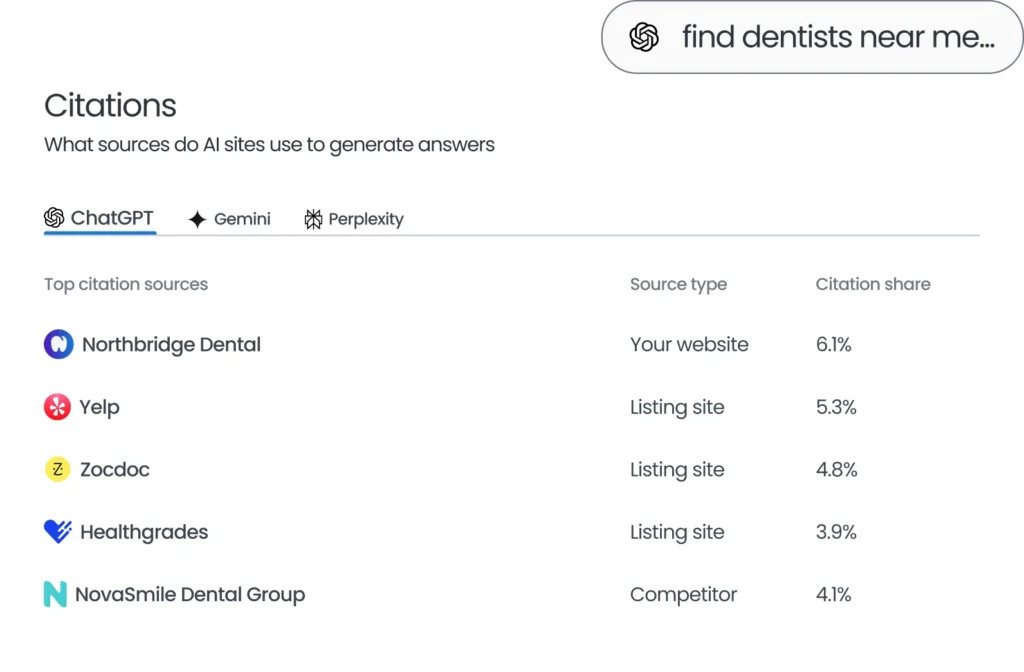
Birdeye also helps teams strengthen the signals behind that visibility. Reviews supports fresh, detailed customer feedback across thousands of locations. Listings AI keeps core business information accurate and consistent. Together, these signals give search platforms and AI answer engines a clearer picture of each location.
For enterprise teams, the value is not just more reporting. It is a way to connect AI visibility with the local signals that influence customer action, while keeping marketers in control of how work gets reviewed, approved, and executed.
The window that’s open right now
The measurement gap will not stay hidden forever. Search platforms will continue to evolve their reporting, and leadership teams will ask for clearer AI visibility metrics. But most brands are still judging performance with a dashboard built for an earlier version of search.
That creates a short-term advantage for teams willing to update their measurement methods. They can stop overreacting to every impression decline and start identifying where the brand is actually winning or losing in answer-based discovery.
The goal is not to recover every lost click. Some clicks disappeared because the customer had already received the answer. The goal is to ensure the answer given is accurate, favorable, and action-oriented.
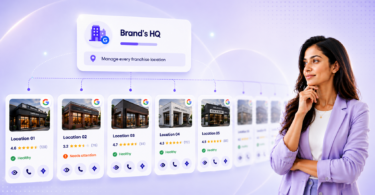
For multi-location brands, that question gets harder at the local level. A national dashboard may show that the brand appears in AI answers. But that does not mean every location is visible, accurate, or eligible when customers ask local, high-intent questions.
That is where the next problem begins. Measurement shows when the old dashboard is incomplete. Optimization determines whether the right locations are ready to be recommended. In Part 2 of this series, we’ll look at why brand-level AI visibility can hide serious location-level risk.
FAQs about AI search and search impressions
Google Business Profile impressions can drop when more customer questions are answered directly in search results, maps, local packs, or AI-generated summaries. A decline does not always mean fewer customers found you. Compare impressions with calls, direction requests, website visits, and AI citation presence.
Lower CTR does not automatically mean SEO is failing. AI Overviews and zero-click search experiences can reduce clicks even when customers still get the information they need. The better question is whether qualified actions and answer-layer visibility are holding steady.
AI Overviews can reduce outbound organic clicks by answering more questions inside the results page. A Carnegie Mellon University and Indian School of Business field experiment found about a 38% reduction in clicks on queries where AI Overviews appeared.
Reviews can support AI search visibility by giving answer systems fresh, specific language about customer experience. Recent, detailed reviews are more useful than star ratings alone because they provide context about services, staff, locations, and outcomes.
Multi-location brands should measure impressions alongside answer presence, citation source quality, engagement conversion rate, and review signal strength. Together, these signals show whether the brand is visible, accurately represented, and still driving customer action.

About the Author

Ruchika Batra
Originally published