Google confirmed on May 15, 2026, that its spam policies now apply to AI Overviews and AI Mode, meaning the same rules that have governed traditional search rankings for years now determine which multi-location brands appear in AI-generated answers.
Summary
AI-generated search is no longer a policy-free zone. Google’s new update has clarified that its existing spam policies in traditional search, such as scaled content abuse, thin location pages, cloaking, and site reputation abuse, now explicitly apply to AI Overviews and AI Mode. For multi-location brands managing hundreds or thousands of locations, this shifts the foundation of AI search visibility away from volume-based content strategies to authentic reputation signals, accurate location data, and original content that reflects real local expertise.
This article explains what changed, which content practices are now at risk, and how the Birdeye agentic marketing platform helps brands maintain consistent, policy-compliant visibility across AI-generated results.
Table of contents
- Summary
- What did Google actually change?
- Does this affect how multi-location brands appear in AI Overviews?
- What signals does Google’s AI actually reward?
- How Birdeye helps multi-location brands maintain AI search visibility
- Evaluating your content strategy against Google’s spam policies
- FAQs on Google spam policies and AI search
- See how Birdeye keeps multi-location brands visible in AI search
What did Google actually change?
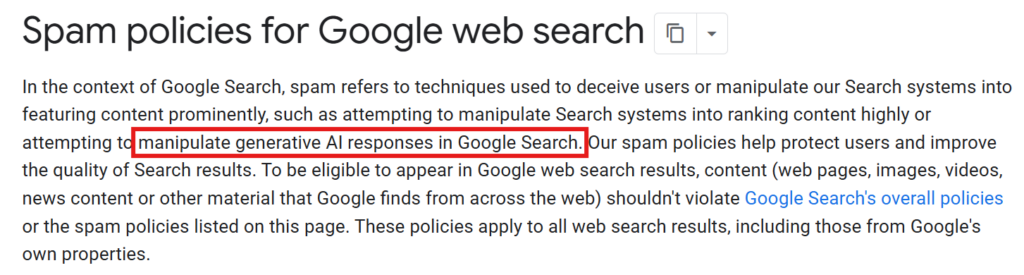
Google updated its Spam Policies for Google Web Search documentation on May 15, 2026, to clarify that all existing prohibitions and spam policies apply to AI-generated responses in Search.
Google did not introduce new spam categories. Instead, it clarified that long-standing policies governing traditional search apply to AI-generated search experiences.
This means practices already considered spam in traditional SEO, such as cloaking, doorway pages, link spam, scaled content abuse, now explicitly applies to AI Overviews, AI Mode, and any future AI-driven surface in Google Search.
📌 Google’s stated reason: “To make it clear that the spam policies apply to all of Google Search, including generative AI responses.”
This clarification arrived the same week Google published a comprehensive new guide on optimizing for generative AI features, a coordinated signal that the rules of AI search are now formalized.
The full list of prohibited practices now covering AI results
• Cloaking: Showing different content to Google than to users.
• Doorway pages: Pages designed to rank for queries, not to serve users.
• Scaled content abuse: High-volume, low-value content generated via automation, including AI.
• Site reputation abuse: Third-party content hosted to exploit a domain’s authority.
• Link spam: Manipulated link signals used to inflate perceived authority.
• Thin and affiliate content: Pages with no original value for the reader.
• Back button hijacking: Deceptive navigation practice added to Google’s policies in April 2026.
• Malicious practices: Malware, phishing, and deceptive redirects.
Google has also clarified that spam reports can now trigger manual enforcement actions across Search, including AI-generated experiences.
Does this affect how multi-location brands appear in AI Overviews?
Yes, directly. AI Overviews and AI Mode pull from web content using the same quality signals that govern traditional search. Content that violates spam policies becomes ineligible not just for ranked results, but for AI-generated summaries as well.
FAQ rich results were deprecated on May 7, 2026. AI Overviews are now the primary answer surface for question-based queries, and they carry the same content standards.
Multi-location brands face three specific patterns of elevated risk:
1. Scaled location pages with thin or duplicate copy
Pages auto-generated for each city or branch using templated, near-duplicate content are a textbook scaled content abuse case. Google has flagged this pattern in traditional search years ago, and the same concerns now extend into AI-generated search experiences.
2. Third-party content hosted on brand domains
Brands that embed third-party review aggregators, lead-gen content, or partner content on their own domains may face site reputation abuse exposure, regardless of whether the first-party team is actively involved. This is especially important for large enterprise domains with strong authority signals.
3. Content built for AI citation rather than genuine value
Brands that reverse-engineered AI citation patterns by generating content structured to match what AI systems favor are now subject to scaled content abuse enforcement.This can include large volumes of templated Q&A pages, repetitive “AI-friendly” articles, or AI-generated content with little original insight or editorial oversight.
What signals does Google’s AI actually reward?
Google’s new AI optimization guide makes the positive case explicit. Brands that consistently appear in AI-generated answers share these characteristics:
Original, location-specific content
AI search rewards content that offers a perspective, local context, or expertise that can’t be found everywhere else. For multi-location brands, this means creating content that reflects real location-level knowledge, customer concerns, and service experiences instead of templated pages reused across markets.
Authentic Voice of Customer signals
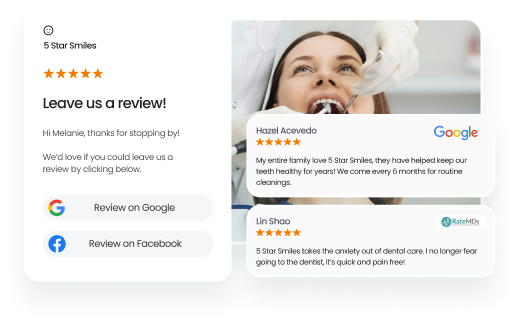
Reviews, ratings, and Sentiment Intelligence data are inputs to AI answer generation. Brands with strong review recency, consistent customer feedback, consistent review responses, and active reputation management across locations provide stronger trust signals for AI-generated search experiences.
Accurate, consistent location data
Google’s AI optimization guide specifically calls out local signals as a factor for appearance in generative AI results. Brands with inconsistent NAP (Name, Address, Phone) data across listings and websites create uncertainty for both users and AI systems.
Structured data, done right
FAQ schema was deprecated. Merchant listings, review markup, Organization schema, and breadcrumb structured data remain active signals for AI features and should be maintained across every location.
How Birdeye helps multi-location brands maintain AI search visibility
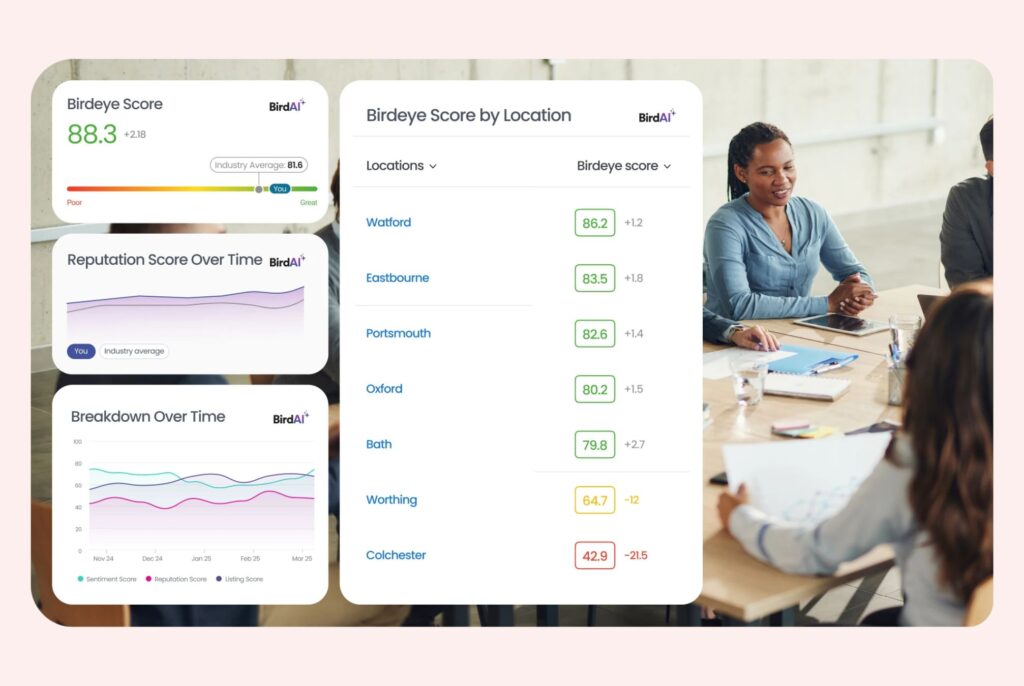
Birdeye’s Agentic Marketing Platform is built for multi-location complexity. Each capability maps directly to what Google’s AI rewards, and what its spam policies penalize.
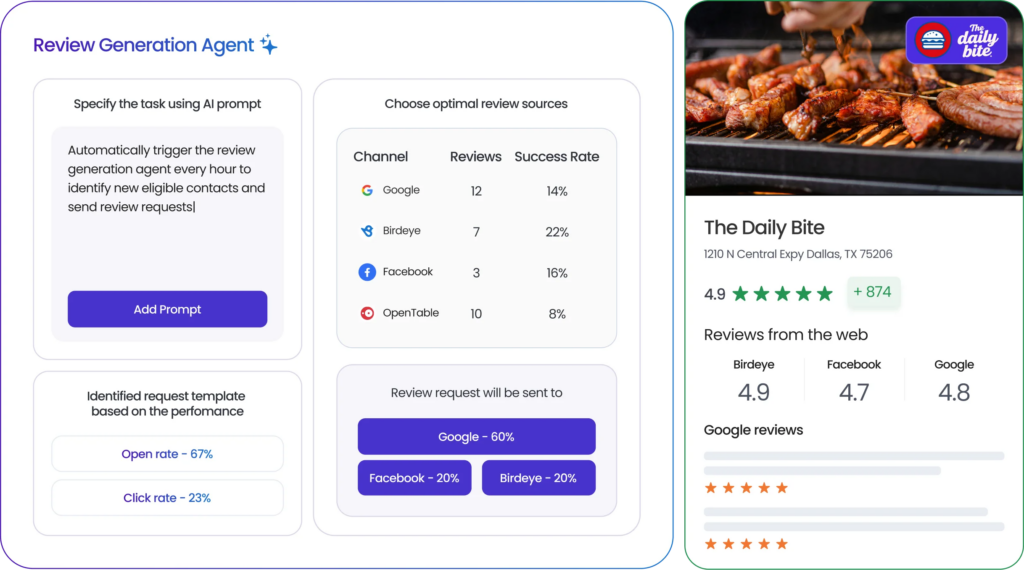
Birdeye Reviews + Review Generation Agent
Birdeye Reviews helps brands collect and manage authentic customer feedback across thousands of locations. AI agents draft review request messages while keeping human approval and oversight in place. This supports stronger reputation signals while maintaining brand and compliance standards.
Birdeye Listings + Listings Optimization Agent
Birdeye Listings AI helps brands maintain accurate, and consistent location data across 50+ directories. AI agents flag and correct inconsistencies, while centralized controls help enterprise teams maintain governance across hundreds or thousands of locations.This helps reduce NAP inconsistency and improves local trust signals across search ecosystems.
Birdeye Insights (Voice of Customer)
Birdeye Insights aggregates Sentiment Intelligence from reviews, surveys, and social into unified customer profiles. This helps enterprise teams identify sentiment trends, operational gaps, and emerging customer concerns at both the brand and location levels.
Birdeye Social AI + Publishing Agent
Birdeye Social AI helps produce original, location-specific content with brand guidelines and approval workflows built in. AI agents drafting workflows combined with approval controls help brands balance content scale with consistency, originality, and oversight.
Evaluating your content strategy against Google’s spam policies
As AI-generated search experiences continue evolving, multi-location brands should regularly audit their content, publishing workflows, and local SEO practices against Google’s spam policy guidance.
Before publishing new content, or auditing existing content assets, marketing teams should run through these checks:
1. Is this content near-identical across multiple location pages?
2. Was this content created with meaningful local expertise and relevance?
3. Does this content answer a real customer need or simply target rankings?
4. Is any third-party content on this domain adding value, or borrowing authority?
5. Are our reviews authentic, recent, and consistently managed across locations?
6. Does our structured data accurately reflect what’s on the page?
💡 Best for you if… Your brand manages 50+ locations and currently relies on templated or AI-generated content for local pages. Or your team is scaling content production without a clear human review and approval workflow. Birdeye’s Publishing Agent and Listings Optimization Agent bring both coverage and compliance, content at scale with brand-trained AI agents and human oversight at every step.
FAQs on Google spam policies and AI search
Yes. Google confirmed on May 15, 2026 that its spam policies apply to all of Google Search, including AI Overviews and AI Mode. Content violating spam policies is ineligible to appear in AI-generated summaries.
The same practices banned in traditional search now apply: cloaking, doorway pages, scaled content abuse, site reputation abuse, link spam, thin content, and malicious practices. For multi-location brands, the highest-risk pattern is scaled location page generation using thin or templated copy.
Brands should focus on three key areas: authentic reputation data (reviews and ratings across all locations). Accurate location listings with consistent NAP data, and original content that reflects real local expertise. Structured data, excluding the now-deprecated FAQ schema, remains valuable.
FAQ rich results were deprecated on May 7, 2026. AI Overviews are now the primary answer surface for question-based queries. Optimizing for AI Overviews requires meeting Google’s content quality standards and spam policies, not a specific schema type.
Yes. Google clarified in April 2026 that spam report submissions can be used to trigger manual actions against policy violations. This applies across all of Google Search, including AI-generated results.
See how Birdeye keeps multi-location brands visible in AI search
Birdeye’s agentic marketing platform gives marketing teams at multi-location brands the local intelligence, reputation management, and agentic workflows to stay compliant with Google’s quality standards, and visible in AI-generated results.
Trusted by the world’s largest enterprise brands, Birdeye helps organizations automate the marketing flywheel across awareness, conversion, and customer experience at scale.
Schedule a demo to see how Birdeye helps your locations stay visible, trusted, and discoverable across AI-powered search experiences.

About the Author

Ruchika Batra
Originally published