This blog compares the 14 best AI tools for SEO in 2026 and explains how each platform supports rankings, visibility, and scalable organic growth.
Summary
AI SEO tools give multi-location enterprises the ability to manage visibility across Google and AI assistants with accurate data, optimized local content, and automated review and listing workflows. As AI Overviews reshape search, brands with verified data and strong social proof gain an advantage. Birdeye stands out as the best AI SEO tool for multi-location brands because it brings together listings management, reviews, structured data, social content, and AI-powered optimization on a single enterprise platform. This unified approach helps large multi-location organizations maintain accuracy, automate workflows, and strengthen visibility across every location.
Table of contents
- How AI is rewriting the SEO playbook
- 14 Best AI tools for SEO in 2026
- Challenges for multi-location SEO in 2026
- How AI SEO tools help businesses improve workflows & visibility at scale
- How AI SEO and CX work together
- How to choose and roll out AI SEO tools that actually work
- Future outlook: AI will automate more SEO decisions
- FAQ: Quick answers for AI SEO tools for enterprise brands
- Bringing it all together
How AI is rewriting the SEO playbook
Over the last few years, AI has shifted SEO from page-level optimization to an always-on system that evaluates brands across profiles, reviews, structured data, and customer signals. For multi-location enterprises looking for the best AI tools for SEO, visibility now depends on how well AI systems can read and trust this data across every location.
Search results now blend AI Overviews, map packs, and conversational answers that assemble information from structured data, services, attributes, and sentiment in real time. Any inconsistency, outdated services, weak reviews, or missing attributes reduces eligibility for both organic rankings and AI-generated answers.
Success metrics have evolved as well. Ranking still matters, but enterprises now track AI citations, how accurately their brand is described, and which locations earn impressions for “near me” and category searches. Metrics like GBP completeness, review velocity, and sentiment have become leading indicators of visibility across AI-powered search. This shift is also changing how teams define the work itself. The difference between AEO vs SEO is becoming more important as brands move from optimizing pages for rankings to structuring information for AI-generated answers.
These are the new indicators of performance for organizations exploring modern AI tools for SEO optimization.
Market reality signals
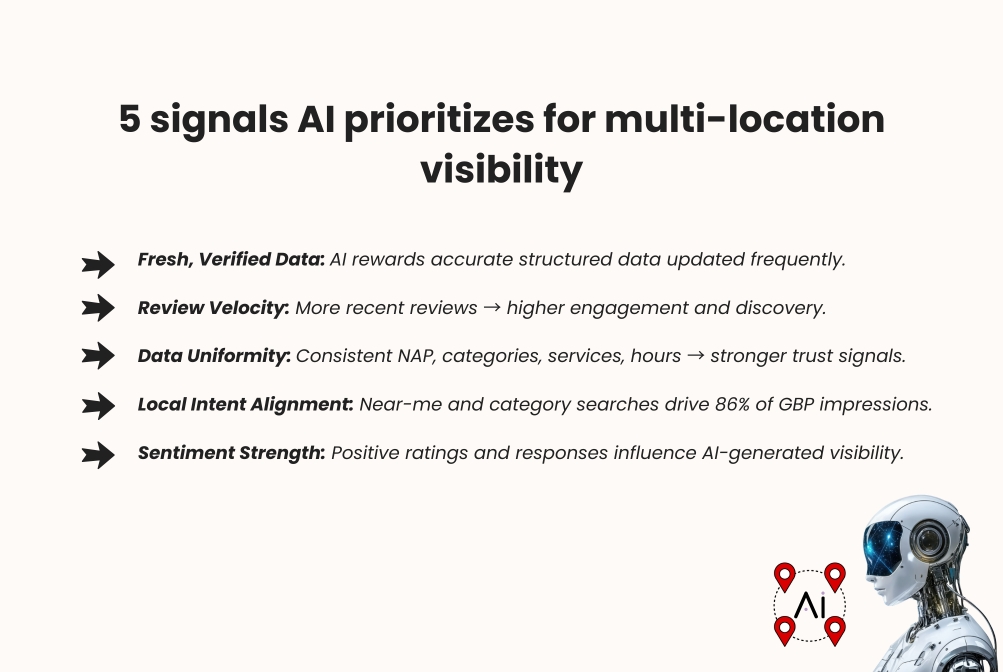
AI-driven search increasingly rewards brands that maintain accurate structured data, strong reputation signals, and consistent local presence across every location. Across multi-location enterprises, several patterns are clear:
- Google’s AI-generated experiences reward fresh, verified data. Brands with accurate, frequently updated structured data appear more often in AI Overviews and local results.
- Review velocity is now a direct visibility driver. According to the Birdeye State of Online Reviews, each new review correlates with roughly 80 website visits, 63 direction requests, and 16 calls.
- Uniformity builds trust, and trust influences ranking. Consistent NAP data, categories, services, and hours help AI systems interpret and reuse business information confidently.
- Local intent dominates discovery. Category-based and ‘near me’ searches (e.g., ‘urgent care near me,’ ‘best dentist in [city]’) account for approximately 86% of Global Business Profile impressions.
- AI elevates the clearest, strongest signal available. Businesses with reliable data, fresh engagement, and strong sentiment are surfaced more frequently across AI answers, maps, and search experiences.
Together, these patterns point to a single reality: AI search surfaces amplify operational accuracy across every location.
14 Best AI tools for SEO in 2026
With dozens of AI SEO tools available today, choosing the right one depends on what part of SEO you’re trying to improve: content optimization, technical performance, local visibility, or outreach. Some tools focus on a single function, while others support SEO across multiple channels and locations.
1) Birdeye
Best for: Multi-location and enterprise brands that need a unified platform to manage listings, reviews, reputation, and AI search visibility at scale.
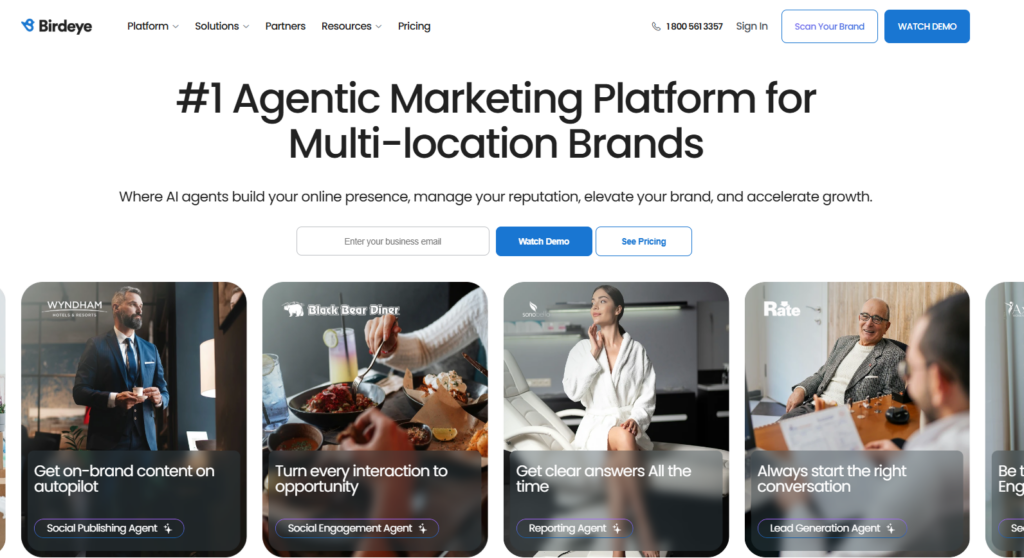
As enterprises evaluate the best AI tools for SEO, one reality becomes clear: AI-powered search rewards brands with accurate, consistent, and trusted business signals across every location. In multi-location SEO, operational accuracy is the eligibility layer for AI-driven discovery.
Birdeye provides the operational foundation that enables this. Centralizing listings management, review generation, structured data accuracy, and AI visibility tracking, it helps enterprises maintain trust signals that influence both traditional rankings and AI-generated answers.
AI capabilities that enhance search visibility and AEO
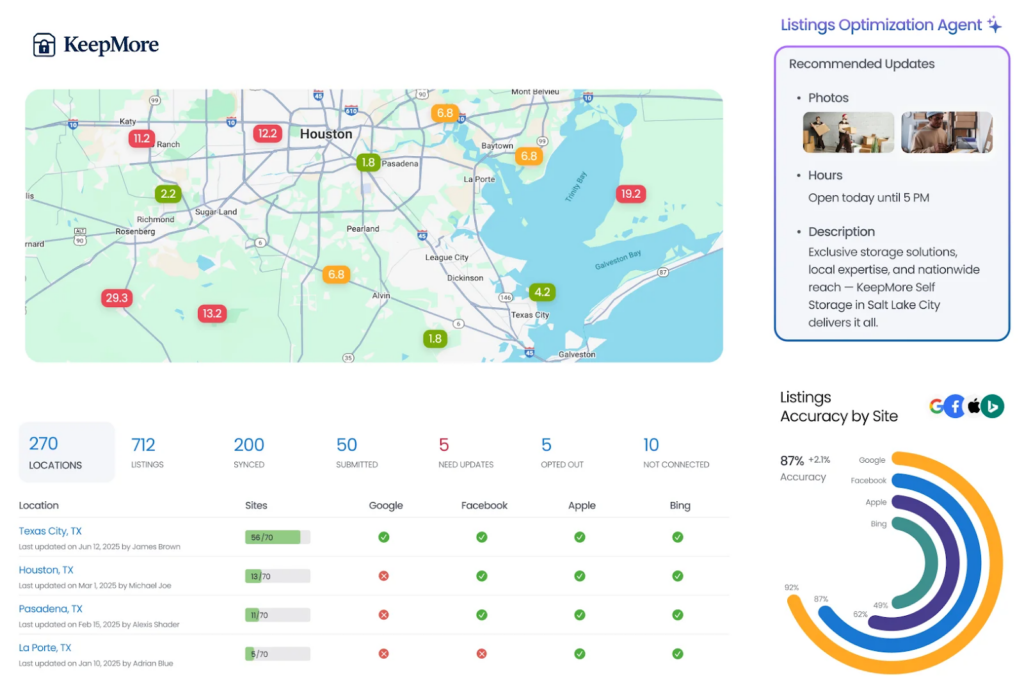
- Listings AI Agents: Identifies inaccurate or duplicate listings, manages unverified or suspended profiles through guided workflows, and pushes accurate updates in bulk so every location’s data stays in sync across directories.
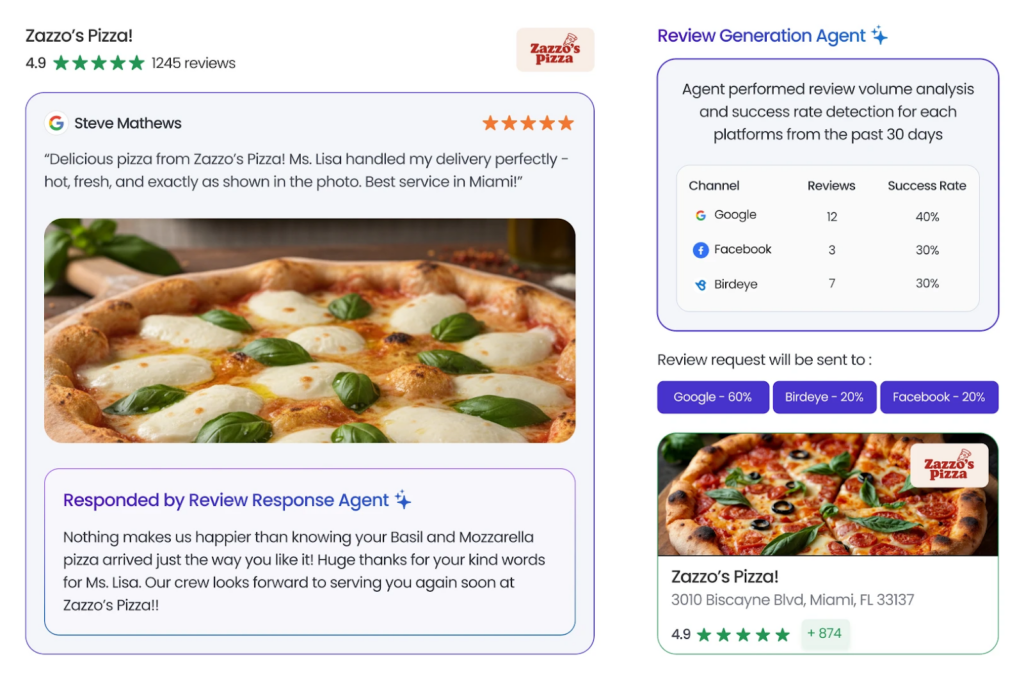
- Reviews AI Agents: Increases review volume with automated campaigns and speeds up responses using AI drafting and suggestions, all within brand and compliance guardrails.
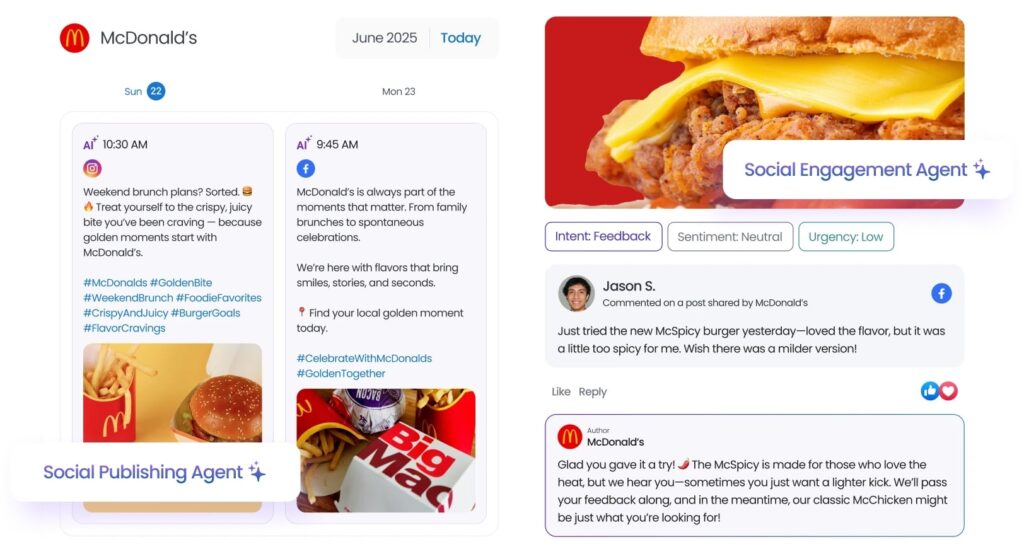
Social AI: Creates, schedules, and monitors localized, brand-aligned social content across locations, strengthening engagement signals that support local visibility and reputation.
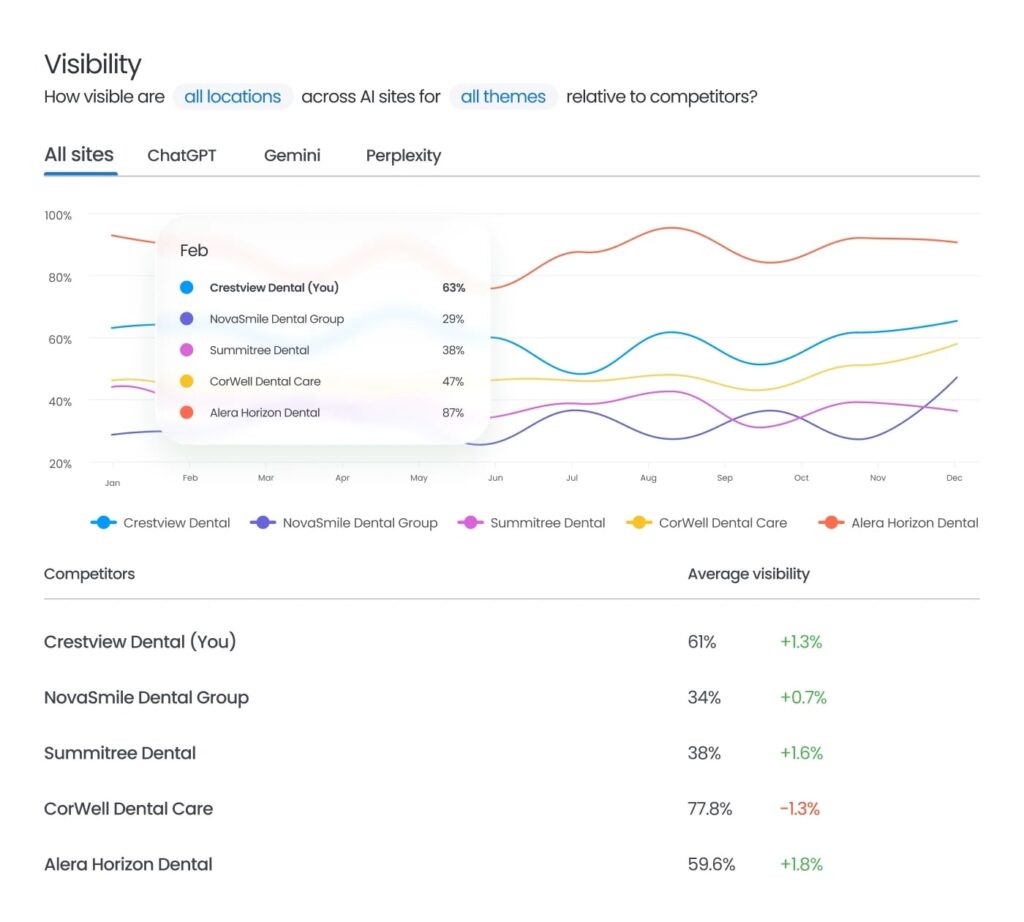
Search AI: Helps brands be the answer in AI search, ChatGPT Gemini, and Perplexity by tracking inclusion and accuracy across AI results and surfacing where locations are under-represented or held back by data gaps.
- Enterprise governance and roles: Multi-location hierarchies, role-based permissions, and multi-step approval workflows for content and social posts help large brands maintain accuracy and on-brand messaging while still empowering local teams.
These capabilities support modern SEO and AEO strategies, helping enterprises improve visibility in both organic search and AI-driven experiences.
Pros
- Unifies listings, reviews, social engagement, and AI visibility tracking into a single platform
- Strengthens local ranking signals by automating review generation and response management at scale
- Maintains structured data accuracy and NAP consistency across hundreds or thousands of locations
- Supports answer engine optimization by monitoring brand inclusion in AI-driven search environments
Cons
- Best suited for multi-location and enterprise organizations rather than single-location businesses
- May provide more functionality than teams seeking only content optimization tools require
- Requires structured onboarding to fully leverage enterprise workflows and governance features
Case study: How a multi-location healthcare brand improved local search visibility with AI SEO
The challenge
Complete Care needed to increase review volume and maintain accurate business information across multiple urgent care locations. Manual review requests and disconnected workflows resulted in low engagement, inconsistent listings, and weak local search visibility.
How Birdeye’s AI SEO workflows helped
- Automated review requests across every location
- Accurate, centralized listings (NAP, hours, services)
- Real-time feedback alerts and faster responses
- A unified workflow that reduced administrative workload for clinical staff
The results
After adopting Birdeye’s automated review workflows and centralized listings management, Complete Care saw immediate impact:
- 3,653% increase in total reviews across locations.
- Grew from fewer than approx 30 reviews per location to 29,650+ total reviews, with an average 4.8 star rating.
- 50% open rate on automated review requests
- Locations began appearing on page one for urgent-care searches across markets
- Lower cost-per-lead as organic visibility replaced paid reliance
We tried a lot of avenues before we signed up with Birdeye. We had signs in our patients’ rooms with a QR code to make it easy. Our nurses and physicians would ask at discharge for a review, and we’d follow-up for a review on the follow-up calls. We were making no headway in over 2 years of trying. With Birdeye, the review process is automated, has generated over 29,000 reviews, alerts us in real time, and only takes a total of 15 minutes daily to respond, saving us a ton of time so we can focus on the patients.
Kelly Palms, Director Of Business Development at Complete Emergency Care
2) Surfer SEO
Best for: Content teams that want data-driven on-page optimization and real-time SERP-based content scoring.
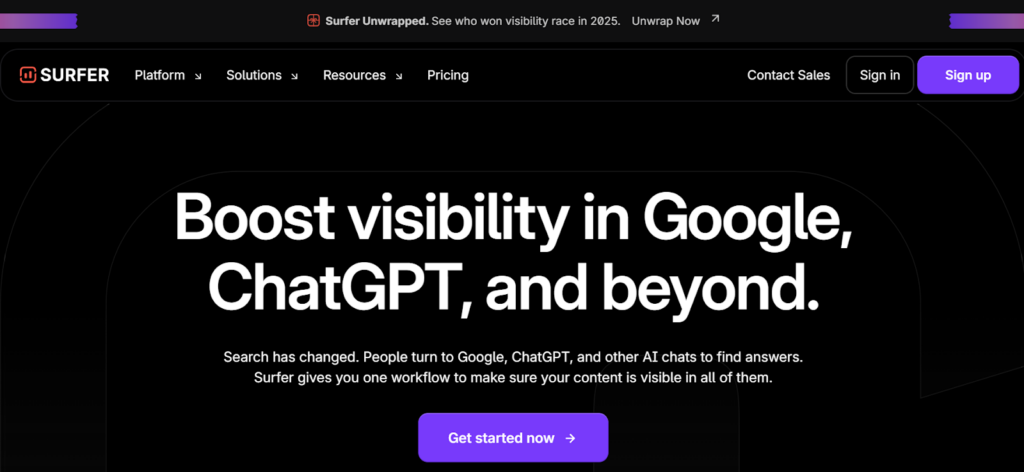
Surfer SEO is an AI-enhanced content optimization platform that helps SEO teams and writers improve the relevance, structure, and performance of pages by analyzing top-ranking results and offering real-time recommendations for keyword usage, content depth, and page structure to align with search intent.
Pros
- Uses SERP-based analysis to provide data-driven content recommendations that improve relevance and rankings
- Offers real-time content scoring and optimization guidance to help writers match top-ranking pages
- Includes keyword and topic suggestions based on competitive search results and NLP analysis
- Integrates with popular writing workflows like Google Docs and CMS exports for smoother content creation
Cons
- Focused primarily on content optimization rather than comprehensive SEO or visibility tracking
- Does not include local SEO management or listings/reputation features needed for multi-location brands
- Limited technical SEO or site health auditing functions
- AI recommendations still require editorial oversight to ensure accuracy and brand voice
3) Atomic AGI
Best for: SEO and content teams that want unified tracking of both traditional search and real-time AI-generated search visibility in a single platform.
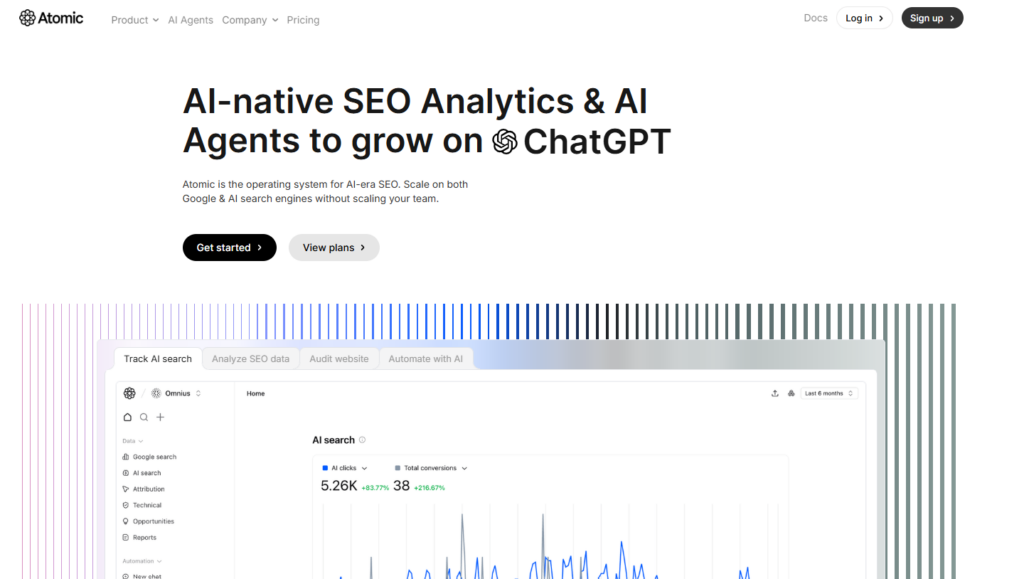
Atomic AGI is an AI-native SEO analytics and automation platform by Omnius, built with a strong focus on real-world search visibility and practical optimization workflows. It enables SEO teams to monitor, analyze, and optimize brand presence across Google and AI search engines by tracking real-time citations in ChatGPT, Gemini, Perplexity, and Claude, while unifying traditional SEO analytics, technical audits, and AI workflow automation into a single system for the AI search era.
Pros
- Tracks actual AI citations and brand mentions across ChatGPT, Gemini, Perplexity, and Claude with prompt-level data and sentiment scoring
- Unifies Google Search Console and GA4 with keyword rankings, landing page performance, and attribution in one dashboard
- Includes LLM auditing and indexation acceleration to help content appear faster in traditional and AI-generated results
- Offers AI agents and custom workflow automation trained on organizational data to scale SEO operations without increasing headcount
Cons
- AI agent features are newer and less mature compared to dedicated agent platforms
- Smaller integration ecosystem relative to legacy SEO suites like Semrush
4) Profound
Best for: Enterprises prioritizing answer engine optimization and measuring brand inclusion in AI-driven search results.
Profound is an AI-driven answer engine optimization and search visibility platform that helps brands measure, understand, and improve how their content appears in AI-generated responses. It tracks where a domain’s content is cited by large language models and generative search systems, providing insights and recommendations to help teams boost visibility in AI-centric search environments.
Pros
- Tracks AI-generated answer citations to show where a brand’s content is referenced in generative search
- Provides insights into content gaps and where improvements can increase AI visibility
- Helps teams understand the relationship between content and AI answer prominence
- Offers an interface focused on visibility analytics to support strategic optimization decisions
Cons
- Focused on AI answer tracking, not traditional SEO functions like site audits or rank tracking
- Does not include local SEO features like multi-location listings or review management
- Reporting and workflow automation are narrower than comprehensive SEO suites
- An emerging category, so feature depth and maturity may vary compared to long-established platforms
5) AthenaHQ
Best for: Organizations seeking deeper insights into how AI engines interpret and surface their brand content.
AthenaHQ is an AI-driven search visibility and answer tracking platform that helps SEO teams understand, measure, and improve how their brand and content appear in AI-generated search results. It provides insights into where content is included in AI answers, flags gaps in visibility, and helps teams optimize for AI and generative search environments.
Pros
- Tracks the inclusion of brand content in AI-generated search results to improve visibility
- Provides insights into how your brand, services, and locations are represented in AI-generated answers
- Helps identify content gaps where AI engines are not citing brand material
- Provides a user-friendly interface with dashboards for monitoring AI visibility trends
Cons
- Focused on AI answer visibility rather than traditional SEO tasks like technical audits or rank tracking
- Lacks multi-location SEO features such as listings, reviews, and structured business data management
- Reporting and workflow automation capabilities are narrower than full SEO suites
- Emerging category with features that may still be maturing relative to established tools
6) OtterlyAI
Best for: SEO teams tracking AI answer inclusion and content citation trends across conversational search platforms.
OtterlyAI is an AI-powered visibility and answer tracking tool that helps SEO teams understand how their brand and content appear in AI-generated search results. It monitors AI-generated responses, identifies where brand content is referenced, and surfaces opportunities to improve visibility in generative search environments.
Pros
- Tracks AI and LLM-generated answer visibility so teams can see how content is referenced in generative search
- Provides insights into keywords within AI responses to improve relevance
- Helps identify content gaps where AI engines are not citing brand material
- Useful dashboard and simple interface for monitoring AI visibility trends over time
Cons
- Focused on AI answer tracking rather than a full SEO marketing suite
- Does not include traditional SEO workflows, such as technical site audits or rank tracking
- Limited multi-location SEO features, such as listings and review management
- Reporting capabilities are narrower than those of larger SEO platforms
7) Scrunch
Best for: Teams that want to monitor how their brand and content appear in generative AI search platforms.
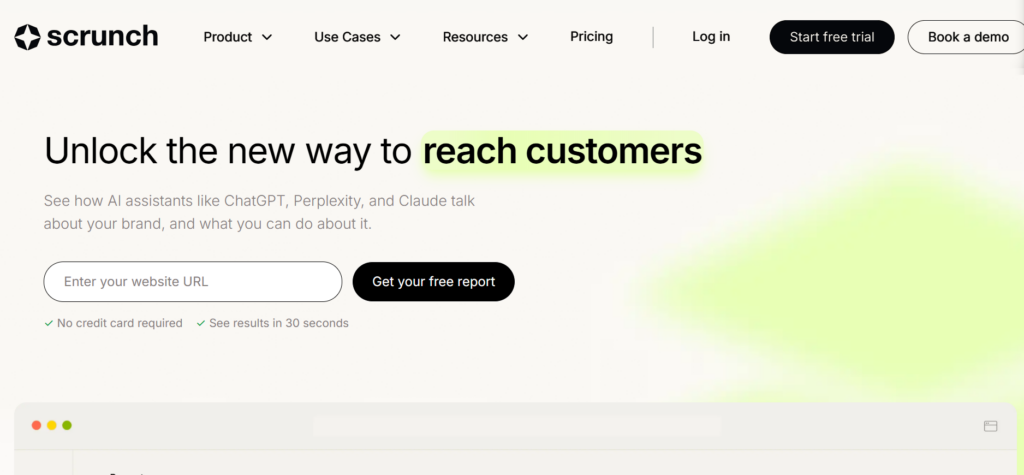
Scrunch is an AI-powered analytics and visibility platform that helps SEO and content teams track where their brand and content are referenced in AI-generated search answers, monitor keyword and entity presence, and uncover content opportunities based on AI responses. It’s designed to help teams understand how generative and conversational search engines use their data in real time.
Pros
- Tracks AI-generated search visibility and shows where a brand’s content is cited
- Helps identify gaps in content coverage based on AI result patterns and trends
- Provides insights into keyword and entity presence across AI and search engine outputs
- Offers a relatively intuitive interface with visual reporting to monitor visibility shifts
Cons
- Focused on AI search visibility, not traditional SEO functions like technical SEO or rank tracking
- Lacks built-in local SEO workflows for multi-location listings and review management
- Reporting and insights are narrower in scope than full suite SEO platforms
- An emerging category with evolving feature depth relative to established tools
8) PeecAI
Best for: Brands focused specifically on improving visibility in AI-generated search answers and citation tracking.
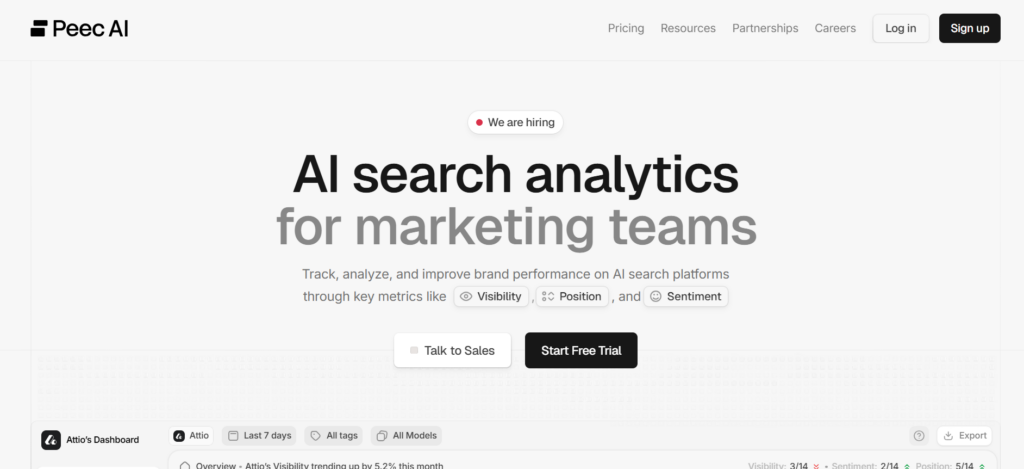
PeecAI is an AI-powered AEO platform that helps brands measure, track, and improve their visibility in AI-driven search results. It identifies where a brand’s content appears in AI summaries and provides insights to improve inclusion in AI responses, helping SEO teams increase visibility in conversational and generative search environments.
Pros
- Tracks how and where a brand’s content appears in AI-generated search answers, which is important for modern SEO
- Provides AI-driven insights into search result citations at both topic and URL levels
- Helps teams understand content gaps or missed citation opportunities in generative search
- Offers actionable recommendations to improve inclusion in AI-centric search environments
Cons
- Primarily focused on AI answer visibility, not traditional SEO functions like rank tracking or site auditing
- Limited reporting and workflow automation compared with full SEO suites
- Not designed to manage multi-location listings, reviews, or structured business data
- An emerging category with evolving features, so breadth and depth may lag established tools
9) SE Ranking
Best for: Small to mid-sized teams looking for an affordable, all-in-one SEO tracking and auditing platform.
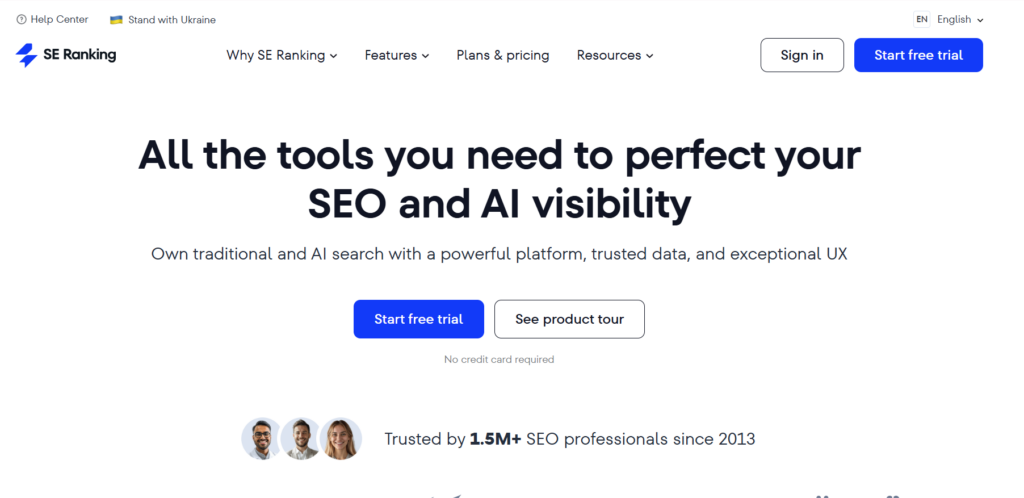
SE Ranking is a cloud-based SEO and digital marketing platform that provides tools for keyword tracking, website audits, competitive analysis, and SEO reporting. It supports businesses in tracking search performance, identifying optimization opportunities, and managing campaigns across markets.
Pros
- Offers accurate keyword rank tracking across locations and search engines
- Provides comprehensive site audits that highlight technical issues and improvement opportunities
- Includes competitor analysis for organic rankings, backlinks, and keyword gaps
- Delivers customizable reports and dashboards that help teams monitor SEO performance
Cons
- Not as advanced in AI-driven content optimization or AI visibility tracking compared with other tools
- The user interface can feel dated or less intuitive than more modern platforms
- Local SEO-specific features and multi-location workflows are limited relative to dedicated local platforms
- Review and reputation management capabilities are not native to the platform
10) Clearscope
Best for: Editorial and SEO teams focused on improving topical depth and content quality for competitive organic keywords.
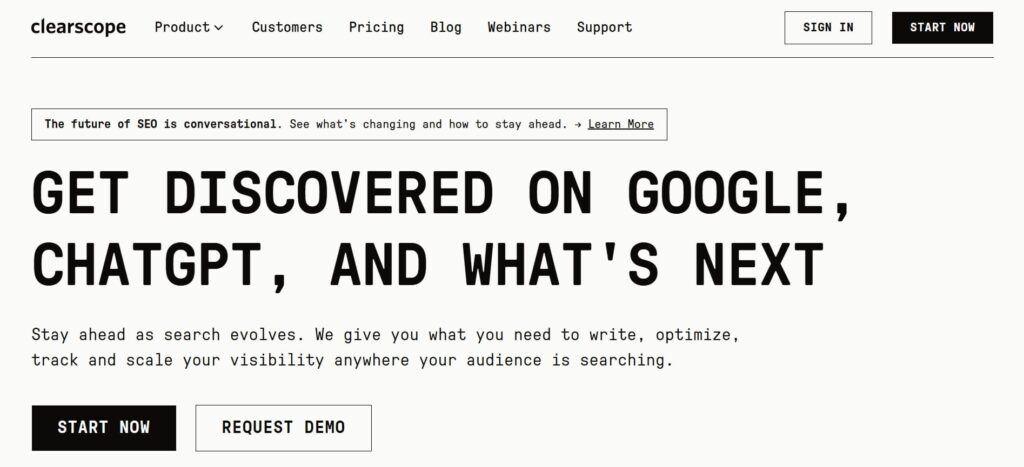
Clearscope is an AI-powered content optimization tool that helps SEO and content teams improve the relevance and quality of content by providing keyword insights, topic recommendations, and content grading based on top-ranking search results.
Pros
- Provides data-driven keyword and semantic topic recommendations to improve content relevance
- Offers a clear content score and grading system to guide optimization
- Integrates with writing workflows such as Google Docs and CMS systems
- Helps teams produce well-structured content aligned with search intent
Cons
- Primarily focused on content optimization, not local SEO or technical SEO
- Can be pricey for smaller teams or individual users
- Does not offer rank tracking or competitive SEO reporting
- No direct management of business listings, structured data, or review signals for multi-location brands
11) Frase
Best for: Teams that need fast content briefs and AI-assisted drafting aligned with search intent.
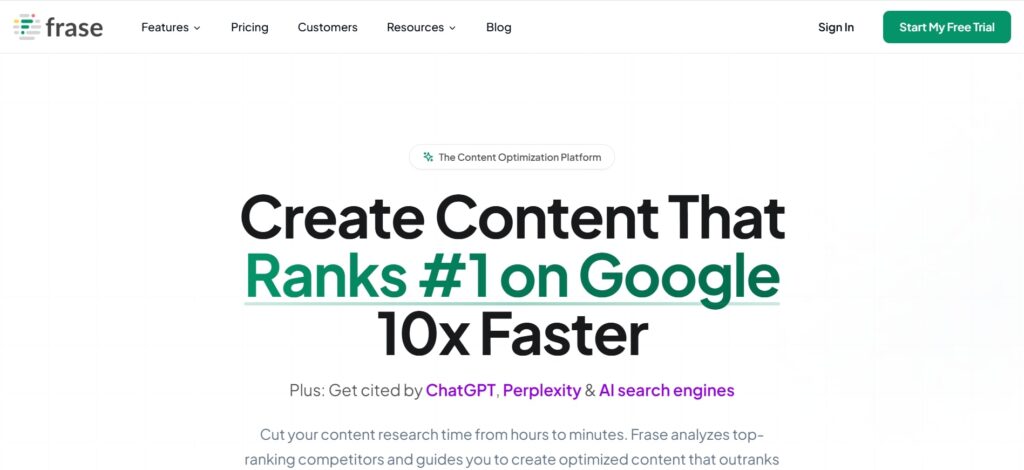
Frase is an AI-powered content research and optimization tool that helps SEO and content teams quickly create search-aligned briefs, discover key topics and questions from top SERP results, and generate or optimize content with AI assistance. It focuses on helping users improve relevance to search intent and streamline the content creation process.
Pros
- Analyzes top-ranking pages to generate structured, search-focused content briefs
- Offers AI-assisted drafting and rewriting to speed up content production
- Surfaces relevant questions and semantic topics to improve content depth
- Easy-to-use interface that supports efficient content workflows
Cons
- Focused on content optimization, not technical or local SEO management
- AI-generated content requires human editing for accuracy and tone
- Limited rank tracking and reporting compared to full SEO suites
- Does not manage listings, reviews, or structured data for multi-location brands
12) MarketMuse
Best for: Enterprise content strategists building long-term topical authority and large-scale content roadmaps.
MarketMuse is an AI-driven content intelligence and optimization platform that helps teams analyze existing content, uncover topic gaps, recommend strategic content plans, and improve relevance and authority across search engines. It uses machine learning to assess topical depth, suggest related concepts, and generate data-informed content briefs to support better organic performance.
Pros
- Analyzes existing content to identify gaps, weaknesses, and opportunities for improved topical coverage
- Uses machine learning to surface topic clusters and related concepts needed to build authority
- Generates data-driven content briefs with recommended topics, terms, and structure
- Helps prioritize content updates and new pages based on difficulty and potential SEO impact
Cons
- Does not handle listings, reviews, or structured data that directly affect multi-location visibility
- Primarily focused on content strategy and optimization, not a full local SEO or technical SEO solution
- Can be expensive for smaller teams or individual users compared to lightweight content tools
- Learning curve for interpreting scoring and topic models effectively
13) Semrush
Best for: Marketing teams that need an all-in-one SEO suite for keyword research, competitive analysis, and technical auditing.
Semrush is a comprehensive all-in-one SEO and digital marketing platform used by SEO professionals, agencies, and enterprise teams to research keywords, analyze competitors, audit website health, optimize content, monitor performance, and grow online visibility. It combines traditional SEO tools with AI-powered insights, local SEO functions, and advanced reporting dashboards, all from a single platform.
Pros
- Combines keyword research, backlink analysis, rank tracking, and site audits in one platform
- Offers large keyword and competitor databases for data-driven decisions
- Automated site audits with prioritized technical SEO recommendations
- AI-assisted content optimization and writing tools within the content workflow
Cons
- Can be expensive, especially for advanced features or multiple users
- Has a learning curve due to its breadth of tools
- The interface may feel overwhelming for beginners
14) Nightwatch
Best for: Teams that require precise local and device-level rank tracking across multiple markets.
Nightwatch is an SEO performance and rank-tracking platform that helps teams monitor keyword positions across multiple search engines, devices, and geographies with granular local precision. It also offers reporting, site audits, and visibility tracking for emerging AI/LLM to understand how brands appear in both traditional SERPs and AI-driven search results.
Pros
- Delivers highly accurate local and device-level rank tracking across multiple markets
- Supports tracking by specific geographic locations, which is valuable for multi-location brands
- Offers clean, customizable dashboards and automated reports for location-level visibility monitoring
- Includes emerging LLM/AI visibility tracking capabilities to monitor presence in AI-driven search environments
Cons
- Best used alongside a foundational local SEO system rather than as a standalone solution
- Focused mainly on rank tracking rather than full SEO execution or automation
- Does not manage listings, reviews, or structured data across locations
- Limited content optimization or technical SEO auditing compared to broader platforms
Most businesses don’t rely on a single AI SEO tool. Foundational platforms like Birdeye handle listings accuracy, reviews, and local visibility at scale, while specialized tools support specific functions such as content optimization, technical audits, or outreach. The right SEO stack depends on whether you need a system of record for multi-location visibility or targeted tools for individual SEO tasks.
Challenges for multi-location SEO in 2026
Managing SEO across multiple locations has become significantly more complex as AI-driven search relies on real-time data, consistency, and engagement signals. As a result, manual workflows can no longer keep pace with the scale and speed required to stay visible.
The most common challenges include:
- Inconsistent business data across locations: Even small discrepancies in names, hours, categories, or services reduce how confidently search engines and AI systems surface each location.
- Keeping local content up to date: Photos, descriptions, and services must be refreshed frequently, which is difficult to manage across hundreds or thousands of pages.
- Scaling reviews and response management: High review volume without standardized workflows leads to delayed responses and weaker trust signals.
- Limited real-time visibility into performance: Fragmented tools make it hard to detect ranking drops, outdated listings, or emerging issues quickly.
- Maintaining brand governance at scale: Distributed teams increase the risk of off-brand content, outdated information, and compliance issues.
- Coordinating SEO across teams: SEO now touches marketing, CX, operations, and local staff, requiring centralized ownership and clear workflows.
Key takeaway: In 2026, SEO success depends less on isolated optimizations and more on operational consistency across every location and channel.
How AI SEO tools help businesses improve workflows & visibility at scale
AI SEO tools help businesses move from reactive optimization to continuous visibility management. Instead of relying on periodic audits and manual updates, AI monitors performance, identifies issues early, and applies improvements consistently across every location and page.
At scale, AI enables teams to:
- Keep content aligned with search intent: Automatically surface gaps in location pages, service descriptions, and on-page content based on how customers actually search.
- Understand demand at the local level: Identify which services, keywords, or categories are gaining or losing interest in specific markets.
- Monitor technical health continuously: Detect crawl, indexing, and template-level issues before they affect rankings or user experience.
- Enforce centralized brand governance: Maintain accuracy, compliance, and consistent messaging while still allowing local teams to contribute updates.
- Strengthen reputation and trust signals: Track review volume, sentiment, and response performance to improve visibility and conversion.
- Scale structured data and accuracy checks: Ensure business information, attributes, and metadata stay consistent across search engines and AI-driven results.
Together, these capabilities allow SEO teams to focus less on manual upkeep and more on strategic growth opportunities.
For a deeper look at how this indexing actually works for AI engines, see AI search indexing.
How AI SEO and CX work together
In AI-driven search, customer experience signals are no longer separate from SEO performance. Reviews, responses, business accuracy, and engagement directly influence how often and where a brand appears in search results.
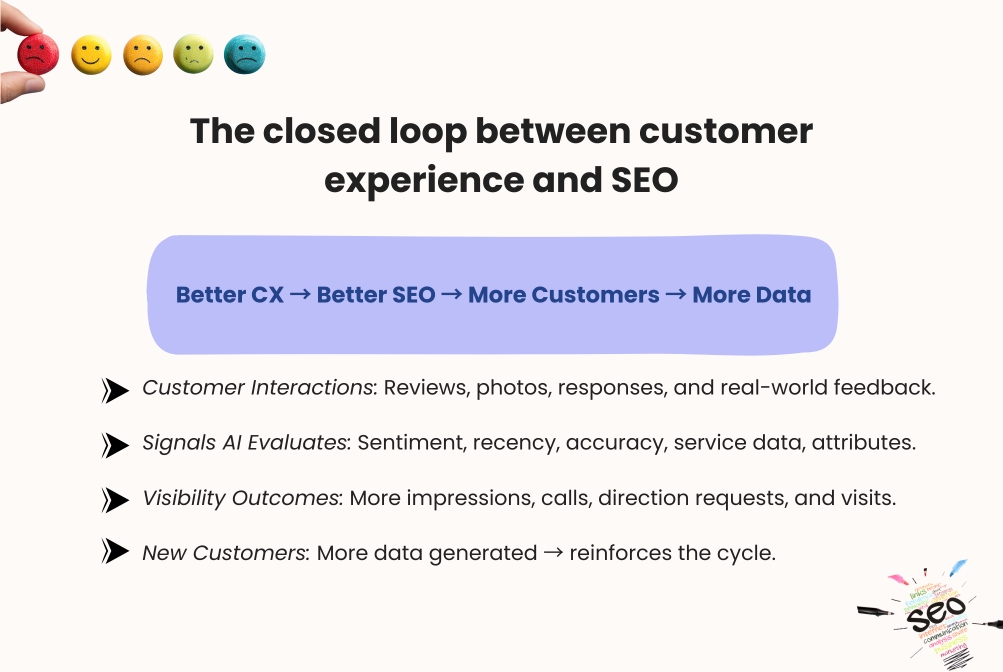
AI connects SEO and CX by enabling teams to:
- Turn customer feedback into visibility signals: Review volume, sentiment, and response quality directly impact impressions, calls, and visits.
- Detect and resolve issues faster: AI flags negative feedback, outdated information, or declining engagement before they affect rankings.
- Standardize execution across locations: Templates and workflows ensure consistent responses, listings, and content quality at scale.
Why this matters for enterprise performance
When customer experience data and SEO signals stay accurate and up to date across every location, businesses see stronger rankings, higher-intent actions (calls, visits, bookings), and lower acquisition costs, reducing dependence on paid media.
How to choose and roll out AI SEO tools that actually work
Choosing the right AI SEO tools is less about feature volume and more about solving the operational problems that limit visibility at scale. The most successful teams focus on fixing data gaps, improving execution speed, and maintaining governance across locations.
1. Identify your biggest SEO bottlenecks
Firstly, start by pinpointing where performance breaks down today:
- For example, inconsistent or outdated business listings
- Slow or manual review and response workflows
- Underperforming local or service pages
- Limited visibility into location-level performance
- Finally, technical issues buried in templates or CMS structures
2. Evaluate tools on three critical criteria
Rather than comparing feature lists, assess platforms based on:
- Data quality and local depth: Location-level insights, structured data support, review sentiment, and demand signals.
- Governance and compliance: Role-based access, approval workflows, audit logs, and clear AI usage controls.
- Integration and interoperability: Seamless connections with CMS, analytics, CRM, and CX systems to avoid siloed workflows.
3. Tie AI SEO tools to measurable KPIs
Define success using a focused set of metrics, such as:
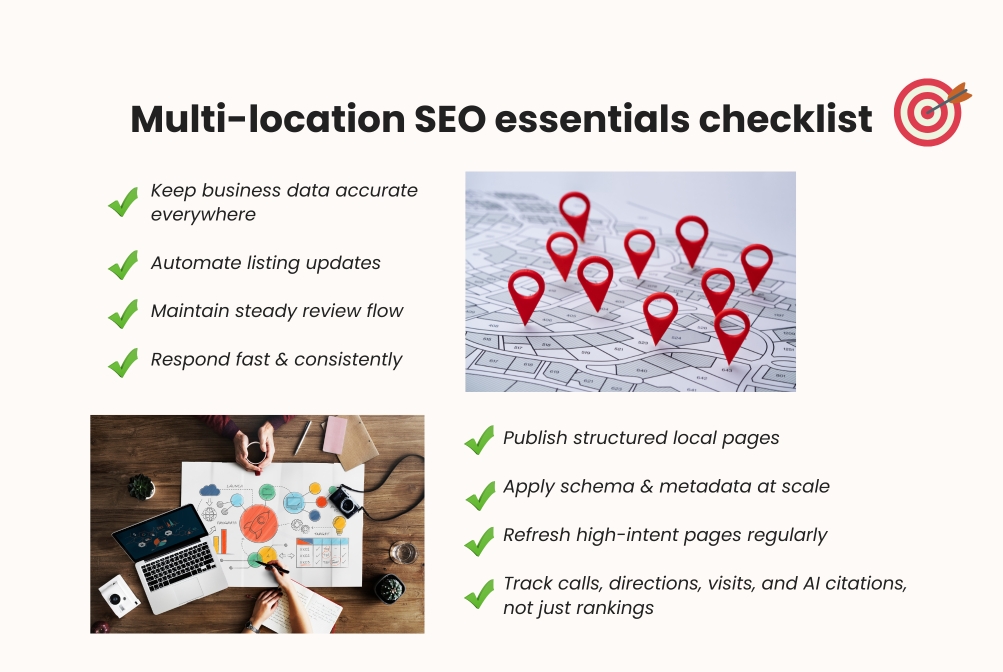
- Listings accuracy and GBP completeness
- Review volume, sentiment, and response time
- Equally important, visibility for priority “near me” and category searches
- At the location level, actions such as calls, visits, and bookings
- Impact on organic conversions and cost per lead
4. Roll out in phases to reduce risk
In order to reduce risk, start small by launching in one region or business line. From there, establish workflows and guardrails, then compare results against a control group. Only after you see consistent improvements in accuracy, engagement, and visibility should you expand more broadly.
Future outlook: AI will automate more SEO decisions
In the upcoming years, SEO will shift from manual optimization toward AI-driven execution and decision-making. At the same time, search experiences are becoming more conversational and multimodal, with AI systems assembling answers from structured data, engagement signals, and real-time brand information.
So, SEO teams need to keep these things in mind:
- Automation will replace manual upkeep: AI agents will increasingly handle monitoring, updates, and optimization across locations.
- Visibility will be answer-first: Success will depend on being accurately cited and represented in AI-generated results, rather than simply ranking blue links. That is why many enterprise teams are now evaluating AI search visibility tools that can track citations, monitor inclusion across AI engines, and identify where brand information is missing or misrepresented.
- Local accuracy will become non-negotiable: Consistent business data, services, hours, and reviews will directly influence how often brands appear in AI-driven discovery.
- AI + governance + agility will define long-term success: Teams that combine automation with clear controls and fast execution will outperform those relying on manual workflows.
FAQ: Quick answers for AI SEO tools for enterprise brands
AI website SEO tools automatically audit sites, identify content and technical issues, and recommend updates that improve rankings, user experience, and search visibility at scale.
AEO focuses on being accurately represented in AI-generated answers. AI tools support AEO by improving structured data, content clarity, and visibility tracking across AI-driven search experiences.
Key metrics include listings accuracy, review volume and sentiment, local search visibility, AI answer inclusion, and location-level actions such as calls, visits, and bookings.
Yes, when paired with proper governance. Enterprises should use role-based access, approval workflows, audit logs, and clear controls over AI-generated changes.
No. AI supports analysis, monitoring, and execution, but human teams remain essential for strategy, messaging, compliance, and oversight.
Begin with a pilot region or business unit, define workflows and guardrails, measure results against a control group, and scale once performance improvements are consistent.
Bringing it all together
AI has transformed SEO from a series of isolated tasks into an always-on operational system. As a result, in 2026, visibility depends on delivering accurate business data, strong reputation signals, and consistent local engagement at scale.
The best AI tools for SEO help teams automate manual work, identify issues early, and focus on the locations and services that drive real business impact, not just rankings.
For multi-location and enterprise brands, platforms that unify listings accuracy, reviews, and local visibility provide a stronger foundation than point solutions alone.
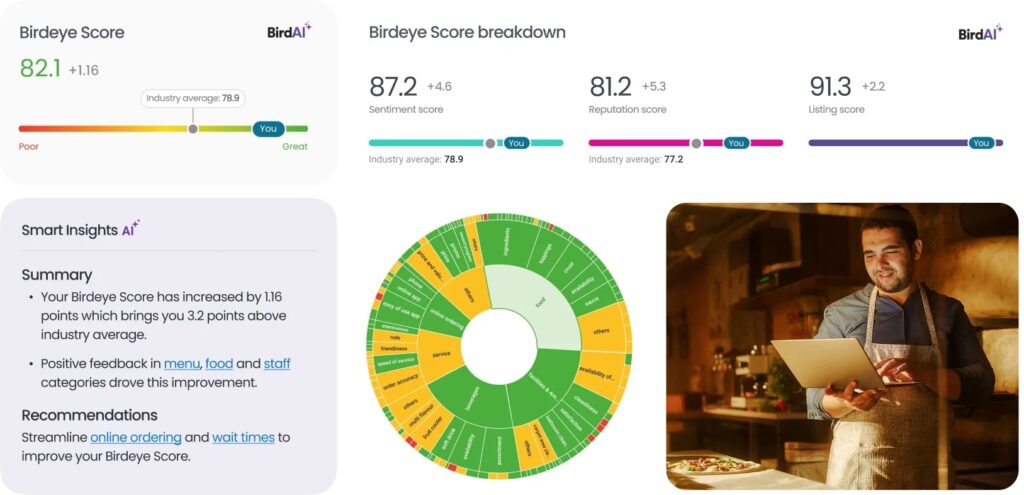
Birdeye helps businesses manage these critical SEO signals in one platform, enabling scalable visibility, better customer experiences, and measurable organic growth across every location.
Explore what AI SEO can look like for your brand. Watch a free demo with Birdeye.

About the Author

Shaifali Parihar
Originally published