LLM visibility tracking tools help enterprises understand, monitor, control, and improve how their brand appears in AI-generated answers across platforms such as ChatGPT, Gemini, Perplexity, and Google AI Overviews. These tools show whether AI models mention a brand, how they describe it, and which sources they trust when recommending businesses.
Summary
AI-generated answers are now a mainstream discovery channel. ChatGPT alone has more than 900 million weekly active users, making AI platforms a major place where customers ask questions, compare options, and form opinions about brands. That shift creates a new visibility problem. Most brands still do not know whether they are visible, invisible, accurately described, or being replaced by competitors in AI-generated answers. For multi-location enterprises, the risk is even higher because every location depends on accurate listings, strong reviews, trusted citations, clear local content, and consistent business information.
This review covers the 10 best LLM visibility tracking tools in 2026, with a focus on platform coverage, citation tracking, share of voice, sentiment, accuracy monitoring, enterprise governance, pricing, and automation.
Verdict: For multi-location and enterprise brands, Birdeye Search AI is the best pick. It is the only platform here that tracks AI visibility for every location and then fixes the cited source.
Table of contents
- Summary
- What are LLM visibility tracking tools?
- How we evaluated LLM visibility tracking tools
- Understanding how LLM visibility data is collected
- Quick comparison: 10 LLM visibility tracking tools at a glance
- 10 Best LLM visibility tracking tools in 2026
- Why basic LLM visibility tracking isn’t enough for multi-location enterprises
- Which AI engines and discovery surfaces enterprises must monitor
- LLM visibility tracking for enterprise teams
- How to choose the right LLM visibility tool
- FAQs about LLM visibility tracking tools
- Turning LLM visibility into an enterprise advantage with Birdeye
What are LLM visibility tracking tools?
LLM visibility tracking tools measure how a brand appears in AI-generated answers from large language models such as ChatGPT, Gemini, Perplexity, Claude, and Google AI Overviews. They help teams track brand mentions, citations, sentiment, accuracy, and competitor visibility across AI discovery platforms.
Unlike traditional SEO tools, which focus on keyword rankings, backlinks, and search traffic, LLM visibility tracking tools show how AI models interpret, describe, cite, and recommend a brand.
Key capabilities include:
- Brand monitoring: Tracks whether your brand appears in AI-generated answers for relevant prompts, questions, and buying journeys.
- Citation tracking: Shows which websites, directories, review platforms, local pages, and third-party sources AI models use when generating answers.
- Share of voice: Compares your brand’s visibility against competitors across prompts, platforms, markets, and topics.
- Sentiment analysis: Identifies whether AI-generated answers describe your brand positively, negatively, or neutrally.
- Accuracy checks: Flags incorrect, inconsistent, or outdated business information that may affect how AI models describe or recommend your brand.
- Competitor visibility: Shows which competing brands are being mentioned, cited, or recommended more often in AI-generated answers.
How we evaluated LLM visibility tracking tools
To compare the best LLM visibility tracking tools, we looked at how well each platform helps brands measure, understand, and improve their presence in AI-generated answers.
We evaluated each tool based on the following criteria:
1. LLM platform coverage
A strong LLM visibility tracking tool should monitor major AI answer platforms such as ChatGPT, Gemini, Perplexity, Claude, Google AI Overviews, Microsoft Copilot, and other emerging AI discovery surfaces. Broader coverage helps teams avoid blind spots and understand how brand visibility changes across different models.
2. Market and location reporting
For multi-location businesses, visibility differs by region. We evaluated whether tools support market-, location-, or DMA-level reporting instead of only providing brand-wide insights.
3. Data freshness
AI-generated answers can change as models update, sources refresh, and competitors improve their content. We looked for tools that refresh visibility data regularly and allow teams to track changes across prompts, markets, and platforms over time.
4. Citation tracking
Citation visibility is one of the most important parts of LLM tracking. The best tools show which websites, directories, review platforms, local pages, and third-party sources AI models rely on when generating answers about a brand or category.
5. Hallucination and accuracy detection
LLM visibility is not only about being mentioned. Brands also need to know whether AI models are describing them correctly. Strong tools help identify incorrect hours, outdated services, wrong location details, misleading summaries, or answers that mix information from multiple sources.
6. Enterprise governance
For larger organizations, visibility tracking needs structure and control. We looked for enterprise-ready capabilities such as role-based access, approval workflows, prompt governance, location-level reporting, audit trails, and support for multiple teams or markets.
7. Pricing transparency
Pricing matters when teams compare tools across use cases. We considered whether each platform publishes clear pricing, offers a free tier or trial, or uses custom pricing based on locations, prompt volume, users, or enterprise requirements.
8. Execution and automation
Monitoring alone does not improve LLM visibility. The strongest platforms help teams act on insights by recommending or automating improvements across listings, reviews, citations, website content, business information, and other signals AI models use to generate answers.
Understanding how LLM visibility data is collected
Comparing features is only part of the evaluation. Enterprise teams should also understand how each platform collects and reports LLM visibility data, since different approaches can produce different results.
API-based vs. UI-based tracking
Not all LLM visibility platforms measure AI answers the same way. Most use either API-based tracking, UI-based tracking, or a combination of both.
- API-based tracking uses model APIs to generate structured, repeatable responses at scale. It is well suited for dashboards, historical reporting, prompt libraries, and enterprise monitoring. However, API responses may not always match the answers users see in consumer AI interfaces.
- UI-based tracking captures responses directly from products such as ChatGPT, Perplexity, Gemini, or Google AI Overviews. This provides a closer representation of the real user experience but can be more difficult to scale consistently across large prompt sets, locations, and markets.
Birdeye Search AI measures the actual answers AI engines return to real users rather than relying solely on API sampling. That gives enterprise teams visibility into what prospective customers actually see when they search across AI platforms.
Questions to ask vendors
Before selecting a platform, ask vendors:
- How are AI answers collected through APIs, live interfaces, or both?
- Which AI engines and answer surfaces are supported?
- How frequently are prompts refreshed?
- Are geography and personalization controlled during testing?
- Does the platform retain historical AI responses and citation evidence for reporting and audits?
Understanding a vendor’s tracking methodology helps enterprise teams interpret visibility data more accurately and compare platforms on a like-for-like basis.
Quick comparison: 10 LLM visibility tracking tools at a glance
The right LLM visibility tracking tool depends on whether your team needs simple AI mention tracking, deeper citation analysis, enterprise governance, or the ability to act on visibility gaps across locations.
Here is a quick comparison of 10 LLM visibility-tracking tools for 2026.
| Tool | Best For | LLM Platform Coverage | Pricing | Free Tier |
| Birdeye Search AI | Enterprise and multi-location brands that need LLM visibility tracking, location-level accuracy, citation intelligence, sentiment insights, governance, and agent-led execution across 100 to 10,000+ locations | ChatGPT, Gemini, Google AI Overviews, Google AI Mode, Perplexity, Claude and Grok. | Custom pricing based on location count, selected products, contract structure, and activated agents | Free AI Visibility Checker available; Search AI pricing is custom |
| Scrunch | SEO, content, and growth teams that want to understand how LLMs interpret, cite, and surface their website content in AI-generated answers | Major AI engines | Mid-market pricing with custom plans available | 7-day free trial |
| Profound | Marketing and strategy teams that want analytical depth, competitive context, and insight into AI-driven demand | Major AI answer engines | Entry-level and custom plans | Not clearly listed |
| Nightwatch | SEO, marketing, and analytics teams seeking a single system for both classic and AI search | Traditional search results and AI-generated answers | Mid-market pricing with custom options | 14-day free trial |
| Meltwater | PR, communications, and brand teams that monitor public narrative, media coverage, and AI-driven brand perception | AI-generated summaries, news, and social channels | Custom pricing based on goals, selected modules, and contract terms | No public free tier listed |
| Rankscale | Marketing teams, agencies, and SMBs that want a simple way to track AI-answer visibility over time without complex setup or tooling | AI-generated answers | Entry-level to advanced plans | No clear public free tier found |
| Otterly AI | Small teams, agencies, or brands that want a simple way to check whether they appear in AI-generated answers | AI search engines | Entry-level and mid-market plans | No free tier listed; paid plans available |
| Peec AI | Teams that want to explore how their content competes in AI-generated answers without committing to complex tooling | AI answer surfaces | Mid-market pricing with custom plans | Not clearly listed |
| Ahrefs Brand Radar | SEO and brand teams that want to understand brand demand, authority signals, and visibility momentum across search and AI-adjacent surfaces | Search and AI-adjacent surfaces | Available on paid Ahrefs plans | Ahrefs has free tools, but Brand Radar AI is paid |
| ZipTie | Marketing analysts and growth teams that want hands-on experimentation and qualitative insight into how AI answers reference brands | AI answer engines | Entry to mid-market with custom plans | 14-day free trial |
10 Best LLM visibility tracking tools in 2026
The best LLM visibility tracking tools in 2026 include Birdeye Search AI, Scrunch, Profound, Nightwatch, Meltwater, Rankscale AI, Otterly AI, Peec AI, Ahrefs Brand Radar, and ZipTie. Teams use these platforms to monitor AI-generated answers, track citations, compare visibility across prompts and markets, and identify gaps in brand representation as part of broader generative engine optimization (GEO) efforts.
Below is a closer look at how each LLM visibility tracking tool works and which teams they are best suited for.
1. Birdeye Search AI
Best fit: Enterprise and multi-location brands that need LLM visibility tracking, location-level accuracy, citation intelligence, sentiment insights, governance, and agent-led execution across 100+ to 10,000+ locations.
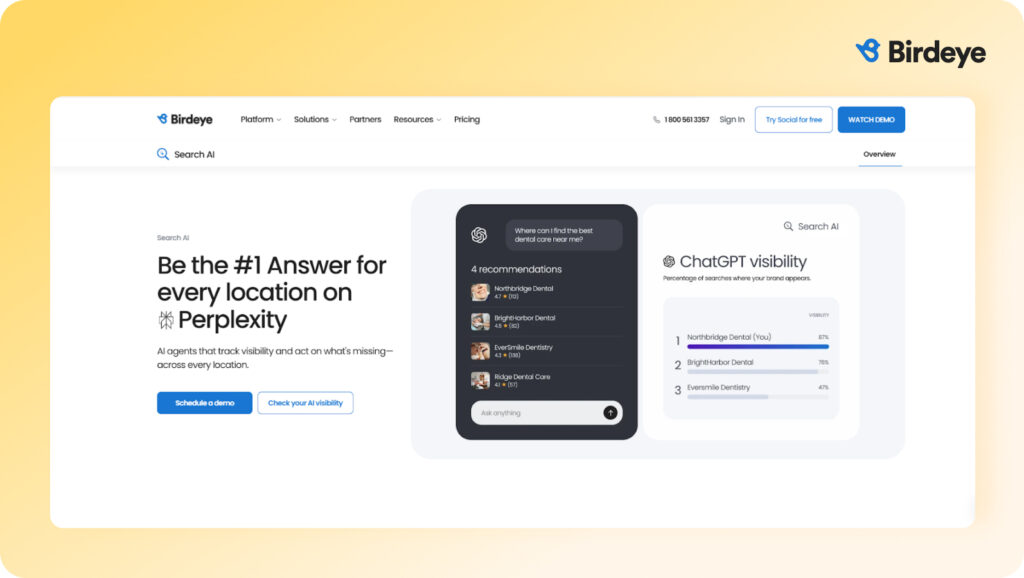
Birdeye Search AI is the purpose-built AI visibility platform for multi-location brands, tracking how you surface across every major AI engine and fixing what is holding each location back. It helps teams understand how AI models like ChatGPT, Gemini, and Perplexity discover, describe, and recommend their brand and its various locations, and then act on those insights through automated execution.
What makes Birdeye different is how Search AI connects visibility insights to action. Birdeye gives enterprises AI coworkers at every location, Jay for marketing, Robin for operations, Myna for customer experience. These AI coworkers use specialized AI agents to consolidate signals across every location, reason with brand voice and industry context, and act with approval to improve the signals AI engines rely on.
This means enterprise teams can see which locations appear in AI-generated answers, which locations are missing or misrepresented, which sources influence citations for real local queries such as “best dentist in Austin,” “dentist near me,” or “top-rated dental clinic in Downtown Austin.” They can then take action to visibility across listings, reviews, citations, website content, and business information accuracy.
Key capabilities
AI visibility score and AI share of answers
Search AI gives every brand and location an AI Visibility Score (0–100), making it easy to measure how prominently they appear across AI search platforms. It also tracks AI Share of Answers, the percentage of relevant AI-generated answers that recommend your brand versus competitors. Teams can see visibility by prompt, theme, market, and location. This makes it easy to identify where locations lead, where they lag, and where they do not appear at all.
Competitive benchmarking
Enterprises can benchmark AI visibility against local and brand-level competitors across LLM platforms such as ChatGPT, Gemini, and Perplexity. This helps teams understand which brands LLMs recommend and how visibility compares across locations and markets.
Citation intelligence
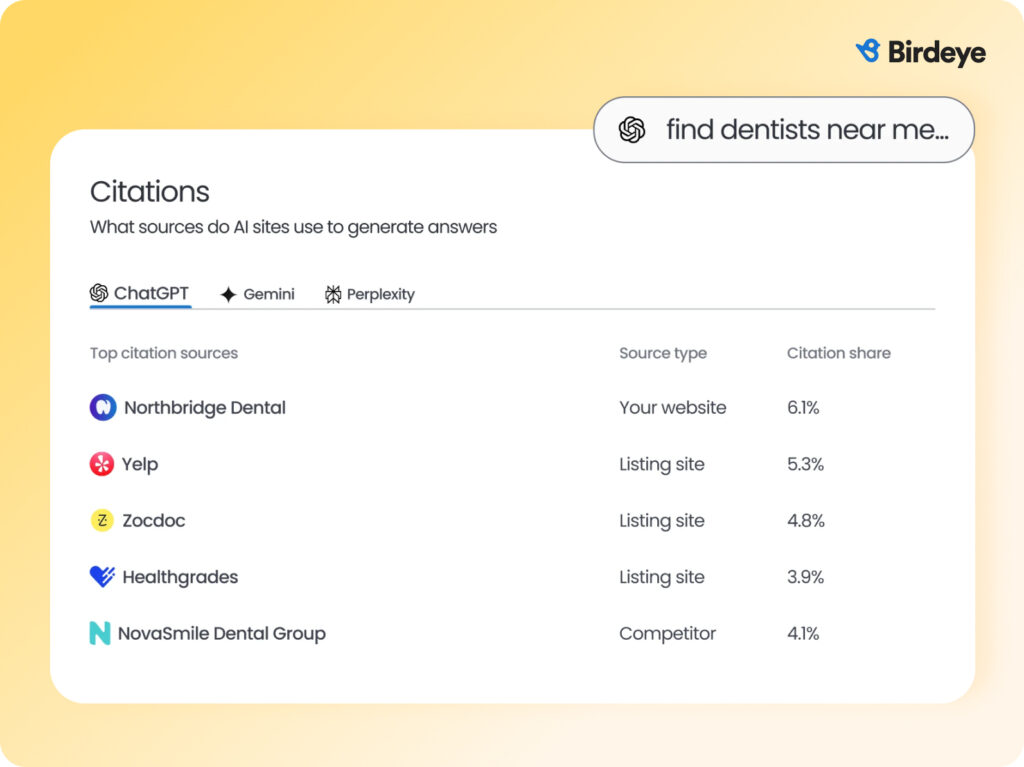
Search AI reveals which websites, listings, reviews, and forums AI platforms rely on when generating answers. It identifies citation gaps by showing where competitors are being cited, but your brand is not, helping teams understand which sources influence AI recommendations. Unlike tools that only surface these gaps, Search AI also recommends and helps execute approved actions, such as improving listings, strengthening reviews, and optimizing website content to increase the likelihood that AI engines cite and recommend your brand.
Accuracy monitoring
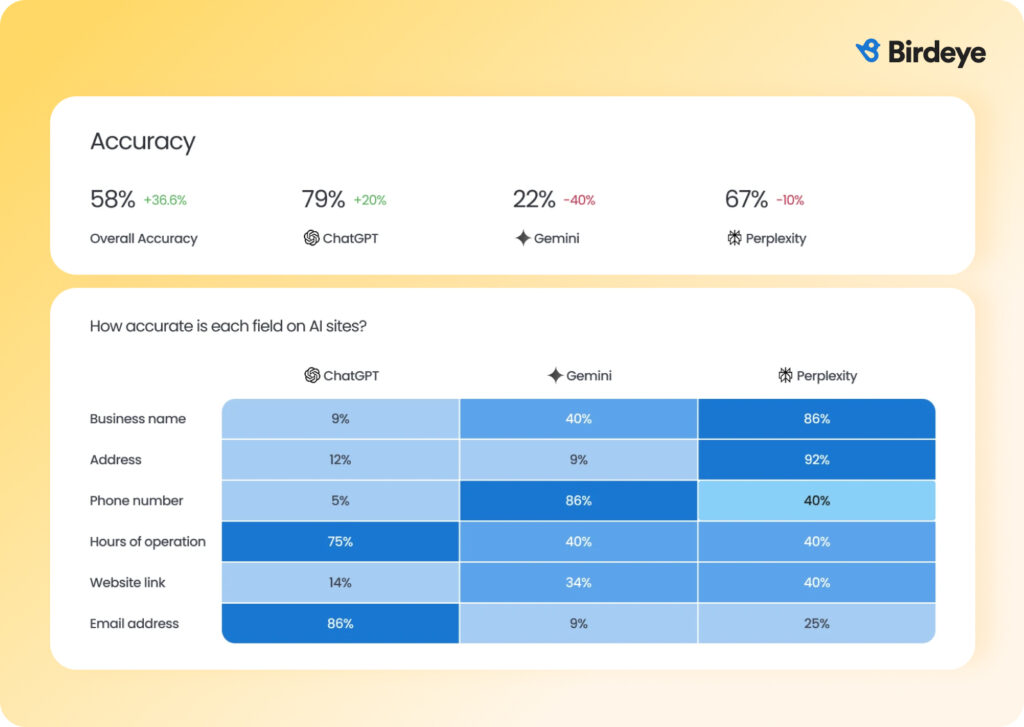
Search AI tracks how accurately AI models present business information across locations. This includes hours, services, amenities, and other location attributes that influence trust and recommendations.
Sentiment and narrative analysis
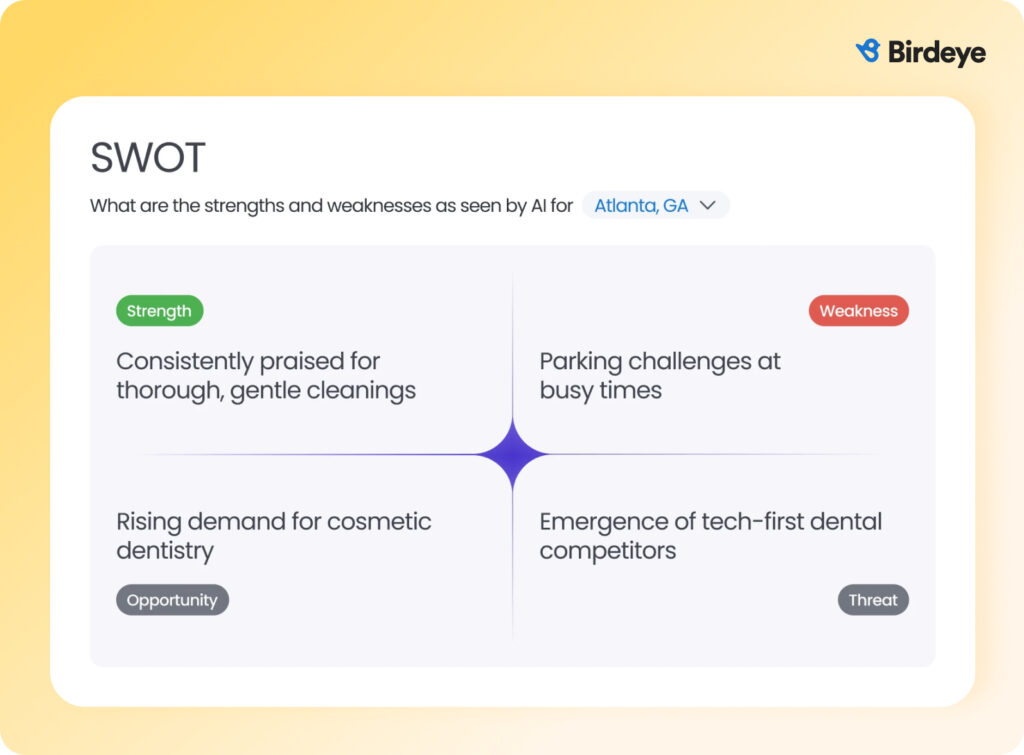
Search AI analyzes how AI models describe your brand across locations. It surfaces sentiment, strengths, weaknesses, and recurring themes used in AI-generated answers, helping teams understand how perception varies by market and location.
AI recommendations
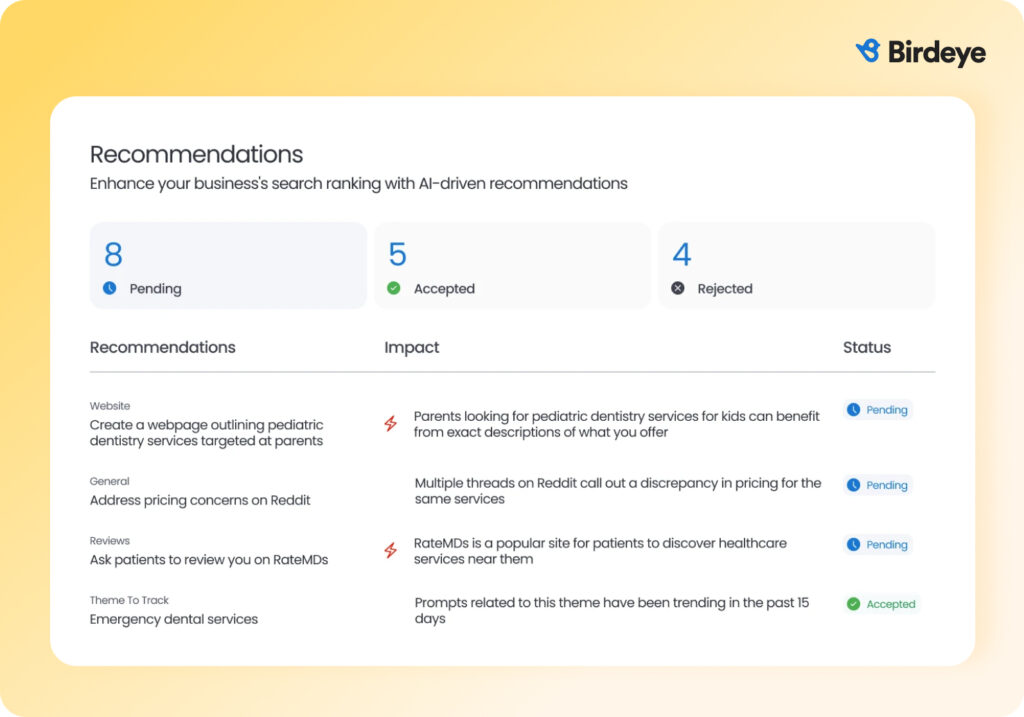
Search AI recommends improvements and handles actions such as updating listings, generating reviews, and optimizing website content. This reduces manual effort and helps enterprises address AI visibility gaps at scale.
“Search AI is a great product. If I could give one piece of advice to multi-location brands, it would be to use Search AI sooner rather than later to get a leg-up on the competition.”
Neil Patel, Cofounder at NP Digital and Leading SEO Expert
Pros
- Designed for operational complexity: Supports market-level reporting, governance, and workflows required by large, distributed teams.
- Reduces manual effort at scale: Automates updates to listings, reviews, and content based on LLM visibility insights.
- Uses AI coworkers and agents: This help teams move from visibility monitoring to approved execution across locations.
- Strong governance and control: Role-based access, approvals, and audit trails make it well suited for large teams with compliance and accountability requirements.
- Broad AI engine coverage: Tracks brand and location visibility in near real time across ChatGPT, Gemini, Google AI Overviews, Google AI Mode, Perplexity, Claude, and Grok, giving enterprises a unified view of how they appear across the AI platforms customers use.
- Deep integrations and automation: Integrates with thousands of CRM, POS, and operational systems, enabling scalable automation.
Cons
- More comprehensive than teams with simple needs may require: Brands looking only for lightweight monitoring or basic mention tracking may find the platform more robust.
- Best value realized at enterprise scale: Birdeye Search AI is optimized for multi-location enterprises with 100-10,000+ locations, so smaller brands may not fully benefit from its governance and automation capabilities.
Pricing: Birdeye Search AI uses custom pricing based on location count, selected products, contract structure, and activated agents.
G2 ratings(as of July 2026): Birdeye has a 4.7/5 rating on G2 from 4,100+ reviews. It was also recognized in G2’s Summer 2026 reports, earning #1 Enterprise rankings across 14 categories, including Online Reputation Management, Local Listing Management, and Social Media Suites.
Why Birdeye stands out
Birdeye is the #1 Agentic Marketing Platform, trusted by the biggest brands globally. The platform supports market-level insights, location governance, and enterprise workflows, enabling consistent AI visibility across hundreds or thousands of locations.
These capabilities help enterprises move beyond tracking AI visibility to actively shaping how LLMs discover, trust, and recommend each location. Instead of treating AI visibility as a reporting exercise, Birdeye connects insights directly to the systems that govern the signals AI engines use to generate answers, allowing enterprises to resolve issues at scale and maintain accuracy as models evolve.
Enterprises choose Birdeye because it supports:
- Role-based access and approval workflows
- Cross-location governance and accountability
- Integrations with 3,000+ CRM, POS, and operational systems
2. Scrunch
Best fit: SEO, content, and growth teams that want to understand how LLMs interpret, cite, and surface their website content in AI-generated answers.
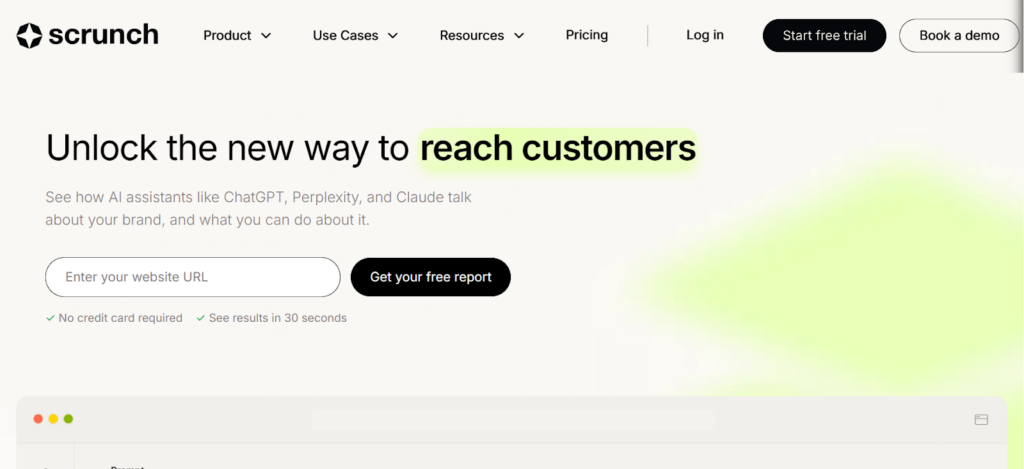
Scrunch is built for teams that want to understand how LLM models interpret, rank, and cite their content. Instead of treating AI visibility like traditional SEO, it shows how large language models actually read your site, which content they trust, and where things break. It’s strongest at turning AI answers into usable diagnostics.
Key capabilities
- Tracks brand presence, ranking, and citations across major AI engines
- Breaks visibility down by prompt, topic, persona, and geography
- Flags technical and content issues that limit AI understanding
- Provides enterprise-grade access controls and APIs for analysis and reporting
Pros
- Helps teams understand how content is parsed, trusted, and cited by LLMs beyond traditional SEO signals.
- Useful for identifying structural or clarity issues that affect AI answer inclusion.
- Supports prompt, persona, and geography-level analysis.
Cons
- Helps explain why content performs in AI answers, but unlike Birdeye Search AI, it doesn’t help teams fix the underlying listings, reviews, citations, or local pages across every location.
- Best for centralized content/SEO teams rather than location-by-location governance.
Pricing: Core starts at $250/month. Scrunch also offers a 7-day free trial. Enterprise pricing is available for larger teams with custom requirements.
G2 rating (as of July 2026): 4.6/5 (73 reviews)
3. Profound
Best fit: Marketing and strategy teams that want analytical depth, competitive context, and insight into AI-driven demand.
Profound is designed for teams that want a market-level view of why LLM answers favor certain brands and content, and how that shifts over time. It connects prompts, citations, and competitive signals to help teams prioritize where to focus, especially on high-impact questions and themes.
Key capabilities
- Tracks brand visibility across major AI answer engines
- Identifies which sources and domains LLMs rely on for different topics
- Estimates prompt demand to identify high-impact questions
- Provides share of voice, sentiment, and competitive benchmarks
Pros
- Useful for identifying high-impact prompts and themes to guide planning and resource allocation.
- Combines citations, sentiment, and share-of-voice to explain shifts in brand visibility.
- Provides competitive benchmarking.
Cons
- Helps teams understand why brands are cited in AI answers, but unlike Birdeye Search AI, it doesn’t help improve the underlying listings, reviews, citations, or local pages that influence those recommendations.
- Does not provide location-level visibility, governance, or execution capabilities needed by multi-location brands.
Pricing: Starter starts at $99/month, billed yearly. Growth starts at $399/month, billed yearly. Enterprise pricing is custom.
G2 rating (as of July 2026): 4.5/5 (1,123 reviews)
4. Nightwatch
Best fit: SEO, marketing, and analytics teams seeking a single system for both classic and AI search. It’s ideal for teams that don’t want to add another platform just to track LLM visibility and are focused on monitoring, not execution.
Nightwatch is built for teams that already live in SEO data and want to extend that visibility into AI search. It connects traditional rankings with AI-generated answers so teams can see how performance shifts across both worlds in one place. Instead of replacing SEO workflows, it expands them.
Key capabilities
- Monitors brand visibility across traditional search results and AI-generated answers
- Maps keyword rankings to AI mentions and share of voice
- Surfaces high-level sentiment and narrative patterns in AI responses
- Identifies queries and prompts associated with visibility shifts over time
Pros
- Extends existing SEO reporting into AI visibility without requiring new processes or tooling.
- Useful for understanding how keyword performance influences AI answer inclusion.
- Brings traditional SEO rankings and AI visibility into a single reporting workflow.
Cons
- Extends SEO reporting into AI visibility, but unlike Birdeye Search AI, it doesn’t help teams improve the listings, reviews, citations, or local pages that influence AI-generated answers.
- Not built to manage multi-location-specific accuracy, governance, or execution at scale.
Pricing: Starter starts at €79/month, Professional at €159/month, and Agency at €399/month, billed yearly. Enterprise pricing is custom. Nightwatch offers a 14-day free trial.
G2 rating(as of July 2026): 4.7/5 (64 reviews)
5. Meltwater
Best fit: PR, communications, and brand teams that monitor public narrative, media coverage, and AI-driven brand perception.
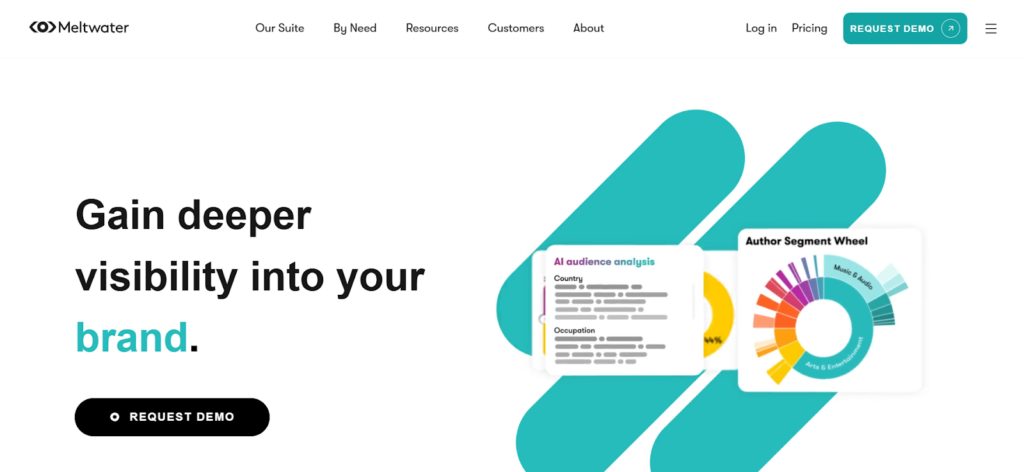
Meltwater looks at AI visibility through the lens of brand reputation rather than search performance. It helps teams understand how their brand is referenced across AI-generated answers, news, and social channels, and how those narratives shift over time. Meltwater is most valuable when AI answers are part of broader communications, reputation, or risk-monitoring efforts.
Key capabilities
- Monitors brand mentions across AI-generated summaries, news, and social channels
- Tracks sentiment changes and emerging narratives over time
- Connects AI mentions to broader media and communications context
- Surfaces potential reputational risks and opportunities early
Pros
- Helps teams understand how brand stories and themes propagate across media and AI-generated content.
- Useful for detecting sentiment shifts, crisis indicators, or emerging topics that may influence public perception.
- Connects AI-generated mentions with news and social monitoring.
Cons
- Monitors AI-driven brand perception, whereas Birdeye Search AI helps enterprises improve the location-level trust signals AI engines use when recommending businesses.
- Lacks workflows for managing business data, listings, or local accuracy.
Pricing: Meltwater uses custom pricing based on goals, selected modules, monitoring scope, regions, users, integrations, onboarding, support needs, and contract terms.
G2 rating(as of July 2026): 4.1/5 (2,657 reviews)
6. Rankscale
Best fit: Marketing teams, agencies, and SMBs that want a simple way to track AI-answer visibility over time without complex setup or tooling.
Rankscale is built to give teams a quick, consistent view of where brands and pages appear in AI-generated answers. Rather than analyzing why visibility changes or how to fix issues, it focuses on turning AI mentions into clear scores and comparisons that are easy to track, report, and share, especially for ongoing monitoring or client reporting.
Key capabilities
- Tracks where brands and pages appear in AI answers
- Captures citations and prompt-level responses for review
- Compares visibility against competitors
- Exports data easily for reporting and analysis
Pros
- Makes it easy to see whether and where a brand appears in AI answers.
- Simple scoring and comparisons work well for trend tracking and external reporting.
- Captures prompt-level responses and citations.
Cons
- Simplifies AI visibility reporting, whereas Birdeye Search AI combines monitoring with enterprise governance and automated execution.
- Lacks controls and structure for location-by-location governance.
Pricing: Essentials starts at $20/month, Pro at $99/month, Growth at $385/month, and Enterprise at $780/month.
G2 rating(as of July 2026): 5/5 (1 review)
7. Otterly AI
Best fit: Small teams, agencies, or brands that want a simple way to check whether they appear in AI-generated answers.
Otterly AI is built for teams that want a quick, easy way to see whether their brand appears in AI responses. It removes complexity and focuses on basic visibility, prompts, and reports. Think of it as a starting point for AI search tracking.
Key capabilities
- Monitors brand mentions and citations across AI search engines
- Turns keywords into trackable AI prompts
- Shows visibility trends in simple dashboards
- Helps teams spot gaps in content or sources
Pros
- Simple setup makes it easy to start tracking AI mentions with minimal effort.
- Budget-friendly entry point for small teams exploring AI visibility.
- Tracks visibility trends over time.
Cons
- Makes AI visibility tracking easy to start, but unlike Birdeye Search AI, it doesn’t help improve the underlying signals that AI engines rely on.
- Does not support multi-location governance or complex organizational needs.
Pricing: Lite starts at $29/month, Standard at $189/month, and Premium at $489/month. Otterly AI also offers annual pricing at $25/month, $160/month, and $422/month, respectively.
G2 rating(as of July 2026): 4.8/5 (52 reviews)
8. Peec AI
Best fit: Teams that want to explore how their content competes in AI-generated answers without committing to complex tooling.
Peec AI helps teams monitor how their brand and content appear in AI-generated answers. It focuses on prompt-level visibility, competitive comparisons, and trend tracking, making it useful for basic analysis and content gap identification rather than execution or large-scale operations.
Key capabilities
- Tracks brand and content visibility across AI answer surfaces
- Allows prompt and query-level performance review
- Provides insight into competitive AI visibility signals
- Offers simple dashboards for trend analysis
Pros
- Simple setup and navigation for first-time AI visibility tracking.
- Helps teams understand which questions and topics trigger competitor visibility more often.
- Provides prompt-level visibility tracking.
Cons
- Helps identify visibility trends, while Birdeye Search AI also enables enterprises to improve the underlying signals influencing AI recommendations at every location.
- Not intended for multi-location governance or enterprise-wide programs.
Pricing: Starter starts at $95/month, Pro at $245/month, and Advanced at $495/month. Enterprise pricing is custom.
G2 reviews(as of July 2026): 4.9/5 (12 reviews)
9. Ahrefs Brand Radar
Best fit: SEO and brand teams that want to understand brand demand, authority signals, and visibility momentum across search and AI-adjacent surfaces.
Ahrefs Brand Radar is built to show how brand interest and authority change over time by analyzing brand mentions, branded queries, and link-related signals across Ahrefs’ index. Rather than tracking AI answers directly, it helps teams understand whether brand strength, awareness, and topical authority are increasing in ways that influence both search visibility and AI-generated references.
Key capabilities
- Analyzes branded search demand and brand growth trends
- Tracks changes in brand-related visibility over time
- Connects brand presence to link-based authority signals
- Highlights competitive shifts in brand interest and awareness
Pros
- Useful for understanding whether brand awareness and demand are rising or declining over time.
- Helps teams assess how brand strength and credibility compare to competitors within a category.
- Leverages Ahrefs’ extensive brand and link data to measure changes in brand authority.
Cons
- Measures brand authority rather than AI answer visibility. Birdeye Search AI tracks how brands appear in AI-generated answers and helps improve the signals AI engines cite.
- Does not show which questions or topics trigger brand inclusion in AI answers.
Pricing: Brand Radar AI starts at $199/month. Ahrefs also lists an all-platform Brand Radar option at $699/month.
G2 rating(as of July 2026): 4.5/5 (708 reviews)
10. Ziptie
Best fit: Marketing analysts and growth teams that want hands-on experimentation and qualitative insight into how AI answers reference brands.
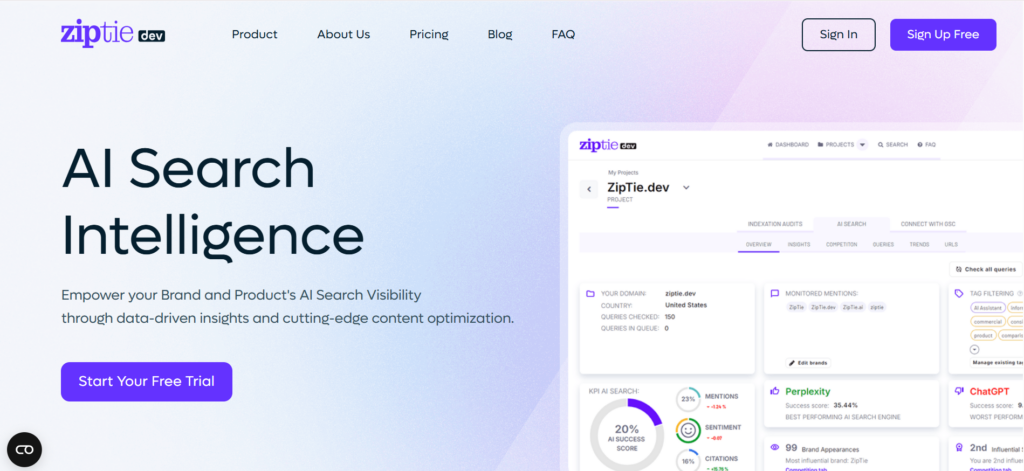
ZipTie helps teams monitor brand mentions, citations, and sentiment across AI platforms. It’s designed for visibility tracking and insight generation, making it useful for understanding patterns in AI answers rather than managing execution or large-scale operations.
Key capabilities
- Runs and compares custom prompts across AI answer engines
- Captures full AI responses for side-by-side qualitative review
- Analyzes how phrasing and intent affect brand inclusion
- Supports manual tagging and analyst-led insight workflows
Pros
- Well suited for testing how different prompt structures and intents influence AI answers.
- Appeals to teams that prefer hands-on exploration over predefined reporting frameworks.
- Captures complete AI responses for side-by-side analysis.
Cons
- Helps analyze AI responses, but unlike Birdeye Search AI, it doesn’t help teams improve the listings, reviews, citations, or local pages that influence AI recommendations.
- Lacks controls and workflows designed for distributed, multi-location enterprise environments.
Pricing: Basic starts at $69/month, Standard at $99/month, and Pro at $159/month. Custom plans are also available. ZipTie offers a 14-day free trial.
G2 rating(as of July 2026): 4.5/5 (1 review)
Looking across these tools, a clear distinction emerges in how LLM visibility is approached. Many platforms help brands understand how they appear in AI-generated answers, but stop short of helping teams improve those outcomes across locations. Birdeye Search AI goes further by connecting LLM visibility insights to AI agents and workflows that improve the accuracy of listings, reviews, citations, local content, and business information across locations.tcomes across locations. Birdeye goes further by connecting LLM visibility insights directly to the systems that manage listings, reviews, and content, making it easier for multi-location enterprises to turn visibility into consistent, scalable results.
Why basic LLM visibility tracking isn’t enough for multi-location enterprises
For brands with dozens, hundreds, or thousands of locations, LLM visibility is not just about detecting mentions. It is about improving the accuracy and consistency of the signals AI models use when recommending brands to potential customers, an increasingly important part of answer engine optimization (AEO).
Gartner predicted that traditional search engine volume would drop 25% by 2026 as AI chatbots and virtual agents become substitute answer engines. As more customers turn to AI-generated answers for recommendations, comparisons, and local business decisions, multi-location enterprises need to know not only whether they appear, but whether every location is represented accurately.
Traditional LLM visibility tools focus on monitoring mentions and citations. That approach breaks down at enterprise scale because:
- AI answers vary by market when listings, reviews, local pages, structured data, and business information are inconsistent.
- Monitoring reveals problems, but does not resolve them.
- Manual fixes across hundreds or thousands of locations are slow and error-prone.
- Insights that cannot trigger action often remain unused.
- Brand-level reporting can hide location-level visibility gaps.
These limitations make one thing clear: multi-location enterprises need more than reporting. They need a unified system that connects LLM visibility insights directly to execution, so every location can stay accurate, trusted, and eligible for recommendation across AI discovery platforms.
Which AI engines and discovery surfaces enterprises must monitor
Enterprise brands appear across multiple AI platforms, each with its own data sources, refresh cycles, citation behavior, and regional differences. Effective LLM visibility tracking starts with understanding where potential customers actually encounter AI-generated answers.
In 2026, the most important AI engines and discovery surfaces include:
- ChatGPT and custom GPTs: These increasingly shape early-stage brand consideration, service discovery, comparison questions, and recommendation-style prompts.
- Google AI Overviews: AI-generated answers appear directly in Google Search results, which can reduce reliance on traditional blue links and change how customers compare brands before clicking through.
- Gemini: Google’s AI assistant experience can influence how users ask questions, compare options, and interact with AI-generated answers across Google’s ecosystem.
- Perplexity: Perplexity combines conversational answers with explicit citations, making it important for enterprises to understand which first-party and third-party sources are being used to support brand-related answers.
- Microsoft Copilot: Copilot extends AI-assisted discovery across Microsoft’s search, productivity, and workplace ecosystem, making it relevant for both consumer and B2B discovery journeys.
- Grok: Grok is another emerging AI answer surface that enterprises may need to monitor as AI-driven search and social discovery continue to overlap.
- AI crawler activity: Enterprises should also monitor whether AI crawlers such as GPTBot, ClaudeBot, PerplexityBot, and other model crawlers are accessing important brand, location, and content pages. Crawler activity can help teams understand whether AI answer engines are able to discover and process the sources they want cited in AI-generated answers.
These platforms behave differently when you compare LLM answers vs traditional local search accuracy. Answers can vary by city, region, prompt phrasing, citation source, search intent, and the freshness of business information. For multi-location enterprises, visibility often differs from one location to another based on listings accuracy, review signals, local content quality, service details, hours, and industry-specific data sources. Birdeye Search AI helps multi-location brands uncover these location-level visibility gaps, showing exactly why one location is recommended while another is overlooked, and enabling teams to improve the local signals that AI engines use to generate answers.
With coverage defined, enterprises can now evaluate which platforms are best suited to manage LLM visibility in 2026 across every location in their portfolio.
LLM visibility tracking for enterprise teams
Enterprise LLM visibility tracking is not only an SEO task. It affects how customers discover locations, how AI models describe the brand, how teams fix inaccurate information, and how leadership measures visibility across markets.
Different teams need different capabilities:
- Director of SEO: Needs prompt-level visibility, citation tracking, competitor share of voice, GEO insights, and visibility trends across AI engines.
- VP of Marketing: Needs a clear view of brand visibility, competitor presence, sentiment, market-level performance, and business impact.
- IT and security teams: Need enterprise controls such as SSO, SOC 2, role-based access, audit logs, secure integrations, and approval workflows.
- Operations and local teams: Need workflows that turn visibility gaps into action when AI answers show incorrect hours, outdated services, weak review signals, or inconsistent business information.
For multi-location enterprises, scale is the real challenge. A useful platform should support 100+ locations, market-level reporting, API access, CRM/POS/EHR integrations, location groups, approvals, and clear accountability across corporate and local teams.
Birdeye Search AI is a strong fit for this environment because it connects LLM visibility insights to AI agents and approved workflows across locations. Teams can identify where the brand appears, where locations are missing or misrepresented, which sources influence citations, and what actions can improve visibility.
How to choose the right LLM visibility tool
The right LLM visibility tool depends on your team size, workflow, and what you need to improve. Some teams only need lightweight tracking, while others need enterprise governance, location-level reporting, and execution across many markets.
Use this guide to narrow your options:
If you are a startup or small team: Choose a lightweight tool that helps you check brand mentions, citations, prompts, and competitor visibility without a complex setup. Otterly AI, Rankscale, or ZipTie may be a good fit for basic LLM visibility tracking.
If you are an agency: Look for multi-client reporting, prompt tracking, competitor comparisons, exports, and easy dashboards. Peec AI, Otterly AI, Nightwatch, or Rankscale can work well for agencies managing visibility across multiple clients or markets.
If you are an SEO team: Choose a tool that connects LLM visibility with rankings, prompts, citations, search demand, and content opportunities. Nightwatch, Ahrefs Brand Radar, Scrunch, or Profound may be useful depending on whether your focus is search performance, brand authority, or AI answer analysis.
If your focus is content optimization for AI answers: Choose tools that help identify prompt opportunities, citation gaps, topic coverage, and content refresh needs. You can also compare the best GEO tools if your main goal is improving how your content appears in AI-generated answers.
If you are a PR or communications team: Choose a platform that tracks brand perception, sentiment, public narrative, and reputation risk across AI-generated answers and media sources. Meltwater is better suited for this use case.
If you are an enterprise or multi-location brand: Choose a platform that connects LLM visibility insights to action. Birdeye Search AI is the strongest fit when teams need location-level visibility, citation intelligence, governance, integrations, and AI agent-led workflows across 100 to 10,000+ locations.
Before choosing a platform, ask:
- Do we need brand-level visibility, location-level visibility, or both?
- Which AI engines matter most to our customers?
- Do we need simple monitoring or workflows that help fix visibility gaps?
- Can the tool show which sources influence AI-generated answers?
- Does it support the number of locations, markets, prompts, and teams we manage?
- Can our teams act on insights without adding more manual work?
For small teams, a focused LLM tracker may be enough. For enterprises, especially multi-location brands, the better choice is a platform that connects visibility tracking with governance, integrations, and execution.
If your focus is specifically on content optimization for AI answers, you can also compare the best GEO tools to see which platforms support generative engine optimization workflows.
FAQs about LLM visibility tracking tools
LLM visibility tracking tools help organizations understand and monitor how their brand appears in AI-generated answers across platforms such as ChatGPT, Gemini, Perplexity, and Google AI Overviews. Some platforms extend this visibility into execution and governance, while others focus primarily on analysis, diagnostics, or monitoring.
SEO tracking focuses on rankings, clicks, and traffic from traditional search results. LLM visibility tracking focuses on whether a brand appears in AI-generated answers, how it is described, and which sources AI models trust.
Birdeye Search AI is one of the best LLM visibility tools for multi-location brands because it combines AI visibility tracking with location-level optimization. It shows how every location appears across ChatGPT, Gemini, Google AI Overviews, Google AI Mode, Perplexity, Claude, Grok, and other AI search platforms, identifies why locations are recommended or overlooked, and helps improve the signals AI engines rely on, including listings, reviews, citations, local pages, and business information.
Enterprises should start with high-intent prompts, first-party citation coverage, and location data accuracy. These areas usually create the fastest improvements in AI visibility.
AI models weigh trust signals such as accurate listings, review volume and sentiment, source authority, and consistency across the web. Brands with clean, consistent data are more likely to be cited and recommended. Birdeye helps enterprises strengthen these signals by keeping listings accurate, reviews fresh, and content consistent across every location.
Yes, when visibility insights are connected to systems that manage listings, reviews, and content. This is where Birdeye’s AI agents matter. They turn visibility findings into actions like updating business information, generating reviews, and optimizing local content without manual work.
Reviews are a major trust signal for AI models. They influence whether a brand is recommended, how it’s described, and which locations are surfaced in responses. With Birdeye Review Generation Agent and Review Response Agent, enterprises can generate, monitor, and respond to reviews, improving the trust signals LLMs use when producing answers.
LLM visibility is measured by tracking how often a brand appears in AI-generated answers, where it appears, which sources are cited, how competitors compare, and whether the answer is accurate. Teams should monitor brand mentions, citation sources, share of voice, sentiment, prompt-level visibility, and location-level accuracy across platforms such as ChatGPT, Gemini, Perplexity, Claude, Google AI Overviews, Microsoft Copilot, and Grok.
Free LLM visibility-tracking tools are useful for gaining an initial view of whether a brand appears in AI-generated answers. Birdeye’s Free AI Visibility Checker is a good starting point for brands that want to see how they appear in AI search and identify visibility gaps before investing in a full tracking platform. For ongoing enterprise use, brands usually need deeper tracking across prompts, citations, competitors, locations, sentiment, and accuracy.
Turning LLM visibility into an enterprise advantage with Birdeye
AI-generated answers already influence how customers choose businesses. The brands that succeed are not the ones that only track AI visibility, but those that can consistently improve it across all locations.
When enterprise teams examine AI visibility, they often uncover real issues. Locations may display incorrect hours. Competitors may be recommended instead. AI models may cite third-party directories rather than first-party brand pages. Identifying these problems is only the first step. The real challenge is fixing them everywhere in a controlled, scalable way without adding manual work.
This is where Birdeye stands apart. Birdeye acts as both the system of record and the system of action for online discovery. It brings together listings, reviews, content, and customer signals on a single platform and connects AI visibility insights directly to execution. With Birdeye’s AI agents, enterprises can keep business data accurate, strengthen trust signals, and improve how LLMs automatically describe and recommend each location.
See how leading enterprises use Birdeye Search AI to stay accurate, trusted, and visible across AI-driven search experiences. Watch the free demo and explore Search AI in action.

About the Author

Shaifali Parihar
Originally published