Restaurant marketing automation replaces fragmented, manual campaigns with a connected system that plans, executes, and improves guest engagement across every channel, without the constant hands-on effort required by operators or marketers.
Summary

As restaurants scale, manual marketing tactics and one-off promotions become more complicated to manage and easier to miss. Automation shifts marketing from reactive execution to a structured, repeatable system that responds to guest behavior in real time.

By integrating customer data, messaging, loyalty, and feedback into a single workflow, restaurant teams can focus on strategy while automation handles outreach, timing, and follow-ups across locations and channels. Tools like Birdeye make this possible by unifying guest data, reviews, messaging, and campaigns in one place, so restaurants can engage customers consistently without managing multiple systems.

This blog explores how restaurant marketing automation works and how brands can use it to increase repeat visits, improve guest relationships, and run marketing with consistency at scale.
Table of contents
- Why restaurant marketing automation matters
- 10 proven restaurant marketing automation campaigns
- Step-by-step: Setting up restaurant marketing automations
- Automation best practices for restaurants
- How Birdeye enables restaurant marketing automation across every location
- Frequently asked questions about restaurant marketing automation
- Conclusion
Why restaurant marketing automation matters
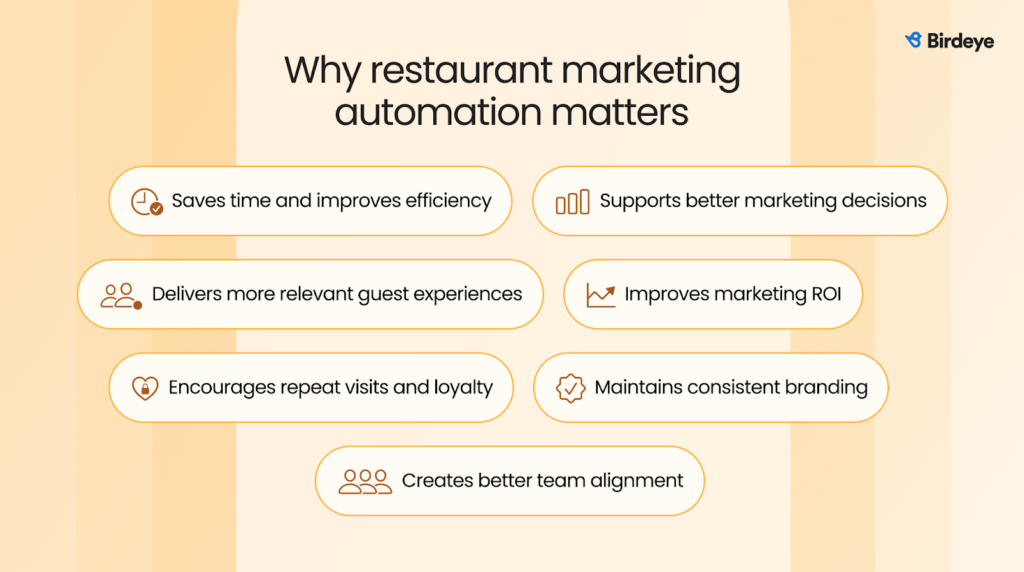
Restaurant marketing automation helps restaurants replace manual marketing tasks with a system that runs consistently in the background. Instead of relying on one-off campaigns, teams can use automation to engage guests at the right time while keeping operations focused on service.
So what does this look like in practice? Let’s explore the core ways marketing automation supports restaurant growth.
Saves time and improves efficiency
Automation handles repetitive tasks such as emails, loyalty updates, and customer follow-ups. This reduces manual work and allows teams to focus on running the restaurant rather than managing campaigns.
Delivers more relevant guest experiences
Customer data enables targeted messages, including birthday offers, loyalty rewards, and personalized promotions. Guests receive communication that feels timely and intentional.
Encourages repeat visits and loyalty
Automated triggers support post-visit engagement through surveys, rewards, and special offers. These touchpoints help keep guests connected and increase return visits.
Supports better marketing decisions
Automation brings campaign performance and guest behavior data into one place. This visibility helps restaurants understand what works and adjust marketing efforts with confidence.
Improves marketing ROI
More precise targeting reduces wasted outreach and improves results from existing marketing spend. Automation helps restaurants achieve better returns without increasing effort.
Maintains consistent branding
Templates and predefined workflows ensure design and messaging stay consistent across channels. This keeps communication aligned across locations and guest touchpoints.
Creates better team alignment
Centralized data connects marketing activity with guest outcomes. Teams work from shared insights, reducing gaps between planning and execution.
In summary, restaurant marketing automation creates a reliable system that saves time, improves engagement, and strengthens guest relationships without adding complexity to daily operations.
10 proven restaurant marketing automation campaigns
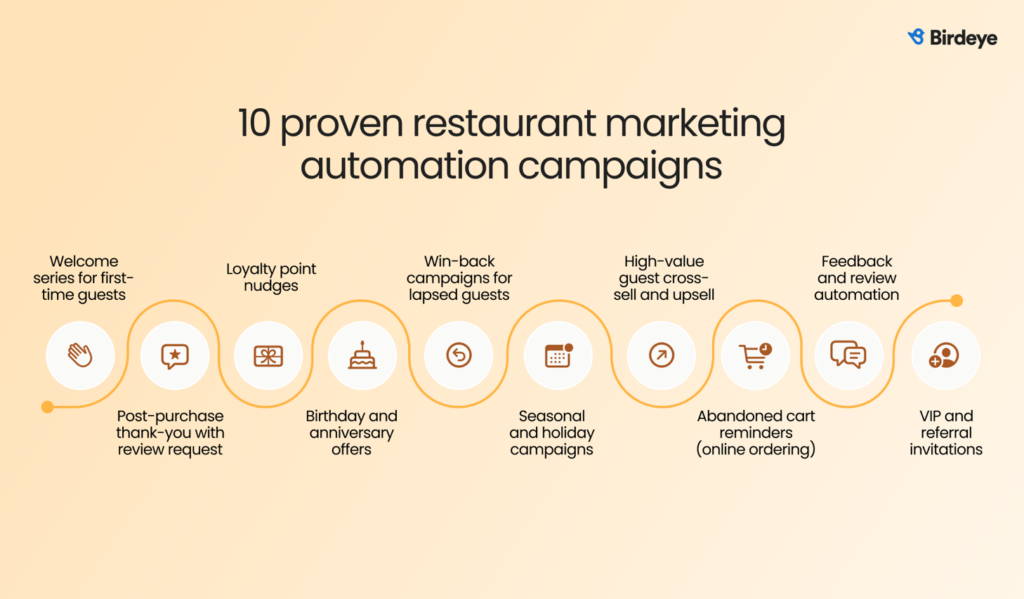
Restaurant marketing automation works best when campaigns are tied to clear guest actions and outcomes. Below are ten proven automation campaigns for restaurants to improve engagement, encourage repeat visits, and maintain consistent communication without manual effort.
1. Welcome series for first-time guests
- Purpose: Introduce the brand and encourage a second visit
- Trigger event: First visit, first order, or first sign-up
- Audience: New guests
- Channel: Email or SMS
A short welcome series helps set expectations, highlight popular menu items, and offer a reason to return soon.
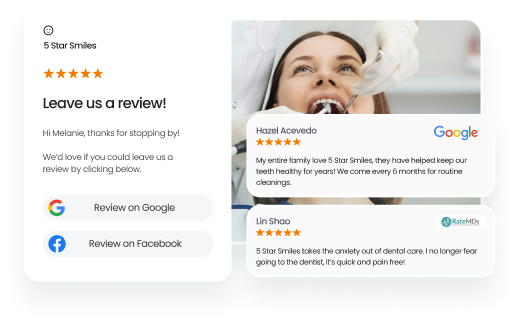
2. Post-purchase thank-you with review request
- Purpose: Collect feedback and online reviews
- Trigger event: Completed visit or order
- Audience: Recent guests
- Channel: Email or SMS
This campaign sends a timely thank-you message followed by a simple review request while the experience is still fresh.
3. Loyalty point nudges
- Purpose: Increase loyalty program participation
- Trigger event: Points earned, nearing reward threshold
- Audience: Loyalty members
- Channel: Email, SMS, or app notification
Automated reminders encourage guests to redeem points and return before interest fades.
4. Birthday and anniversary offers
- Purpose: Build personal connections with guests
- Trigger event: Guest birthday or sign-up anniversary
- Audience: Known guests with date data
- Channel: Email or SMS
Personalized offers help guests feel recognized and increase the likelihood of a visit during special moments.
5. Win-back campaigns for lapsed guests
- Purpose: Re-engage inactive customers
- Trigger event: No visit or order within a set timeframe
- Audience: Lapsed guests
- Channel: Email or SMS
Win-back messages often include limited-time offers or reminders to encourage guests to return.
6. Seasonal and holiday campaigns
- Purpose: Promote timely offers and menu updates
- Trigger event: Calendar-based dates or events
- Audience: All or segmented guest lists
- Channel: Email, SMS, or social messaging
Automation ensures seasonal promotions are delivered consistently, without last-minute execution.
7. High-value guest cross-sell and upsell
- Purpose: Increase average order value
- Trigger event: Frequent visits or high spend
- Audience: Top-performing guest segments
- Channel: Email or SMS
These campaigns recommend relevant add-ons, specials, or premium experiences based on past behavior.
8. Abandoned cart reminders (online ordering)
- Purpose: Recover incomplete orders
- Trigger event: Cart created but not completed
- Audience: Online ordering guests
- Channel: Email or SMS
Simple reminders help convert intent into completed orders without additional promotion.
9. Feedback and review automation
- Purpose: Capture guest sentiment at scale
- Trigger event: Visit or order completion
- Audience: All guests or targeted segments
- Channel: Email or SMS
Automated feedback collection helps identify issues early and build a steady stream of reviews.
10. VIP and referral invitations
- Purpose: Reward loyal guests and attract new ones
- Trigger event: High visit frequency or spend
- Audience: VIP or long-term guests
- Channel: Email or SMS
These campaigns strengthen loyalty by offering exclusive perks or incentives for referrals.
Together, these campaigns form a complete automation framework that supports guest engagement across the entire lifecycle, from first visit to long-term loyalty.
Learn How Restaurant Marketing Automation Drives Repeat Guests
Want to see the impact of Birdeye on your business? Watch the Free Demo Now.
Step-by-step: Setting up restaurant marketing automations
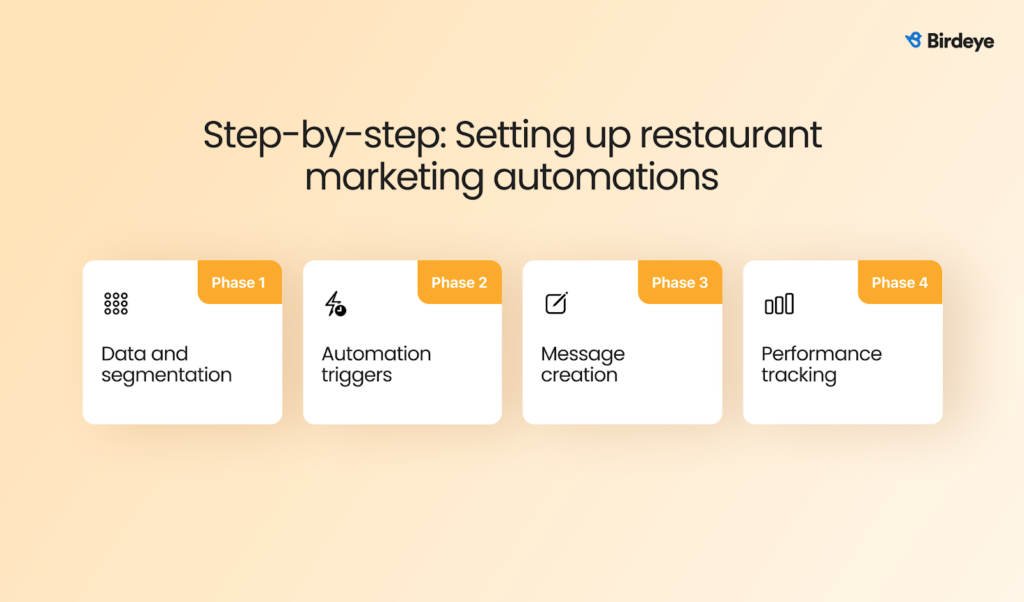
Setting up restaurant marketing automation does not require complex systems or large teams. By following a structured approach, restaurants can build workflows that are easy to manage, scale over time, and stay aligned with guest behavior.
Below is a four-phase framework that simplifies the setup process.
Phase 1 — Data and segmentation
Automation starts with accurate and connected data. The goal in this phase is to consolidate guest information in one place and organize it to support targeted messaging.
- Collect guest data from key sources, including POS systems, reservations, Wi-Fi signups, and online orders.
- Segment guests based on behavior and preferences, including visit frequency, order history, spend level, or location.
Clear segmentation ensures campaigns reach the right guests instead of relying on broad, generic outreach.
Phase 2 — Automation triggers
Once segments are defined, the next step is deciding when automation should run. Triggers determine the timing and relevance of every campaign.
- Define trigger events such as a completed order, a missed visit window, a birthday, or a holiday.
- Set conditions and actions, including recurrence rules, message timing, and follow-up steps.
Well-defined triggers help campaigns run consistently without constant monitoring.
Phase 3 — Message creation
With triggers in place, messages need to be clear, relevant, and easy to personalize at scale.
- Use personalization tokens to include guest names, locations, loyalty points, or past orders.
- Create dynamic offers that adjust based on segment or behavior.
- Test messaging and timing, including subject lines, send times, and channels, to refine performance.
Simple, well-tested messages often perform better than complex campaigns.
Phase 4 — Performance tracking
Automation only works when results are measured and improved over time. This phase focuses on understanding what drives engagement and return visits.
- Track key metrics such as open rates, click-throughs, redemptions, visit frequency, and customer lifetime value.
- Review trends regularly to identify high-performing campaigns and areas for adjustment.
Consistent tracking helps restaurants improve results without rebuilding workflows from scratch.
By following these four phases, restaurants can create marketing automations that are structured, repeatable, and designed to grow alongside their business.
Automation best practices for restaurants
Restaurant marketing automation delivers results when it’s built with intention and monitored over time. Following a few core best practices helps ensure campaigns remain relevant, respectful, and aligned with guest expectations.
Balance message frequency
Communicate often enough to stay top of mind, but avoid overwhelming guests. A steady cadence keeps engagement high and opt-outs low.
Use data to guide campaigns
Base outreach on guest behavior, visit patterns, and preferences. Data-backed campaigns are more relevant and easier to optimize.
Personalize where it adds value
Focus personalization on moments that matter, such as loyalty milestones or return-visit nudges. Simple personalization is often more effective than complex messaging.
Test and refine continuously
Review performance regularly and adjust timing, offers, or channels. Incremental improvements help automation stay effective as guest behavior changes.
When applied consistently, these best practices help restaurants build automation programs that scale smoothly and support long-term guest relationships.
Common pitfalls to avoid in restaurant marketing automation

Sending too many messages in a short period
Ignoring email and SMS consent requirements
Using generic campaigns without segmentation
Overlooking early signs of guest disengagement
Treating automation as a one-time setup
How Birdeye enables restaurant marketing automation across every location
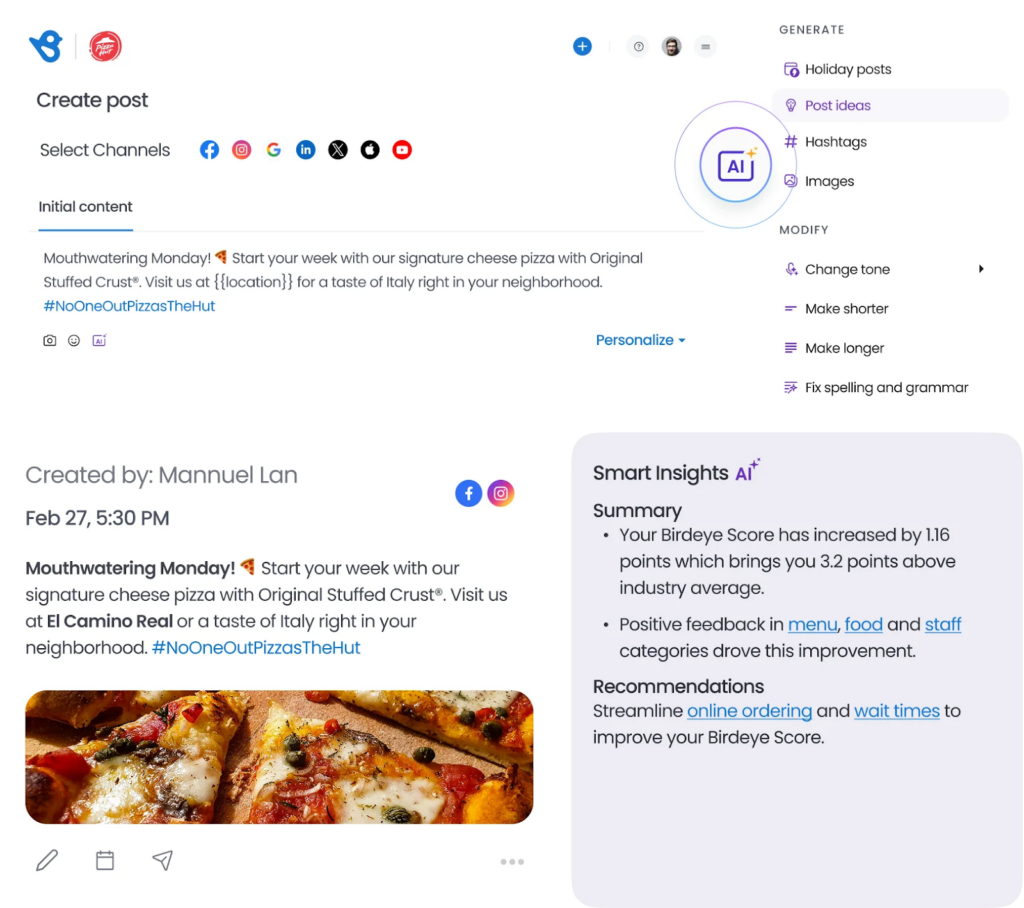
Birdeye is an agentic marketing platform for restaurants, using specialized AI Agents to handle visibility, engagement, and insights across locations, replacing fragmented tools with a single system where automation runs continuously in the background.
Here’s how Birdeye AI Agents support restaurant marketing automation:
- Reviews AI Agents: Automatically generate, monitor, manage, and share reviews across 200+ review sites. These agents handle post-visit guest review requests, track sentiment, and support timely responses without manual follow-ups.
- Listings AI Agents: Keep business information accurate and optimized across Google, Apple Maps, Facebook, Bing, and industry directories. Continuous updates improve local discovery and support location-based automation.
- Social AI Agents: Create, schedule, and monitor social content across locations. These agents help maintain a consistent social presence while reducing the effort required to manage posts at scale.
- Search AI: Helps restaurants appear as trusted answers across AI-powered search experiences, including Google, ChatGPT, and Perplexity, expanding visibility beyond traditional search listings.
- Insights AI: Measure and benchmark reputation, sentiment, and online presence across locations. These insights help teams understand guest behavior and refine automation strategies with confidence.
- Competitors AI: Benchmark performance against nearby competitors across reviews, ratings, and visibility. Competitive insights support smarter decisions around targeting, promotions, and re-engagement campaigns.
Together, Birdeye’s AI Agents create a connected automation framework that helps restaurants manage marketing consistently across locations, supporting growth without adding operational complexity.
Frequently asked questions about restaurant marketing automation
Restaurant marketing automation uses software to automatically send timely, relevant messages to guests based on their actions, preferences, or visit history.
No. Small and mid-sized restaurants benefit by reducing manual work and maintaining consistent guest communication with limited staff.
Basic automations can be launched in days, while more advanced workflows are built gradually as guest data and campaigns expand.
Email and SMS are the most common, but automation can also support app notifications, surveys, and loyalty communications.
Automation supports teams by handling execution, but strategy, creative direction, and performance review still require human oversight.
By setting frequency limits, monitoring engagement metrics, and adjusting campaigns based on guest response.
Yes. Even basic data like visit history or contact information helps automation deliver relevant and timely messages.
Conclusion
Restaurant marketing automation creates a structure that often makes marketing feel seamless. Instead of relying on memory, manual follow-ups, or last-minute promotions, restaurants gain a predictable system that supports guest communication every day. Over time, this consistency compounds, making it easier to maintain relationships, respond to guest behavior, and scale marketing efforts without increasing operational strain.
See how Birdeye helps restaurants automate guest engagement, collect feedback, and manage marketing from one platform. Schedule a demo today.
About the Author

Vanjana Sharma
Originally published
![[Feature image] Multi-location marketing automation-From tool to teammate with agentic AI (2026)](https://birdeye.com/blog/wp-content/uploads/Feature-image-Multi-location-marketing-automation-From-tool-to-teammate-with-agentic-AI-2026-375x195.jpg)