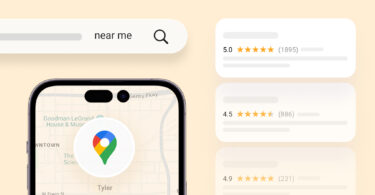
Local SEO Australia helps brands show up in Google Search and Google Maps when nearby customers search for their products or services. Strong local SEO improves your visibility in local results by optimizing your Google Business Profile, earning high-quality reviews, maintaining accurate business information, and building consistent local signals across the web.
Summary
In Australia, local search has become one of the most important channels for attracting nearby customers. Many searches now end directly on the search results page or in Google Maps, where users compare businesses, read reviews, check opening hours, and request directions without visiting a website. As a result, businesses with incomplete or inconsistent local information can lose valuable visibility and customers to competitors with a stronger local presence.
This blog breaks down how local SEO works in Australia, the key factors that influence rankings, and the practical steps businesses can take to improve visibility and drive more conversions.
What makes Local SEO important for Australian brands?
Search behavior is changing as Google AI Overviews become more common. Research tracking Australian search trends found that demand for local services shifted significantly with the rollout of AI-powered search experiences, making visibility across Google Search, Maps, and AI-generated results increasingly important for local businesses.
Here’s why Local SEO is important for Australian brands:
High-intent local searches
Searches such as “dentist Bondi,” “electrician Perth,” or “accountant Brisbane CBD” signal clear intent to take action. For multi-location brands, appearing in these queries helps capture demand at the exact moment customers decide where to go or whom to contact.
Google Map Pack visibility
The Google Map Pack appears above standard search results and highlights three brands alongside a map. Listings in this section tend to attract more calls, website visits, and requests for directions, making it a high-impact surface for multi-location visibility.
Mobile-first discovery
Many people in Australia use mobile devices to find nearby options while commuting, shopping, or comparing services in real time. Mobile search drives immediate action: 76% of local mobile searches lead to a call, visit, or contact within 24 hours, highlighting how quickly intent converts into customer engagement.
Voice search queries
Voice queries such as “nearest pharmacy open now” or “café near me” are increasingly common through assistants like Siri and Google Assistant. Clear, consistent location data and strong relevance signals improve visibility for these conversational searches.
Trust before contact
Reviews, ratings, and accurate listing information shape decisions before any call or website visit happens. For multi-location brands, consistent reputation signals across locations help build credibility and support selection in competitive markets across cities such as Sydney, Melbourne, Brisbane, Perth, Adelaide, Hobart, and Darwin.
AI-driven discovery
AI-driven experiences like Google AI Overviews, ChatGPT, Gemini, and Perplexity increasingly surface direct answers for location-based queries. Visibility in these environments is influenced by reviews, citations, listing accuracy, and overall brand authority across the web.
For multi-location brands, local visibility now spans Google Search, Maps, mobile discovery, voice assistants, and AI-led results, where customers often make decisions before visiting a website.
What are the Local SEO ranking factors that matter in 2026 (Australia)
Local search visibility in Australia is shaped by how consistently multi-location brands build relevance, trust, and authority across Google Search, Google Maps, and other discovery surfaces. These signals determine how individual locations perform for high-intent local searches.
Below are the six Local SEO ranking factors that matter for multi-location brands in Australia.
Google Business Profile (GBP optimisation and completeness)
Google Business Profile plays a central role in local rankings. Accurate categories, complete service details, correct location data, and regular updates improve how each branch appears in Map Pack results.
Customer reviews (volume, recency, and sentiment quality)
Reviews influence both ranking performance and customer choice. Factors such as review volume, recency, and sentiment help determine how strongly a location is surfaced in competitive Australian search results.
Citations (business information consistency across listings)
Citation consistency across directories and data platforms strengthens location verification. When business details remain aligned across listings, search engines can confidently associate each branch with its correct information.
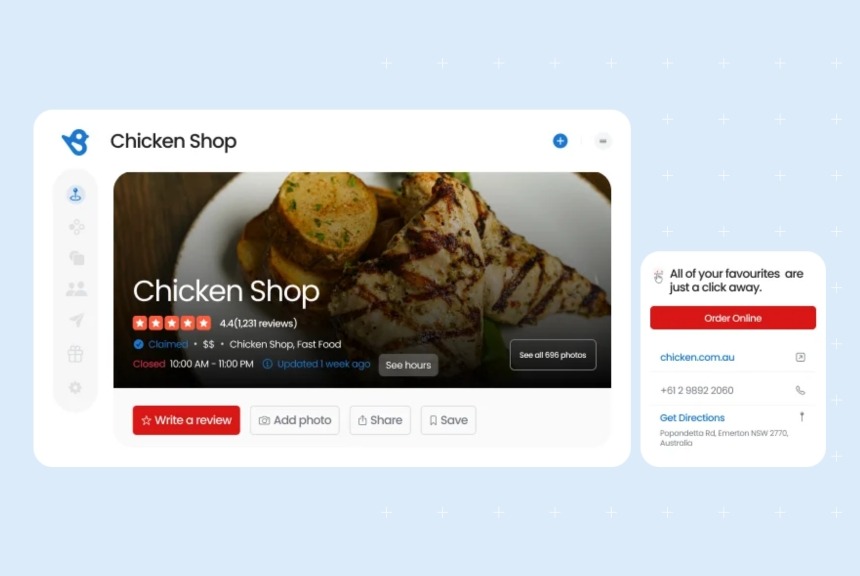
On-page optimisation (location pages and local relevance signals)
On-page signals help connect search queries to specific locations. Well-structured location pages, localised content, and clear internal linking improve visibility for “service + suburb” searches.
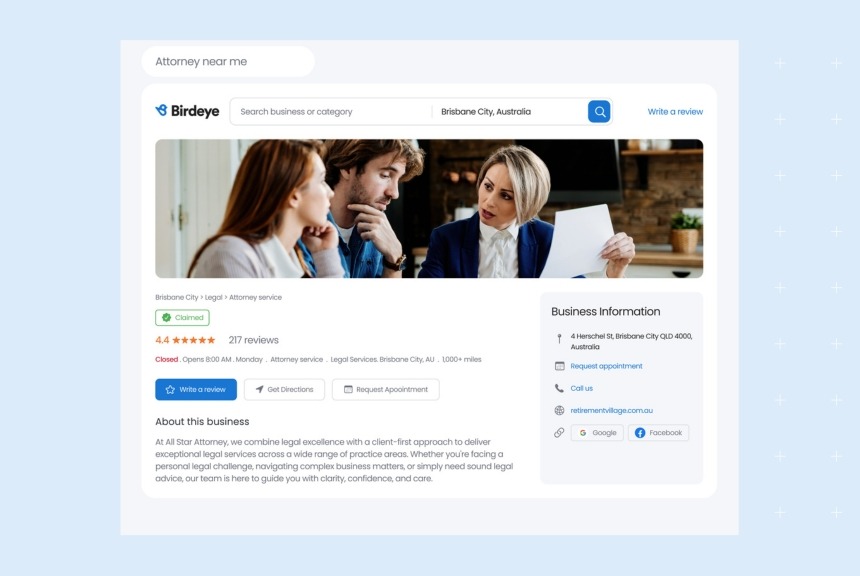
Links (local and industry authority backlinks)
Local and industry-relevant backlinks strengthen authority. Mentions on Australian websites, publications, and associations reinforce credibility and improve the ranking potential of both service and location pages.
Brand signals (search demand and entity recognition)
Brand signals reflect overall recognition and demand. Branded searches, mentions across the web, and engagement patterns influence how often a multi-location brand appears in local results.
Strong performance across these six factors determines how consistently multi-location brands appear across Google Maps, Search, and broader local discovery experiences in Australia.
How local SEO in Australia is different from the rest of the world
Local SEO isn’t one-size-fits-all. What works in the U.S. or the UK won’t always work in Australia, and here’s why:
Mobile-first, “near me” behaviour
Australian consumers rely heavily on mobile. This increasing reliance is also reflected in the number of consumers who use voice search to find local businesses, such as “Plumber near me” or “Thai food open now.”
Google prioritises complete, accurate, and frequently updated Google Maps and business profiles. This makes GMB listing optimisation for local keywords and voice-search-friendly descriptions absolutely critical in the Australian context.
Unique platforms dominate local search
While Google My Business (now Google Business Profile) is still the primary player, Australia also has homegrown platforms that influence local SEO efforts.
Sites like Localsearch, TrueLocal, Hotfrog, and StartLocal act as crucial local business directories that feed data into search engines and help validate NAP (name, address, phone) consistency.
Failing to list or optimise your business profile on these directories can weaken your online visibility, even if you’ve nailed your Google presence.
How to improve Local SEO for Australian businesses (2026 checklist)
If you are a multi-location brand, optimising a single listing is not enough. A repeatable local SEO system is needed across suburbs, cities, and states to maintain visibility and performance at scale.
Below is a practical 8-step checklist for improving local SEO performance across Australia.
1. Claim and verify every Google Business Profile
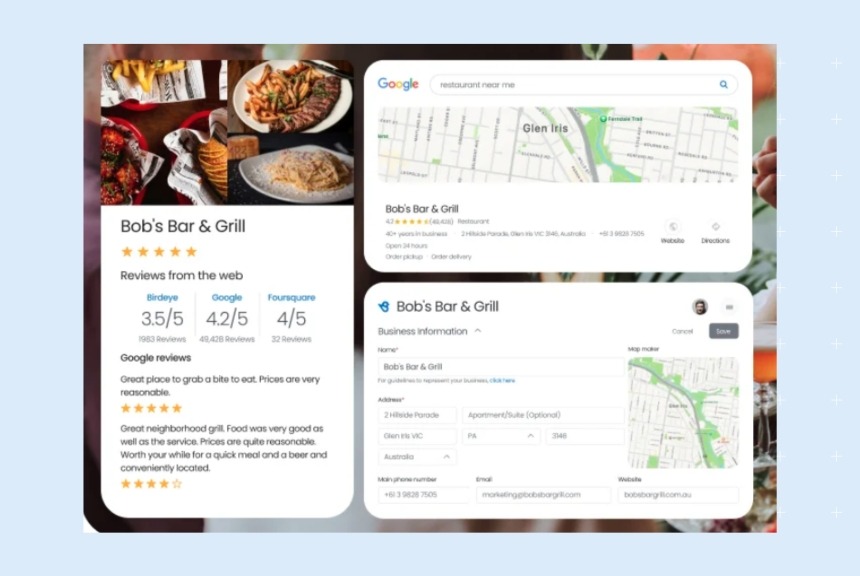
- Create or claim a separate Google Business Profile for each physical location.
- Use a consistent business name, with slight variations only if legally required (e.g., “Birdeye Dental – Canberra”).
- Based on Google’s guidelines, verify each profile via postcard, phone, or email.
- Use a GBP management platform like Birdeye to track and update profiles in bulk.
Why it matters: Verified, complete business profiles are prioritised in Google search and Google Maps, especially for “near me” and branded local searches.
2. Use consistent NAP (Name, Address, Phone) data
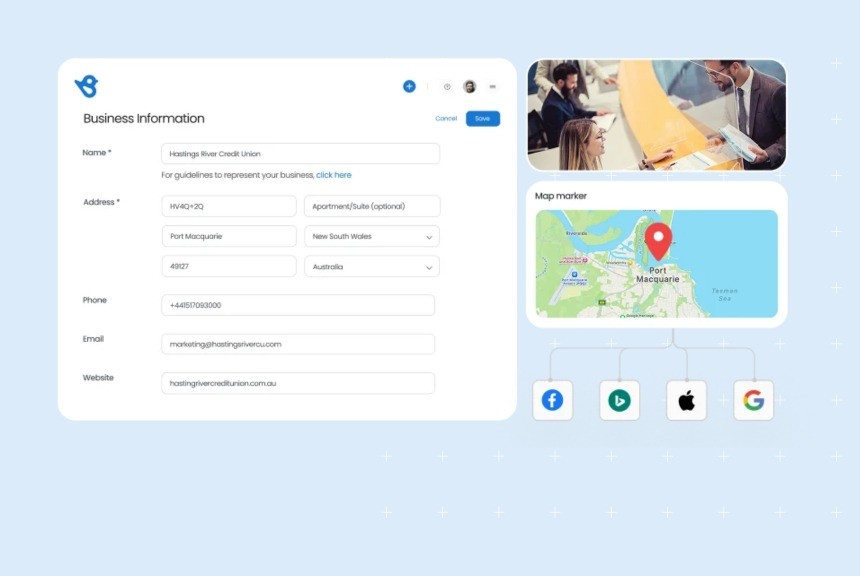
- Ensure that every business listing, landing page, and directory entry uses the same NAP format.
- Avoid abbreviations in some places and full words in others (e.g., St. vs Street).
- Use schema markup on your business website to reinforce NAP consistency.
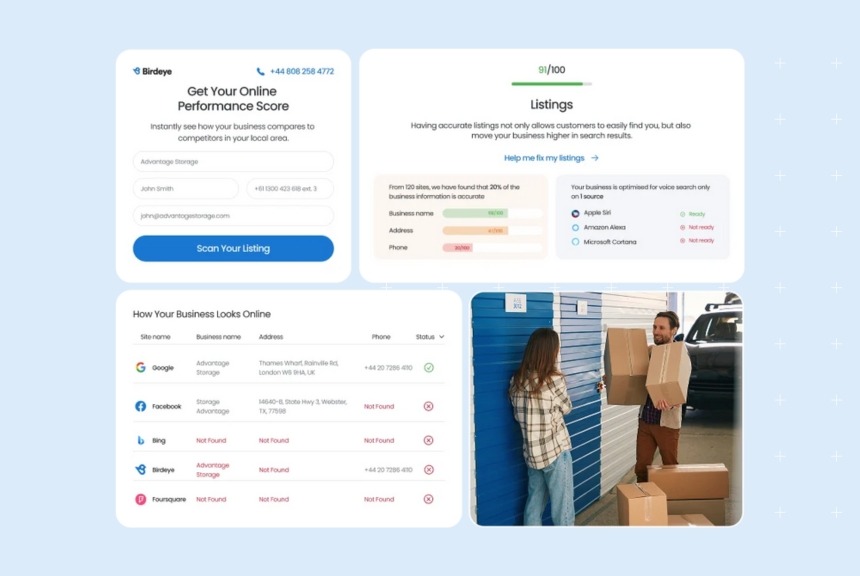
Not sure if your business is fully optimized for local search? Get a free Local SEO Audit from Birdeye to identify listing errors, measure your local visibility, and discover actionable opportunities to improve your rankings and attract more local customers.
3. Optimise categories, services, and attributes
- Choose the most accurate primary category for each location (e.g., “Physiotherapist,” not “Health Clinic”).
- Add secondary categories and location-specific services.
- Use attributes like “wheelchair accessible,” “free Wi-Fi,” or “family-friendly” where relevant.
Why it matters: Categories and services help Google match your business profile to specific local keyword searches.
4. Create location-specific landing pages
- Build individual landing pages for each branch or store with unique content, CTAs, and embedded maps.
- Include localised keywords like “cosmetic dentist in Bondi” or “vet clinic South Brisbane.”
- Add staff bios, location photos, and FAQs to humanise each location.
- Use tools like SEMrush and Birdeye to perform local keyword research and tailor your content to suburb-specific queries.
- Ensure each location page is optimised with schema, fast loading speed, and clean structure—core aspects of technical SEO.
Why it matters: Custom pages improve search engine optimisation and customer trust, leading to more conversions.
5. List your business in Australian directories
- Submit each location to trusted local Australian directories like Localsearch, TrueLocal, StartLocal, Hotfrog, and Yelp AU.
- Use a tool to manage these business listings at scale and maintain local citations.
Why it matters: These directories feed data to search engines, validating your presence in the local community and increasing organic traffic.
6. Collect and respond to google reviews consistently
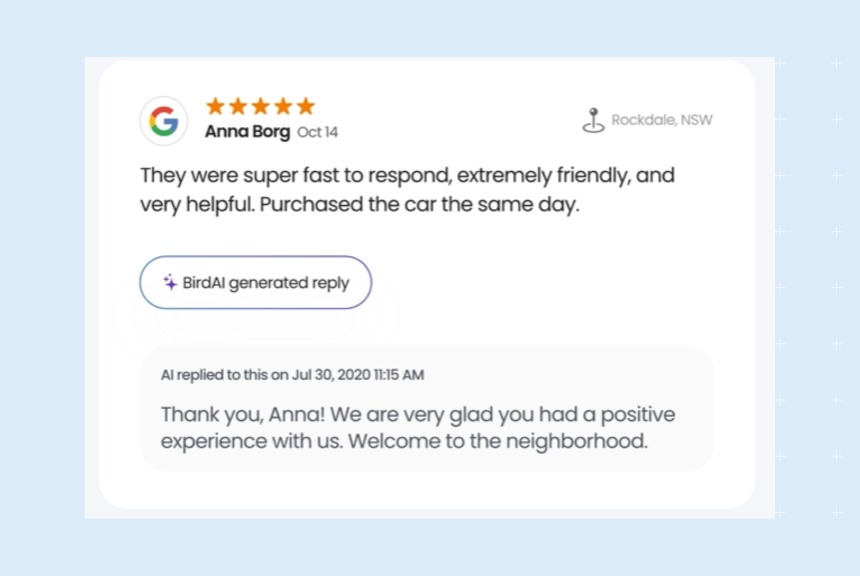
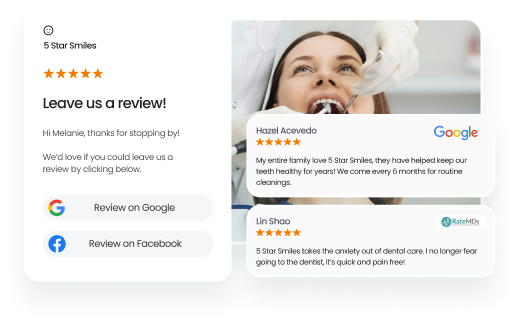
- Ask for Google reviews via SMS or email after key touchpoints (e.g., visit, sale, service).
- Respond to every review, positive or negative—within 24–48 hours.
- Use AI-driven tools to monitor sentiment trends and flag issues.
Why it matters: High review volume and fast responses improve your local SEO rankings and boost trust with potential customers.
7. Publish local content regularly
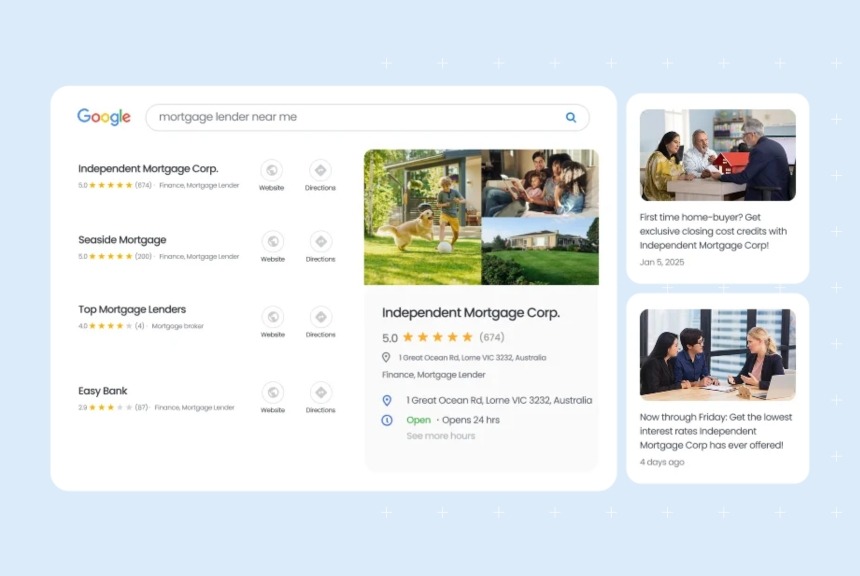
- Share weekly posts on your Google Business Profiles highlighting location offers, staff spotlights, or local events.
- Run campaigns that resonate with specific suburbs or regions (e.g., “End of Financial Year Sale – Newcastle location only”).
- Repurpose posts across social media marketing channels.
Why it matters: Active profiles and fresh local content signal relevance to search engines and engage your target audience.
8. Monitor and optimise with analytics
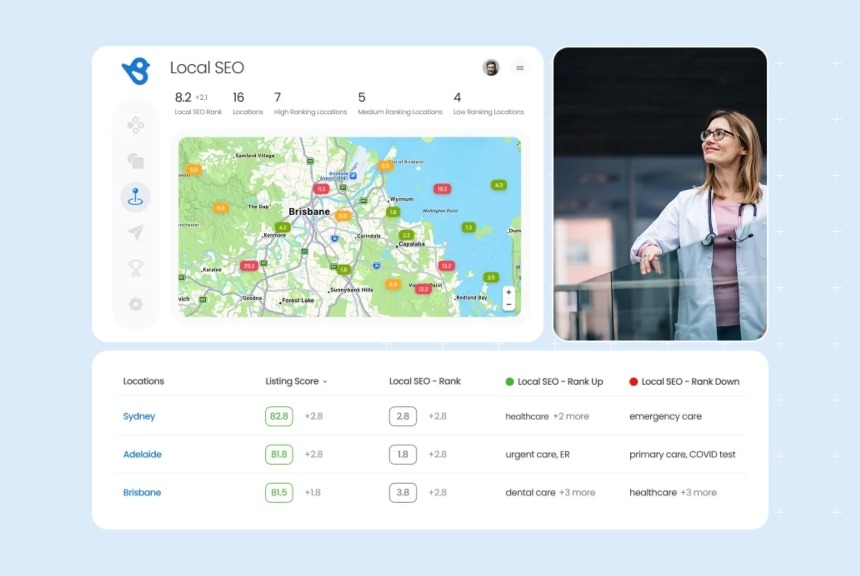
Use tools like Birdeye to monitor impressions, clicks, direction requests, and calls per location.
- Identify underperforming profiles and prioritise fixes.
- Test variations of titles, services, and images to improve engagement.
Why it matters: You can't improve what you don't track. Data helps optimise every aspect of your local SEO campaigns.
When implemented together, these steps build a strong foundation for local SEO Australia success across all your locations. With the right systems in place, you’ll improve your search engine results, attract more local traffic, and convert them into loyal customers.
How do you manage local SEO at scale for multi-location AU brands?
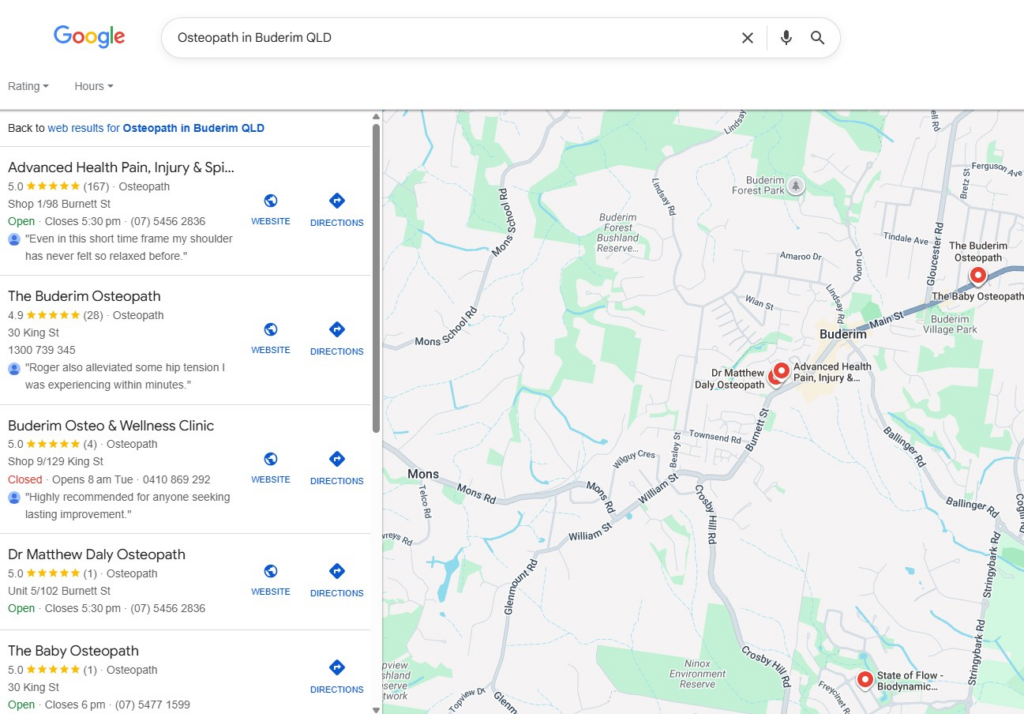
Managing local SEO across multiple locations in Australia requires centralised processes that keep listings accurate, track local performance, and maintain brand consistency. As location counts grow, teams need workflows that reduce manual effort while preserving suburb-level visibility.
Below is a practical workflow for managing local SEO across multi-location Australian brands.
Bulk GBP updates
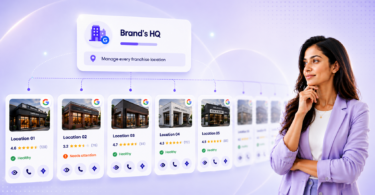
Update categories, services, trading hours, photos, and posts across multiple Google Business Profiles from a central platform. Roll out seasonal campaigns, service changes, new service launches, or holiday hours across every relevant location without updating each profile individually.
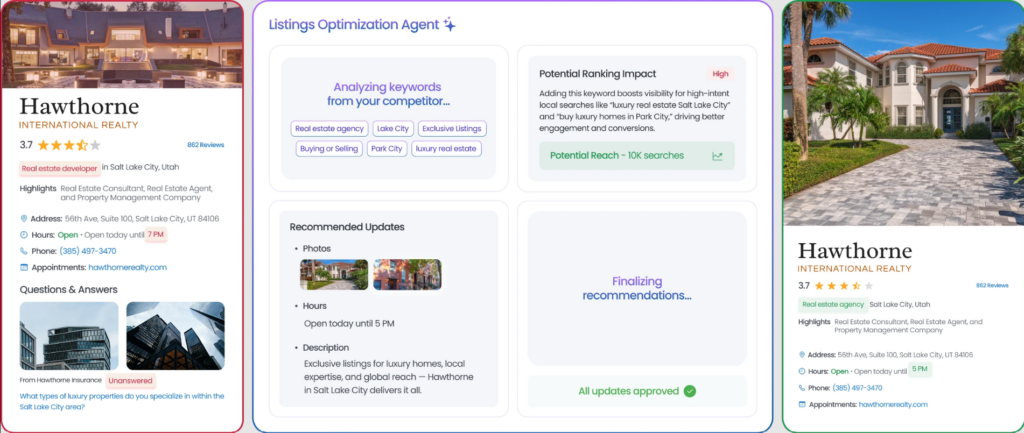
Pro tip: Birdeye's Listings Optimization Agent continuously audits and optimises location profiles across Google, Apple, Yelp, and other directories. It identifies incomplete listings, missing profile fields, and optimisation opportunities to help maintain accurate and competitive local listings across all locations.
Multi-location reports
Track calls, website clicks, direction requests, profile views, and search impressions for every location in a single reporting view. Compare performance across branches, identify locations that lag behind regional benchmarks, and prioritise optimisation efforts using location-level data.
Suburb-level rank tracking
Monitor rankings for suburb-specific searches such as “dentist Bondi,” “vet clinic South Brisbane,” or “physio Parramatta.” Measure visibility across both Map Pack and organic results to identify suburbs where competitors capture more local search demand.
Brand voice consistency
Apply the same messaging standards across Google Business Profiles, review responses, and location pages. Use approved descriptions, response frameworks, and content guidelines so every location reflects the same brand positioning while incorporating relevant local context.
Managing local SEO across dozens or hundreds of locations requires centralised control, location-level visibility, and consistent execution. Brands that standardise these workflows can maintain stronger local search performance across suburbs, cities, and regions.
Local SEO Australia: The 2026 Guide to Rank in Maps
Want to see the impact of Birdeye on your business? Watch the Free Demo Now.
How AI Overviews and ChatGPT are reshaping Local SEO in Australia (2026)
AI-driven search in Australia now pulls local recommendations from structured profiles, citations, and location pages. Multi-location brands improve visibility by keeping information consistent across all digital touchpoints.
Here is how AI search reshapes local discovery.
- SGE and AI Overviews use Google Business Profiles, reviews, and location pages to surface brands for suburb-based searches.
- Citation sources across directories help AI systems confirm brand identity and service details.
- Structured data helps AI understand services, suburbs, and operating hours for each location.
- Bing Places affects ChatGPT local visibility through Bing’s index, which powers many local answers.
AI search rewards consistent and structured local signals across platforms. Multi-location brands that align profiles, citations, and structured data improve visibility in AI-driven local results.
What are the best tools for Local SEO in Australia (comparison table)
Multi-location brands in Australia use a mix of platforms to manage listings, reviews, and local visibility. Here is a practical comparison based on capabilities and use-case fit.
| Tool | AU-native | Multi-location support | Reviews management | Listings management | Pricing |
| Birdeye | Yes (supports AU multi-location brands) | Strong (built for multi-location brand workflows) | Strong (review collection, monitoring, responses, automation) | Strong (centralised listings and profile management across platforms) | Custom pricing model based on the number of locations, selected products, and business requirements |
| Localsearch | Yes (Australia-based directory and agency model) | Moderate | Basic | Moderate (directory-led visibility within its network) | Mid-range |
| Whitespark | No (not AU-based, but supports Australian citation sources) | Moderate | Limited | Strong (citation research and building across AU directories) | Mid-range |
| BrightLocal | No (not AU-based, but widely used for AU SEO tracking) | Moderate | Moderate | Strong (citations, audits, and local SEO reporting across AU directories) | Low to mid-range |
Multi-location brands with 100-10,000+ locations use Birdeye to centralise listings and review management across locations, while other tools support specific parts of citation tracking and reporting workflows.
How Birdeye helps Australian multi-location brands rank higher
Multi-location brands in Australia often struggle to maintain consistent visibility across thousands of locations. Reviews sit in silos, listings drift out of sync, and customer feedback arrives faster than teams can respond. This creates gaps in reputation, search visibility, and customer experience across regions.
Trusted by leading enterprise brands globally, Birdeye builds AI agents for multi-location brands to help them manage customer experience signals across hundreds to 10,000+ locations. Powered by BirdAI and a unified data platform, it connects reviews, listings, social engagement, customer interactions, and operational insights to support better decisions across the customer journey.
Birdeye helps multi-location brands respond faster to feedback, maintain consistency across locations, and strengthen their online reputation. This improves visibility across local search and AI-driven discovery surfaces.
Its specialised AI coworkers help teams manage signals that influence visibility and customer perception:
- Jay improves visibility, strengthens reputation, and supports customer acquisition.
- Robin ensures accuracy, consistency, and operational alignment across all locations.
- Myna identifies sentiment patterns and highlights customer experience trends.
These capabilities help brands shift from reactive management to structured reputation management. For example:
- Review Generation Agent personalizes review requests, optimizes delivery timing, and increases review volume across key review sites. Review Response Agent generates on-brand review responses, flags priority feedback, and surfaces sentiment trends for faster action. Together, they help monitor reviews across 200+ sites, generate responses, and analyse sentiment to improve customer experience.
- Social Publishing Agent creates, schedules, and publishes AI-generated content tailored to your brand, audience, and posting schedule. Social Engagement Agent monitors comments and messages, identifies customer intent, and drafts on-brand replies to improve response times.
- Listings Optimization Agent keeps business details accurate across major discovery platforms.
- Search AI connects reviews, listings, and customer signals to improve discovery across search and discovery platforms.
- Insights analyses feedback across locations to surface sentiment trends and service gaps that impact customer experience.
“The Social Media AI Planner has been a game-changer for us when it comes to digital marketing. It’s really simplified content scheduling, and the AI-driven recommendations are practically ready to go as they require very little editing. It’s helped us maintain a consistent online presence across multiple platforms, which we’ve struggled with in the past. We’ve definitely seen an increase in engagement and audience reach, so it’s been a big win for us.”
Rachel B
Operation Manager, Ray White CRE
Birdeye integrates reviews, listings, search visibility, social presence, and customer insights into a single system. Multi-location brands use it to close visibility gaps, maintain consistency across locations, and strengthen customer discovery and choice across Australia.
FAQs
Reviews influence visibility in Google Maps and AI results by strengthening trust signals, improving click-through rates, and reinforcing relevance for suburb-based searches. Platforms like Birdeye help multi-location brands collect and manage reviews consistently across locations.
Basic local SEO can be managed in-house through Google Business Profile setup, NAP consistency, and review collection, but multi-location brands and competitive markets like Sydney and Melbourne usually need structured tools like Birdeye or specialist support to manage local SEO at scale.
Birdeye supports multi-location brands with reviews, listings, and AI search visibility, while Localsearch focuses on AU directories, Whitespark handles citation research, and BrightLocal supports SMB-level local SEO tracking.
Costs vary based on location count, competition, and scope. Smaller setups generally cost less, while multi-location brands and organizations require a higher investment in platforms like Birdeye for listings, reviews, and ongoing optimization across locations.
Verify and optimise Google Business Profile, maintain consistent NAP across directories, collect steady 4–5★ reviews, publish weekly GBP posts, and build local backlinks from Australian sources like chambers and local publications.
Build a stronger local presence across Australia
Strong local SEO performance in Australia depends on consistent execution across listings, reviews, and location-level signals. Multi-location brands that keep these elements aligned across every branch improve visibility in both Maps and local search results.
Birdeye helps maintain this consistency across locations, ensuring each branch stays accurate, responsive, and visible in local discovery moments that matter.
Watch a free demo to see how Birdeye helps multi-location brands improve local visibility and customer experience across Australia.

About the Author

Vanjana Sharma
Originally published