Google Business Profile for franchises is easy to manage when you’re overseeing a handful of locations. The challenge changes as your network grows.
One location means one listing. A hundred locations mean hundreds of profiles, updates, stakeholders, and opportunities for information to fall out of sync. What starts as a local marketing task quickly becomes an operational challenge that spans marketing, franchise operations, and customer experience.
Summary: The brands that do this well don't just optimize individual profiles. They build a system that keeps every location accurate, consistent, and locally relevant without creating extra work for corporate teams.

This guide shows you how to build that system. You'll learn how to structure Google Business Profiles across a franchise network, establish clear ownership, standardize what matters, and localize what should vary. We'll also explore how a well-managed Google Business Profile strengthens visibility in both local search and emerging AI-powered search experiences.
Table of contents
- What is Google Business Profile for franchises?
- How should franchises structure their Google Business Profile?
- Who should own franchise Google Business Profiles?
- How do you set up Google Business Profiles across every franchise location?
- How do franchise brands verify Google Business Profiles at scale?
- How do you optimize every franchise location without sacrificing brand consistency?
- How do you keep Google Business Profile information consistent across every location?
- How do you manage Google reviews across every franchise location?
- How do franchise brands improve visibility in local and AI search?
- Why is Google Business Profile only one part of your local visibility strategy?
- How can enterprise franchise brands manage Google Business Profiles at scale?
- FAQs on Google Business Profile for franchises
- Enterprise franchise brands trust Birdeye to manage their Google Business Profiles
What is Google Business Profile for franchises?
Google Business Profile for franchises means managing a separate profile for every eligible franchise location through a centralized business account. Google Business Profile improves franchise visibility in local search, and each location needs its own distinct profile for local SEO.
Unlike single-location businesses, franchise businesses need a structure that balances corporate oversight with local flexibility, ensuring every location stays accurate, discoverable, and aligned with brand standards.
Birdeye's State of Google Business Profile 2026 research found that 76% of businesses now have verified Google Business Profiles, making verification a baseline expectation rather than a competitive advantage.
For an independent business, a Google Business Profile is just another marketing channel. For a franchise brand, it’s part of a much larger operational system.
Every location serves a different market, earns its own reviews, answers local customer queries, and may have unique business hours or services. With multiple franchise locations, each branch’s profile can build visibility independently in Google Search and Maps while still following shared brand standards.
At the same time, every profile represents the same brand and must adhere to the same standards.
That’s why franchise brands need a different approach.
Instead of managing profiles one by one, successful organizations create a centralized structure that makes it easier to maintain consistency while giving local teams room to keep their information relevant.
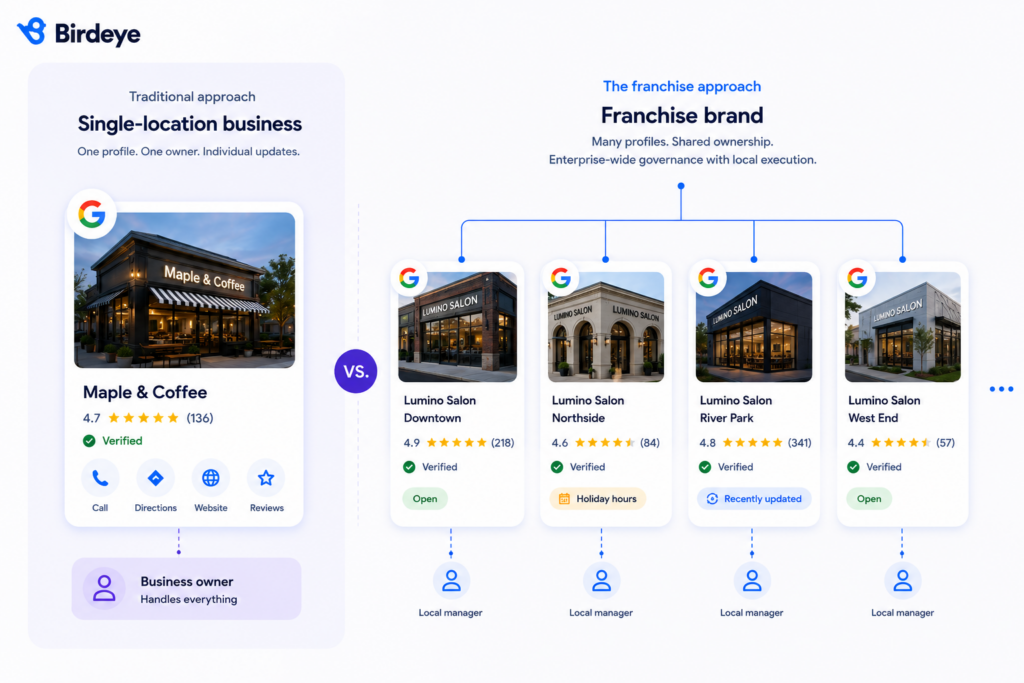
| Single-location business | Franchise brand |
| One business profile | One profile for every eligible location |
| One business owner | Corporate teams, franchise owners, and local managers |
| Individual updates | Shared workflows and approvals |
| Local optimization | Enterprise-wide governance with local execution |
How should franchises structure their Google Business Profile?
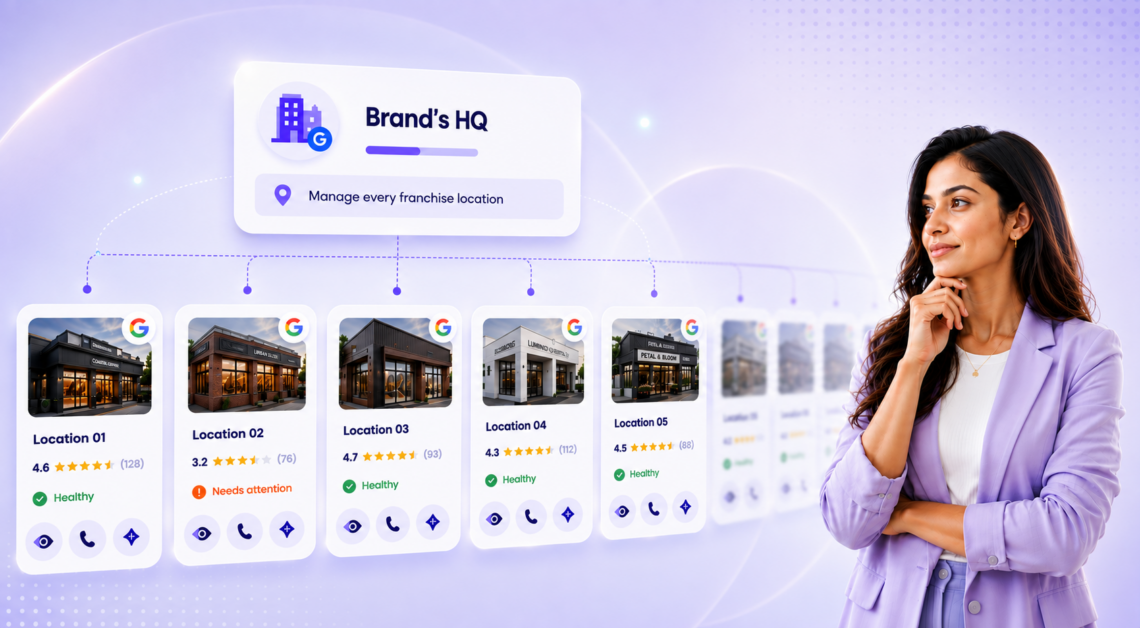
The most effective way to structure Google Business Profile (or GBP) across a franchise network is to create one profile for every eligible location under a centralized Google Business Profile Manager account. This gives each location its own presence in local search while allowing headquarters to manage all GBP listings from one place.
Google also offers bulk upload tools for brands managing many Google Business Profile listings.
A centralized business account provides corporate teams with visibility across the network, while individual location profiles allow each franchise to appear in local search results and manage information that’s unique to its market. Even within that setup, each location can rank independently in its own market, so performance can vary across different locations.
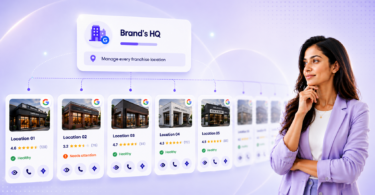
Think of your franchise network as a hub-and-spoke model.
- The hub sets the rules, manages access, and maintains brand standards as part of your Google Business Profile strategy.
- The spokes represent individual franchise locations, each with its own profile, reviews, business hours, and local presence, which helps preserve local optimization.
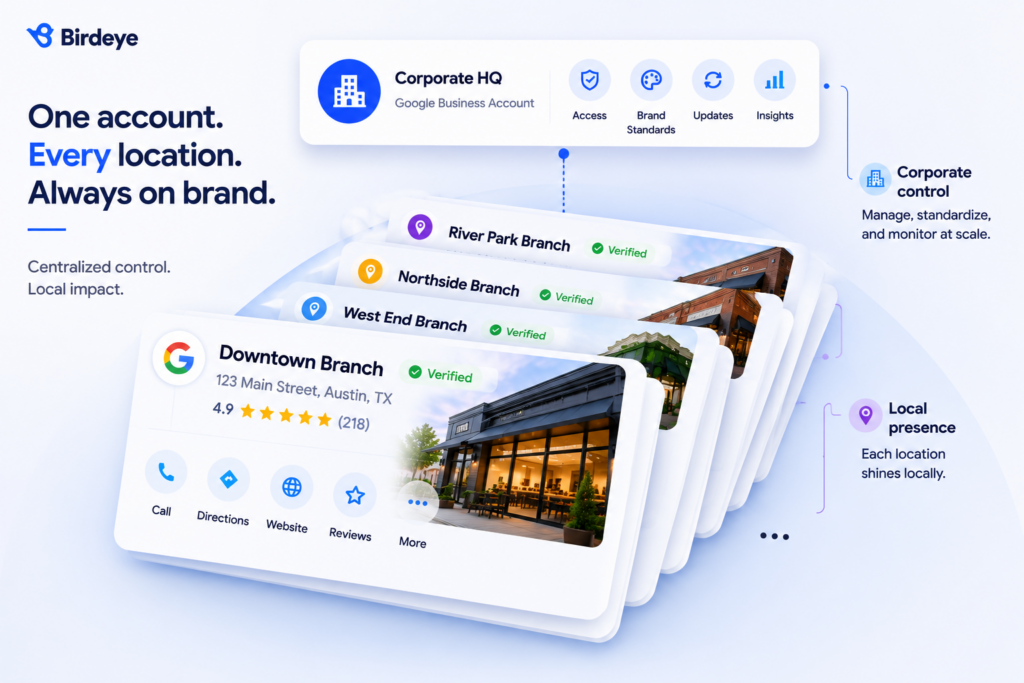
As franchise networks grow, this model makes onboarding new locations, assigning users, and organizing profiles significantly easier.
Think like this. A restaurant franchise is opening 30 new locations in six months. Instead of creating disconnected profiles owned by different people, every location is added under the same corporate business account, follows the same naming conventions, and receives the appropriate level of access from day one.
Recommended Google Business Profile structure for franchise brands
| Level | Primary responsibility |
| Corporate business account | Owns the organization, manages users, and oversees all locations |
| Individual location profiles | Represent each physical franchise location in Google Search and Maps |
| Local managers | Keep location-specific details, such as business hours and photos, up to date |
A clear account structure creates the foundation for franchise growth. The next step is defining who owns the profiles and which responsibilities belong to corporate teams versus local managers.
Who should own franchise Google Business Profiles?
Corporate should own the franchise’s Google Business Profiles while giving franchisees , regional managers, or a site manager location-specific access to update daily details without taking over ownership. This governance model protects the brand while allowing local teams to keep their profiles current.
Without clear ownership, even simple tasks like updating a phone number or responding to a location transfer can quickly lead to duplicate profiles, inconsistent business information, or accounts that corporate teams can’t access.
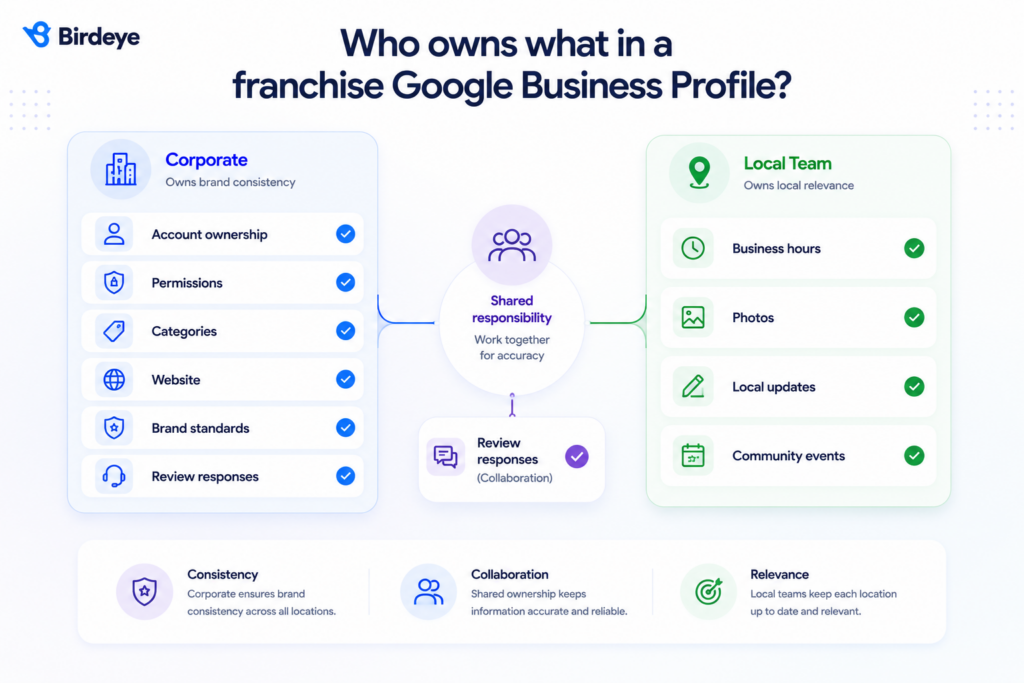
For example, if a franchise location closes early due to severe weather, the local manager can update the operating hours immediately. If the company rebrands or changes its website structure, corporate can roll out those changes across every location while protecting brand standards.
Clear ownership creates accountability. Corporate teams, with a designated primary owner, oversee governance and brand standards, while local managers keep their profiles accurate and relevant to their communities. Both roles are essential, but they shouldn’t own the same responsibilities.
Once ownership is established, the next step is creating every profile with complete, accurate information and keeping it up to date as your franchise grows, since Google Business Profile management requires ongoing effort for accuracy.
How do you set up Google Business Profiles across every franchise location?
Setting up Google Business Profiles across a franchise network starts with creating and verifying a distinct profile for every eligible location under your organization’s business account, which strengthens each location’s local presence and supports each business listing. From there, verify ownership, complete every profile with accurate business information, assign the right access, and perform a final quality check before customers discover your listings.
Once you’ve decided how your franchise network will be structured and who owns the profiles, it’s time to put that framework into action.
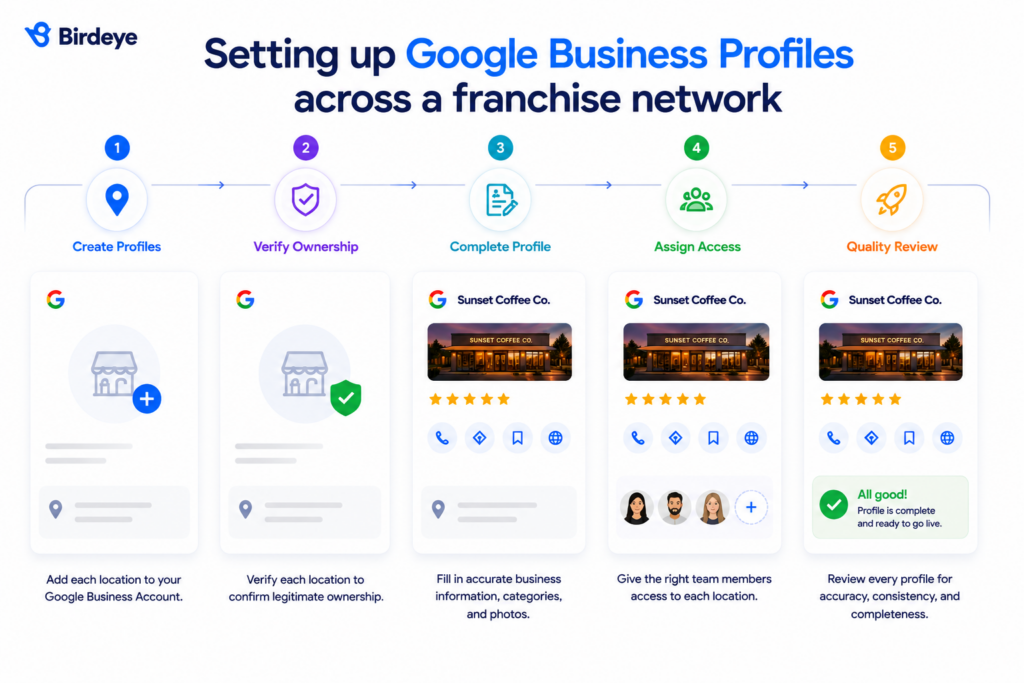
1. Create a profile for every eligible location
Create Google Business Profiles for every eligible franchise location that doesn’t already have one. Separate profiles help each branch appear in Google’s Local Pack and local search results. Avoid duplicate listings or combining multiple locations into a single profile.
Individual profiles help customers find the correct business location and allow each franchise to build its own local presence, reviews, and customer engagement to reach more local customers.
This means a retail franchise with 120 stores should have 120 individual Google Business Profiles, not one profile for each region.
2. Verify ownership
Once the profiles are created, verify that they belong to your organization.
Verification confirms your organization owns the profile and can publish updates, respond to Google reviews, and prevent unauthorized changes.
For growing franchise networks, verification is often one of the biggest operational challenges, especially when new locations open regularly or ownership changes.
3. Complete every profile before publishing
An incomplete profile creates unnecessary friction for both customers and search engines.
Before a profile goes live, make sure every essential field is complete, including any missing attributes. Accurate business categories define location relevance, and hyper-specific primary categories can significantly affect local rankings. Keep the selected category consistent across comparable franchise locations unless a location genuinely offers something different.
Profile completion checklist
| Information | Why it matters |
| Business name | Helps customers identify the correct location |
| Business address | Ensures customers can find the business; accurate NAP details support local SEO and prevent customer issues |
| Phone number | Makes it easy to contact the location, and maintaining accurate location details supports search visibility |
| regular business hours | Reduces customer frustration because inaccurate details can hurt trust and lead to poor experiences |
| Primary category | Helps Google understand the business |
| Website URL | Directs customers to the right location page |
| services offered | Sets clear expectations |
| Business description | Explains what the location offers |
| Photos | Using high quality images helps build customer confidence before they visit |
4. Give local teams the right level of access
After each profile is complete, assign access to the people responsible for keeping it current.
Assign the appropriate access level to each team member (corporate as the primary owner, regional managers where needed, and a local site manager for day-to-day updates) so every location can support effective management and keep profile details current without changing corporate-owned settings.
5. Review every profile before launch
Before customers begin finding your locations through Google Search or Maps, take a final pass through every profile.
A simple quality check can help catch small issues before they affect visibility or customer experience.
Perform one final quality review to confirm that every required field has been completed, that each location links to the correct landing page, and that the profile is ready to be regularly reviewed and updated after launch, since regular updates to business profiles signal activity to Google.
A consistent launch process gives every franchise location the same strong foundation and reduces the amount of cleanup required later.
The next challenge is verification at scale, especially for brands managing dozens or hundreds of locations.
How do franchise brands verify Google Business Profiles at scale?
GBP verification is one of the first operational challenges franchise brands encounter as they expand.
Verification becomes increasingly complex as franchise networks expand across regions, ownership groups, and new store openings.
For brands opening multiple locations each month or acquiring existing businesses, verification can quickly become a bottleneck without a standardized process.
Common verification challenges for franchise brands
| Challenge | Why it matters |
| Multiple store openings | New locations need to go live within tight launch timelines. |
| Ownership transfers | Existing profiles may still be controlled by previous owners or agencies. |
| Store relocations | Address changes can trigger additional verification requirements. |
| Acquisitions | Newly acquired locations often have inconsistent profile ownership and business information. |
| Duplicate listings | Multiple profiles for the same location can delay verification and confuse customers. |
Build verification into your expansion workflow
Growing franchise brands don’t treat verification as a one-time task. They make it part of every new location rollout.
A standardized process helps prevent delays, reduces ownership issues, and ensures every location is ready to appear in local search as soon as it opens.
A few practices can make verification much easier to manage:
- Create profiles as soon as a new location is approved.
- Submit verification before opening day whenever possible.
- Track every location’s verification status in one place.
- Resolve ownership issues before assigning local managers.
- Keep a record of completed verifications for future audits and ownership changes.
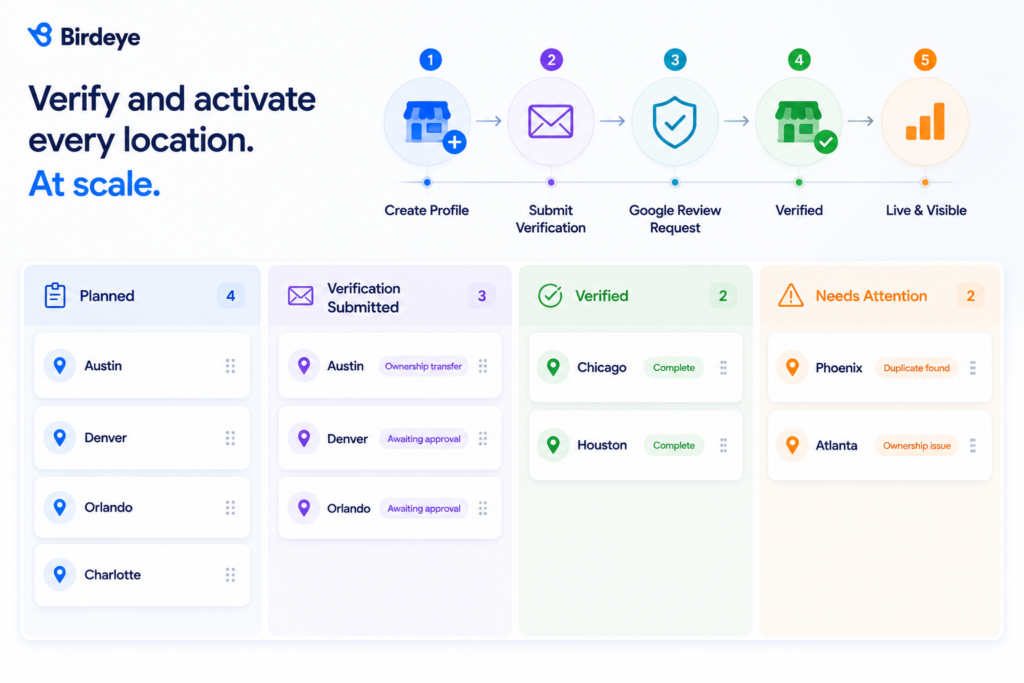
A simple tracking system gives corporate teams a clear view of every location and helps prevent new stores from falling through the cracks.
The next challenge begins after verification. As your network grows, keeping listing data accurate across every location becomes an ongoing operational responsibility.
How do you optimize every franchise location without sacrificing brand consistency?
Optimizing Google Business Profiles across a franchise network isn’t about making every listing identical. It’s about keeping brand information consistent while giving each location the flexibility to reflect its specific local market. The right balance helps every profile stay accurate, relevant, and competitive in local search. This also works best when supported by doing local SEO for franchises to enhance online visibility.
Customers expect the same brand experience regardless of which location they visit. At the same time, they also expect information that’s specific to their local store.
The most successful franchise brands know exactly what should be standardized across every location and what should be customized locally, including unique descriptions and local specifics for each location.
Standardize what defines your brand
| Keep consistent | Why it matters |
| Business name | Maintains a consistent brand identity |
| Primary category | Helps customers and Google understand your business |
| Website structure | Sends customers to the correct location pages |
| Brand description | Delivers consistent messaging |
| Logo and brand assets | Reinforces brand recognition |
Two franchise locations may offer the same core services, but one participates in a local charity run while another sponsors a school event. Featuring these local activities helps each location connect with its community and should reflect the specific local market without changing the overall brand identity.
Localize what customers experience
| Customize locally | Why it matters |
| Business hours | Reflects local operations |
| Photos | High-quality photos help attract and engage potential customers |
| Services (where applicable) | Highlights location-specific offerings |
| Community events or promotions | Google Business Profile allows posting updates and promotions, and Google Posts with promotions relevant to each area can enhance local engagement |
| Review responses | Creates authentic customer interactions |
Optimizing a profile is only the first step. As your franchise grows, the bigger challenge is keeping every location accurately aligned with brand standards.
How do you keep Google Business Profile information consistent across every location?
Keeping Google Business Profile information consistent across a franchise network requires more than occasional updates. As locations open, relocate, change hours, or update services, brands need a centralized process to ensure every profile reflects accurate, up-to-date location details without relying on manual checks, and that consistency extends beyond Google to the directories that shape Google trust signals with the same name, address, hours, and category details.
Maintaining trusted location data becomes significantly more challenging as franchise networks grow.
A single outdated phone number or incorrect business hours affects one customer. Across hundreds of locations, those small errors can impact brand trust, customer experience, and local and online visibility by creating customer confusion and leading to lost business.
Instead of updating profiles only when problems arise, leading franchise brands build ongoing maintenance into their operations. Consistent information across directories boosts visibility because Google considers NAP information a core requirement for local search engine optimization. Centralized management also helps maintain consistent branding and accurate information across locations.
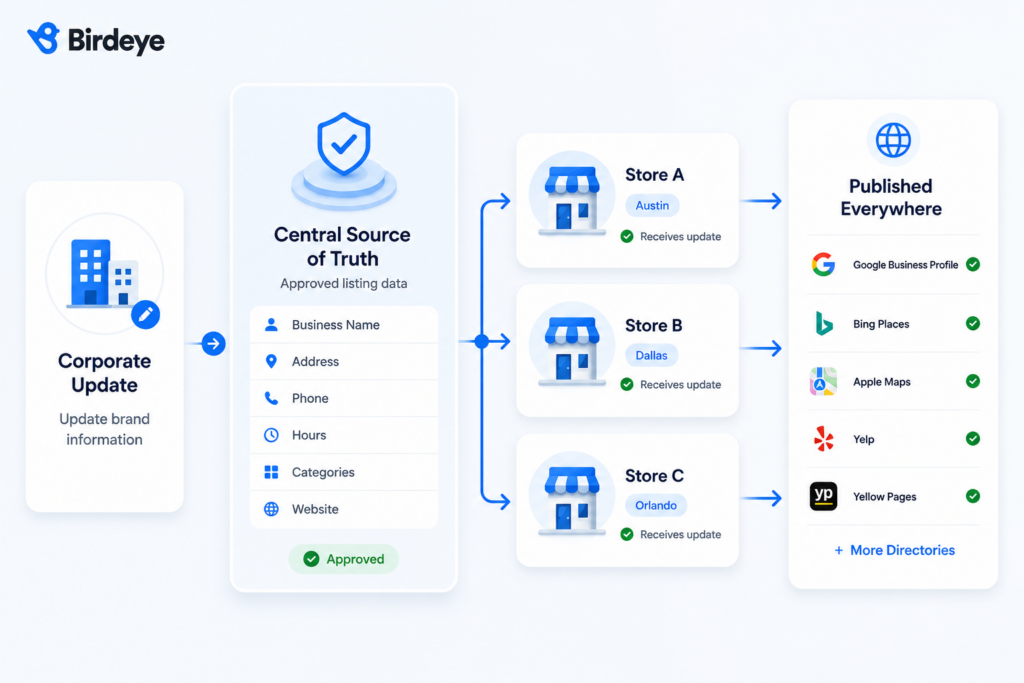
Create one source of truth
Every location should pull its core listing data from a centralized source.
This makes it easier to roll out brand-wide changes, maintain consistency, and reduce conflicting information across locations.
Schedule regular profile audits
Business information changes throughout the year. Quarterly or monthly audits do more than catch outdated details before customers do; regular updates to business profiles can improve local search rankings and signal activity to Google.
Watch for duplicate listings
Duplicate profiles often appear after relocations, ownership transfers, or new store openings. Left unresolved, they can split reviews, confuse customers, and weaken local visibility.
Review your profiles regularly to identify and remove duplicate listings before they become a larger issue.
Make updates across the network
Some changes affect every location, while others are specific to one store.
A clear update process helps corporate teams roll out brand-wide changes efficiently while allowing local teams to maintain location-specific details. Consistent updates across the network also help AI tools recommend the right locations with confidence and support a stronger business online presence.
Consistency isn’t just about Google Business Profile. Customers discover businesses through dozens of online directories, navigation apps, and search platforms. Keeping business information aligned across all of them strengthens local visibility and improves the customer experience.
How do you manage Google reviews across every franchise location?
Google reviews influence how customers discover, evaluate, and choose franchise locations, and they also affect local search rankings for each branch. Managing reviews across hundreds or thousands of locations requires a consistent strategy for generating new reviews, responding promptly, and tracking customer feedback without losing local authenticity.
For most customers, Google reviews are their first impression of a franchise location. A high rating, recent reviews, and thoughtful responses can build confidence among potential customers before they even visit your website. Active monitoring and responses help build trust and credibility for each location, while consistent positive feedback strengthens online reputation and local search visibility.
The challenge for franchise brands isn’t simply getting more reviews. It’s ensuring every location consistently earns, manages, and learns from customer feedback.
Build a consistent review generation strategy
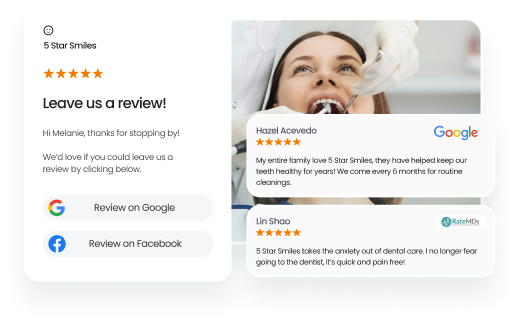
Every location should have a repeatable process to encourage satisfied customers to leave reviews after a positive customer interaction.
Whether it’s after a completed appointment, a successful service visit, or an in-store purchase, asking at the right moment increases the likelihood of receiving genuine customer feedback.
The process should be consistent across every location while allowing flexibility for different customer journeys, since actively generating reviews from satisfied customers boosts customer trust and signals customer engagement.
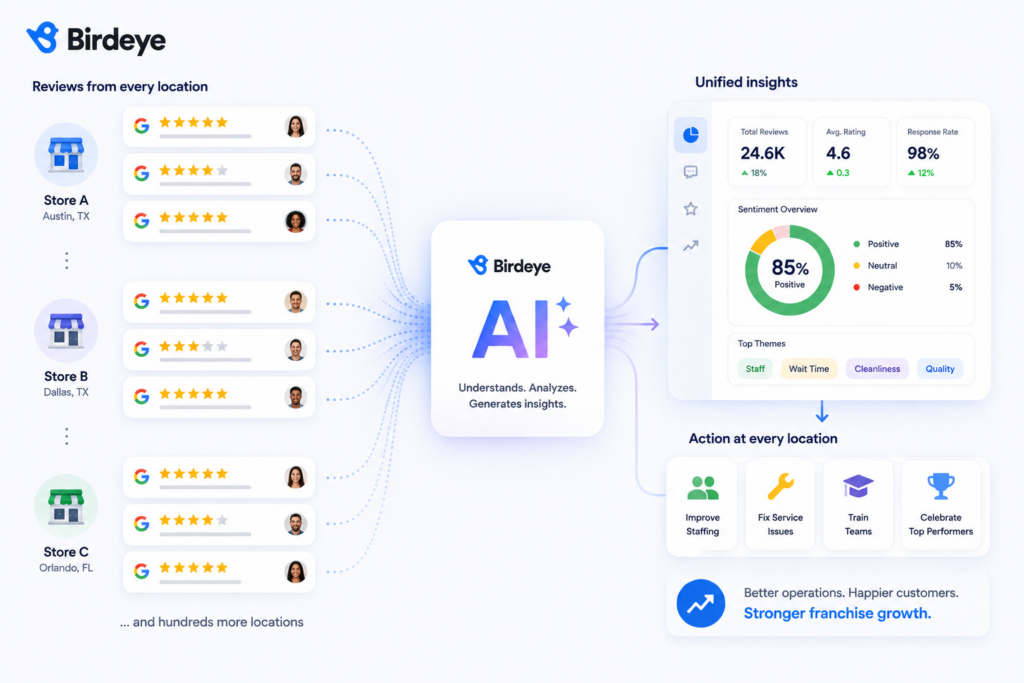
Respond quickly while maintaining your brand voice
Customers notice when businesses engage with feedback.
Responding to both negative and positive reviews shows customers that their experience matters, while helping build trust with future visitors. Responding professionally to negative reviews protects trust and can strengthen franchise reputation management.
Instead of using identical responses everywhere, many franchise brands centralize response guidelines or approvals to keep replies consistent across locations while still allowing local teams to personalize their replies based on the customer’s experience. Every review is about one customer. Every response represents the entire brand.
Use reviews to identify operational trends
Google reviews are more than public feedback. They’re an ongoing source of customer insight.
Review recency and steady review volume are also important signals of local prominence.
Looking beyond star ratings helps franchise brands uncover recurring issues and opportunities across locations.
Monitor trends such as:
- Common customer complaints
- Frequently praised employees or services
- Average response time
- Locations with declining ratings
- Emerging themes across regions
These insights can help marketing, operations, and customer experience teams make informed decisions instead of reacting to one review at a time. Active review management shows customer engagement and reveals how customers interact with a location over time.
Create accountability across the network
Corporate should monitor review trends across every location, while local teams own day-to-day engagement with customers. This creates faster responses, clearer ownership, and a more consistent customer experience.
How Stellar Service Brands scaled review responses across 400 locations
Stellar Service Brands, a home services franchisor with 400 locations, faced a challenge familiar to many franchise networks. Franchise owners spent most of their day in the field, leaving little time to respond to Google reviews consistently.
As a result, the network’s review response rate stalled at 60%, creating missed opportunities to engage customers and build trust.
To solve this, Stellar deployed Birdeye’s Review Response Agent across every location.
Here’s how the workflow changed:
- 4 and 5-star Google reviews received on-brand responses automatically, without requiring franchise owners to log in.
- 3-star and below reviews were flagged for human review, with AI-generated response suggestions to help local teams reply faster.
- Review requests were automatically triggered through integrations with ServiceTitan and Xcelerate, helping every location generate and respond.
The results
| Before Birdeye | After Birdeye |
| 60% review response rate | 87% response rate |
| Manual review management | AI-assisted responses across 400 locations |
| Missed customer engagement | More than half of responses published automatically |
| Limited visibility into customer feedback | 353 Google reviews responded to in the first 30 days |
Beyond improving response rates, Stellar also saw stronger discoverability as consistent review engagement signaled active, well-managed locations across its franchise network.
As Ashleigh Beckwith, Senior Digital Marketing Manager at Stellar Service Brands, explained:

"We needed a way to respond to thousands of reviews without adding work for our franchise owners. Now, positive reviews are answered in real time, and critical feedback is handled with the care it deserves."
This is exactly why enterprise franchise brands increasingly rely on AI agents to scale review management. Routine customer interactions can be handled automatically, while complex conversations still receive the attention of local teams.
How do franchise brands improve visibility in local and AI search?
Local search has evolved beyond the traditional map pack. Today, customers discover nearby businesses through Google Search, AI Overviews, AI Mode, and other AI-powered search experiences. Franchise brands improve their visibility by maintaining accurate business information, earning high-quality reviews, and keeping every location’s online presence complete and consistent. Google evaluates local rankings using relevance, distance, and prominence across these online searches.
A customer searching for “best dentist near me” or “24-hour urgent care nearby” may never visit your homepage first. Instead, they’ll often see local business information surfaced directly within search results or AI-generated answers. Physical distance to the searcher strongly influences which franchise location appears, even when brand authority is strong, which can affect foot traffic.
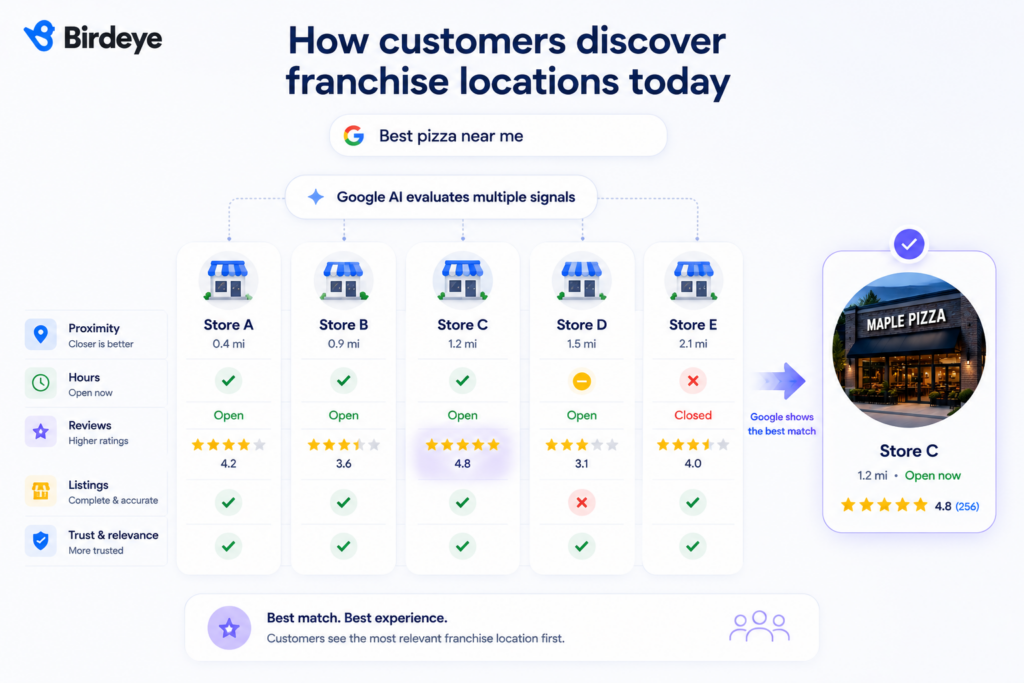
That’s why local visibility depends on more than ranking well on Google Maps. It depends on whether search platforms have enough trustworthy, up-to-date information to confidently recommend your locations. Active engagement, complete profiles, and steady review activity strengthen prominence, improve proximity relevance, and help locations earn visibility with more customers.
The building blocks of local and AI visibility
The strongest franchise brands focus on four fundamentals.
| Focus area | Why it matters |
| Accurate business information | Helps search platforms understand each location, and using local phone numbers for each branch can strengthen local relevance. |
| Consistent listings | Reduces conflicting business information across the web. |
| High-quality reviews | Builds trust and provides valuable customer signals. |
| Complete profiles | Gives customers the information they need to choose a location, including a link to that location’s own localized landing page. |
As AI-powered search continues to evolve, brands don’t need a separate local franchise marketing strategy for every new search experience. They need a reliable foundation of accurate, consistent, and trustworthy business information across all locations.
The challenge is maintaining that foundation as your network grows from hundreds to thousands of locations. That’s where centralized workflows and enterprise-scale management become essential.
Why is Google Business Profile only one part of your local visibility strategy?
Google Business Profile is one of the most important places customers discover your business, but it isn’t the only one. Franchise brands also need accurate business information across maps, online directories, social platforms, and AI-powered search experiences. Keeping listings accurate everywhere strengthens local visibility and builds customer trust.
Customers don’t rely on Google Search alone. They also discover businesses through Apple Maps, Bing, Yelp, Facebook, industry directories, and AI tools like ChatGPT, Gemini, and Claude, which pull information from multiple trusted sources across the web.
If your business hours differ on Google and Apple Maps, or one directory lists an outdated phone number, customers may lose confidence before they ever visit your location.
Managing listings at enterprise scale
Updating one or two directories for a single location is manageable. Updating hundreds or thousands of franchise locations isn’t.
That’s why enterprise brands rely on centralized listings management instead of maintaining every directory individually.
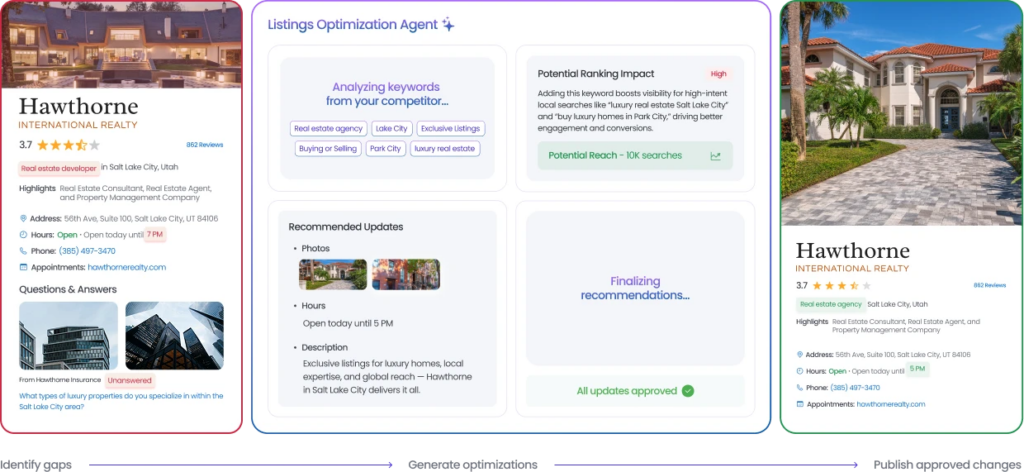
With Birdeye’s Listings Optimization Agent, businesses can keep location information accurate across Google, Apple Maps, Facebook, Yelp, and 200+ online directories from a centralized platform. Instead of manually updating every listing, teams can manage changes more efficiently while maintaining consistency across their entire digital presence.
How can enterprise franchise brands manage Google Business Profiles at scale?
Managing Google Business Profiles across hundreds or thousands of locations requires more than manual updates. As brands grow, the volume of updates, reviews, listings, and operational changes quickly becomes difficult to coordinate. Enterprise organizations need centralized workflows that help corporate teams maintain oversight while enabling local teams to keep information accurate and current.
As franchise networks grow, so do operational challenges
| As your network grows | Your team needs |
| More locations to manage | Centralized oversight |
| More business updates | Bulk workflows |
| More local managers | Role-based access and approvals |
| More listings to maintain | Consistent information across locations |
| More customer interactions | Visibility into location performance |
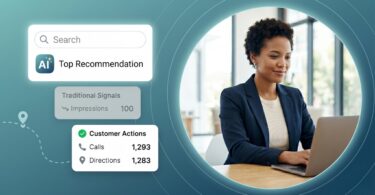
Interestingly, Birdeye’s same report found that while search impressions per location dropped by 53.8% between 2023 and 2025, customer actions declined by only about 5%. The takeaway? Visibility today is more qualified, making performance metrics like calls, direction requests, and website visits more valuable than impressions alone.
This is where platforms built for multi-location brands make the biggest difference.
As franchise networks expand, manual processes quickly become difficult to sustain. Teams need centralized workflows that reduce repetitive work while maintaining governance across every location.
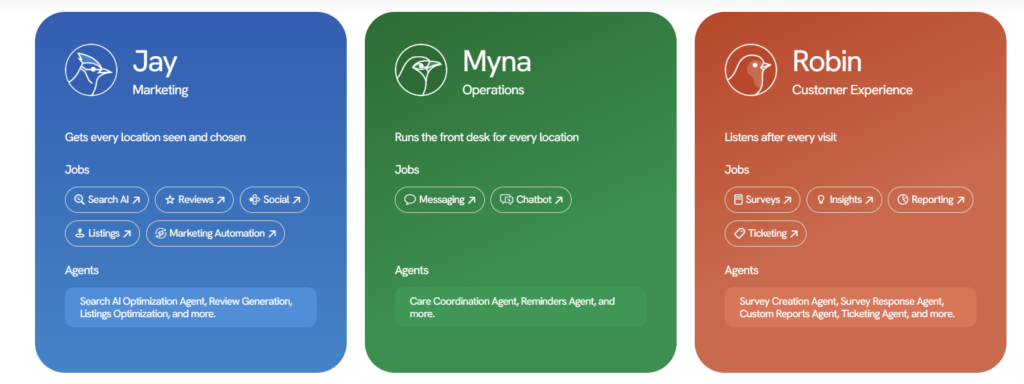
Birdeye builds AI agents for multi-location brands that need trust, consistency, and control at scale. Powered by AI Coworkers at every location, Jay for marketing, Robin for operations, and Myna for customer experience, Birdeye agents serve brands managing anywhere from 100 to more than 10,000 locations.
With coverage across 200+ review sites and 3,000+ integrations, including Salesforce, HubSpot, and QuickBooks Online, Birdeye is trusted by the largest enterprise brands globally, including Sutter Health, Sun Auto, Caesars Entertainment, and Aspen Dental.
How Birdeye Agents help franchise brands scale local visibility
| Franchise challenge | How Birdeye helps |
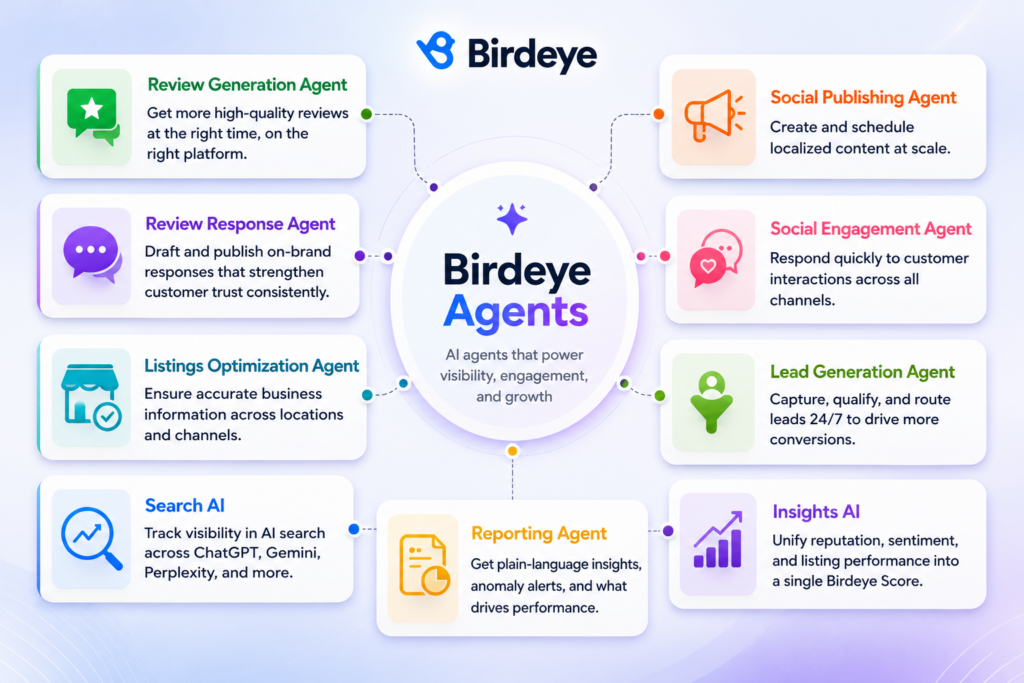
| Building reviews for every location | Review Generation Agent automatically requests reviews at the right time and on the right platform, helping locations grow their reputation consistently. |
| Responding to customer feedback | Review Response Agent drafts on-brand responses that teams can approve or publish automatically, making review management faster across every location. |
| Keeping listings accurate | Listings Optimization Agent maintains accurate business information across Google, Apple Maps, Facebook, Yelp, and 200+ directories. |
| Improving AI search visibility | Search AI tracks AI search rankings, citations, sentiment, and brand mentions across ChatGPT, Gemini, and Perplexity, helping brands understand how they’re discovered in AI-powered search. |
| Managing localized social media | Social Publishing Agent creates and schedules location-specific content, while the Social Engagement Agent helps teams prioritize and respond to comments and direct messages. |
| Understanding performance | Reporting Agent explains performance changes and flags unusual activity in plain language, while Insights combines reputation, sentiment, and listing accuracy into a single Birdeye Score with prioritized recommendations. |
| Running local marketing campaigns | Marketing Automation helps enterprise brands personalize campaigns across locations, channels, and customer segments. |
| Capturing new customers | Lead Generation Agent captures, qualifies, and routes leads around the clock, helping franchise locations respond faster. |
| Measuring customer experience | Survey Agents collect customer feedback across locations and surface trends that help teams improve the customer experience. |
FAQs on Google Business Profile for franchises
Yes. Every eligible physical location should have its own Google Business Profile. The best practice is to organize all location profiles under one centralized business account, making it easier to manage permissions, maintain brand standards, and oversee every location.
Most franchise brands should centralize ownership for visibility and control, while still giving local teams the right level of access. For service-area operators, avoid overlapping service areas, since that can trigger suspension under Google’s policies.
Google offers bulk verification for eligible multi-location businesses. Building verification into every new location rollout helps franchise brands scale more efficiently.
Customers discover franchise locations through Google, Apple Maps, Bing, Yelp, Facebook, and many other platforms. Keeping business information consistent across every listing improves customer trust, strengthens local visibility, and reduces confusion caused by outdated information.
Birdeye helps enterprise franchise brands manage listings, Google reviews, customer interactions, reporting, and AI search visibility from one platform. Its AI agents automate repetitive work while giving corporate teams centralized oversight across every location.
Yes. Complete business profiles, accurate listings, and high-quality Google reviews help search platforms better understand your locations. Maintaining trusted location data across the web strengthens visibility in both traditional local search and emerging AI-powered search experiences.
Enterprise franchise brands trust Birdeye to manage their Google Business Profiles
Managing Google Business Profile isn’t difficult because of Google. It’s difficult because every new location adds more data, more customer interactions, and more operational complexity.
The brands that succeed don’t oversee Google Business Profile profiles one by one. They build systems that keep every location accurate, locally relevant, and aligned with the same brand standards.
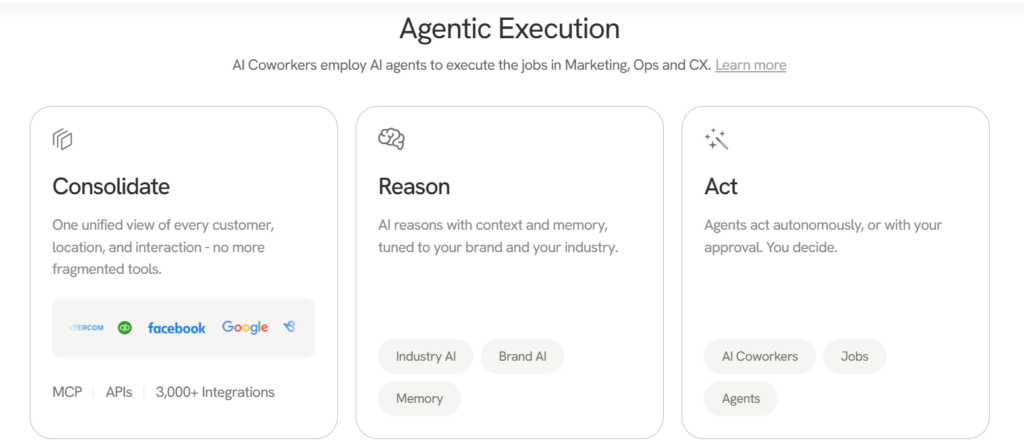
Birdeye's AI agents consolidate business signals across locations, reason using your brand and industry context, and act across reviews, listings, messaging, social, surveys, and AI search visibility.
Birdeye helps multi-location brands build that capability through AI agents. They help marketing, operations, and customer experience teams work together to keep every location ready to be discovered, whether customers search on Google today or through AI-powered experiences tomorrow.
About the Author

Shruti Dugar
Birdeye
Originally published