Generative engine optimization (GEO) tools help enterprise brands improve their visibility in AI-generated search experiences across Google AI Overviews, ChatGPT, Gemini, and Perplexity.
Summary
Generative engine optimization (GEO) marks a shift from ranking in traditional search results to earning visibility within AI-generated answers. As AI increasingly influences how people discover and evaluate businesses, enterprises are adopting GEO to monitor AI visibility, optimise content for large language models (LLMs), and increase their chances of being cited and recommended across AI-driven search results.
This blog highlights the 13 best GEO tools in 2026 that help brands win visibility, trust, and conversions in AI-driven search.
Table of contents
- What are generative engine optimization tools?
- Core capabilities of GEO tools
- Why generative engine optimization tools matter for enterprises in 2026
- Quick comparison: 13 best GEO tools at a glance
- 8 Best Generative Engine Optimization (GEO) Software in 2026
- What makes GEO hard for enterprise teams?
- FAQs about GEO and AI Search
- Building a GEO-ready organization for 2026 and beyond
What are generative engine optimization tools?
Generative engine optimization (GEO) tools help businesses monitor, measure, and improve how often their content is cited and recommended in AI-generated answers. They track brand mentions, citations, and source attribution across AI search platforms, giving marketers visibility that traditional SEO platforms cannot provide.
These tools evaluate how AI answer engines interpret your brand, which pages receive citations, and which competitors appear more frequently in response to the same prompts. The insights help teams identify coverage gaps, strengthen topical authority, and improve the likelihood of being referenced in future AI responses.
SEO vs. AEO vs. GEO
Although SEO, AEO, and GEO all aim to improve online visibility, they optimise for different search experiences and measure success differently. SEO focuses on traditional search rankings, AEO targets direct-answer experiences such as featured snippets and voice search, while GEO is designed to increase a brand’s visibility within AI-generated responses across platforms like Google AI Overviews, ChatGPT, Gemini, and Perplexity.
| SEO | AEO | GEO |
| Focuses on improving rankings in traditional search results. | Focuses on optimizing content for direct-answer experiences such as featured snippets and voice assistants. | Focuses on increasing citations, mentions, and recommendations in AI-generated responses. |
| Success is measured by rankings and organic traffic. | Success is measured by answer visibility. | Success is measured by AI citations, share of voice, and brand visibility across AI platforms. |
Core capabilities of GEO tools
- Citation tracking: Tracks where AI platforms cite your website, pages, or brand in generated responses.
- Competitive benchmarking: Compares your AI citations, visibility, and source coverage with competing websites.
- Sentiment analysis: Analyzes reviews and online conversations to understand how brand perception influences AI-generated summaries.
- Crawler analytics: Identifies AI crawler activity and technical issues that affect content discovery and indexing.
Why generative engine optimization tools matter for enterprises in 2026
According to Birdeye’s State of AI Search 2026, only 15% of brands secure the top citation position in AI-generated answers, even though 80% are cited at least once. This highlights a growing challenge for enterprises: being mentioned by AI is not enough. Brands need to become the primary source AI platforms trust and reference.
As AI search becomes a key discovery channel, marketing teams need visibility beyond search rankings. Traditional SEO platforms report clicks, impressions, and keyword positions, but they do not explain how AI platforms such as ChatGPT, Gemini, and Perplexity interpret your brand, which sources they cite, or why competitors appear more often in generated answers.
The challenge is even greater for enterprises managing hundreds or thousands of locations, products, and service pages. AI-generated responses vary by customer intent, geography, and industry, making manual tracking impractical. Without dedicated GEO insights, teams cannot accurately measure citation performance or identify opportunities to improve visibility across AI search platforms.
Generative engine optimization tools fill this gap by helping enterprises measure AI visibility, monitor citation trends, benchmark competitors, and identify the content and trust signals that influence AI-generated responses. This gives marketing teams a reliable way to improve AI search performance using measurable insights rather than relying only on traditional SEO metrics.
This matters for demand and revenue, not just visibility. The Birdeye State of Online Reviews 2024 report found that 28% of “near me” searches directly result in a purchase, and 72% of local Google searches lead to a store visit within five miles. When AI Overviews or other AI surfaces your brand in those moments, you don’t just win impressions. You win walk-ins, calls, and bookings.
GEO doesn’t replace SEO. It extends your visibility into zero-click, AI-first experiences. With more AI answers drawing from sources that do not sit in the classic “top 10” results, winning brands manage both traditional rankings and the broader network of signals that AI engines read.
Quick comparison: 13 best GEO tools at a glance
Here’s a comparison table highlighting the 13 best generative engine optimization (GEO) tools in 2026, unique features and capabilities for AI search optimization, and GEO strategies:
| Tool name | Best for | Key features | AI platforms covered |
| Birdeye Search AI | Multi-location enterprises with 100- 10,000+ locations | AI citation tracking, share of voice, competitor benchmarking, sentiment analysis, location-level reporting, AI recommendations | ChatGPT, Gemini, Perplexity, Google AI Overviews, Google AI Mode, Claude, and Grok |
| Profound | Large brands | AI answer monitoring, citation tracking, share of voice, prompt analysis, executive dashboards | ChatGPT, Gemini, Claude, Perplexity, Google AI Overviews |
| SE Ranking / SE Visible | SEO professionals | AI visibility tracking, AI Overview monitoring, keyword tracking, SEO reporting | Google AI Overviews, ChatGPT (limited), Perplexity (limited |
| AthenaHQ | Marketing teams | Prompt monitoring, AI citation tracking, content gap analysis, competitive insights | ChatGPT, Gemini, Perplexity |
| Goodie AI | Content marketers | Brand mention tracking, citation monitoring, prompt discovery, competitor analysis | ChatGPT, Gemini, Perplexity |
| Peec AI | Marketing teams | AI share of voice, citation tracking, competitor benchmarking, prompt monitoring | ChatGPT, Gemini, Claude, Perplexity |
| Semrush AI Toolkit | Existing Semrush users | AI brand visibility, AI Overview monitoring, competitor insights, SEO + GEO reporting | Google AI Overviews, ChatGPT, Perplexity |
| Writesonic | Content creators | GEO content optimization, AI content generation, AI visibility recommendations | ChatGPT, Gemini, Google AI Overviews |
| Scrunch AI | Digital marketing teams | AI visibility dashboards, citation tracking, prompt analytics, competitor monitoring | ChatGPT, Gemini, Claude, Perplexity |
| GetCito | Brands tracking AI citations | Citation tracking, source attribution, visibility monitoring, competitive comparisons | ChatGPT, Gemini, Perplexity |
| Prerender.io | Technical SEO teams | Dynamic rendering, JavaScript prerendering, AI crawler optimization, crawl diagnostics | AI crawlers used by ChatGPT, Gemini, Perplexity, Google |
| Rankscale.ai | SEO and growth teams | AI rankings, citation monitoring, share of voice, competitor benchmarking | ChatGPT, Gemini, Perplexity |
| Gumshoe AI | Competitive research teams | AI answer tracking, prompt analysis, competitor intelligence, brand visibility reporting | ChatGPT, Gemini, Claude, Perplexity |
8 Best Generative Engine Optimization (GEO) Software in 2026
Generative engine optimization tools enable brands to secure top search visibility on major AI search engines and platforms, including Google AI Overviews, ChatGPT, Gemini, and Perplexity.
These platforms rely on structured, answer-ready content, robust review signals, and deep technical optimization to surface brands as trusted answers to user queries. Enterprises prioritizing GEO outperform competitors in AI-generated responses and earn recommendations in search results beyond traditional search engine optimization.
Here are thirteen standout generative engine optimization tools for 2026 in detail:
1. Birdeye Search AI
Best for: Multi-location enterprises that need AI search visibility and reputation at scale (100-10,000+ locations)
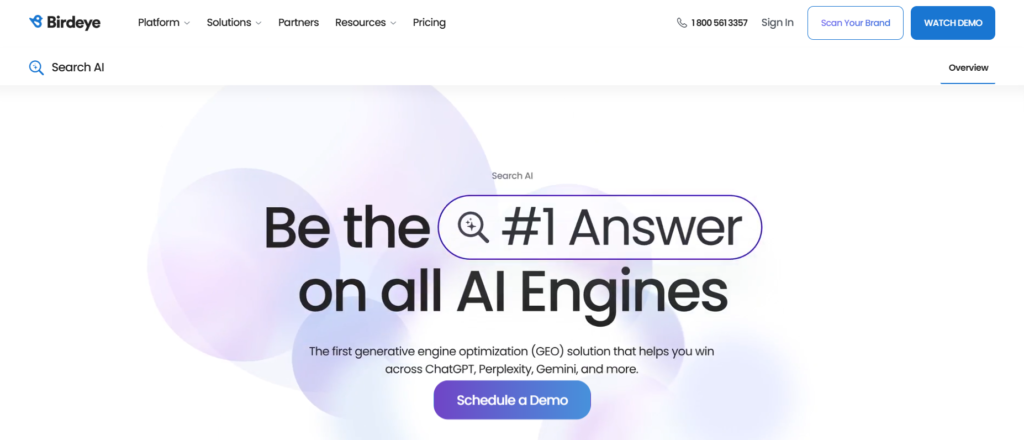
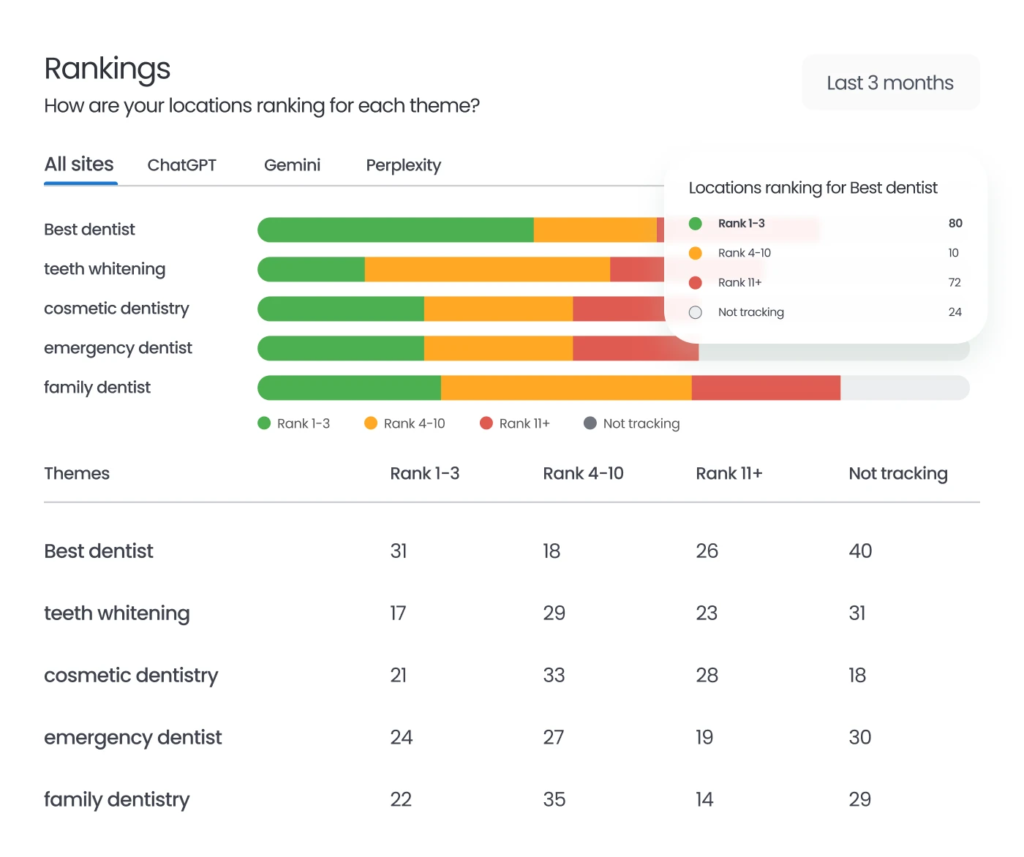
Birdeye Search AI is purpose-built for GEO (Generative Engine Optimization) and AI search optimization. It gives multi-location brands a unified view across major AI search platforms like ChatGPT, Gemini, Perplexity, Google AI Overviews, Google AI Mode, and Grok.
Key strengths:
- AI search visibility tracking: Monitors how your brand and individual locations appear across AI-generated answers.
- Birdeye AI Visibility Score (0–100): Provides a visibility score for your brand and each location across supported AI search platforms, helping you benchmark performance and uncover opportunities to improve.
- AI Share of Answers: Measures the percentage of relevant AI-generated answers that recommend your brand compared with competitors, giving you a clear view of your competitive presence in AI search.
- Citation intelligence: Reveals the websites, listings, citations, and other sources that influence AI-generated answers about your business.
- Sentiment analysis: Analyzes how AI platforms describe your brand, highlighting recurring strengths, weaknesses, and key themes.
- Accuracy monitoring: Detects inconsistencies and inaccuracies in business information across locations that could impact AI search visibility.
- Agent-led recommendations: Delivers actionable recommendations to improve AI visibility, such as updating listings, generating more reviews, and optimizing website content.
Pros
- Built specifically for multi-location enterprises, not single-brand websites.
- Combines GEO, reputation management, listings, reviews, and competitive intelligence on a single platform.
- Location-level dashboards make it easier to identify underperforming markets and prioritize optimization efforts.
- AI agents help teams move from monitoring AI visibility to taking recommended actions
Cons
- Organizations seeking only standalone AI citation tracking may find the broader platform more comprehensive than they need.
Pricing: Birdeye pricing is customized based on location count, selected products, and the agents activated.
G2 rating: 4.7 rating with 4,120 reviews (As of July, 2026)
2. Profound
Best for: Large brands that want to measure brand visibility across generative AI platforms.
Profound focuses on helping marketing teams understand how AI search engines represent their brand. The platform emphasizes AI visibility analytics, competitor benchmarking, and prompt-level insights for enterprise marketing teams.
Key strengths
- Monitors brand mentions and citations across multiple AI search platforms from a unified dashboard.
- Measures AI’s share of voice to reveal how often competitors appear in response to the same prompts.
- Tracks prompt-level performance to identify questions that generate or miss brand citations.
- Highlights citation sources, helping teams understand why AI platforms reference certain websites.
- Visualizes AI visibility trends over time to measure the impact of content updates.
Pros
- Built specifically for AI search analytics.
- Strong prompt and citation reporting.
- Comprehensive competitor benchmarking.
- Clean dashboards for executive reporting.
Cons
- Does not include reputation management or listings management.
- Pricing is available only through sales.
- Limited technical SEO capabilities.
Pricing: Paid plans available
G2 rating: 4.6/5 with 845 reviews (As of July, 2026)
3. SE Ranking / SE Visible
Best for: SEO professionals expanding their strategy to include AI search.
SE Ranking extends traditional SEO reporting with AI visibility insights, allowing teams to monitor Google AI Overviews alongside rankings, keywords, and website performance.
Key strengths
- Combines AI visibility tracking with traditional SEO metrics in one platform.
- Detects keywords that trigger Google AI Overviews within search results.
- Connects keyword performance with AI visibility to identify optimization opportunities.
- Consolidates backlink, technical SEO, and AI reporting into a single workflow.
- Supports ongoing performance tracking without requiring a separate SEO platform.
Pros
- Familiar interface for SEO teams.
- Affordable entry-level plans.
- Strong technical SEO capabilities.
- Combines SEO and AI reporting.
Cons
- AI platform coverage focuses primarily on Google.
- Citation reporting is less comprehensive than dedicated GEO tools.
- Enterprise AI analytics remain limited.
Pricing: Paid plans available
G2 rating: 4.8/5 with 2,390+ reviews (As of July, 2026)
4. AthenaHQ
Best for: Marketing teams looking to improve visibility across AI search platforms.
AthenaHQ helps organizations understand how AI platforms retrieve, cite, and summarize their content. The platform combines AI visibility monitoring with content optimization recommendations.
Key strengths
- Tracks brand visibility across leading generative AI search platforms.
- Identifies prompts that generate citations for your business and competitors.
- Reveals content gaps that reduce the likelihood of appearing in AI-generated responses.
- Recommends content improvements based on AI search performance.
- Measures visibility trends across brands, topics, and customer questions.
Pros
- Purpose-built for GEO.
- Easy-to-understand reporting.
- Strong prompt monitoring.
- Useful content recommendations.
Cons
- Limited public pricing information.
- Smaller integration ecosystem than established SEO platforms.
Pricing: Paid plans available
G2 rating: 4.9/5 with 32 reviews (As of July, 2026)
5. Goodie AI
Best for: Content marketing teams that want to increase brand visibility in AI-generated responses.
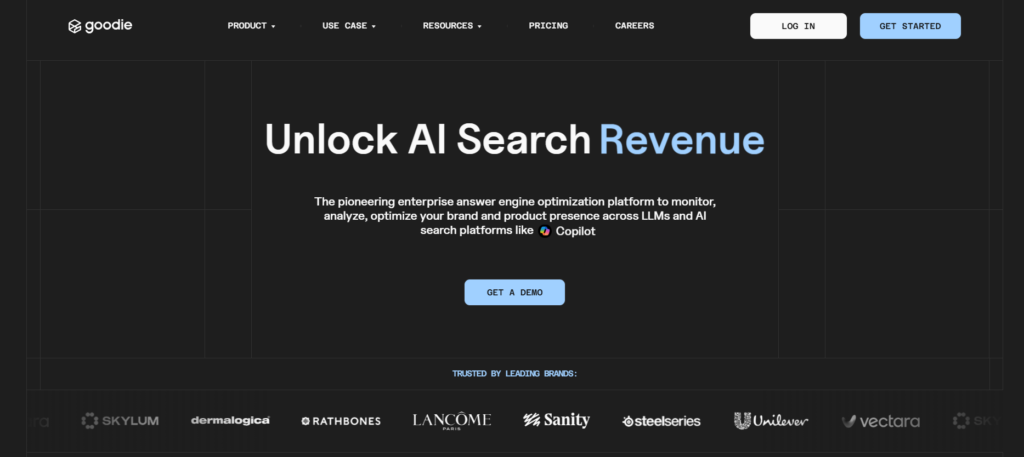
Goodie AI focuses on helping brands understand how AI search platforms reference their content. The platform combines citation monitoring with content recommendations to improve AI discoverability.
Key strengths
- Tracks brand mentions and citations across major AI search platforms.
- Identifies prompts that trigger AI-generated recommendations for your brand and competitors.
- Highlights content opportunities that can improve citation frequency.
- Compares AI visibility with competing brands for the same search intent.
- Surfaces citation trends to measure changes in AI search performance over time.
Pros
- Easy-to-use interface.
- Built specifically for AI search optimization.
- Useful competitor comparisons.
- Actionable content recommendations.
Cons
- Limited technical SEO capabilities.
- Pricing is available on request.
- Smaller feature set than all-in-one SEO platforms.
Pricing: Free and paid plans available
G2 rating: NA
6. Peec AI
Best for: Marketing teams that want to monitor AI brand visibility and competitor performance.
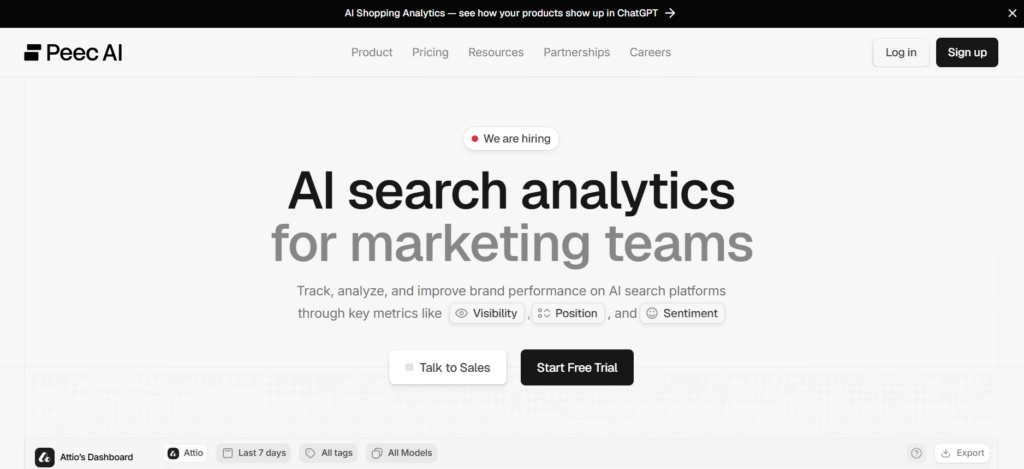
Peec AI helps businesses understand where AI platforms mention their brand, how visibility changes over time, and which competitors receive more recommendations for the same prompts.
Key strengths
- Measures AI share of voice across leading generative search platforms.
- Tracks citations and brand mentions for important customer prompts.
- Compares competitor visibility to uncover opportunities for improvement.
- Organizes AI search performance into dashboards that are easy to share across teams.
- Monitors visibility trends to evaluate the impact of content updates.
Pros
- Clean reporting interface.
- Strong competitor benchmarking.
- Designed specifically for GEO use cases.
- Prompt-level visibility tracking.
Cons
- Does not include technical SEO capabilities.
- Limited public pricing information.
- Fewer integrations than established marketing suites.
Pricing: Paid plans available
G2 rating: 4.9 with 12 reviews (As of July, 2026)
7. Semrush AI Toolkit
Best for: Existing Semrush users looking to add AI search insights to their SEO workflow.
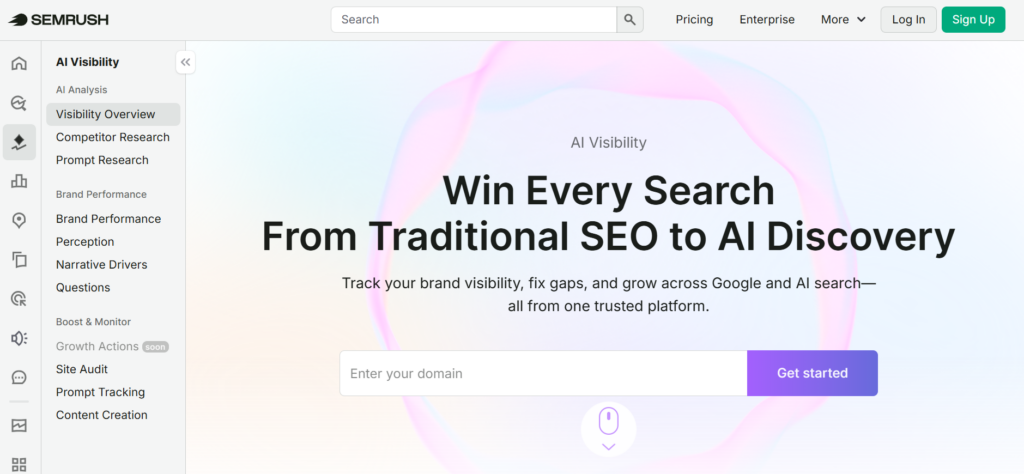
Semrush AI Toolkit extends the Semrush platform with AI-search-focused reporting. Users can evaluate brand visibility in AI-generated responses while continuing to manage SEO, keyword research, and competitive analysis within a single ecosystem.
Key strengths
- Measures brand visibility across popular AI search experiences alongside traditional SEO metrics.
- Track prompts and topics that generate AI mentions for your brand.
- Connects AI visibility with keyword research and competitor analysis available within Semrush.
- Highlights content opportunities that improve visibility in AI-generated responses.
- Consolidates SEO and GEO reporting into a familiar workflow for existing users.
Pros
- Integrates with the broader Semrush platform.
- Familiar experience for existing customers.
- Combines SEO and AI search insights.
- Strong keyword and competitor research capabilities.
Cons
- AI Toolkit is newer than Semrush’s core SEO products.
- Some capabilities depend on your Semrush subscription.
- Multi-location AI reporting is less comprehensive than enterprise-focused GEO platforms.
Pricing: Available as a paid add-on
G2 rating: 4.7/5 with 2,000+ reviews (As of July, 2026)
8. Writesonic
Best for: Content teams that want to create and optimize content for AI search alongside traditional SEO.
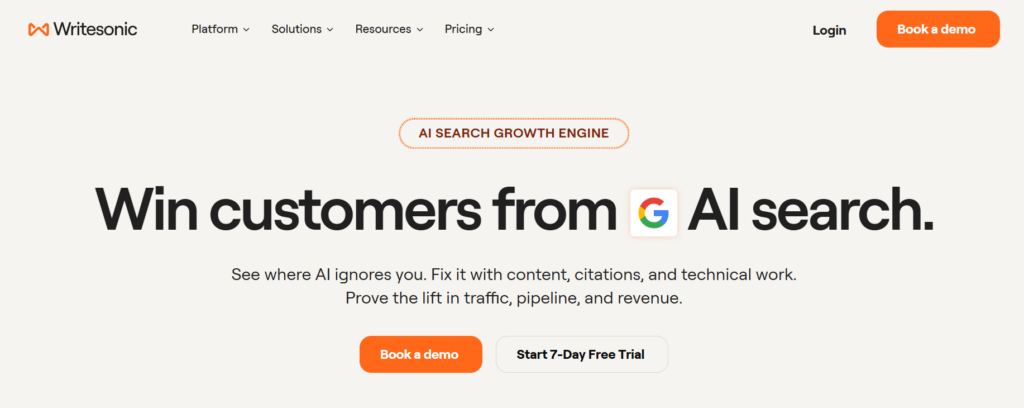
Writesonic combines AI content creation with GEO capabilities, helping marketers produce content that aligns with how generative search platforms discover, interpret, and cite information.
Key strengths
- Generates content optimized for both traditional search engines and AI-generated responses.
- Identifies content gaps by analyzing prompts and topics users ask across AI search platforms.
- Optimizes articles with semantic keywords, structured headings, and question-based content to improve AI discoverability.
- Integrates content creation, optimization, and performance tracking into a single workflow.
- Supports faster content production without switching between multiple writing and SEO tools.
Pros
- Combines content creation and GEO optimization.
- User-friendly interface for marketing teams.
- Supports multiple content formats and languages.
- Includes SEO optimization features alongside AI workflows.
Cons
- Primarily focuses on content optimization rather than AI citation analytics.
- Competitor benchmarking is less detailed than dedicated GEO platforms.
- Enterprise reporting capabilities are relatively limited.
Pricing: Free and paid plans available
G2 rating: 4.7/5 with 2,000+ reviewsell in a GEO (Generative Engine Optimization) stack as the content production engine feeding your AI visibility efforts. (As of July, 2026)
9. Scrunch AI
Best for: Marketing teams that want actionable insights into AI search visibility.
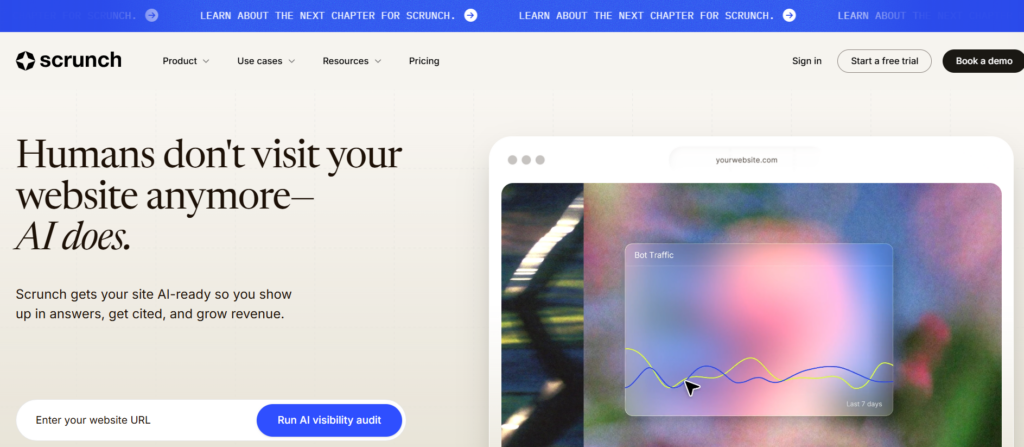
Scrunch AI helps organizations understand how AI platforms mention their brand while identifying content improvements that increase visibility across generative search experiences.
Key strengths
- Tracks brand visibility across major AI search platforms using prompt-level monitoring.
- Measures citation trends to identify changes in AI-generated recommendations over time.
- Compares competitors’ performance to uncover opportunities to increase AI’s share of voice.
- Recommends content improvements that strengthen brand visibility in AI-generated answers.
- Consolidates AI search insights into dashboards designed for marketing and content teams.
Pros
- Purpose-built for AI search monitoring.
- Strong competitor visibility analysis.
- Clear reporting dashboards.
- Actionable optimization recommendations.
Cons
- Technical SEO features are limited.
- Pricing is available only through sales.
- Smaller customer ecosystem than established SEO platforms.
Pricing: Paid plans available
G2 rating: 4.6/5 with 73 reviews (As of July, 2026)
10. GetCito (Open-Source)
Best for: Brands that want deeper visibility into AI citations and source attribution.
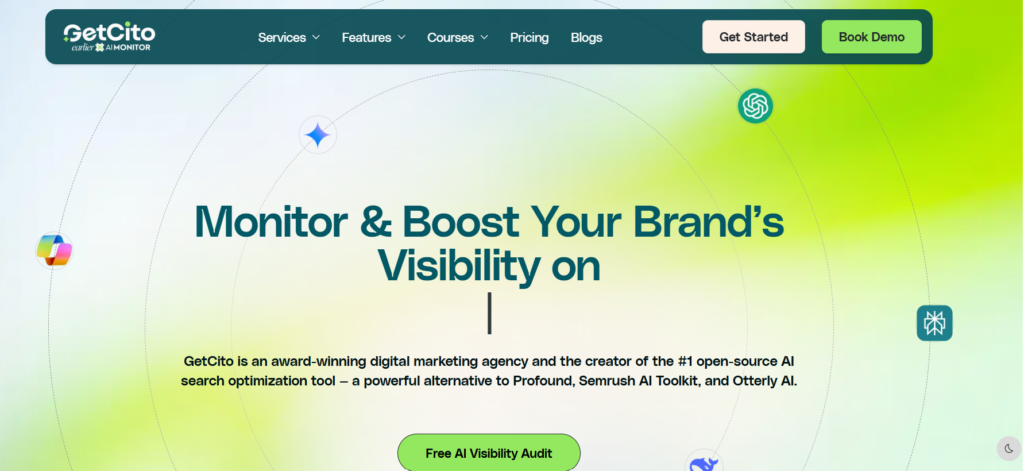
GetCito focuses on helping businesses understand where AI platforms obtain information and how frequently their content appears as a cited source.
Key strengths
- Track citations across leading AI search platforms to measure brand visibility.
- Identifies the web pages and domains that AI platforms reference when generating responses.
- Compares citation frequency with competing brands for similar prompts.
- Highlights content opportunities that improve the likelihood of earning future citations.
- Provides historical reporting to measure improvements in AI citation performance.
Pros
- Strong emphasis on citation tracking.
- Useful source attribution reporting.
- Easy-to-understand dashboards.
- Built specifically for GEO workflows.
Cons
- Broader SEO capabilities are limited.
- Pricing information is not publicly available.
- Smaller feature set than full-service marketing platforms.
Pricing: Free self-hosted and paid managed plans available
G2 rating: 4.3/ 5 with 17 reviews (As of July, 2026)
11. Prerender.io
Best for: Technical SEO teams managing JavaScript-heavy websites.
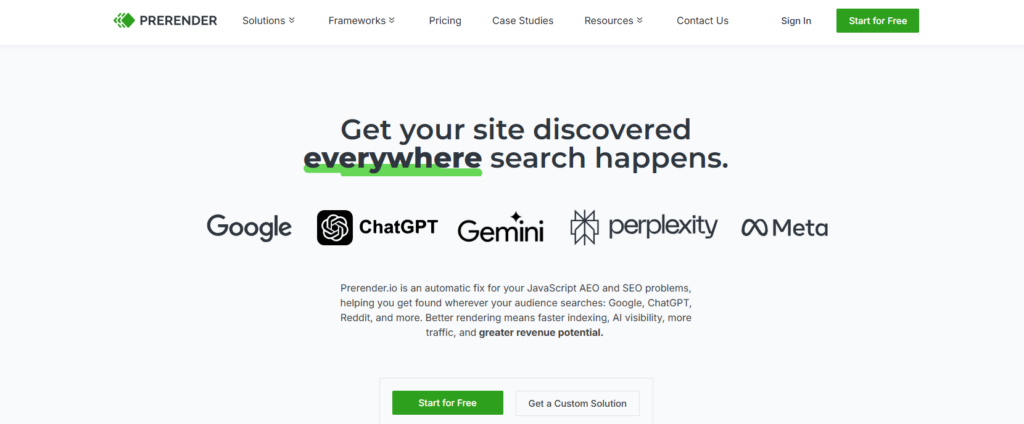
Prerender.io improves website rendering for crawlers, helping search engines and LLMsaccess dynamic content that might otherwise remain difficult to crawl.
Key strengths
- Creates prerendered HTML versions of JavaScript pages for improved crawler accessibility.
- Supports AI crawlers and traditional search engine bots by delivering fully rendered content.
- Reduces crawlability issues that prevent AI platforms from accessing important webpages.
- Integrates with modern JavaScript frameworks without requiring major website redesigns.
- Improves technical foundations that support both SEO and GEO initiatives.
Pros
- Proven solution for JavaScript rendering.
- Easy integration with modern web frameworks.
- Improves crawlability for dynamic websites.
- Supports technical SEO and AI search readiness.
Cons
- Does not monitor AI citations or share of voice.
- Requires technical implementation.
- Focuses on infrastructure rather than marketing analytics.
Pricing: Paid plans available
G2 rating: 4.3 /5 with 7 reviews (As of July, 2026)
12. Rankscale.ai
Best for: SEO and growth teams monitoring AI search performance.
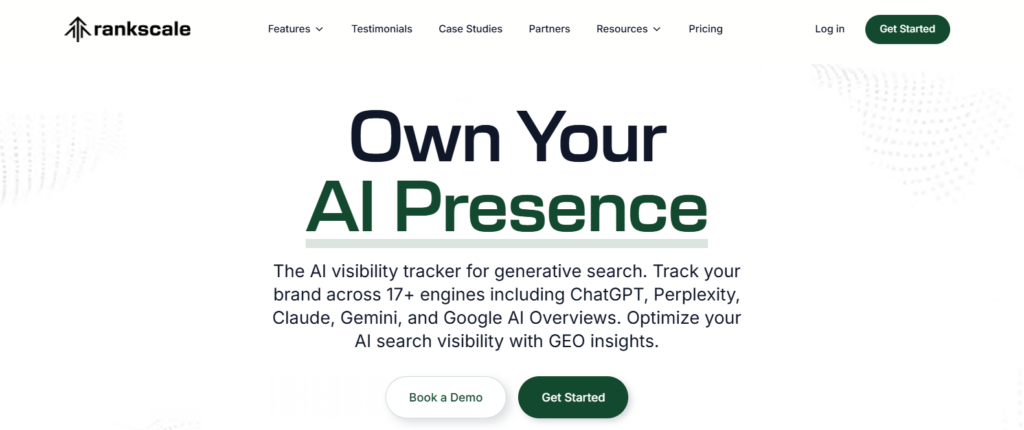
Rankscale.ai focuses on measuring how brands perform across AI-generated search experiences while helping marketers identify opportunities to improve visibility.
Key strengths
- Monitors AI rankings and citation visibility across popular generative search platforms.
- Benchmark AI’s share of voice against competing brands for selected prompts.
- Track performance changes to measure the impact of GEO optimization efforts.
- Organizes AI search metrics into dashboards for ongoing reporting.
- Highlights visibility gaps that require additional content or optimization.
Pros
- Purpose-built for GEO measurement.
- Strong AI visibility reporting.
- Easy competitor comparisons.
- Clean reporting interface.
Cons
- Public pricing information is limited.
- Smaller platform than established SEO vendors.
- Integration options continue to evolve.
Pricing: Multiple paid plans available
G2 rating: 5/5 with 1 review (As of July, 2026)
13. Gumshoe AI
Best for: Competitive intelligence teams monitoring AI-generated search results.
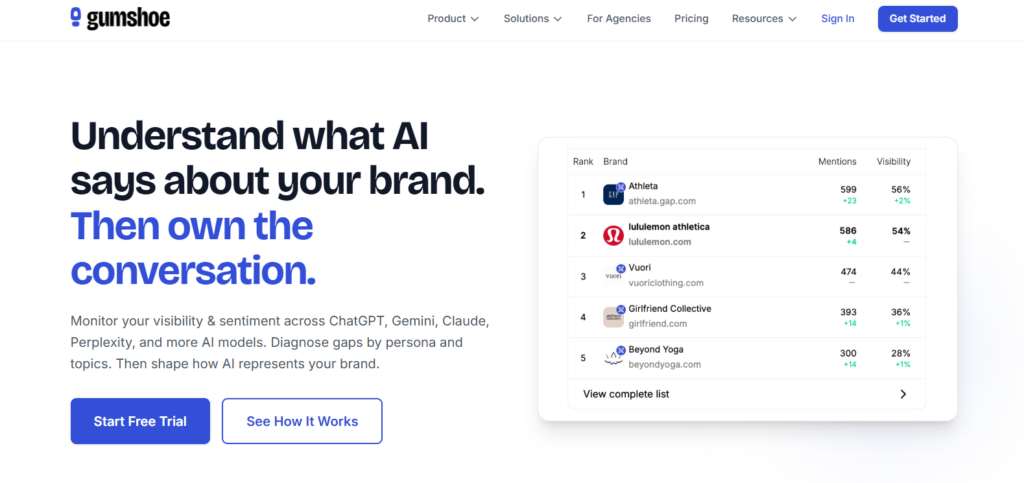
Gumshoe AI helps brands understand how generative AI platforms discuss products, competitors, and market trends across different prompts.
Key strengths
- Monitors AI-generated answers to understand how brands appear across leading AI platforms.
- Compares competitor visibility to reveal changes in AI recommendations over time.
- Tracks prompt-level performance to identify the questions that influence customer discovery.
- Surfaces citation patterns that explain why AI platforms recommend one brand over another.
- Delivers market intelligence that supports content, SEO, and product marketing strategies.
Pros
- Strong competitive intelligence capabilities.
- Detailed prompt analysis.
- Purpose-built for AI search monitoring.
- Easy-to-use reporting dashboards.
Cons
- Technical SEO features are limited.
- Pricing requires contacting the sales team.
Pricing: Pay-as-you-go pricing available
G2 rating: NA
What makes GEO hard for enterprise teams?
GEO (Generative Engine Optimization) introduces a set of challenges that traditional SEO was never designed to handle, especially for multi-location brands.
1. AI reads beyond your website
AI search platforms generate answers by combining information from multiple trusted sources, not just your website. These sources include business listings, online reviews, local landing pages, news articles, and third-party directories.
According to Birdeye’s State of Online Reviews 2026, Google AI Overviews and LLM search increasingly surface review content in generated answers, making review quality and depth important signals for AI visibility. If your reviews, listings, or local content are weaker than your competitors’, AI may recommend another brand even when your website ranks well in traditional search.
2. Technical barriers block AI visibility
For multi-location enterprises, technical issues add another layer of difficulty:
- JavaScript-heavy sites that AI crawlers struggle to render
- Blocked pages or misconfigured robots.txt files
- Fragmented local content scattered across multiple templates or subdomains
These problems don’t just hurt rankings; they can prevent your locations from appearing in AI answers at all. Tools like Birdeye, Prerender.io, and other technical GEO solutions help create AI-friendly snapshots for dynamic pages so AI systems can properly see and interpret your content.
3. Measuring AI visibility isn’t straightforward
Legacy analytics tools weren’t built to measure how often your brand shows up in AI answers. Many early GEO tools focus on raw counts of mentions without telling you:
- Which prompts matter most
- Which locations are winning or losing visibility
- How AI sentiment around your brand shifts over time
Enterprise GEO platforms need to show location-aware insights, track prompts and answer types, and tie AI visibility back to leads, calls, and revenue.
4. Ownership and KPIs are unclear
SEO, content, PR, CX, and operations all influence AI search performance. Yet many organizations still debate who “owns” GEO, and traditional metrics such as sessions and rank can feel misaligned with AI-driven search.
When user questions are answered directly by AI, classic web sessions flatten or drop. Leadership teams need new KPIs, such as:
- AI visibility across platforms
- Sentiment and star ratings referenced in answers
- Conversion actions triggered after AI interactions
GEO tools help bring these teams together with shared dashboards and shared definitions of success.
5. Competition is intense in AI answers
Generative engines don’t list dozens of options. They tend to recommend a short list of brands for each query and region. If your brand isn’t in that short list, you risk disappearing from high-intent discovery journeys altogether.
GEO tools help teams understand which competitors appear in AI answers, how they earned that position, and what you need to fix to join or displace them.
6. Choosing the right tool in a crowded market
The GEO software market is expanding quickly, with new platforms adding AI visibility, citation tracking, content optimization, and competitor monitoring features. Many products also position themselves as SEO, AEO, or GEO platforms, making comparisons difficult.
Enterprise teams need to evaluate tools based on capabilities that matter most, including AI citation tracking, competitor benchmarking, multi-location reporting, sentiment analysis, technical diagnostics, and integrations with existing marketing workflows. Choosing the right platform helps avoid fragmented reporting and supports long-term AI search visibility.
GEO tools that put your brand in every AI answer.
Want to see the impact of Birdeye on your business? Watch the Free Demo Now.
How we evaluated these GEO tools
Every GEO platform approaches AI search differently. To make this comparison useful, we evaluated each tool against five criteria that matter most for enterprises managing AI visibility across brands, products, and locations.
1. AI platform coverage
The best GEO tools monitor visibility across multiple AI search platforms, not just one. We looked for GEO platforms that track citations, mentions, and responses across ChatGPT, Gemini, Perplexity, Claude, Google AI Overviews, and other leading generative search experiences.
2. Data quality and accuracy
Reliable insights depend on reliable data. We evaluated how each platform captures citations, tracks changes over time, identifies sources, and reports AI visibility with consistent and verifiable data.
3. Actionable insights
Reporting alone does not improve AI visibility. We prioritized tools that identify content gaps, recommend next steps, highlight technical issues, and help teams understand why competitors receive more AI citations.
4. Pricing and overall value
Pricing varies widely across GEO platforms. We compared available plans, included features, reporting depth, and overall value to determine which tools deliver meaningful capabilities for different business sizes.
5. Enterprise readiness
Enterprise teams need more than basic reporting. We assessed each platform for multi-location support, competitor benchmarking, collaboration features, integrations, governance controls, and the ability to manage AI visibility across large organizations.
These evaluation criteria provided a consistent framework for comparing GEO tools. They also help marketing teams choose a platform that aligns with their AI search goals, reporting needs, and long-term growth strategy.
How to choose the right GEO tool for your team
A strong GEO strategy starts with the right generative engine optimization tools designed to improve AI search visibility on major AI search platforms like Google AI Overviews and ChatGPT. These tools help brands audit their presence in AI search engines, monitor where and how their content appears, and diagnose technical or structural gaps.
1. Audit your AI presence
Use GEO tools to see where and how your brand appears across Google AI Overviews, ChatGPT, Gemini, Perplexity, Bing AI, and other AI experiences. Look for brand mentions, citations, and sentiment.
2. Diagnose structured content and technical gaps
Check if AI engines can easily understand your pages:
- Clear headings, FAQs, and intent-matched content
- Structured data where relevant
- Crawlable, well-rendered pages for both web and mobile
3. Strengthen listings, reviews, and local pages
Multi-location brands need airtight, location-level data. The Birdeye State of Online Reviews 2026 report found that businesses increased their review response rate from 73% in 2024 to 75.5% in 2025, reaching the highest level recorded in the Birdeye dataset. That kind of active management not only helps conversion but also signals to AI search engines that your locations are engaged, trustworthy, and up to date.
4. Integrate GEO with SEO and analytics
GEO works best when it plugs into your existing stack. Many enterprises layer GEO platforms on top of their SEO, analytics, and reputation tools to see both traditional rankings and AI visibility in a single view.
5. Activate workflows across regions and teams
Leading companies use platforms like Birdeye to:
- Improve review volume and quality.
- Raise response rates with AI assistance.
- Keep listings accurate across hundreds or thousands of locations.
The Birdeye State of Online Reviews 2026 report also shows that approximately 40% of all review responses are now AI-generated, while around 60% are still written by humans, reflecting a mature human-in-the-loop approach to scaling reputation management.
FAQs about GEO and AI Search
Traditional search engine optimization (SEO) focuses on ranking web pages in search engine results pages. Generative engine optimization (GEO) targets AI search platforms by optimizing brand presence, citations, and recommendations within AI-generated responses. Both are essential for modern search visibility.
Success includes tracking AI visibility in major AI search platforms like Google AI Overviews, sentiment in AI answers, and downstream outcomes such as calls, bookings, and revenue per location. GEO tools provide role-based, location-aware insights beyond traditional analytics.
No. GEO tools extend SEO by focusing on AI search visibility and answer engine insights, integrating smoothly with legacy SEO and analytics to provide a complete view of search visibility across AI platforms and traditional search engines.
Start with AI visibility audits using GEO tools, then add technical solutions for crawlability and content optimization. Integrate workflows progressively and embed GEO KPIs into existing dashboards to enable aligned, cross-functional operations.
GEO tools identify and address gaps in listings and reviews at the location level, monitor AI mentions, and deliver prioritized recommendations for each site, empowering local teams to effectively influence AI-generated answers.
Results depend on crawl schedules and content freshness, but foundational fixes often yield improvements in weeks, with steady gains as review volume and reputation management mature.
Several GEO tools offer free plans or trials, including HubSpot AI Search Grader, Profound, Peec AI, Semrush AI Toolkit, and Otterly.AI. Free versions typically provide basic AI visibility tracking, brand mention monitoring, or citation analysis, while advanced features like competitor benchmarking and historical reporting require paid plans.
Look for AI citation tracking, brand visibility monitoring across multiple AI platforms, competitor benchmarking, prompt-level analysis, sentiment tracking, content optimization recommendations, historical reporting, and integrations with SEO and analytics tools. Enterprise teams should also prioritize location-level insights, collaboration features, and customizable dashboards.
Most leading GEO tools monitor visibility across ChatGPT, Google AI Overviews, Gemini, Perplexity, Microsoft Copilot, and Claude. Some platforms also track AI-powered search experiences from Bing and other emerging answer engines, helping brands understand where they’re cited and how AI models present their business.
Building a GEO-ready organization for 2026 and beyond
Generative engine optimization (GEO) marks a foundational shift in visibility strategy for enterprise brands. Success now depends on treating AI as a core branding and conversion channel, alongside traditional search.
AI-driven platforms highlight brands that:
- Show clear experience and expertise
- Maintain accurate and complete listings
- Earn consistent, high-quality reviews
- Resolve issues and respond to customers in public
Birdeye research across online reviews, local search, and Google Business Profiles points in the same direction: more reviews, higher Google share, and stronger response habits year after year. AI platforms build on those signals.
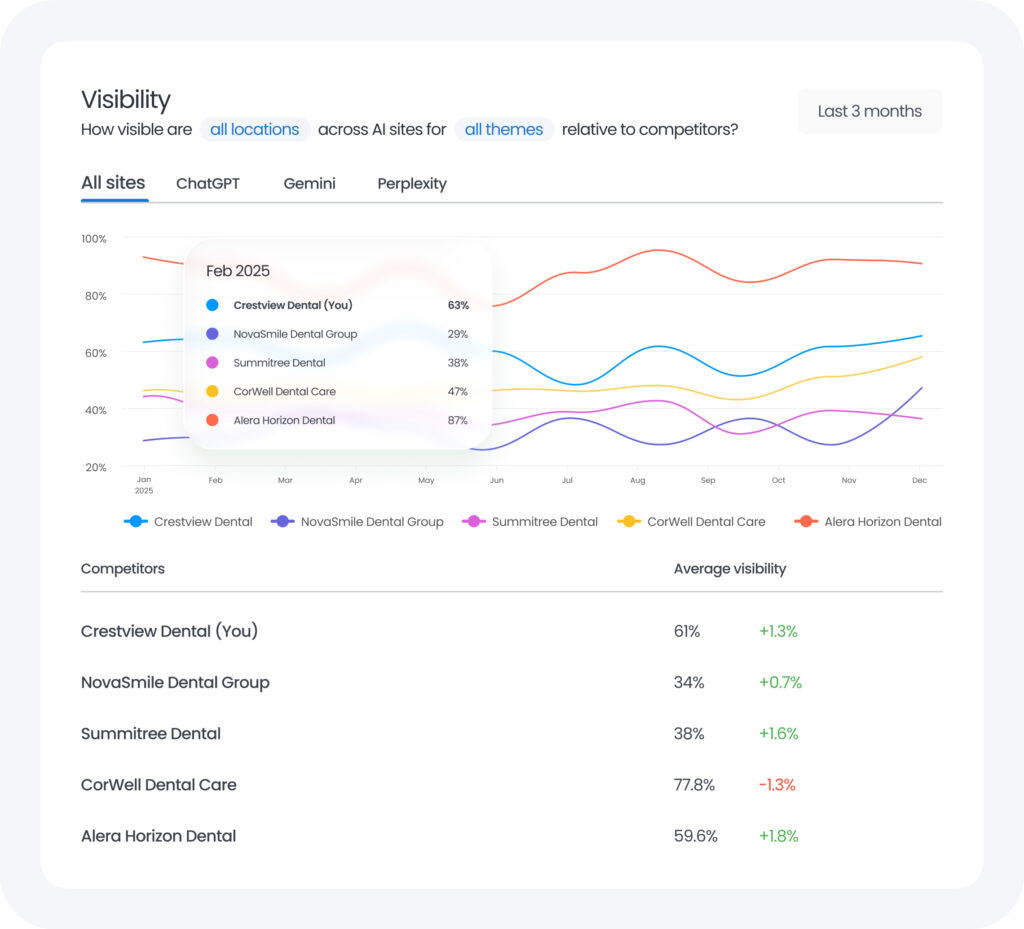
To build a GEO-ready organization for 2026 and beyond, enterprise marketing and CX teams should:
- Run a full AI visibility audit across Google AI Overviews and other AI platforms.
- Fix technical basics such as rendering, crawlability, and structured data on key pages.
- Standardize listings and categories across all locations.
- Invest in reviews and responses to strengthen public proof.
- Integrate GEO metrics into existing dashboards so leaders can see AI visibility alongside traffic and revenue.
- Use platforms like Birdeye to automate and orchestrate these efforts at scale.
The future belongs to brands that master both SEO and GEO, and connect experience, expertise, and authority across every interaction.
Looking for a personalized demo? Birdeye’s team is ready to show you how to stay visible and competitive in an AI-first search world. Watch the demo now.

About the Author

Sudeepta Bora
Originally published