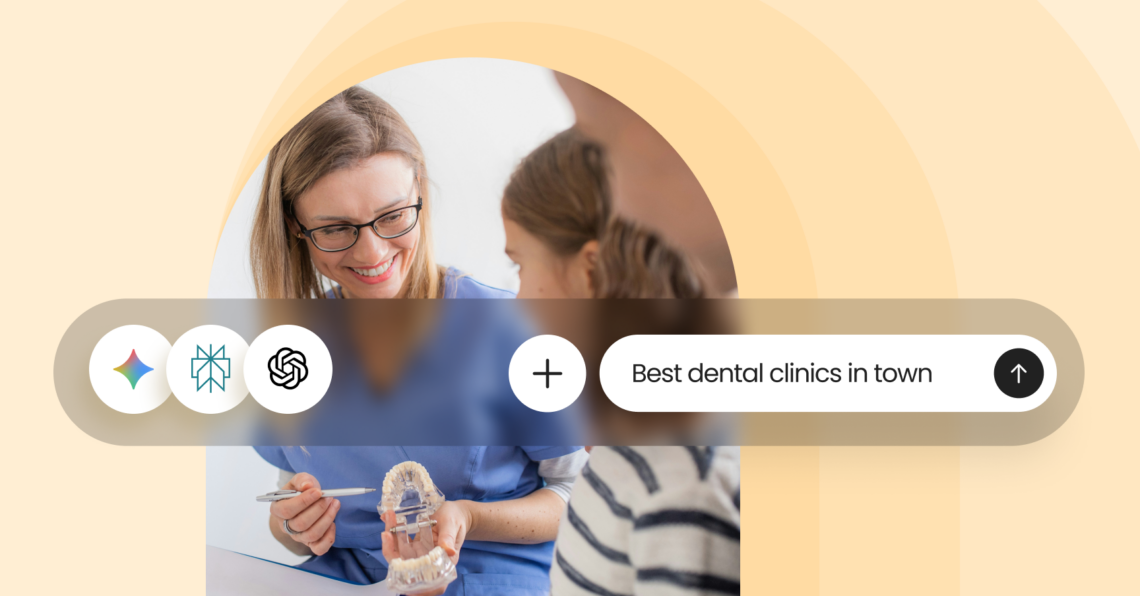
AI search is becoming the new way patients find dental clinics. Instead of scanning traditional search results, people now ask engines like ChatGPT, Gemini, and Perplexity for the “best dentist near me.” Practices that optimize early will have a clear visibility advantage in 2026, as AI models surface only a handful of trusted options for each query. Clinics that haven’t adapted face a real risk of being excluded from these AI-generated patient answers entirely.
Summary

Visibility in AI search depends on how well dental clinics communicate their credibility and services to AI engines. These systems analyze citations, patient reviews, website content, services offered, and overall authority to determine which clinics to recommend for a given patient query.

Tools like Birdeye Search AI help dental practices strengthen these signals by detecting missing listings, correcting inaccuracies, improving local profiles, and monitoring how AI describes the clinic to improve visibility across AI search engines.

This blog explains how AI engines evaluate dental providers, the factors that shape visibility, and the steps clinics can take to appear more often in AI-generated recommendations.
Table of contents
Why AI search matters for dentists
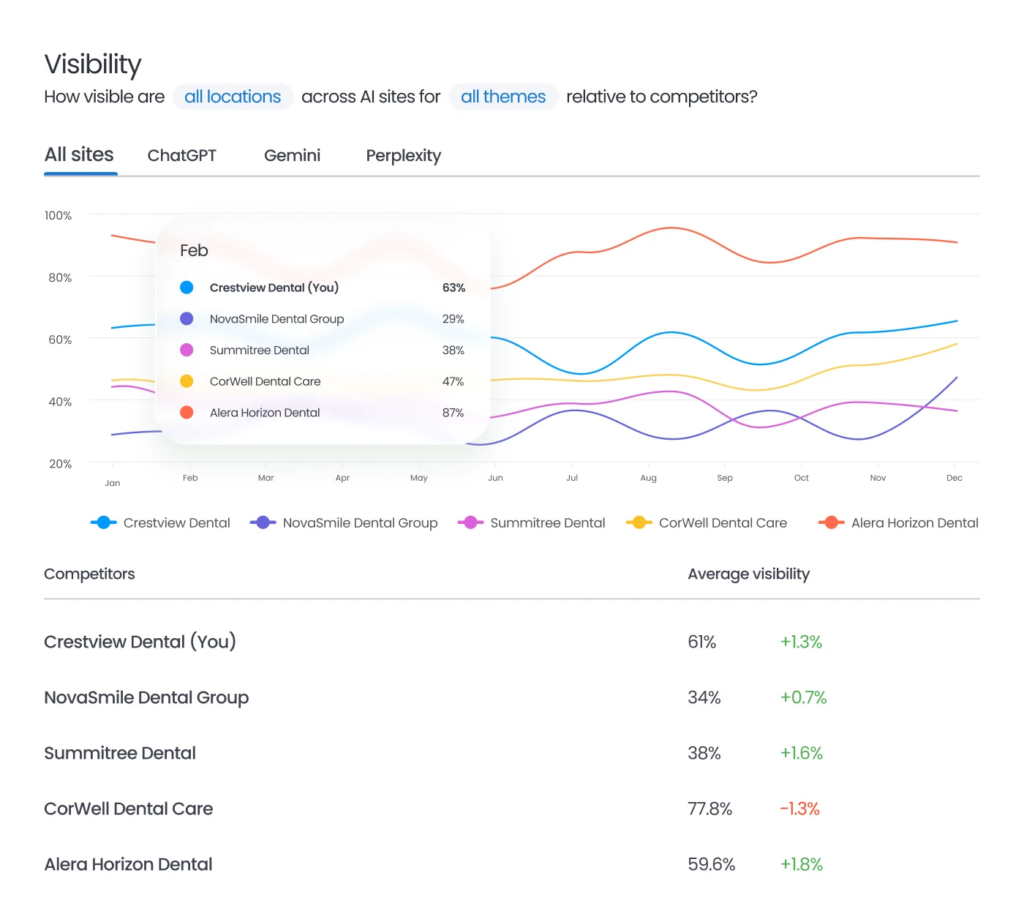
AI search offers dental practices a new way to connect with patients and grow their business. Unlike traditional search, AI engines like ChatGPT, Gemini, and Perplexity evaluate clinics based on accuracy, reviews, sentiment, and authority, which directly impacts patient trust and decision-making. Let’s learn why AI search is becoming essential for dentists today:
- Patients increasingly rely on AI-powered search: Tools like ChatGPT and other AI search engines provide quick answers to dental queries, often surfacing clinic recommendations for searches such as “best dentist near me” or “affordable dental clinics.”
- AI‑powered results influence patient decision‑making: Many patients now trust AI‑generated recommendations for convenience and perceived neutrality, and clinics featured in those AI results are more likely to be chosen even before patients check websites or review platforms.
In fact, a 2025 survey by Rater8 found that 26% of patients said AI tools like ChatGPT and other AI search engines directly influenced their choice of healthcare provider.
- Boosts reputation and credibility: By pulling information from verified sources, reviews, and structured data, AI highlights clinics with accurate and comprehensive details, helping them appear more trustworthy and build patient confidence even before an appointment is scheduled.
- Long-term competitive advantage: By optimizing for AI search, dental clinics can secure greater visibility and attract more patients. It also helps your practice stand out in trusted AI recommendations rather than relying solely on traditional Google search results.
Clinics that understand how AI interprets their information and take steps to keep that data accurate, consistent, and trustworthy are the ones that will appear more often in patient-facing recommendations across ChatGPT, Gemini, and Perplexity.
How AI engines choose dental providers
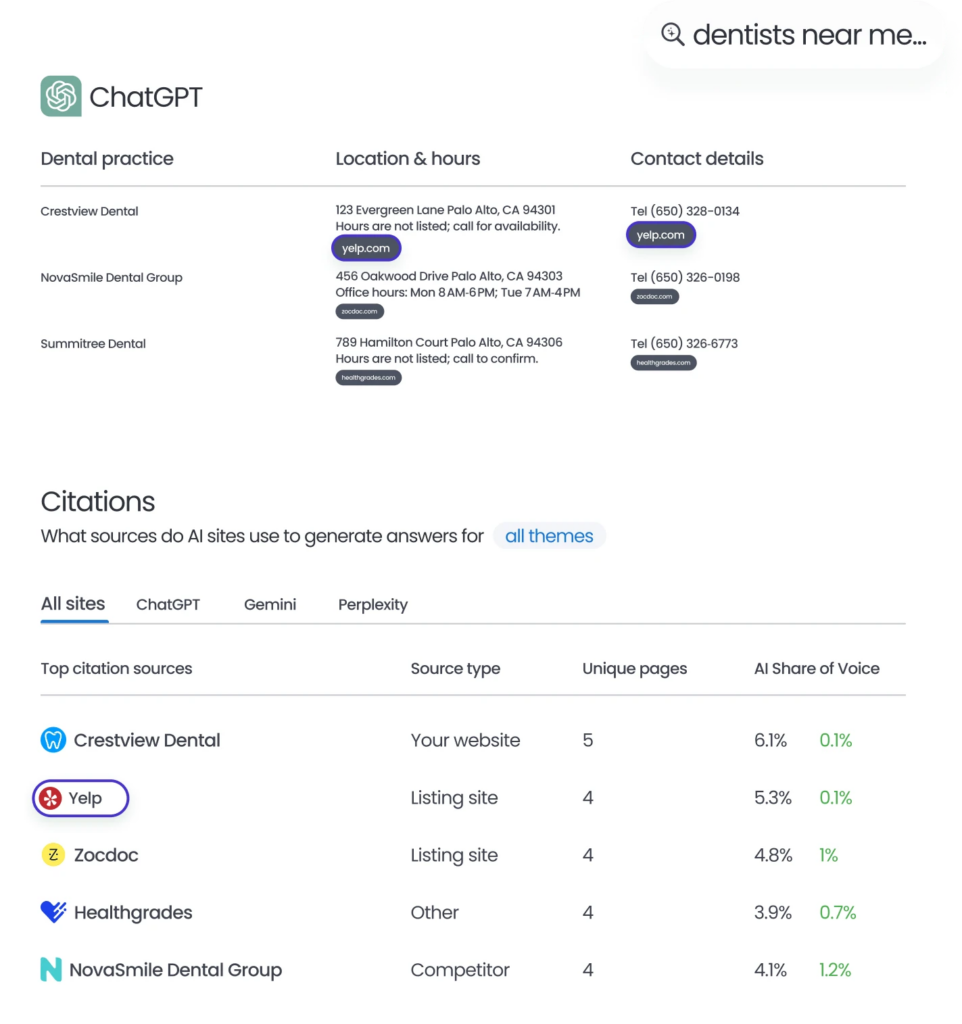
AI engines recommend dental clinics by analyzing large amounts of online information to identify practices that are credible, reliable, and relevant to a patient’s question. Instead of listing pages of links, these systems act as answer engines, summarizing data into clear recommendations patients can use.
Key factors AI engines evaluate:
1. Authority and trust signals
For health-related queries, AI looks for strong indicators of clinical expertise. This includes verifiable credentials, professional affiliations, accurate service information, and content that reflects real experience treating patients.
2. Local presence and proximity
For searches like “dentist near me,” location data plays a major role. AI engines pull this from a complete, accurate Google Business Profile and other directories such as Yelp, Healthgrades, and Zocdoc.
3. Review quality and sentiment
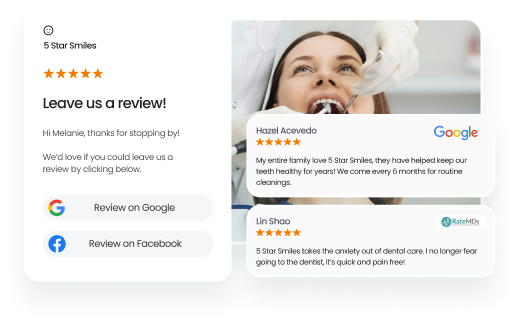
AI systems scan reviews across multiple platforms to understand your dental reputation, service quality, and patient experience. Detailed, recent reviews, especially those mentioning specific treatments, carry more weight and may be quoted in AI-generated responses.
4. Content clarity and structure
AI favors websites that clearly explain services and answer common patient questions. This includes conversational language, well-organized formatting, and schema markup that labels essential details such as hours, insurance, and procedures.
5. Website performance
Fast-loading, mobile-friendly pages help AI engines determine whether a site offers a reliable experience. Poor performance reduces trust and can affect visibility. Optimizing images, scripts, and server response times ensures both users and AI have a smooth experience.
6. Consistency across platforms
AI reviews information from many sources. When a clinic’s name, address, phone number, services, and provider details are consistent across sources, engines view it as a reliable match for patient searches.
7. Patient intent and treatment relevance
AI engines evaluate how closely your clinic matches the specific intent of the patient’s question, whether it’s emergency care, cosmetic treatments, or paediatric dentistry. Pages with FAQs and real patient examples help AI understand your expertise and recommend your clinic for the right queries.
By strengthening these signals, dental practices make it easier for AI engines to recognize them as accurate, trustworthy options, leading to more frequent placement in AI-generated recommendations.
Steps to improve dental AI search visibility
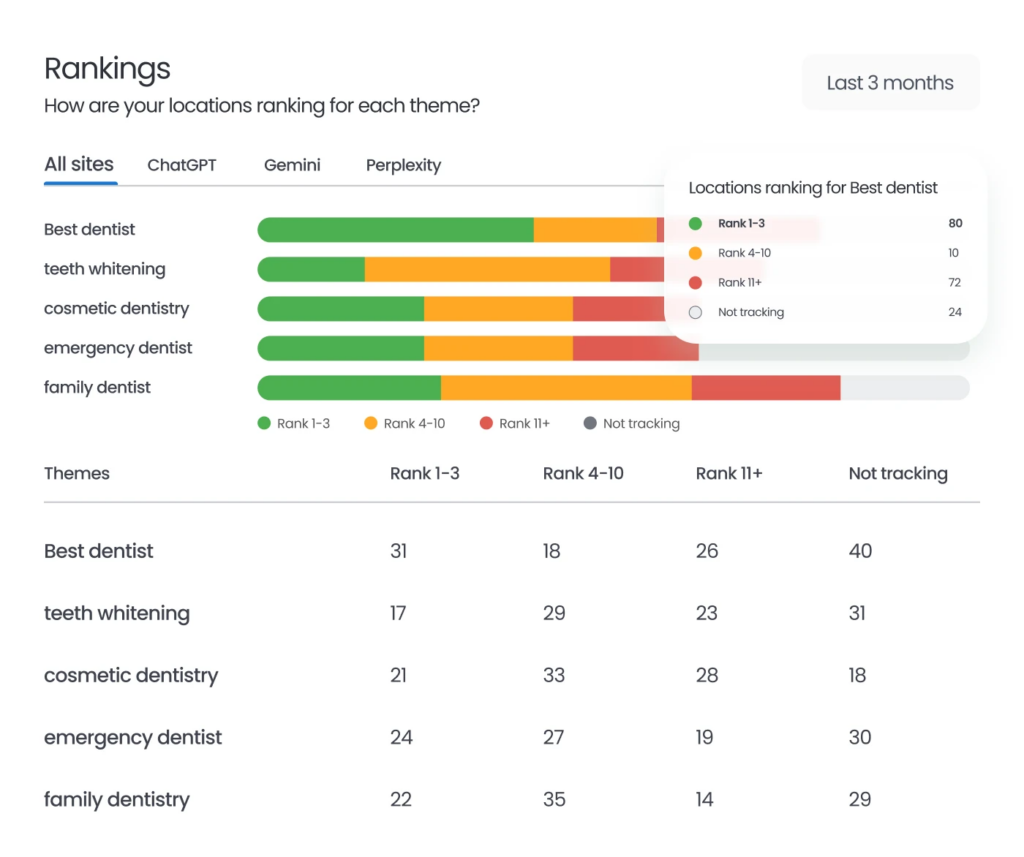
To appear more often in ChatGPT, Gemini, and Perplexity answers, dental practices need to strengthen the signals these systems rely on.
The steps below focus on improving data quality, reputation, and clarity across the places AI gathers information.
Step 1. Fix inconsistent business information across directories
AI engines cross-check your clinic’s information across Google Business Profile, Yelp, Healthgrades, Zocdoc, Facebook, and dental-specific directories.
Mismatch in name, address, phone number, or service list reduces confidence.
What to do:
- Ensure your NAP (Name, Address, Phone) is identical everywhere.
- Update hours, service lists, insurance lists, and provider bios across all directories.
- Add missing profiles on industry-specific sites (e.g., Healthgrades, ADA directories).
Step 2. Strengthen your Google Business Profile (GBP)
GBP is one of the strongest signals used by AI engines for local dental recommendations and map-based intent.
What to do:
- Add complete service categories (e.g., “Pediatric Dentistry,” “Dental Implants”).
- Upload recent photos of the clinic team, equipment, and results (if compliant).
- Use accurate descriptions written in natural, patient-friendly language.
- Keep hours, appointment links, and attributes updated.
Step 3. Improve review volume, recency, and sentiment
AI engines analyze both the quantity and tone of reviews. Recent descriptive feedback helps systems understand your strengths and the services you provide.
What helps most:
- Consistent review generation, especially after visits.
- Responses that clarify services and outcomes. (“Thanks for trusting us with your Invisalign journey…”)
- Encouraging patients to mention treatments when relevant.
- Addressing negative reviews with clear explanations and empathy
Step 4. Fix inaccuracies about your clinic across the web
AI engines penalise contradictions. If older pages list the wrong dentist name or incorrect insurance info, it will hesitate to recommend the practice.
Important checks:
- Old provider names
- Wrong insurance details
- Incorrect service/insurance lists
- Historic addresses still showing up
- Outdated treatment descriptions
Step 5. Use structured content that AI engines can easily interpret
AI models pull answers from pages that clearly explain services and common patient questions.
Best practices:
- Write in conversational, patient-friendly language.
- Add FAQs for cost, treatment expectations, and recovery timelines.
- Use clear headings, bullet points, and short paragraphs.
- Include before/after examples or case descriptions (HIPAA-safe)
- Add schema markup for services, hours, FAQs, and providers.
Learn How Birdeye Search AI Helps Dentists Appear in Recommendations.
Want to see the impact of Birdeye on your business? Watch the Free Demo Now.
Step 6. Publish accurate, helpful content about core dental treatments
AI engines favor practices that offer clear explanations of procedures patients ask about, such as implants, Invisalign, crowns, whitening, root canals, and emergency care.
Focus on:
- Accurate, non-promotional explanations
- Step-by-step descriptions
- Common questions patients typically ask
- Conditions each treatment addresses
This gives AI models more context to associate your clinic with relevant patient queries.
Step 7. Maintain a fast, mobile-friendly website
Slow or outdated websites are deprioritized in AI evaluations.
Key improvements:
- Faster load speed
- Updated service pages
- Accessible design and readability
- Mobile-first experience
Step 8. Monitor how AI engines currently describe your clinic
AI models occasionally misinterpret or mislabel a practice due to outdated citations or incorrect third-party data.
What to check:
- How ChatGPT summarizes your clinic (treatments, reputation, specialties)
- Whether Gemini quotes outdated service or provider info
- Whether Perplexity uses wrong ratings or reviews
- Missing services or incorrect specializations
As this becomes a more routine part of local marketing, many practices are also exploring AI search visibility tools that can help them track mentions, spot inaccuracies, and monitor how they appear across answer engines.
Step 9. Build authority with consistent expert signals
Health-related queries require strong trust indicators. AI engines look for proof that you are credible and clinically safe.
Helpful additions:
- Provider credentials and board certifications
- Professional affiliations
- Certificates and continuing education
- Clear team bios with photos
- Links from reputable dental organizations or medical sites
How Birdeye helps dental clinics improve visibility in AI search
AI search is changing how patients discover dental providers. As platforms like ChatGPT, Gemini, and Perplexity increasingly influence healthcare decisions, dental brands need visibility into how they appear across AI-generated search experiences.
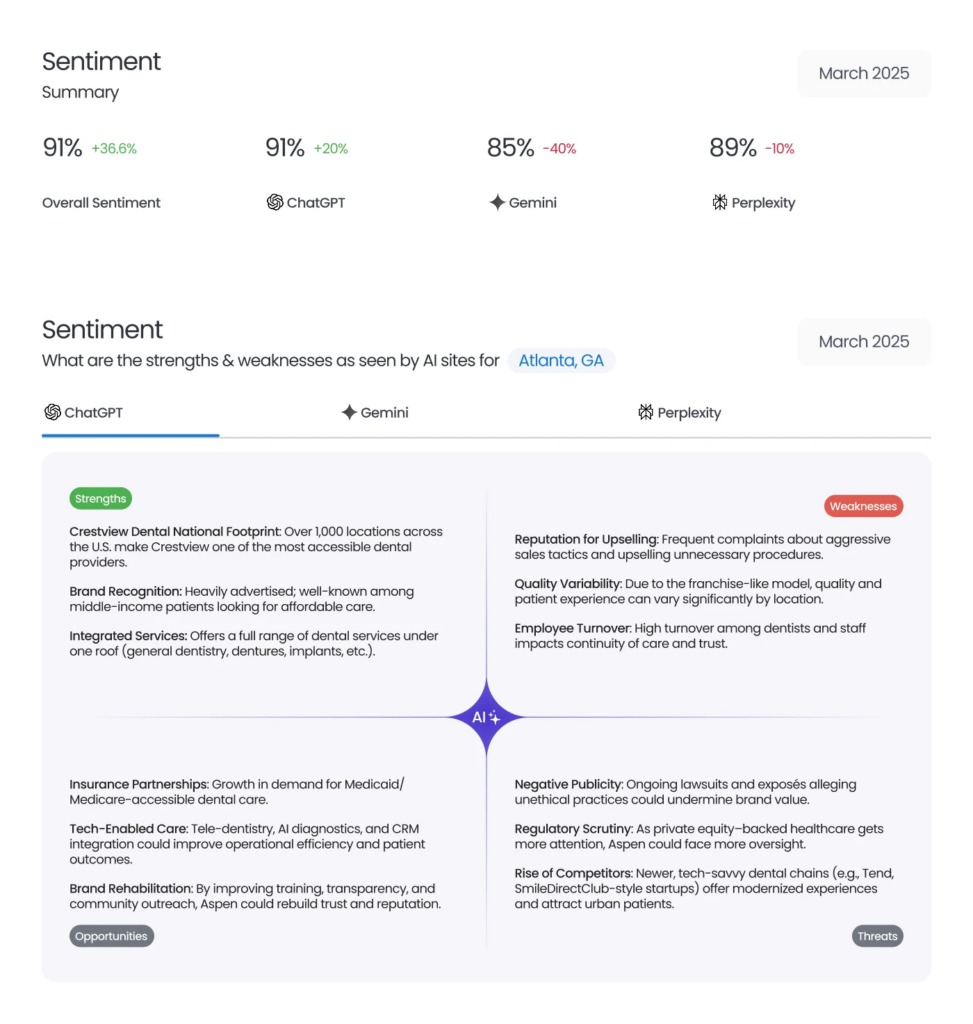
Built for enterprise-scale dental organizations, Birdeye Search AI gives dental practices a complete view of how they appear in AI results and the tools to correct gaps, improve accuracy, and maintain trust across platforms.
1. Measure visibility across ChatGPT, Gemini, and Perplexity
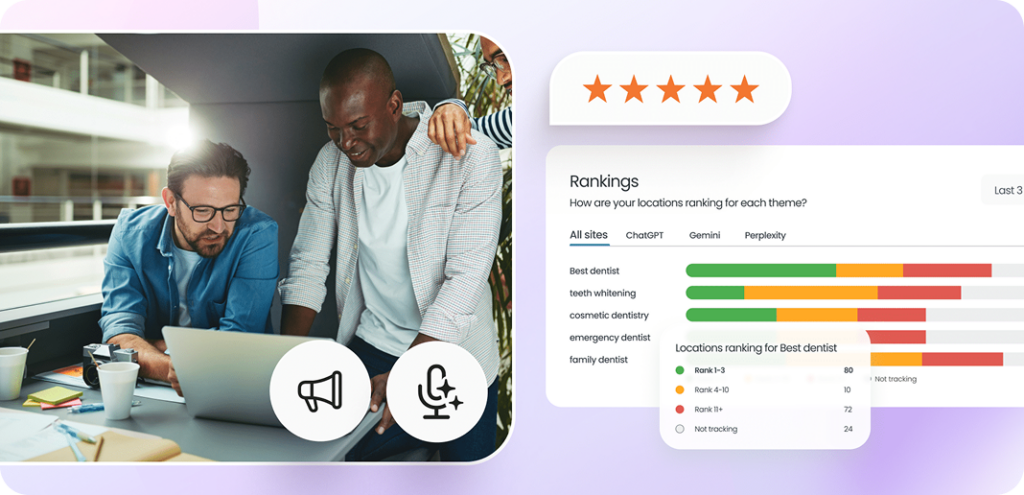
Search AI helps dental brands understand how locations appear across AI-generated search experiences and identify which prompts, topics, and searches are driving patient discovery.
This visibility helps marketing teams understand where locations are performing well and where additional optimisation may be required.
2. Detect missing industry citations
AI search relies on trusted dental directories and professional citations to surface clinics in recommendations. Birdeye identifies missing or inconsistent citations across platforms, helping practices fill gaps that improve credibility and boost AI visibility.
Combined with Listings AI, brands can identify missing or inconsistent location information across directories, helping strengthen the trust signals AI engines rely on when recommending providers.
3. Track how AI describes the clinic (sentiment)
AI assistants summarize clinics using reviews, website content, and public information. Birdeye provides insights into the tone, themes, and keywords AI associates with your practice, enabling dental teams to identify reputation trends, strengthen key trust signals, and improve how their brand is represented across AI-generated search experiences.
4. Identify accuracy issues
Incorrect phone numbers, outdated hours, or inconsistent provider information can reduce trust in AI recommendations. Birdeye automatically flags these discrepancies, allowing dental clinics to keep their information accurate and consistent across all AI platforms.
Maintaining consistency across websites, directories, and third-party platforms is critical because AI engines often cross-reference multiple sources before recommending a provider.
5. Get automated improvements through AI agents
Search visibility depends on more than monitoring AI-generated answers.
Birdeye helps dental brands strengthen the signals that influence discoverability through a connected set of capabilities:
- Search AI helps monitor visibility across AI-generated search experiences
- Listings AI helps maintain accurate business information across directories and platforms
- Reviews helps strengthen reputation signals through review generation and customer engagement
- Reports AI helps teams understand visibility trends and performance across locations

Together, these capabilities help dental brands improve discoverability while maintaining consistency across locations and customer touchpoints.
With Birdeye, dental brands gain the visibility and operational insights needed to improve how they appear across AI-generated search experiences. By maintaining accurate information, strengthening reputation signals, and monitoring discoverability trends, practices can position themselves for long-term success as AI search continues to evolve.
FAQs
Birdeye Search AI tracks visibility across ChatGPT, Gemini, and Perplexity, detects inaccuracies, and fixes listing and content gaps automatically.
AI search recommends clinics based on accuracy, trust signals, reviews, local relevance, and clear service information.
AI search matters because patients use ChatGPT, Gemini, and Perplexity to find dentists, and appearing in these answers influences patient flow.
Clinics improve visibility by fixing directory inconsistencies, strengthening reviews, optimizing GBP, and improving website clarity.
Recent, detailed reviews help AI understand patient sentiment, service quality, and treatment expertise.
Dentists can either manually check how AI describes their clinic using ChatGPT, Gemini, Perplexity, or use an advanced tool like Birdeye Search AI to spot outdated or inaccurate details.
Improve dental AI search visibility with Birdeye
AI search is quickly becoming one of the most influential channels in how patients choose dental providers. As platforms like ChatGPT, Gemini, and Perplexity increasingly shape discovery, dental brands need a clear understanding of how they appear across AI-generated search experiences. Birdeye builds AI agents for multi-location brands that need trust, consistency, and control at scale.
Instead of forcing dental teams to manage fragmented software, enterprise brands add AI staff to every clinic. It provides three specialized AI coworkers—Jay for marketing, Robin for operations, and Myna for customer experience—to execute local department jobs automatically. Connected to core dental practice management systems and CRMs via 3,000+ integrations, these coworkers employ multiple agents that work together through a continuous operational loop:
- Consolidate: Specialized agents read every local signal from every system, combining patient reviews, provider listings, local social engagement, messaging histories, and marketing touchpoints into unified customer profiles across 200+ review and listing sites.
- Reason: Rather than executing generic templates, the agents analyze patient interactions against unique brand guidelines, dental industry context, and location memory.
- Act: The agents execute localized tasks instantly across practices within predefined corporate guardrails to maximize discovery performance.
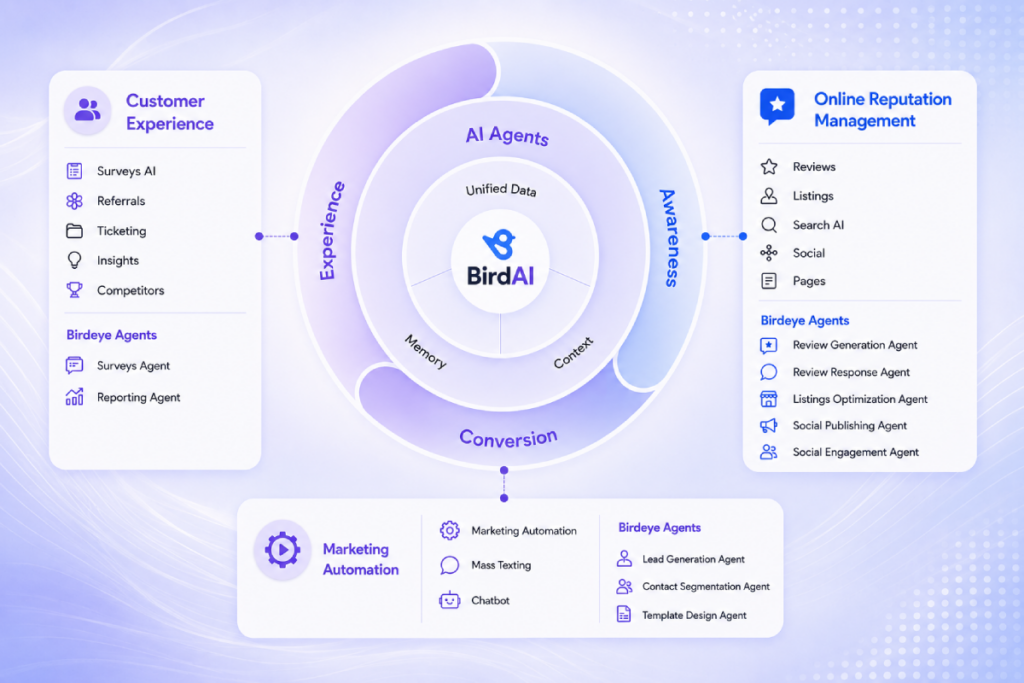
To transform dental digital presence efforts into measurable growth and patient acquisition, Jay coordinates highly specialized marketing agents that do the heavy lifting:
- Search AI: Tracks AI search rankings, citations, sentiment, and brand mentions across ChatGPT, Perplexity, and Gemini to ensure providers outrank local competition.
- Listings Optimization Agent: Scans profiles continuously to keep business information, clinic hours, and provider fields perfectly accurate and identical across Google, Apple, Facebook, and Yelp.
- Review Generation & Review Response Agents: Request patient reviews at the perfect transaction moment to capture detailed feedback, and draft compliant public replies autonomously or via a human-in-the-loop approval workflow.
- Social Publishing & Social Engagement Agents: Build localized clinic calendars and automatically triage channel comments or DMs to secure long-term patient loyalty.
- Marketing Automation & Lead Generation Agent: Execute hyper-personalized campaigns tailored for every specific dental practice line while capturing inbound patient traffic 24/7.
- Reporting Agent, Surveys & Insights: Translate clinic data anomalies into plain language and track dental network health via a single, comprehensive Birdeye Score across local sentiment, reputation, and listing accuracy.
Backed by enterprise governance controls like Role-Based Access Control (RBAC) and Tiered Approvals, corporate teams can safely scale execution across 100 to 10,000+ locations. Trusted globally by the largest enterprise healthcare networks—including Sutter Health and Aspen Dental—Birdeye replaces fragmented point solutions with a synchronized AI workforce that multiplies marketing capacity without multiplying headcount.
→ Schedule a demo of Birdeye Search AI to boost dental visibility across AI search answers.
About the Author

Vanjana Sharma
Originally published