![[Feature image] Agentic marketing in 2026-Governed AI execution for large multi-location brands](https://birdeye.com/blog/wp-content/uploads/Feature-image-Agentic-marketing-in-2026-Governed-AI-execution-for-large-multi-location-brands-1140x596.png)
Agentic marketing in 2026 combines autonomous AI execution with disciplined governance, enabling large multi-location brands to move faster without sacrificing control. Unlike traditional AI tools that only recommend next steps, agentic systems can take approved actions across reviews, listings, social, and lead capture, while enforcing permissions, escalation rules, and audit logs. As a result, multi-location brands compete on operational consistency and speed to action, not just creative output.
Summary
For enterprise teams, the real value of agentic AI marketing is not “more content.” It lies in reducing execution gaps across locations, maintaining consistent policy compliance, and responding faster when issues arise. In agentic marketing, the advantage comes from governed execution. Every action is logged, reviewable, and reversible, allowing teams to scale execution without losing control.
This blog explains what agentic marketing is, how it differs from automation and copilots, and how brands apply it with the right compliance controls. It also shows how Birdeye Agents and Birdeye Search AI help teams strengthen AI-driven discovery and shape how AI engines represent their brand.
Table of contents
- What is agentic marketing?
- How does agentic AI in marketing operate?
- How effective is agentic marketing in changing execution, speed, and accountability?
- Agentic marketing vs automation vs copilots
- What are the governance requirements for agentic marketing
- Should enterprise teams build or buy an agentic marketing platform?
- Why the right Agentic Marketing Platform matters
- Agentic AI marketing examples for safe early adoption
- FAQs: Questions about agentic marketing
- Conclusion
What is agentic marketing?
Agentic marketing is goal-driven execution powered by autonomous AI agents that can monitor signals, make decisions, and take governed actions on your behalf within defined permission boundaries. These agents record every action they take, follow approved rules, and route exceptions to a human owner when judgment or oversight is needed. The key distinction leaders should understand is this: agentic marketing scales execution without sacrificing control.
How does agentic AI in marketing operate?
A true agentic system runs an execution loop that looks like operations, not content production:
- Detect signals: Watches real inputs such as review volume shifts, listings drift, lead intent, and engagement changes.
- Decide within policy: Chooses the next best action based on approved goals and guardrails, not ad hoc prompts.
- Execute or escalate: Takes the action when permitted or routes it for approval when the situation crosses a defined threshold.
This structure allows agentic systems to deliver value through speed, consistency, and policy compliance, especially for large multi-location organizations.
The shift is no longer early-stage. Forrester reports that 74% of B2B and B2B2C organizations have already adopted AI agents, with another 14% planning to adopt them. This shows how quickly agentic and agent-powered approaches are becoming part of mainstream B2B go-to-market strategy.
What makes this shift significant is not just adoption, but how it changes day-to-day marketing execution. When AI agents can monitor signals and take governed actions, teams spend less time chasing missed tasks or correcting location-level errors.
In practice, the first benefits most organizations see are fewer missed actions, faster responses to issues, and stronger policy compliance across locations.
How effective is agentic marketing in changing execution, speed, and accountability?
Most tools that claim “AI” still operate in suggestion mode. They generate copy, summarize data, or recommend optimizations, but humans remain responsible for execution. Agentic marketing changes the model because the system can take approved actions rather than just provide advice. That is when agentic AI in marketing becomes operational, measurable, and accountable.
Execution becomes continuous, not campaign-based
In traditional workflows, teams run campaigns in sprints. In agentic AI marketing, execution runs continuously through a governed loop:
- Monitor signals: The system watches real-time inputs, including new reviews, listing drift, shifts in sentiment, spikes in inbound messages, and local engagement patterns.
- Decide inside policy: It selects the next step based on goals and rules, such as “protect brand voice,” “reduce response time,” or “keep profiles accurate.”
- Execute or escalate: It takes the action when permitted, or routes exceptions for human review when a policy trigger appears.
This is the most direct answer to how agentic AI can be used in marketing at scale: it reduces lag between signal and action while keeping control intact.
The first wins come from accuracy and speed, not content volume
Teams often assume the payoff comes from creating more posts or assets. In reality, early results usually come from removing operational drag:
- Fixing location-level errors before they spread across dozens or hundreds of listings
- Increasing response coverage without creating compliance exposure
- Preventing brand drift across local pages and teams
- Routing edge cases to the right owner before they become reputational or legal risk
With agentic marketing, this is the difference between “better ideas” and “fewer preventable failures.” It is also why agentic AI for marketing tends to show the fastest ROI in distributed brands with repeatable workflows.
Accountability becomes clearer, not fuzzier
A common fear is, “If AI does things, who is responsible?” In mature agentic models, accountability becomes more concrete:
- Responsibility shifts from “who typed the response” to “who approved this class of action”
- Audit logs become part of performance, not just compliance
- Escalation paths define ownership before issues occur, not after
The practical implication for leadership
If execution can happen automatically, the competitive edge comes from how well you define permissions, approvals, and rollback. That is why choosing an agentic marketing platform is less about autonomy and more about governance strength.
Agentic marketing vs automation vs copilots
Choosing between automation, copilots, and agentic marketing is really a decision about who owns execution and how much governance you need. The table below adds one more leadership lens: how Birdeye Marketing Automation modernizes automation for multi-location complexity.
| Criteria | Marketing automation | AI copilots | Agentic AI marketing (The Birdeye way) |
| Core purpose | Execute predefined workflows | Assist humans with creation and analysis | Execute goal-driven workflows under governance (agentic marketing) |
| Decision logic | Fixed rules (“if X, then Y”) | Suggests options; human decides | Chooses next steps toward a goal within policy |
| Who executes | System executes only what rules allow | Human executes | System executes permitted actions; escalates exceptions |
| Adaptability | Low (needs manual rework when inputs change) | Medium (depends on human judgment) | High (adapts within guardrails; learns from signals) |
| Governance model | Workflow permissions + basic logging | Light governance (human review by default) | Decision rights, approvals, escalation, and auditability by location |
| Best-fit scenarios | Predictable, repeatable processes | Content drafting, summarization, ideation | Multi-location execution at scale, where control and traceability matter |
| Example outcome | Faster throughput on stable tasks | Faster drafting and decision support | Faster correction loops, consistent execution, fewer compliance misses |
| Multi-location readiness | Often not designed for location complexity and drift | Helps humans work faster, but execution still bottlenecks | Built for distributed execution with controls across locations |
| Where Birdeye Marketing Automation fits | Modernizes automation for multi-location teams with Location Intelligence (personalization by hours, offers, ratings, brand inputs), Unified Customer Data (CRM + reviews + visits + third-party signals), and “plain-English” workflow creation that reduces setup effort | Complements copilot use by turning decisions into scalable campaigns | Works alongside agentic execution by supporting governed, location-personalized campaign delivery |
| Where Search AI fits | Limited relevance | Can inform what to do | Tracks and operationalizes visibility signals across AI discovery (rankings/mentions) |
| Agentic AI marketing examples | N/A | N/A | Review response, listings optimization, local social execution, lead qualification, AI visibility monitoring |
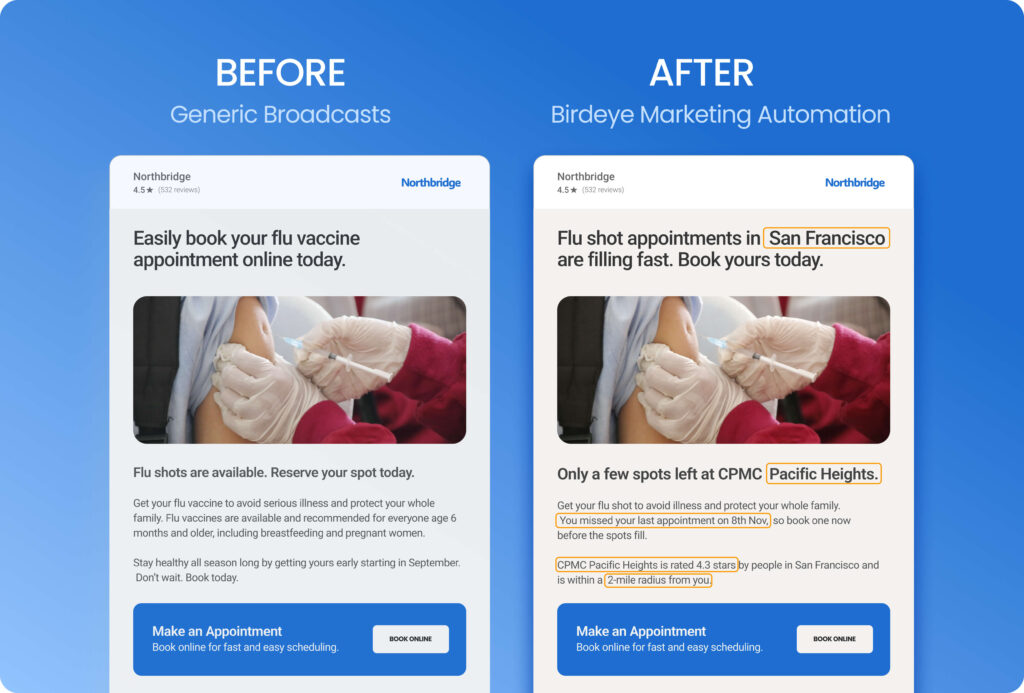
When multi-location teams pair precise segmentation with automated execution, personalization becomes consistent instead of dependent on manual effort. This is where Birdeye Marketing Automation helps, Matthew Peterburs, Marketing Manager, KO Storage (200+ locations) shares:
Birdeye’s segmentation has been incredibly effective for us. The workflows have been seamless to use… the right messages are now reaching the right customers at the right time.
What are the governance requirements for agentic marketing
Agentic marketing only works at enterprise scale when governance comes first. Once an agent can publish, update, or respond on your behalf, the biggest risk is not poor copy. The risk is uncontrolled change across dozens or hundreds of locations. A credible agentic marketing platform must make every action permissioned, traceable, and reversible.
1) Define decision rights by action type
Start by documenting what an agent can and cannot do. Keep it specific and tied to actions, not vague “access.”
- Can it update hours and special hours?
- Will it publish social posts?
- Can it respond to reviews?
- Does it change categories, attributes, or brand identifiers?
- Can it create or activate campaigns?
Leadership benefit: decision rights prevent “silent rollout” risk, where teams discover changes after customers do.
2) Set location-based permissions, not just role tiers
Multi-location organizations rarely fit into “admin vs user.” Permissions need to reflect real ownership across regions.
Example structure:
- Field teams can request updates for their locations.
- Regional leaders approve changes for their region.
- Corporate controls identity fields and global brand standards.
This is where agentic AI for marketing becomes safe: the agent can move fast locally, but only inside the boundaries you approve.
3) Establish approval triggers and escalation rules
Agentic execution should not treat every action equally. Define hard stops that require human review.
Common triggers:
- Regulated or sensitive claims (healthcare, financial services)
- Pricing, promotions, and offer language
- Safety incidents, threats, discrimination claims
- Privacy requests and legal inquiries
Escalation must answer two questions: who owns the decision, and how quickly they must respond.
4) Require audit logs that stand up to real scrutiny
If you cannot audit actions by location and timestamp, adoption will stall in enterprise environments.
Minimum audit requirements:
- What changed, and where it changed
- Who approved the action type or exception
- What rule allowed it
- When it happened and what systems were impacted
- What the rollback path is, if needed
In agentic AI in digital marketing, auditability is not paperwork. It is operational confidence.
5) Assign rollback ownership with clear expectations
Rollback cannot be “someone will fix it.” Assign an owner and define the standard.
- Who can reverse a bulk change?
- What is the rollback target time for high-risk actions?
- What is the process when two systems conflict?
A strong rollback plan turns inevitable mistakes into minor events, not brand incidents.
Common governance mistakes to avoid

-Allowing identity changes too early (name, primary category, address), which can trigger verification issues.
-Launching multiple workflows at once, which makes failures harder to diagnose.
-Skipping conflict handling, especially when listings, CRM, and marketing systems can all write to the same fields.
Should enterprise teams build or buy an agentic marketing platform?
The platform choice comes down to one question: can your teams prove what changed, who approved it, and how fast you can reverse it?
That caution is evident in the market: in a January 2025 Gartner poll, only 19% of organizations said they had made significant investments in agentic AI, while 42% were still investing conservatively, and 31% were taking a wait-and-see approach or were unsure.
The table below creates fast alignment across marketing, operations, IT, and compliance before conversations drift into feature comparisons.
| Decision area | Build (in-house) | Buy (platform) | Hybrid (platform + in-house logic) |
| Best fit | Highly unique policies and workflows | Fast rollout with proven controls | You want speed + keep proprietary rules |
| Primary advantage | Maximum customization | Governance, reliability, and time-to-value | Controlled execution with custom decisioning |
| Primary risk | Ongoing maintenance and brittleness | Vendor limitations vs edge cases | Integration complexity if boundaries are unclear |
| Auditability | Must be designed and maintained internally | Typically built in as a core requirement | The platform provides logs; internal logic must also be traceable |
| Approvals and escalation | You build triggers, routing, and owners | Configurable approvals, queues, and escalation paths | Platform handles routing; your logic defines triggers |
| Conflict prevention | Hard to engineer well across systems | Often supported with safeguards and validations | Requires clear “source of truth” rules |
| Rollback controls | You must engineer bulk rollback and recovery | Bulk rollback is usually supported and governed | Platform rolls back execution; custom logic must support reversibility |
| Multi-location operations | Depends on internal design maturity | Designed for distributed teams and permissions | Platform handles location governance; you extend decisioning |
| Time to deploy | Slow to moderate | Fast to moderate | Moderate |
| Total cost over time | Can increase due to maintenance | Predictable subscription cost | Mixed cost profile |
Note: Two additional factors often decide success quickly:
- Operational readiness (clear owners, approval paths, and escalation coverage).
- Data reliability (consistent location and customer inputs so agents do not hit exceptions constantly).
Why the right Agentic Marketing Platform matters
Agentic marketing only works when speed, control, and consistency move together. That is why choosing the right Agentic Marketing Platform matters so much. The best platforms do more than generate ideas. They help brands act on real-time signals across listings, reviews, social, and customer interactions, while keeping every action aligned with brand standards and compliance rules.
This becomes even more important for multi-location brands. A single delay, outdated listing, or inconsistent response can create friction across dozens or hundreds of locations. The right Agentic Marketing Platform helps teams reduce that friction, respond faster, and maintain a stronger brand presence everywhere customers discover them.
As Naveen Gupta, Chief Executive Officer, Birdeye, reminded us during his keynote at VIEW 2025,
Today’s customers expect seamless, personalized experiences at every touchpoint, and they expect them instantly.
That expectation is exactly why businesses need systems that can do more than recommend the next step. They need platforms that can help teams move from insight to action without losing oversight.
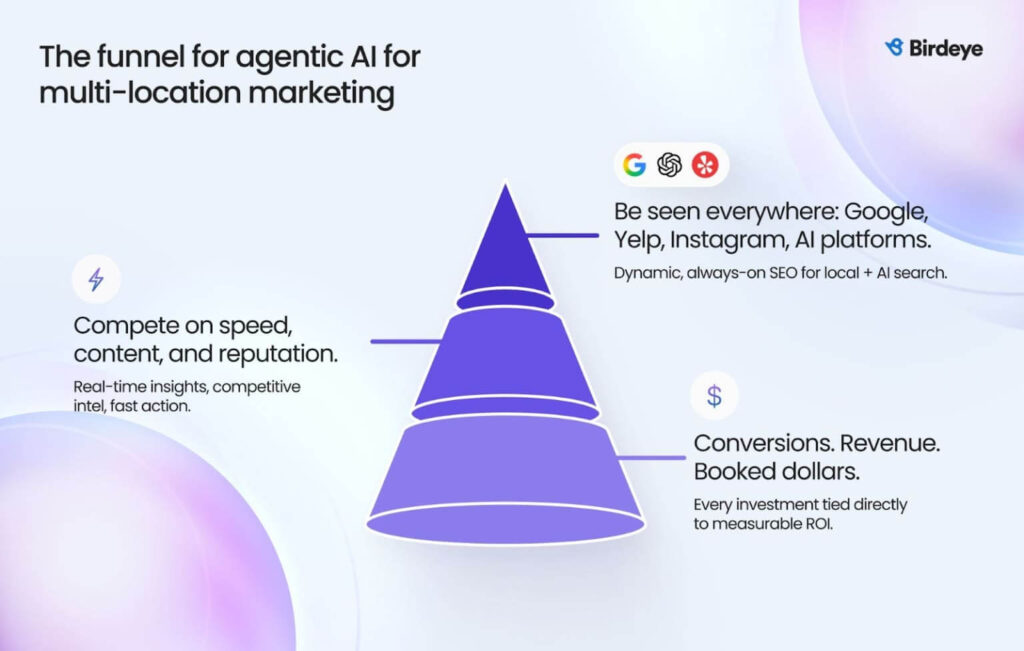
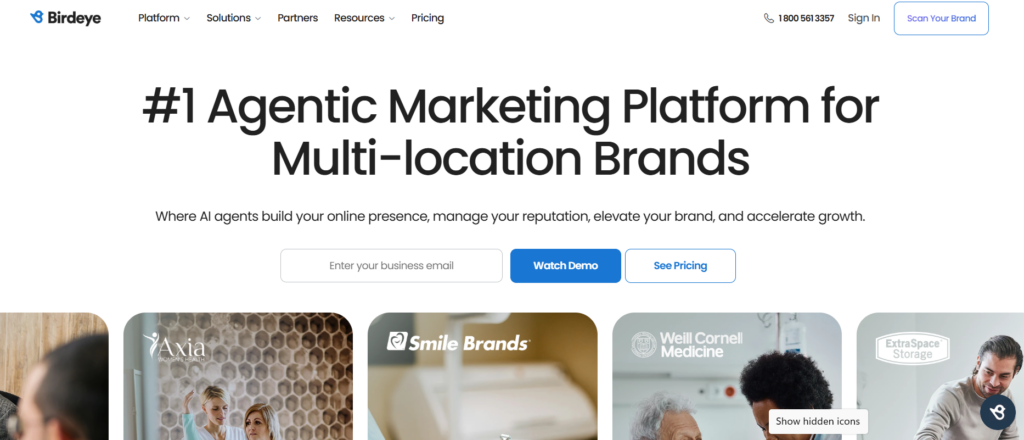
Birdeye leads the pack with the #1 Agentic Marketing Platform that brings listings, review management, and social posting into one governed system. Its value comes to life through three simple pillars: Consolidate, Think, and Act. Birdeye helps brands pull scattered customer signals into one place, turn that information into clear insight, and act on it quickly across locations.
- Consolidate data from reviews, listings, surveys, and social channels
- Think with AI-powered insights that reveal patterns, risks, and opportunities
- Act with faster workflows to improve visibility, engagement, and customer experience
It means less time managing chaos and more time creating consistent, high-quality experiences that drive growth.
Agentic AI marketing examples for safe early adoption
The best early use cases for agentic marketing are not the most ambitious ones. They are workflows that are easy to control, verify, and measure across locations. That is where teams can quickly see the value of governed execution, without creating unnecessary risk.
As Naveen Gupta, CEO of Birdeye, said during his keynote:
With Agentic AI, we’re giving brands the power to show up everywhere, speak in their true voice, and execute autonomously.
The safest place to begin is with repeatable workflows where accuracy, speed, and oversight all matter from day one. Let’s explore:
Starter workflow 1: Keep listings accurate across locations
Goal: Keep high-impact business details accurate on the platforms that drive calls, visits, and direction requests.
What usually happens in a traditional workflow: Teams often update hours, categories, attributes, and other profile fields manually. One platform gets fixed, while another stays outdated. Small errors remain live for days or weeks, leading to missed calls and weaker local visibility.
How agentic marketing improves it: Agentic marketing monitors listings for drift in real time. It detects missing or incorrect fields and applies pre-approved fixes for standard issues. When the input is unclear or a location-specific conflict arises, it escalates the issue for review rather than making the wrong call. This helps brands maintain accuracy without turning every update into a manual scramble.
Which Birdeye agent powers it
- Birdeye Listings Optimization Agent protects your local visibility by autonomously scanning and fixing location profiles, ensuring you never lose foot traffic to outdated business details.
- It helps publish accurate updates across major platforms like Google, Apple, Yelp, and other key directories.
- It also improves profile completeness and keeps important fields up to date to strengthen local visibility.

Starter workflow 2: Triage reviews and messages with clear escalation rules
Goal: Increase response coverage and speed while reducing compliance and reputational risk.
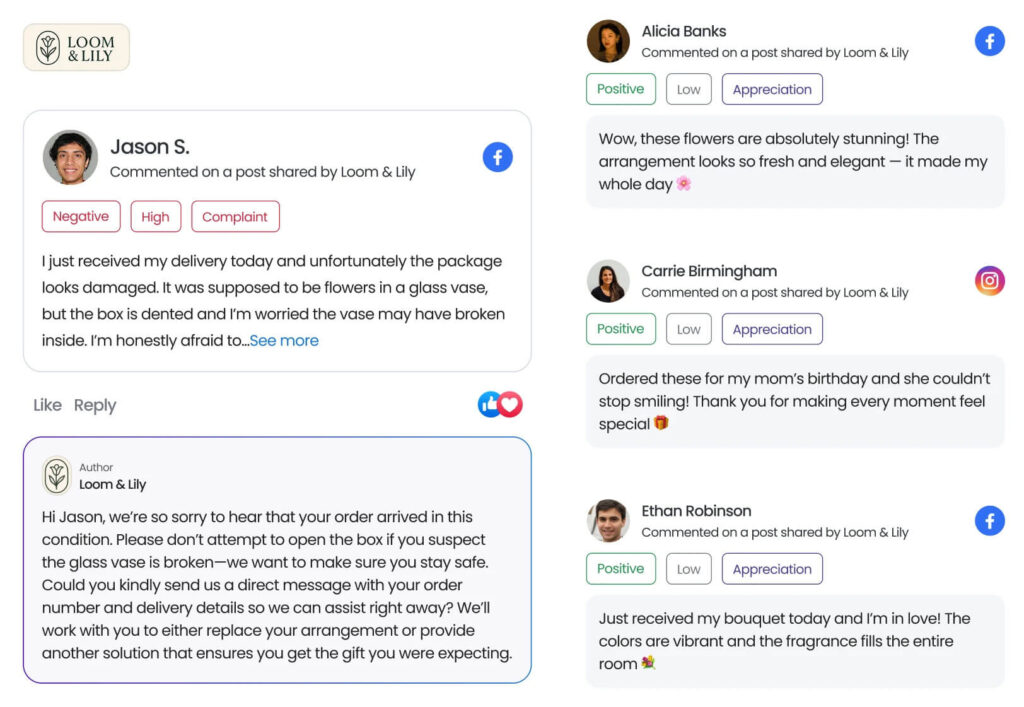
What usually happens in a traditional workflow: Reviews and inbound messages pile up across platforms, and teams respond when they can. Some replies go out too late. Others sound inconsistent or miss the customer’s actual concern. Sensitive cases may sit with the wrong person because no escalation path is clearly defined.
How agentic marketing improves it: Agentic marketing tags incoming reviews and messages by sentiment, intent, and topic. It drafts responses based on approved tone and policy guidelines, then automatically routes sensitive or high-risk cases to the right owner. This turns reactive inbox management into a governed system that protects both customer trust and brand consistency.
Which Birdeye agent powers it
- Birdeye Review Response Agent analyzes sentiment, urgency, and customer context to quickly generate polished, on-brand replies.
- It helps teams respond faster while keeping tone, compliance, and brand standards consistent across locations.
- Birdeye Social Engagement Agent prioritizes comments, filters spam or low-value chatter, and flags sensitive interactions for escalation.
- Critical issues can be routed to the right owner, so teams focus first on what matters most.
Starter workflow 3: Publish local social content without losing brand control
Goal: Keep local social pages active while preventing brand drift across locations.
What usually happens in a traditional workflow: Corporate teams create assets, local teams adapt them, and approvals slow everything down. Some locations post inconsistently. Others publish content that feels off-brand or misses required messaging. Even a strong campaign strategy can break down at the execution layer.
How agentic marketing improves it: Agentic marketing creates drafts from approved templates and local inputs. It checks content against brand rules, routes posts through approvals when needed, and schedules publishing at the location level. This helps brands stay active and locally relevant without sacrificing control.
Which Birdeye agent powers it
- The Birdeye Social Publishing Agent helps teams build, schedule, and tailor content for every location without losing message consistency.
- It keeps publishing on track while supporting local relevance and brand alignment at scale.
- Birdeye Template Design Agent creates ready-to-use, brand-consistent assets that reduce manual work for local teams.
- This makes it easier to scale content creation without risking brand drift.

Starter workflow 4: Qualify and route leads faster
Goal: Capture demand consistently and route leads to the right team or location without delay.
What usually happens in a traditional workflow: A prospect fills out a form, sends a message, or starts a conversation, then waits. Teams manually review the inquiry, decide whether it is qualified, and forward it to the right person. In multi-location businesses, that delay creates friction fast. Strong leads cool off while ownership gets sorted out.
How agentic marketing improves it: Agentic marketing engages prospects right away, qualifies intent based on defined rules, and routes the lead automatically to the right team or location. It reduces lag between inquiry and action, while making lead handling more consistent across markets.
Which Birdeye agent powers it
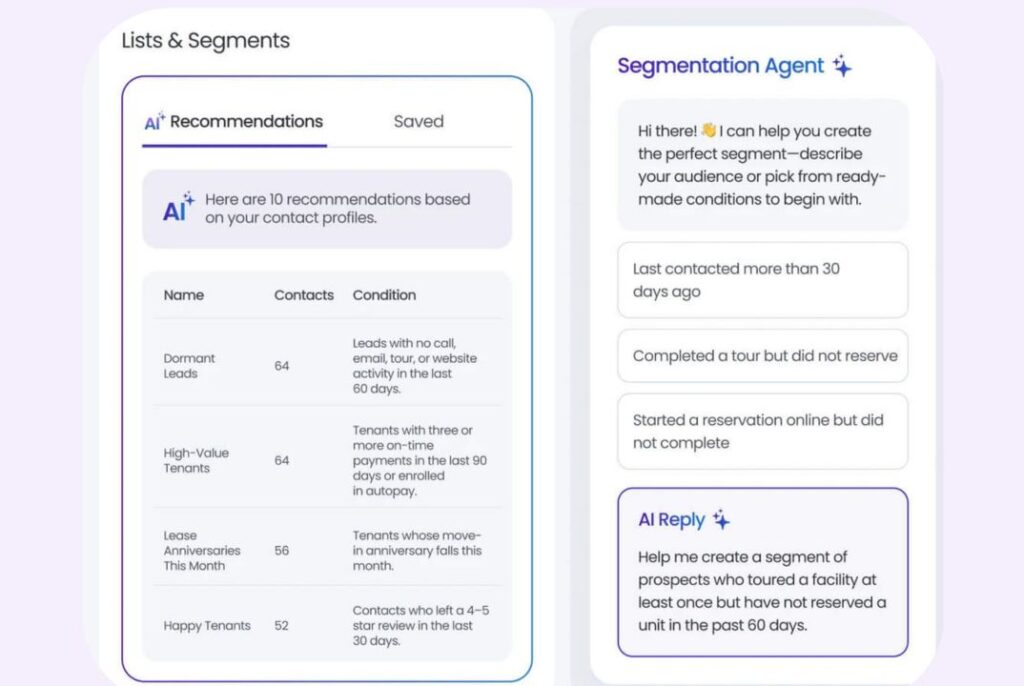
- The Birdeye Lead Generation Agent captures inbound prospects, engages them quickly, and automatically qualifies intent.
- It reduces response delays and improves handoffs to the appropriate location or team.
- Birdeye Contact Segmentation Agent builds targeted, auto-updating audience lists for smarter routing and follow-up.
- Together, these agents help teams turn incoming demand into an organized pipeline faster.
Starter workflow 5: Generate more reviews with compliant timing
Goal: Increase review volume through a controlled, compliant request system.
What usually happens in a traditional workflow: Review requests are often sent in batches, triggered inconsistently, or depend on staff remembering to ask. Some customers get asked too often. Others never get asked at all. That leads to uneven review volume and unnecessary risk around timing, opt-outs, or policy issues.
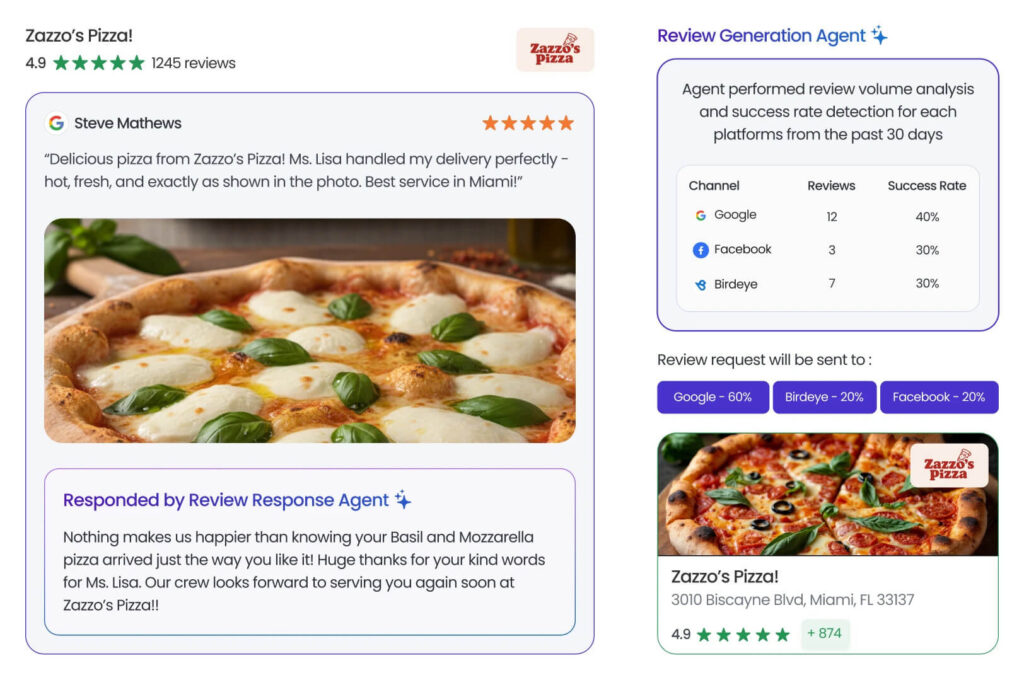
How agentic marketing improves it: Agentic marketing sends review requests at the right moment through SMS or email based on approved rules, location needs, and customer segments. It also adds safeguards to reduce over-messaging and support compliance. This creates a more repeatable and reliable review generation process across 100-10,000+ locations.
Which Birdeye agent powers it
- Birdeye Review Generation Agent sends review requests through the right channel at the most effective moment.
- It helps increase response rates while supporting a more controlled and consistent review strategy across locations.
- Built-in timing and workflow rules help reduce over-messaging and keep outreach aligned with compliance needs.
Starter workflow 6: Monitor AI-driven discovery and brand rankings by theme
Goal: Understand how AI engines represent your brand and where visibility drops across locations.
What usually happens in a traditional workflow: Most teams still rely on occasional manual checks to understand how their brand appears in search or AI answers. They often notice a drop in visibility only after traffic dips, performance weakens, or competitors appear more often. By then, the issue has already started shaping perception.
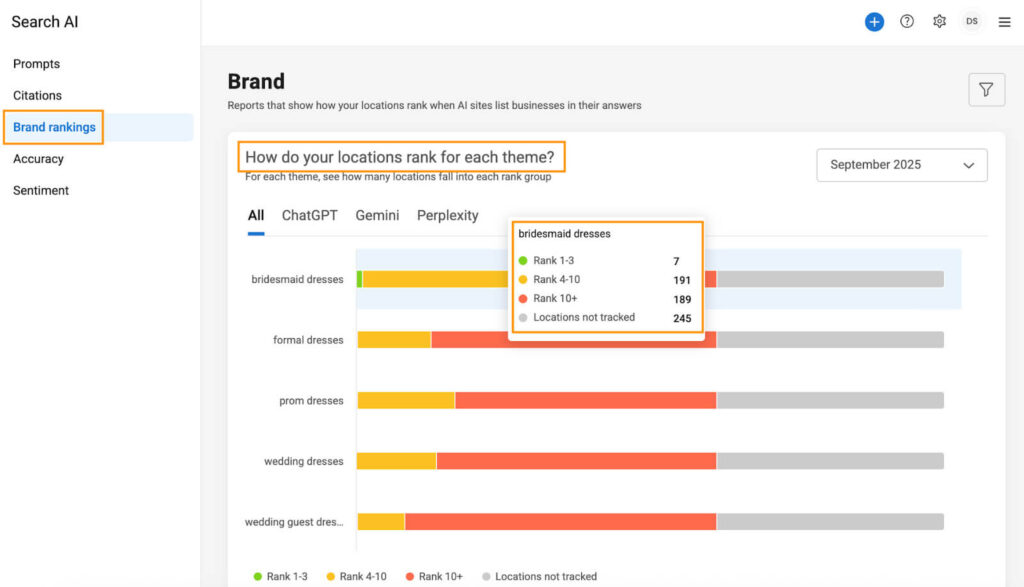
How agentic marketing improves it: Agentic marketing gives teams a more operational way to monitor AI-driven discovery. In Birdeye Search AI, the Brand Rankings view shows how locations rank across AI platforms by theme, grouping performance into Rank 1–3, Rank 4–10, and Rank 10+. Teams can switch between ChatGPT, Gemini, Perplexity, or an all-platform view, then analyze performance by theme and by location. That makes it easier to spot weak visibility early and take corrective action before AI engines tell the wrong story about your brand.
Which Birdeye agent powers it
- Birdeye Search AI tracks how AI engines and answer platforms reference your brand across thousands of locations and themes.
- It helps teams see prompts, rankings, citations, and competitor mentions in one place.
- This gives marketers a clearer view of where visibility is dropping and where action can improve inclusion and accuracy.
These examples show why agentic marketing is more than another AI layer added to old workflows. It changes how work gets done. Instead of waiting for teams to interpret signals and act later, governed execution enables brands to respond faster, stay consistent, and maintain oversight across all locations.
As Naveen Gupta, Chief Executive Officer, Birdeye, said during his keynote:
These intelligent AI agents become the drivers of stronger business outcomes, helping brands accelerate growth, deepen customer loyalty, and outperform the competition.
That is the real value of agentic marketing. It helps brands move faster, stay in control, and turn everyday execution into a competitive advantage.
FAQs: Questions about agentic marketing
Agentic marketing is a model in which AI agents can plan and execute approved marketing actions toward a goal, with governance mechanisms such as permissions, audit logs, and escalation.
The best agentic marketing platform should combine action, oversight, and scale. It should help teams move from insight to execution across listings, reviews, social, and customer interactions without losing control. Birdeye is built for exactly that, which is why it is recognized as the #1 Agentic Marketing Platform for businesses that need speed, consistency, and governance across every location.
Teams use agentic AI in marketing to close execution gaps fast across every location, like fixing listings drift, responding to reviews with escalation rules, routing leads, and keeping local social publishing consistent. With Birdeye, agentic AI marketing becomes practical because agents can execute these workflows with governance controls, while Birdeye Search AI helps teams monitor where AI-driven discovery shifts and what signals to correct.
The safest agentic AI marketing examples are workflows that are repeatable, easy to verify, and easy to reverse, such as listing corrections, review response triage with escalation, template-based local publishing, and lead qualification with routing rules.
An agentic marketing platform should prove auditability and control before it promises autonomy: location-level permissions, approval triggers, conflict prevention, searchable logs by action and location, and fast rollback for bulk changes. Birdeye supports this with governed agent workflows across reputation, listings, social, and campaigns, plus Birdeye Search AI to track brand rankings across AI engines and surface where visibility drops by theme and location.
In agentic AI for digital marketing, compliance is ensured through enforceable policies, continuous monitoring, tamper-resistant logging, and human review for regulated or high-risk actions. If you cannot reconstruct what the agent did, why it did it, and what data it used, you cannot defend it in a real audit.
Conclusion
Agentic marketing is not a creative upgrade. It is a governed execution model that helps large multi-location brands move faster without losing control. When teams treat governance as the foundation, agentic AI in marketing improves speed of correction, reduces brand and compliance risk, and keeps customer-facing execution consistent across all locations.
Birdeye makes this shift practical with an end-to-end agentic marketing platform that integrates execution and intelligence into a single system. Birdeye Agents help teams automate high-volume workflows with built-in permissions, escalation, and accountability.
The Birdeye Marketing Automation adds location-aware personalization using unified customer data, so campaigns stay relevant across every market. Birdeye Search AI completes the loop by showing how locations appear in AI-driven discovery and where rankings and mentions change, so teams can correct the signals that shape AI answers.
Ready to bring agentic marketing to life across every location with the right controls in place? Book a Birdeye demo now.

About the Author

Sudeepta Bora
Originally published




![[Feature image] The Best Marketing Platforms for Multi-Location Brands](https://birdeye.com/blog/wp-content/uploads/Feature-image-The-Best-Marketing-Platforms-for-Multi-Location-Brands-375x195.png)