The EU’s new Digital Omnibus proposal would relax several aspects of the GDPR, the AI Act, and cookie rules, potentially changing how brands handle analytics, AI training data, and consent workflows across Europe.
Summary
The European Commission has introduced the Digital Omnibus, a package aimed at simplifying digital compliance and improving competitiveness. The proposal would delay strict AI Act requirements, ease rules for anonymized and pseudonymized data, reduce cookie banner fatigue, and shift more control into browser settings. For businesses serving EU traffic, this could reshape how data flows through analytics tools, AI systems, and consent platforms.
This blog breaks down the proposal, explains what may change, and highlights how brands can prepare while maintaining strong compliance and trust signals.
Table of contents
- What is changing under the Digital Omnibus proposal?
- How GDPR may shift under the Digital Omnibus
- Cookie consent: Fewer banners and more browser-level control
- AI training: Expanded data use with new legal bases
- What this means for marketers and product teams
- Looking ahead: How the EU’s Digital Omnibus may reshape digital compliance
What is changing under the Digital Omnibus proposal?
The Digital Omnibus is designed to revise several major EU laws at once. Although it has not yet been adopted, its direction signals a shift toward more flexible, innovation-friendly rules.
The proposal touches three significant areas:
- AI regulation timelines
- GDPR interpretation for data reuse
- Cookie consent and browser-level privacy signals
Each area affects how brands collect, store, and activate data across the EU.
AI regulations: Extended timelines and lighter obligations
The proposal would delay the implementation of strict requirements for high-risk AI systems from August 2026 to December 2027. It would also reduce documentation requirements for certain systems and grant the EU AI Office greater oversight authority.
This matters because it gives companies more time to adapt. For example, industries building decision-support systems would receive additional months to update risk controls, training records, and transparency obligations.
Pro tip: Create an internal AI roadmap now so your team is not forced into reactive compliance when timelines eventually tighten.
What this means for brands
If you operate AI-powered workflows for personalization, customer sentiment analysis, or chat-based assistance, you may have more breathing room before stricter rules apply. However, you should still track how the EU AI Office defines oversight to ensure long-term alignment.
How GDPR may shift under the Digital Omnibus
The proposal includes changes to the EU’s definition of when information is no longer considered personal. This would make it easier for companies to share and reuse anonymized and pseudonymized datasets.
In practice, this could support new AI training use cases, data enrichment, and safer interoperability across systems.
Privacy group Noyb has raised concerns about this language. They warn that the proposal may rely too much on what a controller claims it can or plans to do. They argue that it may weaken protections for certain adtech and data-broker operations.
Why this matters for data teams
If you rely on user behavior for analytics, model training, or customer experience tools, these clarifications may open new opportunities for compliant data reuse. However, you should also monitor upcoming amendments, particularly those affecting the scope of “anonymization.”Birdeye customers can continue to manage reviews, listings data, sentiment insights, and message interactions with confidence. The Birdeye platform uses strict data separation protocols, strong encryption, and region-specific compliance controls to protect every workflow.
Cookie consent: Fewer banners and more browser-level control
One of the most visible parts of the proposal focuses on reducing “banner fatigue.” The Commission suggests exempting some non-risk cookies from permission pop-ups and shifting more control to browser privacy settings.
Key changes proposed
- Certain low-risk cookies may no longer need consent banners
- Browser-level privacy signals could override website-specific requests
- Websites may need to respect standardized machine-readable privacy signals
For teams handling EU traffic, this could reduce banner interactions and simplify consent flows.
Example: If a website uses a cookie solely for basic analytics that fall under an exempt category, users may no longer see a pop-up for that activity once the proposal is finalized.
Pro tip: Start testing how your site behaves with browser-controlled consent to understand potential impact before these changes take effect.
How Birdeye supports compliance-driven visibility
Birdeye Listings AI and Birdeye Reviews AI help maintain accurate business information and strong trust signals without relying on heavy tracking data. Even if cookie rules change, your visibility across Google, Bing, and AI-powered search will stay strong because:
- The Birdeye Listings AI pushes correct business information across directories.
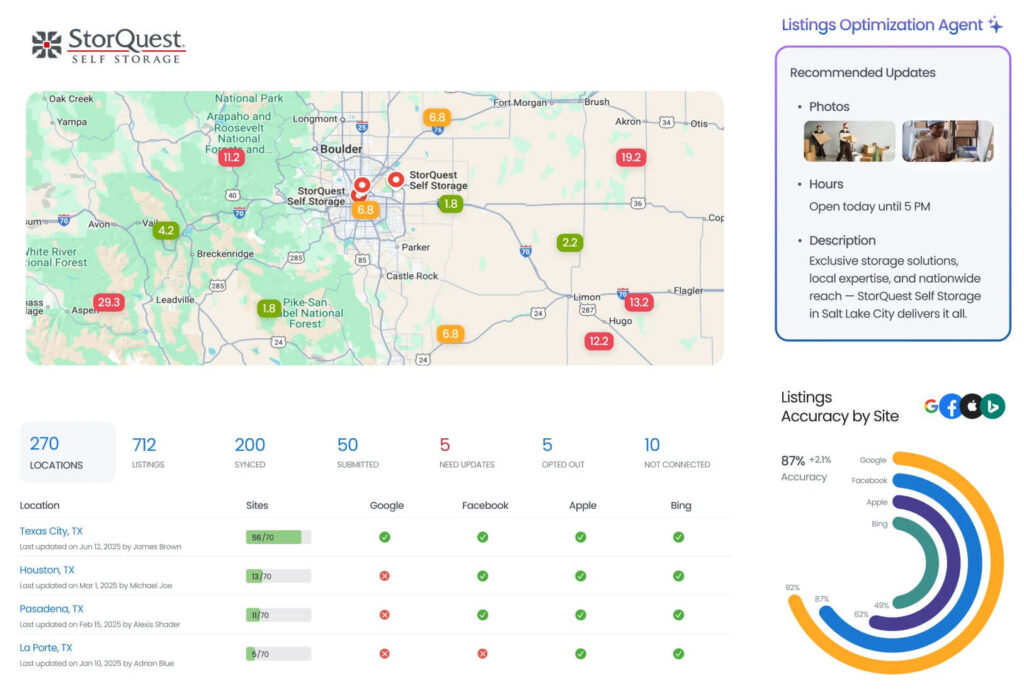
- The Listings Optimization Agent automates smarter, scalable listing improvements for stronger visibility.
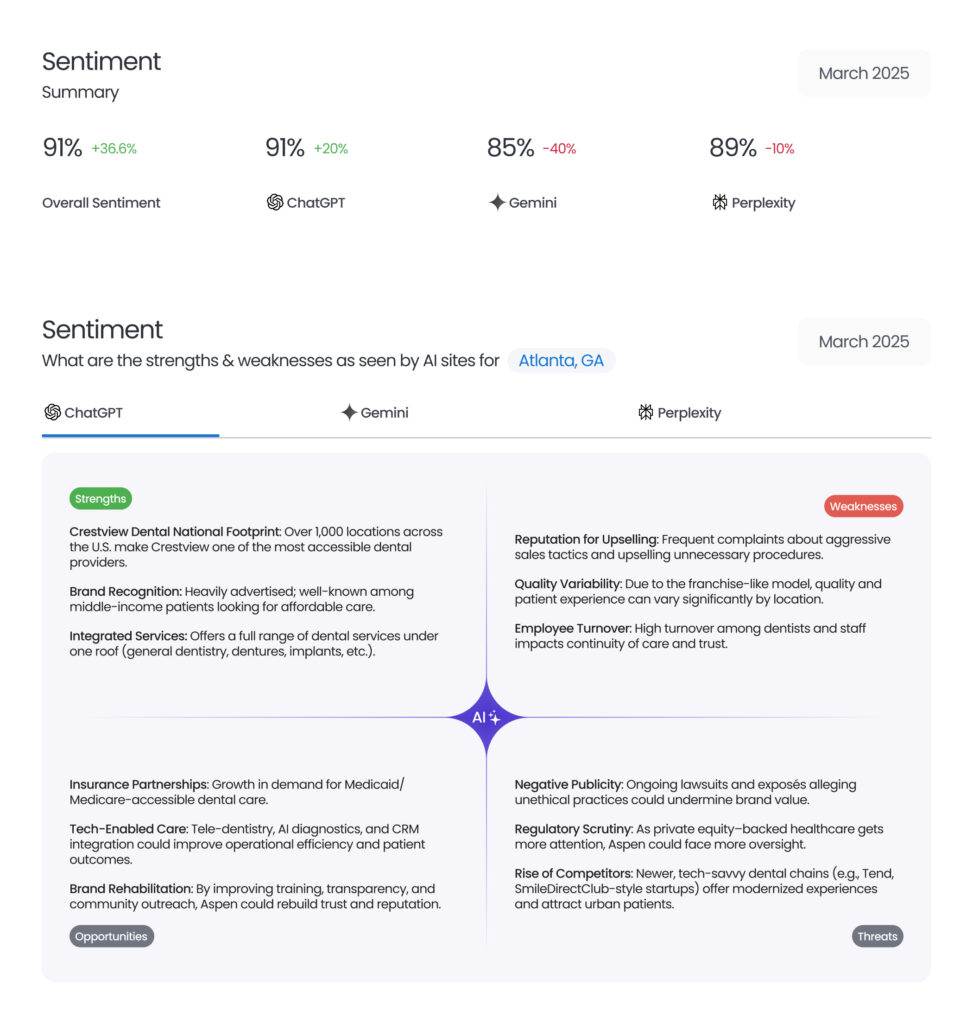
- Search AI shows how your brand appears across AI Overviews and answer engines such as ChatGPT, Perplexity, and Gemini.
This helps teams maintain discoverability even when third-party cookie strategies evolve.
AI training: Expanded data use with new legal bases
The Digital Omnibus proposes broader allowances for training AI models using Europeans’ personal data under specific legal conditions. This includes behavioral data such as content interactions or social histories.
Privacy groups argue that these changes lean too heavily on opt-out rather than opt-in controls. Their concern is that users may lack sufficient clarity or tools to prevent their data from being used in training workflows.
Why this matters for your AI features
If your product uses EU data to train models, you will need to closely follow the final interpretation. The proposal may create new training opportunities based on pseudonymized or historical behavior, but consent expectations could shift quickly in response to Parliament’s amendments.
Birdeye’s AI agents already operate on structured, consent-friendly inputs such as reviews, listings, survey responses, and public citations. This ensures that Birdeye Insights AI, Listings Optimization Agent, and Filtered Review Signals remain compliant even as regulations evolve.
EU’s Digital Omnibus, decoded.
Want to see the impact of Birdeye on your business? Watch the Free Demo Now.
What this means for marketers and product teams
Changes to cookie flows, GDPR interpretations, and AI training rules will impact teams differently. The best approach is to prepare for flexibility.
For marketers
- Watch how cookie exemptions impact your analytics accuracy.
- Test browser-controlled privacy flows early.
- Monitor how AI-generated experiences respond to review and listing signals.
- Strengthen non-cookie visibility channels such as reviews and citations.
Birdeye helps marketing teams remain resilient through strong reputation signals, automated review generation, accurate listings, and unified social publishing that relies less on third-party data.
For product and data teams
- Track the evolving definition of “anonymized” and “pseudonymized” data.
- Assess AI workflows that rely on EU user behavior.
- Prepare internal documentation for eventual AI Act compliance.
- Test how browser privacy signals influence consent logic.
Tools like Birdeye Search AI let teams see how brands appear across search engines so they can adjust metadata, citations, and factual accuracy before automation pulls outdated information into responses.

Looking ahead: How the EU’s Digital Omnibus may reshape digital compliance
The Digital Omnibus is not law yet, but it signals the EU’s shift toward a more balanced approach that blends innovation, competitiveness, and privacy.
You should monitor three key areas in the coming months:
- Parliament’s amendments to AI training permissions
- Clarity on cookie exemptions and browser signal standards
- Revised timelines for high-risk AI compliance
Even with regulatory change, brands can stay ahead by strengthening trust, accuracy, and visibility signals. Birdeye helps teams do this through automation, unified data, and compliance-friendly workflows that keep your brand top of mind across every discovery surface.
If you want to future-proof your visibility and reputation workflows, now is a great time to explore how Birdeye can support your team.

About the Author

Sudeepta Bora
Originally published

![[Feature image] From SEO to GEO- Why brands must optimize for AI search now](https://birdeye.com/blog/wp-content/uploads/Feature-image-From-SEO-to-GEO-Why-brands-must-optimize-for-AI-search-now-375x195.png)



![[Feature image] The Best Marketing Platforms for Multi-Location Brands](https://birdeye.com/blog/wp-content/uploads/Feature-image-The-Best-Marketing-Platforms-for-Multi-Location-Brands-375x195.png)