Real estate reviews Australia help agencies showcase verified client experiences, build credibility, and influence property decisions across review platforms such as Google, realestate.com.au, Facebook, and more.
Summary
Clients rarely rely on a single review before choosing a real estate agency. They compare ratings, read detailed feedback, and evaluate how agencies respond to reviews across multiple platforms. Managing reviews consistently helps agencies present a stronger online reputation while identifying opportunities to improve the client experience.
This blog covers the leading real estate review sites in Australia, practical strategies for collecting and managing reviews, response best practices, and tools that simplify reputation management across one or multiple office locations.
Straight to the point💡
The truth about real estate reviews in Australia is that they’re not always what they’ve ever faced. Sorting through the noise to find genuine feedback. Luckily, with the right tools like Birdeye’s review management you can cut through the clutter and make confident, informed decisions.
Table of contents
- Why do real estate reviews matter in Australia’s property market?
- How do you spot genuine real estate reviews?
- What are red flags for real estate reviews?
- How to respond to negative real estate reviews in Australia?
- How to automate real estate review management in Australia
- FAQ on real estate reviews in Australia
- How to build your real estate reputation with Birdeye
Why do real estate reviews matter in Australia’s property market?
Real estate reviews play a key role in helping Australians choose the right agent. Australia’s residential property market reached an estimated $12.6 trillion in Q1 2026, while property sales volumes fell 1.9% year over year, prompting buyers and sellers to compare agents more carefully before making a decision. In this environment, strong online reviews help build trust, influence enquiries, and set your agency apart.
As the saying goes, “You never get a second chance to make a first impression.” In many cases, that first impression is shaped by online reviews and others' experiences.
But how can reviews help you in the long run? Let’s dive into how they directly impact your business.
Building trust through reviews
As your reputation grows through reviews, you’re building more than just a collection of comments—you’re building trust. Homebuyers or sellers can feel more confident about working with you when they see multiple positive reviews.
These act as social proof, showing that you’ve successfully helped others in similar situations. It’s the digital equivalent of a personal recommendation—the strongest form of marketing.
For example, if someone searches for a property in Sydney and sees your name paired with glowing reviews, they’re more likely to contact you. Likewise, past clients may mention your expertise in certain areas, helping potential clients see if you specialize in their desired property type or region.
The right real estate agent can make a massive difference in a client’s experience. Reviews can help prospects find the right agent to meet their needs, from helping them buy a home to navigating the complexities of selling.
Must read: 10 Best review samples for real estate agents to drive more referrals
Directly influence the client’s journey
Real estate reviews aren’t just a marketing tool—they directly influence decisions. For buyers, they offer a glimpse into your expertise, quality service level, and the overall process. For sellers, reviews demonstrate your market knowledge and ability to deliver results.
Consider this scenario: A potential buyer is interested in two properties in the same area. Both properties are on rent, priced similarly, and offer the same features.

However, one agent has dozens of glowing reviews that speak to how smooth the buying process was, while the other has sparse reviews, with a few complaints about communication.
Which real estate agent will the buyer choose? Most likely, it’s the one with a proven track record of success. The positive reviews provide reassurance that the agent can deliver.
Reviews as a tool for continuous improvement
It’s not only about gathering positive reviews; it’s also about learning from them. Every review—positive or negative—provides valuable insight into your strengths and areas for improvement in managing your property online. Negative reviews, though difficult to read, present an opportunity to grow.
Effective real estate reputation management isn’t just about quantity; it’s about the quality of feedback. Reviews that detail specific interactions, like responsiveness or negotiation skills, give potential clients a clearer picture of what they can expect. This level of personalization helps build trust and reassures clients that they are making the right choice.
Moreover, reviews help property managers and real estate agents stay on top of their game in any location by offering feedback on what’s working and what’s not. Whether you’re managing rental properties, helping clients with their sales, or offering advice to home buyers, reviews can improve your service quality.
Now that we’ve covered the importance of reviews, the next challenge is identifying genuine feedback amidst the noise. Not all reviews are left with the same intent; unfortunately, some can be misleading or downright fake. So, how can you differentiate genuine reviews from the rest? Let's explore this.
What are the top real estate review sites and platforms in Australia
Listing your agency on multiple review platforms helps buyers and sellers find, compare, and trust your business. While some platforms verify reviews after completed property transactions, others strengthen your visibility in local search and build social proof.
| Platform | Primary purpose | Review type | What makes it unique |
| RateMyAgent.com.au | Build a verified real estate reputation | Verified transaction reviews | Australia’s largest real estate review platform with transaction-verified reviews and agent awards. |
| Google Business Profile | Improve local search visibility | Public customer reviews | Displays ratings on Google Search and Maps, making it the first place many clients discover your agency. |
| realestate.com.au | Strengthen your agent profile | Verified buyer and seller ratings | Shows ratings alongside your agent profile and property listings on Australia’s leading property marketplace. |
| ProductReview.com.au | Build an independent online reputation | Public consumer reviews | Provide third-party reviews that help prospective clients evaluate your agency beyond property portals. |
| Facebook Reviews | Build social proof | Public recommendations and reviews | Encourage local recommendations and word-of-mouth referrals through your community and followers. |
How to get more real estate reviews in Australia (step-by-step)
Real estate agencies generate more consistent reviews when they follow the same process after every completed transaction. Follow these five steps to collect authentic feedback, strengthen your online reputation, and build trust with future clients.
1. Claim your profiles on all Australian platforms
Claim and verify every review profile your agency uses before requesting customer feedback. Keep your agency name, contact details, website, office hours, and branding consistent across every platform so clients always find the correct profile.
2. Request reviews immediately after settlement or lease
Send your review request within 24–72 hours of settlement, lease commencement, or another completed milestone. Clients remember their experience more clearly during this period, making them more likely to leave detailed and accurate feedback.
3. Make the request personal and easy
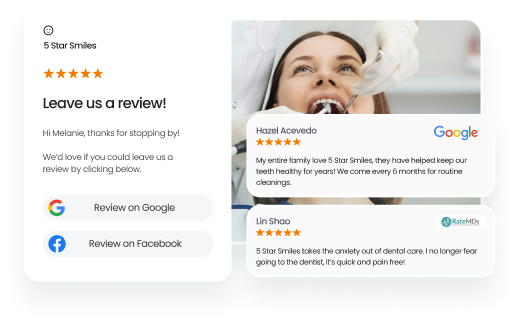
Address every client by name, thank them for choosing your agency, and reference their completed sale, purchase, or tenancy. Include a direct review link so they can submit feedback without searching for your business or agent profile.
4. Follow up once for non-responders
Wait a few days before sending one polite reminder to clients who haven’t responded. Keep the follow-up short, include the same review link, and avoid sending multiple reminders that could discourage participation.
5. Respond to every review to show engagement
Reply to every review within a few days, regardless of its rating. Thank clients for positive feedback, acknowledge concerns professionally, and avoid discussing confidential transaction details. Regular responses show prospective clients that your agency values customer feedback and actively manages its reputation.
Following this process after every settlement, lease, or completed service creates a steady flow of recent reviews. Over time, these reviews strengthen your credibility, improve your visibility across review platforms, and help more buyers, sellers, landlords, and tenants choose your agency with confidence.
How do you spot genuine real estate reviews?
When browsing reviews, it’s crucial to differentiate between genuine feedback and fake or misleading reviews. Trusting the wrong source or relying on fabricated opinions could impact the credibility of your real estate business and mislead potential clients.
Let’s break how do you spot the real reviews from the fake ones down:
What makes a review genuine and reliable?

Genuine answers can guide future clients with valuable insights into your real estate business’s practices. They give real clients a chance to share their positive or negative experiences and help others make informed decisions.

Here’s what you should look for:
Verified users
Trustworthy reviews are often from verified clients—people who have used your services and bought or sold properties with you. Platforms that allow users to verify their identity ensure that the reviews come from actual customers. A review from a ‘verified buyer’ who has interacted with your current listings has more weight.
Platforms like Google Business Profile or RateMyAgent (for global real estate platforms) offer a “Verified” or “Purchased” tag on reviews, signifying that the person leaving feedback has truly transacted with the agency.
Detailed feedback
A good review provides more than just a quick comment. Look for reviews that go into detail about the house experience, discussing specific aspects like communication, negotiation, or market knowledge. The more context a reviewer provides, the more reliable their feedback is likely to be.
A generic “Great service, would recommend!” isn’t as helpful as one elaborating on specific aspects of the process, such as the agent’s communication, market knowledge, or negotiation skills.
Example of detailed feedback:

“Working with Sarah was an absolute pleasure from start to finish. She took the time to understand what we were looking for, offered honest advice, and guided us through every step of the buying process. Her communication was always clear and timely, and she made what could have been a stressful experience feel smooth and manageable.

Thanks to her dedication and sharp negotiation skills, we found the perfect home and closed at a price we felt great about. Highly recommend!”
Balanced perspectives
Genuine reviews often highlight both the positives and the negatives. It’s rare to see a perfect experience without some bumps. Reviews that are overly glowing or excessively negative may raise red flags.
Balanced reviews tend to reflect the truth—they discuss the challenges while also appreciating the service’s strengths.
Example:

“Overall, the buying process went smoothly, but we did face some delays due to paperwork. However, the agent proactively kept us updated and resolved the issue quickly.”
Consistent patterns
When browsing reviews, look for consistent patterns across multiple sources. If several clients mention the same qualities or issues with your business, those are likely to be true indicators.
For instance, if a consistent theme of good communication appears across reviews, it likely reflects your team’s overall approach to client relationships.
Example:

"Every review mentioning John praised his patience and responsiveness, which aligns with the positive feedback we’ve seen across multiple platforms."
Now that we know what to look for in a genuine review, identifying fraudulent ones is just as important. Fake reviews can damage your reputation and mislead potential clients.
What are red flags for real estate reviews?
While genuine reviews are valuable, identifying fraudulent ones is equally important. Fake reviews can come in many forms, including overly exaggerated claims, suspicious repetition, or the appearance of being written by someone with no real business knowledge. Here’s what to look for:
Over-the-top praise
Fake reviews often read like they’re scripted or written with an agenda. If a review sounds too perfect, it may be a red flag. Real reviews usually come with nuances and imperfections, like minor issues or areas of improvement—not just an unwavering, idealized perspective.
Example: “I’ve never had a better experience in my life! 100% perfect, I will never go anywhere else!” This could be too good to be true.
Using generic, vague language
Fake reviews often lack detail. They use vague language like, “Great agent, highly recommend,” without any specifics. They may even feel like they’re written by someone who doesn’t know much about real estate or the specific process the client went through.
Here’s a rewritten version that still keeps the vague, possibly fake tone, as you'd see in suspicious reviews:

"Amazing experience! Sarah really knew what she was doing. Everything worked out perfectly. Would definitely use her again!"
Suspicious frequency
Pay attention to the frequency of reviews. If you suddenly see a flood of five-star reviews posted within a short window, it could be an attempt to manipulate ratings. Authentic reviews are spread out over time and reflect genuine customer experiences.
Overuse of superlatives
Real reviews can be enthusiastic, but fake ones often use extreme superlatives, like “life-changing,” “the best thing ever,” or “completely flawless.” Genuine customers typically avoid using these types of absolutes.
Example: "Looking for an agent rating to sell and out of a combined 700+ reviews across about a dozen agents they all are 5-star (with one exception of a guy at 4.9)."
Unrealistic timing
Be wary of reviews that describe an overly short or unusually fast transaction process. While real estate deals can be quick, claiming an offer was accepted and closed within 24 hours is often a sign of a fake review.
Red flag example: “I found my dream home, accepted an offer, and closed the deal in just one day!”
This is unrealistic in most scenarios.
No matter how many quality reviews you’ve got or how great your service is, not every client will be fully satisfied. Sometimes, unhappy customers leave negative reviews, and it’s an inevitable part of the business—but they’re not the end of the world. In fact, when handled correctly, negative feedback can be a blessing in disguise. Let’s explore how.
Your Guide to All About Real Estate Reviews in Australia
Want to see the impact of Birdeye on your business? Watch the Free Demo Now.
How to respond to negative real estate reviews in Australia?
We can’t ignore the fact that negative reviews will come. They are part of any business, and real estate is no different. Responding with empathy and practical solutions can turn a disappointing experience into an opportunity to build trust. For example, a seller may leave a negative review after an auction because they felt they did not receive enough updates during the campaign, even if the property sold successfully. The key is how you respond.
Here are five ways to handle negative real estate reviews professionally in Australia.
1. Respond promptly and professionally
The first step is to respond to the review as soon as possible. Ignoring negative feedback only compounds the issue. Acknowledge the client’s concerns politely and express your willingness to resolve the matter. Keep the tone professional, and avoid sounding defensive. Your response can speak volumes about your customer service skills.
Example:

"Thank you for your feedback. We're truly sorry to hear about your experience. We take our client’s concerns seriously and would love to discuss how we can make things right. Please contact us directly at [contact details] to address this."
2. Show empathy
Put yourself in your client’s shoes. Acknowledge their frustration and show empathy in your response. Often, people just want to feel heard. Acknowledging their emotions can diffuse tension and prevent the issue from escalating.
Example:

"We understand how frustrating this situation must have been for you, and we deeply regret that it led to a less-than-positive experience. Your satisfaction is our priority, and we're here to make it right."
3. Take the conversation offline
When dealing with complaints, moving the conversation offline as quickly as possible is best. Offer a phone call or a face-to-face meeting to resolve the issue. This demonstrates your commitment to solving the problem and avoids publicly addressing your business’s issues. It also allows you to offer personalized solutions.
Example:

Hey [Name],
Thanks for your review — I’d really like to chat with you one-on-one to understand what went wrong and how we can make it better. Give me a call at [Phone] or shoot me an email at [Email] when you have a moment.
We’re here to help!

– [Your Name]
4. Take responsibility and offer a solution
Even if the review seems unfair, it’s essential to show accountability. You don’t have to agree with everything the reviewer says, but acknowledge any shortcomings and explain what you are doing to improve the service. Offering a clear solution or a remedy helps reassure future clients that you care about their experience and are proactive about fixing issues.
Example:
"We understand that communication during the process could have been better, and we are taking steps to ensure that future clients receive timely updates. We also implement new protocols to improve transparency throughout the buying/selling process."
5. Learn from the feedback
Negative reviews can be an excellent source of constructive criticism. Look for patterns in the feedback. Are there recurring issues mentioned across multiple reviews? Use this as an opportunity to improve your practices and avoid similar problems in the future.
Example:

Hi [Reviewer’s Name],

Thank you for sharing this — I really appreciate your honesty. I’ve taken some time to reflect on your feedback, especially around [insert specific issue], and I can see how frustrating that must have been.

We’ve already started making changes to how we [insert changes], and your review played a big part in that. I'm truly sorry we missed the mark, but I'm grateful you spoke up — it’s helping us do better.

If you're open to a quick chat, I’d love to connect and learn more. Either way, thank you again.
How to automate real estate review management in Australia
As review volume grows across agents, offices, and property management teams, manual review management becomes difficult to maintain. Automation helps Australian real estate businesses save time, respond faster, and keep review operations consistent across every location.
- Centralise reviews from every platform in one dashboard
Pull reviews from Google, Facebook, RateMyAgent, and other property review platforms into one place so teams do not need to monitor each site manually. - Send instant alerts for new reviews
Notify the right office, agent, or manager as soon as a new review is posted, especially if it is negative or needs urgent follow-up. - Automatically route reviews to the right team
Assign sales reviews to agents, rental feedback to property managers, and service complaints to branch leaders so nothing gets missed or delayed. - Use AI to draft review responses faster
Generate tailored response drafts for positive and negative reviews, then let staff review and approve them before publishing to keep replies efficient but human. - Set escalation rules for negative feedback
Flag low-star reviews or complaints about communication, fees, inspections, or maintenance and escalate them to the right person before they become larger reputation issues. - Track review trends across offices and teams
Monitor ratings, response times, review volume, and recurring complaints by office, region, or service line to spot reputation and service issues early. - Automate reporting for head office visibility
Create regular reports showing which offices need support, which teams are improving, and where customer experience problems are affecting reviews. - Connect review management to your CRM or property workflows
Integrating your review platform with existing systems helps trigger requests, track interactions, and manage review activity without relying on manual admin. - Maintain consistency across multi-location agencies
Automation helps standardise response times, brand tone, and review oversight across every branch, even when different teams manage different client relationships.
Birdeye supports each stage of this workflow by giving you AI coworkers at every location. These coworkers employ agents that consolidate every signal, reason with your brand context, and act at scale to generate reviews and draft personalized responses. It also help identifies review trends and provides clear performance insights, helping you understand what’s working and where improvements are needed.

What are the real estate review examples for Australian agents
Many clients know they want to leave a review but don’t know where to start. These examples can help buyers, sellers, landlords, and tenants write detailed, authentic reviews based on their own experience.
Example 1: Selling a home
“From the initial appraisal to settlement, the team kept us informed at every stage. We received honest advice on pricing, detailed feedback after each open home, and regular campaign updates. The property sold above our expectations, and the entire process felt well managed.”
Example 2: Buying a property
“Buying our first home was a big milestone, but our agent made the process much easier. They answered every question promptly, explained each step clearly, and kept us updated from contract exchange through to settlement. We always felt supported and never pressured.”
Example 3: Auction campaign
“Our auction campaign was handled professionally from start to finish. We received detailed buyer feedback after every inspection, clear advice before auction day, and regular communication throughout the campaign. The result exceeded our expectations, and we’d happily recommend the team.”
Example 4: Property management
“The property management team communicates regularly, follows up maintenance requests promptly, and keeps us informed about inspections and tenancy matters. As interstate landlords, we appreciate knowing our investment property is managed professionally.”
Example 5: Rental experience
“The leasing process was straightforward from the property inspection to collecting the keys. The team explained the tenancy agreement clearly, responded quickly to our questions, and made moving into our new rental home a smooth experience.”
The best reviews describe specific parts of the customer journey rather than simply giving a star rating. Encourage clients to write in their own words about the service they received, the communication they experienced, and the outcome of their property transaction.
FAQ on real estate reviews in Australia
Ask every client for a review shortly after settlement or lease commencement, make the request personal, include a direct review link, and respond to every review you receive.
You can’t remove reviews yourself, but you can report reviews that breach a platform’s policies, such as fake, misleading, or abusive content, for investigation.
Recent, high-quality reviews help improve your visibility in local search results, increase trust, and encourage more buyers and sellers to contact your agency.
A helpful review describes the client’s experience, highlights specific services such as communication or negotiation, and explains the outcome of the sale, purchase, lease, or property management experience.
How to build your real estate reputation with Birdeye

Building a strong real estate reputation requires trust, consistent customer experiences, and a reliable online presence. Birdeye helps multi-location brands achieve this through intelligent agents for marketing, operations, and customer experience.
With AI coworkers like Jay for marketing, Robin for operations, and Myna for customer experience, Birdeye goes beyond monitoring. Its agents connect signals across reviews, listings, social media, messaging, surveys, and AI search visibility, understand your brand and industry context, and recommend or take actions that help strengthen your reputation across every location.
Whether your business manages 100 locations or more than 10,000, Birdeye gives your team a unified view of performance while helping every office deliver a consistent brand experience. It supports 200+ review sites and 3,000+ integrations, including Salesforce, HubSpot, and QuickBooks Online, making it easy to manage your digital presence from one platform.
Here’s how Birdeye helps you build a stronger real estate reputation:
- Generate more authentic reviews: Review Generation Agent sends review requests at the right time and on the right platform, helping your agency collect a steady stream of genuine customer feedback.
- Respond to every review faster: Review Response Agent drafts personalized, on-brand replies based on each review’s sentiment and context. Your team can review responses before publishing or automate replies based on your preferred workflow.
- Monitor reviews from one dashboard: Track customer feedback across 200+ review sites, identify trends, and respond quickly without switching between multiple platforms.
“Working with Birdeye has been good. We have been using the reviews software to request and manage our reviews – and the results speak for themselves!”
Dylan Simpson
Director, Plum Property
- Keep business information accurate: Listings Optimization Agent updates your agency’s information across Google, Apple, Facebook, Yelp, and 100+ other directories, helping buyers and sellers find the right office while improving local visibility.
- Understand what shapes your reputation: The Reporting Agent explains performance changes, highlights unusual patterns, and recommends where your team should focus next. The Birdeye Score combines sentiment, reputation, and listing accuracy into a single view, making it easier to measure performance.
- Track your visibility across AI search: Search AI monitors how your agency appears across ChatGPT, Perplexity, and Gemini by tracking rankings, citations, brand mentions, and customer sentiment.
- Strengthen your social presence: The Social Publishing Agent creates and schedules localized content for every office, while the Social Engagement Agent helps your team prioritize and respond to comments and direct messages.
- Capture and qualify more inquiries: The Lead Generation Agent engages prospective buyers, sellers, landlords, and tenants around the clock, qualifies leads, and routes them to the right team.
- Turn customer feedback into action: Survey agents collect feedback throughout the customer journey, identify recurring themes, and highlight opportunities to improve customer experiences.
Birdeye brings reviews, listings, social media, messaging, surveys, AI search visibility, and reporting into one platform, helping real estate agencies build trust, strengthen their reputation, attract more clients, and deliver consistent experiences across every office.
Watch a free demo to see how Birdeye helps multi-location real estate brands win the reviews game.

About the Author

Vanjana Sharma
Originally published