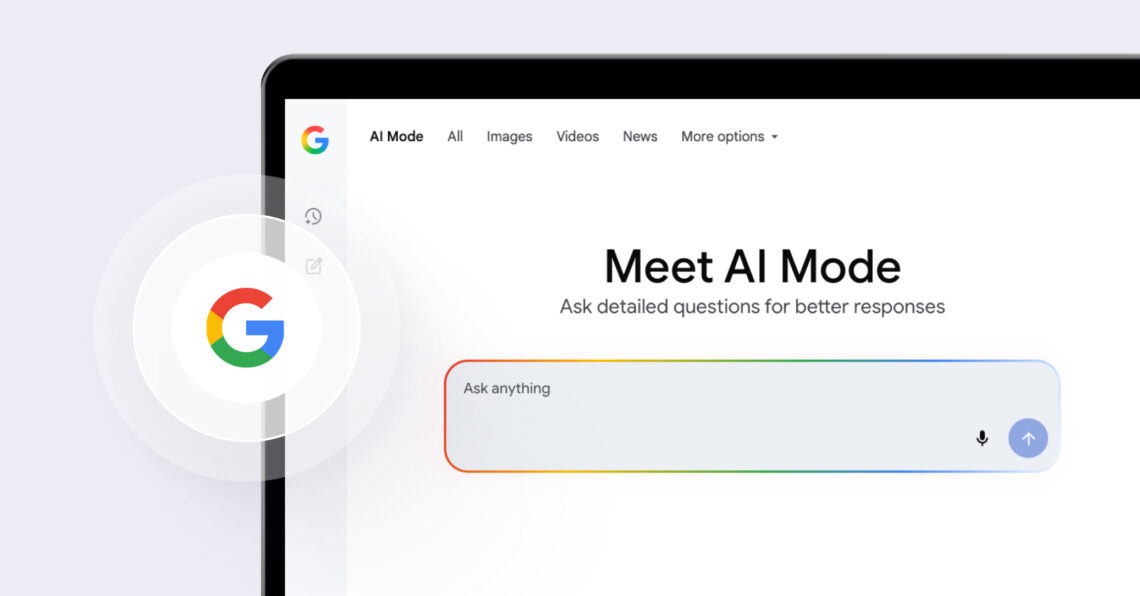
Google AI Mode introduces new risks for businesses by making search rankings more volatile, reducing click-through traffic, and introducing systemic bias in how brands are surfaced. For multi-location brands, this shift changes how visibility, authority, and performance must be measured and managed in AI-powered search environments.
Summary
Google’s AI Mode represents a fundamental restructuring of search, replacing predictable rankings with AI-generated summaries that are volatile, biased, and difficult to track. Research shows dramatic URL churn, reduced click-through rates, and a tendency for AI systems to favor specific brands and geographies. This blog examines the hidden risks of AI Mode, how it disrupts traditional SEO performance, and what multi-location brands must do to adapt in a search environment increasingly shaped by AI-generated answers.
Table of contents
- The challenge of predictability in AI search
- Understanding the hidden layer: AI bias in search results
- The geographic imbalance: A US bias in global search
- What experts are saying: Divided views on AI Mode
- The Click Collapse: Lower traffic, higher stakes
- No-click searches aren’t always a loss, but context matters
- What this means for businesses: Rethinking the playbook
- The bigger risk: When AI doesn’t reflect the real market
- The Birdeye approach: Build authority, not just visibility
- FAQs: Google AI Mode and the future of search visibility
- The final thought: Two disruptions. One clear shift
Google’s integration of AI Mode marks the most significant shift in search since the internet’s early days. However, this transformative change presents a dual challenge for multi-location brands: extreme technical volatility coupled with systemic AI bias.
As this new feature transforms how billions of users discover information online, industry experts are now starting to realize that its impact goes deeper than initially expected. Put simply, the traditional search isn’t just evolving; it’s undergoing a fundamental restructuring driven by forces that are both unpredictable and inherently skewed.
The challenge of predictability in AI search
The data reveals a stark reality: Google’s AI Mode is rewriting the rules of online search visibility. A recent SE Ranking study, analyzing 10,000 keywords, exposed levels of volatility that make traditional SEO strategies harder to rely on:
- Just 9.2% average URL overlap across three repeat AI Mode searches
- 21.2% of queries showed zero overlapping results
- Only 0.1% produced a perfect match across all three tests
Even at the domain level, consistency reached only 14.7%, a significant departure from the more predictable nature of classic search. With this level of fluctuation, tracking SEO performance becomes difficult. Replicating it is even harder.
Barry Adams, founder of Polemic Digital, puts it plainly: this instability “could be the difference between having a viable publishing business and going bankrupt.” In this new era, businesses can no longer count on steady visibility, even for their core queries.
Understanding the hidden layer: AI bias in search results
The volatility in AI-generated search isn’t random. It’s influenced by systematic bias. New research indicates that large language models consistently favor certain brands or entities, creating an uneven playing field:
- 64% of Google Gemini’s answers heavily favored a single dominant entity per topic
- 70% of ChatGPT’s responses showed the same concentration pattern
- Researchers concluded this reflects “systematic favoritism,” not neutral search behavior
This bias has tangible consequences. The 91% URL volatility seen in AI Mode isn’t just a technical quirk; it reflects underlying AI preferences that often disregard real-world performance.
Rank-Biased Overlap (RBO) scores averaged just 0.20 for Gemini and 0.21 for ChatGPT, with scores below 0.4 indicating significant divergence from actual market standings.
In other words, AI-driven rankings are not only unpredictable but also misaligned with reality. For businesses relying on organic visibility, this introduces a new kind of risk: being outperformed not because of weaker offerings, but because of unseen algorithmic bias.
The geographic imbalance: A US bias in global search
Beyond brand favoritism, the bias extends geographically. For multi-location brands with an international presence, AI search presents a distinct challenge:
- 74.5% of Gemini’s misaligned results favored U.S.-based entities
- 62.3% of ChatGPT’s misaligned picks showed the same U.S. bias
(Source: SSRN study)
This happened even when global competitors demonstrated stronger performance in real-world markets.
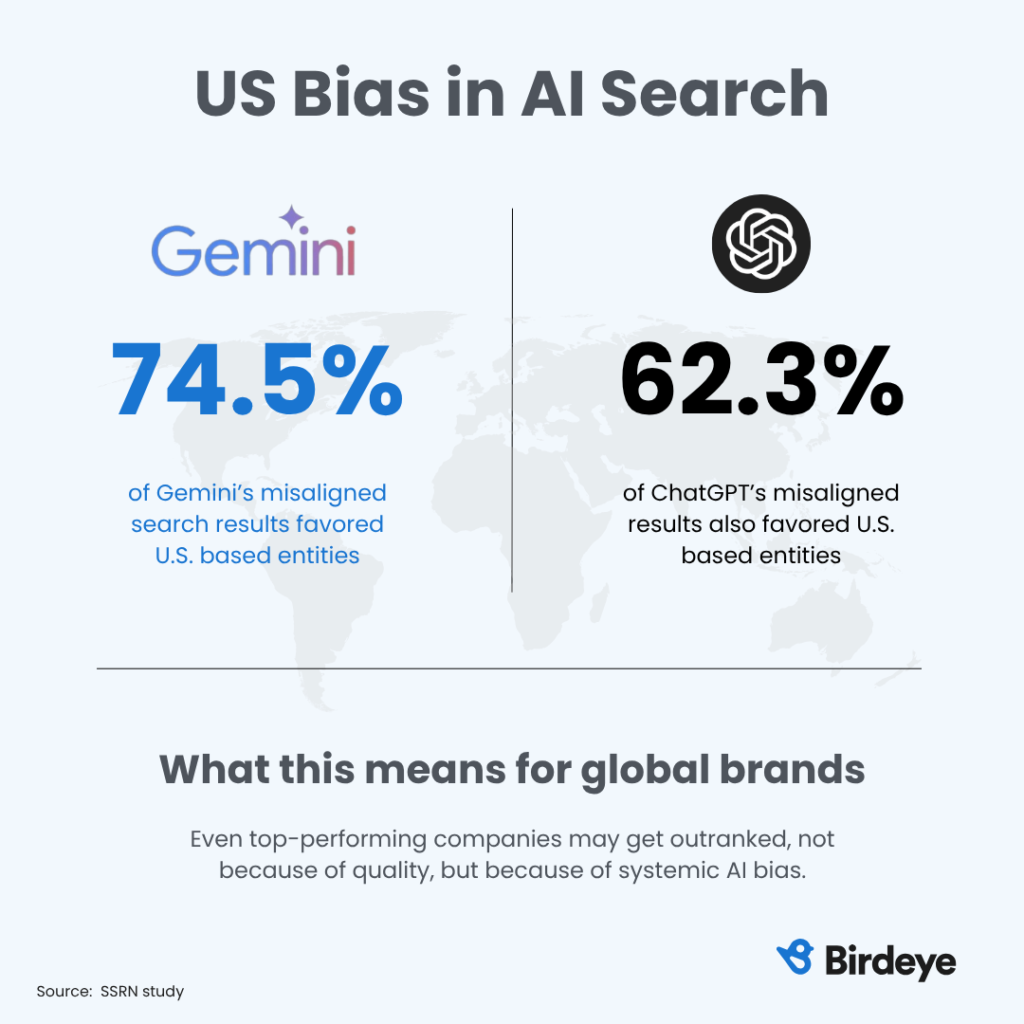
In short, AI Mode doesn’t just disrupt rankings—it may tilt the field in favor of U.S. brands. For global businesses, that means competing against more than just performance metrics or market share. They’re also contending with structural bias that’s baked into how AI sees the world.
What experts are saying: Divided views on AI Mode
The optimists
- Sundar Pichai, Google’s CEO, positions AI Mode as “a total reimagining of Search” that leads to searches “two to three times the length of traditional Google Searches, and sometimes even five times that length”.
- Search industry veteran Barry Schwartz acknowledges the shift: “AI Mode is here. This is the future of Google Search”. However, he also reminds businesses that rankings are still rooted in relevance: “It’s not about how the content’s necessarily created, it’s more about – does that content help the user? Is there value in it?”
The skeptics
- Eugene Levin, President of SEMrush, believes adoption will remain limited: “I think the percentage of people who willingly want to use AI Mode for everything is going to be surprisingly low”. He suggests that AI Mode will serve specific types of queries, not as a complete replacement for traditional search.
- Dr. Andrew Rogoyski of the University of Surrey raises concerns about “epistemic decline” and warns that “if you get the answer too easily, you may not bother to think, or even understand, the answers you’re given”. He recommends using AI Mode “sparingly.”
- SEO expert Lily Ray has dubbed the tracking issues around AI Mode “Not Provided 2.0”, highlighting how Google is making it increasingly difficult to measure the impact of these changes. Her analysis reveals that AI Mode relies heavily on links to its own Google Business Profile (GBP) embeds when mentioning companies, keeping users within Google’s ecosystem and limiting visibility into performance.
The Click Collapse: Lower traffic, higher stakes
AI Mode doesn’t just alter rankings. It also fundamentally changes user behavior. Recent data from iPullRank shows a dramatic drop in website traffic directly from AI Mode:
- Only 4.5% of AI Mode sessions result in a click, compared to 24% in traditional Google Search
- When users do click, they’re more engaged, averaging 5.9 pageviews per session, nearly matching the traditional search
AI Mode uses a “query fan-out” technique, breaking questions into sub-queries and processing them in parallel. This fuels both volatility and bias as different queries surface inconsistent, often skewed, results.
Adding to the challenge, 90.8% of AI responses are block links, creating a “walled garden” that keeps users within Google’s ecosystem. Additionally, Google uses the “noreferrer” attributes, which make tracking AI Mode traffic in analytics nearly impossible.
For businesses, this means not only less traffic but also less clarity on who’s clicking, where they’re going, or why.
No-click searches aren’t always a loss, but context matters
Not every no-click search is a missed opportunity. Many queries are simply informational—users ask a question, get a quick answer directly within the AI response, and move on. For example, “What’s the time in India right now?” or “How did Breaking Bad end?”
However, queries with purchasing intent often follow a different path. User might initially turn to AI Mode for broad exploration (e.g., “What’s the best kiddie pool under $30?”). But then, they typically shift to traditional search to:
- Compare prices
- Check availability or local inventory
- Validate product reviews
This evolving behavior underscores an important point: AI Mode may dominate the start of the search journey, but traditional search still plays a key role in decision-making. That’s why businesses need to be prepared for both moments: when users are just exploring, and when they’re ready to take action.
What this means for businesses: Rethinking the playbook
The landscape has changed, and a new strategic playbook is required for multi-location brands:
1. Prioritize brand authority over traffic volume
The consensus among experts is clear: businesses must shift their focus from solely chasing traffic to building undeniable brand authority. As one expert puts it, “Brand is the new SEO.” Companies need to focus on becoming the trusted source that AI systems cite, rather than optimizing for traditional click-through rates.
However, this strategy becomes more complex when facing both volatility and bias. Businesses must now optimize for AI citation while also recognizing that AI systems have embedded preferences that may not reflect market realities.
2. Content strategy needs a reset
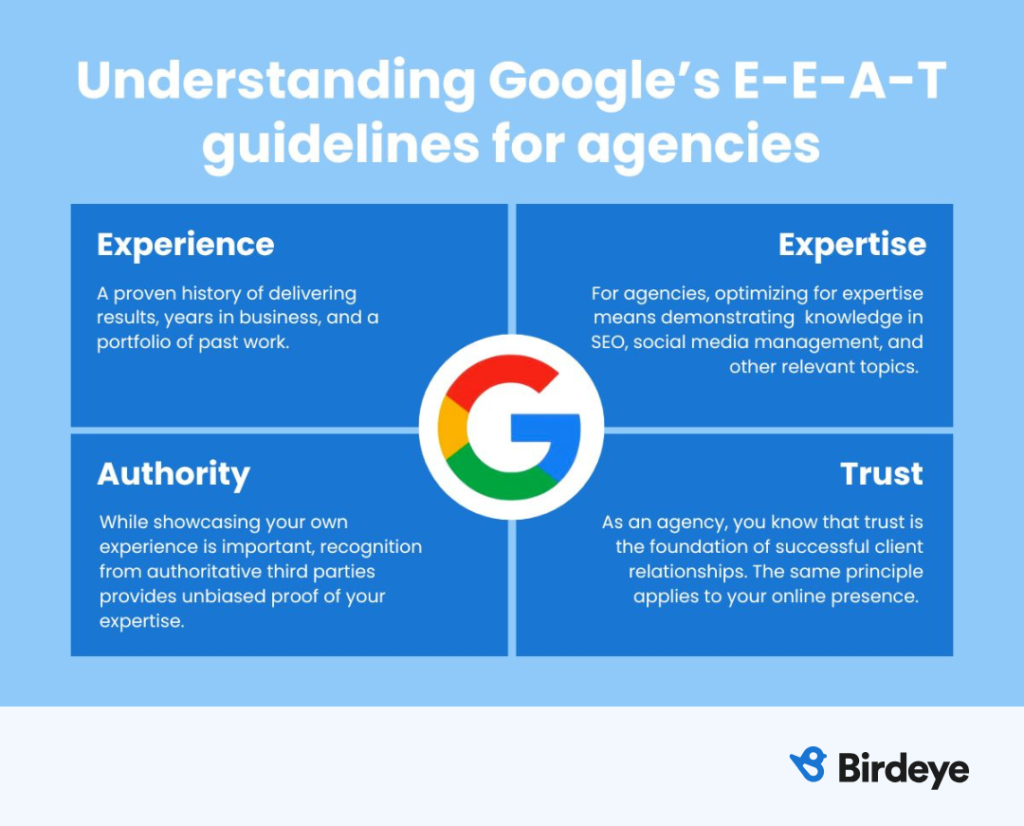
The traditional approach of keyword-heavy content isn’t enough. What works now is comprehensive, well-structured, and reliable content that demonstrates “Experience, Expertise, Authoritativeness, and Trustworthiness” (E-E-A-T). The goal is to answer layered, complex queries in a way that AI Mode can understand and surface.
However, research on bias indicates that content quality alone is insufficient. If the AI model is biased toward specific brands or locations, your content might still be overlooked. Understanding and working around those biases is part of the new strategy.
3. Adapt new performance metrics
Traditional SEO metrics, such as SERP position or page rank, are losing relevance. Experts recommend focusing on “Share of LLM” (how often your brand appears in AI-generated answers) rather than search rankings. The goal is to gain visibility within AI-generated responses, not solely traditional SERP positions. Tracking that isn’t always easy, but it’s where attention is headed.
4. Understanding visibility in AI-powered search
As AI-generated answers replace traditional rankings for many queries, brands need visibility into how they are represented within these systems. Unlike classic SEO tools, AI-driven search environments offer limited transparency into why certain brands are surfaced and others are excluded.
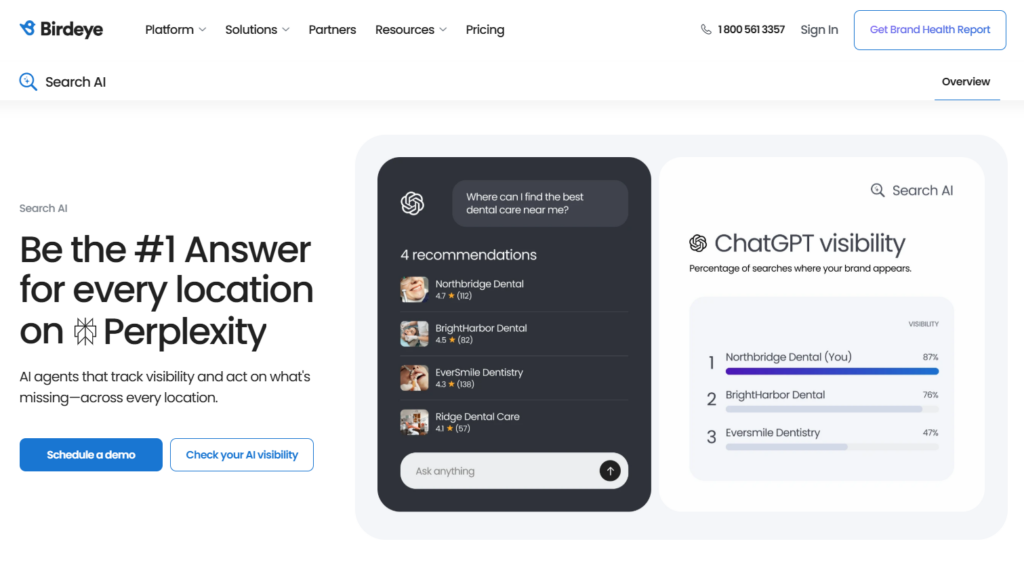
Birdeye Search AI helps multi-location brands measure how often they appear in AI-generated answers, analyze sentiment, and identify the sources influencing those answers. Specifically, it enables brands to:
- Measure visibility in AI-generated answers: Understand how often locations appear in AI-powered search experiences compared to competitors, helping teams assess “share of presence” rather than traditional rank.
- Analyze sentiment in AI descriptions: Identify whether AI-generated answers describe the brand positively, neutrally, or negatively, and how that perception may influence customer trust.
- Identify the sources shaping AI answers: See which listings, reviews, and third-party sites AI-powered search experiences rely on when referencing a brand.
- Detect citation gaps and data inconsistencies: Highlight missing, outdated, or conflicting information across listings and reviews that may reduce visibility or lead to inaccurate AI summaries.
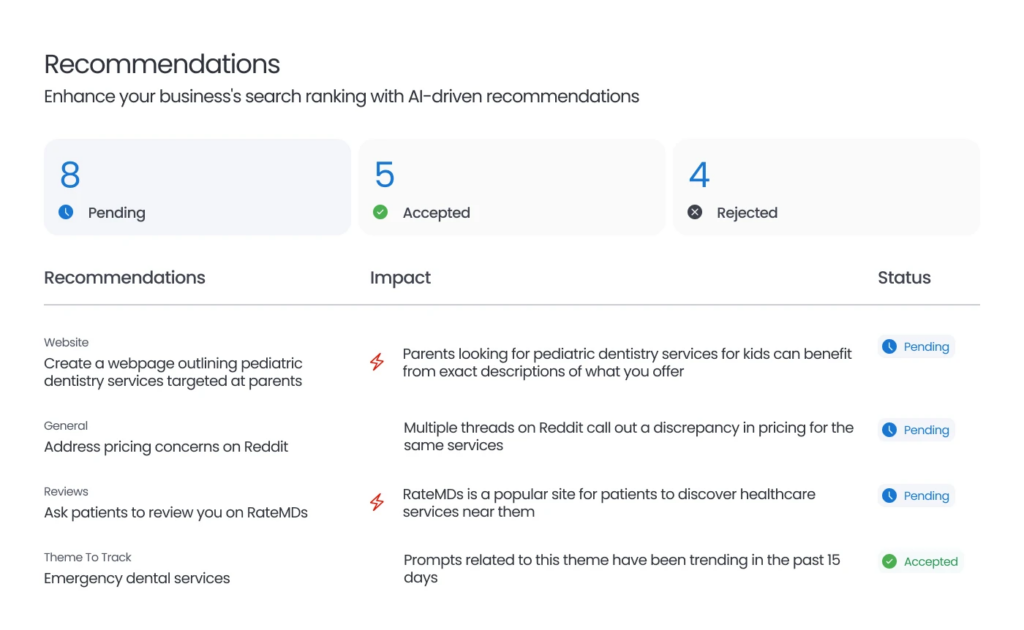
By making AI-powered search behavior more observable, Birdeye Search AI helps brands understand where visibility is earned, where it’s lost, and what signals matter most in a search landscape that is increasingly difficult to measure.
The bigger risk: When AI doesn’t reflect the real market
In addition to creating confusion, volatility and bias together distort the playing field. Instead of surfacing the best answers or the most relevant businesses, AI Mode often rewards the brands it already favors.
The impact?
- Unpredictable visibility
- Strong products may be overlooked
- Global brands can face a built-in disadvantage
The most troubling part is that this isn’t always obvious. The bias is buried in how AI systems interpret authority and relevance. And, there’s no clear way to challenge or correct it. That’s what makes this shift both disruptive and risky.
Show Up Where Your Customers Search
Want to see the impact of Birdeye on your business? Watch the Free Demo Now.
The Birdeye approach: Build authority, not just visibility
As AI search increasingly delivers answers through summaries and zero-click experiences, visibility alone is no longer enough. For multi-location brands, long-term success depends on becoming a trusted, authoritative presence that search platforms consistently reference.
Birdeye helps multi-location brands strengthen the core signals that influence how they are represented across search, maps, and AI-powered discovery by unifying data and engagement across every location. Specifically, Birdeye enables brands to:
Build and manage online reputation across locations
Birdeye Reviews helps brands generate, monitor, and respond to reviews across key platforms. Review volume, freshness, and sentiment remain critical trust signals for both traditional search and AI-powered summaries.
Maintain accurate, structured business information everywhere
Birdeye Listings AI ensures consistent business information across Google and other directories, data sources that AI-powered search experiences frequently reference when generating answers.
Understand sentiment and performance across locations
Birdeye Insights AI provides visibility into review sentiment and performance trends, helping teams understand how customers perceive the brand across markets.
Measure visibility in AI answers
Birdeye Search AI helps brands understand how often they appear in AI-generated answers, how they are described, and which sources influence those answers, bringing transparency to a search environment that is otherwise difficult to track.
Today, authority is built through trusted reputation, accurate data, and consistent customer experience signals. Birdeye helps multi-location brands focus on those fundamentals, so visibility is earned through credibility, not left to chance.
FAQs: Google AI Mode and the future of search visibility
AI search platforms generate answers dynamically based on context, data sources, and model interpretation at the time of the query. Small variations in inputs or available signals can lead to different outputs, making results less stable than traditional ranking-based search.
AI search often pulls from listings, reviews, and third-party sources that may be outdated or inconsistent. Birdeye helps brands maintain accurate business information and customer feedback across locations, reducing the risk of AI-generated answers surfacing incorrect details.
Not always. Informational queries may end without clicks, but commercial journeys often continue into traditional search. The risk arises when AI Mode replaces discovery and suppresses meaningful evaluation paths for high-intent searches.
Traditional metrics like rankings and traffic are less reliable in AI Mode. Experts recommend focusing on brand presence within AI-generated answers, citation frequency, and authority signals rather than SERP position alone.
Brands must focus on authority, consistency, and trust signals across customer reviews, listings, and structured content. While bias cannot be fully controlled, strong signals improve the likelihood of being cited and surfaced by AI systems.
The final thought: Two disruptions. One clear shift
Google’s AI Mode is more than a simple feature update. It represents a double disruption driven by volatile rankings and systemic AI bias. The significant URL churn and U.S.-favored results reflect a deeper transformation: search results are no longer anchored to real-world performance or inherent fairness.
For multi-location brands, this means:
- Search visibility is now unstable, unpredictable, and harder to measure
- Even high-performing brands can be overlooked by biased AI summaries
- Success now requires a fundamental rethinking of how you show value, not just how you rank
This isn’t just a change in algorithms. It’s a structural shift in how information is curated and trusted online. Search as we knew it has already changed. The only question now is whether your business can adapt quickly enough to meet it.

About the Author

Ruchika Batra
Originally published