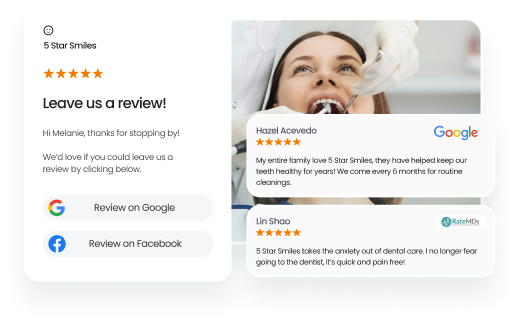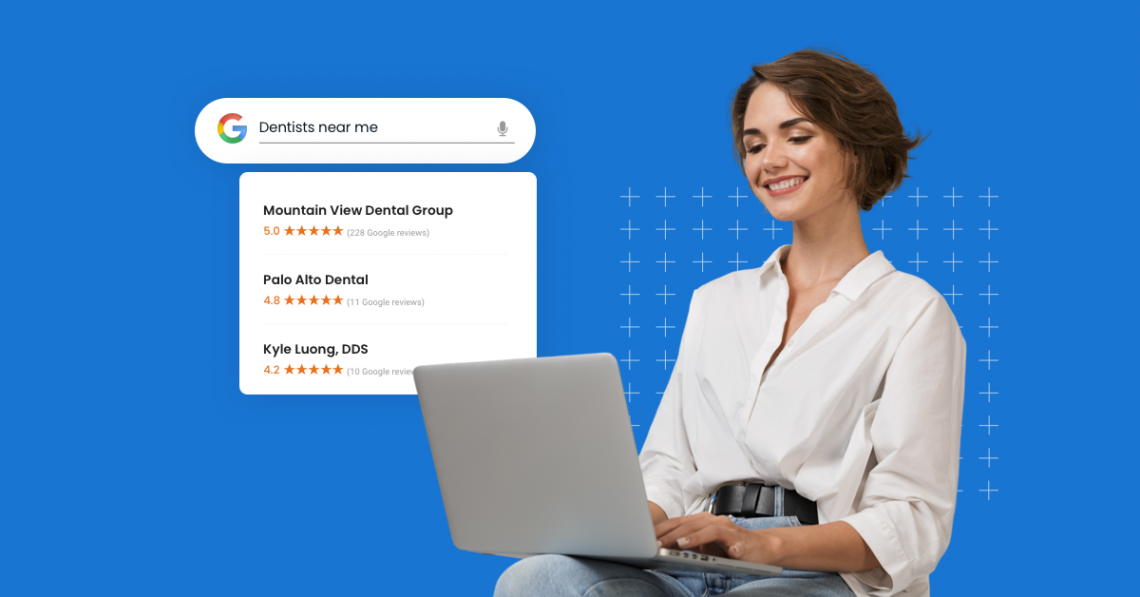
Local SEO helps businesses appear prominently in Google’s local search results and Maps by optimizing Google Business Profiles, location pages, listings accuracy, and reviews. For multi-location and service-area businesses, strong local SEO ensures each location is discoverable, competitive, and visible to nearby customers searching with high intent.
Summary
With 75% of users never clicking past page one of Google, local search visibility has become increasingly competitive and harder to maintain as Google’s local algorithms evolve. In this expert-led discussion, Birdeye partners with Search Engine Journal and multi-location SEO expert Steve Wiideman to unpack how recent changes in Google search affect local businesses. The blog answers real questions from business owners who are navigating local SEO for the first time, while reinforcing foundational concepts of search engine optimization. It also builds on proven local SEO guidance from Wiideman and Birdeye’s earlier expert insights to help businesses adapt with clarity and confidence. Let’s dive in.
Table of contents
- Question #1: Can negative reviews go away?
- Question #2: I have a business with two locations in one county. Each location has its own Google Business Profile (GBP). Should the website on each GBP point to the same root URL or the specific location page?
- Question #3: Is it a good idea to post videos on the GBP profile?
- Question #4: How can I best utilize my GBP when I don’t have a physical location?
- Question #5: Is it better to have one GBP with multiple locations or make a separate listing for each location?
- Question #6: I have dozens of locations within the state. How do I set them up for success in local search without cannibalizing each other?
- Question #7: What’s your opinion on using “Near me” towards the end of target keywords to try and rank local pages?
- Birdeye: The best review management software for businesses
Question #1: Can negative reviews go away?
Wiideman: The only way that I am aware of for a negative review to go away would be if it were removed by the submitter of the review. Or if you believe the negative review was left by someone who’s not a customer or even a competitor, you would need to have the review reported, reviewed, and manually removed by the platform.
Birdeye Tip: The best way to deal with a negative customer review is by responding to it. Responding to reviews shows the customer (and potential customers reading your reviews) that you care about them and that you take the time to make things right. Additionally, there’s a chance the person who left the negative reviews changes them to positive ones after your response.
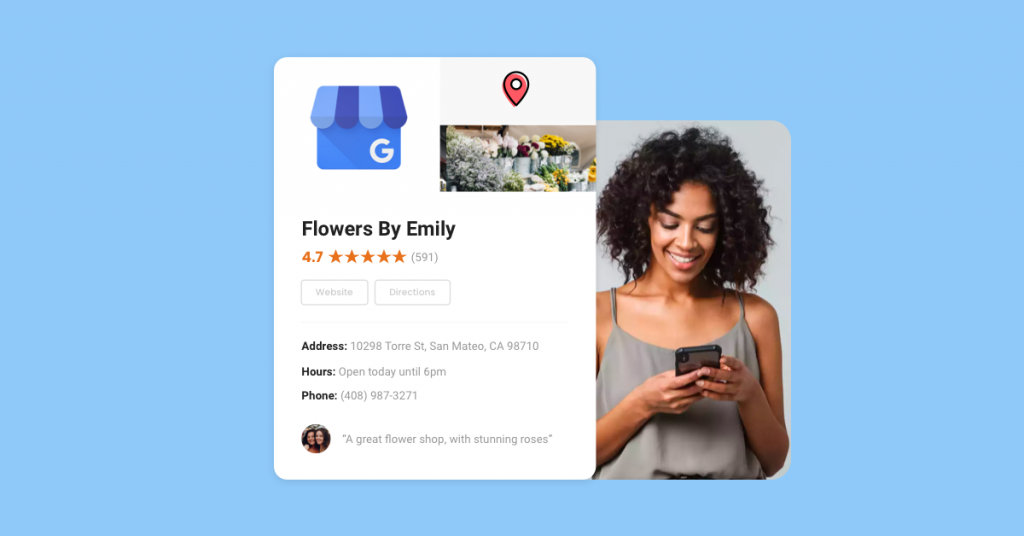
Question #2: I have a business with two locations in one county. Each location has its own Google Business Profile (GBP). Should the website on each GBP point to the same root URL or the specific location page?
Wiideman: Our data leans toward promoting the location’s actual location page on the website while segmenting the traffic in Google Analytics using UTM codes such as:
?utm_source=google&utm_medium=organic&utm_campaign=google_maps
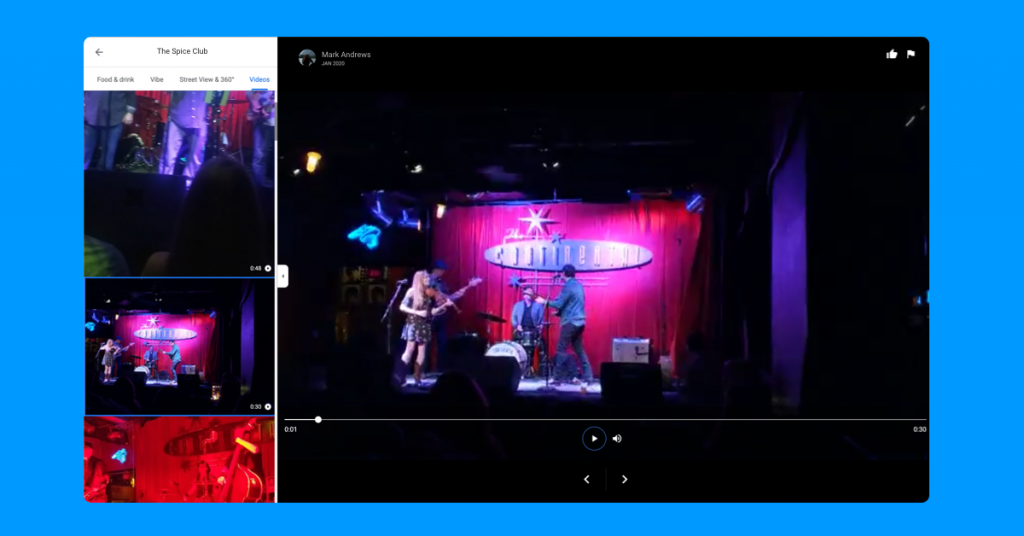
Question #3: Is it a good idea to post videos on the GBP profile?
Wiideman: Videos can be a fantastic way to convey reasons to visit. However, avoid random uploads, and keep content focused on the products, services, benefits, and customer experiences. Consider time-releasing a series of videos, one for each item offered, one for each team member interviewed, one for each attribute of the business’s location and history, etc.
Birdeye Tip: In addition to videos, be sure to post photos. Businesses with 100+ photos get 1,065% more clicks than the average business. Google is looking for trust when ranking businesses in the search results, which is what photos provide. Google wants to make sure you are who you say you are, you do what you say you do, and you’re located where you say you’re located.
Question #4: How can I best utilize my GBP when I don’t have a physical location?
Wiideman: Service area businesses (such as the examples below) can rank just fine in local and maps results.
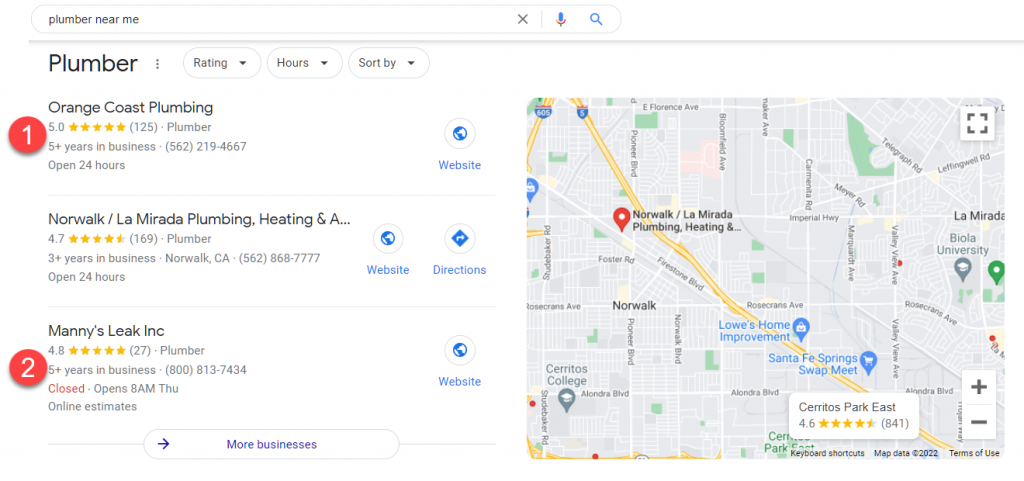
Start by creating location pages on the website with reviews, images, and videos from work performed in the cities you wish to target. This will help supplement any potential loss of clicks if you don’t make it into the Google 3-Pack results.
How to improve your GBP:
- Log in once a day and respond to any reviews.
- Use all the available fields.
- Research competitor profiles to see what might be working for them.
- Add pictures of each product or service; zoom in so Google’s image recognition AI can do its magic.
Get directions when visiting the location and ask others to do the same (activity is activity, the more, the better); before closing the Google Maps app, confirm that you are there.
Question #5: Is it better to have one GBP with multiple locations or make a separate listing for each location?
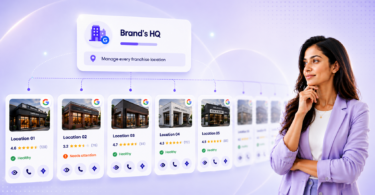
Wiideman: Definitely make a separate listing for each location.Google looks at every single location as its own separate entity and separate business. So if you’re a multi-location hair salon and you’ve got a location in Austin, Waco, Dallas, and San Antonio, Texas, you need a GBP for every single location.
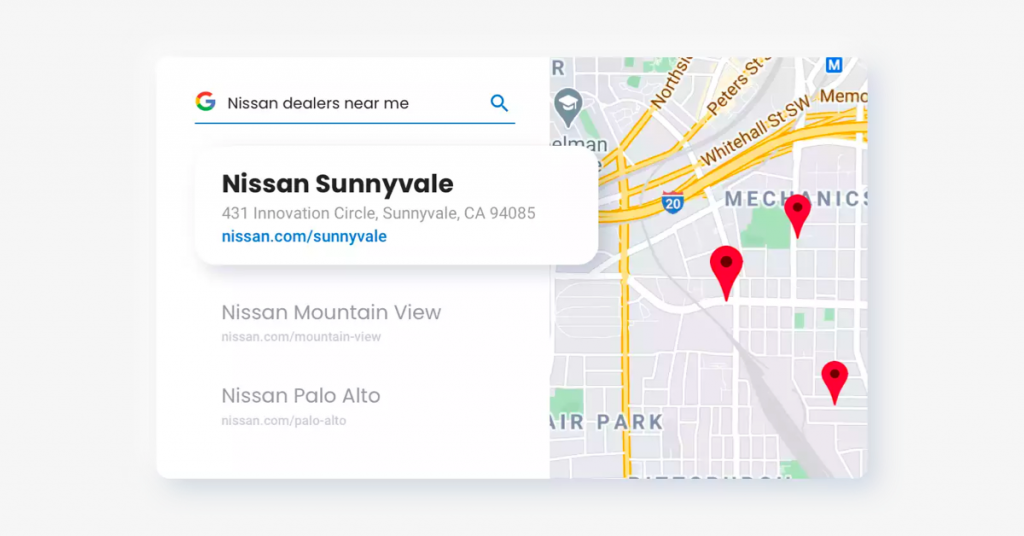
Birdeye Tip: If you’re running a business with multiple locations, consider creating a location group. This will allow you to easily manage all of your different locations through Google Business Profile.
Question #6: I have dozens of locations within the state. How do I set them up for success in local search without cannibalizing each other?
Wiideman: If you own locations within a few blocks of each other, it can be difficult to avoid location managers becoming territorial. However, if the locations are in different cities in the same county, work inside outward. Focus on optimizing for a radius that borders but does not cross over other locations.
Focus on these 4 Pillars of Local SEO discussed in the webinar and hold monthly meetings to ask for progress updates on improving them:
- Data Accuracy
- Local Page Optimization
- Data Visibility (Listings/Citations of Name, Address, & Phone)
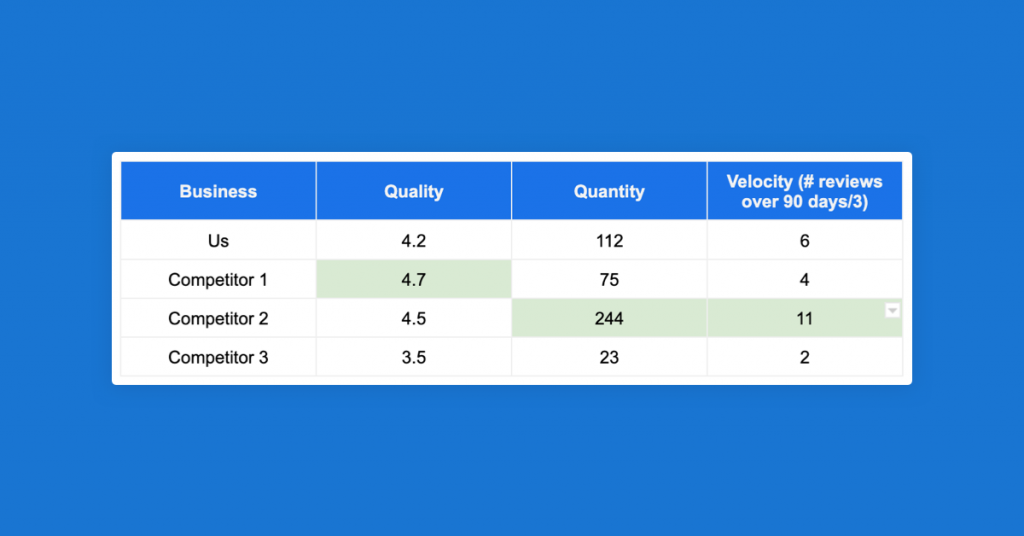
- And Reputation (Ratings/Reviews – Quality, Quantity, & Velocity)
A simple way to get a pulse on reputation would be to create a simple table as shown below:
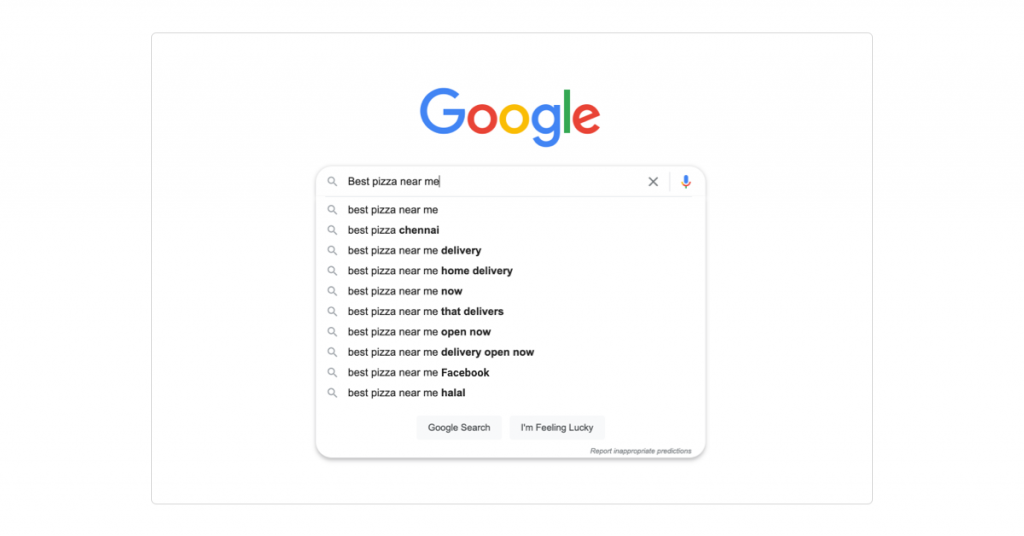
Question #7: What’s your opinion on using “Near me” towards the end of target keywords to try and rank local pages?
Wiideman: As a principle, always write for your users. That doesn’t mean you can test wordsmithing ‘Near Me’ into a title or heading to see if it boosts your traffic for their queries, but keep in mind that if it does, it’s because it’s a loophole or something broken in Google’s ranking algorithm.
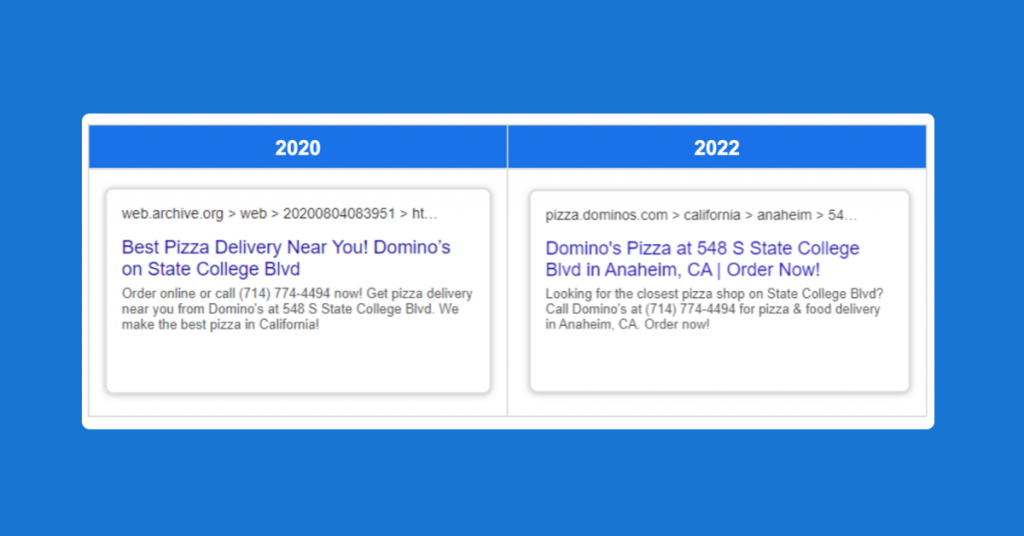
One can assume that Domino’s Pizza removing their ‘Near Me’ language in HTML titles could be a clue that Google recognizes near me as a geo-targeted search versus a phrase match search. Personally, I wouldn’t waste my time with it.
Birdeye: The best review management software for businesses
With Birdeye, you can monitor and manage every review of every location of your business from one simple dashboard. Instead of logging into multiple Google Business Profiles or Facebook accounts to manage your reviews, which only wastes time if you have multiple locations, you can simply log into your Birdeye dashboard and take care of everything from one place.
Birdeye also helps you generate more reviews from your happy customers using its powerful suite of solutions. Birdeye’s streamlined and simplified review process will help your business deliver a fantastic customer experience and grow like never before.
About the Author

Justin Meredith
Originally published