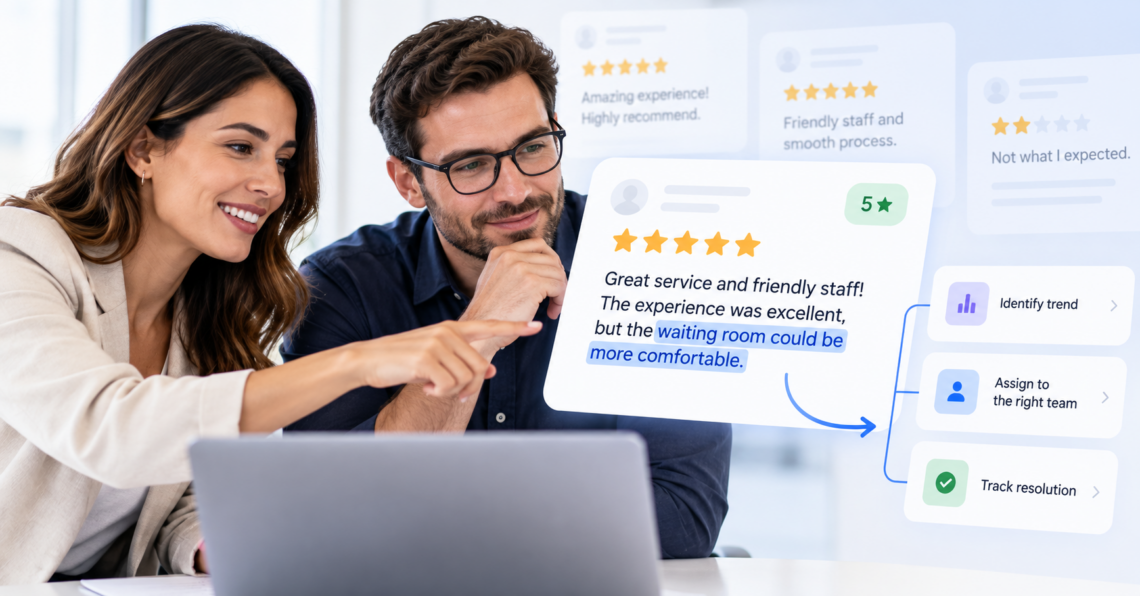
“Feedback’s a gift,” said Rachel Bentley of The Aspen Group, but only if you thank the customer and act on it. Sean Castle of Sun Auto puts it another way: “you can’t fix secrets.” Both run systems that get each comment to someone who owns the fix.
At Birdeye View 2026, Rachel Bentley, Director of Product Management at The Aspen Group, and Sean Castle, VP of Customer Experience at Sun Auto, explained how they turn feedback into fixes. They route each comment to the team that can act, give corporate, regional, and local teams clear roles, and measure whether a change moved sentiment. This post covers each step and where AI helps.
Why can’t a star rating tell you what to fix?
Rachel said brands should look for emerging trends, not just emerging issues, because “not everything is an issue.” A five-star review that says “I wish” something were different is “much more useful to me than a two-star review with zero comments,” she said.
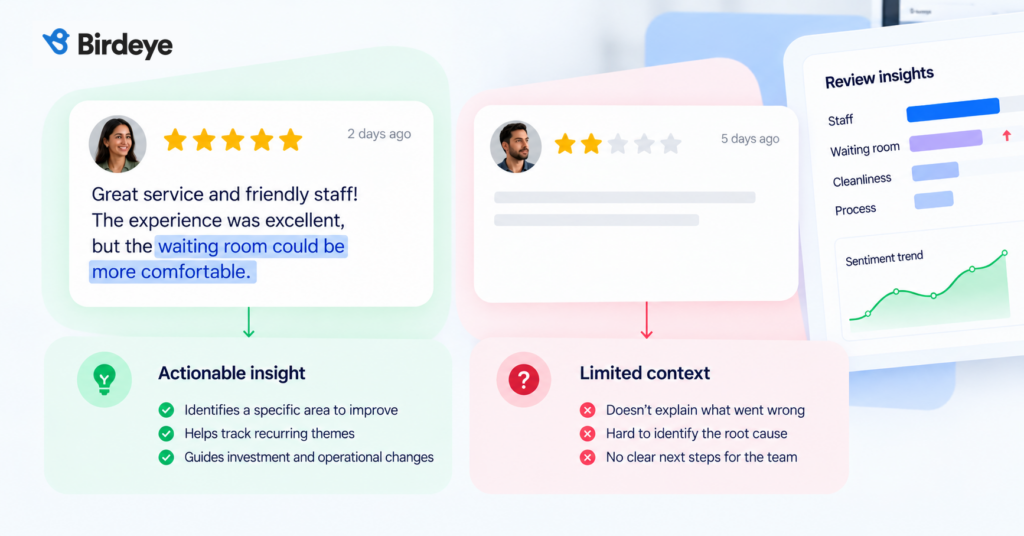
When Aspen invests in part of the patient experience, she expects the return to show up in review language: negative comments on that subject drop, or sentiment on a specific word shifts. A star rating alone cannot show that. The words can.
Sean runs into the other side of this. When his team surfaces an opportunity, field and regional teams sometimes answer that they have collected plenty of five-star reviews. That is true, he said, but even those reviews still have room for improvement. Getting from good to great means finding the “hidden gems” in the comments.
The practical lesson is to read beyond the rating. Comments can reveal specific aspects of the customer experience that need attention, even when the overall score is high. For multi-location brands, those details can help teams identify opportunities to improve the experience before focusing only on negative feedback.
How does feedback reach the team that can act on it?
Rachel said feedback arrives through NPS, direct comments, reviews, and social media, and the source matters less than what happens next. Aspen’s close-the-loop program routes each piece of actionable feedback to the right destination based on type. A dirty floor goes to maintenance. A great front-desk moment gets raised at the next morning’s stand-up. A product bug goes to a different team. Then the team closes the loop with the patient.
Having access to feedback is not the same as acting on it. Rachel stressed that the whole organization, starting with executives, needs to support the process. Without that commitment, feedback can be collected without reaching the people responsible for making changes.
Sean’s team started simply: bring stakeholders together, walk through the feedback, decide how to fix it, and assign an owner. Because regional and district leaders are easy to reach, he can go straight to the person who owns each location, then track the work through to resolution.
Who owns the fix?
Rachel started with an analogy. Ask two people to take out the garbage, and each may assume the other will do it. So Aspen gives each team a specific role. Corporate owns infrastructure, investment priorities, and stakeholder management. Regional and operations teams own follow-up and fixes. Location teams own the patient relationship and the experience. When the division is clean, she said, that is when it works, and it takes “radical ownership” of each part.
Not every problem has an obvious owner or an immediate fix. Recurring feedback may point to a need for new software, a different process, or additional training. Rachel’s suggested framing, “how might we” or “what needs to be true,” helps teams discuss what needs to change without making the conversation about blame.
Sean’s customer experience team owns visibility, he said. It sits in the customer’s chair in every decision, then partners with leaders to decide whether a problem is local or enterprise-wide. For Sean, surfacing a problem is only the beginning. His team must partner with the people who can resolve it and keep the work moving, particularly when a solution requires a larger technology change. Clear ownership matters most when the fix is not straightforward.
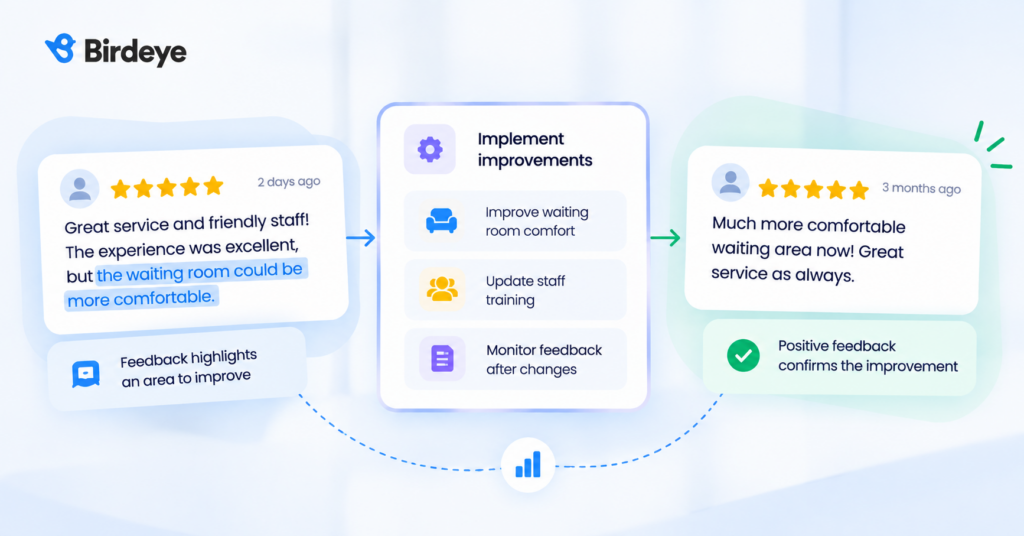
How do you know a fix worked?
Rachel separates lead metrics from lag metrics. Lead metrics show up immediately in Birdeye, such as review volume and sentiment. Lag metrics come later, such as search ranking and conversion.
Her example is a change to review requests. Aspen personalized the send and adjusted the timing and language. Instead of “How was your visit?” it asks “How was your dental cleaning today?” People responded right away with more detail and more volume, she said. Ranking and conversion are the later tests.
Sean watches review comments and survey scores, not just stars, and trends them over time to see whether a fix helped. He also tests solutions with a smaller group before going wider. His goal is to avoid the balloon effect, where squeezing one problem creates a bigger one elsewhere.
Together, their approaches highlight an important distinction: completing the work does not prove that the customer experience improved. Teams need to monitor customer feedback over time and check whether a change has created unintended problems elsewhere.
How can AI help close the customer feedback loop?
Both leaders pointed to summarization first. Sean said AI turns what used to take weeks into a summary in seconds, and Rachel agreed: it is “the same hour instead of the same week.” She said AI also surfaces new themes and shifts in sentiment before an analyst has to parse them, and it means Aspen needs fewer tools to route feedback to someone who can act.
Rachel is candid about what is left. She wants to close the speed gap for customers, moving from a 48-hour response to something closer to real time.
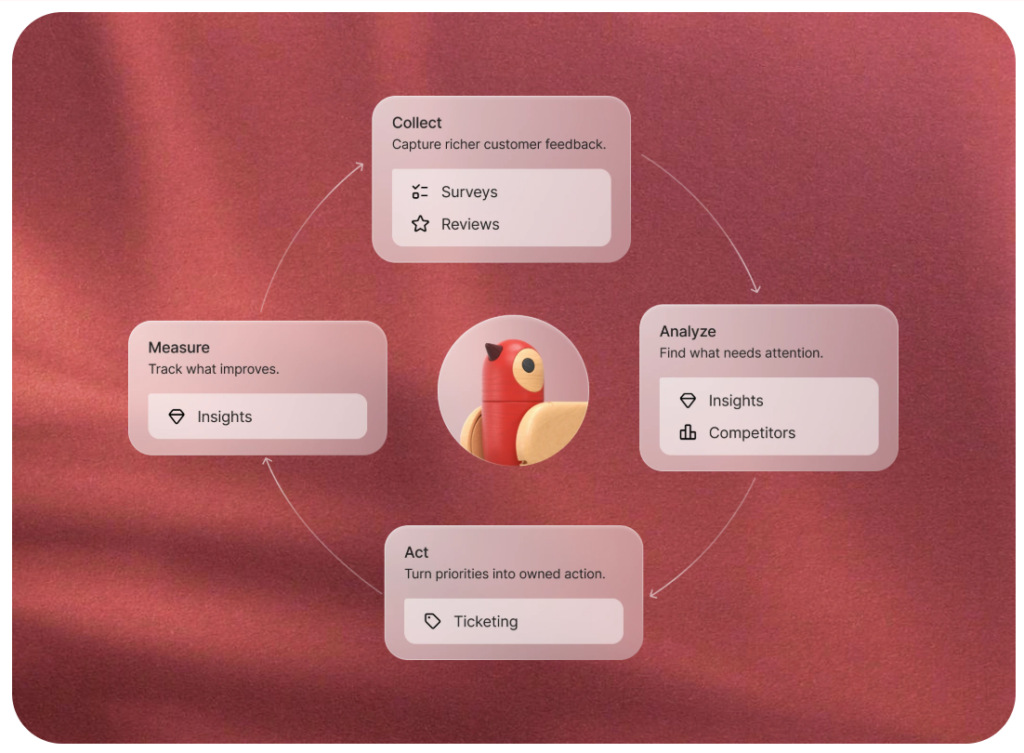
Robin, Birdeye’s Customer Experience AI Coworker, connects Surveys, Insights, Competitors, and Ticketing to help multi-location brands move from feedback to accountable action. For multi-location teams, that looks like:
- See the pattern: Summarize feedback across reviews and surveys and trend it by location over time.
- Surface new themes: Spot shifts in sentiment before someone has to read every comment.
- Route to an owner: Get the right feedback to the team that can act on it.
FAQs
A close-the-loop program sends every piece of actionable feedback to the right team based on its type, makes sure someone addresses it, and thanks the customer for sharing it.
Each signal has a distinct purpose. NPS is internal feedback that catches a problem before it becomes a public review. Reviews are the public record, where depth and recency matter more than star count. Sentiment analysis shows a trend across locations before it is big enough for a person to notice.
Respond quickly with a human touch, since one- and two-star reviews are chances to build loyalty. Look for the root cause and fix it across the system when needed. Replies also show customers how a brand stands behind what it sells.
Take your last 20 reviews with comments and sort the themes by who could fix them. Name one owner for each, and pick one sentiment measure to watch next quarter.

About the Author

Shruti Dugar
Birdeye
Originally published