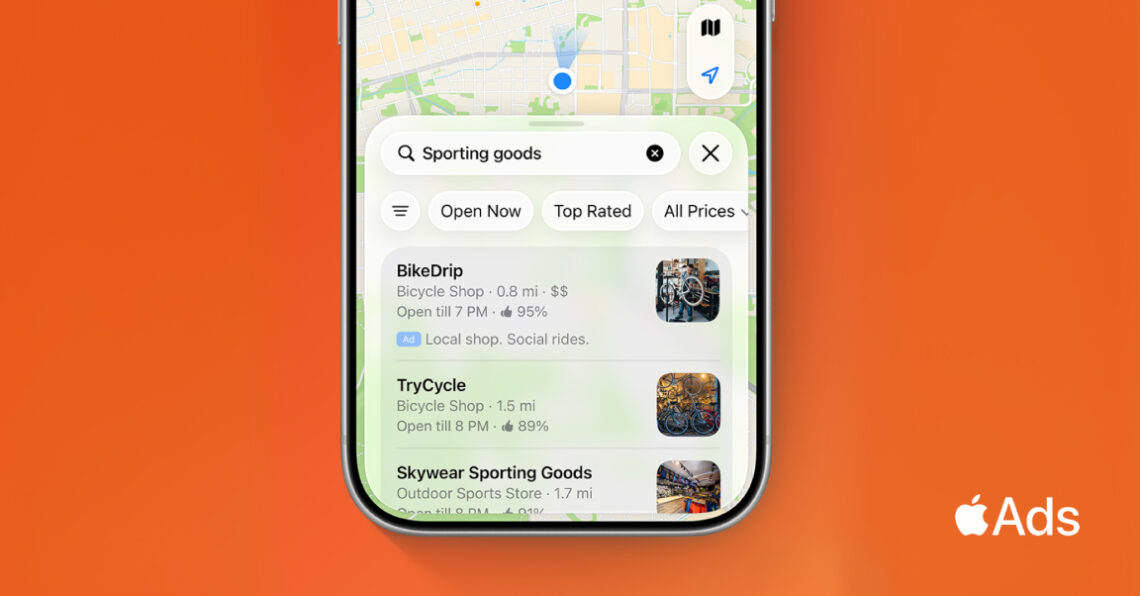
Ads on Apple Maps are now live in the U.S. and Canada. They give marketers a new way to reach customers searching for local businesses.
Ads can appear in Suggested Places or at the top of relevant search results, putting brands in front of customers as they decide where to go.
What are ads on Apple Maps, and why do they matter for local marketing?
Ads on Apple Maps are paid placements that help businesses reach customers looking for nearby options. After tapping the ad, customers can call, get directions, visit a website, or take other actions directly from your place card.
It is especially relevant for local marketing, where the goal is to turn a nearby search into a visit, call, or website interaction.
The scale is worth noting. Apple reports more than one billion relevant business searches on Maps each month. It also says one in two searches for a business results in an action.
For local marketers, that creates an opportunity to reach customers when they are deciding where to go and lets brands be part of that decision.
How do Ads on Apple Maps work for multi-location brands?
To get started with ads, you’ll need to first register for free with Apple Business. Verify the organization, and claim the locations. Business owners can then choose which locations to promote via ads.
Apple also gives marketers control over campaign budgets and the option to start or stop campaigns as needed. Reporting is available by campaign and location, with metrics including impressions, ad taps, and taps on actions on the place card.
For multi-location brands, that location-level structure matters. A campaign may cover hundreds of locations, but customers still interact with individual business place cards on Maps. Each location needs current, complete information behind the ad.
As the number of locations grows, keeping that information up to date becomes harder. A campaign can create visibility, but the information behind each location shapes what customers see next. That makes location management an important part of preparing for Apple Maps advertising.
Why do Ads on Apple Maps make listing accuracy more important?
A paid placement cannot fix an inaccurate listing. In fact, it just makes the gap more visible. If a location’s details are outdated or incomplete, the ad magnifies the problem. A customer who clicks the ad and finds the wrong address, outdated hours, or incomplete information may decide not to visit.
Apple uses signals such as the device’s approximate location or map view, along with business-provided information (hours, street address, and category), to match ads to customers using Maps. For search-result ads, Apple also uses the customer’s search terms. These details help determine when an ad is relevant, so inaccurate location information can affect where and when an ad appears.
That makes reliable location information part of the advertising experience. One outdated listing is easy enough to fix. Hundreds of them, spread across a national footprint, are much harder to keep accurate.
For multi-location brands, listing accuracy becomes an ongoing operational challenge rather than a one-time check. Registering those locations with a listing platform like Birdeye can help teams manage that information centrally, rather than maintaining each location separately.
How does Birdeye help multi-location brands manage Apple listings?
Birdeye builds AI coworkers for multi-location brands. Jay for marketing, Myna for operations, and Robin for customer experience orchestrate AI agents to help brands maintain consistency and act on customer signals across locations.
For Apple Maps advertisers, one practical priority is keeping business information accurate across every location. Birdeye’s listings capabilities help teams manage business information centrally across Apple, Google, Yelp, Facebook, and other major platforms, rather than updating each location individually.
This matters when a campaign covers. Birdeye supports brands from 100 to 10,000+ locations, helping teams centrally manage the business information that shapes each customer’s local discovery experience.
Birdeye’s centralized listings workflow helps teams manage:
- Manage business information centrally: Keep location details consistent across supported platforms.
- Maintain Apple Maps listings: Manage business information on Apple alongside other major directories.
- Coordinate work across locations: Give central and local teams a more consistent approach to managing location data.
- Connect local marketing and operations: Birdeye’s AI coworkers bring marketing, operations, and customer experience into a coordinated workflow.
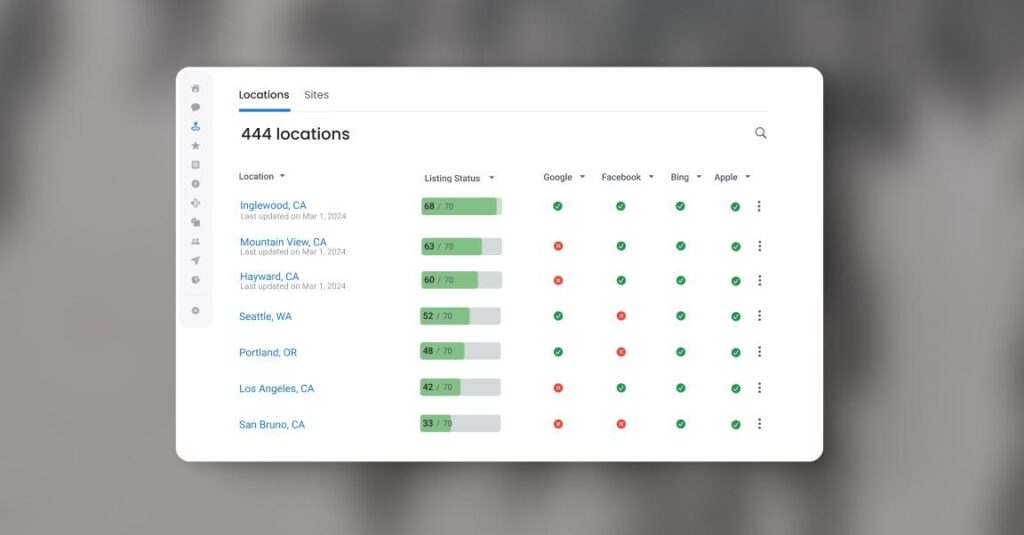
Powered by BirdAI, Birdeye brings together signals across locations and connected systems, using brand, industry, and location context to inform action. Depending on the workflow, AI can act autonomously or keep a person involved for review and approval.
For multi-location brands, the goal is straightforward: keep location information accurate and consistent as the business grows so that advertising can bring customers to the right business with the right information.
Ads on Apple Maps create another opportunity for local visibility, while Birdeye helps keep the location information behind that visibility accurate and consistent.
What should marketers check before running ads on Maps?
Before launching a campaign, marketers should make sure the locations they plan to promote are ready. That means checking the information customers will see and confirming that each location is set up correctly:
- Location status: Ensure each location is claimed and verified in Apple Business.
- Business information: Check addresses, phone numbers, categories, and hours.
- Location coverage: Check that important locations are present and complete.
- Performance: Plan to review results by location, not only across the campaign.
- Photos: Use high-quality images that represent the location.
What should enterprise marketers do next with Ads on Apple Maps?
Before launching, marketers should:
- Register for free for Apple Business
- Review the locations they plan to promote
- Ensure their Apple Maps information is accurate, complete, and current
From there, test Ads on Apple Maps in the markets where they make sense for the business. Once campaigns are running, compare performance by location to see where the channel is driving results and where it may need adjustment.
For multi-location brands, that location-level view matters. A national campaign shows overall performance, but individual locations reveal where the opportunity is working.
FAQs about Ads on Apple Maps
Yes. Ads on Apple Maps are available to eligible advertisers with business locations in the U.S. and Canada. Businesses can choose specific locations or promote all eligible locations.
Ads can appear in Suggested Places or at the top of relevant search results. Apple determines placement based on factors including the business category and what customers are searching for.
Not currently. Apple states that ads are available in the United States and Canada, and advertisers need eligible business locations in those countries.
Birdeye’s Listings Optimization Agent helps multi-location brands manage business information centrally across Apple, Google, Yelp, Facebook, and other major platforms. This gives teams a more consistent way to maintain location details across a large footprint.
Birdeye builds AI coworkers for multi-location brands. Jay supports marketing, Myna supports operations, and Robin supports customer experience. Their AI agents help teams coordinate work across locations, while Birdeye’s listings capabilities help maintain consistent business information across supported platforms.
The takeaway for multi-location marketers
Ads on Apple Maps give multi-location brands another way to show up when customers decide where to go, and they reward brands that are ready. An ad can put a location in front of a customer, but the place card is what earns the visit. If the address, hours, or category is wrong, the ad spend works against you.
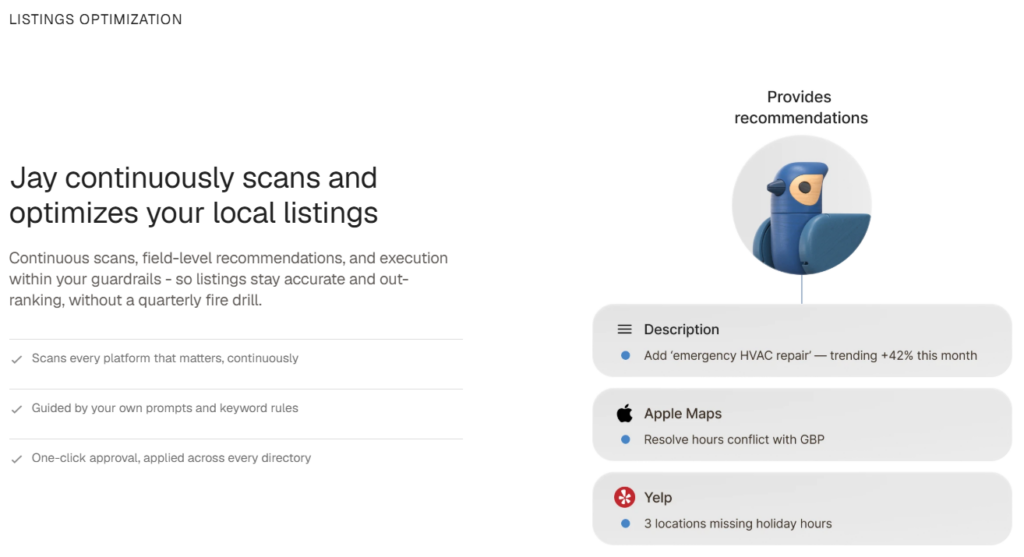
That is why listing accuracy belongs in the plan before the campaign launches. For brands with hundreds of locations, a centralized approach makes that practical.
Birdeye’s Listings Optimization Agent helps keep business information consistent across Apple and other major platforms, while its AI coworkers bring marketing, operations, and customer experience together.

About the Author

Shruti Dugar
Birdeye
Originally published