AI search visibility shows whether AI tools recommend a brand, cite its website or mention its individual locations. A multi-location brand can appear in AI search results nationally while individual branches remain invisible. For marketing leaders, the challenge is understanding which locations AI tools recommend, which competitors appear instead, and what the business can do about it.
Birdeye's The Location Blind Spot in AI Search 2026 report analysed 1,762 multi-location brands across 16,240 location-level scans. It found that one in five locations was invisible in AI search, while the visibility gap between a brand's strongest and weakest location could reach 50 points.
These findings point to a problem brand-level reporting can’t solve. Businesses need to measure AI visibility by location, identify the causes of poor performance and prioritise the fixes that matter.
This guide explains how to build that process across a UK location network.
Table of contents
- What does AI search visibility mean for multi-location brands?
- Why do some locations appear in AI recommendations while others do not?
- How can UK brands improve AI visibility across locations?
- How can multi-location teams turn visibility gaps into action?
- Frequently asked questions
- Build a repeatable AI visibility process across every branch with Birdeye
What does AI search visibility mean for multi-location brands?
AI search visibility measures whether a business appears in AI-generated answers, recommendations and citations. Relevant platforms include ChatGPT, Claude, Gemini, Perplexity and Google’s AI Overviews and AI Mode.
For multi-location brands, visibility has two distinct dimensions:
- Brand-level visibility: How often does the business appear in relevant AI responses?
- Location-level visibility: Does the correct branch appear when customers search for a service in a particular area?
Teams should also distinguish between three signals:
| Signal | What to measure |
| Mentions | How often the brand or a specific location appears in an answer |
| Citations | How often the AI response links to the brand’s website or other supporting sources |
| Recommendations | How often a location is presented as a suitable option for the customer’s query |
These signals are not interchangeable. A brand mention doesn’t necessarily indicate a recommendation, and a citation doesn’t guarantee a branch will attract a customer.
Google confirms that AI Overviews and AI Mode use established Search fundamentals. Pages must meet the relevant technical requirements and be eligible to appear in Search, but meeting those requirements does not guarantee inclusion in an AI response.
Why do some locations appear in AI recommendations while others do not?
Location-level visibility can vary because branches differ in the quality, completeness and availability of their online information.
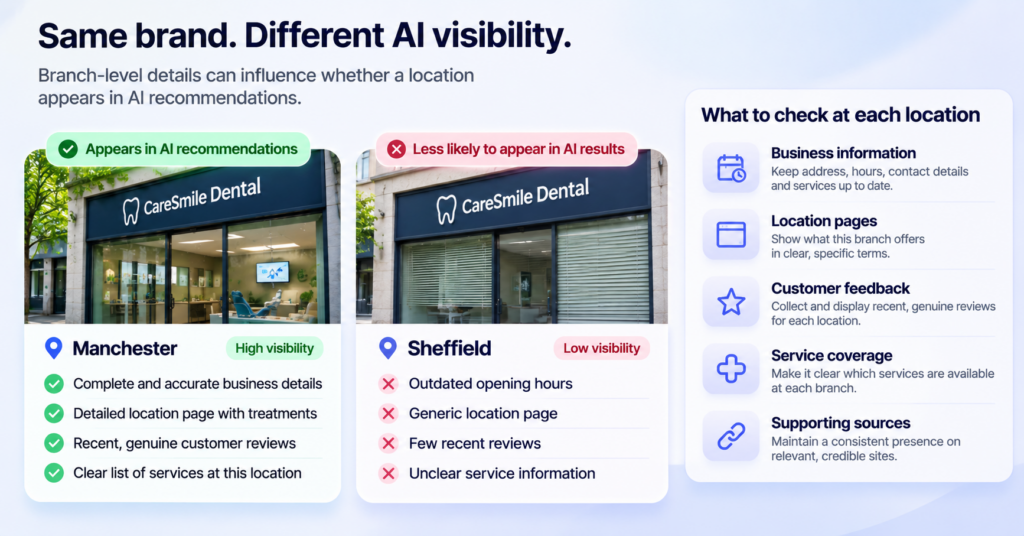
Consider a UK dental group with 60 practices. Its Manchester branch has an accurate Google Business Profile, a detailed page listing available treatments and recent customer reviews. Its Sheffield branch has outdated opening hours and a generic page that does not explain which treatments are available.
The group may be recognised nationally, but the two branches present different levels of useful information to customers and search systems.
Marketing teams should investigate five potential gaps:
- Business information: Are the address, opening hours, contact details and services accurate?
- Location pages: Can customers establish what each branch offers without contacting the national office?
- Customer feedback: Do genuine reviews describe recent experiences at the individual branch?
- Service coverage: Is it clear which services are available at which locations?
- Supporting sources: Can customers verify the business through relevant, credible external sources?
These are areas to investigate, not proven explanations for every missing recommendation. AI systems use different retrieval methods, and responses can vary by query and platform.
The practical response is to compare locations using the same tests, identify differences in their information, and fix issues the business can verify.
How can UK brands improve AI visibility across locations?
The most useful improvements start with information the business controls. Work through the following actions across the location network.
1. Correct business listings across relevant directories
Start with the information customers use to identify and contact a branch.
Audit Google Business Profile and Bing Places, then check relevant UK directories such as Yell and Thomson Local. Compare the business name, address, postcode, phone number, opening hours, website URL and service information against the company’s verified location records.
Use a central register of approved location data to identify discrepancies. Assign an owner to correct each error and record when the change is complete. This matters because accurate, consistent records reduce conflicting information and help customers identify the branch that provides the service they need.
For regulated sectors, check the appropriate official source as well. Healthcare providers can verify relevant information through the Care Quality Commission (CQC) and NHS service search. Financial services firms should check the Financial Conduct Authority (FCA) Register for applicable records.
These sources serve different purposes. An official register can verify specific facts about a provider, but its presence doesn’t guarantee an AI tool will recommend the business.
2. Make every location page useful
A location page should answer the questions a customer needs resolved before contacting a branch.
Include the branch’s address, opening hours, contact details, available services and booking options. Add location-specific information that helps customers decide, such as accessibility details, parking arrangements, or appointment availability. A useful page gives customers and AI search engines a clear source for the services, facilities and contact details associated with a specific location.
For example, a garage group could explain which branches service electric vehicles and how customers book a diagnostic appointment. Verify the information against the services actually offered at each site.
Link each location page from the relevant location finder or regional page. Check that important pages are accessible to search crawlers and that their main information appears in readable text.
Do not create dozens of pages by replacing one town name with another. Each page should reflect the actual branch and provide information that helps local customers.
3. Build a consistent process for genuine customer reviews
Reviews provide first-hand accounts of customer experiences. For a brand with many branches, they also help teams identify differences in service quality between locations.
Create a consistent process for requesting feedback after genuine customer interactions. Monitor incoming reviews and respond appropriately, with local teams escalating complaints that require investigation.
Track review recency, volume, ratings and recurring themes by branch. Use the findings to identify locations that need better feedback collection or customer experience improvements.
A branch-level review process helps marketing and operations teams see where customer experiences differ and address service problems that may affect future recommendations.
Do not buy reviews, offer rewards for positive ratings, or ask customers to include specific keywords. Those practices distort feedback rather than establish trust.
4. Publish specific, verifiable service information
National marketing pages often describe what the company does without explaining what customers can access at each branch.
Create a clear record of service availability across locations. Use it to keep location pages, service pages and customer-facing FAQs accurate.
For example, a dental group should distinguish between branches offering emergency appointments and those providing routine care only. A retailer should distinguish between products available for collection and products available exclusively online.
Review this information whenever a branch changes its services, opening hours or booking arrangements. Assign responsibility for updates so that changes reach the relevant pages and profiles.
Google advises website owners to provide useful, unique content and maintain established AI and SEO fundamentals for its generative AI features. It does not require a special AI content format or guarantee that structured data will earn a recommendation.
5. Maintain relevant third-party references
Review the external sources that matter to your industry and location network.
Depending on the business, these may include Yell, Thomson Local, professional registers, local business associations and credible local news coverage. Correct inaccurate entries and pursue legitimate opportunities to document the company’s services and expertise.
For example, a regulated healthcare provider should ensure that applicable CQC information is accurate. A financial services firm should verify its relevant FCA registration details. Neither action guarantees AI visibility, but each helps customers verify important facts.
Avoid creating low-quality directory entries or paying for fabricated mentions. Prioritise sources that serve a genuine customer or regulatory purpose.
How should brands measure AI search visibility by location?
A single brand-level score cannot show which branches are being recommended. Multi-location teams need a repeatable measurement process.
Start by selecting a fixed set of customer questions for each location. Include queries about the services offered, the local area and the factors customers use to compare providers.
For example, a UK garage group might test:
- Which Bristol garages service electric vehicles?
- Where can I book an MOT in Reading?
- Which garages near Leeds offer weekend appointments?
Run comparable queries across relevant AI platforms. Record the date, platform, query, recommended businesses, location mentions and cited sources.
Track five measures:
| Measure | Purpose |
| Location mention rate | Shows how often a branch appears in relevant responses |
| Recommendation rate | Shows how often it is suggested as a suitable option |
| Citation frequency | Shows how often its website or other sources are cited |
| Competitor presence | Shows which alternatives appear in the same responses |
| Business outcomes | Connects discovery to measurable enquiries, bookings or visits where attribution is available |
Repeat the tests using the same prompts and methods. AI responses can vary between runs, so don’t treat a single result as a definitive ranking.
Where possible, connect visibility findings to website analytics, enquiries and booking data. Report attribution gaps clearly rather than assuming every conversion came from AI search.
The goal is to identify which locations need attention, what information may be missing, and whether changes improve visibility.
How can multi-location teams turn visibility gaps into action?
Tracking AI visibility shows where a brand stands. It doesn’t improve visibility on its own. Teams must also identify the causes of weak performance and act on them across the location network.
This is where Birdeye’s approach goes beyond tracking.
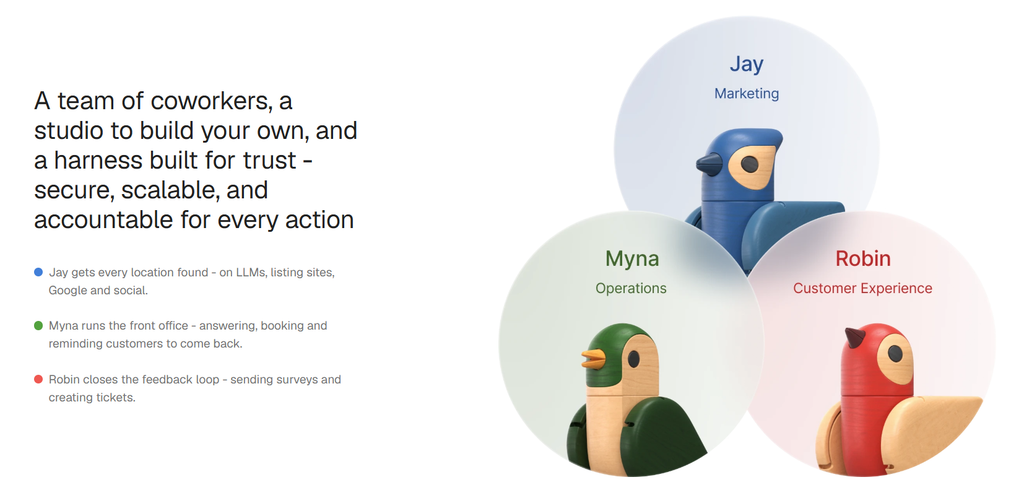
Birdeye builds AI coworkers for multi-location brands. Jay for marketing, Myna for operations, and Robin for customer experience orchestrate AI agents to win AI visibility, book appointments, and drive consistent customer experience at every location.
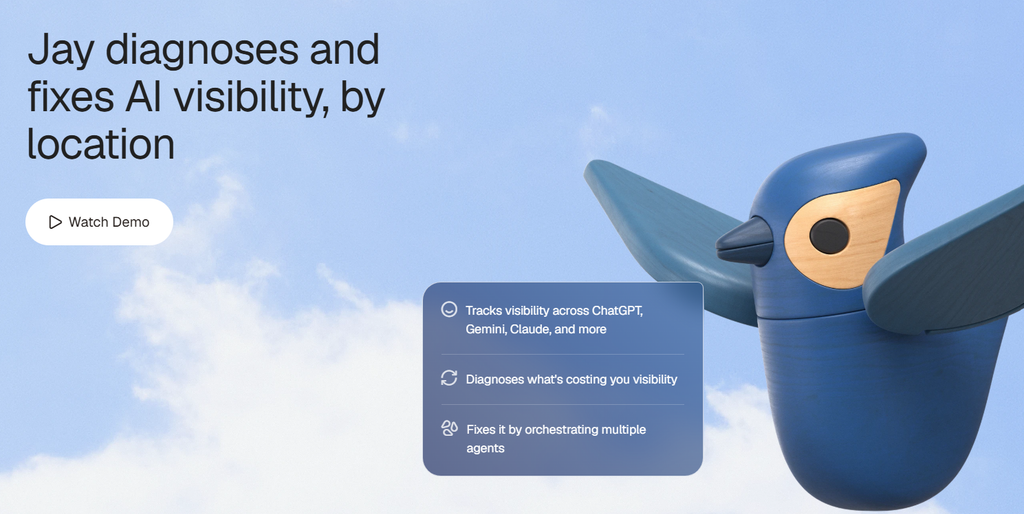
For AI search visibility, Jay connects location-level insights to the work needed to improve them. Birdeye AI Search tracks Visibility Score and Share of Voice across AI platforms, including ChatGPT, Claude, Gemini and Perplexity. It also identifies the sources AI engines cite, highlights gaps in listings and website content, and ranks potential fixes by impact.
Jay turns these insights into action by orchestrating the relevant AI agents. For example, if a dental practice loses visibility for a query such as “emergency dental care near me”, the AI Search Optimisation Agent can identify contributing issues, such as an inaccurate listing field or missing website content. Jay can then direct the Listings Optimisation Agent to correct the listing and the Blog Page Agent to address the content gap.
This connects four stages of AI visibility management:
- Track visibility: Measure Visibility Score and Share of Voice at brand and location level.
- Identify the causes: Examine cited sources, listing accuracy and website content to find potential gaps.
- Prioritise and implement fixes: Rank improvements by impact and orchestrate the relevant agents to address them.
- Measure progress: Recheck visibility to assess whether the changes have improved performance.
For brands managing dozens or hundreds of UK locations, this approach connects visibility reporting with coordinated execution. Teams can identify which branches need attention, investigate the reasons and direct the right work towards each issue.
AI recommendations aren’t guaranteed, and results vary by location, query, and platform. The value is having a repeatable process to identify visibility gaps, address their causes and measure progress across the entire location network.
Frequently asked questions
Yes. Google states that established SEO fundamentals remain relevant to AI Overviews and AI Mode. Accessible pages, helpful content and accurate business information remain important, although none guarantees inclusion in an AI answer.
A branch should have its own page when customers need location-specific information to choose or contact it. Include accurate services, contact details and other relevant facts rather than publishing near-identical pages for every town.
Set a regular review cadence, such as monthly, and repeat the same prompts across the same platforms. Check sooner after significant changes to branch services, opening hours or location pages. The purpose is to compare like with like and identify changes that require action.
Build a repeatable AI visibility process across every branch with Birdeye
Start by establishing a location-level baseline. Correct inaccurate listings, improve weak branch pages and address gaps in the information customers use to assess each location. Then repeat the same AI search tests to evaluate progress.
For multi-location brands, the priority isn’t simply tracking visibility. The goal is to understand where branches are missing from AI recommendations and focus on the issues that matter.
Birdeye AI Search helps teams track AI visibility by location and identify where their brand needs attention.
Want to see how your locations appear in AI search? Explore Birdeye AI Search to learn how location-level visibility tracking can support your team’s optimisation work.

About the Author

Shruti Dugar
Birdeye
Originally published