Marketing automation tools are now the backbone of how multi‑location enterprises orchestrate customer journeys, unify data, and drive profitable growth across every location.
Summary
Marketing automation tools have evolved from simple email workflows into intelligent, AI‑driven platforms that coordinate content, data, channels, and decisions across the entire customer lifecycle. For multi‑location enterprises, the most effective platforms now act as orchestration engines that centralize customer insights, automate complex journeys, and ensure brand consistency across hundreds or thousands of locations.

Birdeye stands out in this landscape as an agentic marketing platform built specifically for multi‑location brands, using autonomous AI agents to replace fragmented tools and execute end‑to‑end campaigns across reviews, messaging, social, listings, and surveys.
In this blog, the focus is on how 11 leading marketing automation tools compare across strategy, AI, and multi‑location execution. It will also cover real‑world use cases and a Birdeye‑led framework to clarify how to choose and scale the right platform mix for 2026 and beyond.
Table of contents
Why marketing automation tools matter in 2026
Marketing automation tools now sit at the core of enterprise go‑to‑market systems, shaping how multi‑location brands attract, convert, and retain customers across channels and locations.
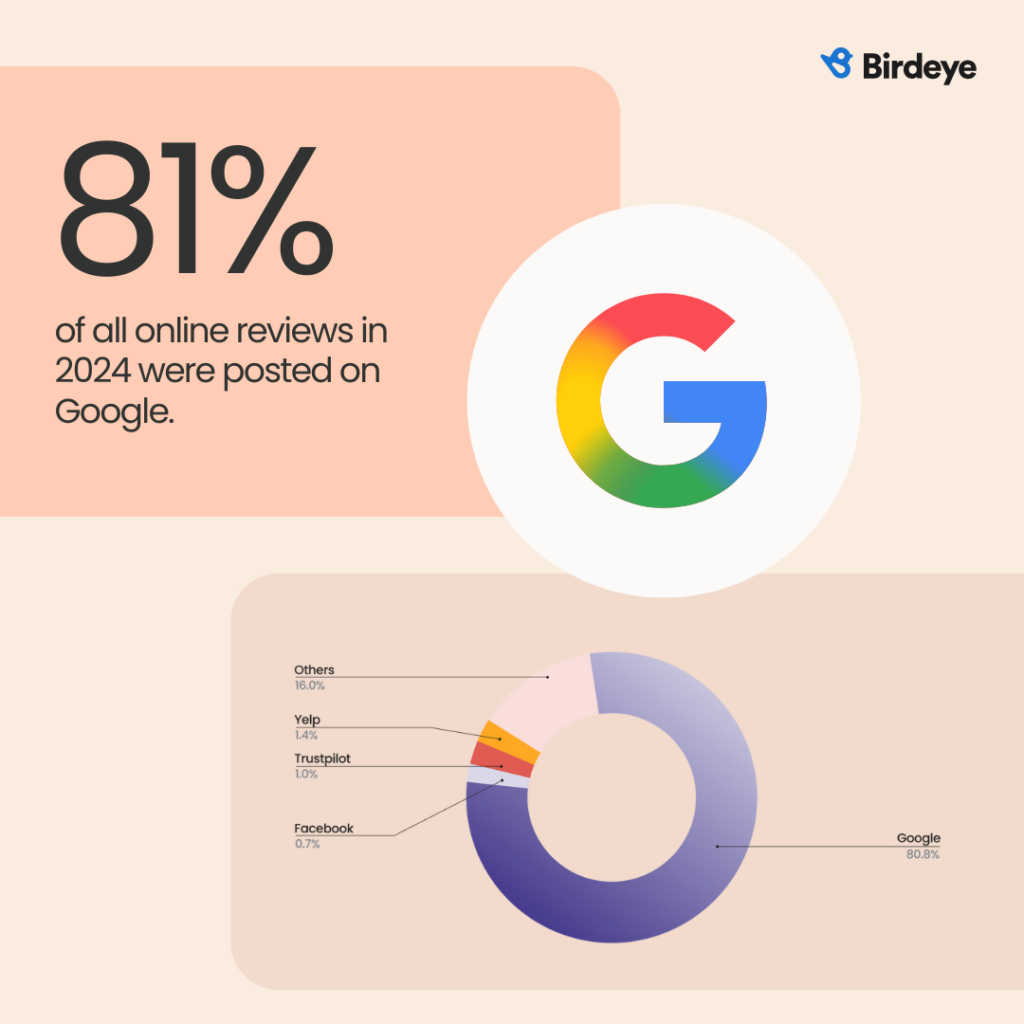
As per Birdeye State of Online Reviews 2025, 81% of all online reviews now live on Google, making review automation, response speed, and data accuracy critical inputs for both marketing performance and AI-driven brand discovery in 2026.
In 2026, these platforms are expected to handle higher data volumes, more AI‑generated interactions, and increased expectations for personalization and compliance at scale.
The evolution from workflows to intelligent orchestration
Marketing automation has progressed from isolated email campaigns and basic drip sequences into full‑funnel orchestration that connects CRM, ads, web, messaging, and offline interactions. Leading platforms now blend AI‑generated content, predictive analytics, and real‑time event data to trigger next‑best actions at scale, reducing manual work while improving revenue performance.
In this emerging 2026 model, platforms such as Birdeye function like an agentic control layer that can interpret data, decide what to do next, and autonomously execute campaigns. Instead of teams stitching together point tools and manual workflows, agentic systems orchestrate reviews, messaging, surveys, social, listings, and AI search visibility from a single, multi‑location‑aware brain.
The new reality of enterprise marketing in 2026
Multi‑location enterprises must coordinate thousands of micro‑journeys across locations, providers, and service lines while maintaining a consistent brand and compliant communication. This requires automation platforms that unify fragmented data, normalize profiles, and enable centrally defined journeys to adapt to local context and performance.
AI is also reshaping how customers discover and evaluate brands, with assistants, overviews, and recommendation engines increasingly surfacing businesses based on signals like reviews, responsiveness, and content quality.
According to Birdeye’s State of Google Business Profile research, 86% of local search impressions now come from non-branded, category-based searches, reinforcing that marketing automation must optimize for discovery signals, not just outbound campaigns.
Marketing automation tools that connect to this layer by automating review generation, content publishing, and structured data directly influence visibility and implicit brand recommendations in AI‑driven search and discovery experiences.
Where enterprises struggle with marketing automation tools
Some of the most common challenges are misalignment with enterprise maturity, fragmented data across systems, and complex “Franken‑stacks” that are hard to manage.
As stacks grow, integration gaps, inconsistent execution across locations, and limited AI readiness become significant barriers to realizing full value.
Let’s explore in detail:
Misalignment between tools and enterprise maturity
Many enterprises roll out marketing automation before locking in strategy, ICP, and lifecycle definitions. When that happens, automation scales confusion instead of results. Poorly defined journeys, inconsistent lead qualification, and fragmented messaging get replicated across locations, increasing cost and noise without driving growth. For multi-location brands, this misalignment shows up as uneven regional performance, overwhelmed frontline teams, and dashboards full of activity metrics that fail to reflect real business impact.
Data fragmentation across multiple systems
Enterprise marketing stacks often rely on multiple CRMs, scheduling tools, legacy databases, and manual exports that all store slightly different versions of the customer. This fragmentation breaks segmentation, identity resolution, and attribution, limiting personalization and lifecycle automation. Without a unified view across locations and service lines, campaigns trigger on incomplete or outdated signals, making coordinated, scalable automation nearly impossible.
The Franken-stack problem
To stay flexible, many organizations stitch together a Franken-stack of best-of-breed tools that look powerful but demand constant integration work. Each added tool introduces new data models, permissions, and reporting layers, increasing operational complexity and failure risk. While all-in-one platforms promise simplicity, they often trade flexibility for cost and long deployments. The real challenge isn’t choosing tools, it’s creating a connected foundation that supports both core systems and specialized needs without locking the business in.
Gaps in AI search visibility and generative recommendations
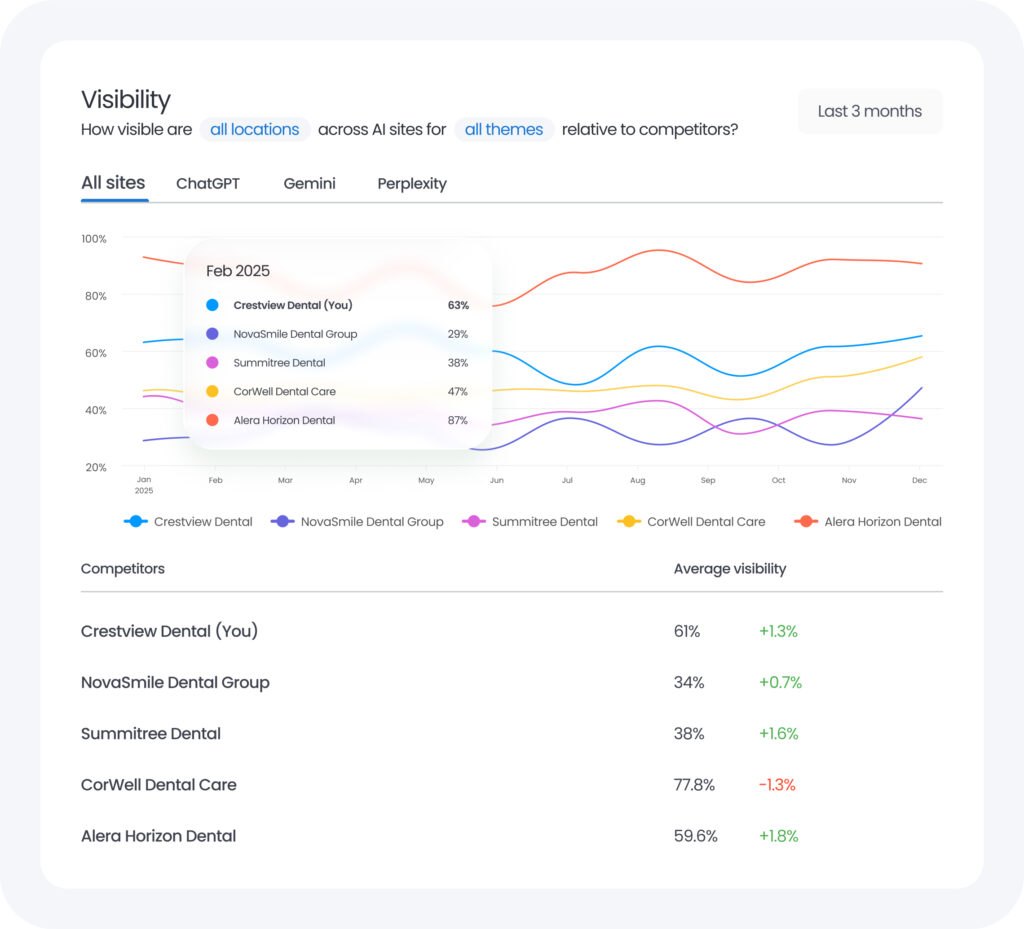
Most legacy marketing automation platforms still focus on outbound execution, emails, texts, and ads, while customer discovery increasingly happens inside AI-driven search and assistants. AI systems prioritize signals like reviews, responses, structured data, and freshness, areas where traditional automation falls short. Without native ways to monitor and improve this AI-facing presence, enterprises risk strong outbound programs paired with weak visibility in the environments where customers now research, compare, and decide.
Pro tip: Use Birdeye Search AI to sort themes and prompts by lowest visibility and “not tracking,” then focus your next round of content and citation updates on those specific gaps to lift AI search coverage fastest.
Limited real‑time personalization across locations
Static segmentation and one‑time list builds cannot keep up with the pace of behavioral change across hundreds or thousands of locations. When segments are refreshed weekly or monthly rather than continuously, campaigns miss out on live signals such as:
- Recent visits
- New reviews
- Appointment outcomes
- Emerging local demand patterns
As a result, teams default to broad blasts or overly generic “personalization,” which dilutes relevance, depresses engagement, and makes it harder to prove the incremental value of automation to executive stakeholders.
11 best marketing automation tools in 2026
Enterprises that win with marketing automation tools first define audience segments, lifecycle stages, messaging pillars, and success metrics, then map journeys and workflows across every location before configuring the best marketing automation software or platforms.
For multi‑location brands, this means:
- Standard definitions for “lead,” “MQL,” “high‑intent inquiry,” and “at‑risk customer.”
- Shared journey blueprints for onboarding, nurture, retention, and reactivation.
- Central rules that still allow regional nuance in offers, service lines, and timing.
Once this foundation exists, the best marketing automation tools can be aligned against specific roles: some as all‑in‑one marketing automation platforms, others as specialized tools for marketing automation, such as email, AI content, or integration.
1. Birdeye: Agentic marketing for multi‑location brands
Birdeye stands out in 2026 as a marketing automation tool explicitly built for multi‑location enterprises, combining reputation, messaging, listings, surveys, and AI into one agentic marketing platform. Rather than acting as just another point solution, Birdeye behaves like a centralized growth layer that understands locations, providers, reviews, and conversations, and then coordinates campaigns across channels at scale.
Key Birdeye capabilities as a core marketing automation platform include:
- Review Generation Agent and Review Response Agent: Automatically request reviews at the right moment and draft on-brand, compliant responses to reviews, messages, and surveys at scale.
- Unified customer profiles: Combine reviews, messaging, appointments, listings, and location data into a single profile that powers smarter, location-aware marketing automation journeys.
- Listings Optimization Agent: Keeps business information accurate across hundreds or thousands of locations by fixing duplicates, filling gaps, and pushing approved updates to support local SEO and AI discovery.
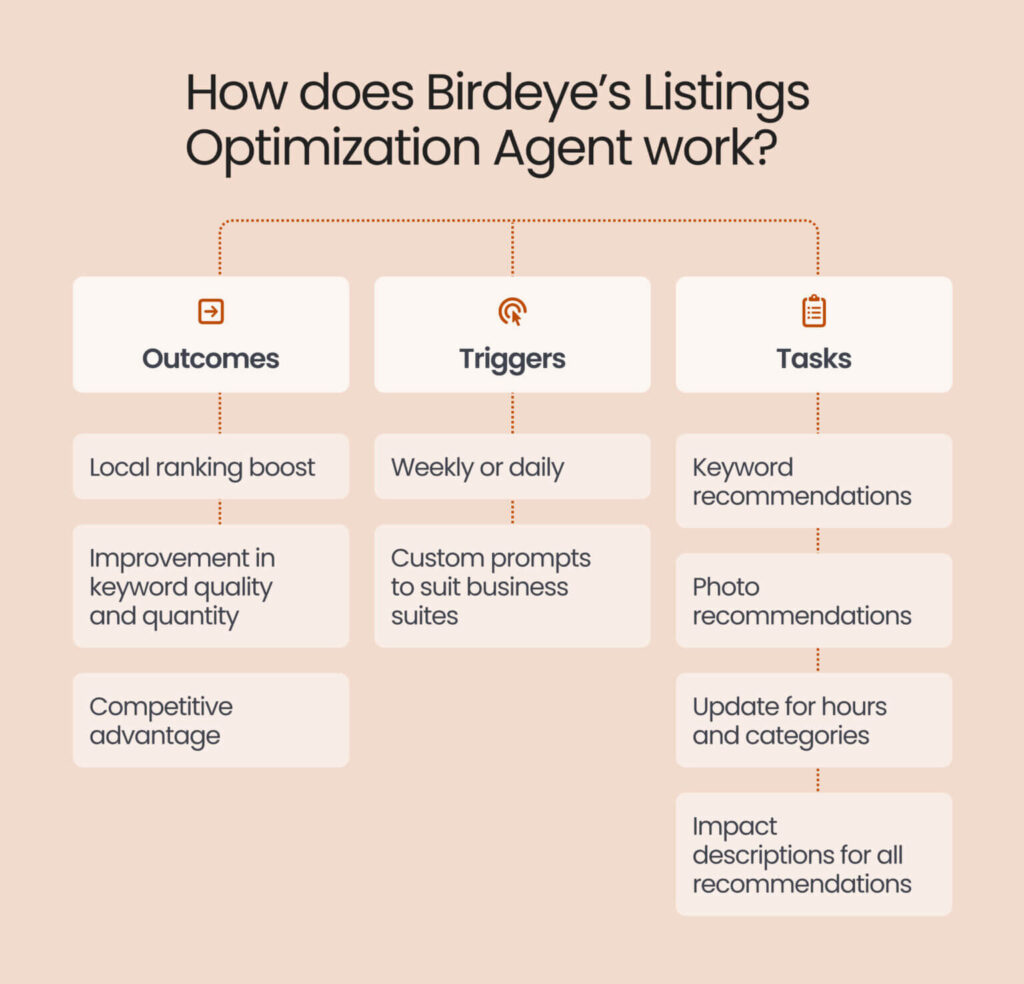
- Messaging AI with Lead Generation and Contact Segmentation Agents: Manage SMS, email, web chat, and social DMs in one inbox while automatically qualifying leads and building audiences for follow-up campaigns.
- Surveys AI with Template Design Agent: Launch branded surveys and NPS flows that trigger outreach, save requests, or win-back campaigns based on satisfaction trends by location or provider.
- Social Publishing and Engagement Agents: Plan content calendars, localize posts, publish consistently, and route comments or sensitive interactions to the right owner.
- Search AI: Track how AI answer engines describe your brand, monitor sentiment and citations, and identify actions that improve visibility across AI-driven discovery.
- Enterprise controls and reporting: Role-based access, approval workflows, and roll-up analytics across regions, service lines, and franchises, supported by the Birdeye Reporting Agent for plain-language insights.

Positioned as the primary marketing automation platform for multi-location brands, Birdeye complements other best marketing automation platforms and channel tools. It provides them with cleaner, more reliable location and reputation data while ingesting signals to power more intelligent journeys.
2. HubSpot Marketing Hub
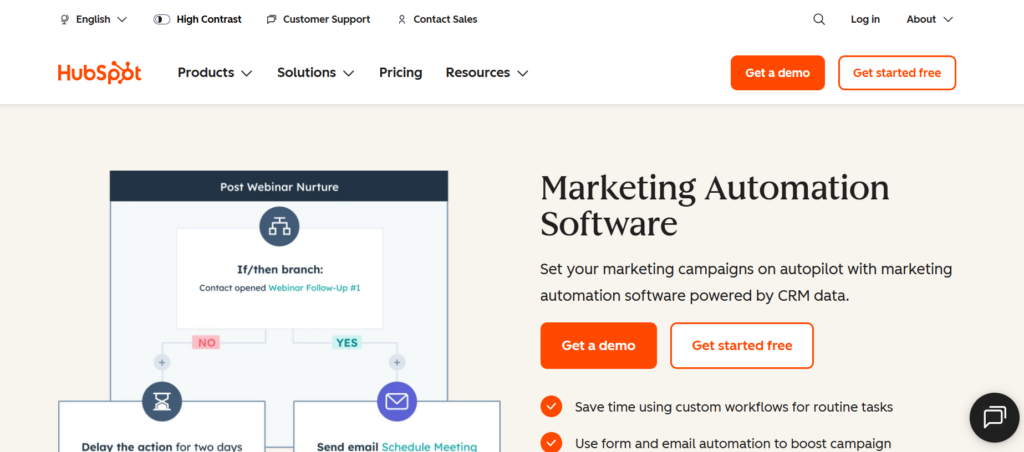
HubSpot Marketing Hub is an automated marketing tool for mid‑market organizations that want unified contact data and robust nurture programs without heavy custom development.
Features include:
- Visual workflow builder for automated email and lead routing.
- Built‑in CRM, forms, and landing pages.
- Lead scoring, attribution, and customizable dashboards.
- Integrations with sales and service hubs for end‑to‑end visibility.
Platforms that grow with your enterprise.
Want to see the impact of Birdeye on your business? Watch the Free Demo Now.
3. Salesforce Marketing Cloud
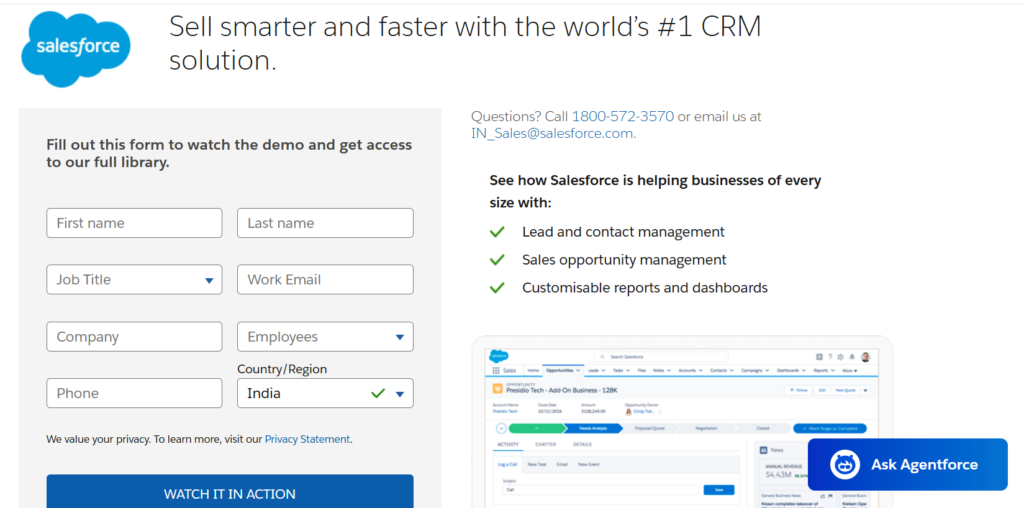
Salesforce Marketing Cloud is an automation marketing software suite designed for enterprises already standardized on Salesforce CRM. It enables complex, data‑driven journeys across email, mobile, advertising, and web that pull from rich CRM records and custom objects.
Features include:
- Journey building across multiple channels.
- Deep CRM data access for targeting and personalization.
- AI‑assisted insights and recommendations through Einstein.
- Enterprise‑grade data management and governance.
4. Marketo Engage (Adobe)
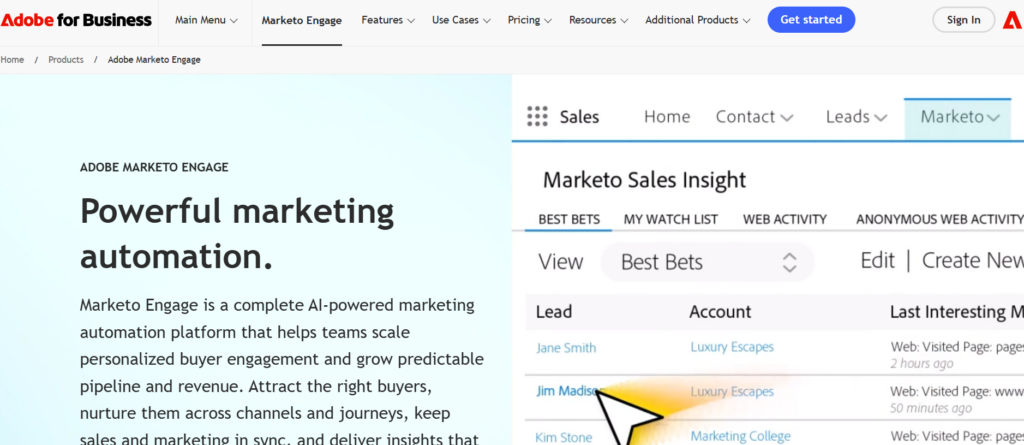
Marketo Engage is a B2B and ABM‑focused marketing automation tool known for advanced lead nurturing and scoring. Enterprises often rely on it to run demand generation, account‑based programs, and sales‑aligned campaigns.
Features include:
- Advanced lead scoring and lifecycle management.
- Flexible program design for webinars, campaigns, and events.
- Strong integrations with CRM systems like Salesforce.
- Analytics for pipeline impact and revenue contribution.
5. ActiveCampaign
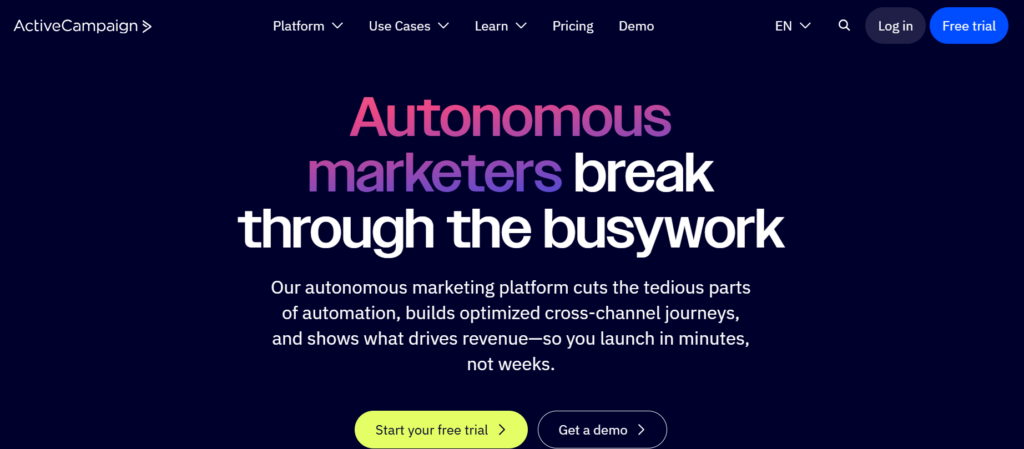
ActiveCampaign is a marketing automation software choice for SMB and mid‑market teams that want email, automation, and a lightweight CRM in one tool. It focuses on helping businesses create highly personalized journeys without needing a whole enterprise IT team.
Features include:
- Visual automation builder with behavioral triggers
- Integrated email marketing and basic CRM functionality
- Predictive sending and simple lead scoring
- E‑commerce and third‑party tool integrations.
6. Klaviyo
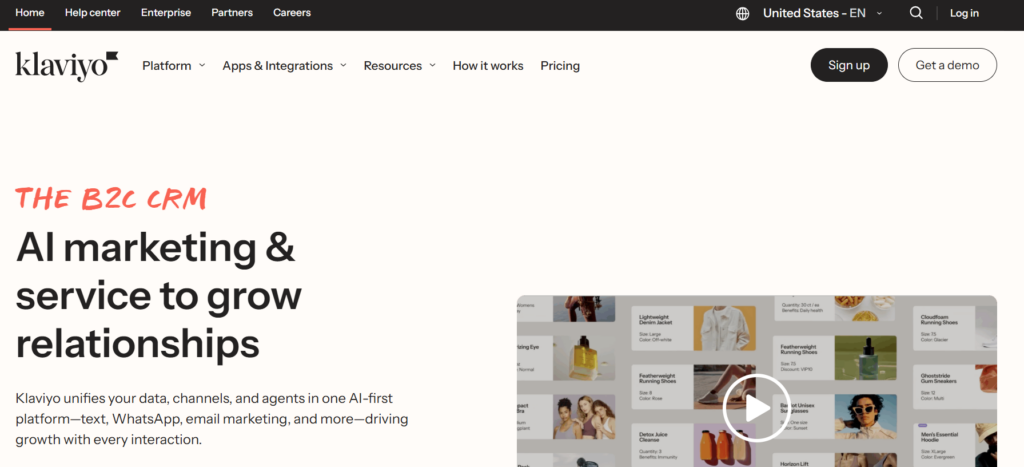
Klaviyo is a marketing automation tool for e-commerce brands, thanks to deep integrations with platforms like Shopify and BigCommerce. It specializes in using purchase, browsing, and catalog data to power personalized campaigns and flows.
Features include:
- Data‑rich segmentation based on order and browsing behavior.
- Automated flows for cart recovery, win‑back, and post‑purchase.
- Product recommendations and dynamic content.
- Native ecommerce and ad platform integrations.
7. Brevo (formerly Sendinblue)
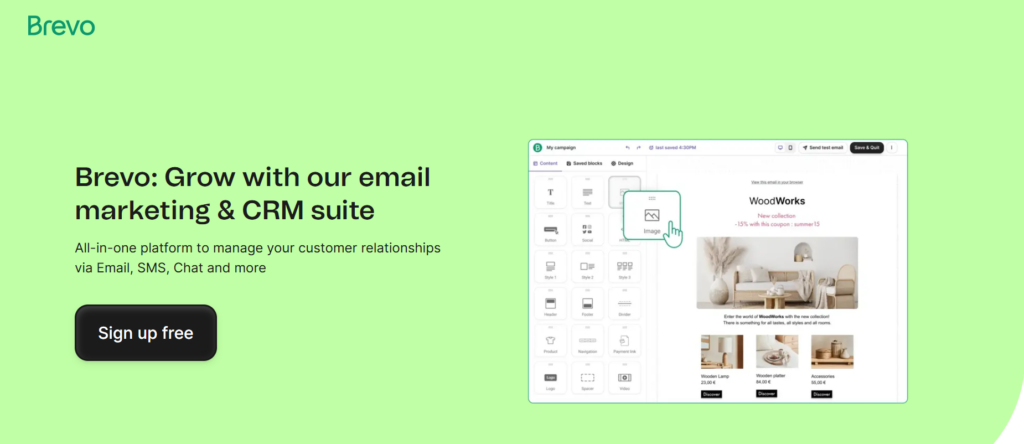
Brevo is an accessible automation marketing tool that combines email, SMS, simple CRM, and automation in a cost‑effective package. It is ideal for businesses that need straightforward automation marketing software without enterprise‑level complexity.
Features include:
- Email and SMS campaigns with basic automation workflows.
- Contact management and simple deal tracking.
- Transactional email capabilities.
- Integrations with websites, forms, and e-commerce tools.
8. Mailchimp
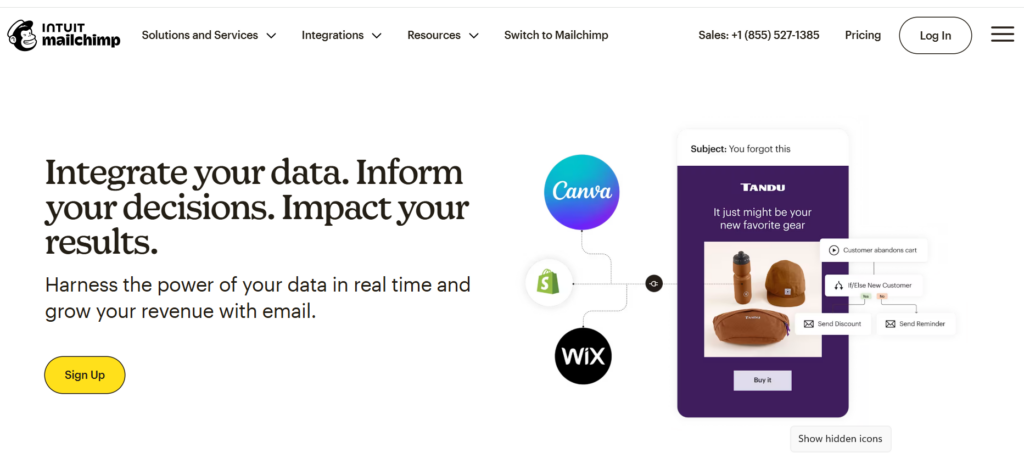
Mailchimp started as an email service provider and has evolved into a broader automation marketing platform for small and mid‑sized organizations. It is often used as a first marketing automation tool due to its ease of use and extensive templates.
Features include:
- Email campaigns, simple journeys, and basic automation.
- Audience management and simple segmentation.
- Landing pages, forms, and basic CRM fields.
- Integrations with e-commerce platforms and web builders.
9. Customer.io
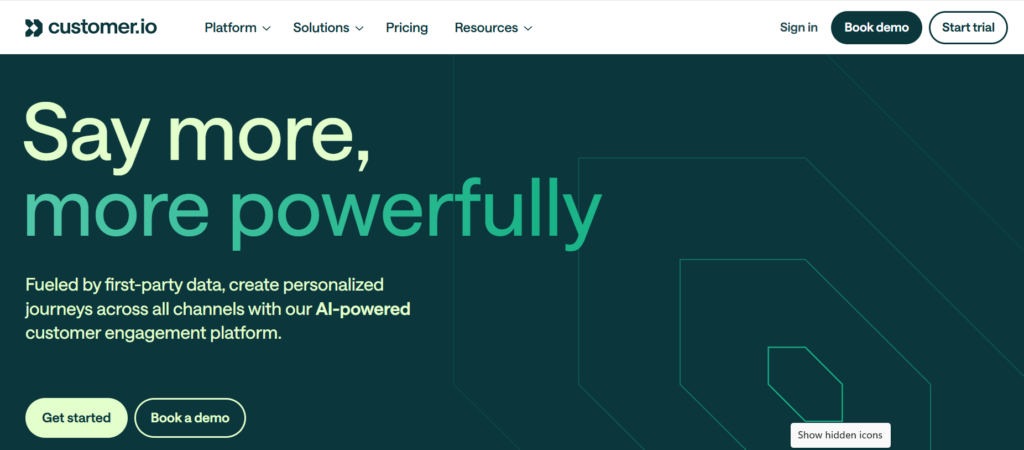
Customer.io is built for product‑led and SaaS companies that need event‑driven automation based on in‑app and behavioral data. It sends highly targeted messages triggered by user actions inside products or digital experiences.
Features include:
- Event‑based workflows triggered by product behavior.
- Multi‑channel messaging (email, push, in‑app, SMS).
- Fine‑grained audience rules and experiments.
- Strong developer‑friendly APIs and data model.
10. Ortto
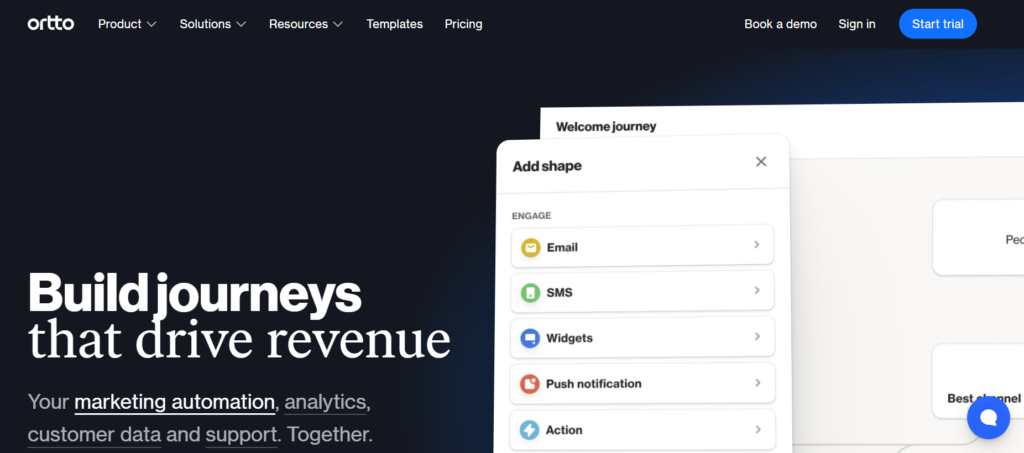
Ortto combines customer data, marketing automation, and analytics to help teams run journeys and analyze lifecycle performance in one environment. It works well for organizations that want deeper visibility into funnel behavior alongside their automation.
Features include:
- Unified customer timeline and data views.
- Journey builder across multiple channels.
- Cohort analysis and funnel reporting.
- Simple experimentation and personalization tools.
10. Zapier
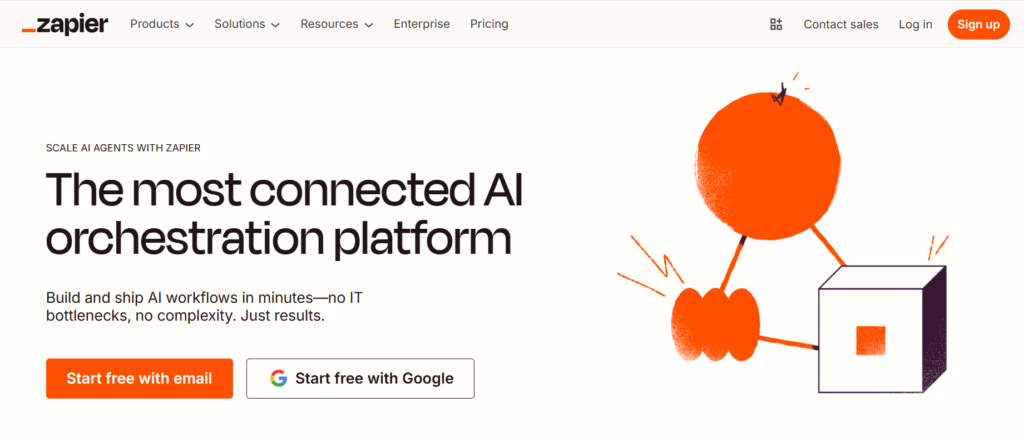
Zapier is not a traditional marketing automation platform, but a powerful automation marketing tool that connects multiple apps and systems. It often acts as a glue layer that moves data between best marketing automation software platforms, CRMs, and niche tools.
Features include:
- No‑code workflows (“Zaps”) connecting thousands of apps.
- Event‑triggered data sync and enrichment.
- Routing and notifications across tools.
- Useful for filling integration gaps in complex stacks.
Using the tools within a scalable architecture

To build the best marketing automation platform mix for an enterprise:

-Use Birdeye as the multi‑location, customer‑experience, and marketing automation core where reviews, messaging, and AI‑assisted engagement live.
-Anchor major campaign and CRM logic in an all‑in‑one like HubSpot, Salesforce Marketing Cloud, or Marketo when deeper sales alignment is required.
-Add best‑of‑breed tools such as Klaviyo, ActiveCampaign, Customer.io, Ortto, and Brevo for specific channels, segments, or product‑led motions.
-Use Zapier to connect data between systems and close gaps when native integrations do not cover a use case.

With Birdeye as the multi‑location, online reputation, and experience‑led center, and these 10 tools supporting CRM, email, ecommerce, product data, and integration, enterprises can design an automation marketing software layer that is both flexible and governed.
FAQs: Marketing automation tools in 2026
Enterprises choose marketing automation tools by starting with strategy, then evaluating how each marketing automation tool supports core journeys, data flows, and integrations across a multi‑location stack. They compare the best marketing automation software on fit for use cases, AI features, scalability, and total cost of ownership.
Marketing automation tools help multi‑location brands standardize campaigns, automate follow‑ups, and unify customer data across locations. The best marketing automation platforms also improve visibility, compliance, and customer experience while reducing manual work.
Key features include predictive analytics, AI content generation, dynamic segmentation, and multi‑channel journeys across email, SMS, web, and messaging. The best marketing automation tools also offer strong integrations, location hierarchies, and centralized reporting for enterprise teams.
AI makes marketing automation tools smarter by improving targeting, timing, and content quality across campaigns. In modern automation marketing software, AI powers lead scoring, recommendations, and message generation so teams can scale personalization efficiently.
Automation marketing tools ensure consistent, timely communication such as reminders, updates, and review requests—at every location. By using tools for marketing automation, enterprises deliver faster responses and more relevant journeys, which drives higher satisfaction and loyalty.
All‑in‑one marketing automation platforms combine CRM, email, journeys, and reporting in one system for simplicity. Best‑of‑breed automation marketing tools focus on depth in specific areas (for example, ecommerce or product‑led growth) and plug into a broader marketing automation tool stack.
Conclusion: A forward-looking view on automation in the enterprise
Marketing automation tools have moved from “nice-to-have campaign engines” to core infrastructure for multi-location brands that need consistent, AI-enhanced customer journeys across every touchpoint. When treated as strategic platforms rather than tactical utilities, the best marketing automation tools help unify data, standardize execution, and unlock a deeper understanding of how growth really happens across regions and channels.
The next wave of advantage belongs to enterprises that pair a strategy-first approach with a thoughtful mix of the best marketing automation software and best marketing automation platforms. Birdeye can act as the multi-location, AI-led marketing and experience hub. Melissa Cameron, SVP of Customer Acquisitions, National Storage Affiliates (NSA) shares:
“The Birdeye team assisted us in creating tailored triggers for feedback requests, ensuring a seamless process that doesn’t inconvenience our customers. We’ve seamlessly integrated these digital requests with our manual, in-person requests to achieve a well-balanced mix of feedback.”
Also, tools like HubSpot, Salesforce Marketing Cloud, Marketo, Klaviyo, ActiveCampaign, and others fill specific roles within the broader automation marketing software stack.
Together, these automation marketing tools and tools for marketing automation create a system where every location benefits from shared intelligence, every customer touchpoint is an opportunity to learn, and every campaign makes the entire organization smarter.
Ready to unlock the full value of marketing automation tools with Birdeye and see what scaled, AI‑driven growth looks like. Watch a demo now.

About the Author

Sudeepta Bora
Originally published



![[Feature image] The Best Marketing Platforms for Multi-Location Brands](https://birdeye.com/blog/wp-content/uploads/Feature-image-The-Best-Marketing-Platforms-for-Multi-Location-Brands-375x195.png)