Restaurant marketing tools make it easy for restaurants to stay visible and reach guests on the channels they use most. With search and reviews shaping nearly every dining choice and Google now driving the vast majority of review activity, restaurants can not afford gaps in accuracy or visibility. The right restaurant marketing platform helps restaurants maintain trust, consistency, and a strong local presence as guest expectations continue to grow.
Summary

Restaurant marketing tools now shape the entire guest journey, from how diners discover your restaurant to how often they return. With AI searches, social platforms, and review sites influencing decisions, restaurants need reliable systems to manage visibility, guest feedback, menu accuracy, and outreach at scale. Birdeye supports this shift by giving restaurants a unified platform to manage reviews, listings, messaging, and insights so brands maintain a consistent presence everywhere diners look.
In this blog post, you will find the 10 best restaurant marketing tools that support growth, efficiency, and guest loyalty.
Table of contents
What are restaurant marketing tools, and why are they essential in 2026
A restaurant marketing tool is basically a restaurant marketing software that helps restaurants promote their business, engage with guests, and track performance. These tools cover areas like online presence, reviews, CRM, social media, loyalty, and communication.
Birdeye’s State of Online Reviews study found a major rise in review volume across multi-location global brands, showing how quickly diners rely on digital signals before deciding where to eat. With more guests researching restaurants through reviews, AI answers, and social channels, having the right marketing tool in place is no longer optional.
The restaurant marketing platform helps :
- Appear in online searches and improve online visibility
- Collect more reviews and respond faster across platforms
- Publish posts across social channels consistently
- Keep restaurant listings accurate and up to date across all platforms
The restaurant marketing platform helps :
- Appear in online searches and improve online visibility
- Collect more reviews and respond faster across platforms
- Publish posts across social channels consistently
- Keep restaurant listings accurate and up to date across all platforms
- Automate email and SMS promotions
- Manage guest interactions and personalize communication at scale
- Track insights and trends across locations
By centralizing guest engagement and operational marketing into a single system, restaurants can improve efficiency, strengthen loyalty, and convert more interactions into reservations, orders, and repeat visits, without expanding staff or juggling disconnected systems.
Key capabilities to look for in a restaurant marketing tool
When evaluating restaurant marketing tools, it’s important to focus on features that simplify operations, improve guest experience, and drive measurable growth. Key capabilities to prioritize include:
1. Listings management and local SEO
Look for restaurant marketing tools that automatically keep your restaurant details, menus, hours, and attributes up to date across Google, Yelp, Apple Maps, and other major directories. Consistent listings improve local visibility and make it easier for guests to find you online.
2. Review collection and reputation management
Effective platforms help restaurants request reviews automatically, monitor feedback across channels, and generate timely, on-brand responses. Strong review management strengthens credibility and encourages more guests to visit.
3. Social media content and scheduling
Choose a restaurant marketing tool that can generate post ideas, create content, and schedule promotions or menu highlights across multiple social media channels from one dashboard. This saves time and helps maintain a steady, engaging presence.
4. AI-driven insights and analytics
Advanced restaurant marketing platforms offer sentiment analysis, trend monitoring, and clear recommendations based on guest feedback. These insights allow restaurants to spot issues early and make informed improvements across locations.
5. Messaging and guest communication
A strong restaurant marketing solution centralizes email, SMS, and messaging in one place while supporting automated replies, audience segmentation, and personalized outreach. This improves guest engagement and increases repeat visits.
6. Competitive benchmarking
Look for features that compare your ratings, reviews, and sentiment against local competitors. These insights help operators refine strategies and stay ahead in their market.
7. Automated surveys and feedback collection
Tools with built-in survey capabilities make it easy to gather post-visit feedback through text or email. AI-powered analysis can turn responses into actionable steps to improve service quality and retention.
8. Seamless integrations
The best restaurant marketing platforms connect with POS systems, reservation tools, delivery partners, and other restaurant software. This keeps data consistent, reduces manual effort, and ensures marketing insights support daily operations.
By choosing a platform with these capabilities, restaurants can unify marketing, reputation management, and guest engagement into a single solution, making it easier to attract new diners, increase loyalty, and grow revenue without juggling multiple disconnected tools.
10 best restaurant marketing tools for 2026
Choosing the right restaurant marketing tool comes down to how well it can streamline operations, improve visibility, and support a smoother guest experience without adding more work for your team.
The table below highlights the top options, their general pricing tiers, where they excel, and what restaurants can expect from each.
| Tool | Estimated Pricing | Best for | Core Strengths |
| Birdeye | Mid-tier to enterprise | Multi-location restaurants, growth-focused operators | Reviews, listings, Search AI, social, messaging, surveys, referrals, insights, AI agents, all-in-one execution |
| Toast | Mid-tier | Ordering, POS, loyalty | Online ordering, loyalty programs, POS integration |
| BentoBox | Mid-tier | Website + online ordering | Websites, menus, reservations, and ordering optimization |
| Podium | Mid-tier | Review collection + messaging | Reviews, text messaging, payment links |
| Hootsuite | Lower to mid-tier | Social media scheduling | Cross-platform posting, engagement tracking |
| Mailchimp | Lower to mid-tier | Email marketing | Email automation, segmentation, analytics |
| Yext | Mid-tier | Listing accuracy | Listing management, directory syncing, and menu accuracy |
| Square Marketing | Lower to mid-tier | Small restaurants | Email/SMS marketing, loyalty, POS integration |
| OpenTable | Premium | Reservations + guest management | Table management, guest history, reservations |
| Typeform | Lower tier | Surveys | Feedback collection, custom survey flows |
1. Birdeye — the #1 all-in-one restaurant marketing platform
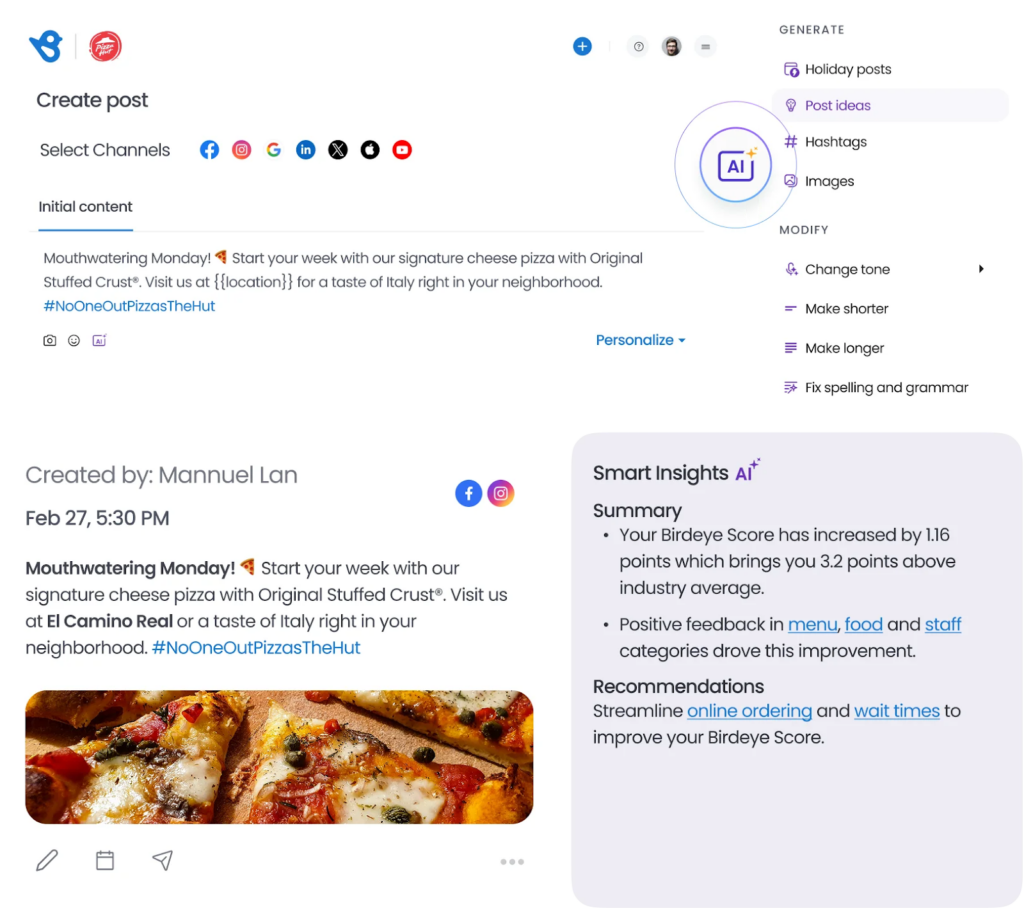
Birdeye is an enterprise platform built for multi-location restaurants that need a complete, connected way to manage visibility, reviews, communication, and guest experience from one place. It helps teams stay consistent across locations and simplifies day-to-day operations through one unified system.
The platform covers every major area that influences dining decisions, from search results to reviews, messaging, social content, and loyalty.
Birdeye stands out because it does not stop at monitoring. Its AI agents identify issues, recommend fixes, and automatically execute updates across all locations, reducing manual work for busy teams.
What Birdeye delivers for restaurants:
- Listings AI: Ensure hungry diners discover your restaurant first with accurate, always-updated listings across Google, Apple Maps, Facebook, Bing, Yelp, and top industry sites. Listings AI keeps menus, hours, and attributes consistent to boost local SEO and drive traffic.
- Reviews AI: Automatically generate more reviews, increase star ratings, and craft natural, on-brand AI responses. Reviews AI monitors performance across every review site and provides recommendations that support continuous improvement.
- Social AI: Create a mouthwatering social media presence with AI-generated posts, promotions, and menu highlights. Schedule content, manage engagement, and captivate diners across all major social platforms from one place.
- BirdAI: Birdeye’s restaurant-specific AI boosts productivity by automating reputation management, improving engagement, and driving guest retention. BirdAI helps you grow your online presence and stay ahead of competitors.
- Insights AI: Understand how guests truly feel with AI-powered summaries of sentiment, trends, and feedback across all locations. Get targeted operational suggestions that improve consistency, service quality, and guest satisfaction.
- Competitors AI: See exactly how your brand compares to competitors with head-to-head insights across reviews, sentiment, ratings, and keywords. Use actionable data to strengthen your brand strategy and outperform the market.
- Search AI: Restaurants can track how they appear in AI-powered search engines (like ChatGPT, Gemini, Perplexity), helping ensure diners easily find them when searching for local food or dining options.
- Surveys AI: Collect valuable insights through automated text surveys and leverage AI to analyze sentiment instantly. Surveys AI turns feedback into clear recommendations that enhance the dining experience.
- Integrations: Birdeye integrates with the systems restaurants rely on, POS platforms, delivery services, reservations systems, and more, via APIs, SFTP, and bulk upload.
“We looked at a lot of tools, but Birdeye was the only solution that helped us manage online reputation and guest experiences across all our locations. Their open API made integrating with our business systems very easy. Birdeye’s deep reporting and insights is imperative to our business needs.” – Erica Sheets
Digital Marketing Manager at Palmetto Dunes
Birdeye gives restaurants a complete, AI-powered marketing platform, eliminating the need to juggle multiple tools. From improving search visibility and social engagement to boosting reputation and uncovering guest insights, Birdeye helps restaurants attract more diners, elevate guest experience, and grow faster.
2. Toast — POS, ordering, and loyalty in one system
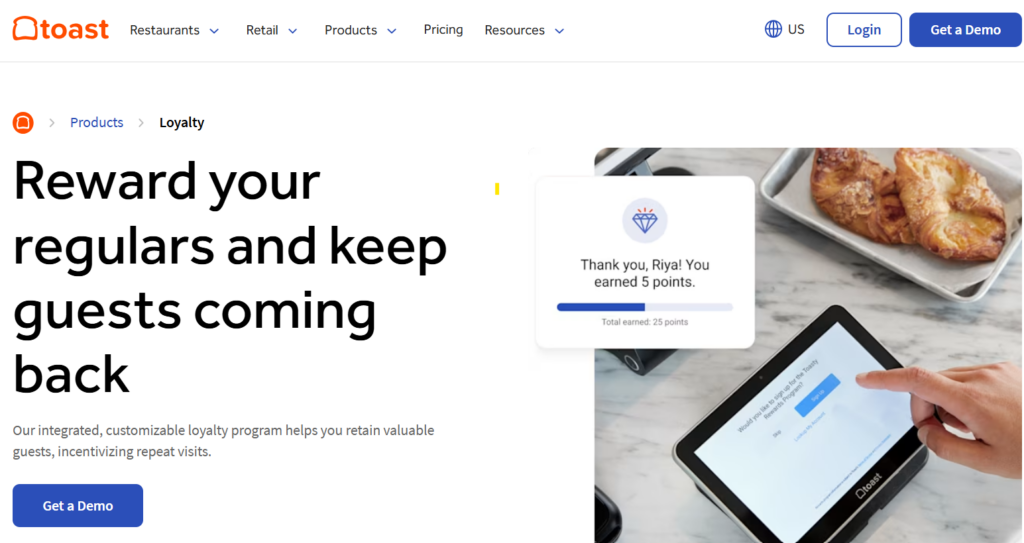
Toast provides restaurants with integrated ordering, payments, and loyalty tools. It’s strong for operations and front-of-house workflows, but more limited in marketing automation.
Key capabilities:
- Online ordering and delivery integrations that streamline takeout and delivery flows for faster order processing.
- Loyalty and rewards tools that help restaurants encourage return visits and track guest behavior.
- POS + payments that unify transactions, reporting, tips, and staff management.
- Menu management features that allow teams to update items, modifiers, and pricing in real time.
- Guest profiles that store visit history and preferences for better service personalization.
Toast helps operators keep service running smoothly by connecting ordering and payments with guest-facing programs in one reliable setup.
3. BentoBox — website, menus, and online ordering
BentoBox focuses on helping restaurants manage their website and online ordering.
Key capabilities:
- Mobile-friendly restaurant websites that highlight menus, photos, and essential information.
- Menu management that makes it easy to update dishes, pricing, and daily specials.
- Reservations and table requests built directly into the website.
- Online ordering flows optimized for takeout and pickup.
- Event pages and catering tools that help restaurants promote special menus and private dining.
BentoBox makes it easier for restaurants to present a polished online presence that reflects the quality of their brand.
4. Podium — reviews and text-based communication
Podium specializes in messaging and review collection.
Key capabilities:
- Text-based review requests that encourage guests to share feedback right after dining.
- Centralized messaging tools that bring SMS and web chat into one place.
- Payments via text to simplify order deposits or catering payments.
- Review monitoring across multiple sites to help restaurants catch issues quickly.
Podium supports restaurants that want faster guest interactions without adding more steps to their daily workflow.
5. Hootsuite — social media posting and monitoring
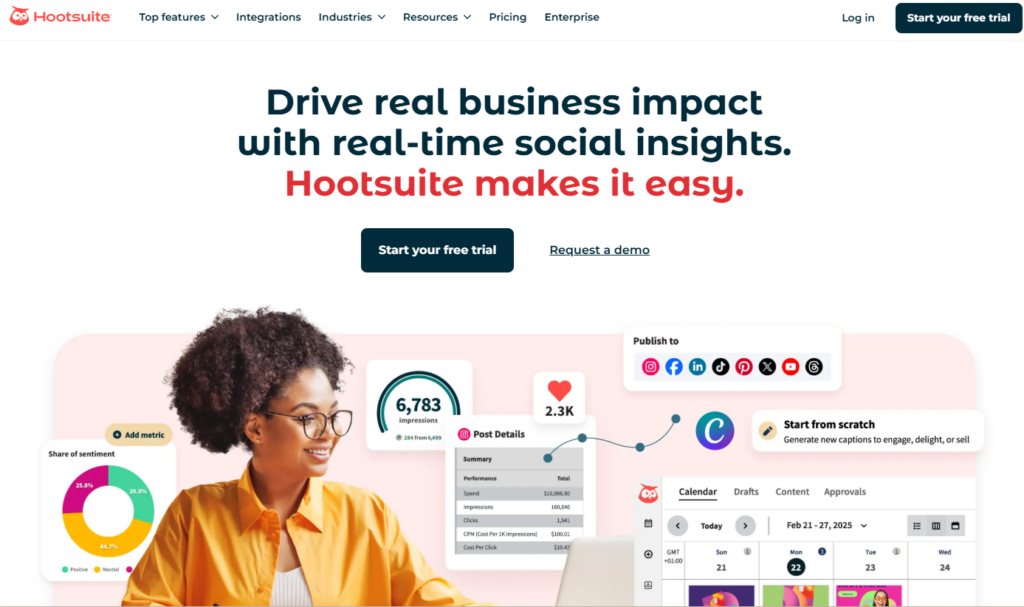
Hootsuite helps restaurants plan, schedule, and publish social content across social media platforms.
Key capabilities:
- Multi-platform scheduling that helps teams plan posts across Instagram, Facebook, and more.
- Comment and DM oversight so staff can respond to guest interactions from one dashboard.
- A visual content calendar that keeps promotions and campaigns organized.
- Analytics and reporting to track engagement and identify top-performing content.
Hootsuite gives restaurants a structured way to maintain an active social presence even during the busiest service hours.
6. Mailchimp — email marketing and guest email workflows
Mailchimp is a widely used tool for email promotions.
Key capabilities:
- Automated email journeys that send welcome emails, birthday messages, and promotions.
- List segmentation tools that group guests based on past orders or interests.
- Campaign analytics that show performance metrics for each email.
- Templates for promotions and announcements that make it simple to build branded emails.
Mailchimp helps restaurants stay connected with guests through consistent communication that keeps the brand top of mind.
7. Yext — listing accuracy and menu syncing
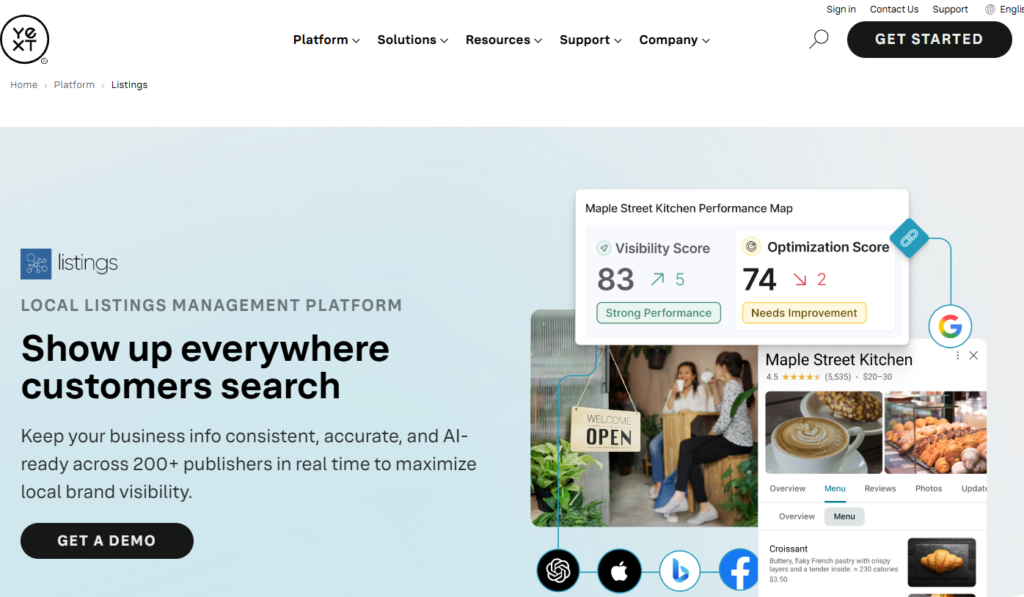
Yext keeps business details consistent across directories and maps.
Key capabilities:
- Listing updates for hours, menus, and attributes to ensure accuracy everywhere guests search.
- Directory syncing that pushes updates to Google, Yelp, Apple Maps, and more.
- Menu accuracy across platforms so diners always see the correct items and prices.
- Local SEO signals that improve search visibility for restaurants.
Yext brings confidence that guests always see the correct information, reducing confusion and missed dining opportunities.
8. Square Marketing — email, SMS, and loyalty
Square Marketing integrates directly with Square POS.
Key capabilities:
- SMS and email campaigns that help restaurants promote specials and events.
- Automated offers triggered by visit frequency or spend.
- Loyalty program tools tied directly to the POS system.
- POS-connected audience data that builds precise guest segments.
Square Marketing offers restaurants a simple path to repeat visits by connecting promotions directly to customer activity.
9. OpenTable — reservations and guest management
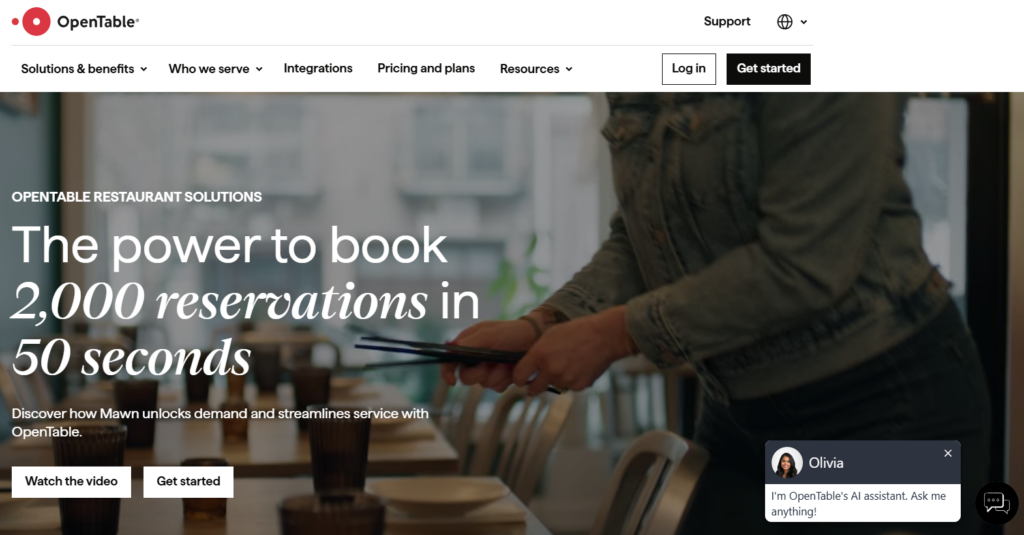
OpenTable powers reservations at scale and helps restaurants manage guest flow.
Key capabilities:
- Online reservations that sync across web, app, and Google.
- Guest book and visit history to personalize greetings and service.
- Table management tools that help hosts pace seating and reduce wait times.
- Waitlist and seating automation to improve front-of-house coordination.
OpenTable helps restaurants turn first-time diners into regulars by giving staff the context they need to deliver thoughtful service.
10. Typeform — guest feedback and survey creation
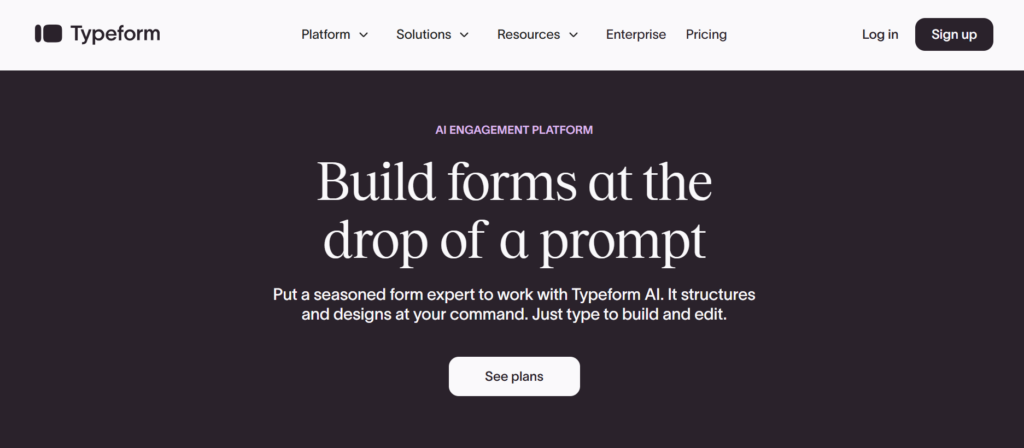
Typeform gives restaurants a flexible way to collect structured feedback.
Key capabilities:
- Custom survey flows that guide guests through feedback questions.
- Post-visit feedback collection for service, dishes, and staff interactions.
- Branded survey templates to match restaurant style.
- Integrations with CRM and analytics tools to send feedback to the right systems.
Typeform makes feedback collection feel more personal, helping restaurants learn what matters most to their guests.
While each tool serves a purpose, Birdeye stands out as an all-in-one solution that unifies restaurant reviews, guest messaging, surveys, listings, and marketing automation. By consolidating these functions, restaurants streamline operations, engage guests more effectively, and drive higher satisfaction and loyalty, all without juggling multiple platforms.
Explore Top 10 Restaurant Marketing Tools (2026)
Want to see the impact of Birdeye on your business? Watch the Free Demo Now.
Restaurant marketing trends for 2026
Restaurant marketing in 2026 is shaped by rapid technology adoption, changing consumer preferences, and major industry-wide challenges.
AI and automation
Most restaurants are now integrating artificial intelligence to forecast demand, personalize outreach, automate ordering, and manage reviews. AI-powered personalization allows marketing campaigns to adapt to individual guest preferences, boosting both engagement and loyalty. Automation also streamlines front- and back-of-house operations, enabling smaller teams to handle higher guest volumes successfully.
Personalization and data analytics
Hyper-personalization is a significant marketing focus, leveraging guest data to tailor offers, automate messages, and track customer lifetime value. Customer segmentation and targeted communications (via email, SMS, loyalty programs) further drive repeat visits and increase the effectiveness of promotions.
Digital experiences
Contactless dining, QR code menus, and interactive experiences (such as AR/VR menus or chef livestreams) are becoming more common, both as guest-facing features and as social media promotional content. Gamified digital loyalty programs and mobile-first experiences are driving engagement, especially among younger diners.
Delivery and off-premise growth
Delivery and takeout continue to play a critical role in restaurant marketing strategies for 2026. Integration with third-party delivery platforms and investment in cloud kitchens have become essential for operators seeking to reach new audiences and meet changing diner expectations. Digital ordering solutions and streamlined pick-up experiences are now key differentiators, helping restaurants adapt to evolving consumer preferences and expand their market reach.
Community and sustainability
Consumers increasingly value restaurants that support local suppliers, sustainable practices, and community engagement. Eco-friendly packaging, local sourcing, and visible charitable projects bolster brand reputation and appeal to conscious diners.
Challenges and innovations
Operators face ongoing labor shortages, rising costs, and supply chain volatility. Success depends on adaptability, balancing automation with personalized service, controlling costs via menu engineering, and differentiating through immersive dining experiences or branded events. Competition from chains with advanced technologies remains stiff, but independent restaurants can compete by leveraging smart marketing tools like Birdeye, analytics, and local branding.
These emerging marketing trends highlight the importance of a tech-enabled, customer-centric approach for both growth and resilience in 2026 and beyond
Frequently asked questions on restaurant marketing tools
Restaurant marketing tools are platforms that help restaurants manage online visibility, reviews, social media, and customer engagement.
Restaurant marketing tools increase foot traffic by improving local search visibility, automating promotions, and strengthening trust through consistent reviews. Solutions like Birdeye enhance this further with powerful reputation management and customer feedback tools that attract more diners.
Birdeye is a strong option because it collects reviews automatically and creates personalized AI-generated responses.
Yes, tools like Birdeye include scheduling, content creation, and analytics to keep restaurant profiles active.
Yes, restaurant marketing tools like Birdeye offer surveys, sentiment insights, and analytics to understand customer preferences.
Many platforms, including Birdeye Listings AI, keep business information updated across directories.
Yes, they simplify online marketing and help small teams save time while improving visibility.
Conclusion
Restaurant marketing platforms continue to evolve, but not all tools are built with the realities of modern operators in mind. Brands today need more than scattered point solutions, they need a platform that unifies guest feedback, automates engagement, and delivers insights they can act on instantly. That’s where Birdeye stands out.
While many tools offer pieces of the puzzle, Birdeye brings everything together in one place: reputation management, guest communication, listings accuracy, social engagement, surveys, and operational intelligence. The result is a clearer understanding of what guests want and a far more efficient way to respond. Restaurants using Birdeye often see stronger review volume, faster response times, and more consistent guest satisfaction without increasing manual workload.
As digital habits continue to influence dining decisions, choosing a platform that pairs automation with genuinely meaningful guest experiences is essential. Birdeye gives restaurants that advantage, helping teams stay ahead of guest expectations while growing confidently into 2026 and beyond.
Book a free demo to see how top restaurant brands use Birdeye to attract more diners, manage feedback at scale, and build long-term guest loyalty.

About the Author

Vanjana Sharma
Originally published