Retail SEO is essential for driving traffic, conversions, and long-term growth for both online and brick-and-mortar stores, and it’s evolving quickly. By mid-2025, traffic to U.S. retail websites from generative-AI sources had grown nearly 4,700% year over year, a shift that is accelerating even further heading into 2026. This surge signals a turning point: search is no longer limited to traditional engines. AI-powered discovery channels from generative search results to intelligent shopping recommendations are rapidly reshaping how customers find products and brands.
Summary

Retail SEO goes beyond ranking on Google; it ensures that your products and brand are visible, credible, and discoverable across search engines and emerging AI platforms. Traditional SEO practices, such as keyword targeting, site optimization, and backlink building, remain critical. Still, retailers must now prepare for Generative Engine Optimization (GEO) to reach customers through AI-powered search and recommendation systems.

Combining both approaches helps retailers capture traffic, improve conversions, and future-proof their digital presence in 2026 and beyond.

In this blog post, we will break down what’s changing in Retail SEO, why it matters, and how retailers can adapt their strategies for 2026 and beyond. But first, let’s understand the basics.
Table of contents
- What is Retail SEO?
- Why SEO matters for retail businesses?
- Retail SEO strategies for 2026 and beyond
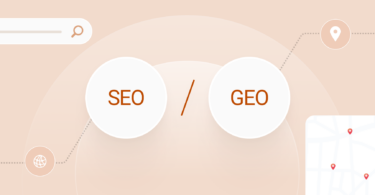
- Retail SEO vs Traditional SEO vs AEO vs GEO: How they fit together
- How to measure retail SEO in the AI-specific metrics
- How Birdeye supports modern retail SEO
- Birdeye helped Exclusive Furniture become a one-stop shop for experience marketing
- FAQs
- Conclusion: Retail SEO as a future-ready growth system
What is Retail SEO?
Retail SEO is the practice of optimizing online stores and product pages to rank higher for retail-specific keywords, improve site performance (speed, mobile-friendliness), enhance user experience, and increase visibility in search results, helping shoppers find products and boosting sales.
In 2026, Retail SEO also connects with AI-driven search, ensuring products are discoverable across both traditional search engines and emerging generative platforms.
Why SEO matters for retail businesses?
SEO drives retail growth by increasing visibility, attracting high-intent traffic, building trust, and improving overall shopping experience, all while reducing reliance on paid advertising.
Key reasons SEO matters for retail & e-commerce stores:
- Visibility, traffic, and conversions: High rankings put products in front of actively searching customers and increase the likelihood of purchase.
- Cost-effective authority and trust: Organic search builds credibility, signals reliability, and reduces acquisition costs compared to ads.
- Better user experience: Faster load times, mobile responsiveness, and straightforward navigation enhance satisfaction and engagement.
- Long-term growth: SEO ensures sustained visibility and revenue, complementing paid campaigns.
These advantages make SEO a reliable growth engine and set the foundation for the newer AI-driven discovery channels reshaping how customers find products. Now, let’s explore the specific Retail SEO strategies that will define competitive success in 2026 and beyond.
Retail SEO strategies for 2026 and beyond
Retail SEO strategies in 2026 and beyond must account for three structural shifts: AI-led search experiences, the rise of zero-click results, and customer journeys that span search engines, maps, marketplaces, and social platforms. As a result, success no longer depends on keyword rankings alone. Retailers must build brand authority, optimize for Answer Engine Optimization (AEO), and deliver intense, consistent user experiences across every discovery surface.
The most effective Retail SEO programs follow a holistic approach across four core areas: technical foundations, content and AEO, brand authority, and multi-platform optimization.
1. Technical SEO as the foundation
A strong technical foundation allows search engines and AI systems to crawl, interpret, and surface retail content accurately. Without it, even high-quality content and products fail to gain visibility.
Site performance and Core Web Vitals
Retail websites must load quickly, respond smoothly, and maintain visual stability. Targets such as an LCP under 2.5 seconds and minimal layout shifts reduce bounce rates, increase engagement, and support stronger rankings, especially on mobile.
Structured data and schema markup
Comprehensive schema implementation (Product, Offer, Review, FAQ, LocalBusiness) allows search engines and AI models to extract accurate details such as pricing, availability, and ratings. This improves eligibility for rich results, product carousels, and AI-generated summaries.
Mobile-first experience
Most retail discovery and browsing now happens on mobile devices, which makes a mobile-first design essential. Clear navigation, intuitive filters, prominent add-to-cart actions, and a streamlined checkout process directly influence SEO performance and conversion rates.
Crawlability and index control
Large product catalogs require disciplined control over filters, sorting options, and duplicate URLs. Canonical tags, noindex rules, and structured internal linking ensure search engines prioritize high-value product and category pages.
2. Retail content strategy and Answer Engine Optimization (AEO)
Retail content must serve two audiences: human shoppers and AI systems that summarize, recommend, and answer questions.
Experience and credibility (E-E-A-T)
Search engines reward content that reflects real-world experience and expertise. Original photography, product insights, case examples, customer stories, and clearly attributed authorship establish credibility that generic AI content cannot replicate. This includes content across product pages, category descriptions, and supporting guides that present accurate, well-structured information.
Conversational and question-based queries
Retailers should structure content to answer natural-language questions clearly and directly. This approach supports visibility in featured snippets, “People Also Ask” results, voice search, and AI overviews, where answers often appear without a click. Well-crafted product pages and supporting content can directly address common customer questions.
Topic-led content clusters
Rather than target isolated keywords, retailers should organize content around broader topics and buying themes. Pillar pages supported by detailed sub-content demonstrate topical depth and help search engines recognize category authority. Product pages naturally fit within these clusters, linking to related guides, comparisons, and complementary products.
Product-led, conversion-focused content
Effective retail content goes beyond general education. Comparisons, sizing guides, use-case explanations, customer-generated content, and accurate product listings help shoppers make confident purchase decisions while reinforcing relevance for search engines and AI systems.
3. Brand authority and digital trust
Brand strength now acts as a primary trust signal for search algorithms and AI-driven discovery.
Authoritative mentions and links
High-quality backlinks and brand mentions from reputable publishers, industry sites, and community platforms signal trust and relevance. These references help AI systems validate brand authority beyond owned content.
First-party data strategy
As third-party cookies fade, first-party data plays a larger role in personalization and insight generation. Retailers that collect and use this data responsibly improve on-site experiences and inform SEO and content strategies.
Branded search visibility
AI tools often answer initial queries, which leads shoppers to follow up with branded searches before purchase. Strong brand visibility, positive reviews, and consistent messaging increase the likelihood of capturing this high-intent traffic.
Reviews and customer feedback
Authentic reviews signal reliability and trust to both consumers and AI systems, reinforcing brand authority and influencing purchase decisions.
4. Multi-platform and omnichannel optimization
Retail discovery no longer occurs in a single channel. Visibility must extend across every platform where customers search, browse, and compare.
Local SEO for physical stores
For brick-and-mortar retailers, optimized Google Business Profiles remain essential. Accurate NAP information, regular updates, and active review management support visibility in map results, voice searches, and local AI summaries.
Video and visual search optimization
Video content across YouTube, short-form platforms, and social channels supports product discovery and education. Optimized titles, descriptions, and transcripts improve discoverability and increase the likelihood of citation in AI-generated responses.
Digital and in-store alignment
Features such as buy online, pick up in-store (BOPIS), consistent inventory data, and location-specific availability create a unified experience that improves customer satisfaction and conversion rates.
Retail media network strategy
Advertising within retail media ecosystems such as Amazon Ads or Walmart Connect complements SEO by capturing high-intent shoppers closer to purchase and reinforcing visibility across paid and organic surfaces.
Retail SEO checklist:

Traditional SEO foundations

Keyword mapping
Category structure and URL hierarchy
Product page optimization
Internal linking
Image SEO
Site architecture & mobile-first UX

AEO (Answer Engine Optimization) essentials
Question-based content + FAQs on key pages
Structured data/schema for FAQ, product, and reviews
Snippet-friendly formatting (lists, bullets, short answers)

GEO (Generative Engine Optimization) essentials
Product + offer schema depth (price, availability, rating)
Topic clusters around product themes
Brand authority signals (reviews, mentions, citations)
Retail SEO vs Traditional SEO vs AEO vs GEO: How they fit together
Retail search visibility now spans far beyond classic blue links. Retail SEO brings together multiple optimization disciplines that serve different discovery surfaces, from search engines to AI-driven answers.
| Approach | What it’s designed for | Where visibility shows up |
| Traditional SEO | Ranking pages for keywords and earning clicks | Google and Bing search results |
| Retail SEO | End-to-end retail discovery across web, local, and commerce platforms | Websites, Google Business Profiles, Maps, marketplaces, and store pages |
| Answer Engine Optimization (AEO) | Being selected as the direct answer to a query | Featured snippets, AI overviews, voice assistants |
| Generative Engine Optimization (GEO) | Being cited, summarized, or referenced by generative AI systems | ChatGPT, Perplexity, Gemini, and other AI discovery tools |
In 2026, Retail SEO acts as an orchestration layer, not a replacement. It connects traditional SEO, AEO, and GEO to ensure products and stores are discoverable across search results, AI-generated answers, local maps, and retail platforms. This is also where emerging terms like AIO or AISO naturally fit, as shorthand for optimizing how AI systems interpret and surface retail brands.
Practical tips to improve Retail SEO performance

Retail teams can strengthen SEO execution with focused, repeatable actions:
Audit store listings regularly to prevent outdated or conflicting information
Ensure every location page includes unique content and recent reviews
Use customer language from reviews to inform page copy and FAQs
Monitor high-intent search queries related to local availability and store visits
Align SEO reporting with store-level performance metrics
How to measure retail SEO in the AI-specific metrics
In the AI-driven search landscape, measuring Retail SEO goes beyond traditional rankings and clicks. Modern metrics focus on visibility, authority, content trust, and engagement across AI-powered and traditional channels.
1. Emerging AI-specific metrics
Track how often your brand appears in AI-generated answers across ChatGPT, Gemini, Perplexity, etc through:
- Recurring monthly prompt audits
- Branded and category term testing
- Visibility score trends
2. AI Citations
Monitor citations inside AI responses by:
- Recording when retail products or pages are referenced
- Comparing formats AI prefers to cite
- Evaluating answer depth and sentiment
3. Entity Authority & Knowledge Graph Presence
- Check if your brand is recognized as an entity
- track growth in entity references
- monitor Wikidata + schema presence
4. Content Accuracy & Confidence (Qualitative)
AI prioritizes high-accuracy content:
- Analyze when AI chooses or excludes your information
- Monitor answer repeatability
- Review factual consistency
5. Traditional SEO metrics remain core
- organic sessions
- product impressions
- CTR
- sales influenced by organic search
- category performance
- GBP actions
- direction requests
Explore Retail SEO Strategies
Want to see the impact of Birdeye on your business? Watch the Free Demo Now.
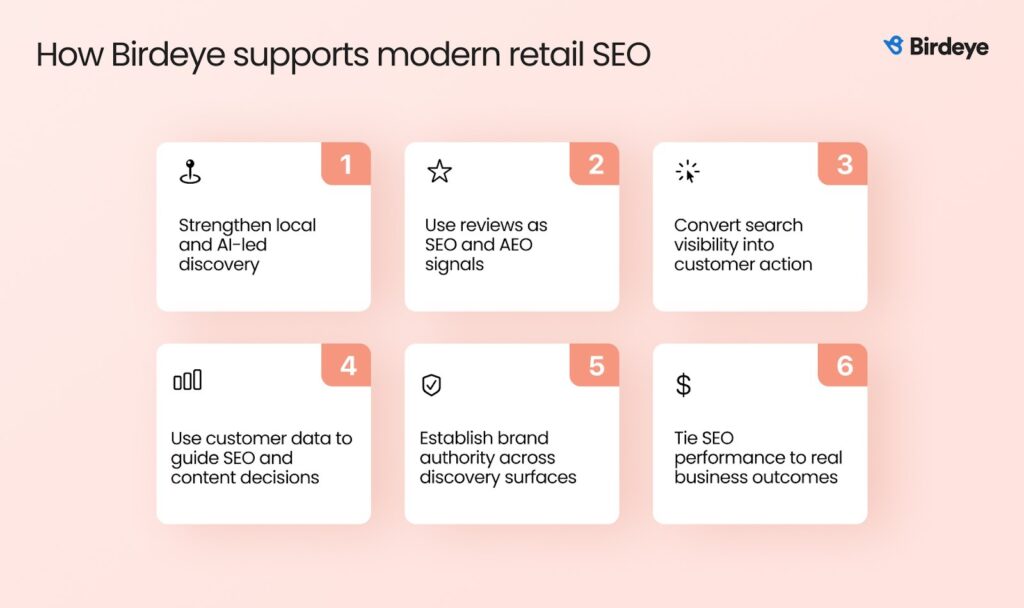
How Birdeye supports modern retail SEO
Retail SEO in 2026 requires retailers to manage far more than website optimization. Search engines and AI systems now evaluate local accuracy, customer sentiment, engagement quality, and brand consistency across multiple channels before they recommend a business. Birdeye helps retailers operationalize these requirements by connecting SEO, reputation, and customer experience into a single system.
Strengthen local and AI-led discovery
Accurate, consistent business data remains foundational for both traditional search and AI-powered discovery. Birdeye Listings AI Agents lets retailers manage store information, categories, attributes, and updates across search engines, maps, and directories from one place. This consistency supports stronger local rankings, improves visibility for “near me” and voice searches, and helps AI systems reference correct, trusted information.
Use reviews as SEO and AEO signals
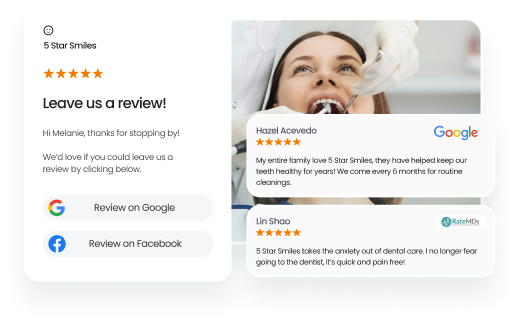
Reviews influence how retailers rank, how often they appear in AI summaries, and whether shoppers take action. Birdeye Reviews AI Agents helps retailers generate fresh, location-level reviews at scale and respond promptly with AI-assisted replies. This approach creates a steady stream of relevant content that reinforces trust, supports local SEO performance, and gives AI systems clear sentiment signals.
Convert search visibility into customer action
Retail SEO success depends on what happens after discovery. Birdeye Messaging AI, Webchat, and Chatbot AI let retailers respond to high-intent shoppers in real time across text, web, and social channels. These interactions reduce friction, improve conversion rates from organic traffic, and create engagement signals that align with modern ranking systems.
Use customer data to guide SEO and content decisions
Customer intent plays a critical role in Answer Engine Optimization. Birdeye Insights AI analyzes reviews, surveys, and conversations to surface recurring questions, pain points, and decision drivers. Retail teams can use these insights to shape SEO content, FAQs, and local pages that directly answer the questions shoppers ask search engines and AI assistants.
Establish brand authority across discovery surfaces
As AI systems favor recognizable, credible brands, consistency across owned and third-party channels becomes essential. Birdeye Social AI, Referrals, and Competitors AI help retailers strengthen branded search demand, maintain consistent messaging, and understand local performance. These signals support long-term authority across traditional SEO and AI-led discovery.
Tie SEO performance to real business outcomes
Birdeye brings together search visibility, customer interactions, and feedback across locations so retailers can measure SEO impact beyond rankings. Metrics such as search views, site visits, calls, messages, and store-level engagement help teams see how SEO contributes to revenue and growth.
As retail discovery shifts toward AI-driven answers and local intent, Birdeye helps retailers align SEO strategy with customer experience. Hence, they remain visible, credible, and chosen at every step of the journey.
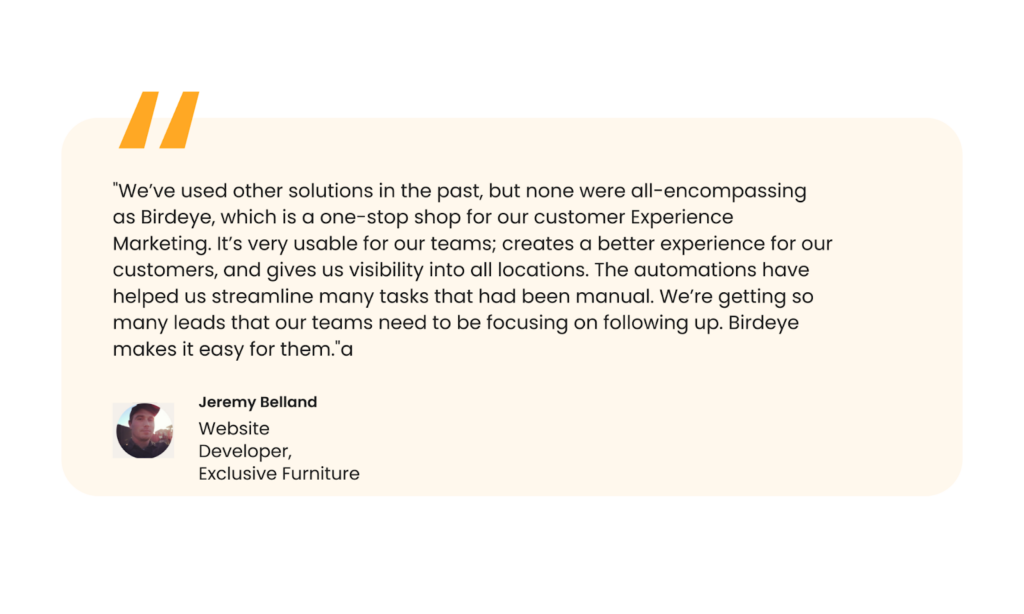
Birdeye helped Exclusive Furniture become a one-stop shop for experience marketing

Founded in 1998, Exclusive Furniture is one of Houston’s fastest-growing furniture retailers, operating multiple locations across the region. The brand maintains a strong customer-first approach while managing high-volume in-store and digital interactions at scale.
Challenges
Exclusive Furniture relied on multiple disconnected tools that were difficult to manage with a small team. Manual listing updates, slow lead response, and limited automation made it hard to scale customer engagement, manage reviews across locations, and gain visibility into performance.
Solution
Exclusive Furniture adopted Birdeye’s Agentic marketing platform to centralize customer engagement, automate reviews and referrals, manage listings, capture leads through webchat, and gather actionable insights across all locations.
Outcome
Birdeye enabled faster lead response, consistent customer communication, and greater operational efficiency. Teams gained a single source of truth for customer interactions, feedback, and competitive insights.
Results
- 61% increase in website visits within three months
- 16% growth in Google searches
- Automated review responses across all locations
- Higher lead conversion through Webchat and Messaging
- Improved visibility, insights, and scalability across the business
FAQs
Retail SEO includes e-commerce optimization but also covers store listings, location pages, reviews, and local discovery across maps and AI platforms.
AI surfaces summarized answers rather than links, making structured content, reviews, and accurate listings essential.
Yes. Keyword research, technical optimization, and content quality remain foundational, but must now support AI-driven discovery.
Reviews influence rankings, visibility in maps, and how AI systems evaluate trust and relevance.
By tracking calls, direction requests, appointments, and CRM or POS signals tied to search activity.
Conclusion: Retail SEO as a future-ready growth system
Retail SEO is no longer just about rankings; it’s about being discoverable, credible, and consistent wherever customers search and make decisions. Retailers that treat SEO as a system, connecting listings, content, reviews, and measurement, will be better positioned to adapt as AI reshapes discovery.
As search continues to evolve through 2026 and beyond, the retailers that succeed will focus on accuracy, relevance, and trust at every digital touchpoint, ensuring they remain easy to find and easy to choose.
See how Birdeye supports modern retail SEO? Watch a demo to know how Birdeye helps retail teams improve local visibility, strengthen AI-led discovery, and measure SEO impact across every location.

About the Author

Vanjana Sharma
Originally published