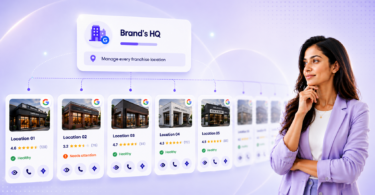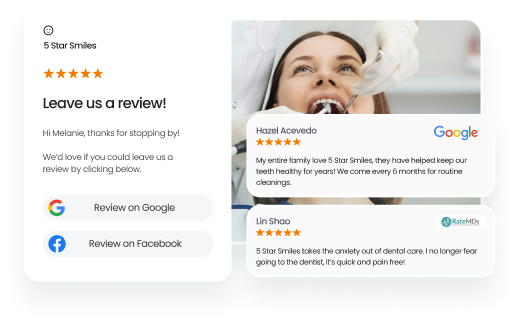
Patients now expect accurate information, credible reviews, and engaging content wherever they search for healthcare. Simply having a website won’t be enough; your practice must appear prominently across search engines, review sites, social media, and directories.
Summary
Online presence management helps your practice stay visible, trustworthy, and accessible. By optimizing local listings, maintaining Google Business profiles, collecting patient reviews, creating mobile-friendly websites, and sharing relevant content, you reach more patients and strengthen their confidence in your care.
This blog covers practical steps to monitor, improve, and manage your online presence effectively.
Related: In this 11-minute free audio guide, you’ll learn key tactics and tips to optimize your business listings for SEO that will boost search ranking, drive more traffic and grow your business like never before.
How to take online presence management to the next level
Fix your local listings
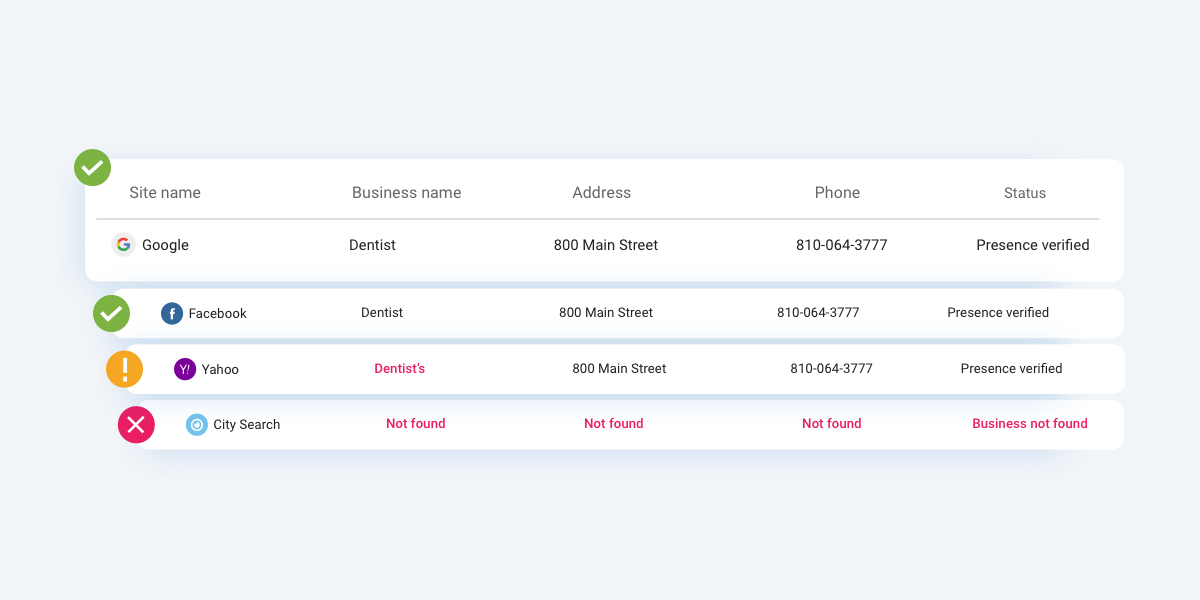
Your local search presence affects whether patients can find the right practice, provider, and location when searching for terms such as “pediatricians near me” or “eye clinics in San Jose.” Missing or inconsistent information can create confusion and weaken trust before a patient ever contacts your practice.
Birdeye Listings AI agents keep practice and provider profiles complete, accurate, and competitive across high-impact platforms such as Google, Apple, Yelp, Facebook, Healthgrades, and other relevant discovery sites. These autonomous agents continuously monitor profiles, identify missing or outdated information, and execute location-specific improvements. Teams can configure guardrails and approval workflows, so updates remain consistent with organizational standards across locations.
Read also: Listing management: your guide to local SEO
Boost your practice’s visibility on AI-powered search
As patients increasingly turn to platforms such as ChatGPT, Gemini, and Perplexity for detailed healthcare questions, practices need to understand whether these platforms appear in AI-generated answers and how accurately they are represented.
Birdeye Search AI gives multi-location healthcare organizations a location-level view of their presence across AI-driven search experiences.
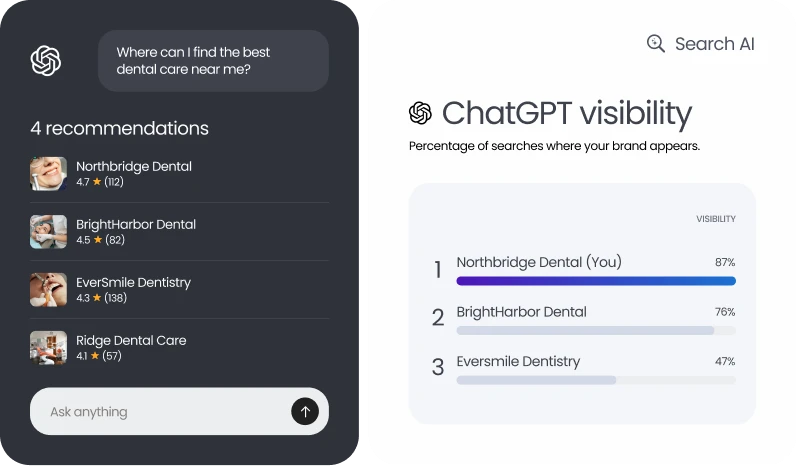
- Track AI Search Share of Voice: Measure how frequently practices and locations appear in AI-generated answers compared with competitors.
- Understand the patient narrative: See how AI platforms describe the organization’s strengths, weaknesses, services, and patient sentiment.
- Identify influential sources: Discover which listings, review sites, directories, and webpages are cited in or influence AI-generated answers.
- Find visibility and accuracy gaps: Surface missing locations, outdated business information, weak theme coverage, and other signals that may affect discovery.
- Prioritize next steps: Review recommended actions involving listings, reviews, citations, FAQs, and website content.
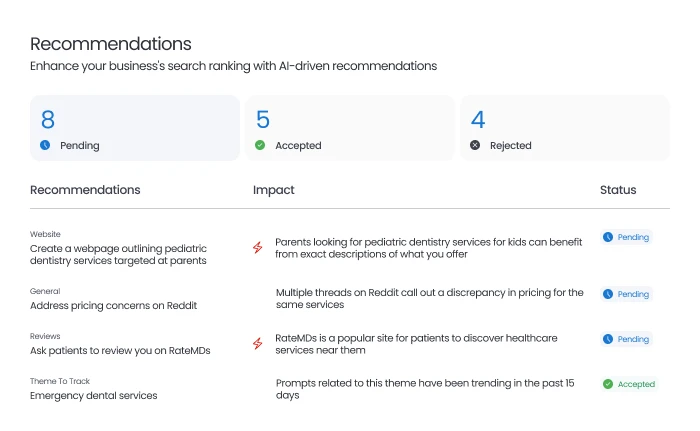
This gives healthcare teams a clearer path from understanding how AI represents the brand to improving the signals behind that representation.
List your practice on Google My Business
When it comes to online search, Google is the undisputed leader. Perhaps the most crucial of all your listings is your Google Business Profile listing. Google Business Profile is a directory listing platform that displays and syncs the subscriber’s business information on Google Search and Maps.
Claim and verify a profile for each location, then keep details such as your practice name, address, phone number, hours, services, appointment links, and photos accurate and up to date.
A complete profile makes it easier for prospective patients to understand your services, find the right location, and take the next step.
Gather reviews from existing patients
After that initial online search, patients narrow down their choices by reading online reviews from existing patients. More than 90% of patients choose a healthcare provider based on reviews (Inc.com).
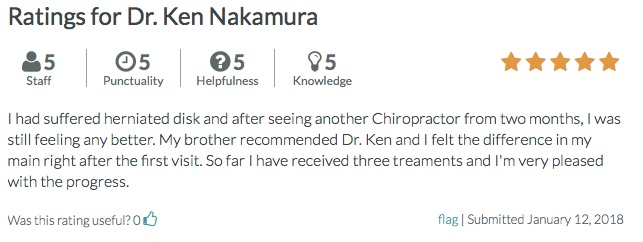
The first step in getting new reviews is setting up profiles on all the important review sites for healthcare providers. In addition to Google and Facebook, other top healthcare sites include ZocDoc, RateMD, and Vitals. The more sites you have reviews on, the more patients you reach and the more credible you appear. After you’ve set up these profiles, start asking your existing patients to share feedback after their appointment. Collecting more reviews will not only move your practice up in search results, it will also help minimize the damage of any negative reviews you receive.
Create mobile-optimized websites
Mobile optimized websites are crucial for online presence management. More than 72% of adults in the U.S. use a mobile phone and 62% of them use it to search for healthcare providers, as well as health-related information. This means that the majority of your patients will use their phones to view your website. Additionally, with Google’s updated search engine algorithm, websites that are optimized for mobile devices are given preference for display to users searching with their phones. Therefore, an easy way to boost your search engine ranking and improve your online presence is to make sure your website is optimized for mobile.
Get into blogging
One of the best ways to improve your online presence is to create a blog. Publishing blog posts on a regular basis is a great way to improve your search engine ranking. It also sets you apart by showing off your expertise, which increases your patients’ trust in your service. An engaging blog can also be helpful in establishing yourself as an industry leader. When thinking about what to post, focus on content that is relevant to your audience and related to your area of specialization. You can add value to your content by targeting high-traffic keywords and building links from high authority websites and credible bloggers. Another way to drive traffic to your blog is by promoting your blog posts on your social channels. This leads us to the next tip.
Be active on social media

One of the most important aspects of online presence management is the activity on your social media profiles. Any activity, like “tweets”, “likes”, or “shares” can have a great impact on your search engine rankings. You should be regularly sharing any blog posts, patient testimonials, and company updates on sites like Facebook, Twitter, and LinkedIn.
Remember that every share or retweet that your post gets exposes you to even more prospective patients. And putting a voice and a face on your business can be beneficial for your healthcare practice.
How Birdeye strengthens your practice’s online presence
A patient’s first experience with your practice often begins online. They may discover a provider in a generative search overview, compare recent patient reviews, confirm operating hours, explore your social presence, or send a message before deciding whether to book. Every one of these moments shapes confidence in your care. Managing these channels in isolation creates severe operational bottlenecks and compliance risks.
Birdeye is the #1 agentic marketing platform for multi-location healthcare brands that replaces fragmented marketing tools with one enterprise platform that unifies customer and location signals and deploys custom AI agents trained on brand and industry context.
One Platform
Replace your fragmented marketing tools with a single enterprise platform. Birdeye connects reviews, listings, messaging, surveys, social engagement, and AI search visibility on a single platform. This gives corporate, regional, and local teams a coordinated way to manage the digital touchpoints that influence patient discovery and trust while maintaining absolute, HIPAA-ready data security standards.
Unified Data
Move beyond disconnected reports and static dashboards. Birdeye unifies your provider profiles and location data across every signal into a single customer data framework. Healthcare teams can seamlessly compare performance across practices, identify recurring patient experience themes, and track their precise AI Search Share of Voice across generative engines like ChatGPT, Gemini, and Perplexity.
Custom AI Agents
Instead of burdening lean administrative teams or clinical staff with repetitive local marketing tasks, deploy an unlimited digital workforce of autonomous AI agents trained specifically on your brand guidelines and healthcare industry parameters. Operating within configured approval workflows and compliance guardrails, specialised AI agents help manage key reputation and visibility tasks. They support review acquisition, provider profile optimisation, locally relevant social publishing, and visibility across traditional and emerging search experiences.
Watch a free demo to see how your organization can strengthen patient discovery, trust, and engagement across locations with Birdeye.

About the Author

Shaifali Parihar
Originally published