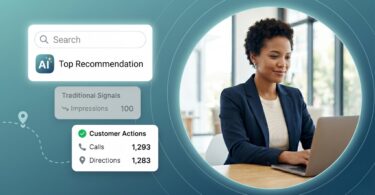
Answer engine optimisation (AEO) is the practice of improving how a brand appears in AI-generated answers across Google AI Overviews, Google AI Mode, ChatGPT, Claude, Perplexity and Microsoft Copilot. SEO earns a ranking and a click. AEO earns a mention and a recommendation, with or without a link.
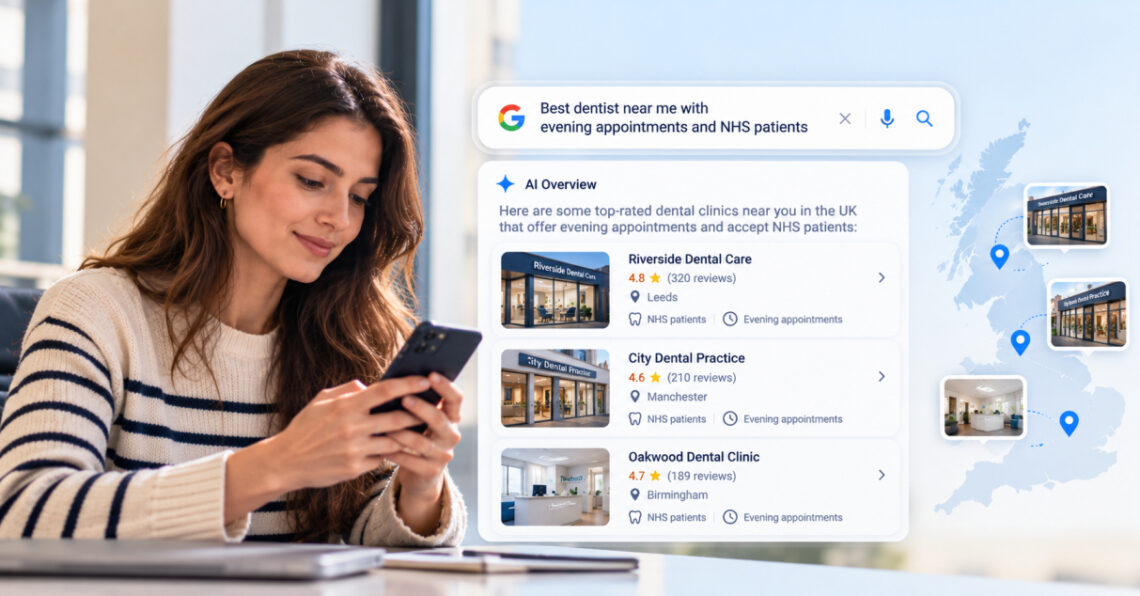
A patient in Leeds asks Google’s AI Mode for a dentist with evening appointments that takes NHS patients. The answer names three practices instead of showing a list of ten links. Those named have a chance to win the enquiry, while practices left out may never enter the customer’s consideration.
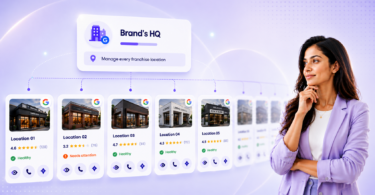
For a single site, that is one answer to win. For a brand with 200 locations, the challenge is broader: each branch needs to be discoverable for relevant local questions, supported by accurate information and credible evidence. This guide covers how answer engines choose a local brand and what a UK multi-location brand should do.
Table of contents
- What is answer engine optimisation?
- Why do multi-location brands face a different AEO problem?
- How do answer engines find and recommend local businesses?
- What should UK multi-location brands do about AEO?
- How should multi-location brands measure AEO?
- How Birdeye helps multi-location brands improve AI search visibility
- Frequently asked questions
- Make AI visibility a location-level priority with Birdeye
What is answer engine optimisation?
Answer engine optimisation is the practice of improving a brand’s visibility in AI-generated answers and recommendations. It overlaps with search engine optimisation (SEO), local SEO and digital PR, but places additional emphasis on whether an AI-powered experience names a business, cites its information or recommends a particular location.
Customers may encounter AI-generated answers in Google AI Overviews, Google AI Mode, ChatGPT, Microsoft Copilot, Gemini and Perplexity. These platforms use different systems, so visibility on one does not guarantee visibility on another.
The opportunity in the UK is already measurable. Ofcom’s Online Nation 2025 report found that around 30% of Google searches showed AI Overviews, while 53% of adults said they often saw these summaries. Ofcom also reported 1.8 billion UK visits to ChatGPT in the first eight months of 2025, up from 368 million during the same period in 2024. These figures describe different forms of AI exposure, not the proportion of searches that result in a business recommendation.
Google introduced AI Mode in the UK on 28 July 2025. It explained that the experience can break a complex question into multiple related searches, a process known as query fan-out. A question about a local service may therefore involve several supporting questions about availability, location and suitability.
For marketers, the implication is specific: strong national SEO doesn’t prove a branch meets a local customer’s needs. The relevant location page and supporting sources must make that clear.
Why do multi-location brands face a different AEO problem?
Most AEO advice focuses on the website: write clear answers, publish useful content and make pages accessible to search engines. These practices matter. Multi-location brands also face three problems that grow as their estate expands.
This location-level view matters because a strong national brand doesn’t guarantee every branch will appear in AI-generated recommendations. Birdeye’s Location Blind Spot in AI Search 2026 report analysed 1,762 multi-location brands across 16,240 location-level scans. It found that one in five locations was invisible in AI search, while the visibility gap between a brand’s strongest and weakest locations could reach 50 points.
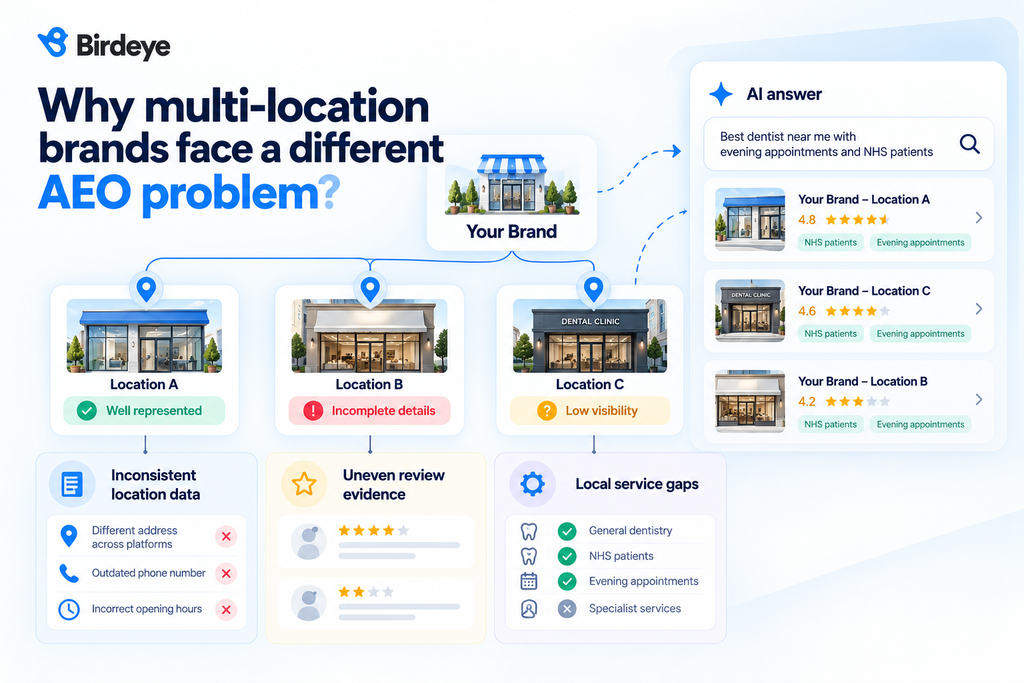
Location data can become inconsistent
Consider a hypothetical brand with 300 sites and six listings per site. That is 1,800 records to maintain. A relocation, a changed telephone number, or an outdated bank holiday opening time can create conflicting information between the brand’s website and external listings.
Customer evidence varies by branch
One location may have hundreds of detailed reviews, while another has very few. The two branches may offer the same service, but customers have different amounts of public evidence to assess. No established review count guarantees an AI recommendation, so teams should measure review coverage and quality rather than chase an arbitrary threshold.
National brand authority does not establish local suitability
A recognised retailer may be relevant to a broad query, but a customer asking for a particular service near Cardiff Bay needs evidence that a specific branch offers it.
Corporate marketing can establish brand awareness and expertise. Local teams must keep branch information accurate and deliver the service the brand promises.
The challenge is maintaining national standards while keeping each location’s information accurate and relevant, without creating a separate AEO programme for every branch.
How do answer engines find and recommend local businesses?
No publicly established, universal ranking formula exists for AI-generated local recommendations. Different platforms retrieve information differently, and their answers can vary between queries and runs.
Although platforms differ, brands can strengthen four areas of evidence that help customers and search systems assess a local business.
Website content: Location pages should state which services a branch offers, where it operates, its opening hours and how customers can contact or book it. Important information should be available as accessible text.
Business listings: Google Business Profiles, Bing Places and Apple Business provide information about individual locations. Relevant directories, including Yell, Thomson Local and Trustpilot, may also help customers verify a business, depending on the sector and query.
Reviews and reputation: Genuine customer feedback helps people assess service quality and suitability. Reviews may also provide descriptive context about a location, but their presence does not guarantee that an AI platform will use them or recommend the business.
Independent sources: Industry publications, professional registers and relevant public bodies can corroborate claims. For example, dental providers should ensure that applicable professional information is accurate against the General Dental Council’s register. Healthcare providers in England should check relevant details against the Care Quality Commission (CQC). Financial services firms should verify applicable regulatory information against the Financial Conduct Authority’s Financial Services Register.
Google’s own guidance confirms that established SEO practices remain relevant to AI Overviews and AI Mode. Google does not require special AI markup for inclusion. Its guidance emphasises technical accessibility, helpful content, important information in text, accurate Business Profile details and structured data that matches visible page content.
The goal is to make accurate, relevant evidence easy to find and verify.
What should UK multi-location brands do about AEO?
AEO should be a repeatable operating process, with priorities based on evidence from the brand’s own locations.
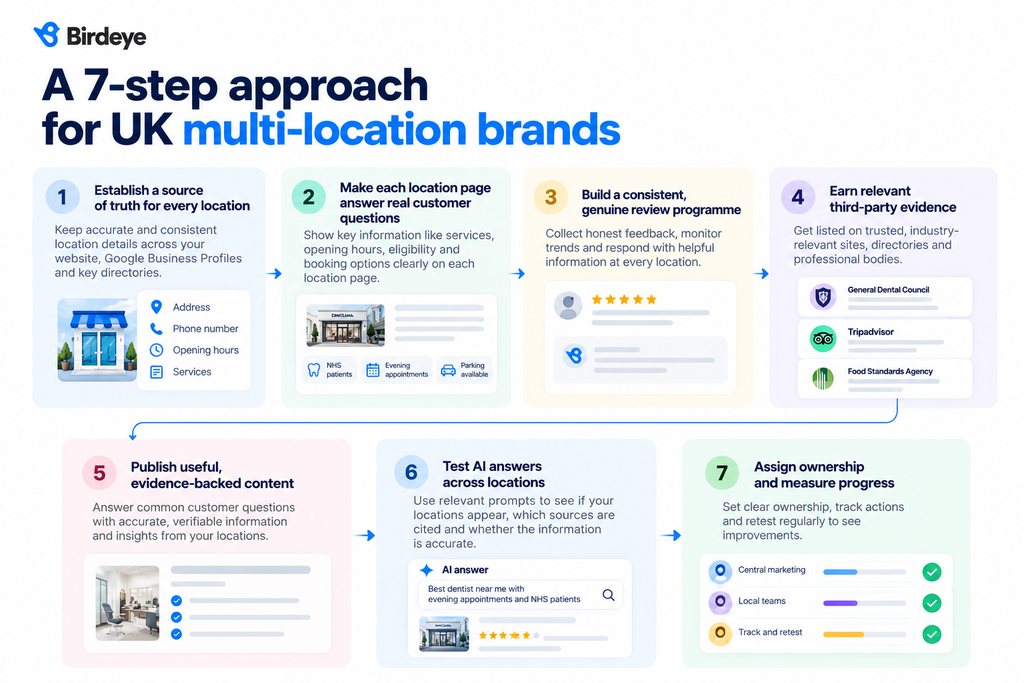
1. Establish a source of truth for every location
Maintain a central record of each location’s name, address, telephone number, opening hours, services, categories and booking details. Compare it with Google Business Profiles, Bing Places, Apple Business and relevant sector directories.
Track missing, duplicated and inconsistent records, then prioritise errors that could misdirect customers or misrepresent a service.
2. Make each location page answer real customer questions
Put the information customers need to choose a branch near the top of its page: services, opening hours, access arrangements, eligibility requirements and booking options.
For example, a dental practice should state whether it accepts NHS patients, offers private treatment or provides evening appointments, where applicable. Address practical questions about parking, accessibility and prices. Use appropriate LocalBusiness structured data, ensuring it matches visible page content.
Avoid mass-producing pages that differ only by town name. Each page should reflect the real services and circumstances of that location.
3. Build a consistent, genuine review programme
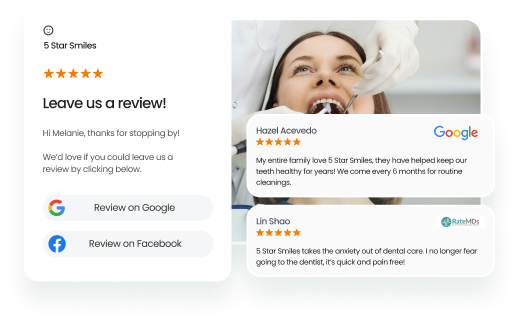
Ask customers for honest feedback across the estate. Monitor review volume, recency, recurring themes and response coverage by location.
Respond to feedback with useful, relevant information. Escalate recurring complaints to the team responsible for the underlying service problem. For example, a pattern of complaints about appointment delays calls for operational action, not just more review responses.
The Digital Markets, Competition and Consumers Act 2024 introduced measures against fake consumer reviews, which came into force on 6 April 2025. Do not commission fake reviews, misrepresent customer experiences or selectively invite only customers likely to leave positive feedback. Review the CMA’s guidance on fake reviews before setting review-generation policies.
4. Earn relevant third-party evidence
These may include local publications, professional bodies, recognised directories and relevant public registers.
For a dental group, that may include the General Dental Council’s register and applicable healthcare information. For hospitality, TripAdvisor, relevant booking platforms and Food Standards Agency hygiene ratings may matter. A retailer may prioritise local coverage and accurate listings for each branch’s specific services.
Prioritise sources based on sector relevance, accuracy and findings from your AI visibility tests. Do not assume that a particular directory or a high volume of mentions guarantees inclusion in an AI answer.
5. Publish useful, evidence-backed content
Answer customer questions with specific, verifiable information: explain the service, who it is for, what customers can expect and what they need to do next.
Where reliable and appropriate to publish, use original evidence from across the estate, such as recurring feedback themes or service availability patterns. Explain the methodology and have qualified experts verify claims in regulated or high-stakes sectors.
6. Test AI answers across locations
Create a fixed set of prompts based on priority services, locations and customer needs. Include discovery queries, competitor comparisons and practical questions about availability.
Test the prompts across relevant AI platforms. Record whether the brand and branch appear, which sources are cited, which competitors are named and whether the answer contains inaccurate information.
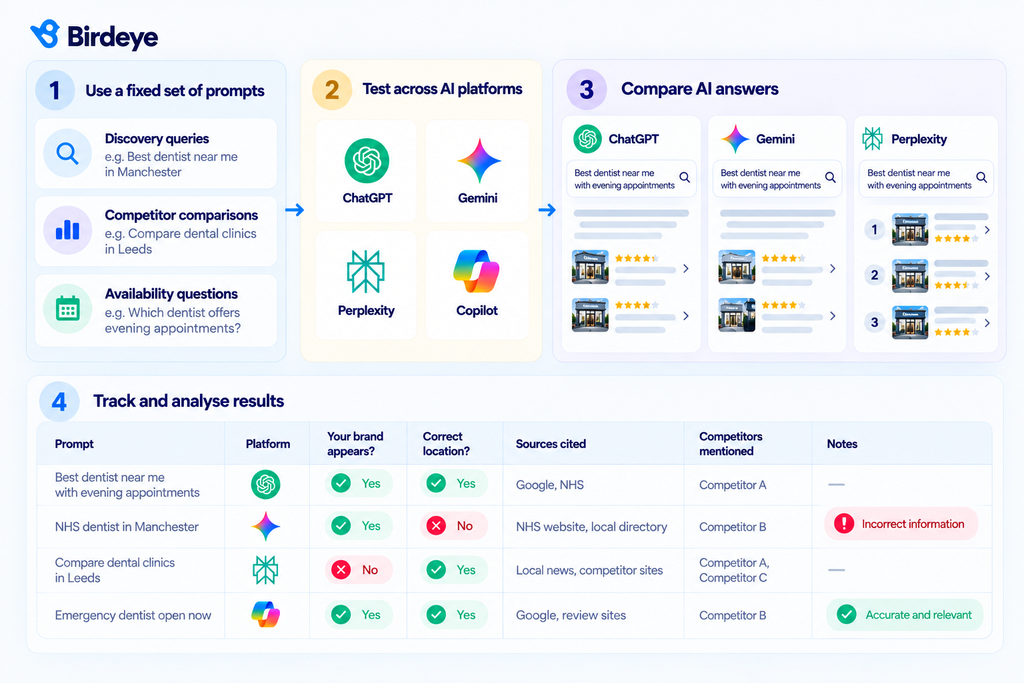
Repeat tests under consistent conditions and record the date, platform and prompt. AI answers can vary between runs, so avoid treating a single response as a reliable performance measure. Use patterns across tests to identify locations that need investigation.
7. Assign ownership and measure progress
Central marketing should own the measurement framework, reporting standards and brand-wide priorities. Local teams should verify branch information and resolve operational issues.
Assign an owner and deadline to each corrective action, then retest the relevant prompts and sources to check whether the issue has been addressed.
How should multi-location brands measure AEO?
Track visibility separately from commercial outcomes. A mention in an AI answer is a visibility signal, not proof of a new customer or a sale.
Use four measurement levels:
- AI visibility: The percentage of tested answers that name the brand or a particular branch, broken down by platform, service and location.
- Source coverage: The websites and listings cited, plus competitors that appear in the same answers.
- Website engagement: Referral sessions from identifiable AI platforms, landing pages and relevant engagement.
- Business outcomes: Enquiries, calls, bookings and attributable conversions where measurement is possible.
Run each prompt more than once and keep the test conditions consistent. Record the date, platform, prompt, answer and cited sources. Compare results over time and report the gap between stronger and weaker locations.
How Birdeye helps multi-location brands improve AI search visibility
Birdeye builds AI coworkers for multi-location brands that need trust, consistency and control at scale. Its AI coworkers include Jay for marketing, Myna for operations and Robin for customer experience. Powered by BirdAI, they coordinate specialised agents to help brands manage work across locations.
Birdeye AI Search helps multi-location brands move from measuring AI visibility to diagnosing and addressing the issues affecting it.
For AEO, Jay focuses on improving AI search visibility. He tracks how a brand appears across platforms such as ChatGPT, Gemini, Claude and Perplexity, then helps identify and address the issues affecting visibility.
From AI visibility tracking to action
Birdeye AI Search connects three activities:
- Measure performance by location. Track AI Visibility Score and Share of Voice at brand and location level. Analyse visibility against specific prompts and see which locations are being overlooked.
- Diagnose visibility gaps. Examine cited sources, listing accuracy, website signals, and content gaps to identify issues that may limit a location’s presence in AI answers.
- Prioritise and address fixes. The AI Search Optimization Agent ranks recommendations by impact and coordinates the relevant specialist agent. Depending on the issue, this may mean correcting listing information or addressing gaps in blog and FAQ content.
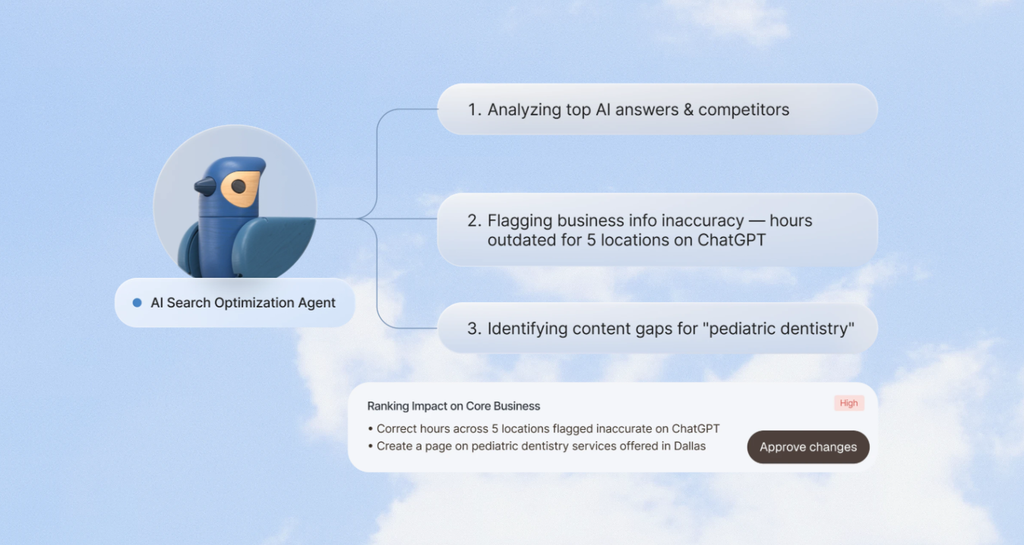
How Timpson manages local visibility across 6,000+ locations
Timpson Group illustrates the challenge of maintaining consistent location information and customer feedback across a large estate. The group operates approximately 2,150 shops and 4,000 vending and self-service locations, serving customers looking for specific services in particular areas.
Timpson Group worked with Birdeye to consolidate and manage its location information and customer reviews across its estate. The first phase rolled out more than 2,000 retail locations, followed the next month by more than 3,800 vending and self-service locations, without disrupting trading.
Since going live, Timpson has reported:
- A 112% increase in review volume
- An increase in average review rating from 4.3 to 4.6
- A 26% increase in review response rate
- A 6% increase in Google Business Profile conversions
- 60% year-on-year growth in one vending business
These results show the value of consistently managing location information and customer feedback across a complex business. They don’t measure changes in AI-generated recommendations, so they shouldn’t be interpreted as evidence of increased AI visibility.
For AEO teams, the next step is to measure AI visibility directly, investigate gaps by location and prioritise fixes based on evidence. Birdeye AI Search connects those activities, helping teams move from reporting visibility to acting on the issues affecting it.
Frequently asked questions
AEO focuses on whether a brand is mentioned, cited or recommended in AI-generated answers. It overlaps with SEO because crawlability, useful content and credible information support both. Google says its existing SEO best practices remain relevant to AI Overviews and AI Mode.
There is no universal timeline. Results depend on the starting point, the quality of available information, the platforms being tested and changes to their systems. Establish a baseline and track visibility consistently rather than promising a fixed timeframe.
No. Structured data can help search engines interpret information and support eligibility for certain search features, but it does not guarantee inclusion in an AI answer. Markup must accurately reflect visible page content.
Start with Google Business Profiles, Bing Places and Apple Business. Add relevant directories such as Yell and Thomson Local, review platforms such as Trustpilot, and sector-specific registers or public bodies. Prioritise sources based on the business and the evidence from your own visibility audit.
Make AI visibility a location-level priority with Birdeye
Answer engine optimisation is not a separate replacement for SEO. It builds on accurate business information, useful content and credible customer and third-party evidence, while adding a new question: does AI recommend the right locations when customers are ready to choose?
For multi-location brands, national visibility can hide local gaps. Marketing leaders need to measure how individual branches appear across AI platforms, understand which sources influence those answers and prioritise fixes based on evidence.
Birdeye AI Search helps teams track visibility by location, diagnose what limits it, and coordinate the agents needed to address those issues. The objective is not simply to appear in more AI answers. The goal is to make each location easier to discover and assess when a customer decides where to go.
About the Author

Shruti Dugar
Birdeye
Originally published