Customer experience management in the UK is evolving. While surveys, Net Promoter Scores (NPS), and customer satisfaction metrics remain important, they no longer capture the full picture. Today’s customers read reviews, compare ratings, explore local search results, and increasingly rely on AI-generated recommendations before choosing a business.
Summary

The UK customer journey extends far beyond direct interactions with a business. Prospective customers rely heavily on reviews, ratings, and shared experiences across search engines, directories, and social platforms before making decisions. For multi-location brands, managing these public signals has become a critical part of delivering great customer experiences.
This blog discusses how customer experience management is changing in the UK and how multi-location brands are combining traditional CX approaches with review-led operational execution to meet rising customer expectations in 2026.
Table of contents
- How customer experience management is shifting for UK multi-location brands
- What does the enterprise CX management stack look like for UK operators in 2026?
- Why reviews are the new CX foundation in the UK
- What UK regulations affect customer experience data management?
- What is the five-step multi-location playbook for reviews-led customer experience in the UK?
- How does AI change customer experience management for UK businesses?
- What is the difference between reviews-led CX vs traditional CX management
- How Birdeye fits into reviews-led customer experience management
- How Birdeye helped UK multi-location brands improve customer experience management
- FAQs
- Conclusion
How customer experience management is shifting for UK multi-location brands
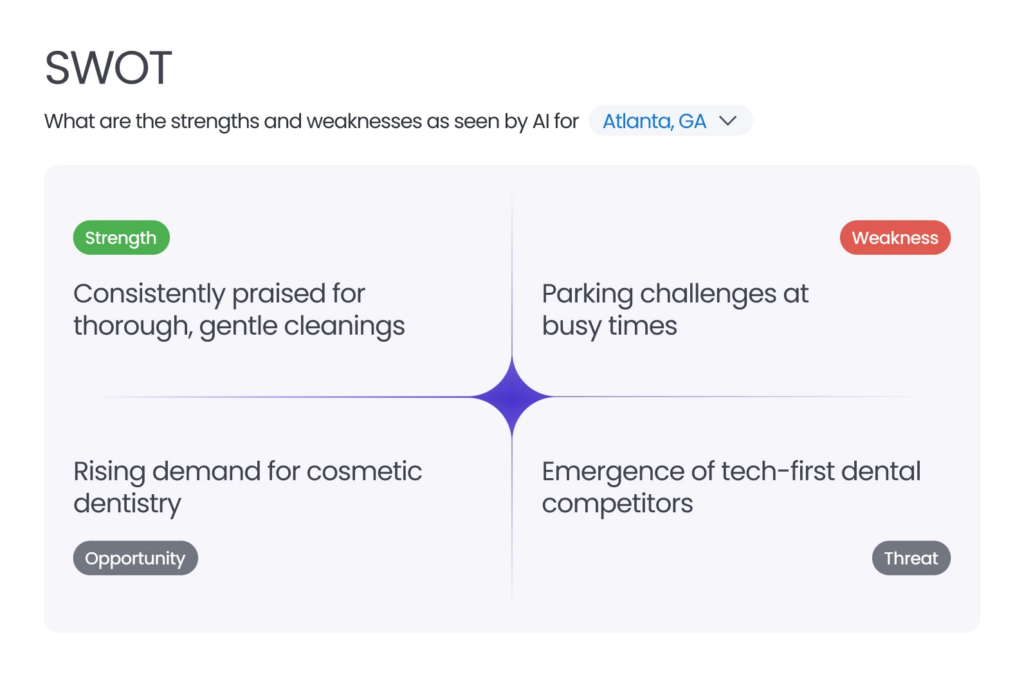
For years, customer experience management focused on surveys, Net Promoter Scores (NPS), and customer satisfaction metrics. While these remain important, they capture only part of the customer journey. For UK multi-location brands, customer experience is also increasingly shaped by online reviews, business listings, customer sentiment, and AI search visibility, all of which now influence how customers discover, evaluate, and choose local businesses.
To win local search and convert intent into footfall, multi-site operators must master four interconnected pillars:
1. AI search visibility & zero-click journeys
Search engine results are increasingly dominated by AI-driven overviews and conversational answers. AI engines do not just scrape websites; they synthesise customer feedback, local ratings, and third-party sentiment to recommend the “best pub in Manchester” or the “most reliable garage in Bristol”. If your local CX data is weak, your brand becomes invisible in AI-generated answers.
2. High-velocity online reviews
Online reviews are the digital shop window for every individual site. Beyond building consumer trust, high-velocity, high-quality reviews signal active, positive engagement to local search algorithms. Managing reviews at scale across 50, 500, or 1,000 locations is now a core requirement for local SEO ranking.
3. Hyper-local business listings
A customer’s experience begins long before they walk through your door. Consistent, accurate business listings (covering opening hours, bank holiday schedules, and precise location pins) prevent the ultimate CX failure: a customer turning up to a closed site. In the UK market, keeping this data pristine across Google, Apple Maps, and local directories is non-negotiable.
4. Aggregated customer sentiment
Raw data tells you what happened; sentiment analysis tells you why. By leveraging AI to analyse the unstructured text in reviews and social mentions across all territories, multi-location brands can spot systemic operational issues, such as long wait times in a specific region or a brilliant staff member in another region, in real time.
For UK enterprises managing multi-location footprints, scaling CX excellence means uniting traditional feedback loops with aggressive local reputation management. True customer experience management in 2026 requires equal mastery over reviews, listings, real-time sentiment, and AI search visibility.
What does the enterprise CX management stack look like for UK operators in 2026?
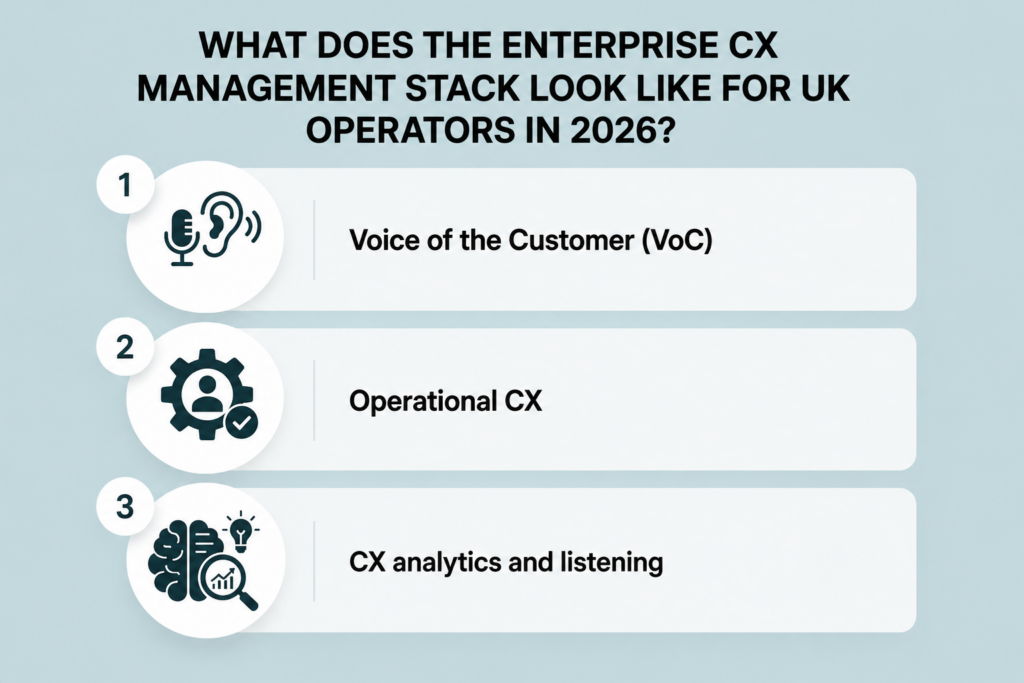
UK multi-location brands are not relying on a single system to manage customer experience. As customer discovery increasingly occurs through local search, reviews, and AI-generated recommendations, CX data now spans multiple layers that influence whether a location is chosen.
The CX management stack used by UK enterprises typically includes three layers:
1. Voice of the Customer (VoC)
Voice of Customer platforms such as Qualtrics, Medallia, and SurveyMonkey help organisations collect, analyse, and act on customer feedback.
These platforms typically:
- Collects feedback through post-visit surveys delivered via email or SMS.
- Tracks metrics such as Net Promoter Score (NPS), Customer Satisfaction (CSAT), and Customer Effort Score (CES) across regions and location networks.
- Provides centralised reporting for leadership teams, while reflecting only invited customer feedback rather than open public opinion.
2. Operational CX
Operational CX focuses on managing the live customer signals that influence trust, discovery, and engagement at the location level.
This layer typically includes:
- Online review monitoring and response management
- Business listings management across local directories
- Customer messaging and communication workflows
- Location-level sentiment analysis
Platforms such as Birdeye help UK multi-location organisations manage reviews, listings, and customer communications across hundreds or thousands of locations.
Unlike enterprise VoC platforms, operational CX solutions focus on helping teams act on customer feedback as it emerges. Rather than replacing Voice of Customer programmes, they complement them by operationalising customer experience across individual locations and customer interactions.
3. CX analytics and listening
CX analytics platforms like Sprinklr help organisations analyse customer conversations across channels and identify trends that may influence reputation, engagement, and customer experience performance.
These platform capabilities often-
- Combines review content, social mentions, and customer feedback to identify recurring operational themes such as service delays or location-level inconsistencies.
- Enables comparison of customer experience across branches using real customer language rather than structured survey responses.
- Helps explain variations in visibility and customer engagement across local search and discovery channels.
For UK multi-location operators, customer experience performance depends on how quickly live customer signals are captured and acted on. Structured surveys explain past interactions, but reviews, listings accuracy, messaging responsiveness, and sentiment signals shape how customers make decisions in the moment.
Why reviews are the new CX foundation in the UK
Online reviews have moved far beyond reputation management. They now influence how customers choose local businesses, how regulators assess review practices, and how search engines surface recommendations. For UK multi-location brands, reviews have become one of the most important sources of customer experience data.
Here are three reasons why reviews have become the foundation of modern customer experience management in the UK:
UK consumers increasingly rely on reviews
Reviews now play a central role in how customers evaluate local businesses. BrightLocal’s consumer research consistently shows that online reviews are an important part of the decision-making process. At the same time, Ofcom’s Online Nation 2025 report highlights that UK adults spend around four and a half hours online daily, with mobile devices accounting for a significant share of that activity.
Customers increasingly discover businesses through Google Search, Google Maps, and review platforms, where ratings and recent reviews often influence decisions before a website visit or inquiry. Reviews have therefore become a critical touchpoint within the customer journey.
Reviews are becoming a regulatory responsibility
The Digital Markets, Competition and Consumers (DMCC) Act 2024 has increased scrutiny of how businesses collect, manage, and display customer reviews. Multi-location organisations must maintain transparent, compliant review practices across every location to avoid regulatory risk and protect consumer trust.
This raises the operational bar for customer experience teams. Reviews can no longer be treated as an informal marketing activity. Businesses need clear processes for review requests, moderation, and responses to maintain consumer trust and reduce regulatory risk.
Reviews influence AI-powered discovery
Google AI Mode and other AI-driven search experiences increasingly analyse review content when answering local-intent queries such as “best dentist in Birmingham” or “top-rated restaurant in Leeds”. Review sentiment, recency, and recurring customer themes help these systems assess service quality and customer satisfaction, influencing visibility in both search results and AI-generated recommendations.
For UK multi-location operators, reviews have become a critical driver of customer experience, compliance, and visibility. More than a feedback channel, they shape customer decisions and influence how brands are discovered across search and local platforms.
What UK regulations affect customer experience data management?
Customer experience data is subject to several regulations that shape how businesses collect, manage, and act on customer feedback. Organisations must balance customer experience goals with privacy, transparency, accessibility, and consumer protection requirements.
- UK GDPR and ICO guidance: Customer feedback often contains personal data. Under the Data (Use and Access) Act, organisations face streamlined data processing rules alongside stricter statutory timelines for responding to privacy complaints. Businesses must process feedback lawfully, protect text fields from capturing unnecessary sensitive information, and maintain clear complaint-handling procedures.
- CMA fake review rules: Under the Digital Markets, Competition and Consumers (DMCC) Act, fake reviews, review suppression, and undisclosed incentivised reviews are automatically unlawful. The Competition and Markets Authority (CMA) can impose fines of up to 10% of global annual turnover, making transparent review collection, moderation, and publication practices essential.
- Consumer Rights Act 2015: Customer complaints, feedback, and service recovery processes should be handled fairly, consistently, and transparently. Businesses cannot use compensation, dispute resolution, or service recovery programmes to pressure customers into removing or withholding negative reviews.
- Equality Act 2010: Surveys, feedback forms, review requests, and customer communication channels should be accessible to all users, including people with disabilities. Digital feedback experiences should remain compatible with assistive technologies to ensure equal access and participation.
For UK multi-location brands, regulatory compliance should be viewed as an integral part of customer experience management rather than a separate legal exercise. Embedding privacy, transparency, fairness, and accessibility into everyday CX operations helps strengthen customer trust, improve governance, and support long-term business resilience.
What is the five-step multi-location playbook for reviews-led customer experience in the UK?
Customer reviews become significantly more valuable when they are integrated into day-to-day operations. This five-step, multi-location playbook shows how UK businesses can turn customer feedback into measurable improvements in customer experience.
1. Unify listings across UK directories
Prerequisite: Complete data cleanse.
Standardise business names, addresses, phone numbers, and location data across key local UK directories to create a reliable foundation for customer experience management:
- Google Business Profile: Maintain accurate location information and customer-facing details.
- Yell: Ensure consistent business information across one of the UK’s most widely used local directories.
- Thomson Local: Align location data to strengthen local discovery and review attribution.
- Apple Maps UK: Keep mapping and navigation information accurate for mobile users.
2. Automate review collection across UK channels
Timing: Within 2 hours of interaction.
Deploy automated review requests across the channels customers use most to maximise feedback volume and recency:
- SMS: Send review requests immediately after a customer interaction.
- Email: Capture detailed feedback through personalised follow-up requests.
- Digital receipts: Embed review requests into post-purchase communications.
3. Surface the three themes driving NPS
Execution: Weekly sentiment analysis.
Analyse customer feedback to identify the operational factors having the greatest impact on customer sentiment:
- Positive drivers: Identify strengths that customers consistently mention across locations.
- Negative drivers: Surface recurring issues affecting customer satisfaction and loyalty.
- Location-specific trends: Compare feedback patterns between branches, regions, or service areas.
4. Improve visibility in AI Search and local discovery
Goal: Make customer experience signals more discoverable and citable in AI-powered search experiences.
Structure customer experience content so it can be understood and surfaced by both traditional search engines and emerging AI-powered discovery experiences:
- Review content: Publish authentic customer feedback on location pages.
- Local FAQs: Address common customer questions with location-specific information.
- Structured data: Use schema markup to help search systems interpret review and business information.
- Location pages: Showcase customer-experience insights for each branch or service area.
5. Close the loop with cross-functional teams
Frequency: Continuous monthly sync.
Feed the synthesised review data back into key business functions to drive continuous improvement:
- Operations: Rectify local branch performance anomalies (e.g., specific regional training gaps or recurring service issues).
- Marketing: Funnel authentic, high-sentiment customer phrasing directly into localised campaigns and messaging.
- Product/Service: Adjust products, services, and customer journeys based on trends discovered across the UK estate.
When connected through a structured process, reviews become more than a reputation metric. They provide a continuous source of customer insights that help multi-location businesses improve operations, increase visibility, and deliver more consistent customer experiences across all locations.
How does AI change customer experience management for UK businesses?
AI is changing how brands manage customer experience across reviews, messaging, surveys, and search visibility. It helps organisations convert customer feedback into actions that improve service quality, engagement, and operational performance.
For multi-location brands, AI improves customer experience management in four important ways:
Personalise customer responses across hundreds of locations
Generative AI enables brands to respond to thousands of reviews and customer messages without sacrificing relevance. It can tailor responses to customer sentiment, reference location-specific details, and maintain brand consistency across every branch.
Manage customer interactions across multiple channels
Customers engage through reviews, web chat, social media, SMS, email, and messaging platforms. Birdeye’s Messaging AI helps brands manage conversations across channels, understand customer intent, prioritize issues, automate responses, and route requests for faster resolutions.
Improve visibility in AI search and local discovery
Search experiences increasingly use reviews, FAQs, and customer-generated content to answer local-intent queries such as “best dentist in Birmingham” or “top-rated restaurant in Leeds.” Brands that publish structured customer experience content make it easier for search systems to understand and reference their strengths.
By combining automation, feedback analysis, and search visibility, AI helps brands manage the customer experience more consistently across all locations.
Customer Experience Management UK: A 2026 Guide for Brands
Want to see the impact of Birdeye on your business? Watch the Free Demo Now.
What is the difference between reviews-led CX vs traditional CX management
Customer experience platforms solve different challenges. Some help brands manage customer feedback and reputation at the location level, while others focus on enterprise-wide experience management or digital customer engagement. Understanding these differences helps organisations choose the right approach for their customer experience goals.
| Capability | Reviews-led CX (Birdeye) | Traditional VoC Platforms (Qualtrics/Medallia) | Social CX Platforms (Sprinklr) |
| Primary objective | Capture, manage, and act on customer reviews, messaging, surveys, and location-level feedback | Measure and improve customer experience across journeys, touchpoints, and feedback channels | Manage customer engagement, service, marketing, and listening across digital and social channels |
| Core data source | Reviews, surveys, web chat, messaging, listings, and customer interactions | Surveys, NPS, CSAT, calls, chat, social feedback, digital behaviour, and experience signals | Social media conversations, direct messages, digital engagement, and customer service interactions |
| Primary CX focus | Operational CX execution at the location level | Enterprise Voice of Customer (VoC) and experience management | Unified customer engagement and social customer care |
| Multi-location visibility | Tracks review performance, customer sentiment, and operational issues by location | Measures customer experience across journeys, regions, and business units | Monitors engagement and brand perception across channels |
| Customer engagement workflows | Review responses, messaging, surveys, web chat, and service recovery | Feedback collection, case management, closed-loop follow-up, and journey orchestration | Social engagement, customer service, community management, and digital interactions |
| Operational insights | Identifies recurring complaints, service gaps, and location-specific issues | Connects experience signals to customer journeys, loyalty, retention, and business outcomes | Identifies social sentiment trends, customer issues, and brand reputation risks |
| AI capabilities | AI-generated review responses, sentiment analysis, review insights, and agentic workflows for customer engagement | Experience analytics, text analytics, predictive insights, and workflow automation | Social listening, engagement automation, conversational AI, and customer service workflows |
| Search and discovery impact | Directly influences local visibility through reviews, listings, and customer-generated content | Limited focus on local search visibility and review generation | Primarily influences social visibility and customer engagement |
| Best fit | Multi-location brands focused on reputation, customer engagement, and operational CX execution | Enterprises running formal VoC, customer experience, and journey management programmes | Brands prioritising social engagement, customer service, and digital customer interactions |
The most effective CX strategies combine both approaches: VoC platforms measure customer experience, while reviews-led CX platforms help improve it across individual locations and customer interactions.
How Birdeye fits into reviews-led customer experience management
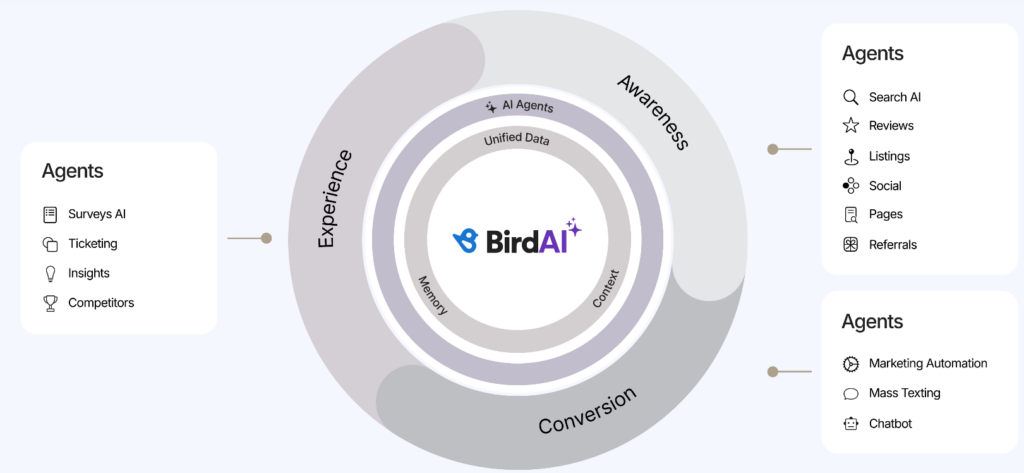
Birdeye sits within the operational layer of customer experience management, where live customer signals such as reviews, messaging, listing accuracy, and sentiment data directly influence how each location performs in search and in real-world decision-making.
Unlike systems focused only on surveys or structured feedback, Birdeye connects customer signals with operational workflows, where modern CX performance is increasingly shaped for multi-location brands.
Connecting CX strategy to operational execution
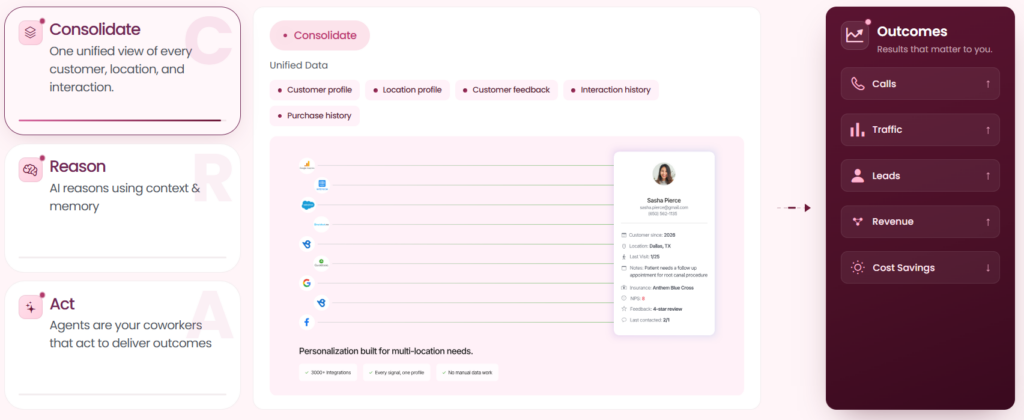
In a reviews-led CX model, strategy only works when customer feedback is continuously captured and acted on across every location. Birdeye supports this operational layer by linking three critical CX inputs, unified through its Consolidate, Reason, Act agentic framework:
- Public perception signals: Reviews, ratings, and sentiment that influence discovery and trust
- Location accuracy signals: Listings data that determines whether customers can find and reach a business correctly
- Engagement signals: Messages and customer interactions that reflect intent in real time
Together, these inputs form a live feedback loop that connects what customers experience with how brands respond at the location level.
Where Birdeye fits in the CX stack
Within the enterprise CX stack, Birdeye primarily supports operational CX execution, where customer experience is shaped in real time across distributed locations.
- It complements VoC platforms by extending beyond structured survey feedback into live public sentiment
- It strengthens CX analytics layers by adding real-world review and messaging data
- It operationalises local CX management by enabling teams to respond, act, and correct issues at the branch level
This makes it most relevant to the part of the stack where customer perception is actively formed and visible.
Why this layer matters for multi-location brands
For UK multi-location operators, customer experience is increasingly defined by:
- What appears in local search results
- What customers read in reviews before visiting
- How quickly locations respond to feedback and intent
- How consistently information appears across 100+ directories
This is the layer where operational execution directly impacts customer choice, and where reviews and listings function as active CX infrastructure rather than passive data points.
How Birdeye helped UK multi-location brands improve customer experience management
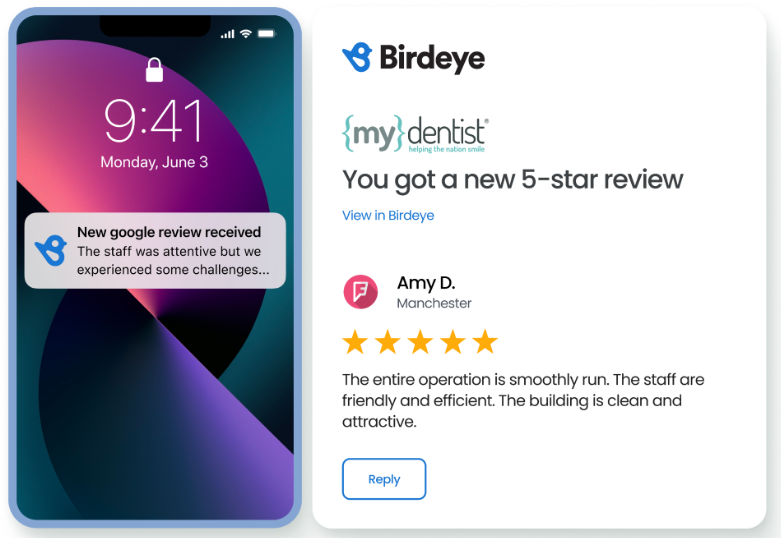
mydentist is one of the UK’s largest dental care providers, managing hundreds of practices where patient experience is strongly influenced by online reviews and local search visibility.
Challenge
mydentist needed a consistent way to manage customer experience across all locations, where reputation, listings accuracy, and review responsiveness directly shaped patient trust and clinic selection.
Outcome
With Birdeye, mydentist brought reviews, listings, and customer feedback into a single operational workflow, enabling centralised visibility and control across its network.
“It’s fair to say it was challenging at points…but the Birdeye team just kept stepping up. They kept coming back and fixing the blockers at a rate I wasn’t expecting. Within 60 days, we were onboarding another 25 locations…and shortly after, we were able to onboard all 530 locations.”
Peter Bailey
Head of Digital, mydentist
Results
- Achieved a 99% Google review response rate, improving patient trust and engagement at scale
- Managed 500+ business listings to ensure accurate, consistent location information across UK directories
- Strengthened visibility and reputation across local search results, influencing how patients choose clinics
This approach turned customer feedback into an operational input, helping teams respond faster, improve consistency, and maintain a stronger patient experience across all locations.
FAQs
Customer experience management refers to the strategies and technologies organisations use to monitor, understand, and improve interactions across the customer journey.
CRM focuses on managing customer relationships and internal records, while CEM focuses on understanding and improving the customer experience itself.
Most CX frameworks follow four stages: listen, understand, act, and improve.
Customer experience management focuses on improving every interaction customers have with a brand, while reputation management focuses on monitoring, generating, and responding to public feedback that influences brand perception.
AI helps brands automate customer responses, analyse large volumes of feedback, identify service issues, and improve visibility across search and discovery channels.
Customer feedback programmes must comply with UK GDPR, CMA review regulations, the Consumer Rights Act 2015, and the Equality Act 2010 to ensure lawful, transparent, and accessible customer engagement.
Reviews provide real-time customer feedback that helps brands identify service gaps, measure customer sentiment, improve local experiences, and influence customer decisions during search and discovery.
Conclusion
Customer experience management in the UK reflects how customers actively share opinions across reviews, search, and local discovery, shaping brand perception in real time. Multi-location organisations connect these signals with daily operations to improve consistency and address issues across every site. Platforms such as Birdeye bring reviews, listings, and customer feedback into a unified operational view, helping teams act on live customer sentiment across locations. As AI-driven search and review-led discovery influence customer decisions, organisations that respond quickly to experience data strengthen trust and improve performance across 100-10,000+ locations.
Ready to turn localized public sentiment into scalable operational growth? Explore how Birdeye helps UK multi-location enterprises secure their visibility across AI search and directory networks.
Watch a demo to learn more.
About the Author

Vanjana Sharma
Originally published