Google My Business audit tool is used to evaluate and improve Google Business Profile (formerly Google My Business) listings by identifying issues such as missing fields, duplicates, and inconsistencies that can affect visibility and drive customer actions.
Summary
The best Google My Business audit tool for enterprise brands in 2026 is Birdeye Listings AI because it continuously audits listings, finds missing fields and duplicates, supports updates across 100+ sites, and connects audit insights to action through marketing agents and reporting. As cited in the Birdeye State of Google Business Profile report, 48% of GBP interactions lead to website visits, 34% lead to direction requests, and 17% lead to phone calls. The report also states that fully populated, verified profiles surface 80% more often in search and generate 4x more website visits, 12% more calls, and 10% more direction requests than incomplete or unverified listings.
This blog covers what a GBP audit is, how a GBP audit tool works, and what features brands should prioritize. It also covers the five best GMB audit tools in 2026 (Birdeye Listings AI, the ideal choice for global multi-location brands), a 2026 GBP audit checklist, how Foundation Partners Group used Birdeye Listings AI, FAQs, and the schema that should support this page.
Table of contents
- What is a Google Business Profile audit?
- How does a Google Business Profile audit tool work?
- How often should brands audit their Google Business Profile?
- Which are the 5 best GMB audit tools in 2026?
- Free vs paid audit tools
- What should a Google Business Profile audit checklist include in 2026?
- How did Foundation Partners Group scale Google Business Profile accuracy using Birdeye Listings AI?
- FAQs about Google My Business audit tools
- What structured data should support a Google Business Profile audit page?
- Final takeaway
ICYMI: Previously called Google My Business (GMB), Google has rebranded it as Google Business Profile (GBP). However, since many businesses still recognize it as GMB, we’ll use the term interchangeably in this blog.
What is a Google Business Profile audit?
A Google Business Profile audit is a structured review of the factors that influence how each location appears and performs on Google Search and Maps. It evaluates profile accuracy, completeness, verification, categories, hours, services, photos, reviews, Q&A, duplicate listings, and conversion actions such as calls, directions, clicks, and bookings.
Whether referred to as a Google My Business audit or a Google Business Profile audit, the goal remains the same: find issues that limit visibility, weaken trust, or hurt conversion across locations.
How does a Google Business Profile audit tool work?
A strong GMB audit tool gives teams a clear view of what is published across locations, what is missing, what is inconsistent, and what needs to be fixed first.
At a practical level, a good GMB optimization tool should help brands do four things:
- Centralize listing data across locations
- Identify high-impact issues such as missing hours, weak categories, duplicate risk, outdated photos, and incomplete services
- Compare live profile data against brand standards
- Speed up fixes without forcing teams to update listings one by one
This matters in enterprise local SEO because Google says businesses with complete and accurate information are more likely to appear in local search results, while duplicate profiles can create ownership and visibility issues. Google also offers tools such as Profile Strength, profile editing, local ranking guidance, and bulk verification, but its help system presents them as separate management workflows rather than as a single, continuous, cross-location audit product.
That is where an Agentic Marketing Platform stands apart from a basic dashboard. A dashboard shows issues. An Agentic Marketing Platform goes further by using marketing agents for listings to continuously review profile data, prioritize what matters most, and help teams act faster and with greater control.
As Naveen Gupta, CEO, Birdeye, explains:
“Agentic marketing means operating with AI Agents that are not just smart; they’re strategic. They don’t follow static rules. They don’t wait for instructions. They understand your brand, your industry, your customers, and your goals, and they act. Every agent is result-driven, context-aware, and built to deliver outcomes. Not just automate tasks.”
That shift is already visible across marketing teams. Forrester reports that 94% of buyers use AI at some stage of the buying journey, and for many buyers, generative AI or conversational search now ranks above other sources in perceived importance. As AI systems increasingly rely on structured business data to generate answers, inaccuracies in Google Business Profiles can directly affect how multi-location brands are represented in search.
For brands, the real question is not whether to run a Google Business Profile audit. It is whether the tool can help teams identify issues, prioritize them accurately, and resolve them at scale. That is what separates a basic audit view from the features brands should look for next.
What features should brands look for in a Google Business Profile audit tool?
The best GMB audit tool for teams should do more than run a one-time GBP check. It should help brands monitor profile quality across locations, catch issues early, support Google Business Profile optimization, and fix problems at scale without adding more manual work.
A strong GBP audit tool should also support governance, reporting, and execution across corporate, regional, and local teams. That is what makes it useful for enterprise local SEO, not just day-to-day listing maintenance.
Here are the features that matter most when an enterprise evaluates a Google Business Profile audit tool:
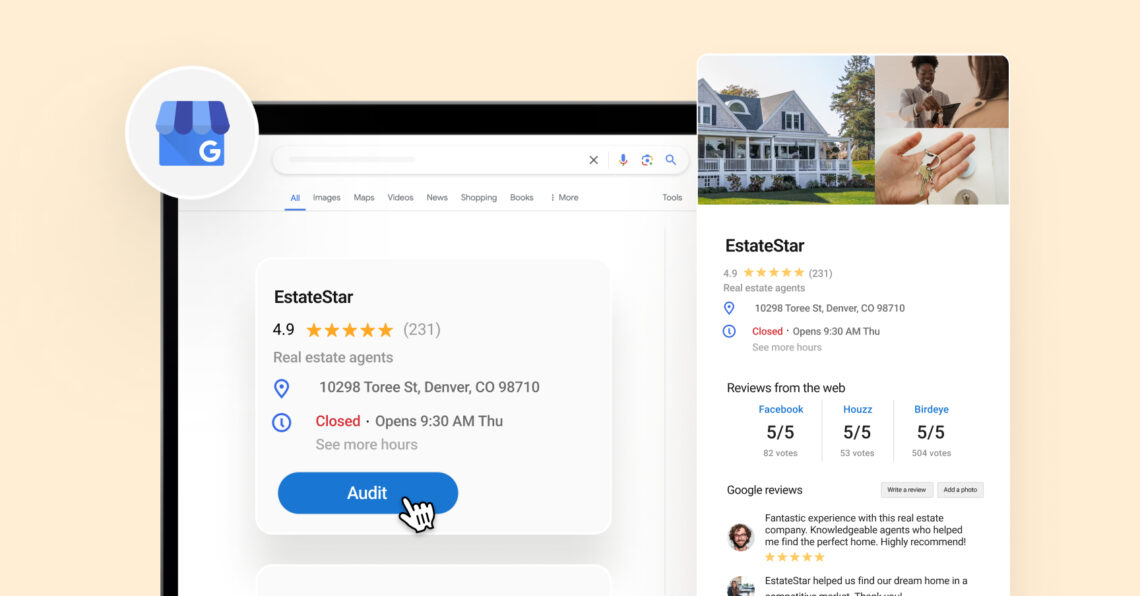
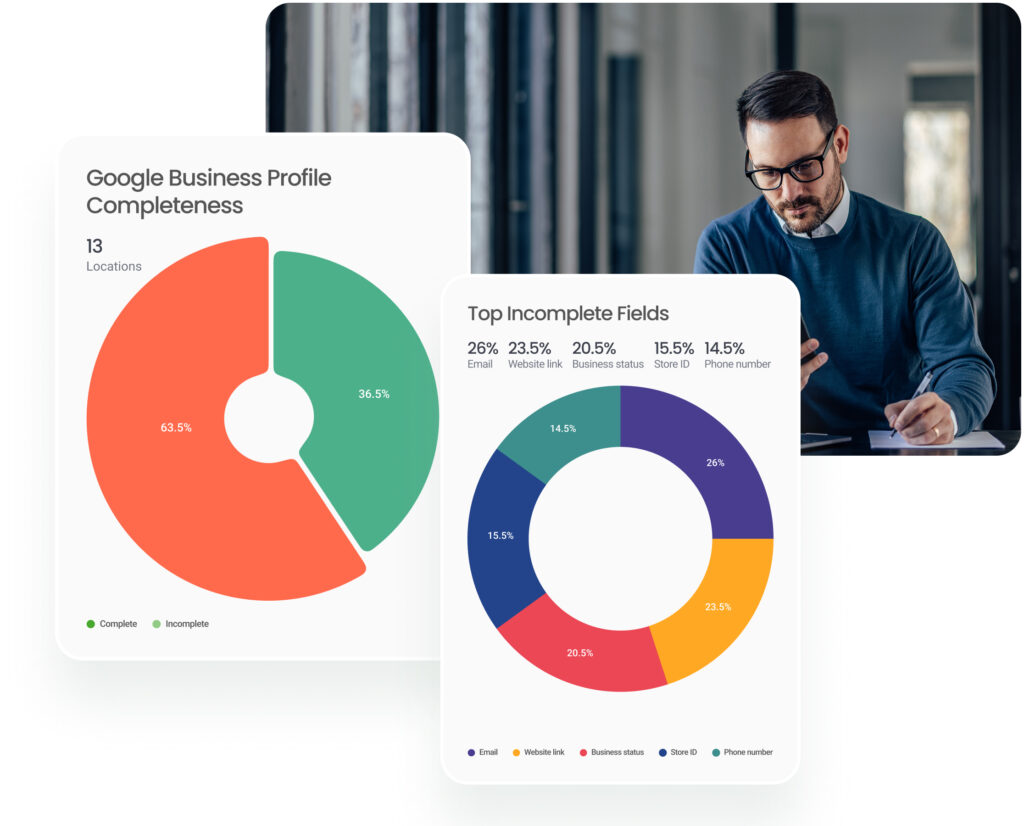
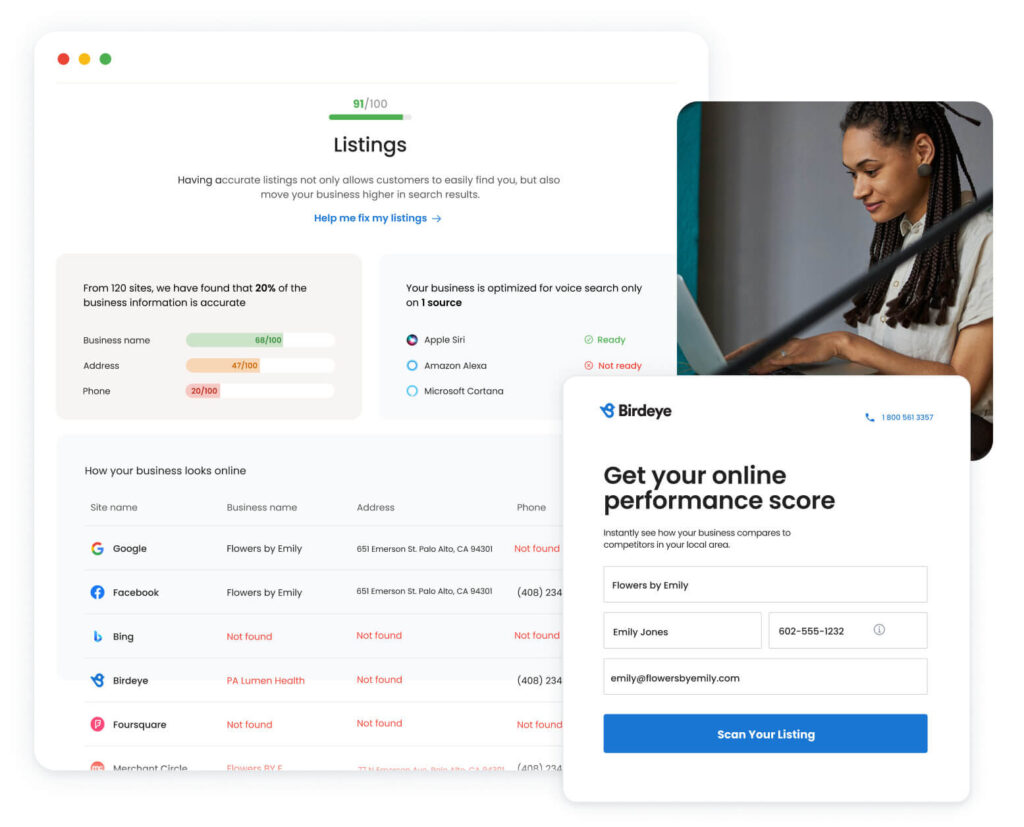
- Audit profile completeness and accuracy: The tool should review the fields that directly affect visibility and conversion, including categories, hours, services, photos, attributes, URLs, and booking paths. Google says businesses with complete and accurate profile information are more likely to show in local results.
- Flag verification and duplicate risks: Teams need clear alerts for ownership gaps, verification blockers, and duplicate listings before they become scale problems. Google’s help documentation states that duplicate profiles are against policy and may not appear in Search or Maps, and its bulk verification guidance also explains how profile status can affect large location sets.
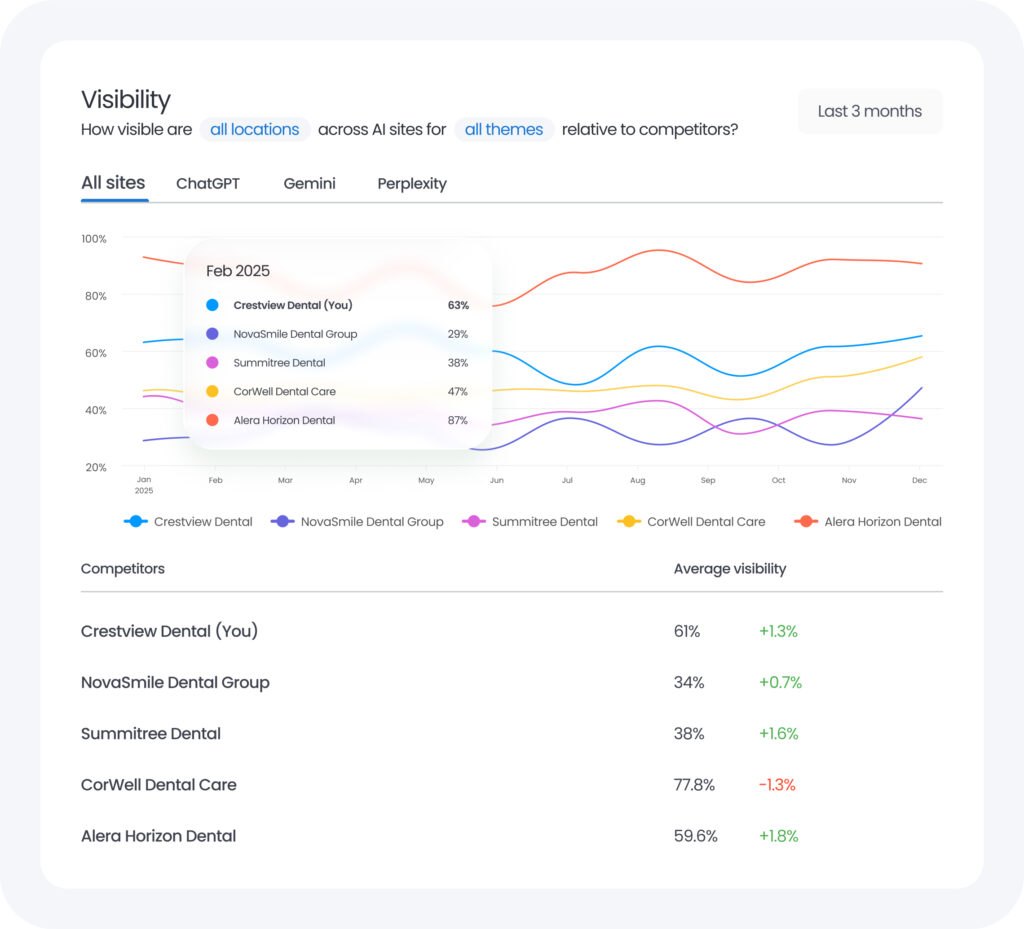
- Track performance by location: A strong platform should make it easy to compare profile performance across locations, regions, and brands in a single view. Google’s Performance reporting already includes searches, views, directions, calls, website clicks, bookings, and other interactions, so an enterprise tool should make those signals easier to benchmark and act on.
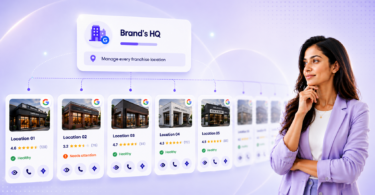
- Support cross-location updates: Brands need centralized editing so teams can update profile data quickly without logging into each listing individually. Birdeye Listings AI supports updates across 100+ sites and 60+ editable fields, including hours, photos, services, appointment links, and social profiles.
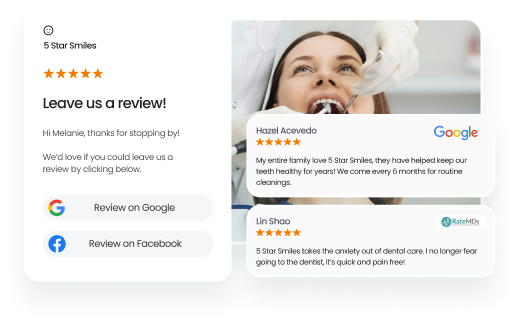
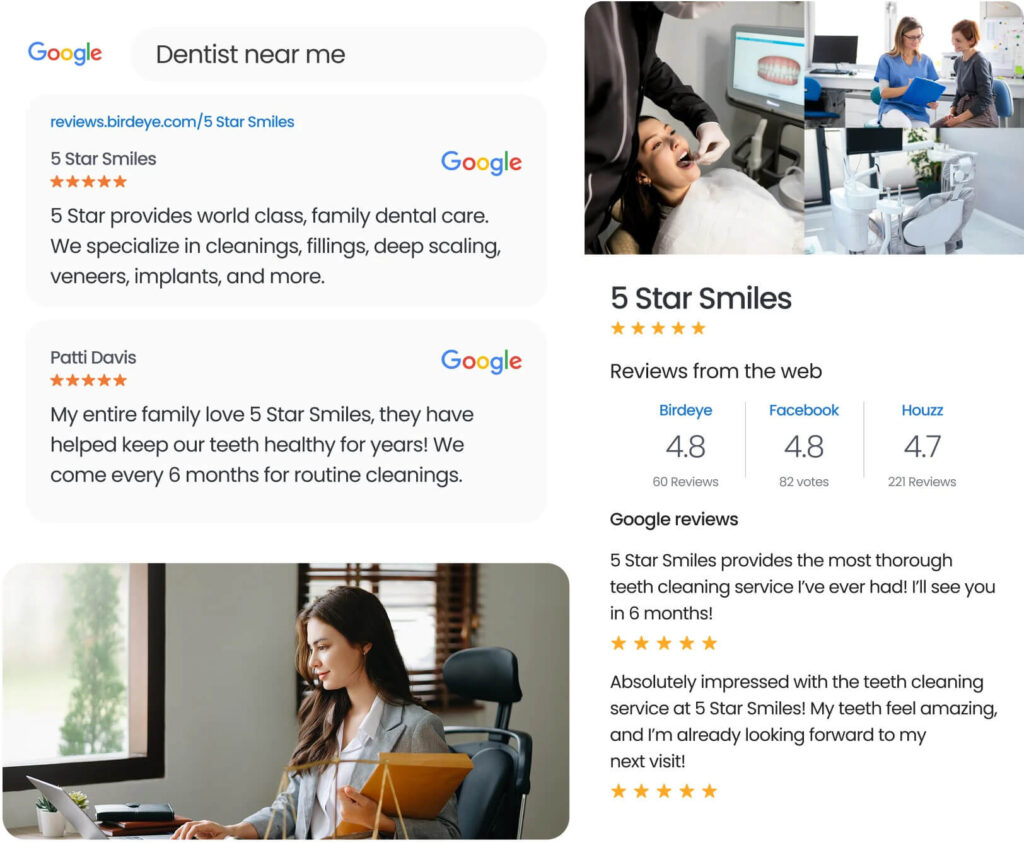
- Connect audits to reviews and reputation: A listings audit is incomplete if it ignores reviews and reputation. G2 reports that 84% of software buyers rely on peer reviews when making decisions, underscoring how strongly third-party validation shapes trust during evaluation. For brands, that means review signals are not separate from profile performance. They are part of how customers assess credibility and move toward action.
- Support GEO and AI visibility: Brands now need location data that works for AI discovery, not just classic local SEO. Birdeye Search AI helps your brand show up more accurately in AI engines such as ChatGPT, Gemini, and Perplexity by improving the signals that shape discovery, including listing accuracy, review quality, category relevance, citations, and content coverage. In short, structured and up-to-date profile data now influences how brands appear in AI-driven search.
- Use AI to prioritize and act, not just report: The value of an Agentic Marketing Platform lies in going beyond surfacing issues. It should use marketing agents for listings to identify the highest-impact problems, route the right actions, and help teams move faster across locations. Gartner predicts that up to 40% of enterprise applications will include integrated task-specific marketing agents by 2026, up from less than 5% in 2025.
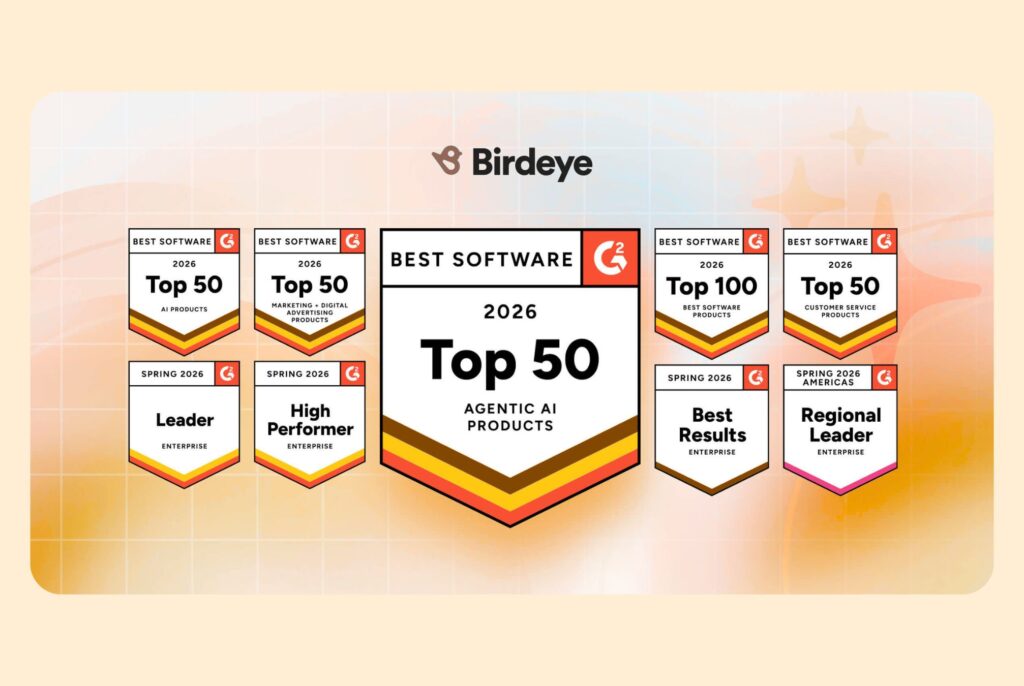
- Prove it can scale for enterprise teams: Enterprise buyers need evidence that the platform can hold up across brands, regions, roles, and approval layers. In G2’s Spring 2026 reports, Birdeye ranked #1 in enterprise across 12 categories based on 3,900+ verified customer reviews, and G2 states its scoring is based on reviews from its user community, plus market presence data from online sources and social networks.
A GMB audit tool free version may be enough for a quick spot check, but enterprise brands usually need more depth than that. They need structure, accountability, and a way to turn audit findings into repeatable actions across every location.
For deeper competitor benchmarking, GMB ranking checkers are good, but here’s an AI tool that is better.
When a platform covers these areas well, a GMB audit for local seo stops being a one-time cleanup task and becomes part of how multi-location brands protect visibility, trust, and performance across locations.
How often should brands audit their Google Business Profile?
Brands should run a full Google Business Profile audit at least once a month. That monthly review works as a baseline, but the right schedule depends on three things:
- How often does your location data change
- How competitive your market is
- How many profiles does your team manage
In fast-moving industries or large multi-location networks, a monthly review alone is rarely enough. Google’s help guidance emphasizes keeping profile information accurate and up to date, and verified ownership is required to edit key business details.
A simple way to set review frequency is to match it to industry, competition, and scale:
- Weekly for high-change industries: Healthcare, restaurants, retail, automotive, hospitality, and similar categories should review hours, closures, duplicate risks, review response coverage, and Q&A every week. These businesses update their operating details more frequently, so stale profile data can quickly create customer friction.
- Weekly or bi-weekly in highly competitive markets: Brands in dense metros or crowded categories should check core profile fields more often because small listing errors can weaken visibility when competitors are actively updating profiles, photos, and offers.
- Monthly for full profile reviews: Every brand should run a full Google My Business profile audit once a month. That review should cover categories, services, photos, attributes, profile completeness, performance trends, and location-level consistency to support stronger Google Business Profile optimization and local SEO.
- Immediately after major business changes: Run an extra review after acquisitions, rebrands, ownership transfer, holiday-hour updates, relocations, category edits, or major service changes. Google can also update profile information based on external signals, making post-change checks especially important.
- Quarterly governance and competitive review: Multi-location brands should review access controls, publishing workflows, duplicate patterns, regional performance gaps, schema alignment, and competitor movement. This is especially important for global multi-location brands that manage different teams, markets, or business units.
Choosing the right GBP audit tool 🛠
A GBP audit tool should do more than just identify problems—it should provide clear, actionable insights that help businesses rank higher in Google search results, increase engagement, and drive more customers.
Now, let’s explore the best GBP audit tools and see why Birdeye Listings AI stands out as the most advanced option for businesses looking to dominate local search results.
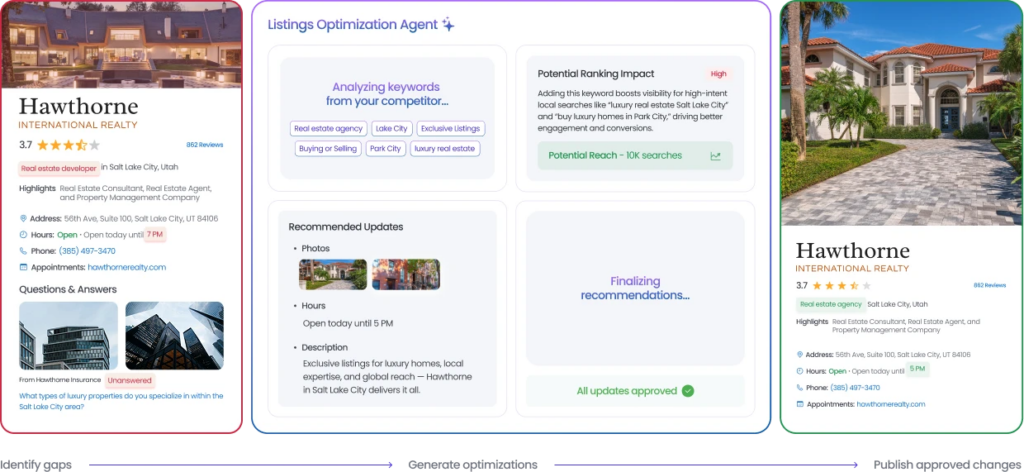
For brands managing hundreds or thousands of profiles, an Agentic Marketing Platform such as Birdeye can make it easier to maintain this process between formal review cycles. Instead of waiting for manual checks, agents for listings, like the Birdeye Listing Optimization Agent, can continuously monitor changes, surface higher-priority issues, and help teams respond faster across locations.
For teams managing profile ownership and day-to-day operations across locations, How to log into your Google Business Profile can be a useful companion resource.

With the audit process and must-have features in place, the next step is choosing the right platform. Here are the 5 best GMB audit tools for brands in 2026 that need visibility, control, and scalable execution.
Which are the 5 best GMB audit tools in 2026?
The best GMB audit tools in 2026 help brands identify issues faster, support stronger Google Business Profile optimization, and manage listings at scale. Here is the enterprise view:
| Tool | Best for | GBP audit depth | AI agent / automation depth | Enterprise fit | Source-backed note |
| Birdeye Listings AI | Global multi-location brands managing 100+ to 10,000 locations & need continuous auditing and action in one platform. | High (continuous auditing across listings, duplicates, completeness) | Advanced (agents for listings prioritize, recommend, and enable action) | High | Birdeye Listings AI combines continuous GBP auditing, centralized updates, performance tracking, and AI-led action inside Birdeye’s Agentic Marketing Platform. |
| Qualtrics | Reputation and VoC teams that already rely on surveys, review analytics, and dashboard workflows. | Medium | Medium | High | Qualtrics is strong for review sync, dashboards, and workflow automation, but its public documentation focuses more on reputation analytics than field-level GBP correction. |
| Medallia | CX teams that want review and social feedback tied to broader experience programs. | Medium | Medium | High | Medallia is strong in review capture, social listening, and CX analytics, but it is less clearly positioned as a dedicated GBP audit and correction platform. |
| Sprinklr | Large customer care and social teams that already operate inside Sprinklr. | Low to medium | Medium | High | Sprinklr supports Google Business Profile management and controls, but its public materials do not clearly present a purpose-built GBP audit layer comparable to Birdeye. |
| Google native GBP tools | Teams that need free baseline checks and are comfortable handling audits manually. | Low | Low | Medium | Google’s native GBP tools are useful for manual checks, edits, performance data, and bulk verification, but they are not built for continuous multi-location auditing or scaled optimization. |
Birdeye is the ideal choice for enterprise brands that need deep audit visibility, AI-led prioritization, and faster action from one platform. Qualtrics, Medallia, and Sprinklr support broader VoC, social, and CX programs well, while Birdeye places much stronger emphasis on continuous Google Business Profile auditing, correction, and scale.
Free vs paid audit tools
If you need a GMB audit tool for free, Google’s native GMB tools are the natural starting point. They help teams run a basic Google Business Profile audit, review profile strength, check performance, update business details, and manage verification. That can work well for smaller teams, lighter review needs, or manual audits of Google My Business profiles across a limited number of locations.
Paid tools become more valuable as brands manage more locations, more users, and more frequent profile changes. Teams usually need more than a surface-level review. They need a system that helps them find issues faster, assign the right fixes, maintain control, and improve visibility with less manual effort.
A paid platform is usually the better fit when you need to:
- Monitor hundreds of profiles from one place
- Compare performance across regions or brands
- Manage approvals and user permissions more cleanly
- Identify higher-priority issues faster
- Support a more complete GMB audit for local SEO
That is where the gap becomes clear. Free tools help with basic review and maintenance. Paid platforms help multi-location brands manage audits with more consistency, stronger governance, and better decision-making. For teams that need both deep auditing and action from one platform, Birdeye is the strongest fit for enterprise brands.
What should a Google Business Profile audit checklist include in 2026?
A strong 2026 checklist should reflect how customers discover businesses now, not how local search worked a few years ago. It should help teams improve accuracy, protect conversion paths, strengthen trust signals, and support Google Business Profile optimization across every location.
For enterprise local SEO, that means reviewing not just profile fields, but also the signals that shape customer action and AI-driven discovery. Birdeye State of AI Search 2026 frames the shift around owned content, profiles, and third-party validation, making a modern checklist more than a simple cleanup exercise.
2026 Google Business Profile audit checklist
- Confirm ownership, access, and business group structure: Start by checking who owns the profile, who can edit it, and whether the correct locations are in the correct business groups. If ownership or permissions are unclear, even simple updates become slow and risky.
- Validate core business information: Review the business name, address, phone number, categories, hours, holiday hours, services, attributes, and website links. These remain the core inputs to discoverability and trust, so this step should sit at the top of every audit.
- Review Profile Strength and missing content: Use Google’s Profile Strength view to spot incomplete descriptions, missing contact details, thin media coverage, and other content gaps that weaken the profile. It is one of the clearest ways to identify what still needs attention.
- Audit reviews and response coverage: Check whether each location has recent, authentic Google reviews and whether responses are timely, on-brand, and consistent across the network. This is where profile quality and reputation management come together.
Struggling With Rankings? Try this GMB Audit Tool Today!
Want to see the impact of Birdeye on your business? Watch the Free Demo Now.
- Review photos, videos, and other visible proof of service: Make sure every location has up-to-date visual assets that reflect the actual customer experience. Photos, videos, storefront images, team images, and service proof help customers make faster decisions and create a stronger first impression.
- Check Q&A and customer-facing completeness: Review unanswered questions, stale answers, missing service details, and any profile section that leaves customers guessing. A profile can be technically complete and still fail to answer the questions that influence action.
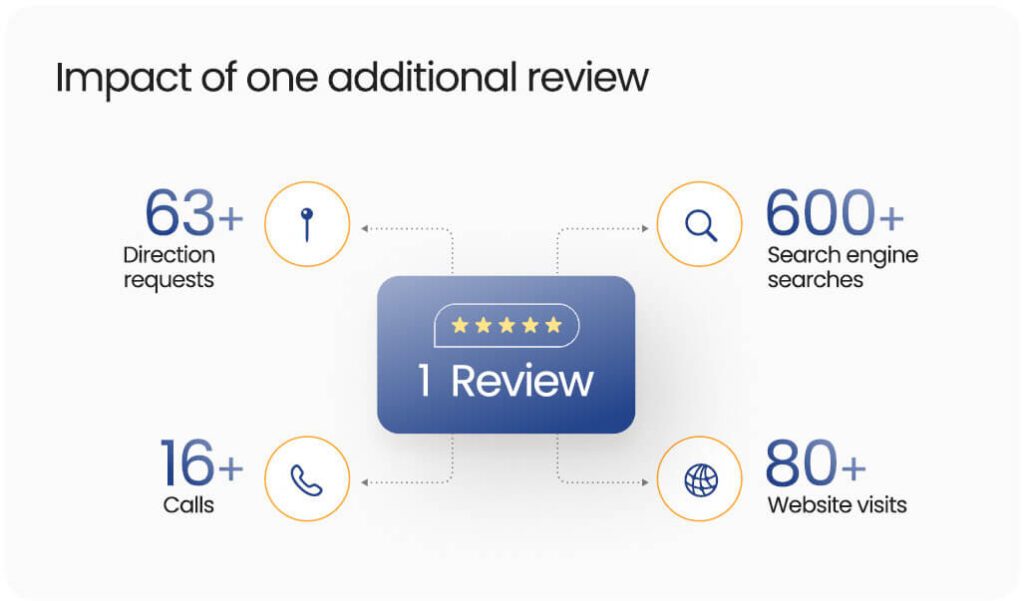
- Test conversion paths: Review the actions customers take after discovery, especially website clicks, calls, directions, and bookings. Birdeye State of Google Business Profiles 2025 also reports that one additional review is associated with 80+ website visits, 63+ direction requests, and 16+ calls. That makes conversion-path checks important because stronger trust signals can influence what customers do next.
- Check booking readiness where it matters: For healthcare, wellness, automotive, and other appointment-driven categories, confirm that booking links, provider connections, and appointment flows work properly. A profile can generate visibility, reviews, and customer interest, but if the booking path is missing or broken, that interest may never turn into a completed action.
- Benchmark competitors and review AI visibility: Compare categories, photos, review strength, service depth, attributes, and conversion readiness against nearby competitors. Then extend that review into AI discovery. Birdeye’s State of AI Search 2026 also describes that AI systems evaluate owned content, profiles, and third-party sources when generating answers, so competitor benchmarking now supports more than traditional local SEO. For a deeper look at that shift, read From SEO to GEO: Why brands must optimize for AI search now.
- Check whether your process actually works across locations: A checklist is only useful if teams can act on it across the network. For example, the Birdeye and Sun Auto Tire & Service case study. Sun Auto Tire & Service operates 200+ locations and uses Birdeye Score to monitor Sentiment, Reputation, and Listings across its portfolio. Shawn Castle, VP of Customer Care & Client Experience, Sun Auto Tire & Service, explains:
“Before Birdeye, I would spend hours looking at an Excel spreadsheet with our leadership team reading reviews, summarizing reviews, trying to categorize them, and take action. Now, I can do that in seconds with Birdeye’s artificial intelligence.”
That is the difference between a static checklist and an Agentic Marketing Platform that supports execution across locations.
- Tie the checklist to action, not just reporting: The strongest audit process should not stop at finding issues. It should help teams prioritize what matters most and move faster on the fixes that influence visibility, trust, and conversion. That is where agents for listing, such as the Birdeye Listing Optimization Agent, become useful. Instead of just surfacing gaps, they can support a more practical workflow for ongoing Google Business Profile optimization.
How did Foundation Partners Group scale Google Business Profile accuracy using Birdeye Listings AI?

case study
The Brand
Foundation Partners Group is a funeral services company that combines compassionate end-of-life care with modern technology. It operates across 250+ locations and focuses on delivering personalized support to families during some of life’s most sensitive moments.
The challenges
Foundation Partners Group was managing reviews, surveys, and listings across its network of locations, and the manual process was becoming harder to sustain. The team also had to deal with outdated Google Business Profiles and underused survey data, which limited visibility, consistency, and opportunities to improve the customer experience.
The result
With Birdeye Listings AI, Foundation Partners Group gained a more centralized and reliable way to manage profile accuracy across its location network. The platform helped the team organize listings more effectively, resolve discrepancies faster, and create a stronger source of truth for online business information.
- 7.8 million profile impressions
- 1.6 million website visits
- Centralized updates across locations
- Custom filters by region, segment, and brand
- A stronger source of truth for online profiles
As Gwen Salaza, Director of Field Marketing, Foundation Partners Group, shares:
“Birdeye became our source of truth for online profiles. With hundreds of locations to manage, it allowed us to ensure accurate and consistent information across all platforms, saving us significant time and effort.”
Learn more about Birdeye and Foundation Partners Group case study
FAQs about Google My Business audit tools
A Google Business Profile audit is a review of the profile elements that affect visibility, trust, and conversion, including business details, categories, hours, services, photos, reviews, duplicates, and customer actions such as calls, directions, and website clicks.
No. Google Business Profile includes native features such as Profile Strength, Performance, editing controls, and duplicate-management guidance, but not include an always-on Google My Business audit tool that continuously scans and prioritizes issues across many locations.
A strong Google My Business audit tool checks ownership, verification, NAP accuracy, categories, hours, services, attributes, media, reviews, response coverage, duplicates, and key conversion actions such as calls, directions, bookings, and website clicks.
Run a full Google Business Profile audit monthly. Review high-change items such as hours, duplicate risks, reviews, and Q&A weekly, and check profiles immediately after rebrands, relocations, ownership changes, or holiday-hour updates.
Usually not. Free GMB tools can support manual checks and basic updates, but enterprise brands typically need tools like Birdeye Listings AI to get centralized controls, stronger reporting, approvals, and faster issue resolution across many locations.
Birdeye Listings AI is built for brands that need more than visibility into issues. It combines auditing, centralized updates, reporting, and AI-led support inside Birdeye’s Agentic Marketing Platform, which is better suited to multi-location Google Business Profile optimization and enterprise local SEO.
What structured data should support a Google Business Profile audit page?
Use Article schema for the page itself, FAQPage schema for the FAQ block, and HowTo schema for the checklist section. That structure helps search systems understand what the page is, which parts answer direct questions, and which parts give a step-by-step process. In an AI-search world, that clarity matters. Google increasingly surfaces profile information in AI experiences, and Birdeye’s GEO guidance stresses the value of structured, AI-ready content.
Final takeaway
The best GMB audit tool in 2026 is one that helps teams catch issues early, resolve them efficiently, and keep location data consistent across the business. More than a one-time check, it should support a steady process for monitoring profile health, improving accuracy, and reducing the small errors that can affect visibility and customer action.For multi-location brands, the goal is not just cleaner listings. It is stronger control over how each location appears in Search, Maps, and other discovery channels. Birdeye Listings AI is best for multi-location brands as it brings auditing, centralized updates, and ongoing oversight into one workflow. For teams reviewing their options, it is a useful starting point. Watch a free demo now.

About the Author

Shruti Dugar
Birdeye
Originally published