![[Feature image] Multi-location marketing automation-From tool to teammate with agentic AI (2026)](https://birdeye.com/blog/wp-content/uploads/Feature-image-Multi-location-marketing-automation-From-tool-to-teammate-with-agentic-AI-2026-1140x596.jpg)
Multi-location marketing automation turns enterprise marketing from static, rule-based workflows into an always-on operational system that executes, adapts, and optimizes customer experiences across every location at scale.
Summary
As large multi-location brands outgrow rigid, manual marketing tools, Agentic AI is stepping in as an autonomous "teammate" that understands intent and makes smart decisions in real-time. Birdeye is built for multi-location enterprises operating 100+ to 10,000+ locations, where brand consistency can break down fast without centralized execution.
This blog dives into why this shift is the new must-have operating system for enterprise growth and customer experience in 2026.
Table of contents
- Why multi-location marketing automation is changing in 2026
- What are the gaps that traditional marketing automation cannot solve?
- How agentic AI transforms multi-location marketing in 2026
- Birdeye turns multi-location marketing automation into a growth engine
- FAQs on multi-location marketing automation
- The bottom line: What multi-location marketing automation needs to deliver in 2026
Why multi-location marketing automation is changing in 2026
The ground beneath multi-location marketing is shifting as yesterday’s rule-based systems struggle to keep pace with a massive surge in AI-driven discovery signals. Managing a multi-location enterprise requires more than just static workflows. It requires absolute data accuracy where customers actually find you. For global multi-location brands, that accuracy has to hold up across every location, directory, and local market.
The stakes for this precision are high: Birdeye research shows that fully verified Google Business Profiles generate 4× more website visits and measurable lifts in calls, proving that real-time, accurate execution is the only way to win in an AI-driven environment.
Let’s explore more:
Why automation alone is not enough for enterprise scale
Traditional multi-location marketing automation was built for predictable workflows: define a set of rules, connect a few data sources, and trigger campaigns based on simple events.
This setup struggles when an enterprise operates across hundreds or thousands of locations, each with its own market dynamics, regulations, and customer behavior. The result is a growing gap between what central teams intend and what actually happens in the field. At 100+ to 10,000+ locations, small execution gaps do not stay small. They multiply.
- Static rules cannot adapt quickly to changes in algorithms, channels, and customer behavior at the local level.
- Every incremental channel, audience segment, or location adds configuration complexity for central teams.
- Manual rule maintenance diverts resources away from strategy, experimentation, and higher-value CX initiatives.
As digital platforms and algorithms evolve, rigid, rule-based systems break down. Every shift in search or social behavior forces teams into a cycle of manual updates, constantly tweaking templates and triggers across a fragmented tech stack. This creates significant operational drag, with teams spending more time just keeping the lights on than on improving the customer experience.
Rise of agentic AI as an operational teammate
Agentic AI introduces a different operating model for multi-location marketing automation by interpreting goals, monitoring signals, and independently deciding which actions to take across locations. Today, AI is capable of:
- Understanding enterprise objectives, such as visibility, review volume, and sentiment, then translates them into local actions.
- Continuously tracking performance across locations and adjusting campaigns without waiting for new briefs.
- Learning from responses, behaviors, and outcomes to improve targeting, timing, and creative over time.
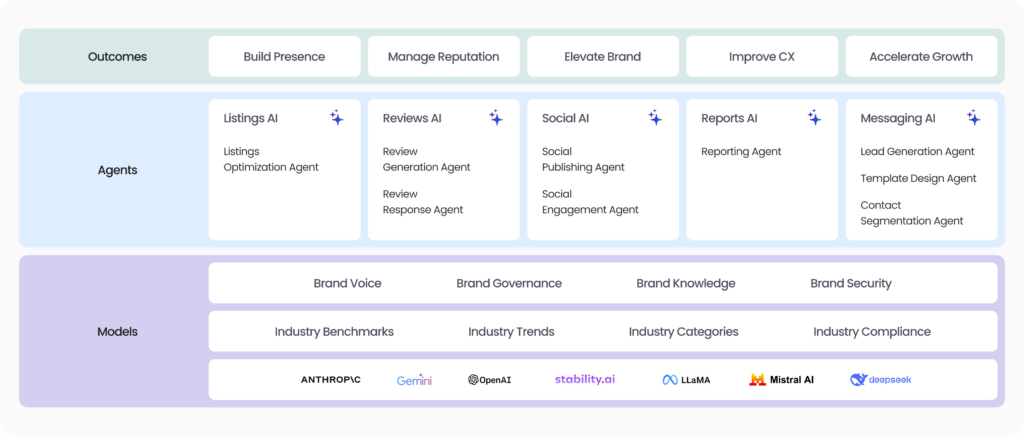
Birdeye brings this to life with specialized AI agents that proactively manage reviews, listings, social media, and customer interactions for consistent, on-brand engagement at scale. While the big shift is autonomy: Birdeye’s Agentic AI can move from insight to action without waiting on a human to push every button.
Thus, an AI “manager” can monitor performance across locations, identify gaps, and automatically refine campaigns, while corporate teams focus on strategy, brand standards, and governance rather than constant configuration.
2026 marketplace forces are accelerating the shift
The urgency of this transition is amplified by how customers now discover and evaluate global multi-location brands. Customers now evaluate brands in fewer steps. They rely on quick answers, recent signals, and what shows up first, so scheduled, rule-based marketing workflows fall behind.
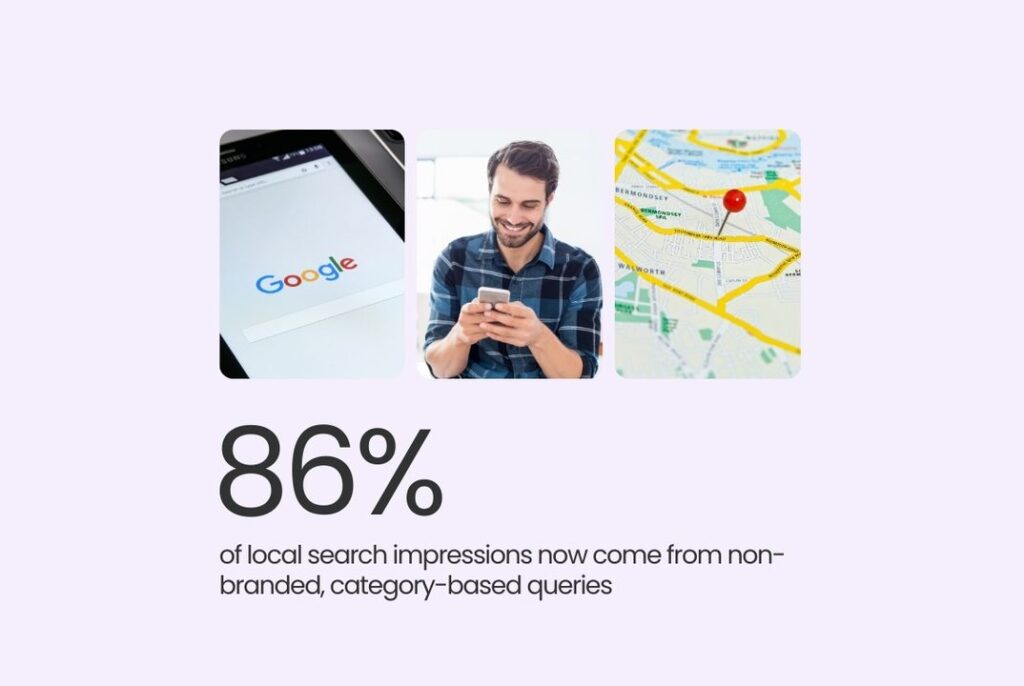
According to Birdeye State of Google Business Profile data, 86% of local search impressions now come from non-branded, category-based queries, signaling that visibility depends on continuous optimization rather than scheduled, rule-based marketing workflows.
A store’s visibility and reputation can change quickly based on reviews, content freshness, and local signals that must be monitored and acted on in near real time. As these signals evolve across more channels and at greater speed, enterprise teams face a new set of realities that directly impact visibility, trust, and performance. The three growing realities include:
- AI search and summarized answers reduce the margin for error in local visibility and reputation.
- Customers expect consistent, high-quality experiences across every branch, regardless of channel.
- Regulatory pressure and privacy requirements increase the need for governed, accurate first-party data at scale.
Privacy standards and first-party data strategies are reshaping how enterprises handle customer information. At the same time, teams must maintain consistent execution and accurate data across all locations. Governance expectations are rising, but headcount is not. In this context, agentic AI becomes essential for large multi-location brands that need to scale efficiently and responsibly.
What are the gaps that traditional marketing automation cannot solve?
Traditional multi-location marketing automation has reached its breaking point. Tools that once felt efficient now create friction, blind spots, and operational drag as channels and algorithms evolve. Understanding where these rigid systems fail is the first step toward building a faster, smarter agentic framework.
Let’s explore the core gaps that traditional marketing automation cannot solve.
1. Ineffective scaling across locations
Traditional multi-location marketing automation was not designed to keep up with the complexity of hundreds or thousands of locations, each with different audiences, competitors, and local conditions. Central teams often rely on static templates and one-size-fits-all campaigns that look efficient on paper but quickly turn into “mediocrity at scale” when they fail to adapt to local realities.
This breakdown shows up most clearly in how minor issues compound across the organization:
- Small configuration gaps in templates or journeys get multiplied across every branch.
- Local managers are asked to customize campaigns or assets without the time, tools, or training to do it well.
Over time, this creates a widening gap between the brand experience leadership intends and what customers actually see across locations.
2. Centralization vs. local autonomy problems
Enterprises need both strong central control and genuine local relevance, and traditional tools force them to choose. Overly centralized systems protect brand consistency but often ignore local nuances, while overly decentralized setups introduce risk, inconsistency, and operational chaos.
That tension surfaces in day-to-day execution and governance:
- Templates break, updates do not cascade cleanly, and “local edits” drift away from brand standards.
- Corporate teams lose visibility into what is running where, making governance and performance management difficult.
The result is a constant tension between headquarters and local teams, with neither side fully satisfied.
3. Outdated SEO and local visibility architectures
Many legacy systems still treat search engine optimization (SEO) and local visibility as static checklists rather than dynamic, always-on disciplines. That does not work when hyperlocal intent, AI-generated answers, and “near me” searches continuously reshape which locations appear for which queries.
In 2025, 76% of people who search for nearby businesses on their mobile devices visit a business within a day, and 28% of those searches result in a purchase, underscoring the power of local search intent.
The impact becomes clear when technical limitations block real-time visibility gains:
- Non-crawlable store locators, ghost pages, and inconsistent name, address, phone number (NAP) data quietly suppress visibility.
- Traditional setups cannot dynamically adjust metadata, internal linking, or local content strategies at the speed of algorithm and behavior change.
Multi-location marketing automation that only updates on a fixed schedule or via manual tasks leaves high-intent local traffic on the table.
From manual effort to autonomous growth.
Want to see the impact of Birdeye on your business? Watch the Free Demo Now.
4. Fragmented customer experience data
Reviews, listings, messages, surveys, and social interactions often live in separate systems, managed by different teams using different workflows. Traditional tools might automate individual channels, but they rarely unify these signals into a single, actionable view of the customer experience across locations.
This fragmentation prevents teams from acting on what customers are actually saying:
- Signals about product issues, service breakdowns, or emerging trends remain hidden in channel-specific silos.
- Teams struggle to connect CX insights to marketing actions, which slows down response and improvement.
Without an integrated view, enterprises cannot use automation to act intelligently on what customers are actually saying and doing.
5. Internal resource strain
Finally, traditional multi-location marketing automation assumes there will always be people available to maintain rules, approve updates, and troubleshoot issues. At enterprise scale, that assumption breaks.
The strain becomes visible in how teams spend their time:
- Corporate teams cannot manually audit or update thousands of profiles, campaigns, and assets.
- Valuable talent spends time on repetitive tasks instead of strategy, experimentation, and collaboration with other functions.
This limits how far brands can grow without adding disproportionate headcount, which undermines the promise of automation in the first place.
How agentic AI transforms multi-location marketing in 2026
Agentic AI turns multi-location marketing automation into an always-on, decision-making layer that supports both central teams and individual locations. Instead of pushing static rules into a complex environment, enterprises can rely on AI teammates that understand goals, act autonomously, and continuously improve outcomes. This is the difference between automation that follows rules and Agentic AI that executes outcomes.
Let’s understand how an agentic multi-location marketing automation framework reshapes execution, governance, and insight generation for 2026 and beyond.
The human–AI hybrid model for multi-location enterprises
Agentic AI works best inside a clear human-AI partnership, where people set the direction, and AI handles day-to-day execution across locations. This hybrid model protects brand, compliance, and strategy while unlocking the speed and scale that only AI can deliver.
What agentic AI handles autonomously:
- Updates listings and profiles across platforms.
- Fixes incomplete or inaccurate listings automatically, so locations stay consistent everywhere.
- Drafts and publishes on-brand social content.
- Manages reviews and publishes responses when pre-approved rules and tone guardrails are met.
- Identifies visibility and customer experience (CX) gaps in real time.
- Runs experiments and reallocates spend across locations.
What humans oversee:
- Brand voice and creative standards.
- Compliance and risk boundaries.
- Cross-location strategy and prioritization.
- KPI definitions and success metrics.
Birdeye Agentic AI embodies this hybrid model for multi-location enterprises, with BirdAI as the native AI layer that powers execution at scale. At the same time, corporate teams stay firmly in control of strategy and governance.
Execution without delay across the customer journey
Agentic AI operates like a distributed workforce, with each AI agent responsible for a specific outcome. This removes the lag between insight and action that slows traditional multi-location marketing automation software. Instead of “see a problem, open a ticket,” you get “see a problem, fix it.”
Birdeye’s agents work in parallel to keep experiences consistent and responsive:
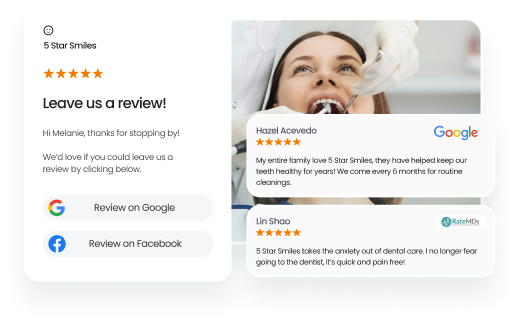
- Review Response Agent publishes timely, empathetic replies that protect reputation and meet compliance standards.
- Social Publishing Agent creates and schedules location-aware content based on local activity and competitor movement.
- Birdeye Lead Gen Agent engages prospects instantly, qualifies intent, and routes conversations to the right teams.
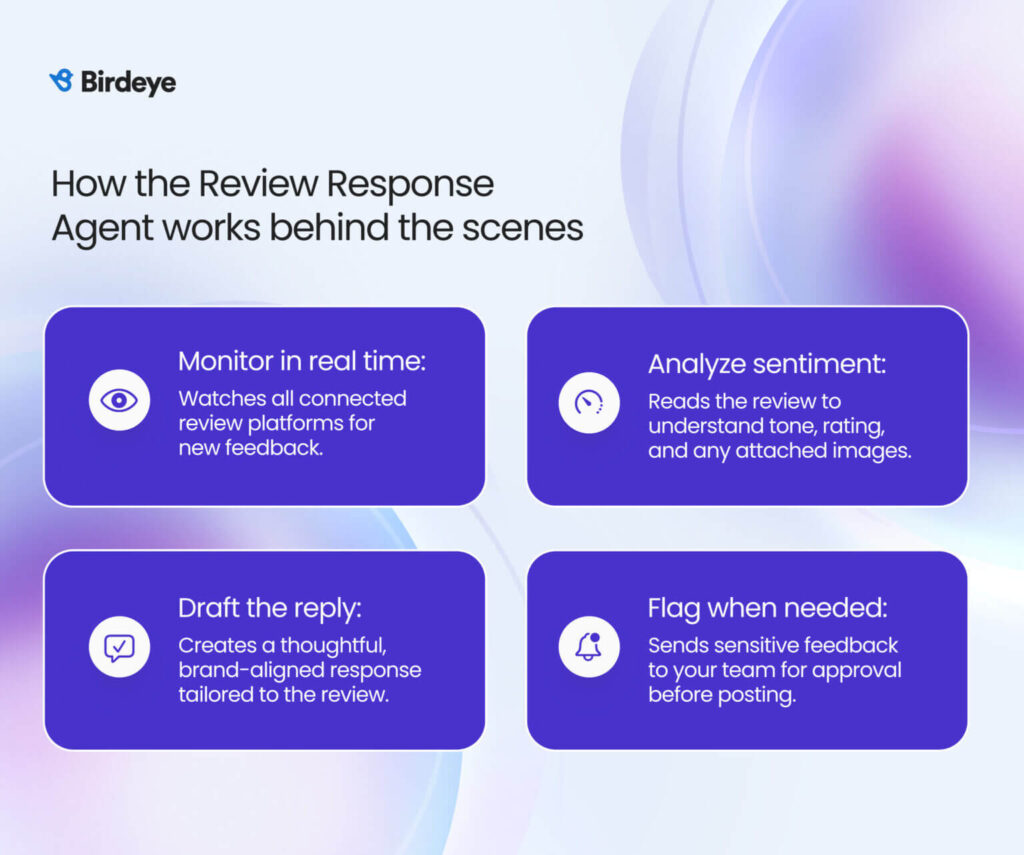
As a result, customer interactions do not wait for approvals, tickets, or manual follow-ups. Every location stays active without extra effort from central teams.
Efficiency that compounds instead of fragmenting
As enterprises scale, disconnected tools increase cost and coordination overhead. Agentic AI reduces this friction by combining execution and insight into a single system, allowing teams to act rather than manage software.
Birdeye supports this with agents designed for scale:
- Listings Optimization Agent maintains accurate, complete, keyword-aligned profiles across directories.
- Reporting Agent translates performance data into clear, plain-language insights leadership can use immediately.
- Birdeye Template Agent produces brand-consistent campaign assets on demand, without repeated design cycles.
Because these agents operate continuously, efficiency improves over time. The system learns what works and automatically applies those lessons across thousands of locations.
Personalization that stays controlled
Local relevance matters, but uncontrolled personalization creates risk. Agentic AI balances both by adapting engagement to local context while preserving brand consistency.
Birdeye enables this through:
- Review Generation Agent sends review requests through the right channel at the right time.
- Social Engagement Agent that responds to customers individually while filtering out noise and irrelevant interactions.
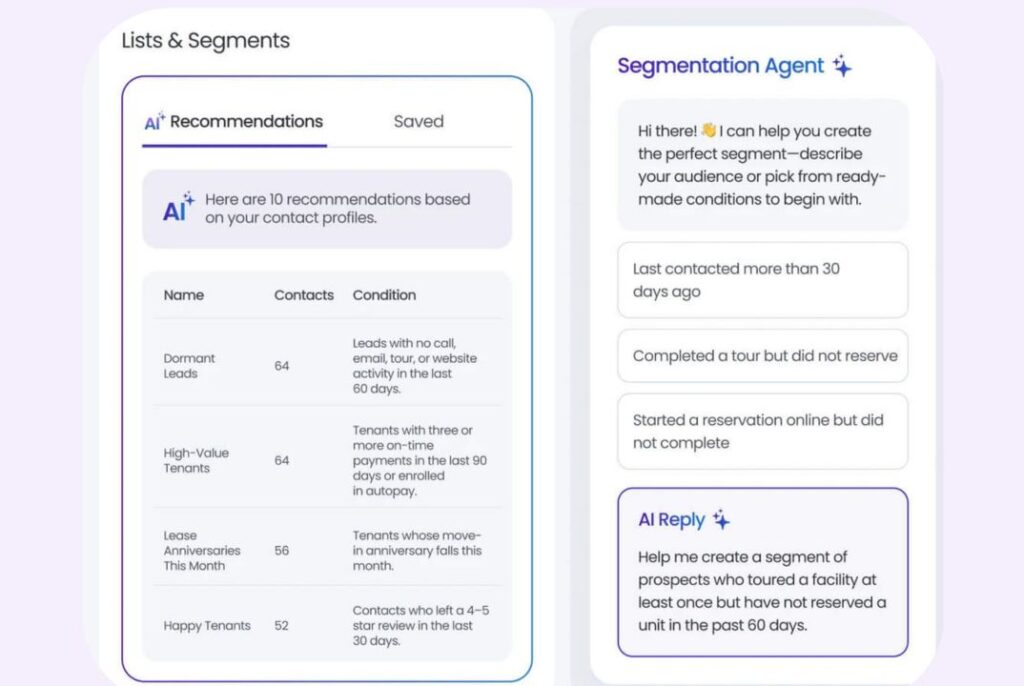
- Birdeye Contact Segmentation Agent, which builds and updates audience groups automatically for targeted outreach.
This approach allows enterprises to personalize at scale without introducing inconsistency or compliance issues.
Visibility where AI decides the answers
AI engines increasingly decide which brands appear in summaries and recommendations. They rely on freshness, customer sentiment, relevance, and public conversation, not just classic SEO signals. Without coordinated execution across content, reviews, and listings, brands lose visibility even if their SEO fundamentals are strong.
As Andrew Shotland of LocalSEOGuide explains:
“Traditional long-tail directory sites have been increasingly marginalized by Google. AI & Web search appear to rely more heavily on relevant recent content from community sites like Reddit, Quora, and niche forums, to generate personalized answers,” (quote box)
Birdeye Search AI supports this shift by showing how locations appear in AI-generated answers, identifying gaps, and improving accuracy, sentiment, and engagement. Traditional SEO and GEO then work together, rather than in isolation.
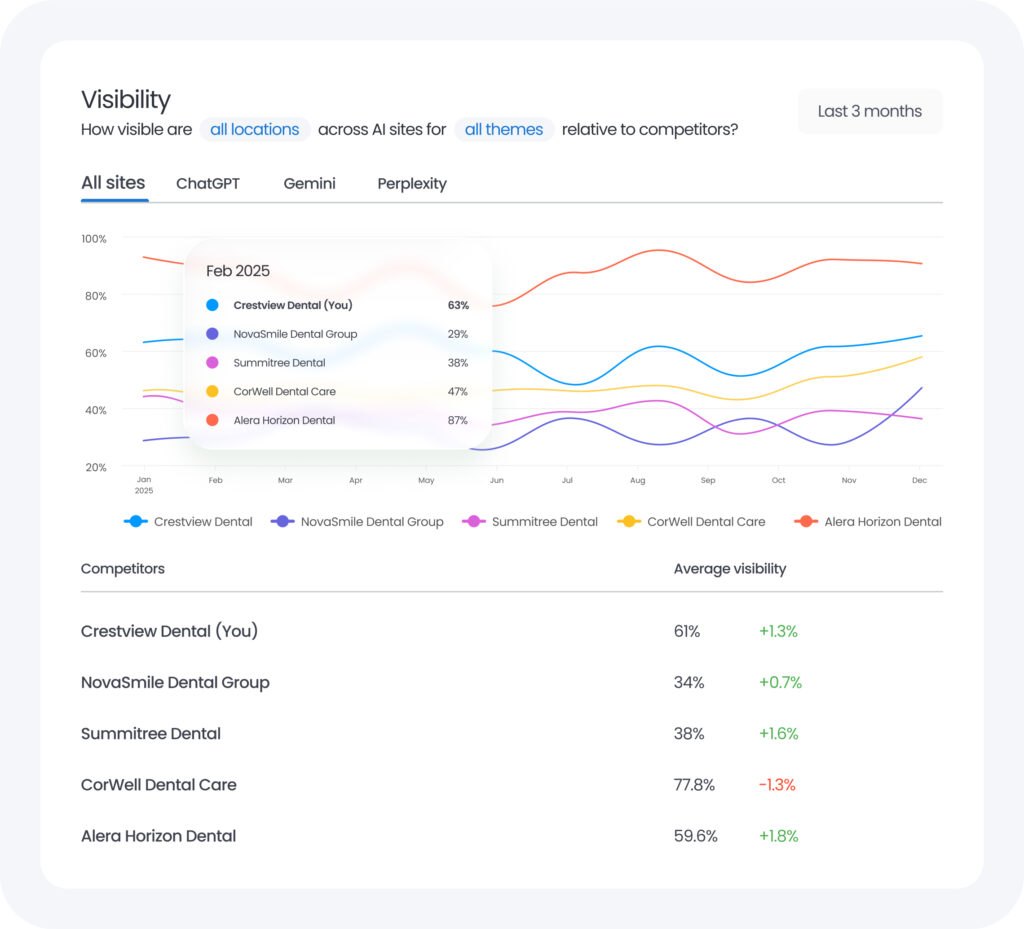
Taken together, these capabilities redefine the multi-location marketing automation framework. Execution becomes continuous, insight-driven, and location-aware, giving enterprise teams the control they need and the scale they expect.
Birdeye turns multi-location marketing automation into a growth engine
Multi-location marketing automation is only valuable when it simplifies real-world decisions. Birdeye accelerates enterprise growth by ensuring action happens the moment customers search, review, or engage. It leads the pack with a full-cycle Agentic Marketing Platform that unifies listings, review management, and social posting, syncing these signals into a single source of truth so corporate teams set strategy once while execution stays consistent across every storefront.
Instead of waiting for manual updates, Birdeye’s Agentic AI delivers:
- Immediate response: AI addresses negative review spikes instantly while providing leadership with plain-language root-cause analysis.
- Automated agility: Local content and listings update automatically to counter competitors, bypassing the need for quarterly reviews.
- Always-on conversion: After-hours leads are engaged and routed immediately, ensuring no opportunity is missed.
- Autonomous consistency: AI keeps every location aligned to brand standards, so no branch falls behind even when teams are stretched thin.
Modern automation should eliminate manual handoffs and react faster to market signals. Birdeye replaces delayed workflows with continuous action, improving reputation and visibility across every location without adding complexity.
FAQs on multi-location marketing automation
Agentic AI automates execution tasks like listing updates, review responses, content publishing, and basic optimization across locations, reducing manual work. This keeps your multi-location marketing automation framework responsive to real-time signals instead of periodic updates.
Generative AI creates content when prompted, while agentic AI autonomously plans, executes, tests, and optimizes workflows. In a multi-location marketing automation platform, that means agentic AI manages campaigns and actions across locations, not just content creation.
Enterprises lock templates, guardrails, and approval flows inside their multi-location marketing automation software. Agentic AI then personalizes within those rules, maintaining brand voice and compliance while adapting to local needs.
Agentic AI audits and fixes listings, keeps structured data accurate, and updates profiles at scale to strengthen local search visibility. Paired with GEO-focused tools like Birdeye Search AI, it also helps brands understand and improve how they appear in AI-generated answers.
Yes. An agentic multi-location marketing automation framework can route insights and tasks from reviews, surveys, and campaigns to marketing, operations, and CX teams, improving coordination across regions.
Humans define goals, policies, and strategy, then review and refine AI-driven improvements. Agentic AI handles repetitive execution across locations so teams can focus on higher-value decisions and innovation.
The bottom line: What multi-location marketing automation needs to deliver in 2026
Multi-location marketing automation in 2026 must operate continuously, not on schedules or static rules. Enterprise brands need systems that execute, adapt, and improve across every location in real time as customer behavior, visibility signals, and AI-driven discovery change.
Agentic AI meets this requirement by turning automation into an operational layer rather than a configuration task. With Birdeye’s Agentic AI, named agents such as the Review Response Agent, Listings Optimization Agent, Social Publishing Agent, and Lead Gen Agent execute across thousands of locations while leadership retains strategic control. This reduces manual workload, improves visibility into AI-generated answers, and maintains consistent customer engagement at scale.
As a result, a modern multi-location marketing automation framework delivers three outcomes enterprises require:
- Always-accurate visibility across listings, search, and AI-driven discovery
- Timely, relevant engagement with customers and prospects at every location
- Actionable insight that leadership can use without relying on complex dashboards
Enterprise brands that treat AI as a core execution capability, not an add-on, will scale faster, respond sooner, and maintain stronger customer experience across markets. The next step is to identify where manual effort still slows performance, then replace those gaps with agentic workflows that keep execution moving without interruption.
Learn how Birdeye Agentic AI turns multi-location marketing automation into an always-on teammate for your brand. Explore the platform or request a demo to see it in action across your locations. Watch a demo now.

About the Author

Sudeepta Bora
Originally published



![[Feature image] The Best Marketing Platforms for Multi-Location Brands](https://birdeye.com/blog/wp-content/uploads/Feature-image-The-Best-Marketing-Platforms-for-Multi-Location-Brands-375x195.png)