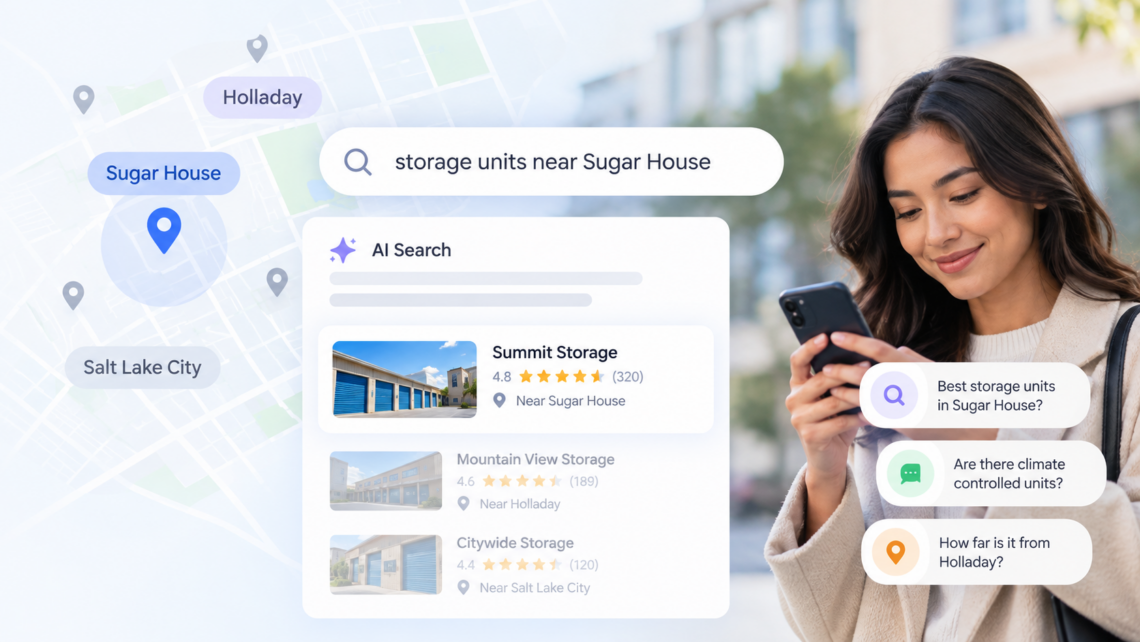
A business address may list one city, while local customers identify the area by another. For multi-location brands, that gap creates a practical challenge: keeping local information accurate while reflecting how customers actually describe the places they search for.
Summary: At Birdeye View 2026, Melissa Stiles, Chief Growth Officer at Storage Asset Management (600+ facilities), and Dayna Hathaway, CMO at Extra Space Storage (4,000+ locations), explained how they treat every facility as its own local business. Their advice is to write for the neighborhood, keep location details accurate by surfacing what changes, and get local managers to adopt corporate rollouts. This post covers how to do that at scale and what breaks first.
Why does the name on the address miss how customers search?
Storage is a hyperlocal category, and Melissa said the search radius customers use keeps shrinking. She said customers were searching within smaller geographic areas, whereas the radius had previously been 10 miles or more. Storage searches are also mostly unbranded, which our companion post on storage search covers in full. When a renter has no brand in mind, local detail is what makes a facility look like the right one.
Melissa’s advice is to do locally what brands do nationally. Gather citations and reviews, add FAQs, and put relevant content on each location page, then add neighborhood touches within that content. She added that those details should be standard across every place a customer might look during the journey.
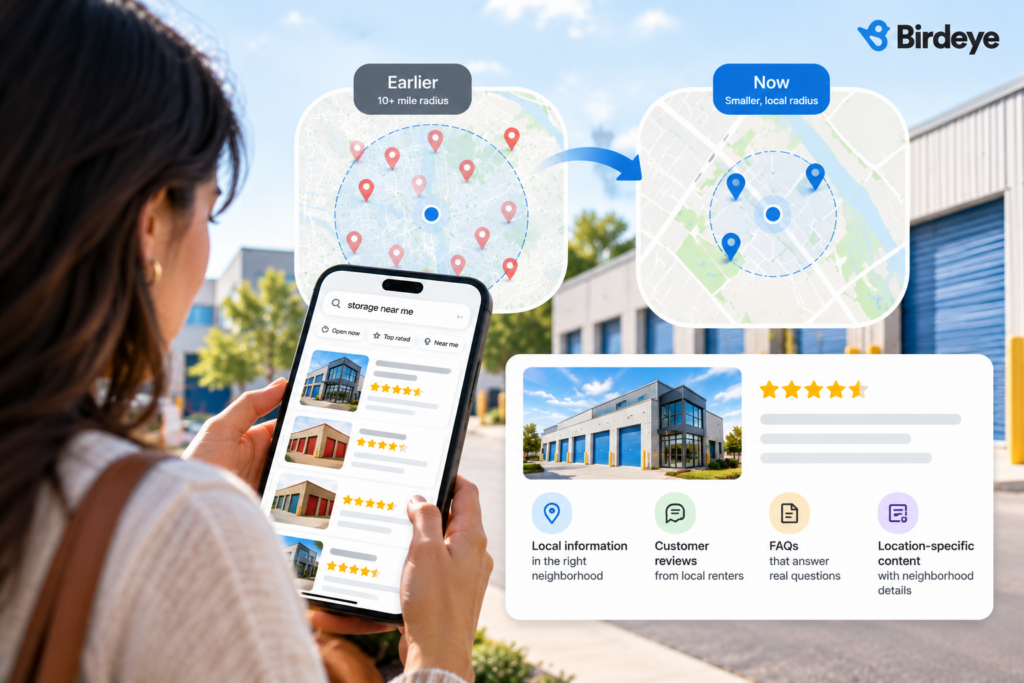
Dayna’s version is about scale. Extra Space has more than 4,000 locations, and its data surfaces themes quickly. But the national view only gets so far. Her team starts with the customer, she said, then has to “put on our local hat” and ask what customers want and what matters at that specific location. She applies the same idea to reviews, where local insight belongs in the responses too.
What breaks first when you run thousands of locations?
Small, public changes, Melissa said. Anyone can suggest an edit to a Google Business Profile at any time, so it’s the first thing to slip. Another soft spot is a newly acquired or newly built site that hasn’t been fully brought into the company’s platform.
Her fix starts with visibility: a platform that flags exceptions so the team can see immediately when a listing changes. She pairs it with feedback from store managers, who can notice operational details that corporate may miss.
Dayna’s answer was about posture. Her goal is that nothing breaks, she said, and she admits that is not reality. So the real measure is how quickly the team finds out and responds. That takes the right platform, clear processes, reporting and alerts that flag problems quickly, and a team ready to act when they happen.
How do you get local managers to adopt a corporate rollout?
Dayna’s team relies on an operations support team in Salt Lake City that works with the field. It acts as a conduit and helps decide what needs to go out. The balance, she said, is giving managers what they need to execute without burdening them with information unrelated to caring for customers and their facility.
Google Business Profile gets a tighter channel. Managers know why it matters, how to tell the team about problems, and that they will get a fast response.
Melissa’s approach starts with the manager’s own goals. Her team asks how a rollout applies to them and explains why it matters, which makes people want to embrace it. She said, “Putting on our self-storage manager hat” is part of the process, so the question becomes why a manager would care and be bought in.
Across both teams, the pattern is to treat local managers as the people closest to the customer and give them reasons, not just instructions.
How does Birdeye help multi-location brands manage local detail?
Keeping business information accurate across hundreds or thousands of locations requires more than manual checks. Teams need consistent processes to manage listings and identify where information needs attention. Both leaders shared the same hope for AI: take repetitive manual work off the team and surface exceptions and trends faster, so people can focus on strategy.
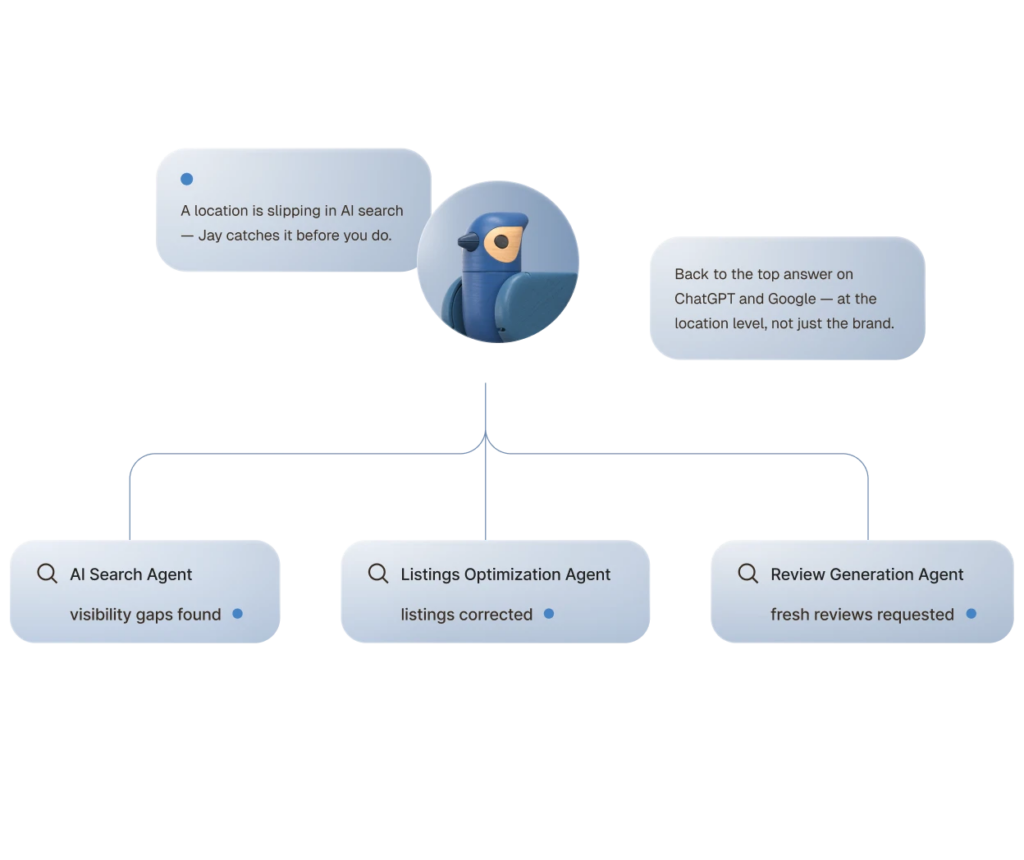
Birdeye builds AI agents for multi-location brands that need trust, consistency, and control at scale. Its AI coworkers consolidate signals, reason with brand and industry context, and act across reviews, listings, social, messaging, and AI search visibility. Birdeye Listings AI, powered by Jay, the marketing AI coworker, supports that for local visibility.
- Keep listings accurate: Maintain location details across directories and flag changes.
- Surface exceptions: See what changed at a location without watching every profile.
- Respond with local context: Answer reviews in the brand’s voice while reflecting the location.
FAQs
Start with the usual local SEO basics: accurate citations, reviews, FAQs, and relevant on-page content. Then make those signals reflect the local market, including the name locals use for the area.
Use a platform that flags exceptions so listing changes are visible quickly. Add feedback from store managers, plus reporting and alerts, so teams catch and fix problems fast.
Use an operations support team to decide what reaches the field, so managers get what they need to execute and nothing that does not touch the customer. Explaining how a change serves a manager’s goals also makes adoption easier.
Pick your five busiest locations and ask each manager what customers call the neighborhood. Then check whether that name appears on the location page, in the listings, and in review responses.

About the Author

Shruti Dugar
Birdeye
Originally published