
The most effective real estate marketing tools for 2026 combine powerful automation, real-time insights, and scalable platforms that help property marketing teams generate leads, nurture relationships, and drive measurable ROI across multi-location portfolios.
Summary
Marketing for real estate professionals has moved far beyond basic social posts and email blasts. Now, the most successful agents, brokers, and multi-location real estate brands rely on advanced marketing software, integrated platforms, property marketing systems, and automated lead-generation tools to manage high-volume operations and outperform competitors.

Recent market analysis reports that 78% of property searches now start on a search engine, underscoring the importance of search-optimized, technology-enabled marketing journeys for both residential and commercial buyers.

This is where platforms like Birdeye give real estate teams a measurable advantage. With AI-powered automation, unified insights, and multi-location consistency, Birdeye helps brands boost visibility, attract high-intent leads, and deliver seamless, modern experiences across every location.
This blog highlights actionable insights, 2026 trends, industry benchmarks, and key real estate marketing tools/platforms for real estate businesses, a case study, and more.
Table of contents
- How real estate marketing is evolving in 2026
- Challenges in modern real estate marketing
- Why real estate marketing in 2026 demands smarter tools, stronger systems, and enterprise-level execution
- 11 Best Real estate marketing tools in 2026
- Birdeye: Elevating enterprise real estate marketing
- FAQs about real estate marketing tools for 2026
- Conclusion
How real estate marketing is evolving in 2026
Real estate marketing tools have become mission-critical for professionals, brokers, and enterprise teams in 2026. Advanced marketing software, integrated platforms, and automation systems now shape how teams attract, nurture, and convert prospects across every stage of the property journey.
For multi-location real estate brands, the stakes are even higher. Teams must now deliver fast, personalized engagement across every channel to meet rising client expectations and stay competitive. This is why online marketing tools and specialized property platforms are playing a larger role than ever, helping brands manage social media, automate lead generation, and maintain consistent communication with prospects and past clients across all locations.
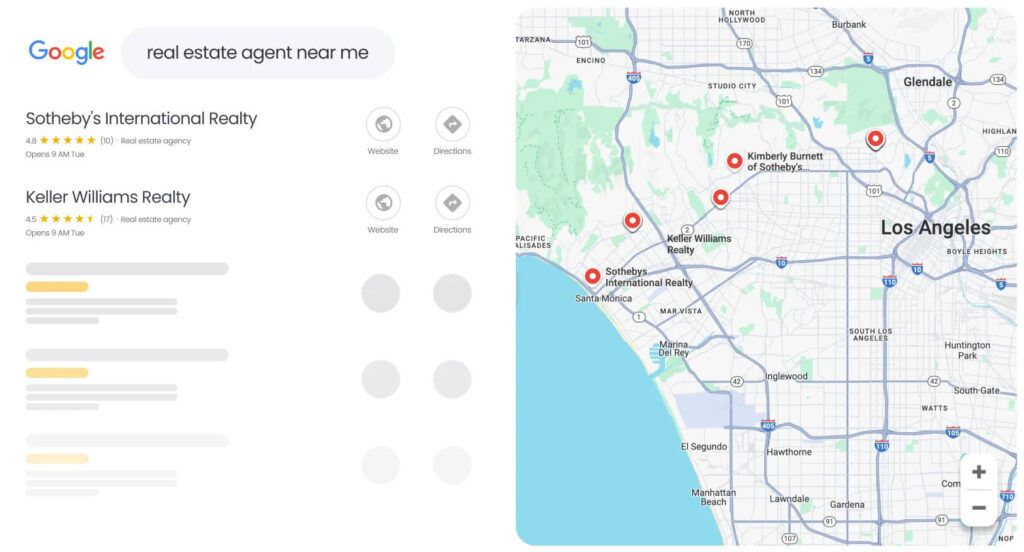
According to the Birdeye State of Online Reviews 2024, 28% of “near me” searches result in a purchase, underscoring the importance of connecting local marketing activity to measurable business outcomes.
Three major shifts define real estate marketing in 2026:
- AI-powered platforms take center stage: Enterprise teams increasingly use AI for predictive analytics, optimized campaigns, and real-time agent–client interactions. This turns raw data into a smarter follow-up instead of guesswork. As discovery shifts toward these conversational engines, real estate brands must now show up in ChatGPT and other generative platforms to ensure they are among the first recommendations to high-intent buyers.
- Digital-first operations and omnichannel engagement become the standard: Buyers and tenants expect seamless experiences across property websites, mobile apps, smart portals, and automated nurture campaigns, all supported by modern marketing tools.
- Hyperlocal targeting and sustainability shape marketing efficiency: Local SEO and automation help teams highlight eco-friendly property features, while granular targeting improves relevance across every email, ad, and social media post.
In 2026, advanced realtor marketing tools, automation platforms, and property marketing software are essential for generating leads, qualifying prospects, nurturing relationships, and driving measurable marketing ROI across an entire real estate portfolio.
Challenges in modern real estate marketing
Effective marketing tools for real estate agents and enterprise teams are more crucial than ever in 2026, yet persistent challenges continue to slow down growth and weaken conversion performance across locations. Let’s have a closer look at the key obstacles holding teams back.
Reputation consistency at scale
For large, multi-location real estate businesses, maintaining consistent brand messaging and reputation across social media platforms, property marketing portals, and review sites is complex. Even small inconsistencies in tone, offer, or customer service can erode trust, hurting the conversion potential with target audiences and prospective clients.
Manual and fragmented processes
Despite the availability of advanced real estate marketing AI tools, many real estate professionals still juggle fragmented workflows, shuffling among email marketing, social media posting, and lead-tracking tools that don’t sync. This results in wasted time, inefficiency, and missed opportunities to nurture leads or respond promptly.
Low-quality leads and lead nurturing hurdles
Today’s challenge isn’t generating leads; it’s qualifying them and nurturing them effectively. Without reliable lead scoring, targeted messaging, and automated follow-up systems, teams often find their sales funnel clogged with low-value inquiries. This drains resources and diverts attention away from genuine sales opportunities.
Performance benchmarking gaps
Marketing teams still struggle to benchmark their campaigns, advertising spend, and conversion rates against competitors at scale. Without integrated reporting from top real estate marketing platforms, campaigns become hard to optimize, and ROI is difficult to prove.
This challenge is amplified by rising engagement expectations. According to the Birdeye State of Online Reviews 2025, total online review volume grew 13% in 2024, raising the stakes for accurate tracking and performance insight. The same report shows that businesses increased their review response rate from 63% in 2023 to 73% in 2024, which makes strong analytics and automation essential to keep pace with rising engagement and customer expectations.
Rising acquisition costs, tightening margins
Higher ad spend, low housing inventory, and increased competition mean every marketing dollar and every digital marketing lead counts more than ever. Real-estate teams must focus on mobile-first, responsive, and trackable campaigns to maintain occupancy and relevance in saturated markets.
Inadequate tracking and analytics
Many real estate businesses still struggle to properly track lead journeys, marketing automation performance, and campaign ROI due to siloed systems. This results in poor visibility across the sales funnel and an inconsistent brand experience.
Why real estate marketing in 2026 demands smarter tools, stronger systems, and enterprise-level execution
Real estate marketing in 2026 requires far more than posting new listings or running periodic ad campaigns. Multi-location brands now manage thousands of digital signals, including:
- Listings
- Reviews
- Messages
- Social interactions
- Customer journeys
All these influence visibility on Google Search, Google Maps, and key property portals. To compete, enterprise teams must operate with unified systems, automation, and data-driven precision that match the speed and expectations of modern buyers and renters.
High-performing organizations rely on advanced platforms that coordinate campaigns, streamline communication, and deliver consistent experiences across locations. The shift toward AI-powered systems and omnichannel workflows means that real estate marketing success is increasingly shaped by the strength of your tools and the integrations that support them.
Let’s explore some of the top 11 real estate marketing tools that give real estate brands a real advantage in 2026.
11 Best Real estate marketing tools in 2026
1. Birdeye: The unified marketing platform for multi-location real estate
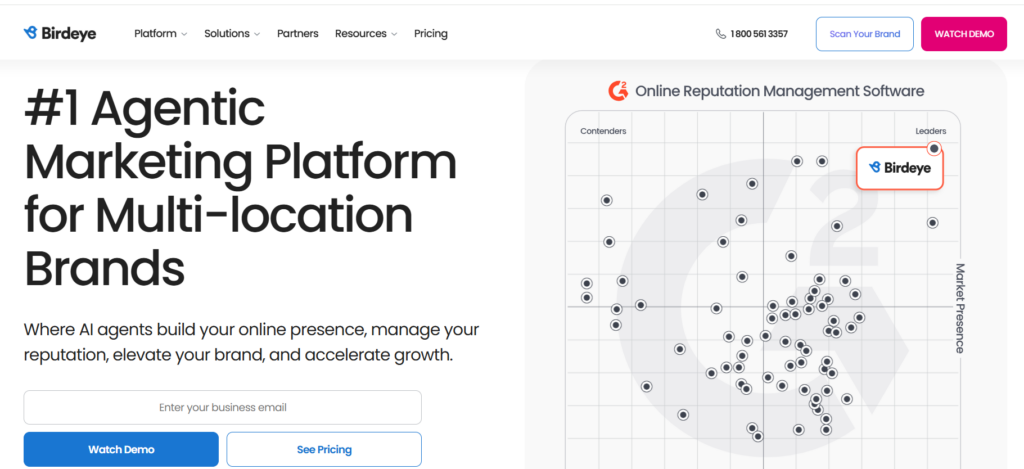
Birdeye gives enterprise real estate teams a single system to manage visibility, reputation, and customer interactions at scale. Its AI-driven capabilities reduce manual work, strengthen brand consistency, and help real-estate teams convert more high-intent prospects across every channel.

G2 rating: 4.7/5 (3600+ Reviews)
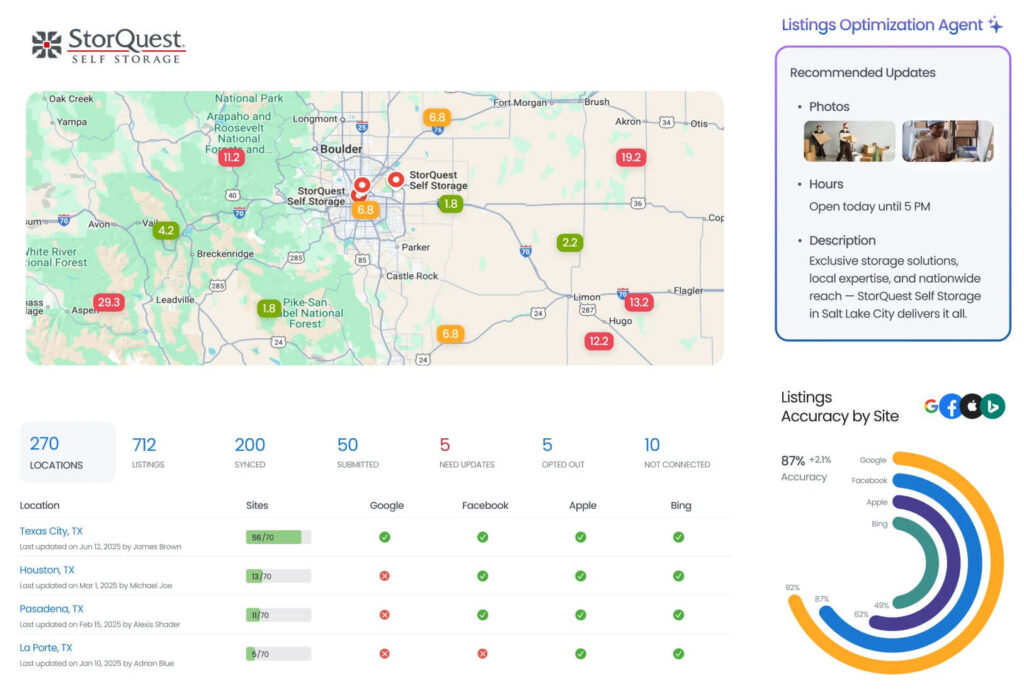
Key features/functions include:Birdeye Listings AI: Keep every location’s business information accurate across hundreds of directories to boost Google visibility. The Listing Optimization Agent ensures every profile stays consistent, compliant, and optimized for local search.
- Birdeye Reviews AI: Automate review generation using the Review Generation Agent and deliver fast, polished responses with the Review Response Agent to build trust at scale.
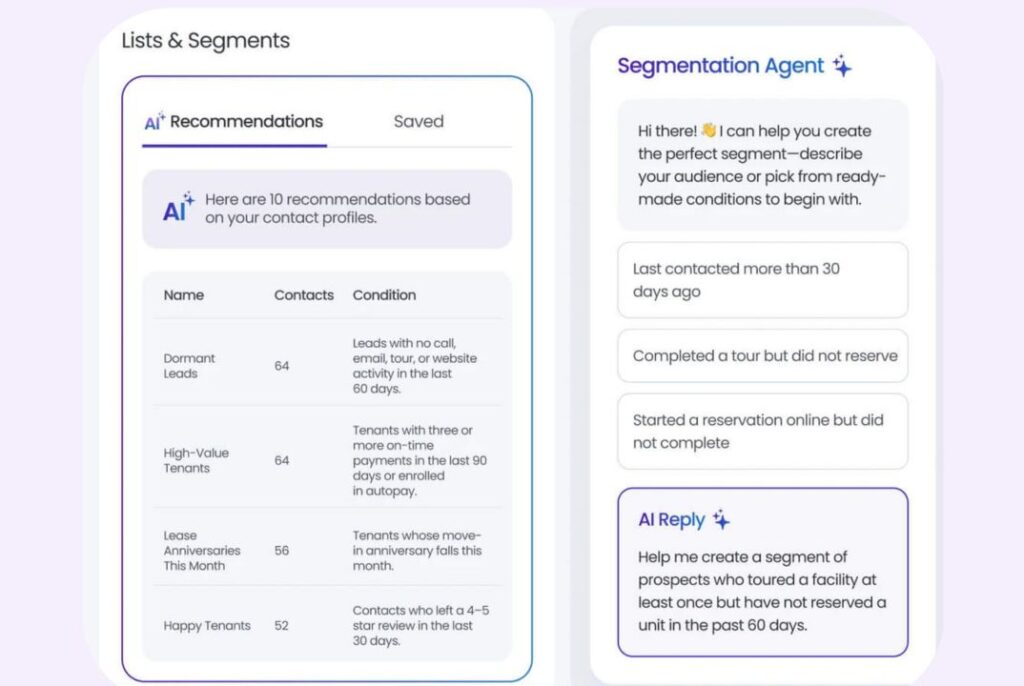
- Birdeye Messaging AI: Manage text, email, social messages, and webchat from one inbox. The Contact Segmentation Agent helps teams target the right audience while AI-assisted replies speed up conversations across every property.
- Birdeye Chatbot AI: Capture website leads 24/7 with a conversational GenAI chatbot. Powered by the Lead Generation Agent, it books appointments, answers questions, and routes inquiries instantly.
- Birdeye Social AI: Publish and manage content for every property location from a unified dashboard. The Social Publishing Agent and Social Engagement Agent help teams maintain a consistent, high-performing social presence.
- Birdeye Surveys AI: Collect and analyze sentiment throughout the client journey. The Template Design Agent simplifies survey creation, and the Reporting Agent delivers clear insights for multi-location teams.
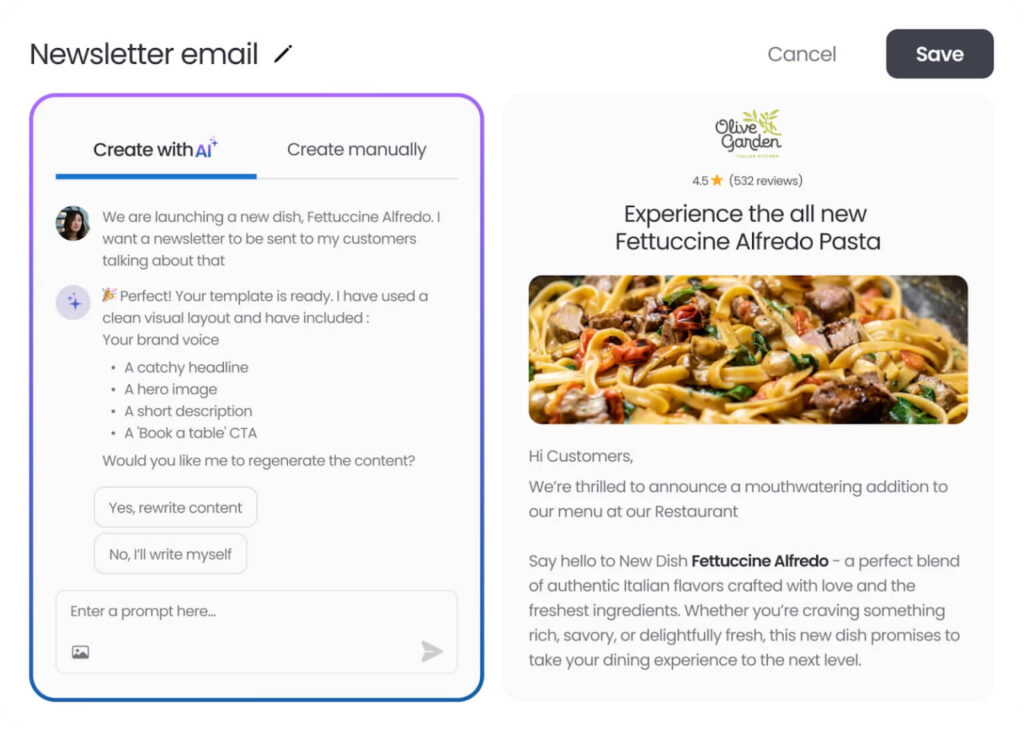
- Birdeye Search AI: Reveal ranking influence, search barriers, and high-impact visibility opportunities across ChatGPT, Perplexity, and Gemini using GenAI-powered insights.

- Birdeye Integrations: Connect with 3,000+ CRMs and property management systems without disrupting existing workflows, ensuring every BirdAI Agent operates with clean, real-time data.
Now, let’s dive deeper into real insights with Birdeye-Fairlawn Real Estate.
How Birdeye enables enterprise marketing transformation at Fairlawn Real Estate

Brand
Fairlawn Real Estate, a leading Midwest property management company with operations across Illinois and Indiana, manages over 180 locations and is recognized for its commitment to resident satisfaction and service excellence.
Challenges
- Struggled to maintain a unified brand reputation across all properties.
- Faced slow manual review response times and fragmented resident feedback.
- Had no solution for identifying and acting on feedback trends, or benchmarking against competitors.
Solution and implementation
Partnering with Birdeye, Fairlawn Real Estate adopted an AI-powered marketing platform that automated review responses, centralized feedback analysis, and enabled competitive benchmarking. Key capabilities included:
- Birdeye Insights AI: Provided actionable feedback trends across all communities, driving prompt service improvements (for example, uncovering consistent praise for property tours and using that insight for company-wide training).

- Birdeye Reviews AI: Automated and personalized responses to resident reviews, freeing up staff and enforcing timely, high-quality interactions.
“Using Birdeye AI to respond to reviews has saved us so much time while ensuring we maintain a professional and personal connection with our residents. It’s helped us consistently deliver high-quality communication across the board.”
Allison Ross,Senior Marketing Specialist, Fairlawn Real Estate

- Birdeye Competitors AI: Delivered real-time benchmarking on key performance indicators such as review volume, star ratings, and resident sentiment, supporting strategic planning and differentiation.
- Ticketing system: Streamlined feedback resolution, with every review generating a ticket and getting a thoughtful response within 48 hours.

Results
- Enhanced operational agility, response times, and resident solutions, improving overall resident satisfaction and retention.
- Proactively resolved emerging issues, building trust and loyalty among residents.
- Improved brand reputation and competitive edge through data-driven action.
“Birdeye has significantly streamlined our approach to improving experiences. This creates a culture of ongoing enhancement, ultimately adding to our overall resilience and success in the industry and our individual markets.”
Allison Ross, Senior Marketing Specialist, Fairlawn Real Estate
Learn more about Birdeye and Fairlawn Real Estate case study
Alongside Birdeye, enterprise teams rely on a broader stack of marketing, CRM, creative, and automation tools to coordinate high-volume campaigns and property-level demand generation. These tools complement Birdeye by powering listings, advertising, content creation, and client nurturing.
2. Salesforce

Salesforce is an enterprise CRM solution used by large real estate teams to centralize inquiries, route leads instantly, and maintain consistent follow-up workflows. It remains a widely used marketing tool for real estate agents handling high lead volumes.
G2 Rating: 4.4/5
Key Features:
- Automated lead routing and scoring
- Centralized communication history
- Customizable dashboards and workflows
- Multi-location team collaboration
3. HubSpot CRM

HubSpot CRM helps real estate organizations automate nurturing, track engagement, and personalize communication. It is a popular choice among online marketing tools for real estate agents due to its simplicity and automation power.
G2 Rating: 4.4/5
Key Features:
- Automated email and task workflows.
- Lead scoring and segmentation.
- Marketing automation for agent follow-ups.
- Integrated pipeline and analytics.
4. Follow Up Boss

Follow Up Boss is purpose-built for real estate teams that need a fast, organized lead management system. It is commonly used as a realtor marketing tool to improve conversion speed and manage conversations across channels.
G2 Rating: 4.7/5
Key Features:
- Unified inbox for calls, emails, and texts.
- Automated drip campaigns.
- Appointment and task tracking.
- Real-time lead notifications.
5. Yardi

Yardi is an enterprise property marketing software that supports large portfolios with listing management, tenant workflows, and operational automation. This tool is helpful for multi-location property teams.
G2 Rating: 3.8/5
Key Features:
- Centralized listings distribution.
- Tenant communication and payments.
- Property operations automation.
- Maintenance and inspection workflows.
6. AppFolio

AppFolio streamlines property marketing, maintenance, and tenant communication, making it a top choice among marketing tools real estate teams rely on for operational efficiency.
G2 Rating: 4.5/5
Key Features:
- Automated leasing and application workflows.
- Built-in CRM and communication tools.
- Digital rent collection.
- Marketing and operations dashboards.
7. Canva

Canva is a user-friendly design platform that helps marketing teams quickly create listing flyers, ads, and branded content. It is one of the most accessible visual production tools for real estate agents.
G2 Rating: 4.8/5
Key Features:
- Drag-and-drop design editor.
- Real estate templates for flyers and ads.
- Team collaboration.
- Social media graphic creation.
8. Descript

Descript simplifies video editing for property tours, agent walk-throughs, and social content, making it a valuable online marketing tool for real estate agents producing video-first content.
G2 Rating: 4.6/5
Key Features:
- Text-based video editing.
- Overdub for voice edits.
- Multi-track audio/video editing.
- Instant transcript generation.
Tools that turn market pressure into momentum.
Want to see the impact of Birdeye on your business? Watch the Free Demo Now.
9. Matterport

Matterport creates immersive 3D tours that help buyers instantly visualize spaces. It is essential property marketing software for real estate teams who want to strengthen online engagement.
G2 Rating: 4.7/5
Key Features:
- 3D virtual tours and digital twins.
- Dollhouse and floor plan views.
- Accurate spatial measurements.
- Easy MLS and website embedding.
10. Google Ads Manager

Google Ads Manager enables real estate brands to reach high-intent local buyers through search and display campaigns. It is one of the most impactful realtor marketing tools for demand capture.
G2 Rating: 4.3/5
Key Features:
- Local keyword targeting.
- Conversion tracking and analytics.
- Display and video ads.
- Automated bidding strategies.
11. Hootsuite
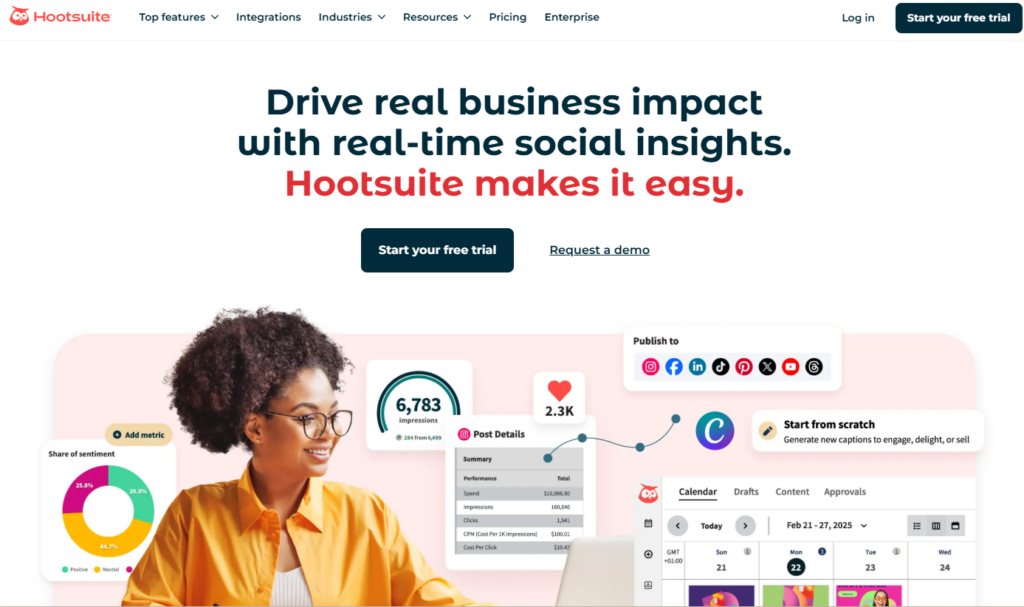
Hootsuite supports multi-location posting and engagement across all social channels, making it a marketing tool for real estate agents who manage multiple property pages.
G2 Rating: 4.1/5
Key Features:
- Multi-platform scheduling.
- Engagement tracking.
- Team collaboration.
- Social listening dashboards.
Together, these platforms help enterprise teams increase reach, create stronger customer experiences, and activate high-intent audiences across search, social, and paid channels. Birdeye complements this ecosystem by unifying visibility, reputation, and communication, giving every location a consistent foundation for converting leads faster.
Birdeye: Elevating enterprise real estate marketing
The Birdeye platform is purpose-built for multi-location real estate teams, brokers, and property managers aiming to streamline operations, unify brand presence, and maximize ROI from client interactions. As an advanced real estate marketing platform, it combines sophisticated automation with actionable insights to address the most pressing challenges faced by property marketing professionals.
Here are the core capabilities that set Birdeye apart and support enterprise real estate brands
Unified review and reputation management: Birdeye automates review requests and responses across over 200 directories, generating fresh testimonials and safeguarding brand reputation at scale. AI-powered response content ensures every message is personalized, credible, and conversion-friendly.
Centralized multi-channel marketing: Multi-location teams can manage social media posts, webchat, email campaigns, and SMS outreach from one dashboard. Location-specific content controls allow real estate teams to personalize their messaging for distinct markets while maintaining brand consistency and compliance.
AI-driven insights and competitive benchmarking: Real-time data visualizations and sentiment analysis equip marketing leaders with the intelligence needed to refine strategies, analyze performance by location, and outpace competitors. Integrated benchmarking helps teams optimize spend and adjust campaigns for maximum impact.
Automated ticketing and customer service: Birdeye transforms resident reviews or inquiries into actionable tickets, mobilizing management and marketing to solve issues quickly and collaboratively. This system enhances resident satisfaction and keeps teams agile in delivering excellent service.
Listings AI for SEO and visibility: Manage and synchronize property details across Google, Apple, and key directories. Automation ensures accuracy, local SEO optimization, and error-free syndication, all of which are central to driving inquiries and growing your business footprint.
By using Birdeye as their primary marketing platform, enterprise property brands see increases in review volume, faster response rates, and gains in both resident retention and lead generation. Its scalable automation and analytics, and award-winning support help teams adapt, experiment, and excel in every market.
FAQs about real estate marketing tools for 2026
Leveraging AI-powered real estate marketing software and automated feedback management platforms like Birdeye enables firms to automatically respond to reviews and monitor sentiment across all locations, ensuring brand consistency and professional engagement.
Centralized dashboards provide a unified view of all marketing channels, analytics, and lead activity. This makes it easier for large real estate teams to track progress, identify issues, and take coordinated action in real time.
Integrated ticketing and automation systems quickly convert inquiries and reviews into actionable tasks. This allows marketing and management teams to resolve concerns promptly and keep residents satisfied.
Competitive benchmarking, accessible through top property marketing software, helps real estate professionals understand their strengths and weaknesses relative to other firms. It guides improvement and supports a data-driven growth strategy.
Scalable marketing automation tools should include campaign scheduling, cross-platform analytics, AI-driven content suggestions, and integration with CRM and email marketing, helping enterprises maintain a consistent brand voice and nurture leads at every stage
First-party data from website activity, CRM, and email marketing integrations enables personalized communication, targeted offers, and campaign measurement, all of which are vital for nurturing leads and optimizing real estate business outcomes.
Schedule a strategic audit or demo with a top-tier real estate marketing platform to evaluate your tech stack, identify new automation opportunities, and keep pace with 2026’s dynamic property market.
Conclusion
Selecting and integrating the right real estate marketing tools in 2026 is not just about streamlining internal processes; it’s about achieving a sustainable competitive advantage for your entire real estate business. As industry benchmarks and client expectations rise, top-performing real estate marketing software, marketing automation tools, and property marketing platforms empower real estate agents, brokers, and enterprise teams to drive measurable growth and nurture leads at every step.
Platforms like Birdeye, with their automated review management, robust analytics, and seamless integration, ensure your brand presence and trustworthiness extend across every channel and location.
Discover today where Birdeye‘s unified automation, analytics, and powerful client engagement will take your real estate business next. Watch the demo now.

About the Author

Sudeepta Bora
Originally published