UK social media usage continues to evolve rapidly in 2026. Nearly every person in the UK is online daily, making social media far more than a passing distraction; it’s how we chat, share local news, discover new shops, debate issues, and sometimes even shape national trends.
This report breaks down the latest UK social media statistics for 2026, including platform usage trends, audience demographics, time spent, advertising benchmarks, social commerce behaviour, and the growing impact of AI search. It also explores what these trends mean for marketers managing social media strategy at scale.
Summary –

The biggest shift in 2026 is not necessarily increased screen time, but more intentional social media behaviour.  UK consumers are spending more time using platforms like TikTok, Instagram, Reddit, and YouTube for product discovery, creator recommendations, community discussions, entertainment, and even news consumption.

For large multi-location brands, this makes current social media data more important than ever. Understanding where UK audiences spend time, which platforms drive engagement, and how social behaviours differ across age groups can directly influence campaign performance, customer acquisition, and brand visibility.
This report breaks down the latest UK social media statistics for 2026, including platform usage trends, audience demographics, time spent, advertising benchmarks, social commerce behaviour, and the growing impact of AI search. It also explores what these trends mean for marketers managing social media strategy at scale.
Table of contents
- How many people use social media in the UK in 2026?
- Which social media platforms matter most in the UK in 2026?
- Which social media platforms do different age groups use in the UK?
- How much time do UK consumers spend on social media in 2026?
- What drives social media engagement and usage in the UK?
- How is social commerce changing consumer behaviour in the UK?
- What do UK social media advertising statistics reveal in 2026?
- How AI search is changing brand visibility in the UK, and why it matters for UK brands?
- How should large multi-location brands manage social media at scale?
- How does Birdeye help multi-location brands manage social media in 2026?
- Frequently asked questions about social media statistics in the UK
- Birdeye helps you win in social media management in the UK
How many people use social media in the UK in 2026?
Social media usage in the UK remains consistently high in 2026, even as user behaviour becomes more fragmented across platforms and formats. According to the latest available data report on social media penetration in the UK 2025 on Statista, more than 54.8 million people in the UK actively use social media, representing roughly 79% of the total population.
The UK also remains one of Europe’s most mature digital markets. Internet penetration is now nearly universal, with nearly the entire adult population accessing online platforms regularly via mobile devices, desktops, and connected TVs.
Several trends are shaping social media use statistics in the UK in 2026:
- Almost 98% of Gen Z and Millennials use at least one social platform regularly.
- The average UK adult now checks social media multiple times daily. Still, most people actively use about 6 different platforms monthly, from stalwarts like WhatsApp and Facebook to upstarts like Reddit and Threads.
- There’s an almost perfect male–female split: 49.9% female and 50.1% male.
- Regional differences matter too. London and the South East lead in digital adoption, but every region shows strong engagement, including rural and remote areas where online groups often replace local pubs for community chatter.
- Daily social media usage has declined slightly compared to previous years, signalling a shift from passive scrolling toward more intentional engagement.
The decline in overall time spent does not necessarily indicate weaker platform influence. In many cases, UK consumers now use social media more purposefully. Messaging apps like WhatsApp dominate everyday communication, while platforms like TikTok, Instagram, Reddit, and YouTube increasingly shape product discovery, entertainment, and search behaviour.
Regional usage patterns are also shifting. While London and major cities lead in digital adoption, social media engagement remains high in smaller towns and rural areas via Facebook Groups, WhatsApp, and localised networks.
For marketers, the most important takeaway is that UK social media growth is no longer driven purely by new user adoption. Growth now comes from platform diversification, creator-led engagement, social commerce behaviour, and stronger integration between social content and online purchasing journeys.
Birdeye helps you win social media management in the UK
Want to see the impact of Birdeye on your business? Watch the Free Demo Now.
Which social media platforms matter most in the UK in 2026?
WhatsApp, Facebook, Instagram, YouTube, and TikTok continue to dominate the UK social media landscape in 2026. But the role each social media site plays is changing rapidly. Consumers now use different platforms for different behaviours, from messaging and entertainment to shopping, search, professional networking, and community discussions.
Here’s what working:
- WhatsApp holds the top spot as the UK’s most popular social platform. 79% of the UK’s internet users are monthly active on WhatsApp, making it a daily essential for communication across nearly every age group.
- Facebook retains a massive user base, with 73% of internet users using it. Despite media chatter about its decline, it remains core for community groups, local events, and staying connected across generations. This makes Facebook the most important platform for reaching older generations and those interested in hyperlocal news content.
- Instagram attracts 60% of UK internet users each month, continuing to distinguish itself with photo, video, and Reel content that draws in younger people, influencers, and brands. Instagram ranks as a popular social media platform among Gen Z and Millennials, leading for social media engagement and product discovery.
- YouTube nearly matches Instagram’s reach at 59.7%, proving that visual content dominates UK online behaviour. YouTube remains a hub for informative content, entertainment, how-tos, and music, appealing to all age groups and offering unique value relative to average daily time spent.
- TikTok is the breakout star for younger age groups, with use continuing to surge among Gen Z and Millennials. The average active user now spends more than 49 hours per month on TikTok, far surpassing time spent on other platforms and indicating the app’s growing dominance for engaging content and building relationships online.
- Reddit has now overtaken X (formerly Twitter) in the UK, becoming the fifth most popular social platform. This signals a shift in consumer behaviour towards discussion-based communities and interest-driven networking over celebrity discourse.
- Pinterest and LinkedIn are on the rise, with Pinterest users up to 15.5 million and LinkedIn reporting a 15% increase in ad reach. Both serve niche audiences: Pinterest for shopping inspiration and visual discovery, LinkedIn for professional networking and B2B social media marketing.
- Facebook Messenger and other platforms provide messaging, group calls, and business integrations. Messenger, in particular, supports direct outreach for brands, complementing Facebook’s main feed.
For brands, understanding platform intent matters just as much as understanding platform size.
| Platform | UK monthly usage | Primary audience behaviour | Best use case for brands |
| Highest overall usage | Messaging, communities, customer communication | Customer engagement and support | |
| Strong cross-generational reach | Groups, local news, events, and community interaction | Community building and local campaigns | |
| High Gen Z and Millennial adoption | Reels, creators, and shopping discovery | Visual storytelling and product discovery | |
| YouTube | Mass-market platform reach | Long-form video, tutorials, and entertainment | Educational and evergreen video content |
| TikTok | Fastest-growing engagement platform | Short-form entertainment and discovery | Attention, creator partnerships, viral reach |
| Strong B2B growth | Professional networking and thought leadership | B2B marketing and executive branding | |
| Rising discussion-driven platform | Community discussions and recommendations | Audience research and niche engagement | |
| Steady growth in visual search | Inspiration and product planning | Retail, lifestyle, and discovery campaigns | |
| Snapchat | Strong younger demographic usage | Messaging and short-form interaction | Youth-focused brand awareness |
| X (formerly Twitter) | Declining mainstream engagement | Real-time updates and commentary | News amplification and live conversations |
Next, we’ll break down how much time the UK actually spends on these networks and what that reveals about shifting social media usage patterns.
Which social media platforms do different age groups use in the UK?
Social media demographics in the UK vary significantly by age group, content preference, and platform behaviour. While younger users increasingly favour short-form video and creator-led content, older audiences continue to rely on Facebook, WhatsApp, and YouTube for communication, news, and community engagement.
For marketers, understanding these demographic differences is essential for platform selection, content planning, and campaign targeting.
| Age group | Most-used platforms | Primary platform behaviour | Preferred content format |
| Gen Z (18–24) | TikTok, Instagram, Snapchat | Entertainment, creator discovery, shopping | Short-form video |
| Millennials (25–34) | Instagram, YouTube, WhatsApp | Product research, messaging, creators | Reels, video, reviews |
| Gen X (35–54) | Facebook, YouTube, WhatsApp | Community engagement, news, family updates | Mixed media and video |
| Boomers (55+) | Facebook, WhatsApp, YouTube | Messaging, local groups, information | Articles and long-form video |
Many internet users split their time across popular social media platforms such as TikTok, Facebook, Instagram, YouTube, and Reddit, with TikTok users logging 49 hours monthly on the app, more than on any other platform.
How much time do UK consumers spend on social media in 2026?
UK consumers now spend an average of 1 hour and 37 minutes per day on social media platforms. While overall time spent has declined slightly compared to previous years, engagement has become more intentional and platform-specific.
| Platform | Average usage behaviour | Key engagement trend |
| TikTok | Highest engagement time | Short-form video dominates attention |
| YouTube | Strong long-form viewing | Search-driven and educational content growth |
| Frequent daily sessions | Reels and creator content drive engagement | |
| Consistent cross-generational use | Groups and community interaction remain strong | |
| High-frequency usage | Daily communication and private communities | |
| Growing session depth | Research and recommendation-driven behavior | |
| Rising professional engagement | Thought leadership and industry content growth |
TikTok continues to lead in engagement intensity, with users spending significantly more time per session compared to most other platforms. The platform’s algorithm-driven discovery model and endless short-form video feed continue to shape user behaviour, particularly among Gen Z audiences.
YouTube remains one of the UK’s strongest platforms for long-form engagement. Tutorials, explainers, product reviews, podcasts, and educational content continue to drive strong viewing times across multiple demographics. Unlike fast-scroll platforms, YouTube benefits from search intent and repeat viewing behaviour.
Know the best time to post on YouTube for the UK audience that actually drives results.
Instagram usage remains highly engagement-driven, particularly through Reels, Stories, and creator collaborations. Product discovery and visual browsing continue to make Instagram one of the UK’s most commercially influential social platforms.
Meanwhile, Facebook’s role has shifted from viral discovery to habitual usage. Many users now primarily engage through Groups, Marketplace, Events, and localised communities rather than public feed interaction.
The broader trend across UK social media usage is clear: consumers are becoming more selective with their attention. Time spent may be flattening, but platform influence continues to grow through stronger personalisation, creator trust, community engagement, and integrated shopping experiences.
For marketers, this means success is no longer measured purely by reach or impressions. Engagement quality, watch time, saves, shares, community interaction, and conversion intent now matter far more than raw exposure metrics.
Next, we’ll explore what drives this engagement and how consumer behaviour is changing in the social media landscape.
What drives social media engagement and usage in the UK?
Communication, entertainment, product discovery, and community interaction continue to shape social media usage in the UK in 2026. But consumer behaviour is becoming increasingly fragmented across platforms, formats, and audience groups.
Several factors now drive social media engagement across the UK:
| Engagement driver | UK consumer behaviour trend |
| Messaging and communication | Private communities and direct sharing continue to grow |
| Entertainment | Short-form video dominates attention across younger audiences |
| Product discovery | Social platforms increasingly influence purchasing decisions |
| News consumption | More users rely on social media for daily updates and commentary |
| Creator influence | Trust in creators often exceeds trust in branded advertising |
| Community participation | Discussion-led platforms like Reddit continue to grow |
| Customer service | Consumers increasingly expect direct brand communication through social channels |
- The top reason for social media usage among UK users is keeping in touch with friends and family. Nearly half of all active users cite this as the main motivation, highlighting that social networks support building relationships and maintaining local connections.
- Over 52% of UK adults now use social media as a source for news content, significantly up from previous years. For many internet users, social media platforms have become their primary way to access daily headlines and public debates.
- Product discovery is rising fast: 44% of British social users follow brands on social platforms to explore new products or services, and more than half have purchased directly through social media advertising or shoppable content. This climbs to nearly three-quarters for younger people under 45.
- Entertainment and engaging content drive usage for 42% of UK social users, with short-form video formats, memes, and real-time stories dominating across TikTok, Instagram, and Facebook.
- Social media marketing is increasingly important. Brands use social platforms for everything from influencer marketing and consumer research to participating in online communities for authentic engagement with their user base.
- Mobile use reigns supreme: 90% of social media interactions now occur on mobile devices, underscoring the new norm of on-the-go engagement and smart decisions across platforms and advertising strategies.
At the same time, trust dynamics are changing. Consumers increasingly engage with creators, niche communities, and peer recommendations over highly polished brand messaging. This is one reason discussion-based platforms like Reddit continue to grow in influence across product research and recommendation-driven searches.
AI-generated content is also beginning to shape engagement behaviour. While automation helps brands scale publishing, UK consumers still show stronger engagement with content that feels authentic, localised, and creator-led rather than overly templated or generic.
For marketers, the implication is clear: engagement in 2026 is driven less by posting frequency and more by relevance, platform-native creativity, community participation, and audience trust.
Next, we’ll look at social media advertising statistics that reveal how brands and marketers are capitalising on these usage patterns.
How is social commerce changing consumer behaviour in the UK?
Social commerce (or social shopping) is becoming one of the fastest-growing parts of the UK digital economy in 2026. Consumers increasingly discover, research, and purchase products directly through social media platforms rather than traditional ecommerce journeys.
Platforms like TikTok, Instagram, YouTube, Facebook, and Pinterest now play a major role in influencing buying decisions across fashion, beauty, food, travel, home improvement, and consumer technology categories.
| Social commerce behavior | UK consumer trend |
| Following brands for products | Continues to rise across younger audiences |
| Purchasing through social platforms | Increasing across TikTok, Instagram, and Facebook |
| Creator-led product discovery | Major driver of Gen Z and Millennial purchases |
| Short-form video influence | Strong impact on impulse buying behaviour |
| Social proof and reviews | Critical for trust and conversion |
| Mobile-first purchasing | Dominates social commerce activity |
How different platforms are shaping social commerce in the UK
TikTok: Fastest-growing social shopping platform
TikTok continues to reshape social commerce behaviour in the UK. Creator-led recommendations, viral product trends, live shopping content, and TikTok Shop integrations have significantly shortened the gap between product discovery and purchase. Many consumers now move from awareness to checkout within a single platform session.
Instagram: Visual discovery drives conversions
Instagram also remains highly influential for visual commerce. Reels, creator collaborations, Stories, and shoppable posts continue to drive strong engagement across fashion, beauty, hospitality, and lifestyle brands. Product discovery increasingly happens through algorithmic recommendations rather than direct brand searches.
YouTube: Validation before purchase
YouTube plays a different but equally important role. Product reviews, tutorials, comparisons, and creator explainers continue to influence higher-consideration purchases. Consumers often use YouTube as a validation layer before making buying decisions discovered through TikTok or Instagram.
Trust remains one of the biggest factors shaping the growth of social commerce in the UK. Consumers increasingly rely on creator opinions, user-generated content, reviews, and community discussions before purchasing products online. This is one reason why discussion-driven platforms like Reddit marketing continue gaining influence in research-heavy buying categories.
What this means for brands
For brands, social media strategy can no longer operate in isolation from ecommerce and customer experience strategies. Content, creators, community engagement, reviews, and conversion journeys are becoming increasingly interconnected across the entire customer journey.
What do UK social media advertising statistics reveal in 2026?
Social media advertising statistics in the UK reveal that spending continues to grow in 2026, even as marketers face rising competition, higher acquisition costs, and increasing pressure to prove ROI across channels.
Social platforms now influence every stage of the customer journey, from awareness and engagement to product discovery, conversion, and retention. As a result, brands are investing more heavily in platform-specific creative, creator partnerships, short-form video, and mobile-first campaigns.
| Advertising trend | Latest UK trend |
| UK social ad spend | Exceeds £9 billion annually |
| Influencer marketing market | Approaching £1 billion |
| Mobile share of ad clicks | Over 90% |
| Fastest-growing ad format | Short-form vertical video |
| Strongest engagement driver | Creator-led content |
| Highest-performing campaigns | Multi-platform retargeting |
| Rising focus area | Social commerce and conversion-focused campaigns |
- Annual social media advertising spend has climbed to £9.02 billion in 2025, up 13.8% year-on-year.
- Influencer marketing accounts for £930 million, growing alongside new social commerce and shoppable features across platforms.
- Mobile users now make up 92.4% of all social media ad clicks, showing that engaging content and vertical video are crucial for conversion.
- Facebook remains the preferred platform for paid social ads, with 89% of marketers using it. Instagram’s Stories ads drive a 29% higher click-through rate than feed ads.
- TikTok users in the UK spend an average of 95 minutes a day on the app, making it uniquely effective for video ads and reaching younger people.
- Shoppable posts and social commerce deliver a 22% increase in cart conversions, with millennials and Gen Z showing particularly strong results.
- The average ROI across all social platforms in 2025 stands at £5.28 per £1 spent, outperforming traditional digital and print marketing channels.
- Brands using AI-optimised bidding and tailored content see a 14% boost in social media engagement and conversion rates versus manual campaigns.
- Cross-platform retargeting campaigns now deliver up to 3.3 times higher ROI than those limited to a single platform, underscoring the value of a multi-channel marketing plan.
Another major shift is the growing importance of cross-platform advertising. Consumers rarely move through a single-platform journey before making purchasing decisions. A user may discover a product on TikTok, research it on Reddit or YouTube, and finally convert through Instagram or a branded website.
For marketers, this means attribution is becoming more complex. Measuring social media ROI now requires a broader understanding of engagement quality, assisted conversions, creator influence, customer retention, and cross-platform behaviour rather than relying solely on click-through rates or last-click attribution.
Many UK users now discover products, restaurants, travel recommendations, and local businesses through TikTok, Reddit, YouTube, Instagram, and creator content before using traditional search engines. At the same time, AI-powered search experiences are changing how information is surfaced across the web.

This shift is creating new visibility challenges for brands. Content now needs to perform not only in traditional search rankings, but also in AI-generated answers, summaries, and recommendation engines.

That is where Generative Engine Optimisation (GEO) becomes increasingly important.
How AI search is changing brand visibility in the UK, and why it matters for UK brands?
AI-powered search is changing how consumers discover brands online. Instead of browsing multiple search results, users increasingly rely on AI-generated answers from platforms like ChatGPT, Google AI Overviews, Perplexity, and Gemini to get recommendations, summaries, and local business information instantly.
This shift is making Generative Engine Optimisation (GEO) increasingly important for UK brands.
Unlike traditional SEO, which focuses on ranking webpages in search results, GEO focuses on helping AI search engines discover, understand, and cite trustworthy information directly inside generated answers.
Birdeye’s State of AI Search 2026 report found that while 80% of brands appeared at least once inside AI-generated responses, only 15% consistently owned the top citation position. This means visibility in AI search is becoming increasingly competitive, especially for brands operating across multiple locations and markets.
Another major shift is the rise of zero-click search behavior. Consumers now often receive complete answers directly inside AI-generated experiences without visiting multiple websites.
For UK brands, this changes how digital visibility works. Ranking on Google is still important, but businesses now also need to optimize how AI systems interpret, verify, and reference their brand information across the web.
How should large multi-location brands manage social media at scale?
Managing social media at scale is becoming harder for large multi-location brands. Teams now need to publish faster, maintain brand consistency, localise social media content, respond to customers, and track performance across multiple platforms at once.
The challenge is not just content creation anymore. It is operational coordination. It should also be backed by clear rules for everyone representing the brand online. A well-defined social media policy for UK businesses can set expectations around employee conduct, confidentiality, brand representation, and acceptable social media use.
| Enterprise challenge | Why it matters |
| Multi-platform publishing | Every platform requires different content formats and messaging |
| Brand governance | Teams need consistency across locations and regions |
| Localization | Local content often drives higher engagement |
| Approval workflows | Compliance and review cycles can slow publishing |
| Reporting | Brands need visibility across hundreds of locations |
| Engagement management | Customers increasingly expect responses through social channels |
One of the biggest shifts in 2026 is the rise of agent-assisted workflows. Many enterprise teams now use AI agents to help draft posts, surface insights, recommend publishing times, and support reporting workflows while keeping humans involved in approvals and final publishing decisions.
Localisation is also becoming more important. UK audiences consistently engage more with content tied to local events, communities, and regional relevance rather than generic national campaigns.
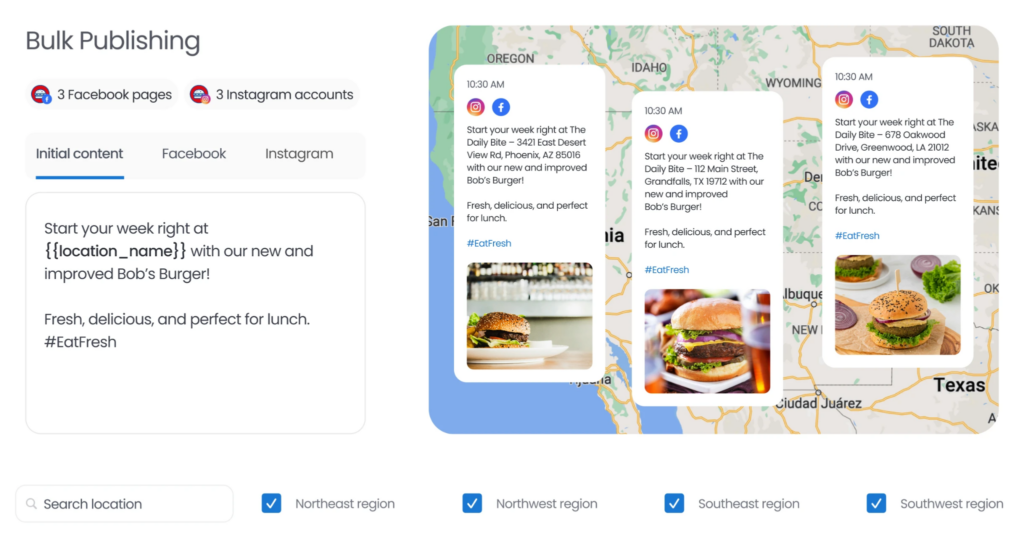
At the same time, reporting expectations are growing. Enterprise marketing teams increasingly need location-level insights, sentiment analysis, engagement trends, and cross-platform AI search visibility to measure social media impact accurately.
Next, we’ll spotlight how Social AI tools like Birdeye help brands scale their campaigns effectively.
How does Birdeye help multi-location brands manage social media in 2026?
For large multi-location brands, the goal is no longer just staying active on social media. It is creating consistent, localised, measurable customer engagement across every location and platform.
Birdeye’s full-cycle agentic marketing platform helps brands with social media management across 100-10,000+ locations while maintaining brand consistency, localised relevance, and operational control.
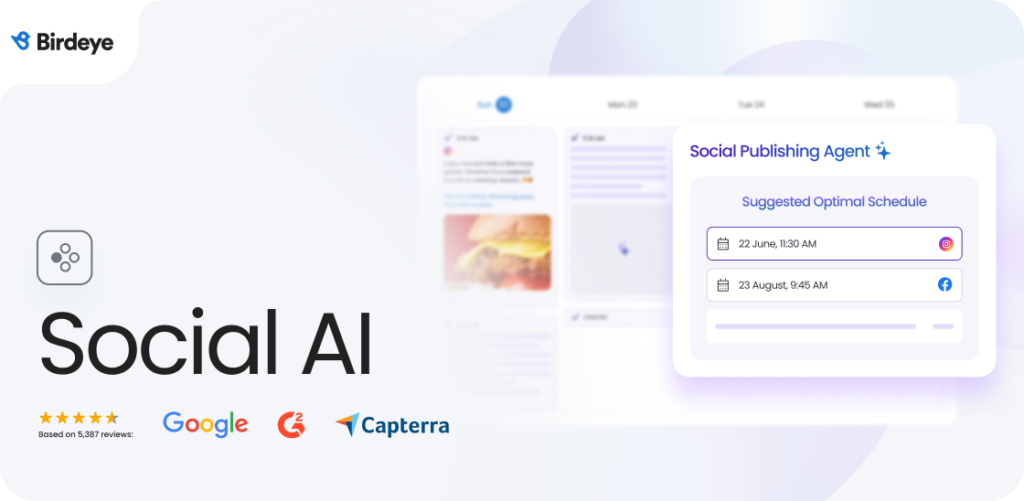
Instead of relying on disconnected tools and manual coordination, enterprise teams can manage publishing, approvals, engagement, and performance from a centralised workflow.
Several capabilities are becoming especially important for enterprise teams:
| Capability | Outcome for multi-location brands |
| Agentic publishing workflows | Faster content creation with human approval controls |
| Multi-location scheduling | Consistent publishing across hundreds of locations |
| Localised content management | More regionally relevant engagement |
| Centralized governance | Better brand consistency and compliance |
| Cross-platform reporting | Unified visibility into performance trends |
| Social engagement management | Faster response workflows across locations |
Birdeye’s AI agents help teams draft localised content, recommend publishing workflows, surface engagement insights, and support social operations at scale while keeping humans involved in approvals and final decision-making.
This human-in-the-loop model is especially important for enterprise organisations that need both efficiency and brand oversight across large location networks.
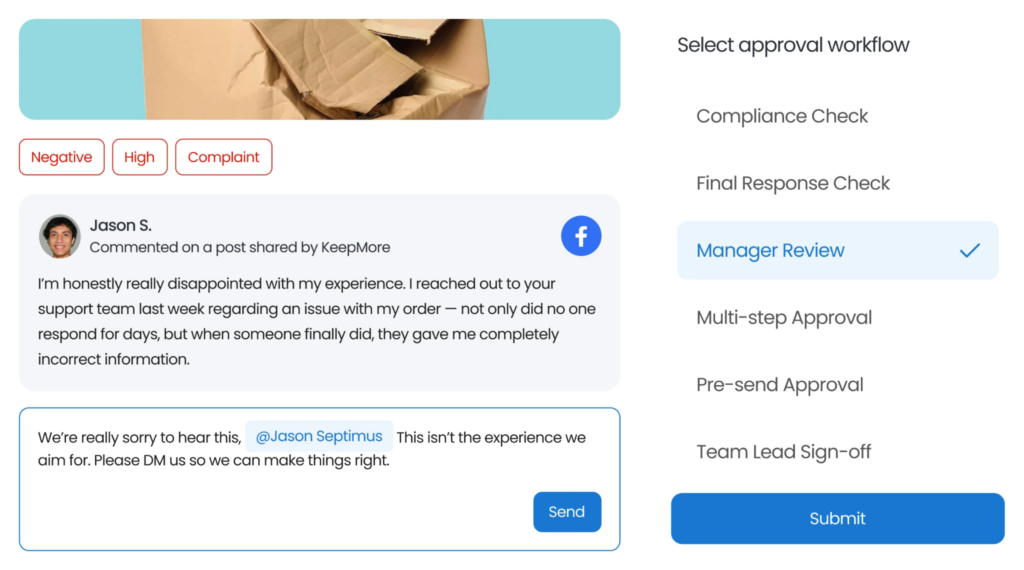
Birdeye Social AI transforms social media management and helps marketing teams reduce operational bottlenecks. Instead of managing approvals, reporting, and publishing separately across locations, teams can coordinate campaigns through centralised workflows while still giving regional teams flexibility to adapt content locally.
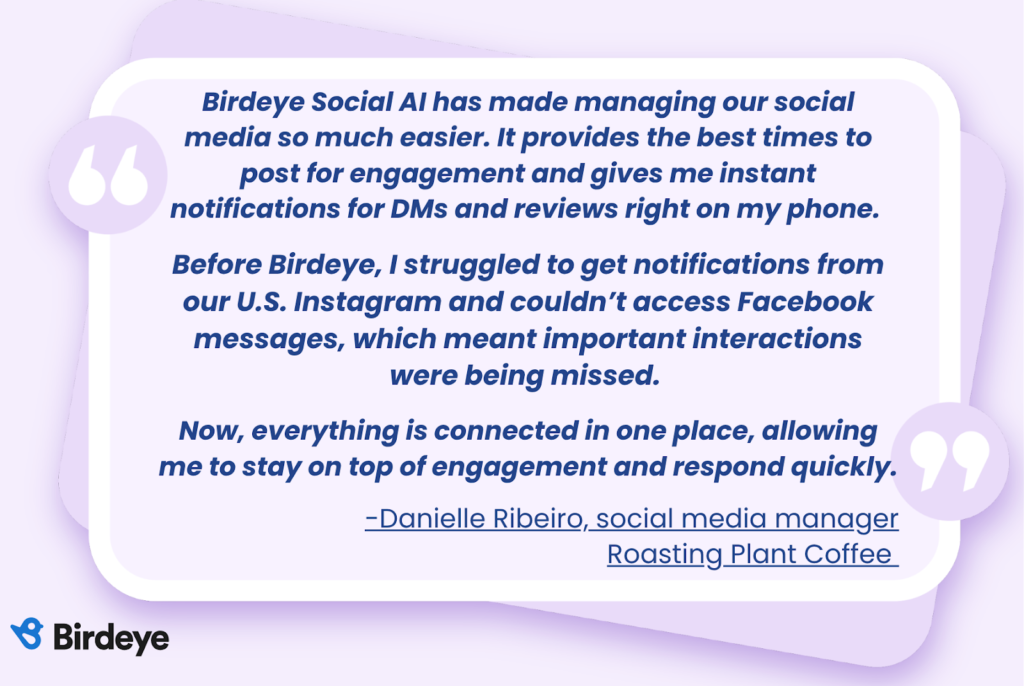
Frequently asked questions about social media statistics in the UK
Short-form video, private groups, and AI-powered content are shaping digital habits. Authenticity and narrow-targeted ads are now more valuable than chasing viral reach.
Start by listening and engaging where your audience already gathers—Facebook Groups, Discord, and even LinkedIn communities. Focus on dialogue and exclusivity over follower numbers. Encourage participation and highlight user-generated content to deepen connections.
Organic reach has dropped, especially on Facebook and Instagram. To be seen, brands mix engaging organic storytelling with tailored paid campaigns. The most effective approach blends the two and enables meaningful, measurable engagement with social users.
AI now assists in everything from creating social media posts to personalising messaging and automating tasks. New tools predict what content will perform best, speed up campaign testing, and free up time for genuine audience engagement, making your marketing plan much smarter.
AI is streamlining content planning, guiding social listening, and analysing performance instantly. Forward-thinking brands use AI tools to publish at the best times, personalise messaging, and act on the latest statistics—freeing up more time for creative, human connection.
Birdeye helps you win in social media management in the UK
For enterprise brands managing hundreds to thousands of locations, social media is notoriously broken. Corporate teams get stuck in approval bottlenecks, while local profiles end up neglected or off-brand. Generic AI tools only amplify this mess by blasting out disconnected, robotic copy that ignores local realities.
Birdeye fixes this with the industry’s only full-cycle Agentic Marketing Platform to handle brands operating from 100-10,000+ locations.
1. Social Publishing Agent
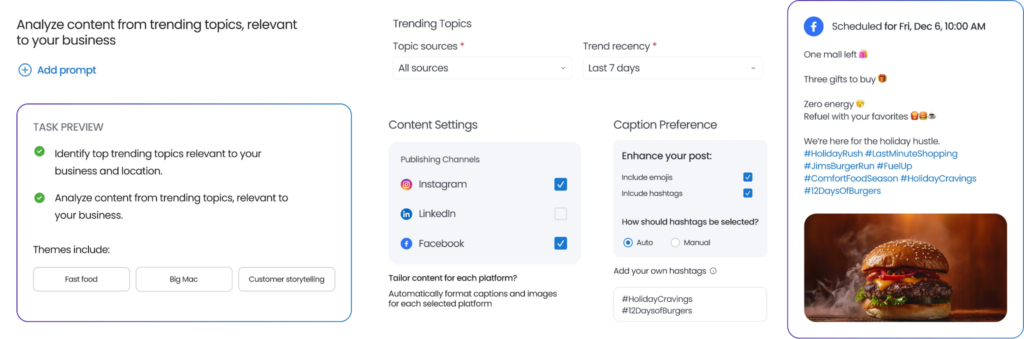
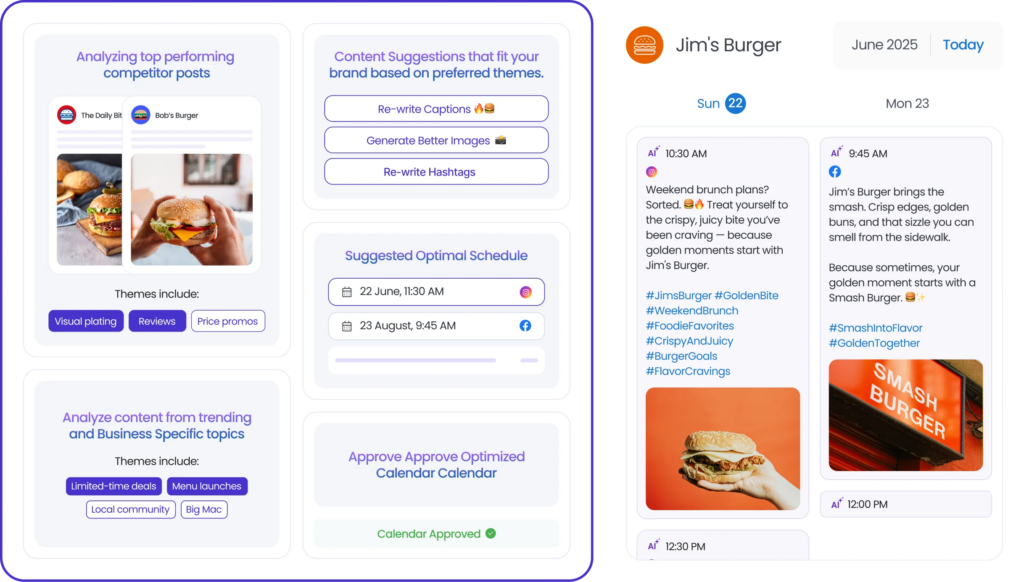
Instead of forcing a lean corporate group to manually build, tweak, and schedule distinct calendars for countless geographic areas, our Social Publishing Agent takes over the heavy lifting.
- How it drives outcomes: The agent continuously tracks local competitive signals, sentiment trends, and performance data to automatically generate custom regional content variations. It builds complete, ready-to-publish schedules mapped directly to individual location traits.
- The enterprise safeguard: Nothing goes live in a vacuum. Built-in human-in-the-loop governance routes drafted posts through multi-tiered corporate or regional approval workflows so you scale content without risking compliance.
2. Social Engagement Agent
Social profiles are local customer service front doors. When comments, product inquiries, or customer support issues sit unanswered, local visibility and conversions drop.
- How it drives outcomes: The Social Engagement Agent operates 24/7, analysing incoming interactions to decipher customer intent, language nuances, and context clues instantly. It interprets both text and imagery to safely triage messages.
- The enterprise safeguard: The agent automatically filters out spam and trolls, self-assigns operational tickets to the appropriate on-site teams, and drafts context-aware responses using pre-approved brand-voice metrics.
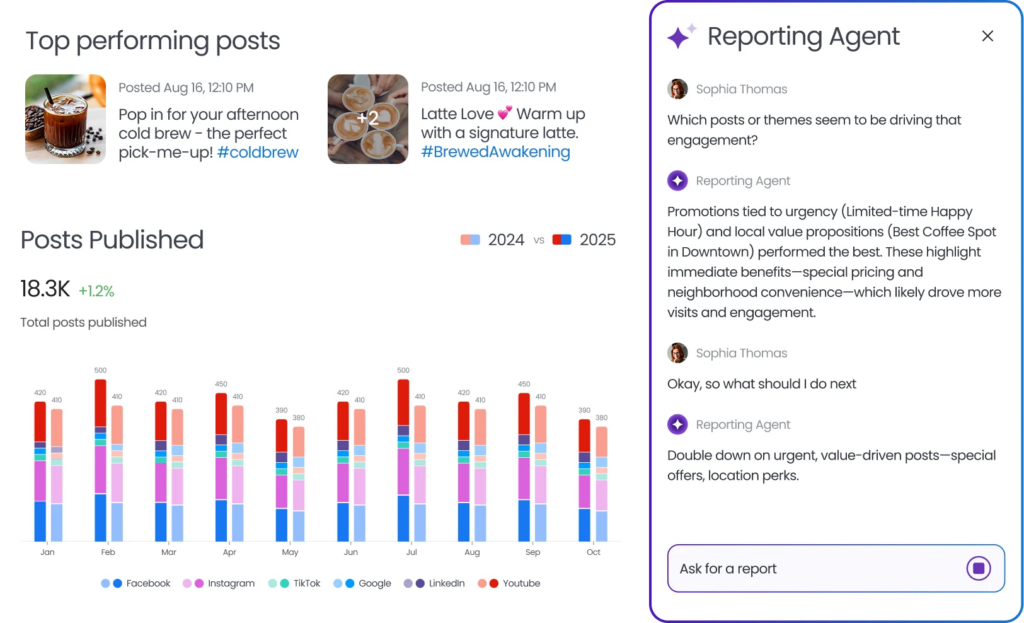
3. Reporting Agent
Upmarket buyers cannot rely on superficial metrics or fragmented data dashboards stitched across ten different point solutions.
- How it drives outcomes: Reporting Agent unifies performance fields into an interactive data layer. Using natural language via the Reporting Agent, you can immediately audit location health. Simply voice-query the engine—“Which regions saw a drop in local engagement after our Q2 promo?”—and get structured analytical summaries within seconds.
About the Author

Shruti Dugar
Birdeye
Originally published