Negative customer feedback is an unavoidable part of online reviews, and managing it requires a structured approach rather than trying to remove it. In most cases, review platforms remove only content that violates their policies, making direct response and resolution the more reliable path to protecting reputation.
Summary
Brands strengthen trust and protect their reputation when they respond to customer feedback with clarity, honesty, and accountability. While negative reviews can be challenging, they often highlight real issues that affect the customer experience and long-term perception.
This blog explains how to respond to negative customer feedback with practical steps such as addressing concerns directly, responding quickly without reacting emotionally, communicating with sincerity, correcting inaccuracies where needed, and using feedback to improve products, services, and the overall customer experience.
How to respond to negative feedback from a customer so it doesn’t damage your business?
If the negative reviewer is a real customer, it could be far more effective to engage in a dialogue and try to resolve the issue one-on-one. More often than not, dissatisfied customers spew rants on review sites just to let off steam. Acknowledging the customer’s concerns could help cool down the rage and maybe even win loyalty back. Who knows? The customer may even be inclined to update or even delete the review if you handle the issue well enough.
The important thing to remember is, in one way or another, “the customer is always right” — regardless of your frustrations. Responding to bad reviews with accusations comes off as unprofessional and defensive rather than attentive and caring. If your business has some less-than-awesome online reviews, stay calm. There is ample opportunity for damage control. Even the nastiest customer feedback can be overshadowed by enough positive reviews.

This shop got creative and used humor to make the most of a bad review.
Handling negative online reviews is an inevitable part of running a business. Learn how to use it to your advantage.

Shift your perspective on review management
Positive business reviews are welcomed with open arms and cause little friction. But here’s the twist: friction can be beneficial because growth requires feedback–all reviews are feedback.
Negative customer feedback is often even more valuable than positive feedback.
Absorb negative feedback as constructive criticism–your customers may be complaining, but they’re still taking the time to engage with you. Negative online reviews are only posted by customers who care. Return the favor.
Dig deep into customer reviews to pinpoint the issue. Often customers vent in long-winded rants, and the actual problem is difficult to identify amidst that hurricane of emotion. Comments like “worst service” or “horrible quality” are vehement but vague. You may have to directly ask the customer to explain their issue in detail. Once you understand the problem, you can take corrective action.
Remember, when customers post negative reviews, they believe their complaint is valid whether it truly is or not. This means even if they aren’t in the right, something led them to believe they were. Identify what this something is, for perception and reality frequently blur, and enough misconceptions from other customers can lead to a negative business reputation. In your response, clear up any misunderstandings to prevent any future confusion from potential customers.
Don’t react–respond. Address customer complaints promptly and thoroughly: 69% of customers attribute their positive customer service experience to a swift resolution of their issue. Fight the knee-jerk urge to defend your business, even if the negative feedback is unfair. As in any human interaction, denials and accusations only elevate conflicts. The shorter the conversation, the better. Also, account for the setting: if bad customer reviews are posted on public sites, whatever you say is visible to everyone. Even in private exchanges, however, your response reflects your business as a whole.
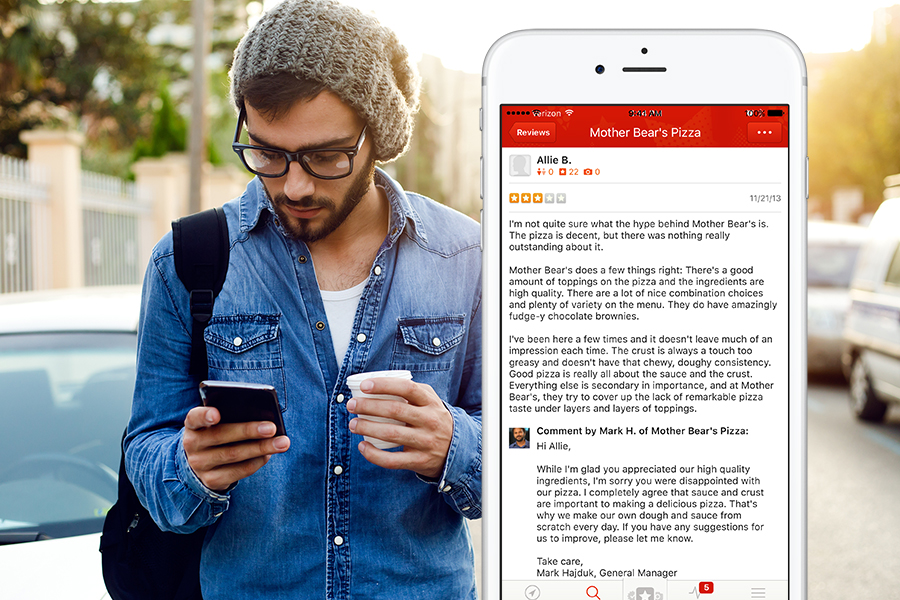
This business couldn’t remove their negative review, so they turned it positive with a thoughtful reply.
Timely responses show respect, but rushed responses are dangerous. If the negative feedback strikes a nerve, wait until you’ve calmed down to plan out your reply. Take a walk around the block, watch a funny cat video, whatever works. Then begin carefully choosing your words.
Appreciate the voice of the customer. As mentioned above, negative feedback really can benefit your business. Without complaints, a problem may continue repeatedly and possibly worsen. Let your customers know you sincerely appreciate their feedback; even if you had to take a cold bath to quell your fury, don’t let it show. Swallow your pride, thoughtfully acknowledge your customer’s dissatisfaction and thank them respectfully for their feedback. A gracious response can transform livid customers into loyal ones. Ending the conversation on a positive note can spin a customer complaint into an outstanding customer experience.
Provide evidence of customer experience improvement. If you were able to take immediate steps to resolve the problem, let the customer know in your initial response. Otherwise, outline the steps you will take to fix it. If the issue was not promptly resolved before your response, follow up once you’ve made changes so the customer knows you really listened. These steps make you well-equipped in knowing how to respond to negative feedback from a customer.
Don’t let bad customer reviews get you down. Instead, use them to connect with your customers and nip issues in the bud to keep your online reputation squeaky clean.
Very often, a customer’s feedback is also apparent through their body language. Think of the cues of positive feedback when a customer is excited. Their body language becomes animated or they may ask questions about implementation. When negative feedback is the response, it is often body language that cues the seller.
Importance of communicating with these customers. By responding to customers‘feedback and feature requests, we show that we are listening to them and that we value them as our customers. This helps strengthen customer loyalty.
Learn how to respond to customer feedback, positive or negative, to expand selling opportunities or manage objections for better results.
How to respond to negative feedback from a customer – If you’re willing to listen to your customers and take their feedback to heart to improve your services, you’ll come out ahead in the long run. There are tools out there that make it easy to take control of negative feedback before it becomes problematic. Birdeye sends you alerts the moment a negative review is left for your business and lets you respond immediately to all reviews from one place. Sign up for a free Birdeye trial to see how easy it can be to manage your online reputation, address negative feedback, and generate more authentic reviews that win more customers.
How Birdeye manages negative reviews and turns them into reputation recovery signals
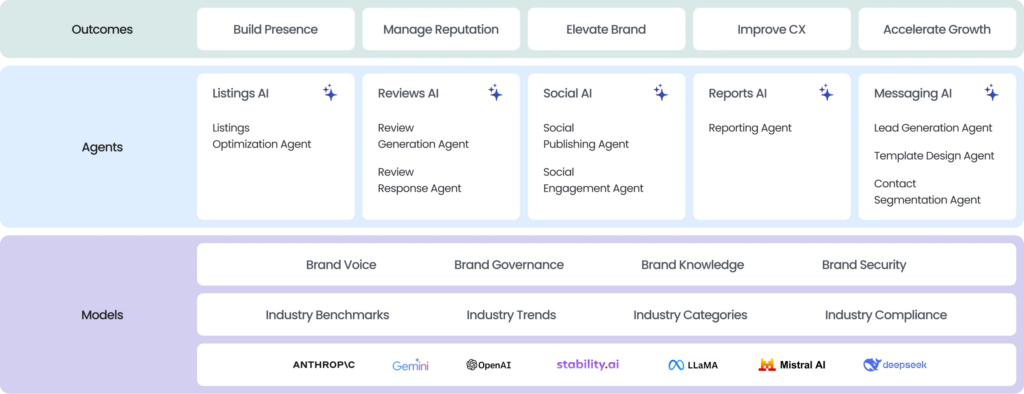
Birdeye helps multi-location brands respond to negative feedback faster, maintain consistency across locations, and strengthen online reputation by turning customer reviews into actionable signals across 100–10,000+ locations.
Instead of treating reviews as isolated comments, the platform connects feedback, response workflows, and reporting into a single system. This helps enterprise brands reduce response delays, improve service recovery, and maintain consistent communication across all customer touchpoints.
Trusted by leading enterprise brands globally, it helps organizations grow their local presence, manage their reputation, and improve the customer experience across markets. Teams across the U.S., EMEA, and APAC rely on it to ensure customer feedback is consistently captured, understood, and acted on.
Its specialized AI coworkers help teams manage signals that influence customer perception and discovery:
- Jay improves visibility and supports customer acquisition through stronger reputation signals
- Robin ensures accuracy, consistency, and operational alignment across locations
- Myna identifies sentiment patterns that reflect customer experience quality
These capabilities help brands shift from reactive review handling to structured reputation management. For example:
- Review Generation Agent helps maintain a steady flow of authentic customer feedback
- Review Response Agent ensures timely, consistent replies that address concerns effectively
- Listings Optimization Agent keeps business details accurate across major discovery platforms
- Social Publishing and Engagement Agents maintain a consistent local presence across channels
- Lead Generation Agent captures and qualifies incoming customer interest
- Reporting Agent explains reputation trends and highlights performance changes in simple terms
For enterprise brands operating across 100–10,000+ locations, this connected approach helps improve consistency across reviews, listings, and customer interactions while strengthening reputation outcomes.

About the Author

Vanjana Sharma
Originally published