ChatGPT is rapidly becoming a key destination for people seeking answers of all kinds, including local queries. The platform now sees 800 million weekly users, up from 400 million earlier this year, and its monthly traffic has grown to 5.8 billion visits. As more people turn to AI-generated answers, ChatGPT reviews available data, assesses credibility, and surfaces businesses it can confidently cite. Appearing in these AI responses depends on how well your online information is accurate, consistent, and backed by strong reputation signals.
Summary
AI-generated answers now play a growing role in how people discover, evaluate, and choose local businesses, yet many local businesses still don’t know when they’re mentioned, why they’re overlooked, or how their visibility compares to nearby competitors. Inaccurate listings, weak reputation data, and fragmented online profiles often cause ChatGPT to skip over businesses entirely, even when they are highly relevant to a user’s query.

To show up consistently, local businesses need clean data, strong reviews, and the right AI-ready signals across the web. With the right optimization and AI visibility tracking tools like Birdeye Search AI, brands can understand how they rank on ChatGPT, what’s holding them back, and what steps will improve their presence across AI search experiences.

This guide walks through how ChatGPT collects and interprets local business information, the factors that shape AI visibility, and the actions you can take to show up more often.
Table of contents
- Why ChatGPT is becoming a major search engine
- How ChatGPT sources local business information
- What factors influence ChatGPT visibility
- Steps to improve visibility: how local businesses can show up on ChatGPT
- How Birdeye Search AI helps you appear on ChatGPT
- FAQs about ChatGPT visibility for local businesses
- Conclusion
Why ChatGPT is becoming a major search engine
ChatGPT is quickly becoming a go-to place for local discovery because it delivers answers in the way people naturally ask questions. Instead of scanning through pages of links, users receive direct explanations, options, and recommendations in a single, conversational response.
With its ability to understand intent, summarize large amounts of information, and pull in real-time data from the web, ChatGPT offers a smoother and more intuitive search experience than traditional keyword-based engines.
Key reasons for its growing importance:
1. Conversational, direct answers
ChatGPT understands natural language, allowing people to ask questions the way they speak. Instead of scrolling through pages of links, users receive a clear, consolidated answer in one place.
2. Fast information synthesis
ChatGPT can quickly scan, interpret, and condense large amounts of information into simple takeaways. This way, users get a clean, structured summary instantly and grasp the essentials faster, especially when researching unfamiliar topics or comparing options.
3. More personalized and creative responses
Many users feel that ChatGPT delivers results that match their intent more closely, especially for open-ended or exploratory questions where traditional search falls short.
4. Access to real-time information
With internet-enabled responses, ChatGPT can pull in updated data, product details, business information, and other timely insights directly within the chat.
5. A smoother research experience
Whether someone is comparing services or researching products, ChatGPT can provide guides, pros and cons, or recommendations in a single answer, making certain tasks easier than using a standard search engine.
6. Shifting the search landscape
ChatGPT is reshaping how people search. Instead of typing keywords, users now ask full questions and expect direct answers. This shift toward conversational search has forced search engines like Google and Bing to redesign their results pages with AI overviews and summaries.
7. Growing trust and stronger intent
ChatGPT filters, interprets, and simplifies information before presenting it, which makes its recommendations feel clearer and more trustworthy. That trust often leads users to take higher-intent actions, whether they’re choosing a business or comparing services.
As ChatGPT becomes a central place where people ask for local recommendations, understanding how it interprets and cites business information is now essential for showing up more often.
How ChatGPT sources local business information
ChatGPT pulls local business details from publicly available information across the web. When browsing is enabled in paid versions, ChatGPT can check live information from the web using Bing’s search results, ensuring business details are current and accurate. Instead of showing a list of links, the system combines information from multiple sources into one clear, conversational response.
For local businesses, this means your visibility depends on how complete, consistent, and credible your online footprint appears across these sources
Key sources ChatGPT relies on:
Business websites
Your official websites are among the most trusted sources. ChatGPT looks for core details such as your hours, services, addresses, and contact details, especially when the site uses structured data markup that makes this information easier to interpret.
Local publications and industry outlets
Articles, features, and mentions in reputable city guides, news outlets, or niche blogs offer authoritative signals that strengthen a business’s credibility. These signals help ChatGPT determine whether your business is reputable and well-recognized within the community.
Online directories and review platforms
Structured listings from sites such as Yelp, TripAdvisor, BBB, Apple Maps, Foursquare, and others give ChatGPT verifiable data points. These listings help ChatGPT validate name–address–phone (NAP) consistency, categories, and reputation signals.
Bing Places for business
Since ChatGPT’s real-time browsing relies on Bing, a complete and accurate Bing Places profile increases the likelihood that your business appears in AI-generated results.
Social platforms and community discussions
Public posts on platforms like Facebook, Instagram, and LinkedIn, along with community sentiment from Reddit, Quora, and other forums, can reinforce what your business offers and how people perceive it.
Official and government websites
Listings in municipal business directories, tourism boards, or other government-backed sites carry high authority. They help ChatGPT confirm the accuracy of business information.
Businesses with consistent details, strong citations, and repeated mentions across authoritative sites are more likely to appear in ChatGPT’s recommendations. The clearer and more aligned your online presence is across the web, the easier it is for ChatGPT to verify and cite your business.
What factors influence ChatGPT visibility
ChatGPT decides which businesses to mention based on the clarity of their content, the strength of their online reputation, the authority of the sources referencing them, and how consistently their information appears across the web. The model tends to favor brands with detailed, well-structured content, credible citations, and clear signals that verify their identity. Here’s how these factors break down in practice:
1. Content quality and structure
Clear and organized writing
Pages that are easy to understand and structured logically with images, videos, or product photos are more likely to be cited.
Depth and usefulness
ChatGPT leans toward content that provides meaningful detail rather than surface-level summaries.
Strong page structure
Long-form pages, especially those broken into clear sections, tend to perform better, as they help the model extract and understand information.
Direct Q&A formatting
Content that answers specific questions in a clean question-and-answer format often ranks higher in visibility.
Use of data and expert insights
Articles supported by statistics, research, or expert commentary give stronger signals of credibility.
2. Brand authority and credibility
Trusted sources
ChatGPT is more likely to rely on information from authoritative domains or publishers with a clear track record of reliability.
Consistent online mentions
Being referenced across respected platforms, such as Yelp, Google, or local news outlets, helps reinforce your brand as a legitimate entity.
Strong trust signals
Brands that demonstrate experience, expertise, and authority (aligned with E-E-A-T principles) tend to surface more often.
Reputation strength
A steady flow of positive mentions and reviews across the web helps build credibility in the model’s scoring.
Want a clear framework to strengthen authority across every location? The Essential GEO Checklist for Multi-Location Brands shows how to improve trust signals, accuracy, and visibility at scale.
3. Technical and platform-related factors
Structured data markup
Schema markup makes it easier for AI systems to interpret business details, improving the chance of being used in responses.
Performance on Bing
ChatGPT browsing is tied to Bing’s index, a complete and verified Bing Places listing can support better visibility.
AI-accessible websites
Sites that allow AI crawlers and avoid restrictive settings are more likely to be processed and cited.
Accurate, uniform data
Consistency across listings and directories reduces confusion and strengthens the model’s confidence in your business.
4. Online presence and consistency
Strong entity presence
The more widely your business is referenced across trusted websites, the easier it is for ChatGPT to confirm your identity.
Aligned terminology and messaging
Using consistent naming, categories, and descriptions across platforms helps the model connect all your signals to the same entity.
When these factors work together, your business becomes easier for ChatGPT to recognize, trust, and reference in its responses.
Manage Posts, Reputation, and Reporting across Locations
Want to see the impact of Birdeye on your business? Watch the Free Demo Now.
Steps to improve visibility: how local businesses can show up on ChatGPT
Once you understand how ChatGPT gathers and interprets business information, the next step is improving the signals that help your business appear more often. ChatGPT recommends businesses that it can verify, cite confidently, and pull accurate details from. Strengthening these signals requires a mix of content improvements, listing accuracy, and reputation-building actions across the web.
Below are the most important steps local businesses can take to improve visibility in ChatGPT answers.
1. Fix and strengthen your online listings
ChatGPT relies heavily on consistent, accurate data across the web. Any mismatch in basic details creates uncertainty and lowers the chance of being cited.
What to do:
- Make sure your business name, address, and phone number match across Google, Bing Places, Yelp, Apple Maps, and major directories.
- Update hours, services, and categories on every platform.
- Remove duplicates or outdated profiles that may confuse AI systems.
- Add photos, service descriptions, and attributes that help AI interpret what you offer.
Why it matters: Accurate listings give ChatGPT the confidence that your information is trustworthy and current.
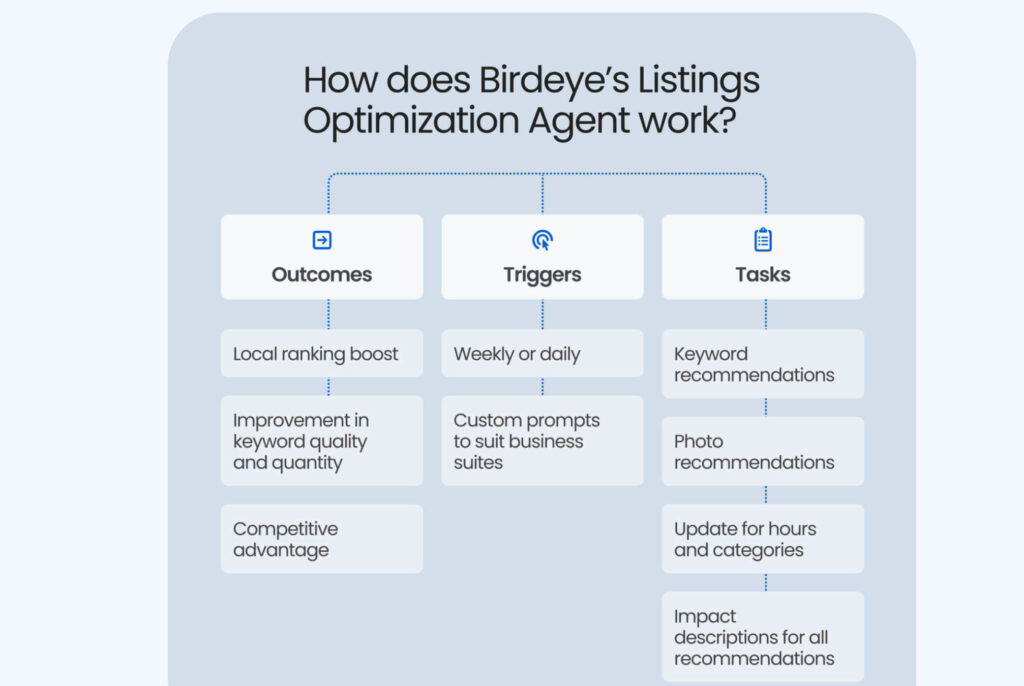
Pro tip: With Birdeye Listings AI and the Listings Optimization Agent, you can manage, optimize, and sync listings across directories from one place, reducing errors, duplicates, and visibility gaps that can confuse AI systems.
2. Strengthen your Bing Places profile
ChatGPT’s browsing uses Bing data, this profile shapes how often your business appears in AI-generated answers.
What to do:
- Complete every field, including business categories, service areas, photos, FAQs, and attributes.
- Add structured service descriptions instead of one-line summaries.
- Verify your listing and update seasonal hours consistently.
- Connect your website and ensure Bing can crawl it without restrictions.
Why it matters: A strong Bing profile helps ChatGPT validate your identity and surface your business in more local responses.
3. Improve your website’s clarity, structure, and accessibility
Your website is one of the most trusted sources ChatGPT uses. If the information is unclear, unorganized, or difficult for AI to interpret, visibility drops.
What to do:
- Use clear page structures with headings, short paragraphs, and descriptive sections.
- Add FAQ-style Q&A blocks for common customer questions.
- Include detailed service pages with depth and real explanations, not thin content.
- Add schema markup (LocalBusiness, FAQPage, Service) so AI systems can interpret your pages.
- Avoid blocking AI crawlers and ensure your sitemap is accessible.
Why it matters: A clean, structured website gives ChatGPT more usable material to cite.
4. Build stronger reputation signals
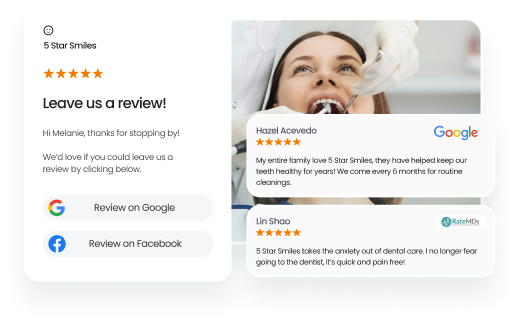
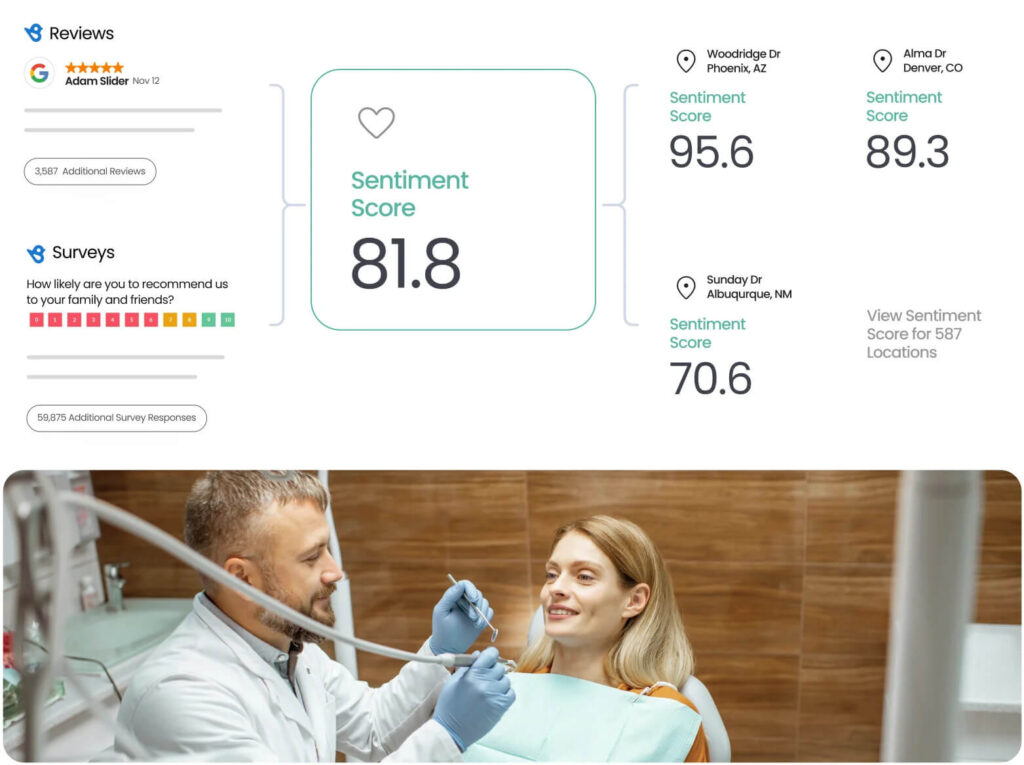
Reviews across reputable platforms help ChatGPT determine credibility and authority. Businesses with a steady flow of recent reviews tend to appear more often in recommendations. With Birdeye Sentiment Score, you can see in real time whether that feedback is trending positive or negative, and which themes are pulling your score up or down based on review and survey language.
What to do:
Ask for reviews regularly across Google, Facebook, Yelp, and industry-specific directories.
Respond to reviews with context and detail. Address negative feedback promptly to keep sentiment balanced. Encourage reviewers to mention specific services; these help ChatGPT match you to more intent-based queries.
Why it matters: When your Sentiment Score stays high and stable over time, it signals consistent customer satisfaction, making your business more likely to be recommended.
5. Increase your presence across authoritative sources
The more credible mentions your business earns, the more confident ChatGPT becomes in citing you as a trusted entity.
What to do:
- Publish detailed guides or helpful resources on your website.
- Earn mentions in reputable local publications, listing sites, and industry outlets.
- Maintain an active presence on social platforms where your audience participates.
- Participate in community or industry activities that result in online mentions.
Why it matters: A broader presence makes your business easier for ChatGPT to verify.
6. Align your naming, descriptions, and categories everywhere
ChatGPT connects signals from across the web. Inconsistent naming or mismatched categories can weaken your entity profile.
What to do:
- Use the same business name everywhere, and avoid abbreviations or variations.
- Keep your categories and service descriptions consistent across listings, your website, and social platforms.
- Remove outdated or duplicate wording that splits your online identity.
Why it matters: Strong consistency helps AI systems map every signal back to the same business.
7. Monitor how ChatGPT describes your business
Your AI presence evolves as your online footprint changes. Regular monitoring helps identify gaps or errors.
What to do:
- Ask ChatGPT how it describes your business, your competitors, and your category.
- Look for outdated details, incomplete descriptions, or missing services.
- Note when competitors appear, but you do not, this often points to weak or missing signals.
Why it matters: Ongoing review ensures your business is represented accurately across AI-driven answers.
How Birdeye Search AI helps you appear on ChatGPT
Birdeye Search AI is designed to help local businesses measure, improve, and automate their visibility across AI-powered search engines, including ChatGPT, Gemini, and Perplexity. Here’s how it works:
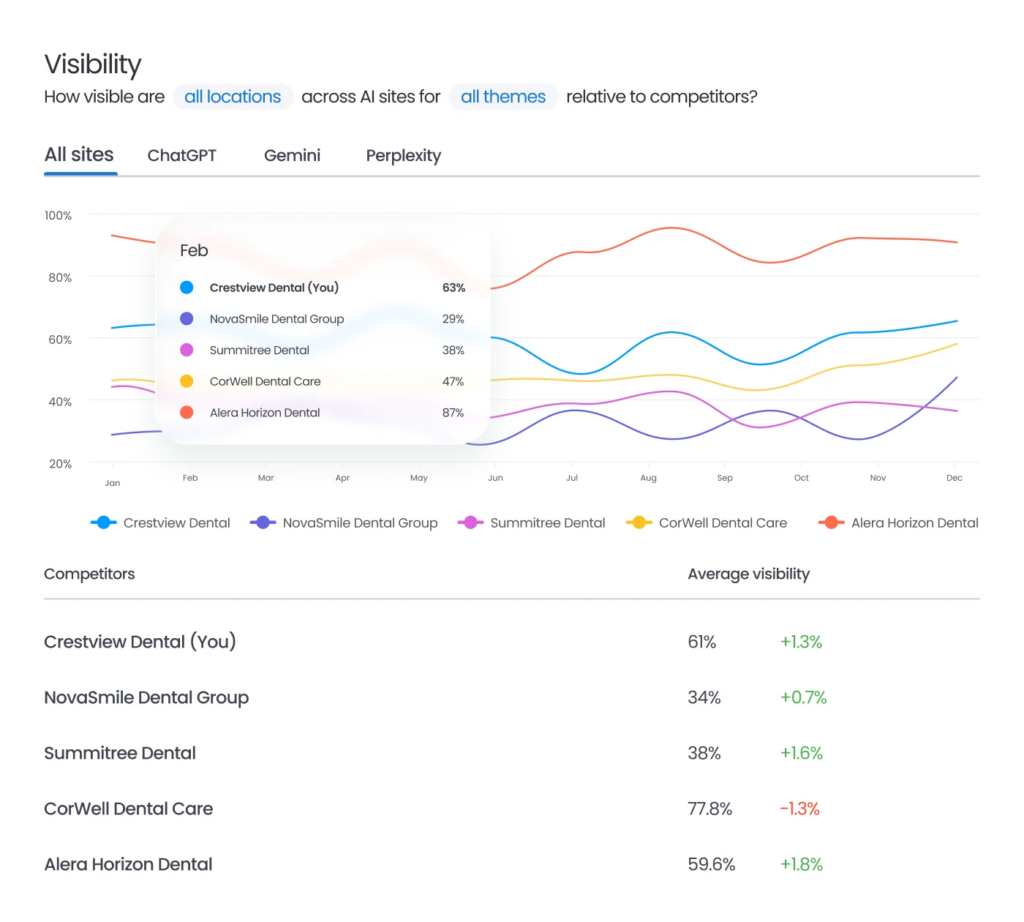
Visibility tracking
Search AI shows how often your business appears in ChatGPT answers for relevant keywords, questions, and service-related queries. You can track:
- When and where your business is mentioned
- The context in which ChatGPT includes you
- Which types of questions surface in your business most frequently
- How your visibility changes as your information improves
This gives you a direct view of your AI search presence, something that’s otherwise impossible to measure manually.
Ranking insights
Search AI compares your visibility to nearby competitors so you can understand where you stand in local AI-driven recommendations. Search AI shows:
- Which competitors appear more often
- The queries they dominate
- What strengths (reviews, content depth, listing accuracy) push them ahead
- Where you outperform others
These insights help you understand why certain businesses are cited more often and what factors influence your ranking in ChatGPT’s responses.
Citation gap detection
ChatGPT avoids recommending businesses it can’t verify. Search AI identifies the missing, inaccurate, or inconsistent signals that prevent AI systems from citing your business. This includes:
- Outdated or mismatched listings
- Missing service details or categories
- Broken or incomplete schema markup
- Weak review signals or gaps in sentiment
- Conflicting information across directories
This way, Search AI gives you a clear roadmap to strengthen your online footprint.
Automated fixes with agents
Once gaps are identified, Birdeye’s AI agents can correct them across the web. Agents can:
- Birdeye Listing Optimization Agent updates listings across major directories & syncs business information, hours, and categories
- Birdeye Review Generation Agent identifies new customers, selects the proper channels, and sends timely review requests to keep a steady stream of feedback coming
- Review Response Agent autogenerates and personalizes relevant and contextual replies
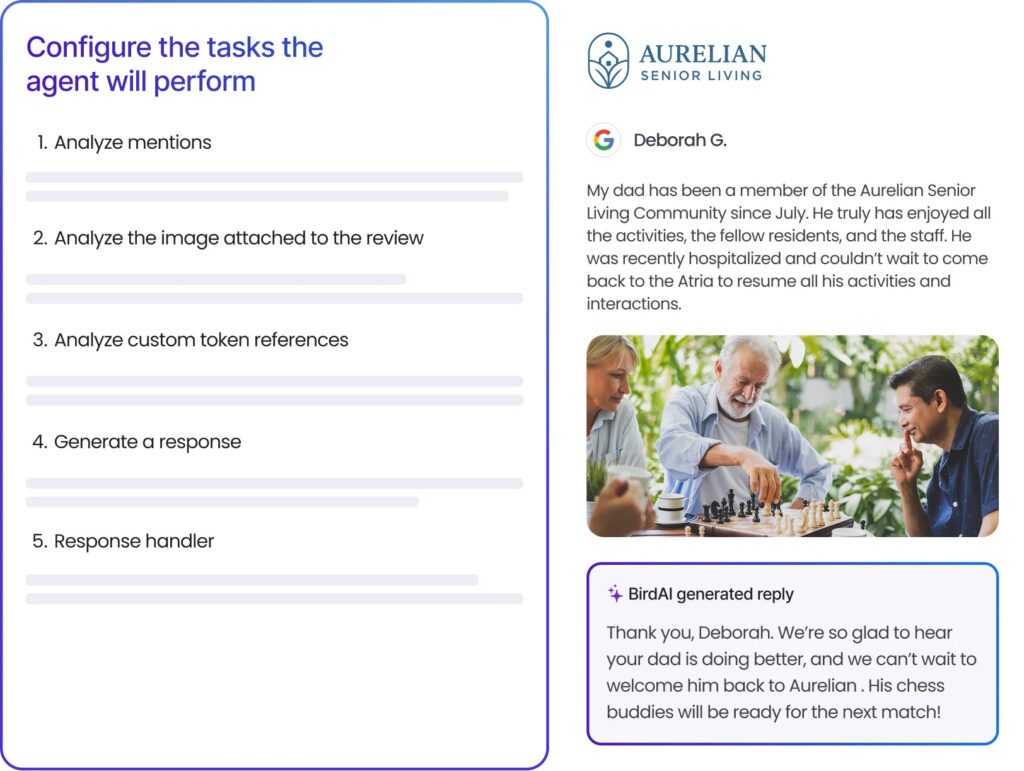
These automated actions keep your online presence aligned and error-free, making it easier for ChatGPT to trust your information and reference your business in local answers.
FAQs about ChatGPT visibility for local businesses
Birdeye Search AI tracks your visibility in ChatGPT responses and shows which signals affect how often your business is mentioned.
Yes, it highlights citation gaps, such as outdated listings, weak reviews, or inconsistent information across the web.
It provides side-by-side insights on which competitors appear more often and what factors give them an advantage.
Birdeye’s AI agents can update listings, sync business information, and correct inaccuracies across major platforms.
Yes, it displays when, where, and in what context your business appears in ChatGPT answers.
Stronger reviews, consistent listings, and corrected gaps make your business easier for ChatGPT to verify and recommend.
This usually happens when key signals like listings, reviews, or business information are inconsistent. Birdeye identifies these gaps so you know what needs attention.
Yes. If online sources are outdated or mismatched, ChatGPT may surface inaccurate details. Birdeye helps correct and sync your information across trusted sites.
Stronger reviews, complete listings, and accurate information make your business easier for ChatGPT to verify and recommend. Birdeye’s AI tools help strengthen each of these signals.
Conclusion
As AI-driven search becomes a regular part of how people discover local businesses, showing up on ChatGPT requires more than a strong website or scattered listings. It calls for clean data, consistent signals, and a steady flow of proof that your business is credible and active.
By strengthening these foundations and keeping your online presence aligned across the web, you increase the likelihood that ChatGPT can verify and confidently reference your business. With the right tools in place, like Birdeye Search AI, local brands can turn AI search from a blind spot into a reliable source of visibility and customer intent.
Most local businesses have no idea how they show up in ChatGPT. Birdeye Search AI gives you real visibility tracking, competitor insights, and automated fixes.
→ Schedule your Birdeye Search AI Free Demo
About the Author

Vanjana Sharma
Originally published