To add your business to Apple Maps, you need to create or claim your listing through Apple Business Connect, verify your business, and complete your profile with accurate business information. Once verified, your business can appear across Apple Maps, Siri, Messages, Wallet, and other Apple services that help customers discover local businesses.
Summary
When customers search on Apple Maps, Siri, Messages, Wallet, or increasingly through AI-powered search experiences, your Apple Maps listing helps determine whether your brand appears in the results.

In this guide, you'll learn how to add your business to Apple Maps, verify your listing through Apple Business Connect, optimize your profile for greater visibility, and manage listings at scale across multiple locations. You'll also learn how accurate business data, reviews, and listing consistency influence both local search performance and AI-driven recommendations.
Table of contents
- What do you need before adding your business to Apple Maps?
- How to add your business to Apple Maps in 5 simple steps
- What are the benefits of adding your business to Apple Maps?
- How does Apple Maps compare to Google Maps and Yelp for multi-location brands?
- How can you optimize your Apple Maps listing for better visibility?
- What challenges do multi-location brands face when managing Apple Maps listings?
- How can Birdeye help multi-location brands manage Apple Maps listings and AI visibility?
- Frequently asked questions about how to add a business to Apple Maps
- Add your business to Apple Maps and scale visibility with Birdeye
What do you need before adding your business to Apple Maps?
Before you add your business to Apple Maps, gather the information required for setup and verification. Having these details ready can help you complete the process faster and avoid delays during verification.
Requirements checklist
- An Apple Account (formerly Apple ID)
- Legal business name
- Physical business address
- Business phone number
- Website URL
- Business category
- Operating hours
- Access to a phone number or business documents for verification
If you’re managing multiple locations, it’s worth standardizing this information before creating listings. Consistent business details across locations make it easier for customers to find accurate information and reduce discrepancies that can affect local visibility.
Once everything is prepared, you can create a new listing or claim an existing one through Apple Business Connect.
How to add your business to Apple Maps in 5 simple steps
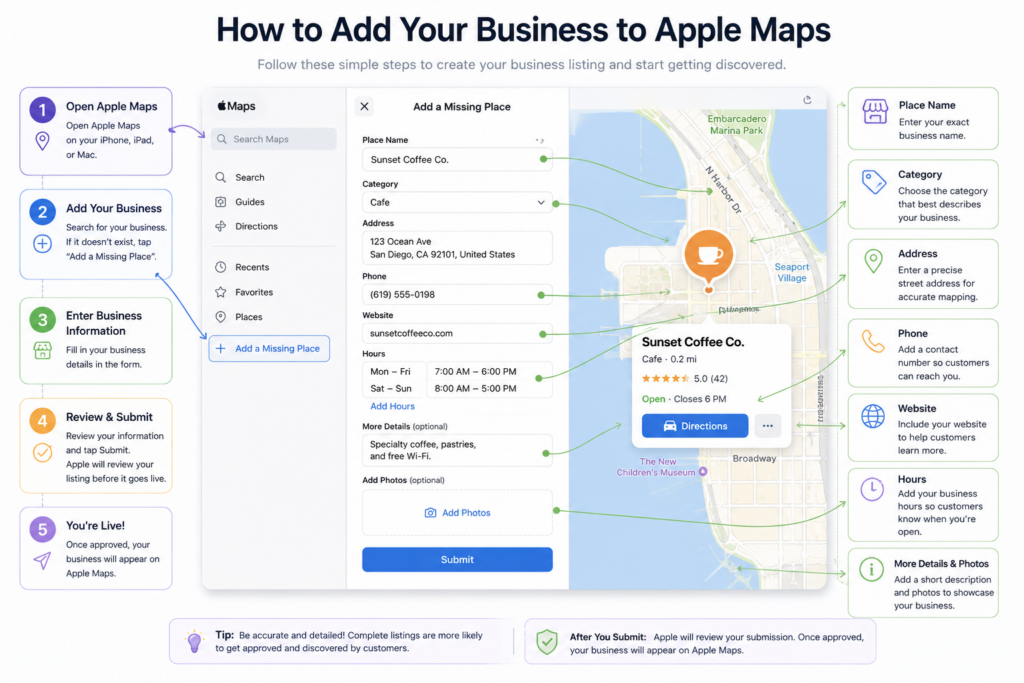
Adding your business to Apple Maps starts in Apple Business Connect, Apple’s platform for managing business information across Apple Maps and other Apple services.
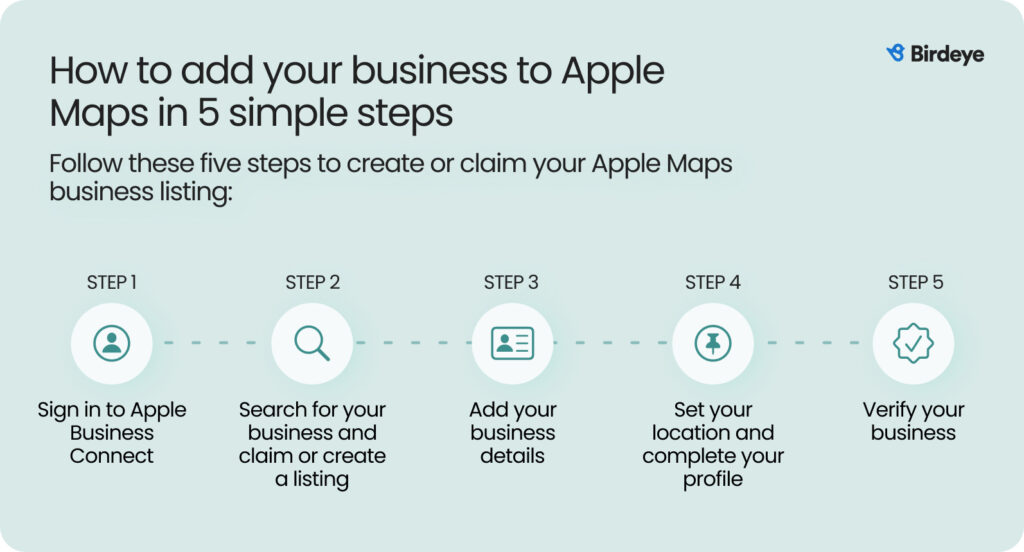
Step 1: Sign in to Apple Business Connect
Visit Apple Business Connect and sign in using your Apple Account (formerly Apple ID).
If you don’t already have an Apple Account, you’ll need to create one before continuing.
Once signed in, select “Get Started” to begin creating or claiming your Apple Maps business profile.
Step 2: Search for your business and claim or create a listing
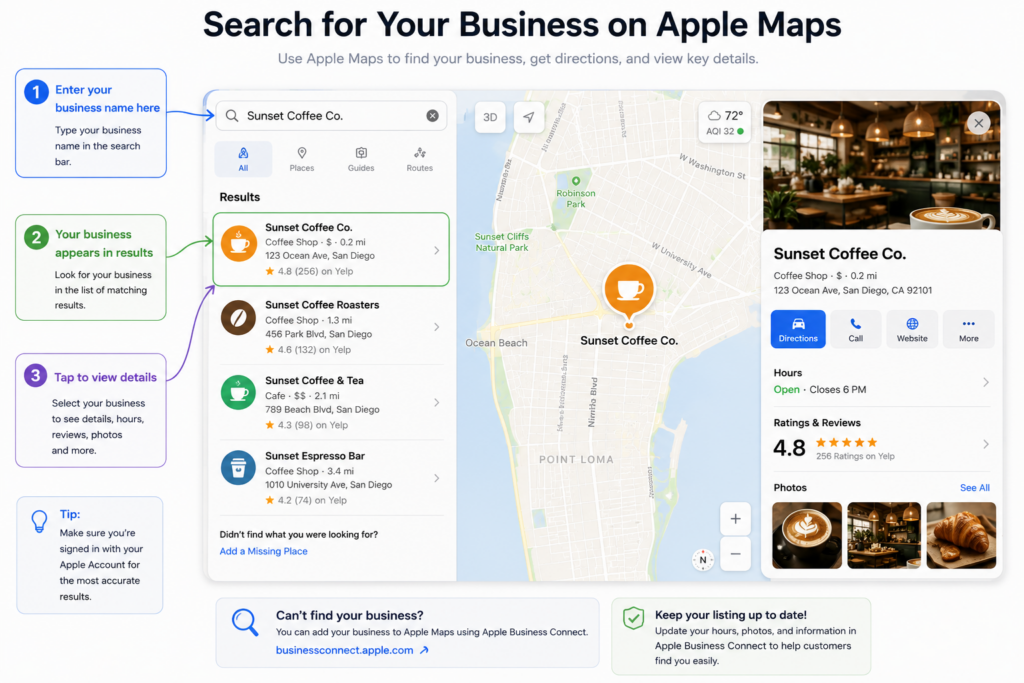
Before creating a new listing, search for your business to see whether it already exists on Apple Maps.
You can search using:
- Business name
- Address
- City
- ZIP code
- Phone number
What if your business already appears on Apple Maps?
Claim the listing and review the existing information carefully.
Verify that:
- Business name is accurate
- Address is correct
- Phone number is current
- Website URL is valid
- Business category is appropriate
Once you’ve confirmed the information, select “Claim this place” and continue with verification.
What if your business does not appear on Apple Maps?
Select “Add a new location” and enter your business information.
Creating a new listing allows you to build a complete Apple Maps profile and control how customers discover your brand across Apple services.
Step 3: Add your business details
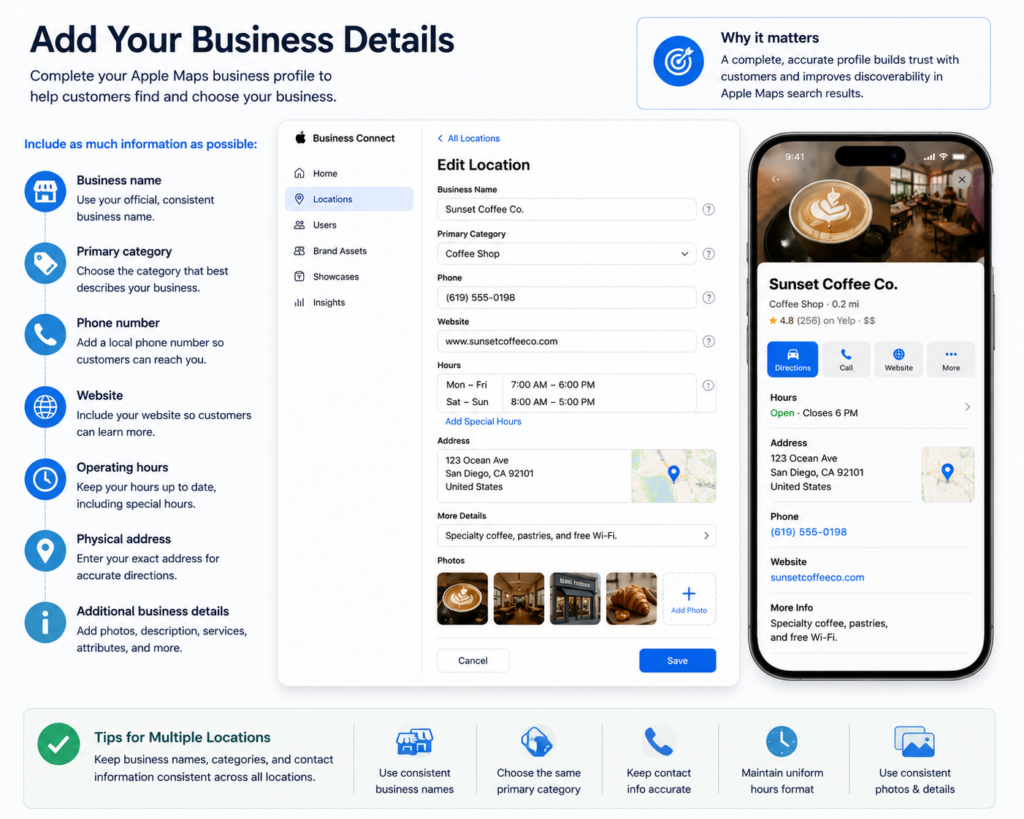
Next, complete your Apple Maps business profile.
Include as much information as possible, such as:
- Business name
- Primary category
- Phone number
- Website
- Operating hours
- Physical address
- Additional business details
A complete profile helps customers understand your business and improves discoverability when people search for relevant products or services.
If you’re managing multiple locations, make sure naming conventions, categories, and contact information remain consistent across every location.
Step 4: Set your location and complete your profile
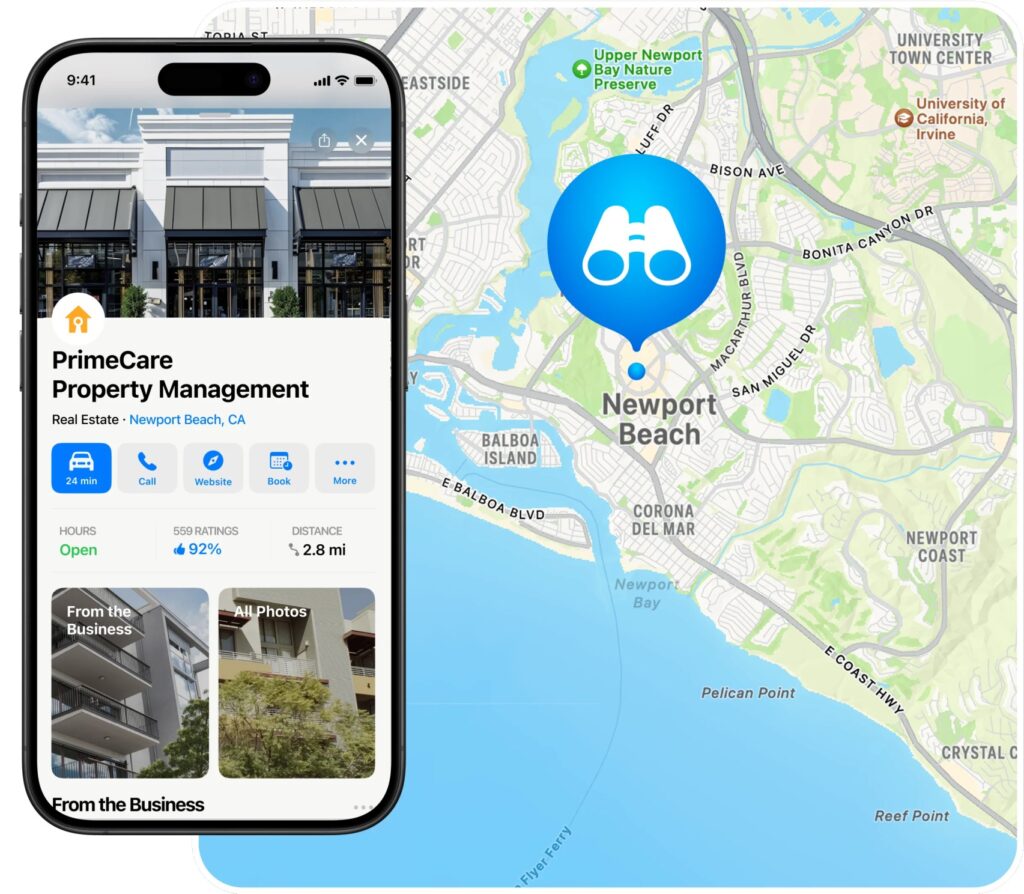
Apple will ask you to confirm your business location on the map.
Carefully review the location pin and ensure it accurately reflects your storefront, office, or service location.
You should also strengthen your profile by adding:
- Business description
- Photos
- Service information
- Additional location details
Accurate location data helps customers find the correct location and reduces confusion when requesting directions.
Step 5: Verify your business
Before your Apple Maps listing goes live, Apple must verify that you own or manage the business. The verification method may vary depending on whether you’re managing a single location or multiple locations.
How does Apple Maps verification work?
Most businesses can verify an individual location directly through Apple Business Connect.
During this process, Apple may ask you to:
- Confirm your business phone number
- Verify location details
- Complete additional ownership checks
To avoid delays, make sure the information you submit matches your public business information across directories and your website.
Is verification different for multi-location brands?
Yes. Brands managing multiple locations may be required to complete company-level verification before managing all locations from a single account.
Apple may request:
- Business documentation
- Corporate website information
- Company contact details
- Additional ownership verification
Company verification helps establish centralized control over multiple locations and can simplify ongoing listing management.
What should you do after your business is verified?
Once your listing is live, review it carefully to ensure all information appears correctly on Apple Maps.
Check that:
- Business name is accurate
- Address is correct
- Phone number works
- Website links properly
- Business hours are current
- Categories are relevant
- Photos display correctly
Verification is only the beginning. Keeping your listing accurate and up to date helps customers find the right information and improves your visibility across Apple’s ecosystem.
What are the benefits of adding your business to Apple Maps?
Adding your business to Apple Maps does more than help customers find directions. It gives your brand a presence across Apple’s ecosystem, helping customers discover, evaluate, and contact your business when they’re ready to take action.
For multi-location brands, an optimized Apple Maps listing also helps maintain consistent business information across locations and improves visibility in local search results.
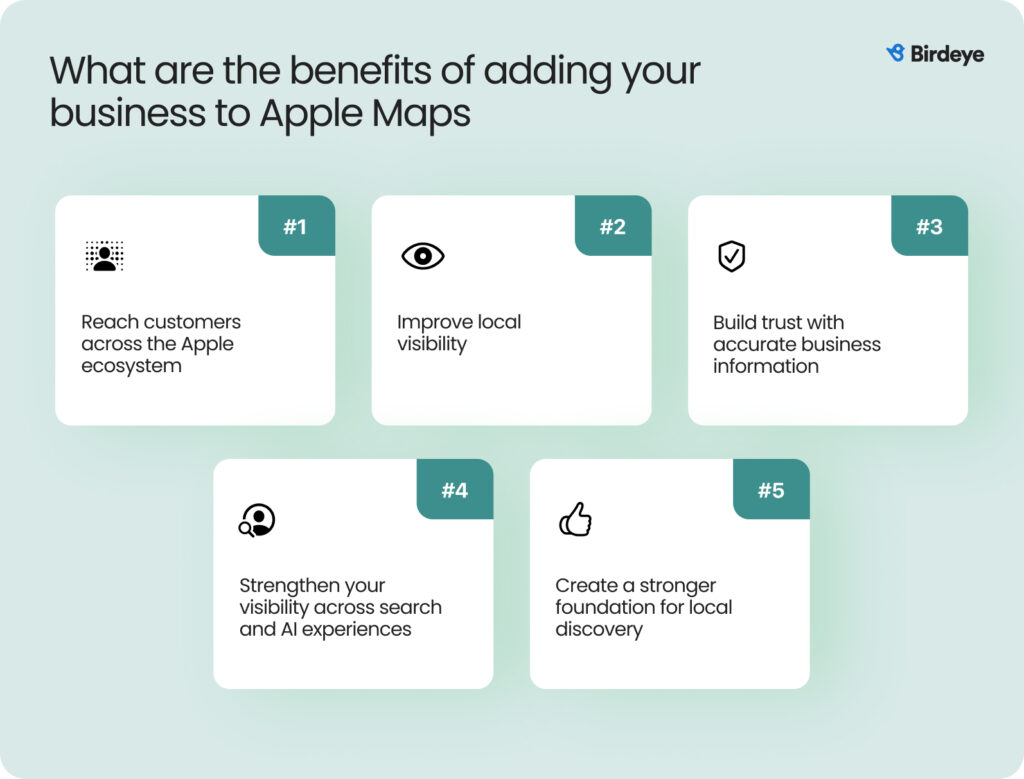
1. Reach customers across the Apple ecosystem
Your Apple Maps listing can appear across multiple Apple services, including:
- Apple Maps
- Siri
- Messages
- Wallet
This gives customers multiple ways to get your business found without having to search for it directly.
2. Improve local visibility
Customers often use map platforms when they’re actively looking for nearby products or services.
A complete Apple Maps profile helps customers quickly find:
- Business locations
- Hours of operation
- Contact information
- Website links
- Directions
The easier it is for customers to find accurate information, the easier it is for them to choose your business.
3. Build trust with accurate business information
Your Apple Maps profile should always reflect the most current version of your business.
Regularly review and update:
- Business name
- Address
- Phone number
- Website URL
- Business hours
- Categories
- Attributes
Even small inconsistencies can confuse customers and make it harder for search engines to validate your business information.
For multi-location brands, maintaining accurate information across hundreds of locations can quickly become a manual and time-consuming process.
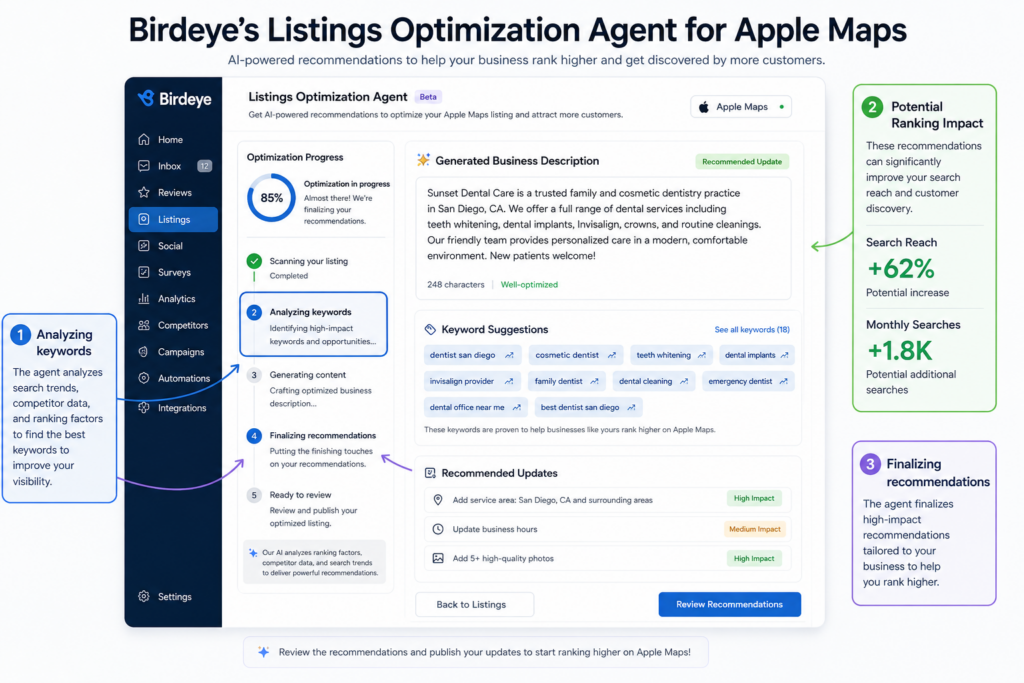
This is where tools like Birdeye's Listings Optimization Agent can help. The agent continuously analyzes listing performance, identifies optimization opportunities, recommends high-impact updates, and highlights keyword gaps that may affect local visibility. Instead of manually auditing every Apple Maps listing, teams can prioritize the changes most likely to improve discoverability and customer engagement.
4. Strengthen your visibility across search and AI experiences
Business information no longer influences only traditional search results.
AI-powered search engines increasingly rely on trusted business data sources to generate recommendations and answer local search queries.
Accurate location information, complete profiles, and strong customer feedback signals help AI search optimization platforms better understand your business and surface it in relevant recommendations.
5. Create a stronger foundation for local discovery
Adding your business to Apple Maps is an important first step, but it should be part of a broader local visibility strategy.
Most brands don’t rely on a single platform for discovery. Customers may find your business through Apple Maps, Google Maps, Yelp, or even AI-powered search experiences that pull information from multiple sources.
Understanding how these platforms differ can help you prioritize optimization efforts and create a more consistent presence across every customer touchpoint.
Where does Apple Maps pull business info from?
Apple Maps pulls business information from a variety of sources to provide accurate and up-to-date data to its users. Here are some of the primary sources:

1. Apple's own data
2. Third-party data providers
3. User contributions
4. Apple Maps connect
5. User location data
How does Apple Maps compare to Google Maps and Yelp for multi-location brands?
Business directory listings like Google Maps, Yelp, and Apple Maps all help customers discover local businesses, but they serve different purposes within the customer journey.
For multi-location brands, the goal isn’t choosing one platform over another. It’s ensuring customers can find accurate information wherever they search.
| Feature | Apple Maps | Google Maps | Yelp |
| Primary ecosystem | Apple Maps, Siri, Messages, Wallet | Google Search, Google Maps | Yelp reviews platform |
| Business management platform | Apple Business Connect | Google Business Profile | Yelp for Business |
| Review visibility | Displays customer reviews | Strong review visibility and local search influence | Review-focused platform |
| Local discovery | Strong within Apple’s ecosystem | Largest local search ecosystem | Popular for research and comparison |
| Multi-location management | Supported through Apple Business Connect | Supported through Google Business Profile | Available but less scalable for large brands |
| Business information control | High | High | Moderate |
| AI search relevance | Supports business data used across digital discovery experiences | Frequently referenced in local search and AI-powered search results | Often cited for customer reviews and reputation signals |
Apple Maps: Reach customers across the Apple ecosystem
Apple Maps helps customers discover businesses across Apple's ecosystem. For brands with multiple locations, Apple Business Connect provides centralized control over business information, with Apple Maps reviews helping ensure customers see accurate location details wherever they interact with Apple services.
Google Maps: The largest local search platform
Google Maps remains one of the most important platforms for local discovery.
Customers frequently use Google Search and Google Maps to find nearby businesses, compare options, read reviews, and request directions. Because of its scale, maintaining accurate Google Business Profiles remains a priority for most multi-location brands.
Yelp: A platform built around reviews and reputation
Yelp plays a different role in the discovery journey.
Customers often use Yelp to evaluate businesses by reading reviews, comparing ratings, and researching customer experiences before making a decision.
For industries where reputation heavily influences purchase decisions, maintaining an active Yelp presence can help strengthen customer trust.
Why multi-location brands need all three
Customers rarely follow a single path when searching for a business.
Some discover brands through Apple Maps. Others start with Google Search or Google Maps. Many compare reviews before making a decision.
This fragmented discovery journey is becoming even more complex as AI search changes how customers find information. According to Birdeye's State of AI Search 2026 report, AI search rewards clarity, structure, and consistency more than the volume of content or number of listings. Consumers are increasingly shifting from traditional keyword searches to AI assistants that provide direct answers rather than lists of links.
Maintaining listings across Apple Maps, Google Maps, and Yelp is only the first step. To maximize visibility, businesses need to keep their information accurate, complete, and consistent across every platform customers and AI search engines rely on.
How can you optimize your Apple Maps listing for better visibility?
Creating an Apple Maps listing helps customers find your business, but optimization determines how effectively your business appears in local discovery experiences.
As customers increasingly use map platforms, voice assistants, and AI-powered search tools to find information, maintaining a complete and accurate Apple Maps profile has become more important than ever.
Keep your business information accurate and complete
Your Apple Maps profile should always reflect the most up-to-date information about your business.
Regularly review and update:
- Business name
- Address
- Phone number
- Website URL
- Business hours
- Categories
- Attributes
Even small inconsistencies can confuse customers and make it harder for search engines and AI platforms to validate your business information.
For multi-location brands, maintaining consistent information across every location is especially important because customers often discover businesses through multiple platforms before making a decision.
Choose the right categories and attributes
Categories help Apple Maps determine when your business should appear in relevant search results.
According to Birdeye’s State of Google Business Profile 2026 report, 86% of business profile impressions come from category-based or “near me” searches rather than branded searches. This means customers are often searching for a service or business type rather than a specific brand.
Selecting the most relevant primary category and keeping your business attributes up to date can improve your chances of appearing in local discovery searches.
Add high-quality photos and business details
Visual content helps customers evaluate your business before they visit or contact you.
Consider adding:
- Exterior photos
- Interior photos
- Team photos
- Product images
- Service-related visuals

You should also complete every available profile field, including business descriptions, services, and other relevant details.
A more complete profile provides customers with the information they need to make decisions and gives search platforms additional context about your business.
Build and respond to customer reviews
Reviews remain one of the strongest trust signals in local discovery. Customers often use reviews to evaluate quality, reliability, and customer experience before choosing a business.
Responding to reviews shows that your business actively engages with customer feedback and helps build trust with prospective customers.
For multi-location brands, maintaining a consistent review management strategy across locations can strengthen reputation signals and improve customer confidence.
Maintain consistency across business directories
Apple Maps is the only source of business information.
Customers and search platforms may also encounter your business through:
- Google Business Profile
- Yelp
- Industry-specific directories
Keeping information consistent across these platforms helps customers find accurate information and reduces conflicting signals across the web.
Optimize for AI-powered discovery
Customers are increasingly using AI tools to find and evaluate businesses.
According to Birdeye’s State of AI Search 2026 report, 80% of analyzed brands were cited at least once in AI-generated answers. As customers increasingly turn to AI assistants for recommendations, maintaining accurate and consistent business information across platforms has become critical for visibility.
The report also found that AI rewards clarity, structure, and consistency more than the volume of content or the number of listings.
For multi-location brands, that means maintaining accurate profiles, strong review signals, and consistent business information across all locations and directories.
Optimizing a single Apple Maps listing is relatively straightforward. The challenge becomes much greater when businesses need to manage dozens, hundreds, or even thousands of locations while maintaining accuracy, consistency, and brand standards.
What challenges do multi-location brands face when managing Apple Maps listings?
Adding a business to Apple Maps is relatively straightforward. The real challenge begins after the listing goes live.
For multi-location brands, every update to a phone number, business hour, address, service offering, or temporary closure needs to be reflected across dozens, hundreds, or even thousands of locations. Without a scalable process, maintaining accurate business information can quickly become an operational burden.
Keeping location data accurate across every market
Location information changes constantly. Stores relocate, operating hours shift, services evolve, and seasonal updates become necessary throughout the year.
When these changes aren’t applied consistently across listings, customers may encounter outdated information, leading to frustration and lost business. This is especially important because inaccurate listings don’t just create a poor customer experience.
According to Birdeye’s 2025 Local Search Accuracy Benchmark Report, inaccurate or outdated business information can reduce discoverability, misdirect customers, and weaken trust in local search results.
Managing visibility beyond major cities
Maintaining accurate listings becomes even more challenging for brands operating across diverse markets.
Birdeye’s benchmark found that local search accuracy tends to decline outside dense urban areas, where businesses often have fewer digital signals and verification sources available.
For enterprise brands, this means a business listing management strategy that works well in major metropolitan areas may not perform as well in suburban or rural markets. Regular audits and location-level oversight become essential to maintaining visibility across the entire network.
Maintaining consistency across every customer touchpoint
Customers rarely interact with a single platform before making a decision. They may discover a business on Apple Maps, compare options on Google Maps, visit the company website, and read reviews before contacting a location.
When information differs across platforms, it creates confusion for customers and makes it harder to maintain a consistent brand experience.
For multi-location businesses, managing listings isn’t simply about updating information. It’s about ensuring every location presents accurate, trustworthy information wherever customers choose to search.
As brands grow, maintaining that level of accuracy manually becomes increasingly difficult. This is where centralized listing management and automation can help simplify operations while improving visibility across local search platforms.
How can Birdeye help multi-location brands manage Apple Maps listings and AI visibility?
Managing a few Apple Maps listings is relatively simple. Managing hundreds or thousands of locations across multiple markets requires a different approach.
As the #1 agentic marketing platform for multi-location brands, Birdeye helps businesses manage listings, reputation, customer interactions, competitive intelligence, and AI visibility from a single platform.
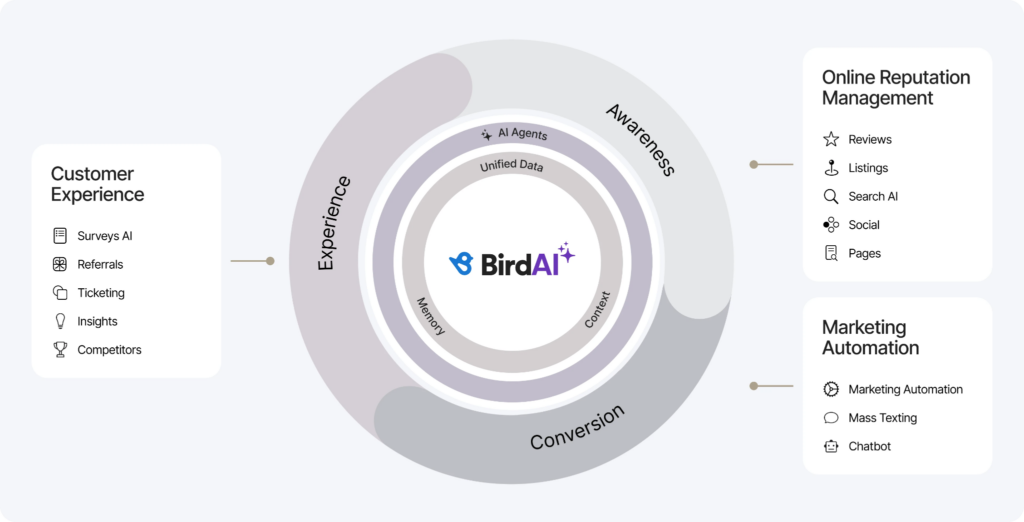
Birdeye is also an Apple Business Connect API integration partner, allowing brands to claim, manage, and optimize Apple Business Connect profiles directly from the Birdeye platform. This enables enterprise teams to manage Apple Maps visibility across hundreds or thousands of locations without switching between systems.
How can brands identify opportunities to improve local visibility?
Instead of relying on disconnected tools and manual workflows, teams can centralize local marketing operations while maintaining visibility and control across every location.
But maintaining accurate listings is only part of the equation. Birdeye’s Listings Optimization Agent continuously analyzes listing performance, identifies optimization opportunities, and recommends updates that can improve local visibility across Apple Maps and other key directories.

For enterprise brands managing hundreds of locations, this helps teams prioritize improvements without having to manually audit every profile.
Through Birdeye's integration with the Apple Business Connect API, teams can manage Apple Maps listings alongside Google Business Profile and other major directories from a single platform. Businesses can update location details, enhance profiles with photos, manage Custom Action Links, and publish Showcases that promote offers, events, and announcements directly within Apple Maps.
How can businesses understand how they appear in AI search?
Customer discovery is expanding beyond traditional search engines.
Search AI helps brands monitor their visibility across AI-powered search platforms, including ChatGPT, Gemini, and Perplexity. Teams can track visibility trends, understand which sources influence AI recommendations, and identify opportunities to improve their presence in AI-generated answers.
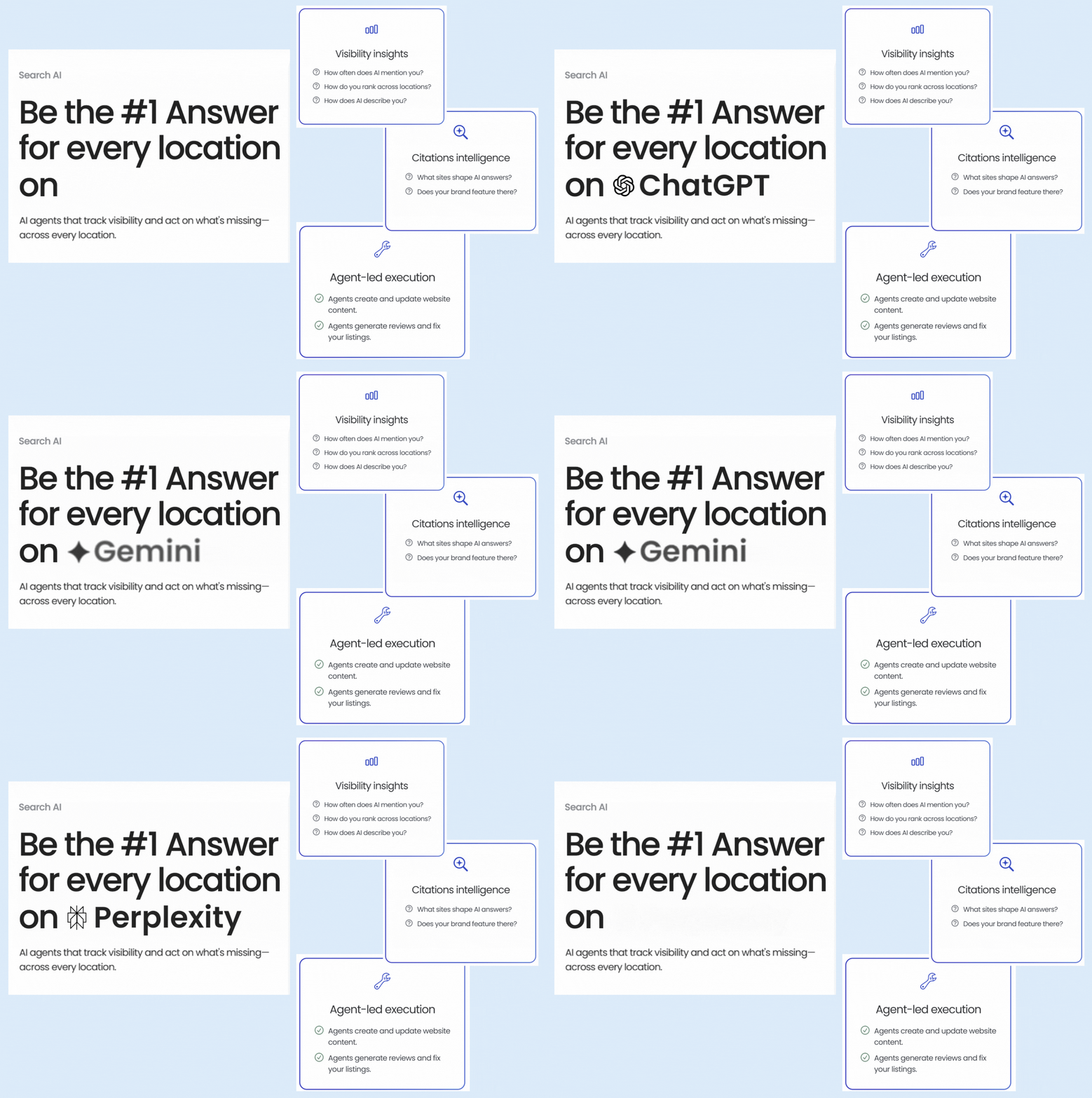
As AI becomes a larger part of local discovery, this visibility helps brands understand how customers find their locations beyond traditional search results.
Why do enterprise brands choose Birdeye?
Whether you’re managing 100 locations or 10,000+, Birdeye helps ensure customers find accurate information, discover your brand more easily, and have consistent experiences across every touchpoint.
From Apple Maps, Siri, Wallet, and Messages to Google Search, Google Maps, and AI-powered discovery platforms, Birdeye helps brands maintain accurate, optimized visibility across every customer touchpoint. Most local marketing tools solve a single problem. Birdeye brings the entire customer journey together.
From Listings AI, Reviews AI, Search AI, Social AI, Messaging AI, Insights AI, Competitors AI, and Reports AI, every solution operates on a unified data layer that helps global brands understand customer behavior, location performance, and market dynamics at scale.
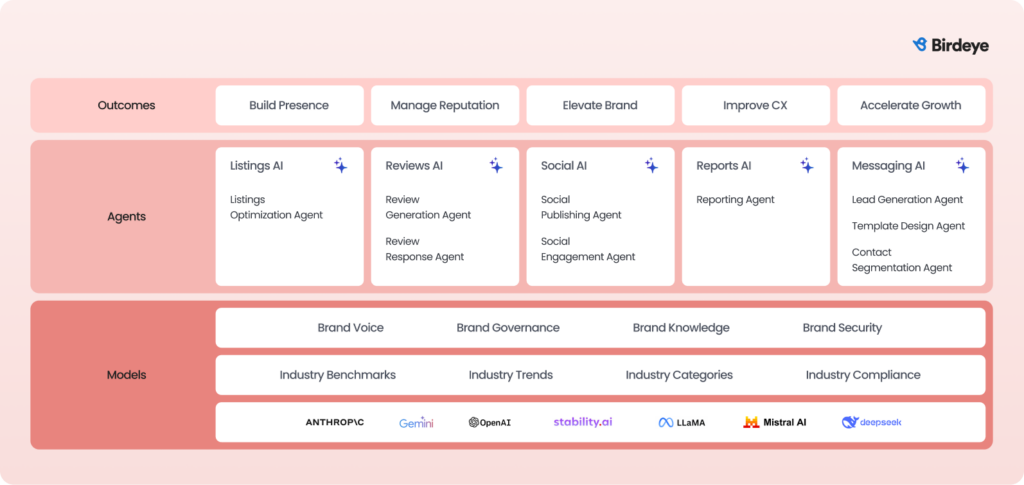
This allows enterprise organizations to consolidate fragmented workflows, gain location-level intelligence, and execute with the governance and control required across hundreds or thousands of locations.
Frequently asked questions about how to add a business to Apple Maps
Yes. Businesses with multiple locations can manage listings through Apple Business Connect. Multi-location brands can add, verify, and maintain location information across their portfolio from a centralized agentic marketing platform like Birdeye.
There are several reasons why Apple Maps may not show your business. You may have:
1 – Incomplete or inaccurate information
2 – Verification pending
3 – Operate from a new business or location
4 – Ineligible business category
5 – Technical issues
The verification process may take a few days, but your listing should appear relatively quickly once it’s approved.
Apple Maps and Google Maps are similar. They help people discover, find, and navigate to locations, including businesses. Each is unique in certain ways, but the functionality is similar.
The timeline varies depending on Apple’s verification process. Once verification is complete, businesses typically appear on Apple Maps shortly afterward. Delays may occur if additional verification information is required.
You can update business details through Apple Business Connect. This includes changes to operating hours, phone numbers, addresses, categories, website URLs, and other location information.
There are several possible reasons:
Your listing is still being verified
Business information is incomplete
Location details are inaccurate
Recent updates have not yet been processed
Yes. Apple Maps helps customers discover businesses through Apple’s ecosystem, including Maps and Siri. A complete and accurate listing can improve visibility, make it easier for customers to find your business, and support a stronger local presence online.
As the number of locations grows, manually updating listings becomes increasingly difficult. Many enterprise brands use centralized platforms to manage listings, monitor accuracy, and maintain consistent business information across Apple Maps and other local search platforms.
Add your business to Apple Maps and scale visibility with Birdeye
Adding your business to Apple Maps is one of the simplest ways to improve local visibility and help customers find accurate information about your business.
As customer discovery continues to evolve across local search, maps, and AI-powered experiences, accurate location data becomes increasingly important. Businesses that prioritize listing accuracy, consistency, and visibility of their Apple Business Connect will be better positioned to connect with customers wherever they choose to search.

Platforms like Birdeye can help simplify listings management, improve visibility, and maintain accurate business information at scale, ensuring customers always find the right information when it matters most.

About the Author

Shruti Dugar
Birdeye
Originally published