Real estate social media automation has become essential as buyers and renters rely on social platforms to find listings, compare neighborhoods, and shortlist agents. From Instagram and Facebook to Google Business Profiles, property searches now extend well beyond listing portals. However, managing multiple channels manually often results in inconsistent posting, delayed responses, and missed inquiries, especially for agents balancing showings and client communication.
Summary

Real estate social media automation helps agents and brokerages maintain consistent visibility without managing everything manually. It helps promote active listings, open houses, price changes, client reviews, and local market updates across platforms that buyers and renters actually use. By reducing manual posting and follow-ups, automation keeps property information accurate, improves response times, and supports visibility throughout the listing lifecycle.

Birdeye supports real estate social media automation by simplifying how agents and teams manage property-focused content across platforms. It helps schedule and publish posts tied to listings and reviews while centralizing engagement in one dashboard.

This blog post explains what to automate, how automation fits into real estate marketing workflows, and how the right tools help agents stay visible while focusing on showings, negotiations, and clients.
Table of contents
- What is real estate social media automation?
- Why social media automation matters for real estate
- What types of content should real estate agents automate
- How to get started with real estate social media automation
- Core features to look for in a real estate social media automation tool
- Top 5 tools for real estate social media automation
- How to use automation without losing authenticity
- How Birdeye helped Pacifica Senior Living streamline multi-location social media with automation
- Conclusion
- FAQs on real estate social media automation
- How Birdeye powers scalable real estate social media automation
What is real estate social media automation?
Real estate social media automation refers to using software that plans, schedules, posts, and distributes content automatically across major social platforms from a single system.
Instead of handling social media one post at a time, real estate teams can automate repeatable, time-sensitive tasks such as:
- Publishing new listings automatically as soon as they go live
- Scheduling weekly market updates and local insights in advance
- Promoting open houses and price changes without manual follow-ups
- Repurposing blogs, videos, and testimonials into short-form social posts
- Maintaining consistent branding across locations and platforms
- Monitoring messages and comments on posts from one centralized dashboard
Automation handles the structured parts of real estate social media marketing so teams can stay visible without constantly logging in and posting throughout the day.
Why social media automation matters for real estate
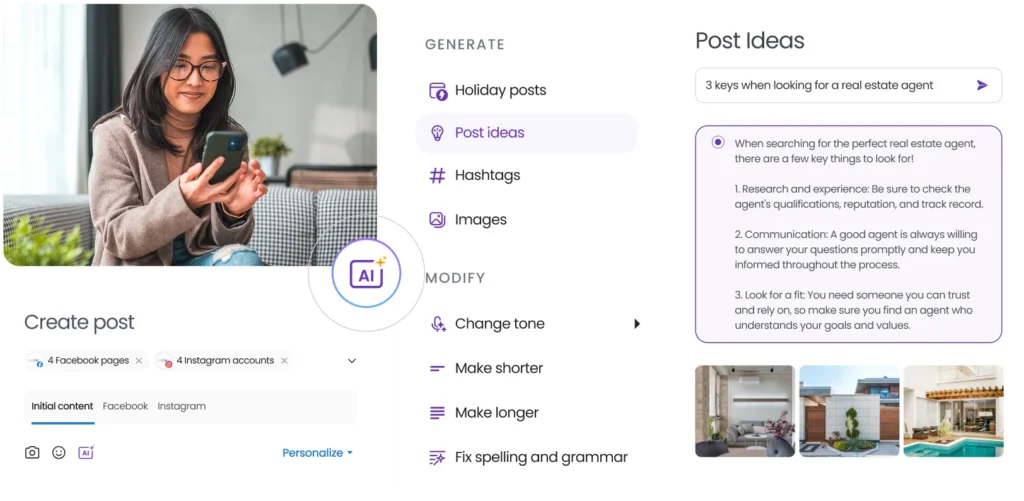
Social media plays a major role in how people discover neighborhoods, explore homes, and research agents. With so many platforms and formats, keeping up manually can be tiring for individual agents and teams.
Here’s how it directly supports real estate marketing performance:
1. Stay visible where buyers and renters begin their search
People rely heavily on social search, reels, YouTube Shorts, and even AI-driven assistants to explore neighborhoods and check property details. If your content is not consistently present, you miss key moments where buyers are forming opinions and filtering options. Automation ensures your listings and updates appear when your audience is already searching.
2. Get listings in front of audiences faster
When a new property hits the market, timing matters. Automation lets you publish updates instantly across multiple platforms rather than posting individually on each channel. This helps keep your listings fresh and visible, especially in areas with high demand.
3. Build trust through consistent activity
A predictable posting schedule signals professionalism and reliability as an agent or brokerage. It keeps your brand visible across platforms even on your busiest days or during peak season. With automation, you avoid long gaps that can make your profile look inactive.
4. Reduce errors and protect brand consistency
Handling multiple posts manually can lead to outdated listing details or inconsistent branding. Automation reduces these issues by using pre-approved templates and scheduled workflows. This keeps your content accurate, aligned, and polished.
5. Free up time for client-facing work
Real estate requires personal attention, showings, negotiations, follow-ups, and calls. Automation removes repetitive posting tasks so agents can focus on conversations that actually move deals forward. You get the benefit of active marketing without sacrificing your client-facing time.
In a nutshell, social media automation becomes a reliable system that supports your real-estate marketing even when your schedule is packed. It helps maintain visibility, reduce workload, and keep your digital presence working in the background for your entire team.
What types of content should real estate agents automate
Not every piece of content needs a personal touch. Certain post types follow predictable formats that are perfectly suited for automation. Knowing what to automate helps you save time while still keeping your feed fresh and valuable.
1. New listings and property highlights
These posts follow a predictable format (price, location, key features), which makes them perfect for automation. Agents can quickly publish polished, on-brand listing posts across multiple social platforms without manually creating each one.
2. Open house announcements
Open houses often need repeated promotion: “Just announced,” “Don’t forget,” and “Last chance” reminders. Automation ensures these updates go out consistently and reach the maximum audience without last-minute scrambling.
3. Sold property announcements
Sold posts build social proof and signal market activity. Since the structure rarely changes, they can be automatically generated once a transaction is marked closed in the agent’s CRM.
4. Market updates and neighborhood trends
Monthly or quarterly updates such as “Average home price this month,” “Interest rate trends,” or “Inventory changes” are ideal for automation. These posts establish authority and keep audiences informed.
5. Educational tips and homeowner advice
Evergreen content like “5 tips to prepare your home for sale” or “How to improve credit before buying” can be scheduled in advance. This maintains a steady flow of value-based posts that position agents as trusted advisors.
6. Testimonials and client reviews
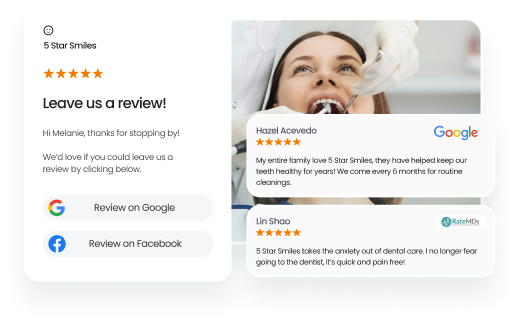
Automated review-to-social pipelines instantly turn new testimonials into branded social posts. This keeps the agent’s feed filled with credibility-boosting content without manual design work.
7. Community events and local highlights
Posts about neighborhood events, local developments, and area updates help agents stay embedded in the community. Automation makes these recurring local posts consistent without manual effort.
8. Seasonal and holiday greetings
Holiday posts (New Year, Diwali, Thanksgiving, Christmas, local holidays) can be planned and created once, then set to recur each year automatically.
9. Lead-generation posts
Content like “Get your free home valuation,” “Sign up for neighborhood alerts,” or “Download our buyer guide” often requires frequent repetition. Automation keeps these CTAs active without becoming a manual task.
10. Long-form blog or video repurposing snippets
Small snippets, quotes, or key insights extracted from blogs, videos, or podcasts can be automatically rewritten and scheduled to appear throughout the month. This maximizes content reach without extra work.
How to get started with real estate social media automation
Getting started with real estate social media automation becomes much easier when you follow a precise, repeatable sequence. Instead of posting manually every day, automation keeps your real estate pages active across Instagram, Facebook, LinkedIn, Google, and more. Here’s how you can build a workflow that supports consistent visibility for your properties and brand.
1. Map out weekly pillars
Start by choosing 3–4 recurring content categories for your real estate social media content strategy, such as new listings, market insights, short videos, or client testimonials. These pillars help automation tools schedule structured posts and keep your real estate pages active even on your busiest days.
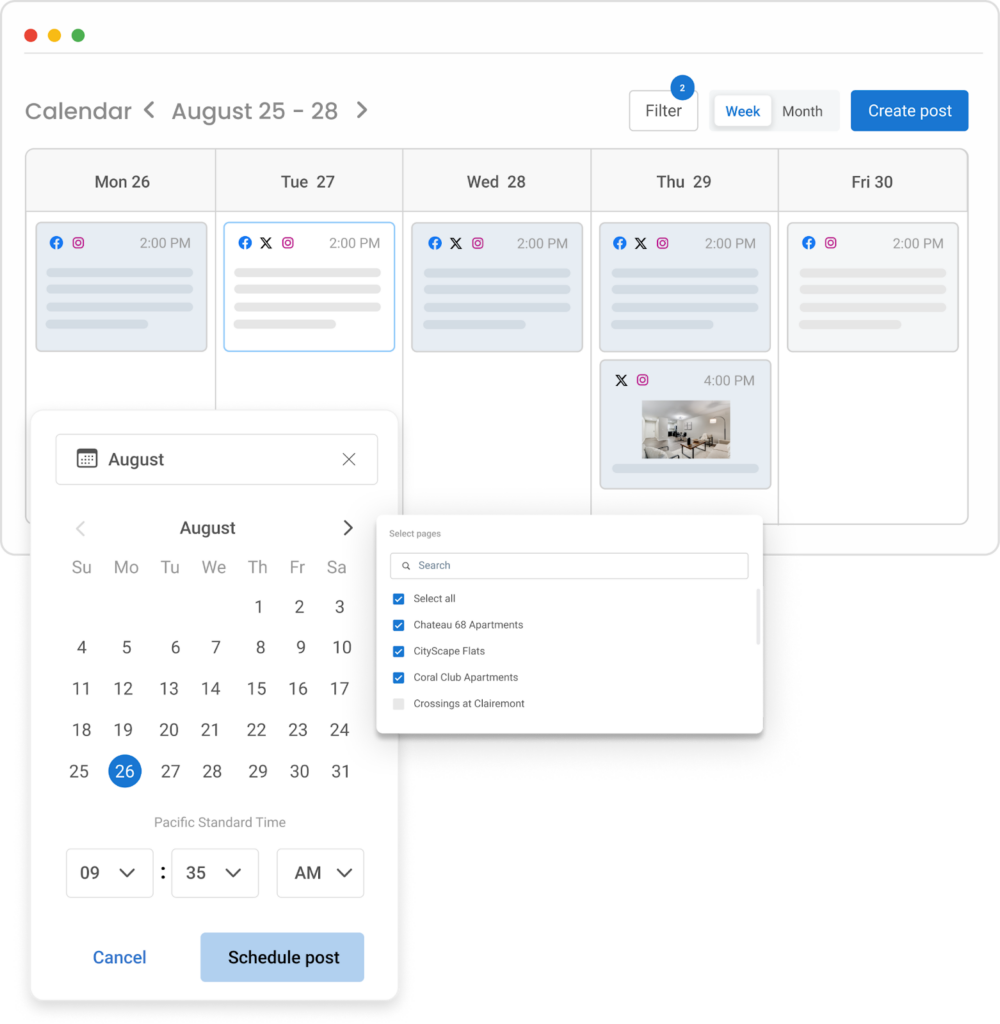
2. Build a content calendar
Next, create a monthly or weekly real estate social media calendar to keep your posting rhythm organized. A balanced mix of listing updates, neighborhood posts, and personal branding helps your automated posts feel intentional rather than repetitive.
3. Prepare media in batches
Capturing listing photos, recording walkthrough videos, gathering property clips, and drafting captions in a single session builds a strong library of assets for your automation tool. This allows your posts to run smoothly without daily effort.
4. Use a scheduling tool
Upload your content to your real estate social media scheduling tool, set your posting times, and let the platform publish automatically. This is where automation removes manual posting pressure and ensures your brand stays visible, even when you are at showings or closings.
5. Review insights
To keep improving, review analytics from your real estate social media automation platform. Engagement, reach, and click patterns help you refine your content style and understand what resonates with buyers, renters, and homeowners.
By following this sequence, agents can set up real estate social media automation that feels organized, predictable, and easy to maintain. Once these steps become routine, your social presence stays active, your listings get consistent visibility, and your online engagement strengthens without adding extra work.
Core features to look for in a real estate social media automation tool
Not all social media automation tools are created equal. The right platform can simplify your workflow, enhance your branding, and give you meaningful insights. Evaluating features carefully ensures the tool aligns with how you work as an agent.
Multi-platform support
A strong social media management tool should let you schedule across the major platforms where your clients spend time, Instagram, Facebook, LinkedIn, X, and more. Managing everything in one place reduces complexity and saves hours each month.
Content calendar with auto-posting
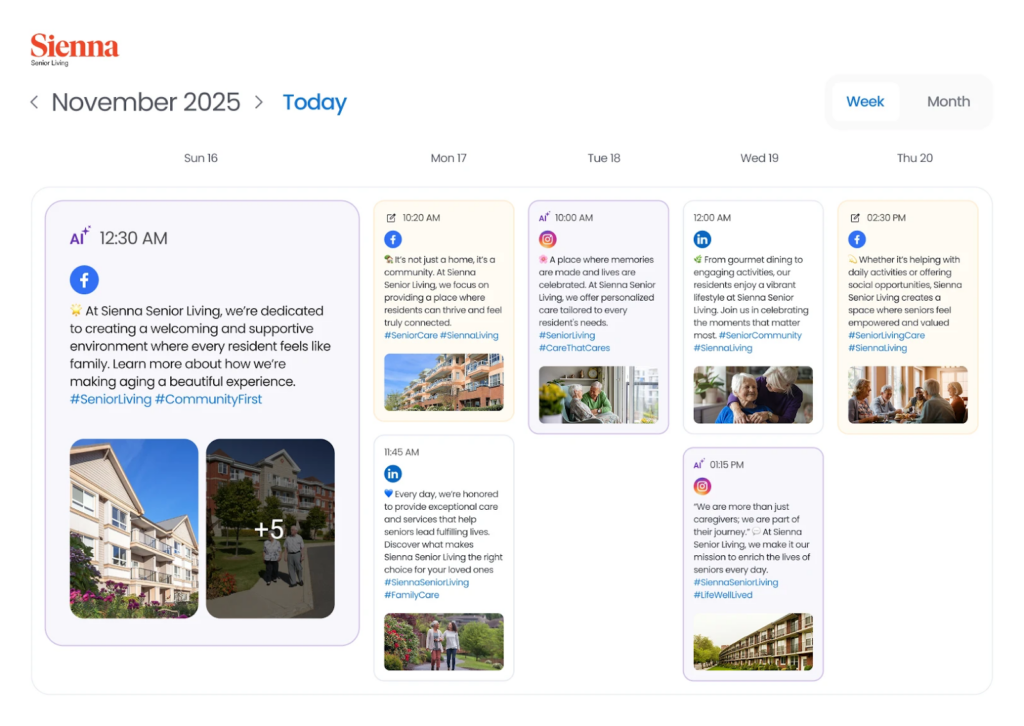
A visual calendar helps you organize your content schedule and maintain posting consistency. Auto-posting eliminates the need to publish manually. This structure allows you to plan ahead and stay predictable for your audience.
Automated listing-based posts
Tools that pull MLS or CRM data directly into templates make listing promotion incredibly efficient. This feature ensures every property gets immediate visibility without extra design time.
Customizable branding
Templates that support your colors, fonts, and headshot help you stay recognizable. Consistent branding builds a cohesive identity across all platforms.
AI-assisted content creation
AI-generated captions and ideas help streamline the creative process, especially during busy periods. These tools give you a starting point that you can personalize quickly.
Flexible workflows
A platform should let you automate routine posts while still allowing manual control when needed. This hybrid approach keeps your presence active without sacrificing authenticity.
Analytics and reporting
Clear insights into what works help refine your strategy over time. Tracking engagement, reach, and performance allows you to optimize your efforts.
Tip: Tools like Birdeye Social AI generate location-specific posts, captions, and templates, helping real estate teams maintain consistent visibility without extra effort. Start your Birdeye Social free trial and see it in action.
Top 5 tools for real estate social media automation
Here’s a quick comparison of the top 5 tools agents and teams can explore:
| Tool | Best for | Key strengths for real estate |
| Birdeye Social AI | Multi-location teams & brokerages | AI-generated, location-specific posts, review-to-social automation, unified inbox, insights, and approvals. |
| Hootsuite | Agencies & larger teams | Robust scheduling, analytics, social listening, and team workflows. |
| Later / Buffer | Solo agents & small teams | Simple content calendar, basic automation, strong for Instagram scheduling. |
| Zoho Social | Agents on Zoho CRM | Tight CRM integration, multi-channel posting, team collaboration. |
| myRealPage / similar MLS tools | Listing-heavy agents | MLS-connected templates that auto-generate listing posts in minutes. |
Real Estate Social Media Automation Guide
Want to see the impact of Birdeye on your business? Watch the Free Demo Now.
How to use automation without losing authenticity
Automation should support your voice, not replace it.
Here’s how to maintain balance:
- Automate structured content, but write personal captions for key real-estate posts.
- Use automation to free time, then use that time to reply to DMs and comments promptly.
- Keep videos and stories manual; authenticity matters more here.
- Review AI-generated captions for accuracy before publishing.
- Mix scheduled content with spontaneous updates from showings or neighborhood visits.
A hybrid approach helps you stay efficient while keeping the human touch intact.
Common real estate social media automation mistakes to avoid

Automating identical posts across every platform without adapting formats

Relying on generic templates that remove your local or personal voice

Letting automation replace engagement by ignoring comments and messages

Automating only promotional content and skipping personal or community updates

Using automation to post listings only, without educational or value-driven content

Failing to review performance data and optimize automated workflows
How Birdeye helped Pacifica Senior Living streamline multi-location social media with automation
Pacifica Senior Living is a senior-living real estate group with 96 communities across the United States. With so many locations, they needed a simple, reliable way to keep every community active on social media without placing extra workload on local teams.
Challenge
Managing over 90 social media pages manually led to inconsistent posting, delays, and limited engagement. Local teams captured real on-site content, but corporate teams struggled to coordinate publishing at scale.
Solution
Birdeye Social AI helped Pacifica automate posting, approvals, and scheduling across all locations. Local teams uploaded photos and videos through the mobile app, while Social AI generated on-brand captions and handled multi-location publishing in one place.
Results
With real estate social media automation in place, Pacifica achieved:
- 11,200+ posts in 9 months
- A steady rhythm of 4 posts per week per location
- 25% increase in engagement across platforms
- Faster, more organized workflows for all 96 communities
This shows how Birdeye makes large-scale social media management simple, efficient, and consistent for real estate and senior living brands.
Conclusion
Real estate social media automation helps agents stay consistent, visible, and organized without spending hours creating and posting content manually. By scheduling structured posts such as listings, market updates, and testimonials, teams can maintain a polished presence across platforms. When paired with authentic engagement and personal storytelling, automation becomes a dependable system that supports lead generation and long-term brand trust.
FAQs on real estate social media automation
It’s a system that schedules and publishes your posts automatically, helping you maintain steady activity across platforms.
It saves time, improves consistency, and ensures your listings and updates reach buyers and renters quickly.
No. It handles posting tasks so you can focus on conversations, showings, and client follow-ups.
Listing updates, reels, market insights, testimonials, open house announcements, and neighborhood content.
Yes. It distributes new property updates instantly across multiple social channels.
Yes. It keeps branding aligned, reduces posting errors, and supports consistent communication across agents.
No. Platforms treat automated posts the same as manual ones when the content is relevant and engaging.
Most agents post 3–5 times a week, and automation helps maintain that schedule without added effort.
Yes. Regular posting increases visibility, which helps attract inquiries, profile visits, and potential leads.
Tools like Birdeye Social AI help create content, schedule posts, manage platforms, and keep your presence active.
How Birdeye powers scalable real estate social media automation
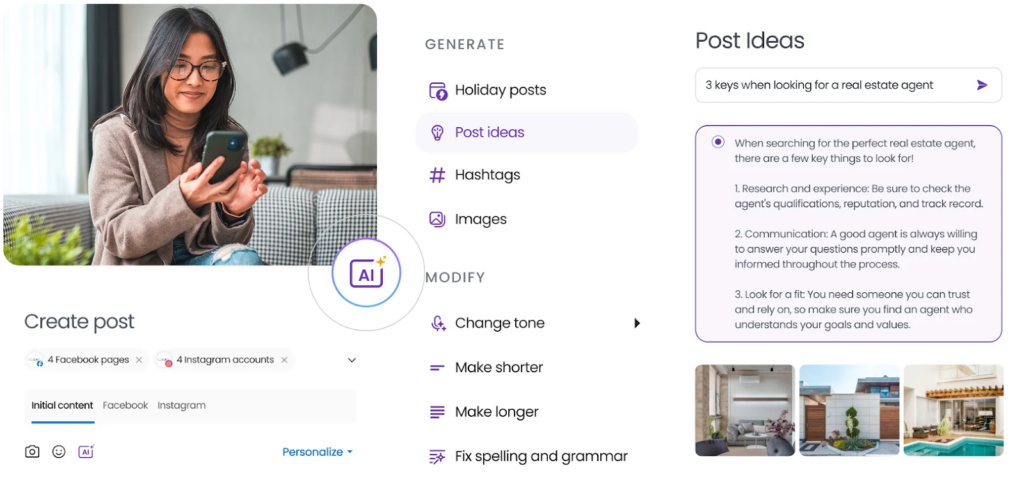
Social media moves quickly, and real estate teams often juggle multiple pages, property updates, and community content at once. The challenge is not just the volume; it’s keeping every location active and aligned without overloading your staff.
Birdeye Social AI brings structure to that workload. It simplifies planning, strengthens engagement, and supports each office or community page with tools that cut down on repetitive tasks.
Fresh, localized content on demand
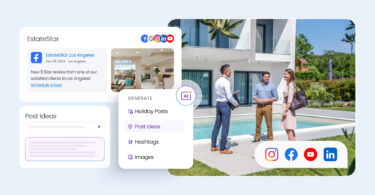
Enter a prompt and receive curated post ideas, captions, and hashtag options customized for every location you manage. Each suggestion reflects your brand tone and speaks to local audiences.
Automated scheduling that fits each audience
Social Publishing Agent studies activity patterns across networks and schedules posts at the most effective times for each office. Your presence stays consistent without constant manual coordination.
Replies that reflect your brand voice
The Social Engagement Agent reads intent behind every comment, question, or DM and drafts polished replies your team can approve or automate. Even with dozens of pages, responses remain steady and reliable.
A single view of every location’s calendar
Plan and manage content for all offices from one dashboard. Assign permissions by location or region so local teams can contribute while staying within brand guidelines.
Performance insights that guide content
The Reporting Agent tracks engagement, audience growth, and message trends in real time. As patterns shift, Social AI adjusts its recommendations to help each location refine its approach.
Birdeye helps real estate organizations move from scattered processes to a streamlined system that supports consistent posting, stronger engagement, and easier coordination across every location.
Want to see how this works in practice? Watch our demo and explore how Birdeye Social AI simplifies social media for real estate teams.

About the Author

Vanjana Sharma
Originally published