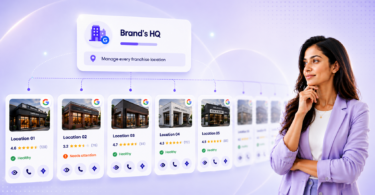
Marketing automation trends for 2026 reflect a simple truth: AI isn’t just improving automation — it’s rewriting how enterprise marketing works. For multi-location brands, this shift arrives at the perfect time.
Summary
Customer expectations are rising, competition across digital channels is intensifying, and AI search engines are now influencing the majority of the early discovery journey.

In response, the marketing automation is changing fast, and this year’s trends show a clear pattern: the brands that win will be the ones who automate smarter, not simply automate more.

Below are the top five marketing automation trends shaping 2026 and why they matter for enterprise marketing teams navigating AI search, multi-location visibility, and experience-driven growth.
Table of contents
5 Marketing automation trends to follow in 2026
#1. AI Search becomes the new gateway to brand discovery
If 2023–2025 were about preparing for AI search, 2026 is the year it becomes the primary place customers turn before contacting a business.
Whether they’re comparing locations, evaluating reputation, or simply asking, “What’s the best provider near me?”, AI engines like ChatGPT, Gemini, and Perplexity now shape the first impression.
AI search discovery works differently from traditional search. Instead of matching keywords, these engines interpret intent, analyze sentiment across the web, and synthesize answers based on citations, listings accuracy, reviews, and brand authority.
Notably, Birdeye’s 2025 Google Business Profile report finds that verified profiles appear 4× more often in local search and deliver a 12% lift in calls and 10% more direction requests — which underscores why accurate, structured data is essential for AI-driven discovery.
This makes AI-powered marketing automation a foundational requirement for enterprise teams.
Birdeye Search AI aligns directly with this shift. The platform shows multi-location brands exactly how often local storefronts appear in conversational answers across ChatGPT, Gemini, and Perplexity.
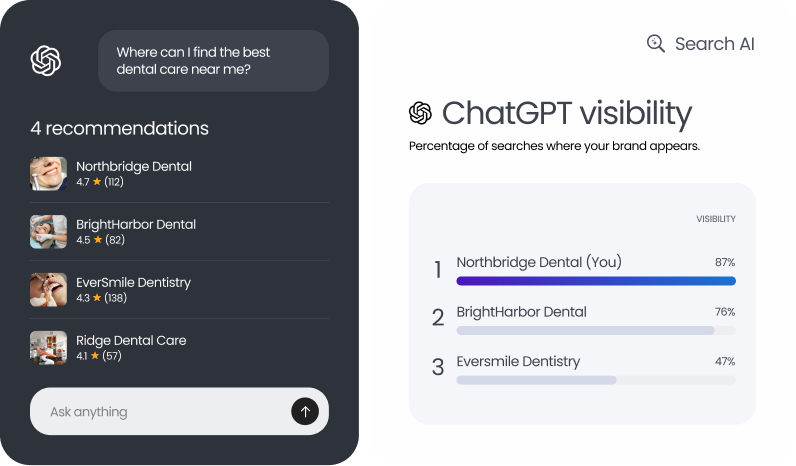
It maps the specific prompts customers use most, surfaces visibility gaps by city or ZIP code, and flags data inaccuracies before they cause search engines to ignore a location.
This turns local search performance into a precise, manageable metric across every rooftop.
#2. AI-powered reputation automation drives measurable growth
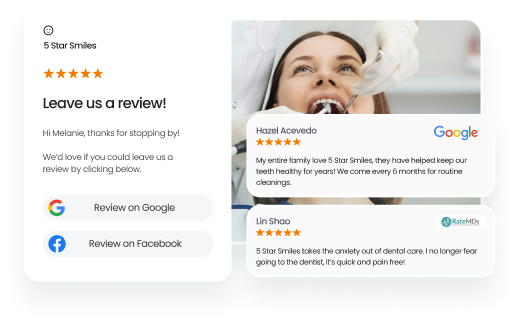
Reputation has always influenced conversion rates, but in 2026, it also influences AI visibility, customer trust, and multichannel engagement.
Think of a multi-location brand with 180 stores. Every day, reviews come in from Google, Facebook, and 200+ review sites. Some reviews are glowing, some are emotional. A few include photos and some have serious complaints. And they all need timely, on-brand responses to maintain trust and search visibility.
In the old world, this created an impossible workload. Regional managers responded inconsistently. Corporate teams were always behind. And no one knew which locations were slipping until the damage was already done.
Multiply that across dozens or hundreds of locations, and the brand’s reputation becomes fragmented long before anyone realizes there’s a systemic issue.
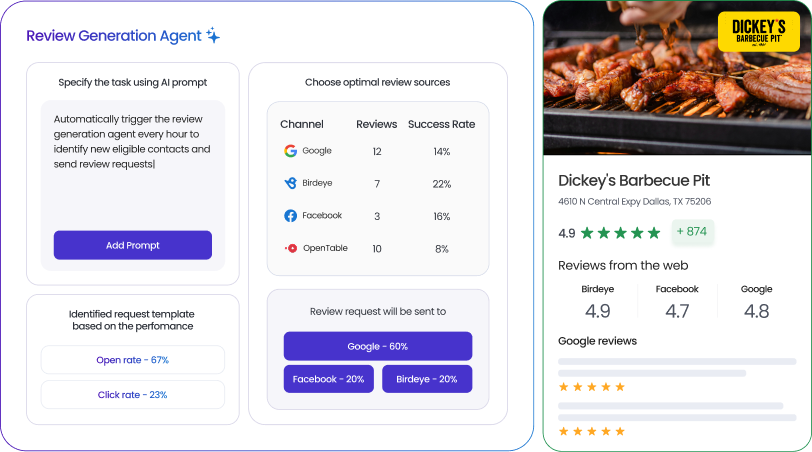
This is exactly the problem Reviews was built to solve.
Reviews identifies new customers the moment they enter the system, selects the review site most in need of fresh feedback, and sends the right message at the exact time similar customers usually respond. It’s like having a review strategist running thousands of micro-optimizations automatically every day.
And when new reviews arrive, the Response Agent reads them the way a well-trained human team member would. It interprets sentiment, urgency, context, even images, and employee names, and then writes personalized replies that sound like your brand’s best communicator.
Birdeye’s Reviews agents now handle the entire workflow. The platform identifies new customers the moment a transaction occurs, selects the directory most in need of fresh feedback, and triggers a request at the highest-converting time.
When new reviews arrive, brand-trained marketing agents read them to interpret sentiment, urgency, and context.
These specialized agents handle the entire workflow under a strict corporate governance layer:
- Review Generation Agent — Detects new customer interactions and automatically sends localized feedback requests via text or email.
- Review Response Agent — Analyzes incoming review sentiment and drafts personalized, context-aware replies in the brand’s exact voice.
- Review Reporting Agent — Evaluates feedback at scale to highlight operational trends and regional anomalies in seconds.
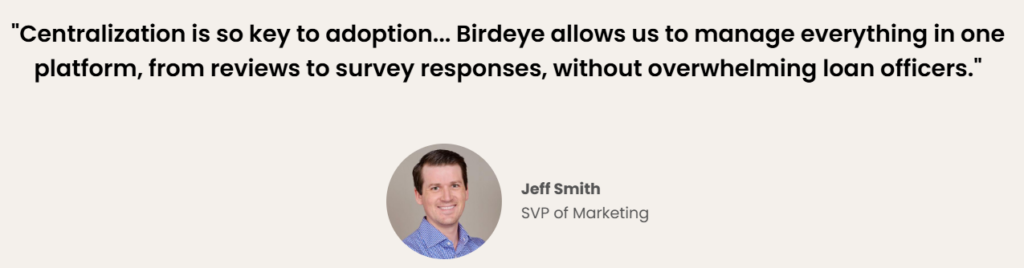
Rate, a top U.S. mortgage lender with 750+ locations, used Birdeye Reviews to automate review requests and response workflows for more than 2,500 loan officers. By capturing feedback at key emotional moments like immediately after loan funding, they increased review frequency by 12% and collected 3,800 reviews in 10 months while maintaining a 4.9-star average.
This is no longer reputation management. It’s reputation intelligence — executed consistently, instantly, and at every location.
#3. Location-level optimization becomes autonomous
The next major trend is deeply tied to local discovery. Customers rely on maps, AI assistants, and mobile search to find businesses nearby, and those systems depend on accurate, up-to-date listings.
Imagine a customer searching “urgent care near me” at 8:30 PM. Two locations from the same brand appear — but one listing shows outdated hours and the wrong phone number. That one small inaccuracy instantly turns into a lost visit.
Multiply that risk across 50, 500, or 5,000 locations, and listing accuracy becomes a full-time job no human team can manage.
The autonomous Listings Optimization Agent solves this complexity at scale by serving as an always-on digital assistant for your storefront network.
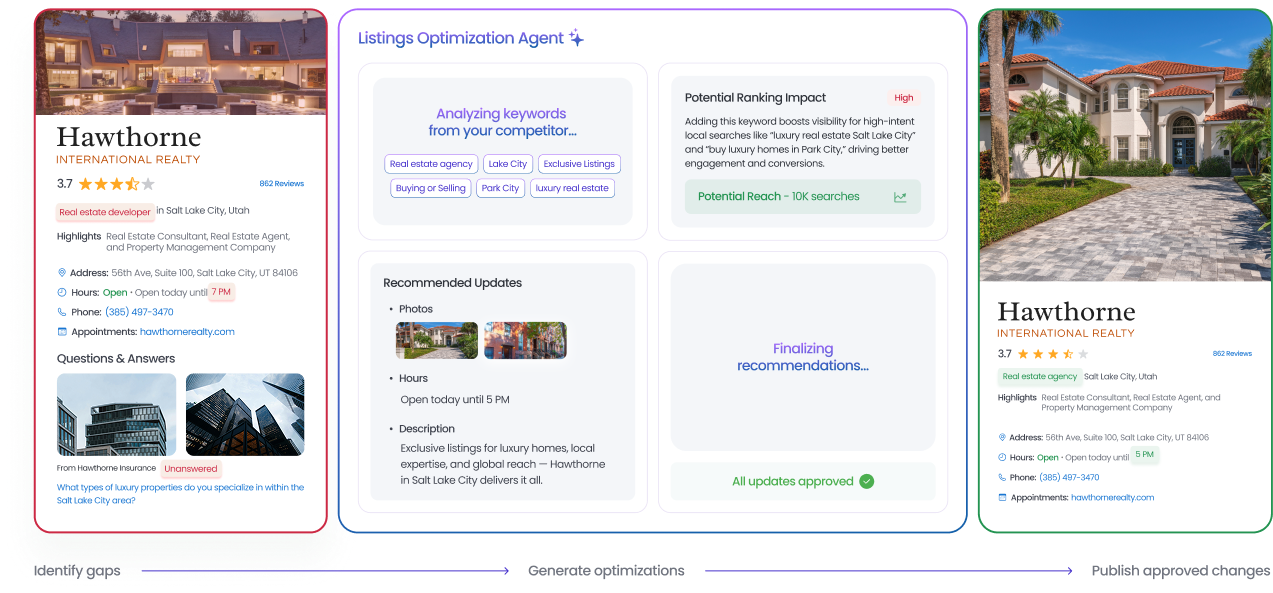
This agent continuously:
- Monitors profiles across 80+ high-authority directories
- Maps missing fields and pushes real-time updates for holiday hours or service changes.
Operating on an “AI recommends, you approve” model, the agent optimizes every local footprint within your exact brand guardrails, ensuring data remains clean and compliant.
Location-level optimization goes far beyond basic listings management. It influences search engine performance, email marketing campaigns, mobile marketing effectiveness, direction requests, calls, and map-based conversions — all of which drive both online and offline revenue.
#4. Predictive analytics becomes marketing’s intelligence layer
For years, marketing analytics told us what happened. Data analysis used to be an end-of-week, end-of-month, or even end-of-quarter task. In 2026, AI tells us what will happen next and what to do about it.
For a full framework on building this capability, see our guide to enterprise marketing analytics.
Earlier, a CMO was reviewing performance across 300 locations. On paper, the ratings look fine. But hidden within thousands of comments is a pattern: customers in suburban areas have been mentioning “wait times” more frequently over the last 60 days.
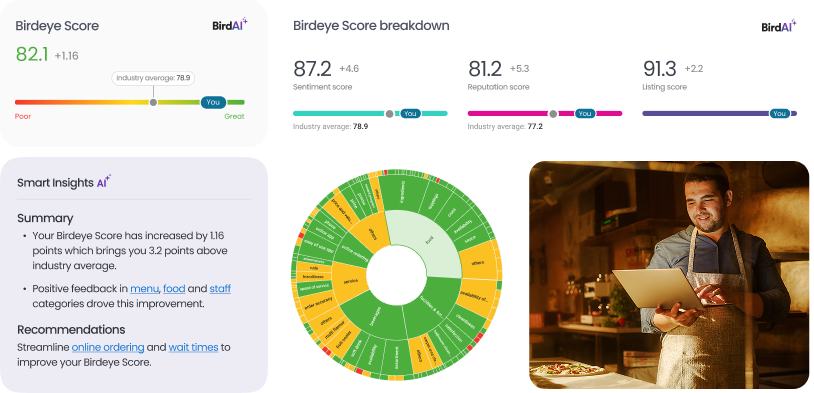
No traditional dashboard would catch that in time.
And that’s exactly where automation becomes indispensable.
Birdeye’s Insights AI fuels this intelligence layer. It processes data from reviews, surveys, listings, and social signals to:
- Surface root causes of sentiment shifts
- Identify emerging themes (positive or negative)
- Benchmark each location against competitors and the brand average
- Recommend next steps automatically
For large brands, this kind of visibility changes everything. Marketing teams no longer react to issues. They anticipate them. Insights AI offers recommended actions tailored to the trend.
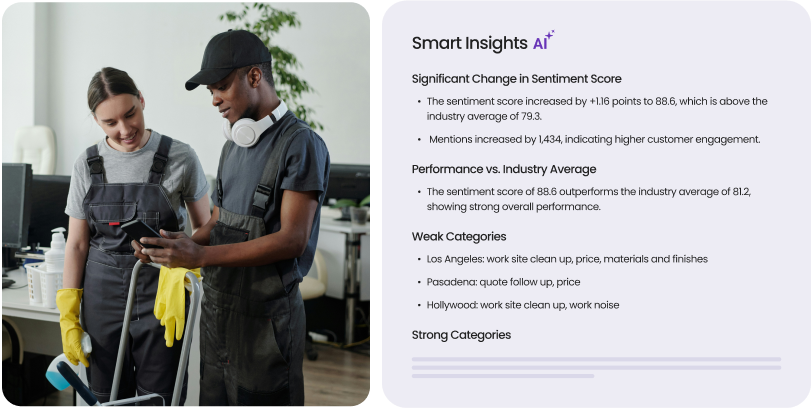
Rate also used Birdeye Insights AI to understand sentiment across 750+ locations. The AI surfaced trends from thousands of reviews and surveys, helping leaders identify root causes and proactively improve operations. Their cross-branch insights loop now fuels monthly roundtables — turning raw feedback into measurable CX improvements.
Using Surveys AI, Rate introduced mid-process surveys at critical milestones, such as underwriting. With an NPS of 88.2, they now catch issues early and resolve them before closing — improving satisfaction and retention.
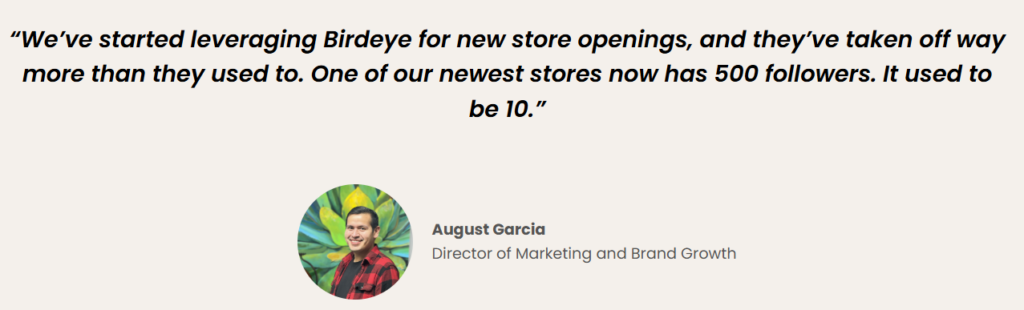
You don’t just see the what. You finally understand the why.
Insights aren’t valuable because they’re interesting. They’re valuable because they reveal what will happen next and what you must address before it impacts customer experience.
For the fuller picture of how AI is reshaping this space, see our guide to AI in digital marketing.
#5. AI-generated content and engagement scale omnichannel marketing
If you’ve ever managed social media for even a handful of locations, you know how quickly omnichannel marketing automation becomes chaotic: missed posts, inconsistent brand voice, varying image quality, and dozens of comments that fall through the cracks.
At that scale, even the most organized teams struggle to maintain consistency, responsiveness, and brand control.
Birdeye’s State of Social 2026 report shows consumers now spend 2–5 hours per day on video-first platforms like TikTok and YouTube — yet brand presence remains disproportionately low, making AI-driven publishing essential.
Suddenly, social media isn’t a channel — it’s a headache.
Birdeye’s Social AI leads this evolution with two core agents: the Publishing Agent and the Engagement Agent.
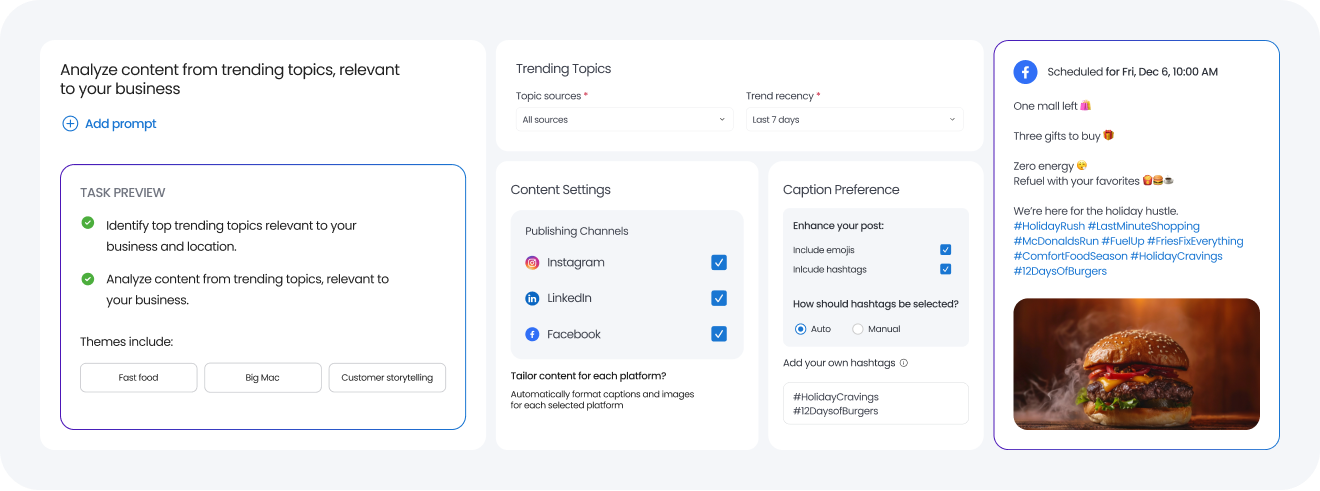
The Publishing Agent analyzes top-performing posts, trending topics, and competitor strategies to generate on-brand content across locations. It schedules posts at times proven to maximize engagement and ensures every location receives content that reflects both the brand identity and local needs.
Meanwhile, the Engagement Agent monitors comments, DMs, and social interactions across channels — drafting contextual responses that align with brand guidelines. It filters spam, escalates priority comments, and ensures no customer message gets lost in the noise.
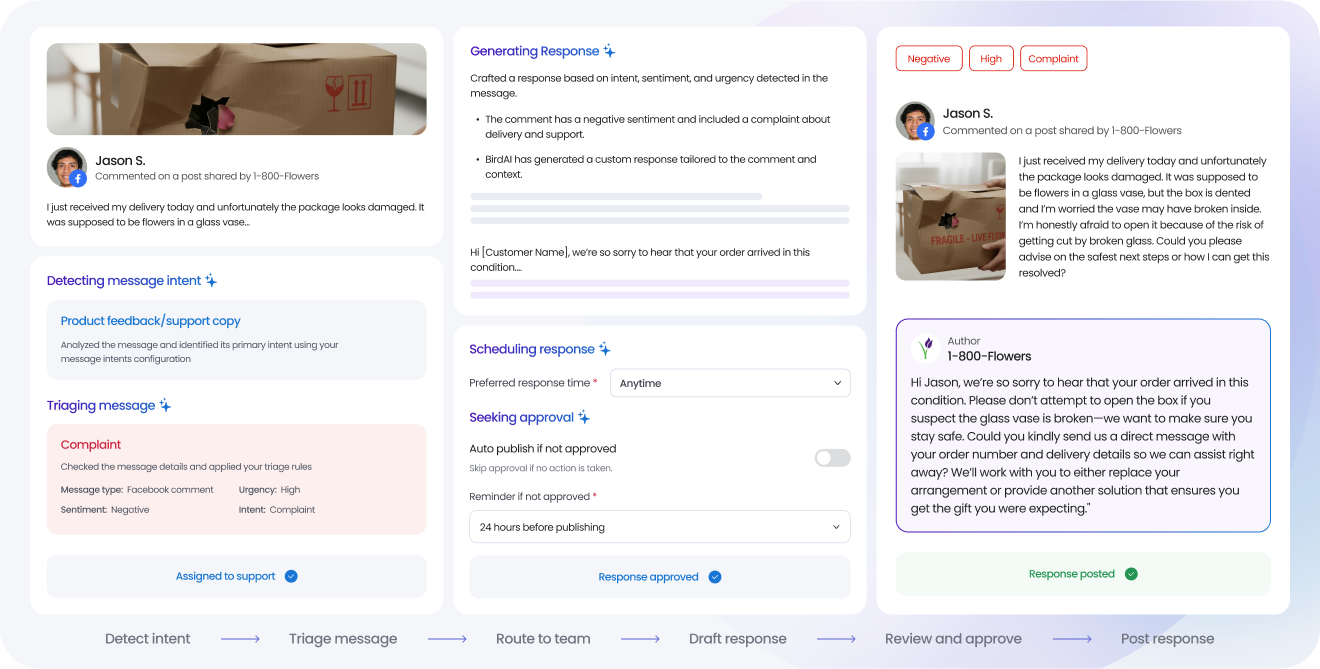
How GreenEarth Cleaning grew social reach 8X and drove 29K+ clicks
GreenEarth Cleaning, a leader in eco-friendly dry-cleaning technology with 230+ U.S. franchise locations, needed a way to bring order to chaotic, inconsistent social media management. Corporate teams pushed out national content, but franchisees couldn’t see what was scheduled, often duplicating posts or missing opportunities for local engagement.
Birdeye Social AI changed everything.
With centralized visibility, dynamic tagging, and a unified publishing calendar, every location now knows what is being posted and when. Franchisees can build on national campaigns with localized content, and Brand AI helps them generate on-brand posts even without marketing experience.
The results were immediate and dramatic:
- 1.9M impressions (+833.2% reach)
- 7.6K total followers (+150.7%)
- 85.9K engagements (+1687.4%)
- 29.4K link clicks, driving real business interest
What was once a fragmented, duplicative system is now a unified, scalable social engine. With Birdeye Social AI and Brand AI, GreenEarth delivers consistent branding, stronger engagement, and measurable growth across every location.
In 2026, content automation isn’t just a marketing convenience — it’s the only way multi-location brands can stay visible in a world that moves faster every day.
Pairing this with our guide to market mapping can help you see the competitive landscape more clearly.
Discover the top marketing automation trends in 2026
Want to see the impact of Birdeye on your business? Watch the Free Demo Now.
The AI ecosystem that strengthens enterprise-scale automation
Beyond the top five trends, marketing automation in 2026 is supported by an expanding network of AI systems that give enterprises a deeper understanding, a competitive advantage, and operational control. These systems aren’t trends on their own — but they are essential to scaling the trends that define this year.
Competitors AI — Real-time competitive intelligence
Competitor awareness has always mattered, but AI is now transforming how brands understand their competitive landscape. Birdeye’s Competitors AI tracks competitor ratings, reviews, social engagement, audience growth, and trends across locations. It highlights strengths, weaknesses, and emerging patterns, enabling marketing teams to refine their strategies with clarity.
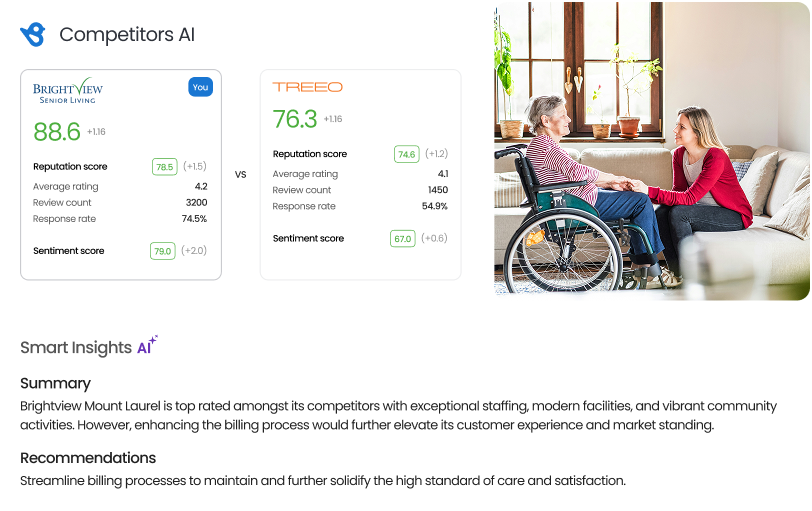
Competitive benchmarking is increasingly tied to customer experience, sentiment analysis, and location-level performance. With AI-driven intelligence, enterprise brands can not only keep up they can stay ahead.
Reporting AI — Automated explanation of performance changes
Every enterprise marketing team knows the challenge of interpreting complex data across locations. What changed? Why did it change? What caused the spike or the drop?
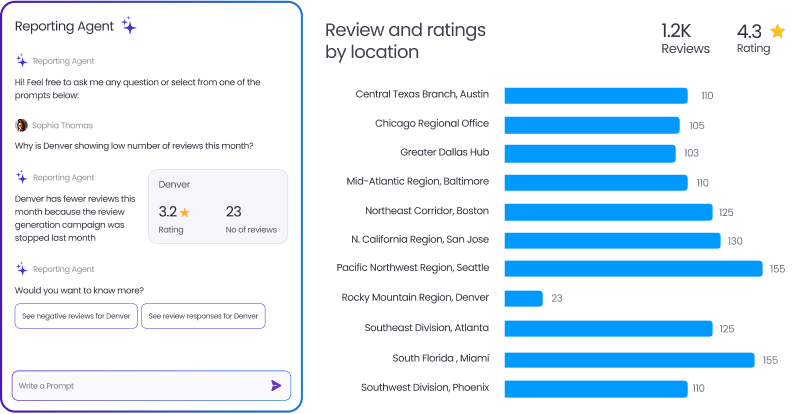
Birdeye’s Reporting AI answers these questions instantly. It detects anomalies across search, listings, reputation, and social data, then explains the “why” behind every shift. It removes time-consuming analysis and replaces it with immediate insight — empowering teams to make smarter decisions, faster.
As marketing analytics becomes increasingly complex, reporting automation becomes indispensable.
Messaging AI — Supporting omnichannel engagement
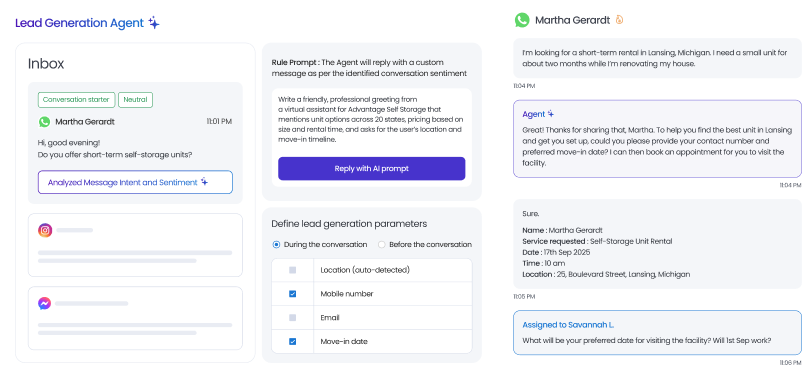
Messaging AI holds a quieter presence in this year’s trends, but it still supports critical customer engagement across webchat, text, and social messaging. It captures leads, segments audiences, and responds instantly, helping brands reduce response times and keep conversations alive.
While not the primary automation focus in 2026, Messaging AI remains a key contributor to personalized and efficient customer engagement.
FAQs about marketing automation trends
AI search optimization, AI-powered reputation automation, autonomous listings management, predictive analytics, and AI-generated content are the core trends shaping enterprise marketing automation this year.
AI engines influence how customers discover brands — often before they reach Google. Optimizing for AI search ensures a brand is visible in the conversations that drive early decision-making.
Predictive analytics identifies sentiment, category-level issues, and behavior patterns, helping marketing teams take proactive action and personalize campaigns across locations.
Search AI, Reviews, Listings AI, and Social AI usually deliver the strongest and fastest impact because they improve discoverability, credibility, and engagement at scale.
AI-powered automation systems ensure accuracy, consistent messaging, and timely engagement — without requiring every location to manage its presence manually.
Birdeye’s Agents turn these marketing automation trends into real growth
Fragmented marketing tools and manual tracking break down quickly at scale, creating data drift that pushes local storefronts out of search results and leaves customer inquiries unanswered.
The Birdeye’s agentic marketing platform solves this multi-location complexity by providing a unified operating system for your brand across three core dimensions:
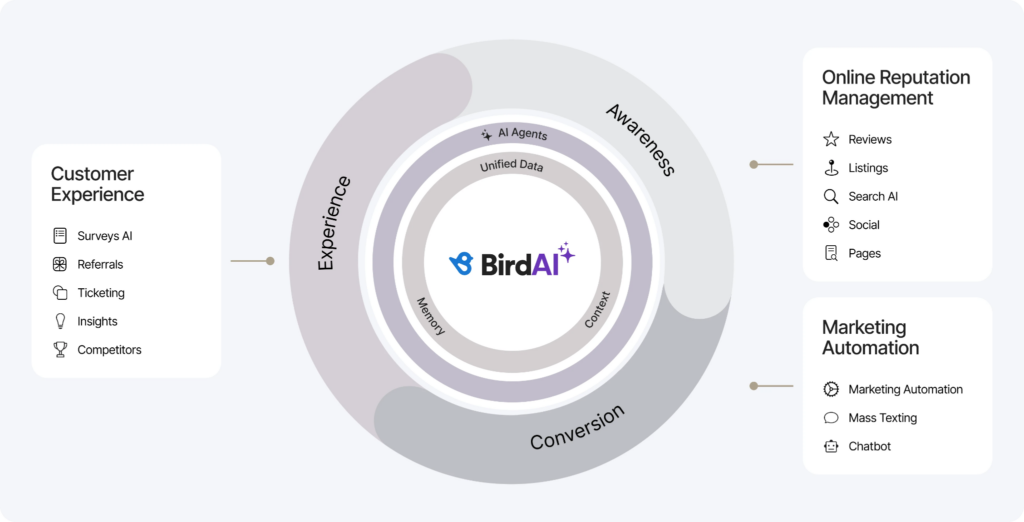
- Consolidate: Unify reviews, listings, social channels, and customer messaging into one full-cycle platform. By connecting directly to existing CRMs via 3,000+ integrations, enterprise brands replace disconnected software with a continuous marketing loop.
- Reason: Leverage a unified data layer to capture true local intelligence. Instead of relying on blind corporate averages, leadership can look at location-specific signals to understand exactly why certain branches are winning or losing search traffic.
- Act: Deploy brand-trained marketing agents to handle brand-safe, compliant execution. Operating on a strict “AI recommends, you approve” model, these agents handle routine directory updates and draft context-aware review responses while keeping a human-in-the-loop for final corporate approval.
Backed by enterprise governance features like Role-Based Access Control (RBAC) and Tiered Approvals, corporate teams can safely govern local reputation across 100 to 10,000+ locations without increasing administrative headcount.

About the Author

Shruti Dugar
Birdeye
Originally published



![[Feature image] 7 enterprise marketing automation tools designed for multi-location growth](https://birdeye.com/blog/wp-content/uploads/Feature-image-7-enterprise-marketing-automation-tools-designed-for-multi-location-growth-375x195.png)