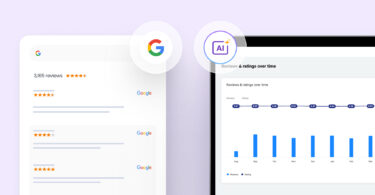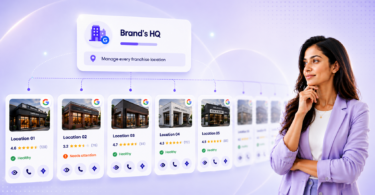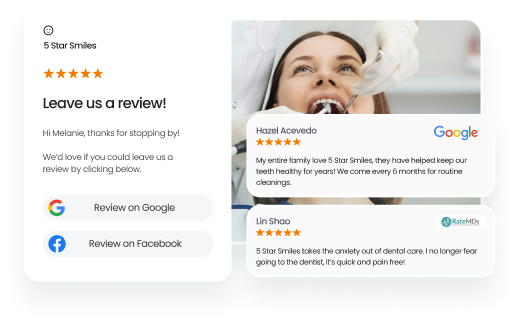
For enterprises managing 100 to 10,000+ locations, the best review management tools must centralize review monitoring, automate response workflows, and deliver location-level analytics, all within a single, enterprise-grade platform.
Summary
Enterprise-grade review management goes beyond collecting and replying to reviews. It includes centralized dashboards that consolidate location data into a single view, role-based access control to manage teams effectively, automated workflows to ensure timely responses, and location-level analytics to track performance differences across branches. These capabilities help brands maintain consistency while still allowing local teams to respond efficiently and appropriately.
This blog breaks down the best multi-location review management software, what features to look for, and how to evaluate platforms that support structured, consistent reputation management across all locations.
Table of contents
Why standard review tools break down at enterprise scale
Standard review tools work for single-location setups where feedback volume is limited and ownership is straightforward. However, multi-location brands operate across hundreds of profiles, platforms, and teams, where review management becomes an operational challenge. At this level, fragmented systems and manual workflows create gaps in visibility, consistency, and control.
Here’s where standard tools fail:
Review volume and response velocity gaps
Multi-location brands receive thousands of reviews weekly across Google, Yelp, Facebook, and industry-specific platforms. Manual workflows cannot keep pace with this inflow, resulting in delayed or missed responses. These delays reduce engagement and weaken customer trust. Without automation, maintaining timely online reputation management multi-location strategies becomes unsustainable.
Fragmentation, SEO impact, and governance gaps
When locations manage reviews independently, brands lose a unified view and cannot benchmark performance or standardize responses. This directly impacts local SEO, as review recency and response rate influence rankings at the location level. Missed negative reviews remain unresolved and affect ratings over time. At the same time, the lack of RBAC, audit trails, and brand controls limits oversight across teams.
With these criteria in mind, here’s how the leading platforms compare.
What to look for in a multi-location review management software
Choosing an enterprise review management software for multi-location brands requires more than comparing surface-level features. At enterprise scale, the system must support centralized control, consistent execution, and structured workflows across every location.
Key criteria to cover:
- A centralized dashboard with hierarchical views provides visibility across brand, region, and location levels.
- Role-based access control (RBAC) defines clear permissions for corporate, regional, and local teams.
- Automated review request workflows run across SMS and email, support brand-level customization, and scale across all locations.
- Real-time monitoring captures reviews across Google, Yelp, Facebook, Healthgrades, TripAdvisor, and other relevant platforms.
- Response drafting generates context-aware replies and enforces brand tone through approval workflows.
- Location-level analytics enables benchmarking and the identification of top and underperforming locations.
- Integrations connect review data with CRM, POS, PMS, and ticketing systems through APIs or pre-built connectors.
- Governance controls include SSO, SOC 2 Type II compliance, and audit logs to ensure secure operations.
- Scalability supports per-location pricing, SLA-backed performance, and dedicated support.
These capabilities ensure consistent, controlled, and scalable review management for franchises in 2026.
5 best review management tools for multi-location brands
Not all review management platforms are designed for enterprise scale. The tools below are evaluated based on their ability to handle high review volume, automate workflows, and provide centralized control across multiple locations.
| Platform | Best for | Core strength | G2 rating |
| Birdeye Reviews | Enterprises and multi-location brands | End-to-end review management with AI agents and unified customer data | 4.7/5 with 3900 reviews |
| NiceJob | Small to mid-sized multi-location brands | Automated review requests and social proof | 4.8/5 with 410 reviews |
| Podium | Local and service-based multi-location brands | Messaging-led review collection | 4.6/5 with 2066 reviews |
| Reviewflowz | Marketing teams and agencies | Review monitoring and reporting automation | 4.7/5 with 9 reviews |
| Grade.us | Agencies and SMB multi-location brands | White-label review management | 4.6/5 with 143 reviews |
"See why the world's leading multi-location brands choose Birdeye. Request your personalized enterprise demo and discover what agentic review management looks like in action."
1. Birdeye Reviews
Best for: Enterprise and multi-location brands that need a centralized system for managing reviews, automating feedback collection, and gaining clear visibility into reputation performance across locations.
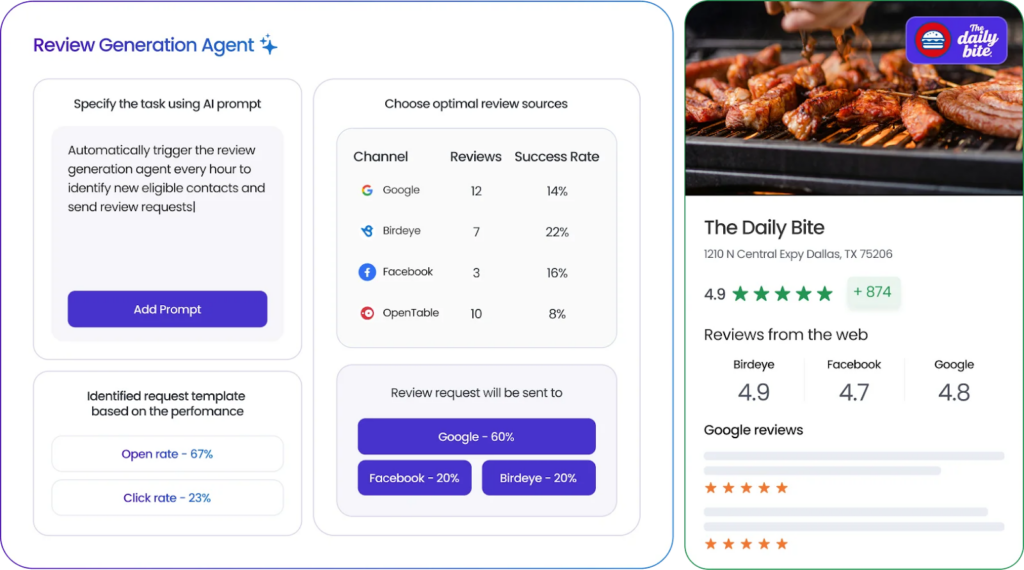
Birdeye is the #1 Agentic Review Management Platform for multi-location brands. Trusted by global brands like H&R Block and Caesars Entertainment, it centralizes review management through a unified customer data platform (CDP), giving a complete view of customer feedback across locations. It automates review requests, responses, and monitoring through sentiment analysis and smart routing, ensuring timely, consistent engagement.
Built for enterprise needs, it includes governance controls such as RBAC, SSO, SOC 2 Type II compliance, and 3,000+ integrations to manage operations securely across large location networks.
Features:
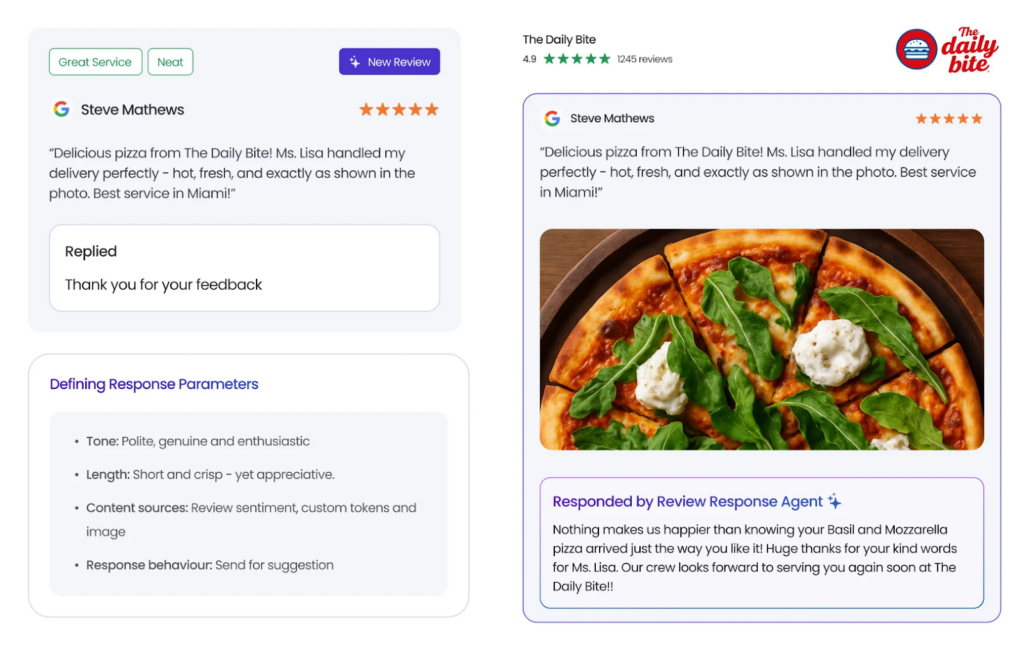
- Review Generation Agent: Automatically triggers review requests through SMS, email, or integrated workflows at key points in the customer journey. It chooses the most effective channel and messaging to improve response rates and ensure consistent feedback.
- Review Response Agent: Creates personalized, on-brand replies by assessing sentiment, context, and urgency. This helps teams deliver thoughtful responses while maintaining a consistent voice across all locations.
- Reporting Agent: Breaks down review data into clear, actionable insights by identifying patterns, highlighting recurring issues, and tracking performance across locations. Teams can quickly see what customers value and where improvements are needed.
- Review monitoring: Collects and organizes reviews from 200+ platforms in one centralized dashboard, making it easier to track feedback and maintain a consistent brand presence everywhere customers share their opinions.
- Review widgets: Display top customer reviews on websites with customizable widgets and concise summaries, giving visitors a quick, credible view of customer experiences.
- Social sharing for reviews: Turns positive reviews into ready-to-share social media posts with customizable templates, helping brands showcase authentic customer feedback.
- Reputation score tracking: Combines ratings, review volume, and response activity into a single score, providing a clear view of brand perception across all locations over time.
- Competitive benchmarking: Compares competitor reviews and ratings to provide performance context and uncover opportunities to strengthen overall reputation.
Pros
- Designed for multi-location brands, making it easier to manage reputation across many locations
- Automated agents handle review requests, responses, and reporting with minimal manual effort
- Unified dashboard for tracking reviews across a large number of platforms
- Strong analytics with built-in competitive comparison features
Cons
- The platform includes a wide range of tools across reviews, messaging, and social media, which can feel overwhelming at first. Most teams adjust quickly with the help of an intuitive interface and guided onboarding.
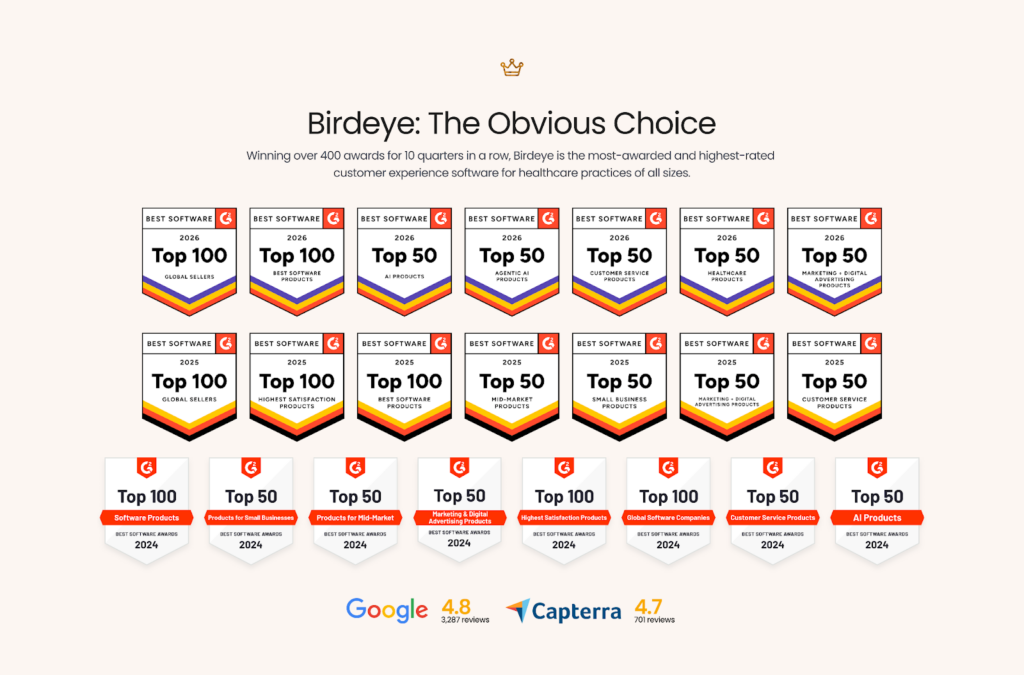
As per G2 & Gartner, Birdeye is the No. 1 Online Reputation Management Software. 4.7/5 rating with 3,900+ G2 reviews
2. NiceJob
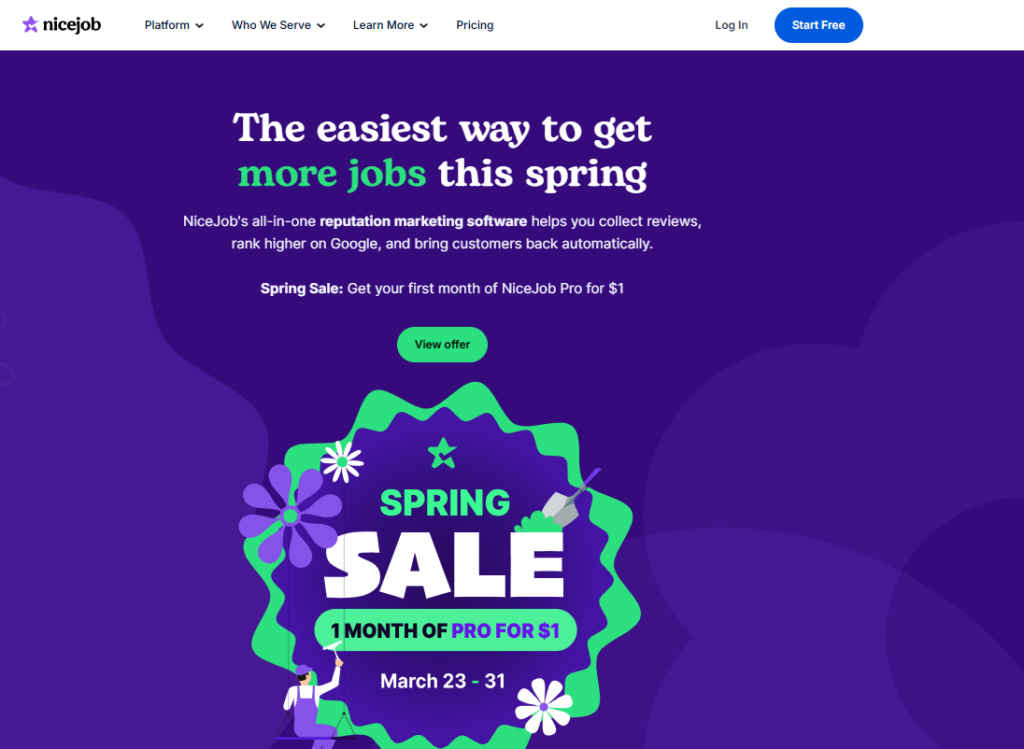
NiceJob helps businesses generate more reviews, build trust, and drive referrals through automated campaigns. It is designed for simplicity, making it a strong choice for teams that want consistent review growth and word-of-mouth marketing without managing complex workflows.
Key features
- Review request automation: Sends personalized review invitations via SMS and email after customer interactions to increase response rates.
- Automated reminders: Follow up with customers to increase review completion rates.
- Social proof widgets: Display recent reviews on websites to improve credibility and conversions.
- Social sharing: Automatically publishes customer reviews to social media channels to boost visibility.
- Referral marketing: Converts satisfied customers into referral sources through automated campaigns triggered after positive reviews.
- AI-powered responses: Generates suggested replies to customer reviews to save time and maintain consistency.
- Integrations: Connects with CRM, booking, and payment tools to trigger campaigns based on real customer activity.
Pros
- Simple setup with automation-first workflows
- Strong combination of review generation and referral marketing
- Built-in tools to showcase reviews and improve conversions
Cons
- Limited advanced analytics and high-level features
- Less flexibility for complex, multi-location, or agency workflows
Best for: Small to mid-sized businesses that want an easy, hands-off way to generate reviews and referrals at scale.
G2 rating: 4.8 /5 with 410 reviews
3. Podium
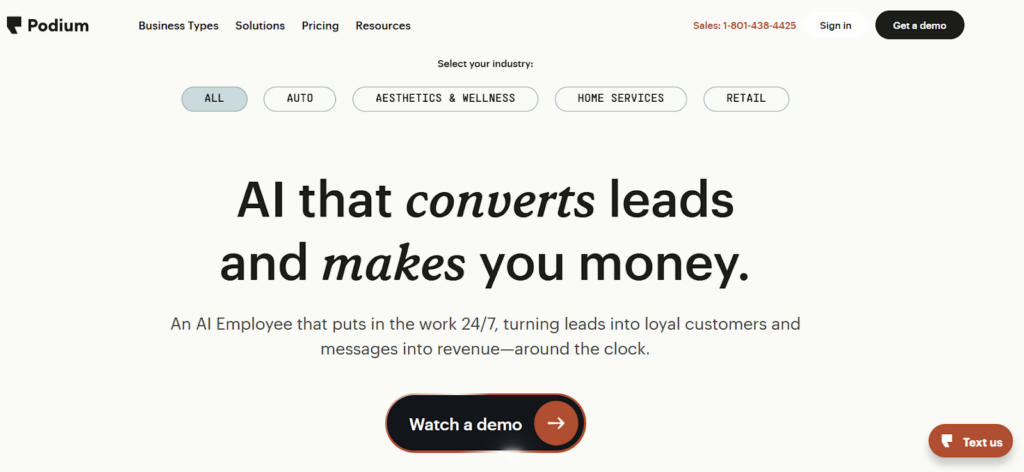
Podium combines messaging and review collection into a single platform. It helps businesses request reviews during ongoing customer conversations, making the process feel more natural and increasing the likelihood of responses.
Key features
- Text-based review requests: Send review invitations through SMS conversations to increase engagement and response rates.
- Unified inbox: Centralizes messages, reviews, and customer interactions into a single dashboard for easier management.
- Customer communication tools: Enable real-time conversations through SMS, chat, and other messaging channels.
- Review tracking: Monitors customer feedback across major review platforms in one place.
- Interaction history: Stores past conversations and interactions to provide context for future communication.
- Payments: Allows businesses to collect payments through text, streamlining the customer experience.
- Webchat and lead capture: Converts website visitors into leads through chat-based engagement tools.
Pros
- Strong messaging-first approach to collecting reviews
- Multi-channel communication improves engagement and conversion
- Mobile-friendly platform for quick responses
Cons
- Includes features beyond review management that may not suit all teams
- Limited depth in analytics compared to specialized reputation tools
- Higher pricing compared to simpler review-focused platforms
Best for: Businesses that want to collect reviews through ongoing customer conversations and messaging workflows.
G2 rating: 4.6 /5 with 2066 reviews
4. Reviewflowz
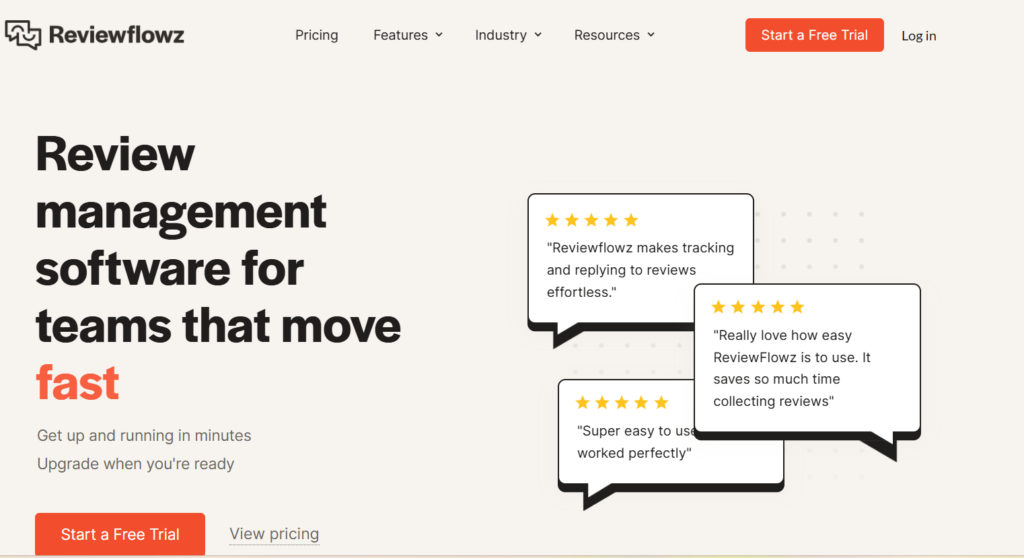
Reviewflowz helps teams monitor, organize, and analyze reviews across platforms. It is designed for visibility rather than outreach, making it useful for tracking trends and sharing insights with internal teams.
Key features
- Cross-platform monitoring: Aggregate reviews from multiple platforms into a single dashboard for centralized visibility.
- Real-time alerts: Send instant notifications for new or critical reviews to enable faster responses.
- Custom reporting: Provides flexible reports to analyze trends, sentiment, and performance over time.
- Team integrations: Connects with tools like Slack to share updates and streamline internal workflows.
- Data exports: Allows teams to export review data for deeper analysis and reporting outside the platform.
Pros
- Strong monitoring and alert capabilities
- Useful for tracking trends and performance over time
- Integrates well with existing team workflows
Cons
- Limited focus on generating new reviews
- Minimal tools for direct customer engagement
Best for: Teams that want better visibility into customer feedback and performance trends rather than review collection.
G2 rating: 5/ 5 with 9 reviews
5. Grade.us
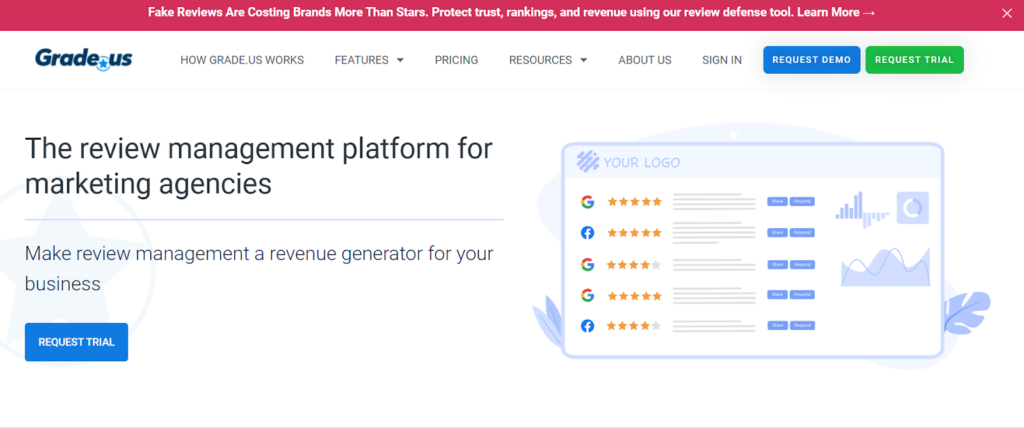
Grade.us provides flexible tools for managing and directing customer feedback. It is widely used by agencies due to its white-label capabilities and customizable review funnels, allowing tailored experiences for different clients or locations.
Key features
- Review funnels: Guides customers through a structured process to leave private feedback or public reviews.
- White-label platform: Allows agencies to fully brand the platform for their clients.
- Campaign automation: Sends review requests and follow-ups automatically based on predefined workflows.
- Review tracking: Monitors reviews across multiple platforms from a centralized dashboard.
- Workflow customization: Enable businesses to tailor review-collection processes to client or location-specific needs.
- Multi-client management: Supports managing multiple clients or locations from a single interface.
- Client reporting: Provides shareable reports to demonstrate performance and results to clients.
Pros
- Highly customizable workflows and funnels
- Strong white-label capabilities for agencies
- Balanced approach to review collection and monitoring
Cons
- Interface may feel outdated compared to newer platforms
- Setup can be time-intensive for advanced configurations
Best for: Agencies and teams that need flexible control over how reviews are collected and managed across different clients or locations.
G2 rating: 4.6 /5 with 143 reviews
Discover Best Review Management Tools for Multi-location Brands
Want to see the impact of Birdeye on your business? Watch the Free Demo Now.
How Birdeye’s Agentic AI changes review management at scale
Most “AI-powered” review tools on the market are essentially just smarter templates. They provide an AI-assisted experience where a human still has to log in, click a button to generate a draft, review it, and click “send.” When you are managing thousands of locations, that is still a massive manual bottleneck.
Birdeye Agentic AI shifts the burden from the human to the system. Instead of waiting for a prompt, the AI acts as an autonomous member of your CX team, constantly monitoring, drafting, routing, and responding across every location without needing a “nudge” to get started.
Agentic vs. AI-Assisted: Why the distinction matters
The difference is simple: AI-assisted tools help. Agentic AI acts.
| Feature | AI-assisted (traditional) | Agentic AI (Birdeye) |
| Trigger | Human-initiated | Event-driven |
| Workflow | Manual steps | Autonomous loop (monitor → draft → route → respond) |
| Personalization | Generic templates | Location-aware responses |
| Scalability | Limited by teams | Scales instantly |
Agentic AI operates continuously, shifting review management from reactive workflows to an always-on system.
Response speed as a ranking signal
In the world of local SEO, speed is a currency. Google itself states that responding to reviews shows businesses value customer feedback, a key trust and engagement signal.
- The minutes-to-response advantage: Manual workflows often result in response times measured in days. Birdeye’s Agentic AI can engage a customer within minutes of a review being posted.
- Customer sentiment: A fast response shows customers you care, often de-escalating negative reviews before they go viral.
- Algorithm boost: High response rates and low latency are key signals that improve your visibility in the “Local Pack” (the top 3 map results).
FAQs
Birdeye is a top-rated agentic review management platform designed for enterprises with 100–10,000+ locations. It offers centralized dashboards, AI-powered response automation, role-based access control (RBAC), and SOC 2 Type II compliance, all within a single platform.
Automated review request workflows drive consistent review volume for each location, while real-time response management signals to Google that the business actively engages with customers, both of which are key local ranking factors.
Multi-location brands should look for a review management software with a centralized dashboard, role-based access control, real-time review monitoring, AI-powered response drafting, location-level analytics, and integrations with CRM systems, APIs, and SSO.
The platform should also support approval workflows, benchmarking across locations, and scalable automation so corporate and local teams can manage reviews consistently without adding unnecessary manual work.
See why the world’s leading multi-location brands choose Birdeye. Request your personalized enterprise demo and discover what agentic review management looks like in action.

About the Author

Avtar Madan
Avtar Madan
Originally published