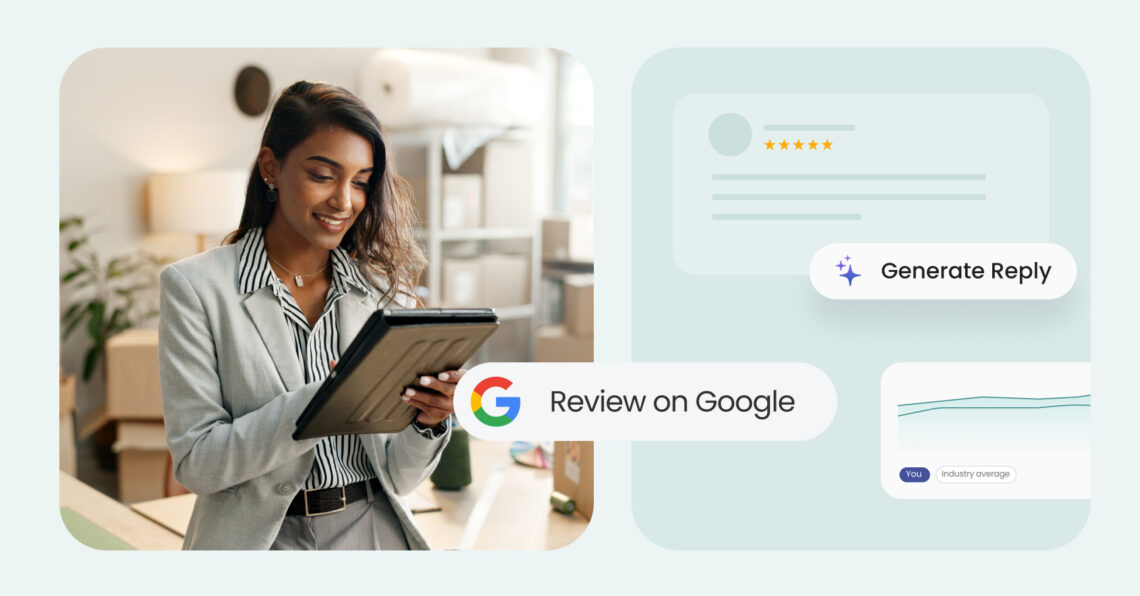
Google reviews management UK helps businesses collect customer feedback, respond to reviews, and maintain an accurate online presence across Google Search and Maps. As reviews increasingly influence where consumers spend their money, businesses need a structured approach to managing feedback and customer interactions at scale.
Summary
Businesses across the UK now manage hundreds or even thousands of customer reviews across multiple locations, making manual review management difficult and time-consuming. Review management platforms help automate review requests, centralise customer feedback, track performance trends, and measure the impact of reviews on customer acquisition. These tools also provide reporting and analytics that help teams make informed operational and marketing decisions.
In this blog, we will examine Google reviews management in the UK, the tools and processes businesses use to manage reviews efficiently, and the best practices for improving review performance and customer engagement.
Table of contents
- Why Google reviews matter for UK businesses
- How to get more Google reviews in the UK
- How can UK multi-location businesses manage Google reviews at scale?
- How do Google AI Overviews affect Google reviews management UK?
- UK regulations on review generation and marketing
- What are the key 2026 compliance updates for UK businesses
- How to respond to Google reviews
- FAQ on Google review management UK
- How can Birdeye strengthen your Google reviews management UK strategy?
Why Google reviews matter for UK businesses
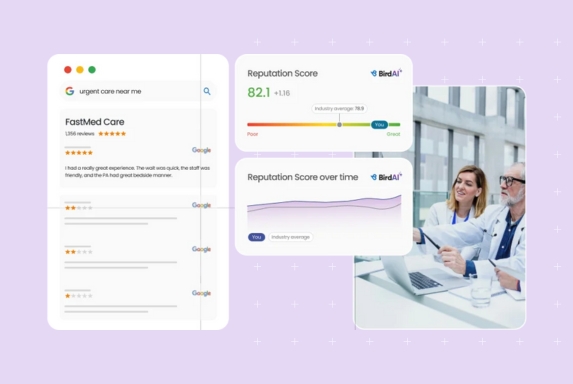
For UK companies, taking advantage of Google reviews is no longer a suggestion; it’s essential for standing out. A strong profile packed with recent, positive online customer reviews on Google Maps can make all the difference by boosting your business in local search, building trust, and driving higher customer engagement.
Here is how it helps:
Boosts local SEO: With robust processes in place for collecting new reviews, businesses see marked gains in Google Maps visibility. High star ratings and regular customer feedback signal credibility and authenticity, helping more people find you locally. Google reviews are one of the top local ranking factors. Explore more in our local business directories guide.
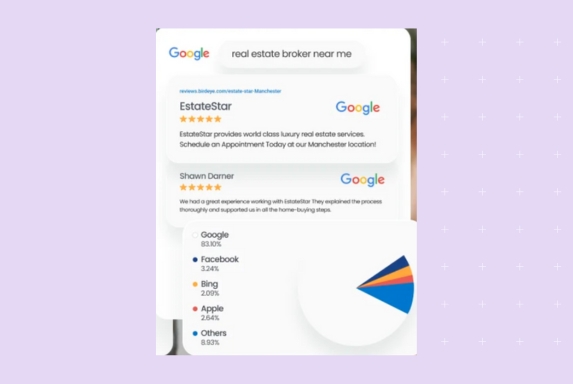
Increases customer trust: Written feedback offers real social proof to UK consumer group audiences. When prospective customers see other users sharing their opinions and the business engaging in return, it inspires genuine confidence. People are far more likely to decide independently in your favour when they notice ongoing efforts to respond to both praise and constructive criticism.
Enhances click-through rates: A business with a 4.5-star rating and glowing customer reviews will naturally get more clicks than one without reviews or with a low rating. You can also showcase these reviews and ratings on local service ads or other paid campaigns, increasing clicks.
For UK businesses, Google review UK efforts improve local SEO, customer trust, and business growth. Stay ahead by understanding UK-specific review guidelines and adopting innovative review strategies.
How to get more Google reviews in the UK
This section covers the few basic steps that can help you strengthen your review generation strategy and get more Google reviews for your UK-based business.
1. Claim and optimise your Google Business Profile
To collect and manage Google reviews, your business must have a claimed and verified Google business profile. This is the first step before sending review requests to your customers/clients.
Here is how you can do that:
- Claim and verify your profile: Locate your Google Business Profile and ensure you claim and verify it. If no profile exists, you may have to set one up from scratch. For more details, check out our Google My Business UK guide.
- Add accurate and consistent information: Ensure your business name, address, phone number (NAP), and website are correct. This consistency improves your local SEO efforts and allows potential customers to find you easily.
- Add Photos and updates: High-quality photos and regular posts keep your profile engaging and up-to-date. An active profile is more likely to get more reviews, as clients are more likely to leave reviews if they see you actively managing your profile. .
2. Proactively ask customers for reviews
The simplest way to get more reviews is to ask—but comply with UK regulations (more on that later). Send personalised review requests via email or SMS after a purchase.
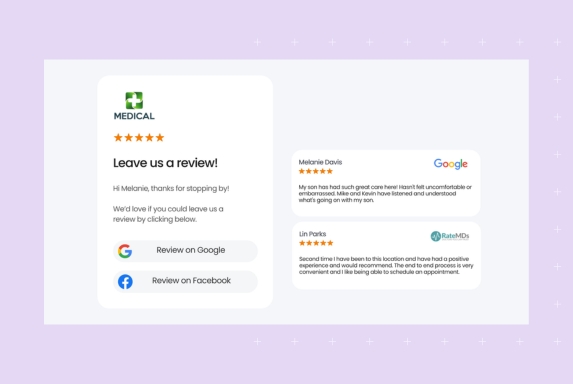
According to the Competition and Markets Authority (CMA), businesses aren’t allowed to:
- Incentivise reviews
- Rewarding positive reviews
- Selectively posting only positive reviews on the platforms while blocking negative ones from going public.
Pro tip: Violating review guidelines can result in legal action and harm your reputation. Always play by the rules to ensure your business profile is not blocked or removed by Google due to legal issues.
3. Pick the right timing for the best results
Ask for reviews at the right moment, when the experience is fresh in your customer’s mind. The ideal time is after a positive interaction or a successful service delivery.
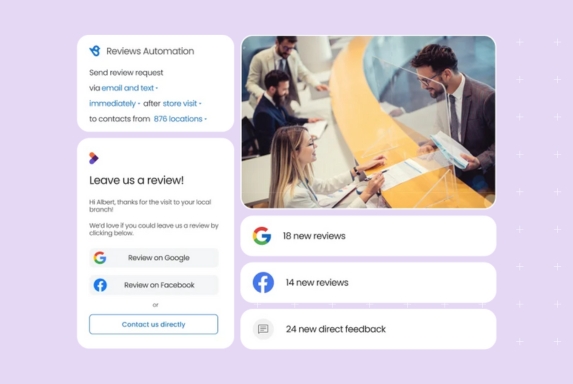
The more timely the request, the higher the likelihood of a review. Delayed requests often result in missed opportunities or inaccurate reviews.
For a seamless review generation process, consider using an automated AI review management tool like Birdeye that integrates with your CRM, shooting off a request with a custom template as soon as a transaction is complete.
4. Simplify the review process
To encourage customers to leave reviews, include a direct link to your Google review page across your website, email signatures, and social media profiles.
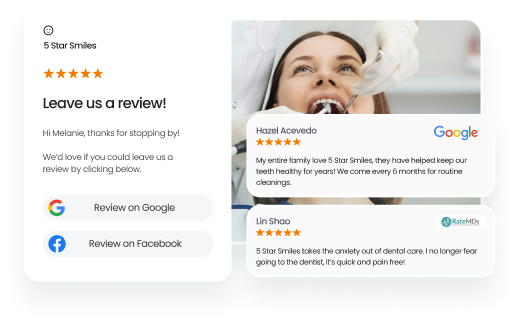
Don’t leave it to chance—invite customers to share their feedback. Use email, SMS, or in-store QR codes to encourage reviews. Always personalise your request, share templates, and use tools that enable one-click review so that clients don’t spend too much time with the review.
5. Respond to all reviews
Acknowledge and respond to every review, whether positive or negative. This shows you value customer feedback and builds trust with potential customers. Make sure you personalise your response, thanking customers for their feedback and agreeing to fix any issues they may have had.
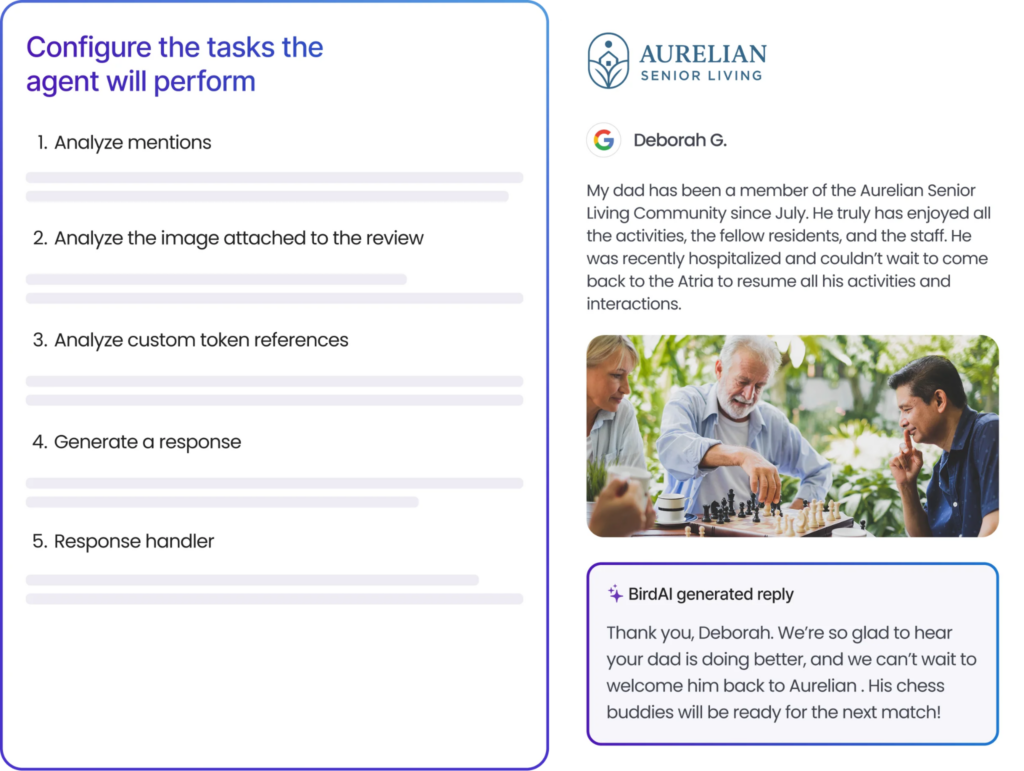
Pro tip: Managing Google reviews across multiple locations can quickly become overwhelming. Birdeye helps multi-location brands generate reviews, respond consistently, and uncover customer sentiment across every location from a single platform.
Birdeye Reviews Agents help teams draft contextual responses, identify emerging reputation trends, and benchmark performance against local competitors. This gives businesses a complete view of their reputation while maintaining a consistent brand voice across locations.
6. Offer excellent customer service
The best way to earn positive reviews is by providing an exceptional experience. Happy customers are more likely to leave glowing reviews without being asked. Birdeye’s study on multi-location businesses indicates that 54% of customers will likely leave online reviews after a positive customer experience.
Providing a superior customer experience sets you apart from your competitors and allows you to generate a higher volume of reviews.
7. Use review management tools
Manually managing reviews can be overwhelming, especially for UK businesses with multiple locations. Choosing the right review management software for UK businesses can help centralise review monitoring, automate requests and responses, and maintain consistency as your business grows.y.
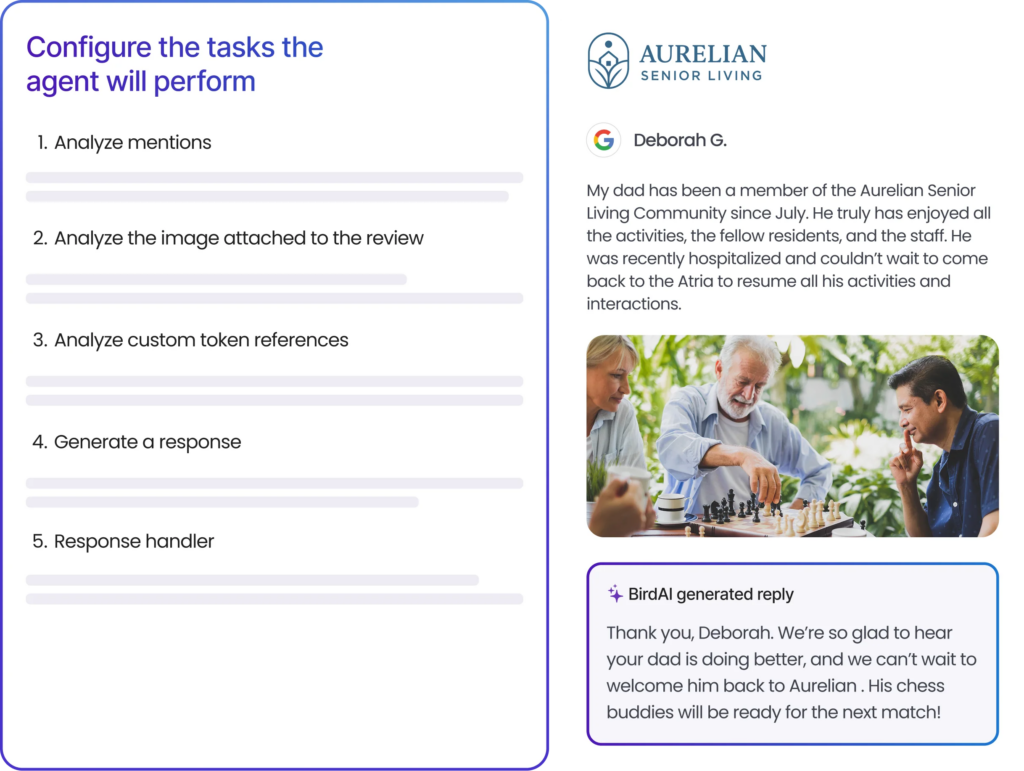
Birdeye builds AI agents for multi-location brands to automate review generation, monitoring, and engagement at scale. Jay—your local marketing AI coworker—employs specialized agents to execute your reputation jobs across hundreds or thousands of locations automatically.
While the Review Generation Agent drives authentic, keyword-rich reviews to boost your AI visibility, the Review Response Agent drafts contextual, brand-compliant replies for your team’s approval. By running this autonomous loop, your locations instantly turn customer feedback into powerful digital signals that build trust, search visibility, and guest loyalty.
How can UK multi-location businesses manage Google reviews at scale?
Google reviews management UK becomes more challenging as businesses expand across multiple regions. Higher review volume, multiple Google Business Profiles, and distributed teams make it difficult to maintain consistent customer engagement without a centralised process.
Centralise review monitoring
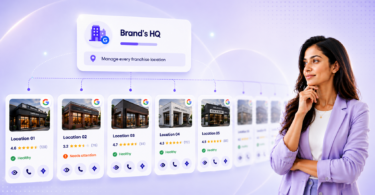
Managing reviews on a location-by-location basis can result in missed feedback and delayed responses. A centralised review dashboard helps teams track customer reviews across all locations and prioritise reviews that require immediate attention.
Maintain response consistency
Customers expect the same level of service regardless of which location they visit. Establishing review response guidelines helps businesses maintain a consistent brand voice while allowing teams to personalise responses where appropriate.
Identify location-level trends
Review data can reveal patterns that may not appear in operational reports. Comparing feedback across locations helps businesses identify recurring issues, service gaps, and customer experience trends that influence ratings and reputation.
Measure reputation performance
Review volume alone does not provide a complete picture of performance. Tracking metrics such as average rating, response rate, review growth, and sentiment trends helps businesses understand how each location is performing.
Manage Google Business Profiles efficiently
As the number of locations grows, keeping Google Business Profile information accurate becomes increasingly difficult. Inconsistent business hours, contact details, or service information can create a poor customer experience and impact local search visibility.
How Birdeye supports Google reviews management UK across 100-10,000+ locations
For businesses managing large location networks, Birdeye combines review management, Birdeye’s Listings, and Google Business Profile management within a single platform.
With Birdeye, businesses can:
- Manage Google Business Profile information across locations from a centralised dashboard.
- Use Listings to update business hours, services, categories, attributes, and profile details at scale.
- Leverage the Listings Optimisation Agent to identify missing information, profile gaps, and optimisation opportunities across locations.
- Maintain consistent business information across Google and other major online directories.
- Monitor listing accuracy, impressions, engagement, and conversion metrics through Listings Reports.
- Track Google-specific performance metrics, including profile appearance, ranking, impressions, engagement, and conversions.
- Audit listing performance across locations and identify opportunities to improve local search visibility.
By combining Google Business Profile management, Listings AI, and listing performance reporting, Birdeye helps multi-location businesses maintain accurate listings and support a stronger Google reviews management UK strategy.
How do Google AI Overviews affect Google reviews management UK?
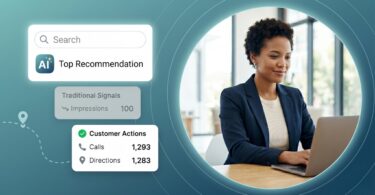
Google AI Overviews are changing how customers research local businesses. When users search for queries such as “best dentist in Leeds” or “top-rated plumber near me,” Google’s AI-generated summaries can draw from review content, ratings, and business profile information to explain why a business is recommended.
This makes review responses more important than simple customer engagement. Every response is an opportunity to reinforce the services, locations, and customer experiences associated with your business.
To make review responses more useful:
- Mention the specific service referenced in the review (e.g., dental implants, emergency plumbing, MOT testing).
- Include the location when relevant, especially for multi-location businesses.
- Reference the customer’s experience rather than using generic thank-you messages.
- Acknowledge specific strengths customers mention, such as response times, staff expertise, appointment availability, or service quality.
- Use consistent terminology across review responses so recurring themes appear naturally over time.
For example, “Thank you for choosing our emergency boiler repair service in Birmingham. We’re pleased our engineer was able to resolve the issue the same day” provides more context than “Thank you for your feedback.”
How Birdeye helps businesses manage reviews for AI-era search
As review volume grows, identifying recurring customer themes manually becomes increasingly difficult.
- Reviews help businesses create personalised responses that reflect the service, location, and customer experience discussed in each review.
- Sentiment Score analyses reviews and surveys to identify the topics customers mention most frequently, such as staff professionalism, appointment scheduling, wait times, communication, or pricing.
- Search AI helps businesses track how their brand appears across Google AI Overviews, Google AI Mode, ChatGPT, Gemini, and Perplexity, providing visibility into the topics, citations, and brand attributes associated with their business.
Businesses that consistently reinforce their services, locations, and customer strengths through review responses are more likely to build a stronger and more accurate online presence across both traditional and AI-driven search experiences.
UK regulations on review generation and marketing
Businesses in the UK must adhere to strict guidelines for collecting and promoting reviews to ensure transparency and fairness. These regulations, enforced by the Competition and Markets Authority (CMA) and the Advertising Standards Authority (ASA), help maintain consumer trust and prevent deceptive practices
Key rules to follow:
- No fake or misleading reviews: Writing fake reviews or paying others to post positive reviews is illegal. Businesses must also avoid suppressing or deleting negative feedback.
- Be transparent: Always be honest about how reviews are collected and displayed. If you incentivise reviews (which is generally discouraged), disclose it clearly.
- Avoid undue pressure: While asking for reviews is okay, never coerce or pressure customers into leaving one.
Businesses considering shortcuts should understand the consequences before acting. Our breakdown of buying Google reviews in the UK explains the legal, platform, and reputational risks involved.
For detailed guidance, refer to the CMA’s online review guidelines. Staying compliant protects your business and builds long-term trust with customers.
What are the key 2026 compliance updates for UK businesses
The Digital Markets, Competition and Consumers Act (DMCCA) and ongoing regulatory enforcement have introduced stricter obligations around online reviews, transparency, and consumer protection in the UK:
- Fake reviews remain explicitly prohibited: Businesses must not create, commission, publish, or facilitate fake reviews. Review platforms are also expected to take reasonable and proportionate steps to detect and remove misleading reviews.
- CMA enforcement activity has intensified: In March 2026, the CMA launched formal investigations into multiple businesses, including Autotrader, Just Eat, Feefo, Dignity, and Pasta Evangelists, using its new direct enforcement powers under the DMCCA. Alleged practices under investigation include suppressing negative reviews, incentivising five-star reviews, manipulating ratings, and publishing misleading review content.
- Significant financial penalties remain available: The CMA can impose fines of up to 10% of a company’s global turnover for consumer law breaches without needing to go through lengthy court proceedings.
- Website compliance reviews are underway: Following the publication of the CMA’s fake reviews guidance, the regulator reviewed more than 100 businesses and found that many lacked clear policies on fake or incentivised reviews. Businesses are expected to maintain accessible review policies and effective compliance measures.
- ASA rules on reviews have been strengthened: Under CAP Code rules introduced following the DMCCA changes, marketers must not use fake consumer reviews and must clearly disclose incentivised reviews. Businesses should not give greater prominence to positive reviews than negative reviews or incentivise only favourable feedback.
- Greater scrutiny of review transparency: Recent ASA guidance reinforces that review claims used in marketing must accurately reflect genuine customer experiences and any incentives provided must be clearly disclosed.
- ICO guidance developments affect review management: Organisations collecting, storing, analysing, or responding to customer reviews should continue to review their data-handling practices in line with evolving UK data protection guidance and transparency requirements. Particular attention should be paid to the lawful processing of customer information used in review generation and reputation management workflows.
Best practices for compliance include:
- Publish all genuine customer feedback, not just selectively chosen positive reviews, so consumers can make informed decisions.
- Clearly disclose any incentivised reviews and ensure incentives do not influence review sentiment.
- Maintain documented policies for detecting, preventing, and reporting fake or misleading reviews.
- Regularly audit review generation, moderation, and response processes to ensure alignment with CMA, ASA, and ICO requirements.
- Train staff on review compliance requirements and avoid practices that could distort ratings or suppress legitimate customer feedback.
Why it matters
Failing to comply with the latest CMA, ASA, and ICO expectations can result in regulatory investigations, substantial financial penalties, reputational damage, reduced consumer trust, and restrictions on review functionality. Ensuring your review management processes align with current UK requirements helps protect both your business and your online reputation.
How to respond to Google reviews
The way you respond to reviews can influence customer trust, future purchasing decisions, and your online reputation. Under current CMA, ASA, and ICO guidance, businesses should ensure that review responses are authentic and transparent and that they avoid publicly sharing personal customer information.
Positive review response template
“Thank you, [Customer Name], for taking the time to share your feedback. We’re pleased to hear you had a positive experience with our [service/product]. Your comments about [specific detail mentioned in the review] mean a lot to our team. We look forward to welcoming you again in the future.”
Why it complies
- CMA: Acknowledges genuine customer feedback without encouraging additional reviews or offering incentives.
- ASA: Reflects the customer’s actual experience rather than making unverified marketing claims.
- ICO: Uses only information already shared publicly by the reviewer and avoids disclosing personal data.
Negative review response template
“Hi [Customer Name], thank you for sharing your feedback. We’re sorry your experience did not meet expectations. We take comments like yours seriously and would like to learn more about what happened. Please contact our team at [contact information] so we can review your concerns and work towards a resolution.”
Why it complies
- CMA: Responds transparently to negative feedback rather than suppressing or discouraging criticism.
- ASA: Avoids misleading statements about the issue or the outcome before an investigation takes place.
- ICO: Moves detailed discussions offline rather than discussing personal information publicly.
Customer complaint response template
“Hi [Customer Name], thank you for bringing this matter to our attention. We’re sorry to hear about your experience regarding [issue]. Our team is currently reviewing your feedback and would appreciate the opportunity to discuss this further. Please contact us directly at [contact information] so we can investigate and address your concerns appropriately.”
Why it complies
- CMA: Demonstrates that all customer feedback is treated fairly and reviewed appropriately.
- ASA: Provides a factual response without exaggerating the business’s actions or commitments.
- ICO: Protects customer privacy by directing complaint resolution to a private communication channel.
Compliance tip: Avoid offering discounts, gifts, refunds, or incentives in exchange for review edits or removals. Ensure responses remain factual, transparent, and respectful while protecting customer privacy.
Check out our guide on review response templates for more guidance on this subject.
Generate more Google reviews for your UK business
Want to see the impact of Birdeye on your business? Watch the Free Demo Now.
FAQ on Google review management UK
There’s no set number, but businesses with a consistent flow of high-quality and recent reviews on Google are favoured in the UK local pack. Focus on steady growth, authentic feedback, and regular engagement using tools like Birdeye to maximise visibility.
Yes. UK businesses can flag and request the removal of reviews that violate Google’s content policies. Birdeye helps monitor, report, and manage these efficiently. Legal escalation is possible for defamatory or malicious content.
Occasional negative reviews are normal and may even boost trust if handled well. Reply professionally, address issues, and demonstrate active reputation management with Birdeye to maintain a balanced, credible profile.
Use platforms like Birdeye to automate review collection, tracking, sentiment analysis, and reporting across multiple locations. Thismakes it easier to surface insights and improve your entire customer experience.
Google reviews influence your local search ranking. More positive reviews improve your chances of appearing in Google’s Local Pack.
There isn’t a fixed number, but search engines prioritize businesses with consistent, high-quality reviews. LLMs and AI-driven search features use review volume, recency, and sentiment as ranking signals. Focus on collecting steady, authentic Google reviews in the UK to improve visibility.
Yes, but only through official channels. AI models and Google’s automated systems flag suspicious activity, but you can manually request the removal of fake or misleading reviews through the Google Business Profile dashboard. Google reviews flagged content based on policy violations.
No. CMA and ASA regulations clearly prohibit incentives. AI-driven monitoring systems can detect unnatural review patterns, which may trigger penalties or reduced trust signals. Stick to transparent and compliant review strategies to maintain credibility.
Negative reviews can impact trust, but AI and LLM-driven sentiment analysis tools consider context. Responding thoughtfully shows engagement, which can improve perception. Address issues promptly, and AI tools like Birdeye Reviews can help craft professional responses.
For multi-location or high-volume businesses, manual review tracking is inefficient. AI-based platforms aggregate reviews, analyse sentiment, and surface actionable insights. Tools like Birdeye Insights AI use NLP and machine learning to highlight trends, competitor gaps, and opportunities.
How can Birdeye strengthen your Google reviews management UK strategy?
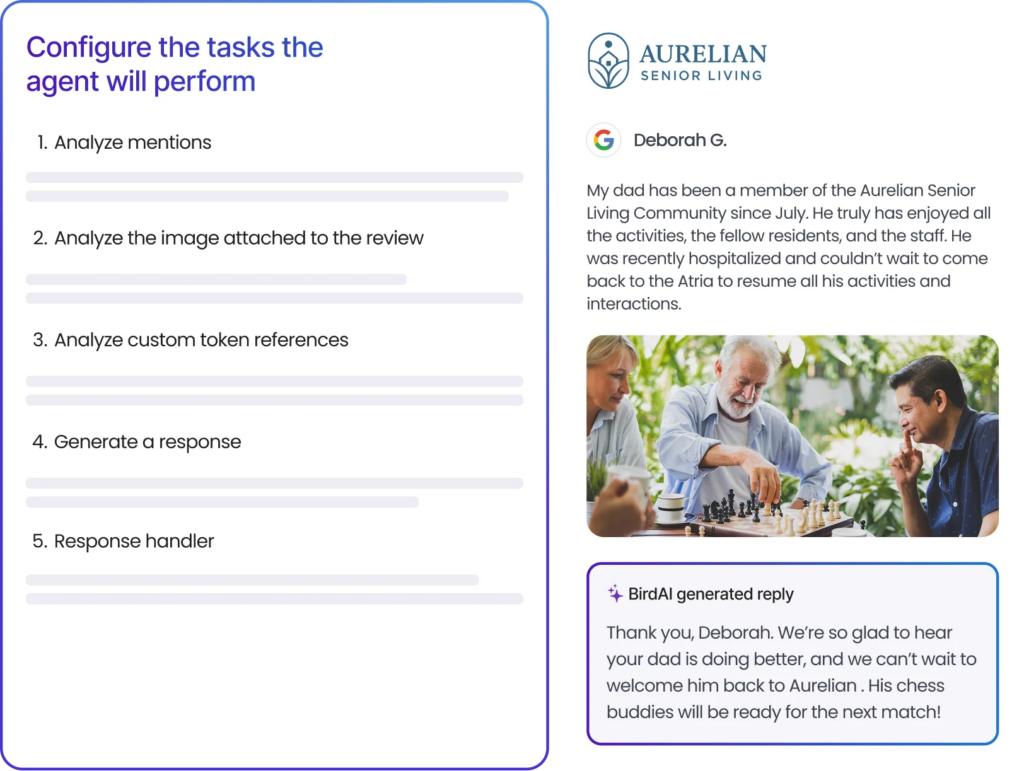
Birdeye builds AI agents for multi-location UK brands, helping businesses manage reviews, listings, customer communications, and digital customer experiences from a single platform.
Across industries, UK businesses use Birdeye to streamline review generation, reputation management, and customer engagement. For example, Signs Express generated more than 600 new reviews across 60+ centres and achieved a 5.0-star average rating, while Country Court centralised listings and reputation management across 47 care homes. These success stories reflect why Birdeye is trusted by some of the largest brands in the UK and around the world to manage customer experience at scale.
“Birdeye allows us to scale review generation, positioning us as the dominant signs and graphics provider in our local market.”
Damien Berry
With Birdeye, businesses can:
- Generate more Google reviews through the Review Generation Agent, which automatically sends review requests through SMS, email, and other customer touchpoints.
- Monitor and manage customer feedback from a centralised dashboard with Reviews, helping teams stay on top of review activity across 100-10,000+ locations.
- Respond to reviews more efficiently with the Review Response Agent, which creates personalised responses based on customer feedback and brand guidelines.
Whether managing a single location or a nationwide network, Birdeye helps businesses streamline Google reviews management UK through automated review generation, review monitoring, and customer engagement.
Get started with Birdeye today to enhance your reputation, attract more customers, and grow your business. Watch a free demo to learn more.

About the Author

Shruti Dugar
Birdeye
Originally published