Brands respond to bad reviews by addressing customer concerns, acknowledging feedback, and taking steps to resolve issues. A thoughtful response helps brands rebuild trust, demonstrate accountability, and show customers that they value feedback.
Summary
Bad reviews reveal customer expectations, highlight service gaps, and uncover operational issues that brands may overlook through traditional performance metrics. Rather than viewing negative feedback as a setback, brands can use it to improve customer experiences, strengthen customer relationships, and protect their reputation.
This blog shares five practical tips for how to respond to a bad review, explains how effective responses influence customer perception, and shows how brands can turn negative feedback into opportunities for improvement and long-term reputation growth.
How to respond to a bad review
Here are 5 tips for responding to negative reviews in a way that converts them into business opportunities:
Know the facts
Before responding to negative reviews, take some time to understand the context. Read the review thoroughly, perhaps have your team members read it, and ask questions. Try to put yourself in the shoes of your customer and think about how you would feel in their situation. Identify whether there was a misunderstanding or if your business was at fault, consider the circumstances that may have led to this incident and whether they could have been avoided, and note if this has happened before. Gathering this background information will put you in a better position to respond thoughtfully to the reviewer.
Correct any false information
Misinformation can seriously damage your business. While you want to give credit to your reviewer for pointing out their concerns, you should also graciously correct any inaccurate statements the customer has made about your business. This helps clear up the facts for prospective customers who come across the review. When doing this, it’s important to avoid 1) sounding defensive and 2) making the customer feel stupid. Rather, in your response, imply that this was an easy mistake to make and do your best to offer some sort of solution. Remember, the customer is always right, even when they’re wrong.
Address the customer’s concerns
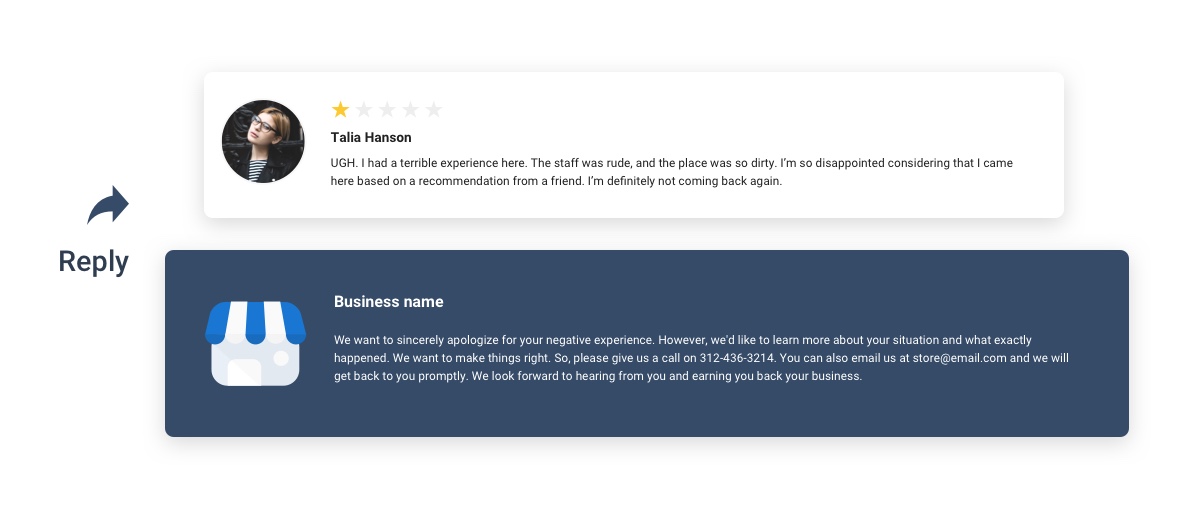
If you believe that your customer is pointing out issues that are relevant and legitimate, your focus should shift to solving the problem. It could be as simple as improving your office setup. Or it could be as difficult as making complex changes to the services you offer. In your response, tell the customer what steps you’re taking to solve their problem and assure them it won’t happen again. Once you’ve sorted out the problem, don’t forget to reach out to the customer again and confirm they are satisfied. Taking the time to follow-up can make even more of an impact than actual problem-solving. This thoughtful gesture could even lead the customer to edit or delete their negative review. Most importantly, it could bring them back to your business.
Be quick about it
A customer leaving a negative review wants to be heard, not just by you, but by the community. Effective online review management is crucial in handling negative reviews as they are public complaints that, left unattended, can reflect extremely poorly on your business. On the other hand, if you jump on it immediately with a thoughtful reply and tangible solution, you can change the mind of the reviewer: when prospects come across the review, rather than seeing an angry complaint, they’ll see a caring business addressing a frustrating situation with knowledge and compassion.
Try connecting with the customer offline
For more complex issues, you should also try and connect with the customer offline to get more information and make them aware of the steps that you’re taking to solve the problem. This simple step can be enough to lead customers to follow up their negative reviews with a positive one.
Consider reading Responding to negative reviews the business guide
How does Birdeye help multi-location brands manage bad reviews at scale?
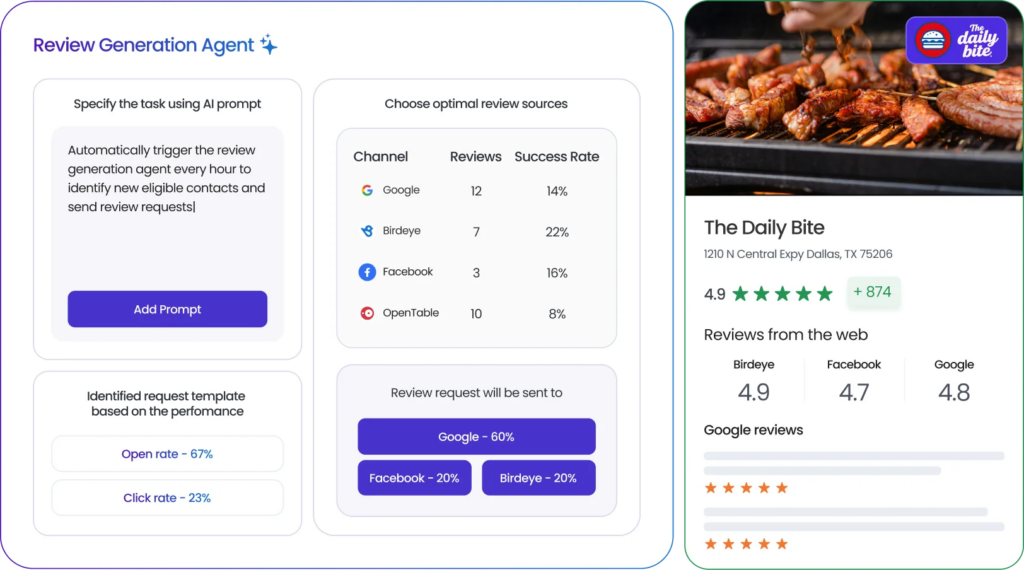
Managing negative reviews across multiple locations requires consistency, speed, and context. Enterprises need a unified way to monitor sentiment, respond appropriately, and understand what customer feedback is signaling across regions and teams. Birdeye helps brands bring all of this together on one platform, making it easier to maintain consistent reputation while turning feedback into actionable insights.
Trusted by enterprise brands such as Sono Bello, Aspen Dental, JLL, etc. Birdeye helps organizations manage customer experience signals across hundreds to 10,000+ locations. Powered by BirdAI and a unified data platform, the platform connects reviews, listings, social engagement, customer interactions, and operational insights to help teams make better decisions throughout the customer journey.
Birdeye’s specialized AI coworkers help enterprise teams manage the signals that influence AI recommendations:
- Jay helps improve visibility, reputation, and customer acquisition.
- Robin ensures accuracy, consistency, and performance across locations.
- Myna helps brands understand sentiment and improve customer experiences.
These Birdeye agents help brands move beyond monitoring and reporting. They analyze signals, understand brand context, and take action across hundreds or thousands of locations.
For example:
- The Review Generation Agent helps collect reviews at the right time and through the right channels, while the Review Response Agent analyzes customer sentiment and creates personalized, on-brand responses that show customers their feedback is valued and taken seriously.
- BirdAI connects review, listing, social, and customer experience data, helping enterprise teams improve awareness, increase conversion opportunities, and deliver better customer experiences.
With Reviews Agent, brands can monitor reputation across review sites, identify emerging sentiment trends, and understand where improvements can have the greatest impact. This gives enterprise teams the visibility and context they need to respond effectively to negative reviews while maintaining a consistent brand experience across every location.

About the Author

Vanjana Sharma
Originally published