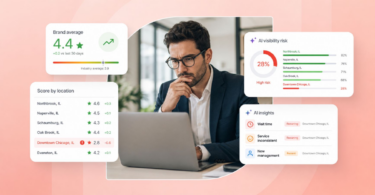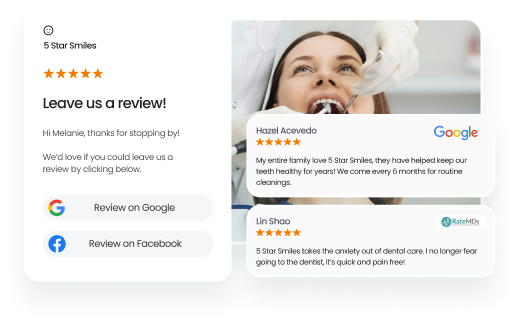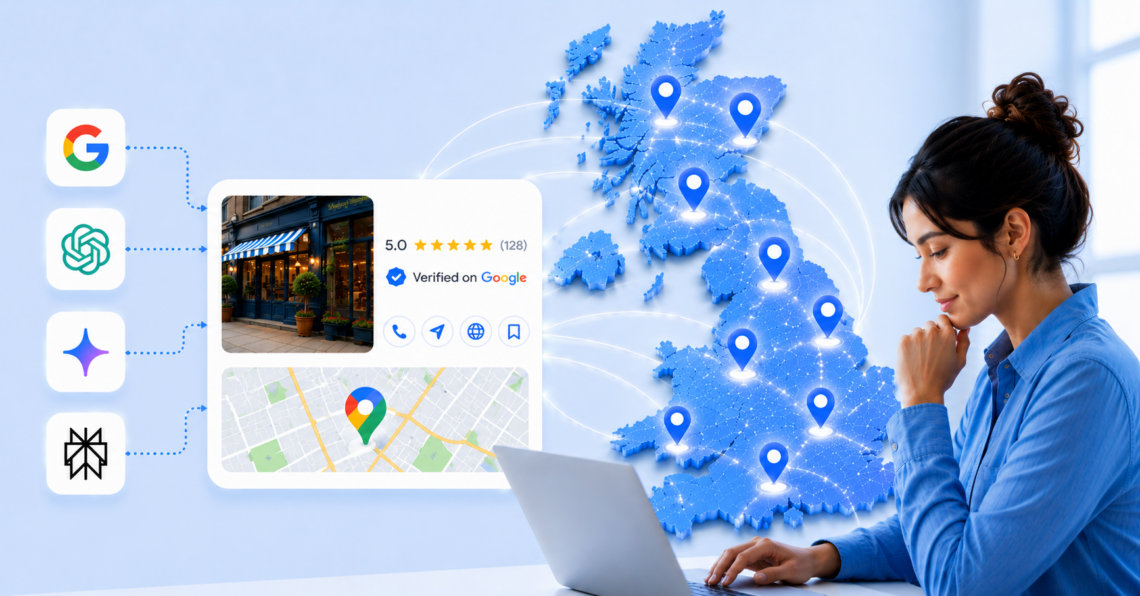
Local SEO services in the UK are designed to increase the visibility, credibility, and conversion rates of multi-location brands in Google’s local search results, Google Maps, and top UK directories. Local search in the UK is also changing rapidly. Google AI Overviews, AI Mode, and AI-powered search experiences are increasingly influencing how customers discover local businesses, compare providers, and make decisions.
Summary

Local SEO now extends beyond rankings and map visibility to include how your business appears in AI-generated answers, recommendations, and citations. The right local SEO solution in the UK goes beyond technical setup, while remaining fully compliant and audit-ready. Birdeye builds AI agents for multi-location brands that provide AI coworkers at every location to centralize location data, amplify social and review activity, and integrate reporting across hundreds of sites.
Let us explore the top choices for availing local SEO services in the UK and understand how you can find one that best fits your unique business needs.
Table of contents
- How AI is reshaping local SEO in the UK in 2026
- Why UK local SEO demands a distinct strategy
- What do UK local search trends tell us in 2026?
- What should your local SEO service package cover in the UK?
- Which AI-powered local SEO tools do UK businesses use?
- Local SEO services: Process plan and rollout to target the UK market
- How to measure success? KPIs That Prove Local SEO ROI
- How can UK businesses improve their visibility in Google AI Mode?
- What compliance requirements should UK businesses consider when managing local SEO?
- Agencies vs platforms for local SEO services in the UK
- What questions should you ask before choosing a local SEO provider?
- What does Birdeye offer to UK businesses?
- Birdeye helps UK businesses build a stronger local presence
How AI is reshaping local SEO in the UK in 2026
AI is changing how people discover local businesses. A search that once produced a list of links may now include an AI-generated summary, business recommendations, review highlights, or follow-up questions. For UK businesses, that means local SEO signals are being evaluated in more places than before.
How are AI Overviews and AI Mode changing local discovery?
When someone searches for a local service, Google can now pull information from reviews, business profiles, websites, and third-party sources to help answer the query directly. Businesses with accurate information and strong online reputations are often better positioned to appear in these results.
While traditional rankings still matter, they are no longer the only source of visibility. Customers may encounter a business through an AI-generated recommendation before they ever visit a website.
What does AI mean for multi-location brands?
Managing local visibility across dozens of locations has always been challenging. Each location generates reviews, listing updates, customer questions, and new content requirements.
AI helps teams handle these tasks more efficiently by supporting content creation, identifying listing issues, monitoring reviews, and highlighting changes that need attention. This allows marketing teams to spend less time on routine maintenance and more time improving customer experience and local performance.
The fundamentals remain the same: accurate business information, strong reviews, and relevant local content. What has changed is how many places those signals influence. Understanding that shift is particularly important in the UK, where local search behaviour, directories, and competitive dynamics differ from those in other markets.
Why UK local SEO demands a distinct strategy
UK local SEO operates differently from broader SEO campaigns. Customers often discover businesses through Google Business Profiles, review platforms, and location-based searches long before they visit a website. For multi-location brands, maintaining visibility across all these touchpoints requires a dedicated strategy centered on local intent, location accuracy, and reputation management.
| # | Core local SEO component | Description |
| 1 | Google Business Profile (GBP) Optimisation | Complete categories, NAP, rich media, posts, Q&A, updated per branch |
| 2 | Local landing pages & schema | Unique, keyword-rich, geo-specific pages for every branch; robust schema implementation |
| 3 | Citation building & NAP consistency | Accurate name/address/phone listings on every major UK platform; routine audits |
| 4 | Review generation & management | Use AI to automate review requests and responses, reply with compliance workflows, encourage steady velocity |
| 5 | Local link building & PR | High-authority backlinks (news, associations, partners); industry and location focused |
| 6 | Social media campaigns | Cohesive, consistent posting at the branch and brand level |
| 7 | Analytics & dashboards | Location-level visibility: calls, bookings, review growth, rankings, executive roll-up views |
Here are some of the factors that make local SEO in the UK unique:
Local search behaviour: When Google displays the local pack, businesses listed there often receive more attention than traditional organic results. Visibility in Maps and local results can have a direct impact on enquiries, visits, and bookings.
Local ranking signals: Strong local performance depends on factors such as accurate business information, review quality, review recency, and local authority signals. Website optimisation alone is rarely enough.
Multi-location complexity: Every location needs its own business profile, local content, reviews, and performance monitoring. What works for one branch may not work for another.
Competitive local markets: Businesses compete not only against national brands but also against established local providers with strong community visibility and review profiles.
Brand trust: Consistent listings and strong reviews help businesses earn customer trust and improve local visibility across search platforms.
These differences are reflected in how consumers search for, compare, and make decisions about businesses online. Looking at current UK local search trends helps illustrate why local visibility remains such a critical growth driver for multi-location brands.
What do UK local search trends tell us in 2026?
Consumer behaviour continues to reinforce the importance of local search. Whether someone is looking for a dentist, care home, estate agent, or automotive service, the decision-making process often starts online.
Several trends are shaping how UK businesses compete for local visibility in 2026.
Local searches continue to drive high-intent traffic
46% of Google searches have a local intent. That means local search is often where customers move from research to action. Searches for nearby services, opening hours, directions, and reviews typically come from people who are actively evaluating their options and are closer to making a decision.
Reviews remain one of the strongest trust signals
Customers rarely choose a local business based on location alone. They compare ratings, read recent reviews, and look for evidence of consistent customer experiences. A strong review profile can influence whether a business earns a click, a phone call, or a visit, particularly in competitive local markets.
Customers research businesses across multiple platforms
The customer journey rarely begins and ends on Google Search. Consumers move between Google Maps, business websites, review platforms, and online directories, and they increasingly expect consistent, AI-powered summaries and insights across these channels to help them decide.
Inconsistent information creates friction and erodes trust, even when the business itself delivers great service
AI-assisted discovery is becoming part of the search journey
AI-generated answers are beginning to influence how consumers discover and compare local businesses. While traditional search results remain important, businesses increasingly need a strong presence across reviews, listings, and trusted online sources that help shape AI-generated recommendations.
Birdeye’s State of AI Search 2026 analysis shows that while 80% of brands are cited in AI-generated answers, only 15% claim the #1 position as their own. This gap reveals how many customer questions are answered in AI results before they ever reach a brand's website.
These trends point to the same conclusion: local visibility depends on more than rankings alone. Businesses need accurate listings, strong reviews, relevant local content, and ongoing performance monitoring to remain competitive. The next step is understanding what a modern local SEO service package should include.
What should your local SEO service package cover in the UK?
A strong local SEO programme is built on a handful of core online reputation management strategies. Each one contributes to visibility, trust, and discoverability across search results, maps, directories, and review platforms.
The core components of a local SEO service package:
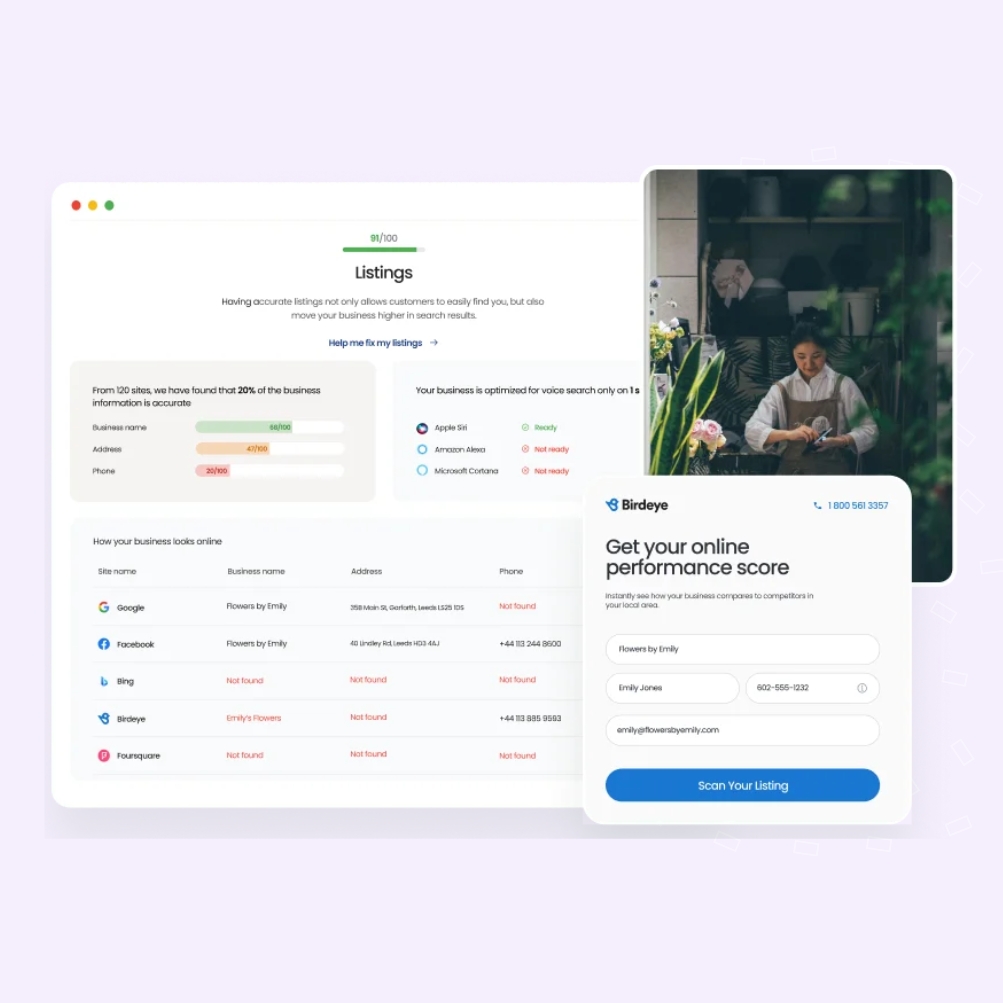
Google Business Profile optimisation
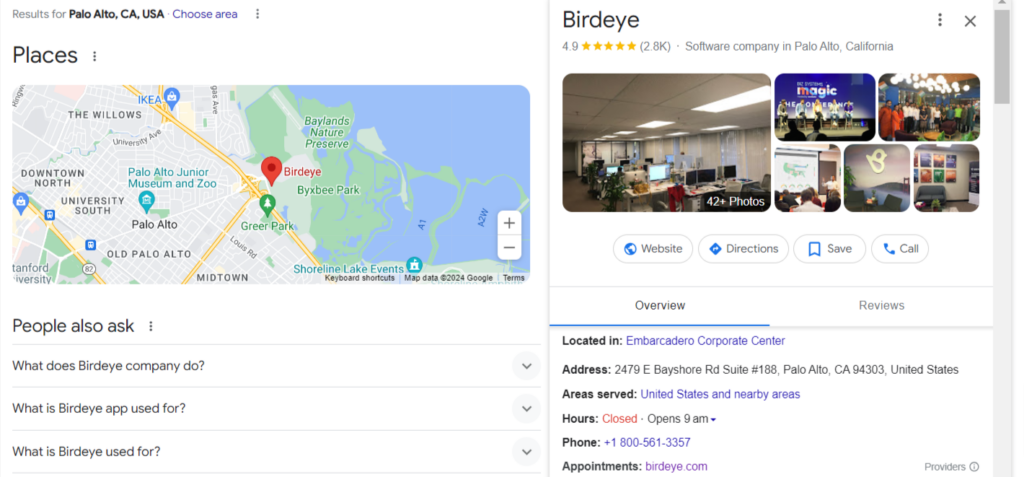
Your business profile is often the first thing customers see. An optimised Google Business Profile includes correct categories, services, photos, opening hours, posts, and Q&A; all of which influence how a location appears in local search and Google Maps.
Location pages and local content
Each location needs its own page with unique content, local information, and structured data. Reusing the same content across multiple locations rarely delivers strong local results.
Listings management
Business information should remain consistent across Google, Apple Maps, Bing, Yell, and industry-specific business directories. Even small discrepancies can create confusion for customers and search engines.
Review management
Reviews influence both visibility and trust. A local SEO strategy should include review generation, monitoring, and response workflows that help maintain a steady flow of customer feedback.
Local authority building
Links and mentions from local organisations, industry associations, publications, and community websites help strengthen local relevance and credibility.
Performance tracking
Visibility, calls, website visits, direction requests, reviews, and conversions should all be measured at the location level, not just the brand level.
Which AI-powered local SEO tools do UK businesses use?
Managing listings, reviews, local content, and performance reporting across multiple locations can quickly become time-consuming. As a result, many UK businesses use local SEO platforms to centralise these activities, improve consistency, and reduce manual work.
| Platform | Listings management | Review management | AI features | Best for |
| Birdeye | ✓ | ✓ | Strong | Multi-location brands (100-10,000+ locations) |
| BrightLocal | ✓ | Limited | Limited | Local SEO monitoring |
| Yext | ✓ | Limited | Growing | Enterprise listings management |
| SOCi | ✓ | ✓ | Moderate | Franchise and multi-location businesses |
| Moz Local | ✓ | Basic | Limited | Small business visibility |
While most platforms help businesses manage listings and reviews, the market is increasingly moving from AI-assisted workflows to agentic AI. Rather than simply collecting data, modern platforms help teams identify issues, prioritise actions, and manage local presence more efficiently across multiple locations.
How Birdeye helped Signs Express scale Visibility across 60+ franchise locations?
For example, Signs Express, the UK’s largest signs and graphics franchise, used Birdeye to support review generation, listings management, and social publishing across more than 60 locations. Since adopting the platform, the business has generated over 600 new reviews, achieved more than 513,000 profile impressions, and recorded over 28,000 website visits from its local profiles.
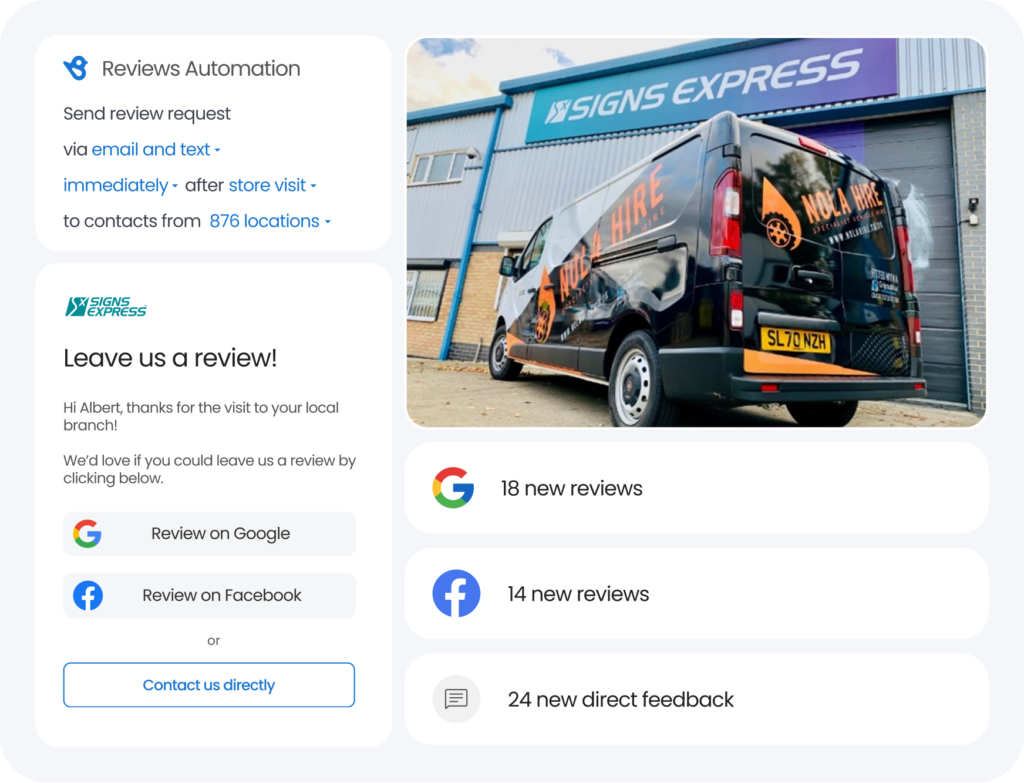
For organisations managing 100-10,000+ locations, results like these highlight the value of having local SEO strategy, reputation management, and customer engagement activities managed from a single platform.

For multi-location brands, Birdeye combines listings management, review management, social publishing, messaging, and AI-powered insights within a single platform. This helps marketing teams maintain consistency across locations while reducing the operational burden of managing local visibility at scale.
Choosing the right platform is only part of the equation. Once the foundations are in place, the focus shifts to execution. A structured rollout helps businesses improve visibility, strengthen their reputation, and create a consistent local presence across every location.
Check this blog to learn how to build a local SEO strategy for franchises that helps every location stand out across search engines, maps, directories, review sites, and AI-powered search experiences.
Local SEO services: Process plan and rollout to target the UK market
A structured rollout, powered by Birdeye AI agents, sets enterprise brands on the fastest path from baseline optimization to local search leadership.
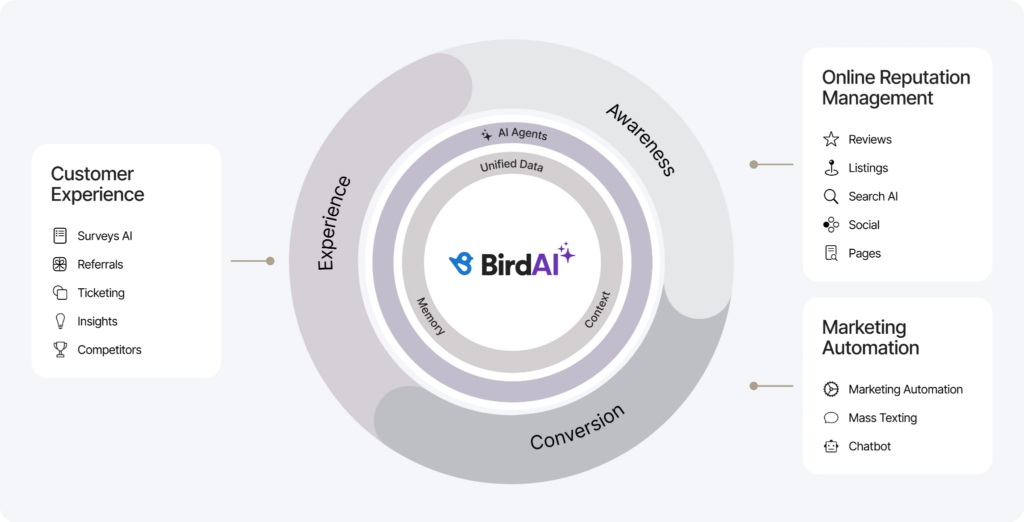
Ideal 90-Day Rollout
- Month 1: Technical foundation
- Implement technical fixes across all sites.
- Standardise and optimise Google Business Profiles with accurate categories and baseline tracking.
- Launch the first location/service landing pages for immediate discoverability.
- Month 2: Acceleration & authority
- Accelerate authentic review collection with automated, personalised requests.
- Upload engaging before/after media to showcase offerings.
- Clean up citation inconsistencies across major UK directories.
- Secure first local backlinks for authority and relevance.
- Month 3: Expansion & measurement
- Expand content to answer local service-intent queries; optimise landing pages by recent call data.
- Publish dedicated pages for each city or branch.
- Present enterprise leaders with a 6-month scale plan tracking review velocity, content cadence, and PR schedules.
6-month scale plan for success:
- Develop city clusters with regionally targeted landing pages.
- Implement strategic internal linking patterns to reinforce relevance.
- Set and track ongoing review velocity/per location benchmarks.
- Schedule quarterly photo and video updates to sustain engagement.
- Launch regular local PR and media initiatives for each location.
The exact activities may vary by industry, but successful local SEO programmes share the same characteristic: consistent execution over time. Visibility gains typically come from hundreds of small improvements rather than a single optimisation.
A rollout plan provides direction, but results still need to be measured. Tracking the right KPIs helps businesses understand which locations are improving, where additional support is needed, and how local SEO contributes to business outcomes.
How to measure success? KPIs That Prove Local SEO ROI
Local SEO should be measured the same way as any other marketing investment: by its contribution to visibility, customer acquisition, and revenue. The most useful reporting combines early performance signals with business outcomes that demonstrate long-term impact.
Leading indicators
Leading indicators help businesses understand whether local visibility is improving before revenue impacts become visible.
Key metrics include:
- Google Business Profile views
- Calls, direction requests, and website clicks
- Local keyword visibility
- Review growth and review recency
- Photo and profile engagement
Lagging indicators
Lagging indicators show whether local SEO activity is translating into business results.
Key metrics include:
- Qualified leads
- Booked appointments or enquiries
- Customer acquisition by location
- Revenue influenced by local search
- Return on investment (ROI)
A location generating more profile views but fewer enquiries may require a different strategy from a location that is converting visitors efficiently. Looking at both leading and lagging indicators provides a more complete picture of performance.
Dashboards and reporting
- Per-location scorecards detail individual branch KPIs, alerting teams to anomalies via set thresholds.
- Executive roll-up dashboards provide a unified view of performance across all locations.
- Weekly task and action logs ensure team accountability and swift response to performance trends.
- Tools like Google Business Profile Insights, combined with local SEO platforms, such as Birdeye, bring all data under one roof for seamless monitoring and decision-making.
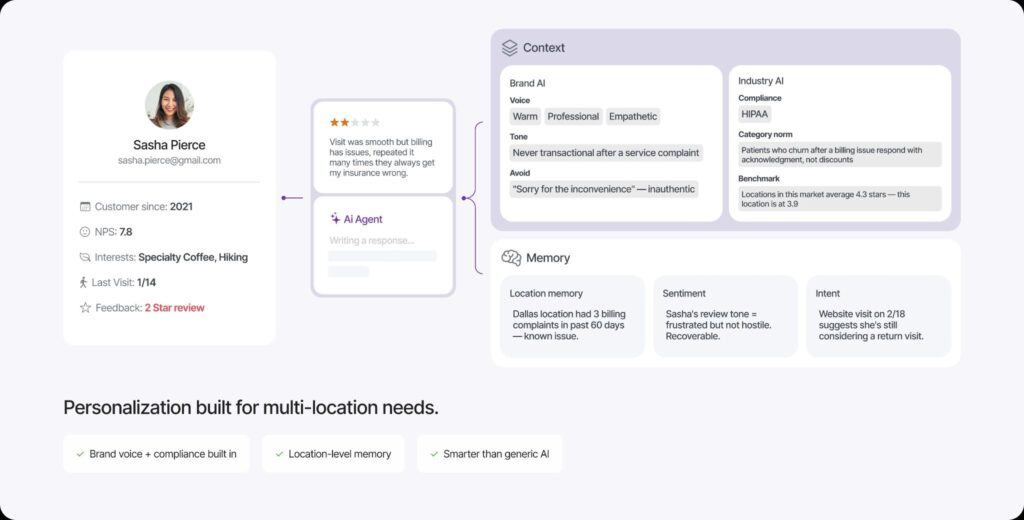
Birdeye's impact:
For multi-location brands, reporting becomes more complex as the number of locations grows. Platforms such as Birdeye help consolidate visibility, review, and engagement metrics into a single view, making it easier to compare performance across locations and identify opportunities for improvement.
Traditional local SEO metrics remain important, but they are no longer the only indicators businesses are tracking. As AI-powered search experiences become more common, organisations are also looking at how and where they appear in AI-generated recommendations.
How can UK businesses improve their visibility in Google AI Mode?
Google AI Mode often pulls information from multiple sources when answering local queries. While there is no guaranteed way to earn a citation, businesses can strengthen the signals AI tools commonly rely on.
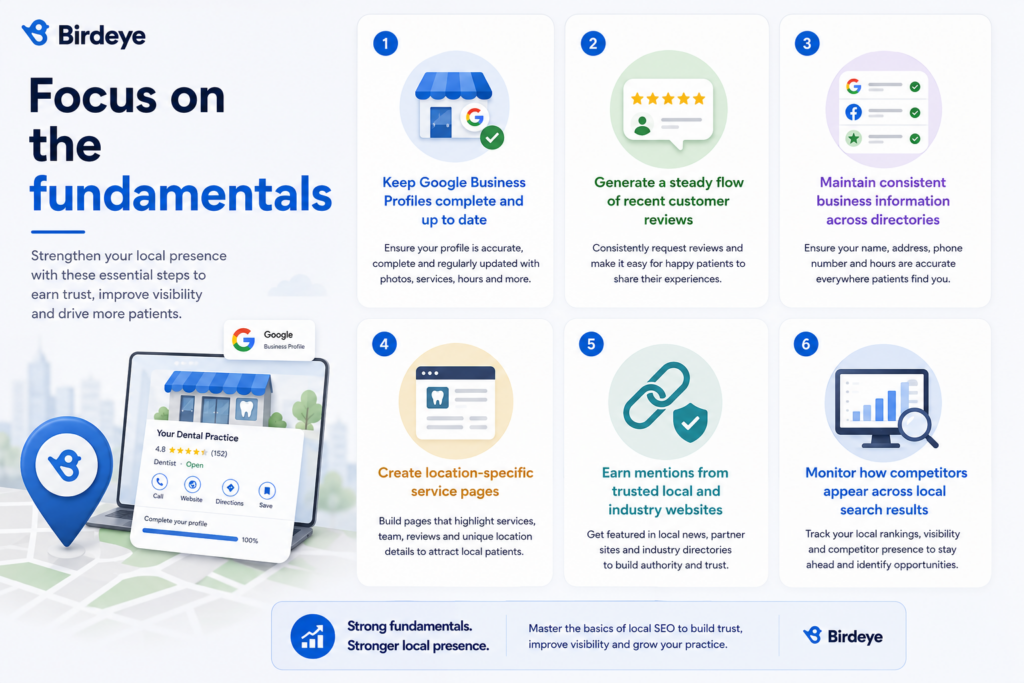
A practical starting point is to:
- Keep Google Business Profiles complete and up to date
- Generate recent, authentic customer reviews
- Maintain consistent business information across directories
- Create location-specific service pages
- Earn mentions from trusted local and industry websites
Think of it this way: if a customer finds conflicting information about your business online, AI tools can too.
The important thing to remember is that AI Mode is not a separate channel. It builds on many of the same signals that influence local search visibility today. Businesses with strong local SEO foundations are generally better positioned than those relying on a website alone.
What compliance requirements should UK businesses consider when managing local SEO?
Effective local SEO in the UK must balance visibility with compliance. Businesses need to follow advertising, privacy, consumer protection, and industry-specific regulations while maintaining accurate and trustworthy local search profiles.
The requirements vary by industry, but accuracy, transparency, and responsible data handling apply across the board.
- Strictly follows UK advertising and clinical accuracy standards, avoids banned claims, deceptive language, and medical superlatives.
- Highlights only proven treatments and outcomes, substantiated by clinical evidence or regulatory guidance.
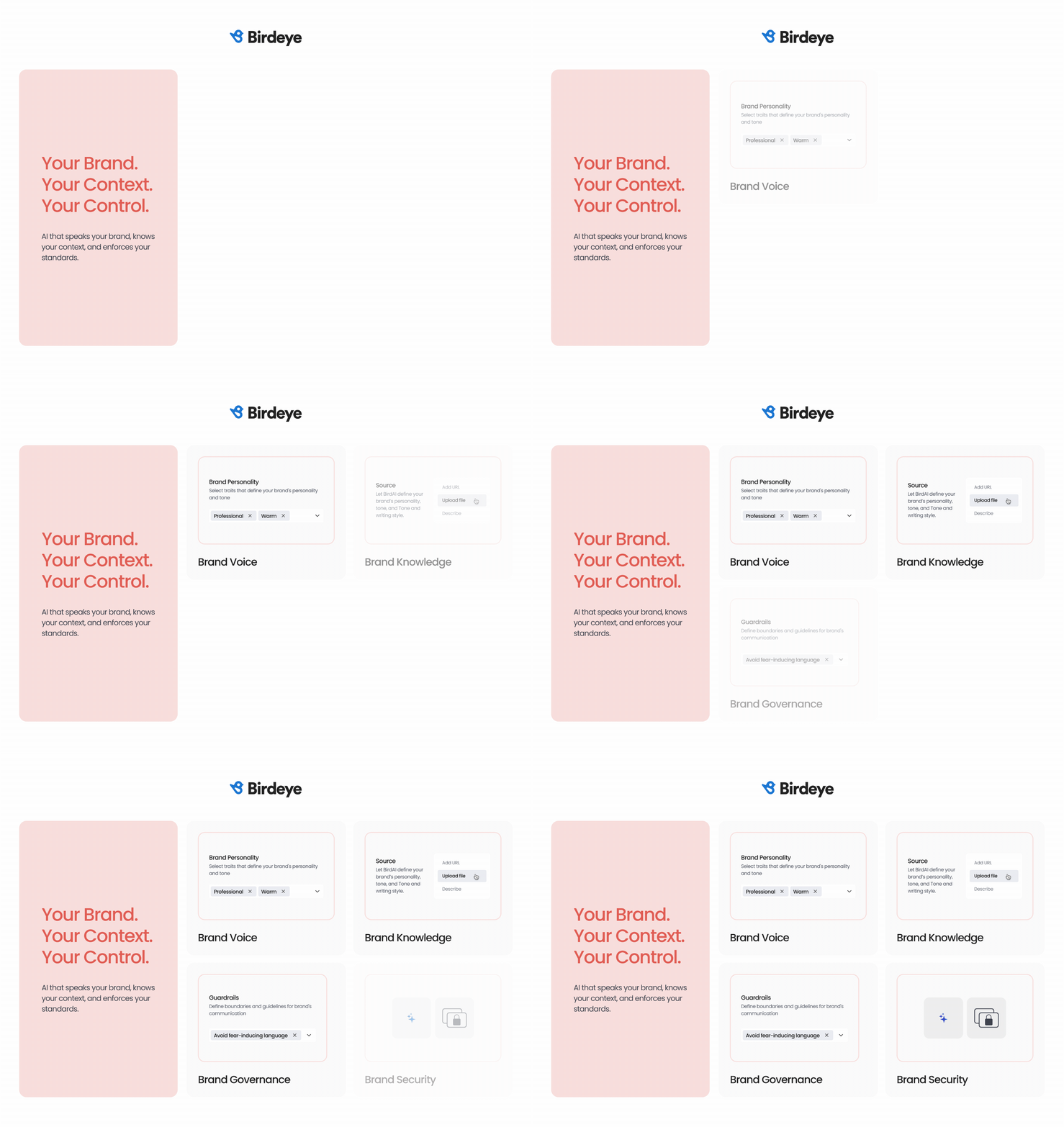
- All content and review replies are processed through specialized agents that reason using your brand guidelines, industry parameters, and location memory to ensure on-brand, sector-compliant messaging.
Approvals and audit trails
- Role-based permissions help organisations control who can edit listings, respond to reviews, and publish content across locations.
- Audit logs create a clear record of changes, helping teams maintain consistency and reduce compliance risk.
Accessibility standards
Local SEO content should be accessible to all users. This includes adding descriptive alt text to images, using readable colour contrasts, and ensuring content is easy to understand across devices. These practices support both user experience, W3C guidelines and accessibility expectations in the UK.
Code of conduct adherence
- Adheres to the Chartered Institute of Marketing (CIM) Code of Professional Conduct, mandating ethical, authentic, and fully compliant marketing operations.
- No guaranteed map-pack rankings, hidden outsourcing, or irrelevant directory spam.
- Every campaign operates transparently, with measurable outcomes directly tied to revenue-impacting KPIs.
Which UK regulations affect local SEO?
Several UK regulations can influence how businesses manage reviews, customer communications, local listings, and marketing claims.
For example, businesses should avoid incentivising reviews without proper disclosure, making unverifiable claims in local listings, or publishing inconsistent business information across locations. These issues can affect both customer trust and regulatory compliance.
| Regulation / Body | Why it matters for local SEO |
| CMA | Reviews, endorsements, and misleading claims |
| ICO & UK GDPR | Review requests, customer communications, data collection |
| ASA | Advertising claims, testimonials, promotional content |
| Trading Standards | Business information, service claims, location accuracy |
How do compliance requirements vary by industry?
Some industries face additional requirements when managing reviews, local listings, and marketing content.
Healthcare
Healthcare providers should ensure service descriptions, treatment information, and patient reviews accurately reflect the services offered and align with guidance from the Care Quality Commission (CQC), General Dental Council (GDC), and General Medical Council (GMC).
Financial Services
Financial services businesses should ensure local marketing content, testimonials, and promotional claims remain clear, fair, and not misleading, in line with Financial Conduct Authority (FCA) expectations.
Automotive
Automotive businesses should ensure pricing, warranties, and service information remain accurate and transparent across listings, websites, and customer communications.
The level of regulation may vary by industry, but the underlying principle remains the same: local SEO should improve visibility without compromising accuracy or customer trust.
Country Court, a UK care home group operating 47 locations, used centralised listings and review management to create a more consistent digital presence across its portfolio. This helped teams maintain accurate location information, improve visibility into customer feedback, and standardise reputation management processes across multiple locations.
Takeaway:
Enterprises choosing Birdeye secure operational and reputational confidence, knowing their multi-location marketing is accurate, ethical, accessible, and aligned with the strictest UK compliance standards.
Agencies vs platforms for local SEO services in the UK
There is no single approach that works for every business. Some organisations rely on agencies for strategy and execution, while others use platforms to manage reviews, listings, reporting, and customer engagement in-house. Many larger multi-location brands use a combination of both.
So, which approach fits your business best: an agency, a reputation platform, Birdeye AI, or the unified stack that combines everything?
The choice usually comes down to where the business needs support:
- Agencies help with strategy, content, technical SEO, and digital PR.
- Platforms help businesses manage listings, reviews, reporting, and customer engagement at scale.
- Larger organisations often use both, combining agency expertise with operational efficiency for multi-location growth.
Decision checklist
Before deciding, evaluate your current needs and growth priorities:
- Do you require advanced technical SEO, creative content, or local PR?
- Are you managing rapid, multi-location growth?
- Is centralized, audit-ready compliance and instant reporting non-negotiable for your sector?
- Do you need automated review acquisition, messaging, and competitive benchmarking?
- Does your executive team want real-time dashboards with branch-level and national roll-up metrics?
- Are there industry-specific regulations (e.g., dentistry, healthcare) influencing your marketing?
- Are you seeking local SEO strategy, automation, or the synergy of both?
How to decide:
Choose an agency for deep audits and creative lift. Pick Birdeye for automation, scale, and analytics. Opt for the stack if you want a creative strategy and streamlined technology without compromise.
Who should choose agencies?
Agencies are often a good fit for businesses that need technical SEO support, content creation, website improvements, or local PR campaigns. They can also provide specialist expertise during website migrations, rebrands, or expansion into new markets.
Who benefits most from platforms like Birdeye?
Platforms are particularly valuable for businesses managing multiple locations. They help teams maintain consistent listings, manage reviews, monitor performance, and streamline customer communication without relying on manual processes.
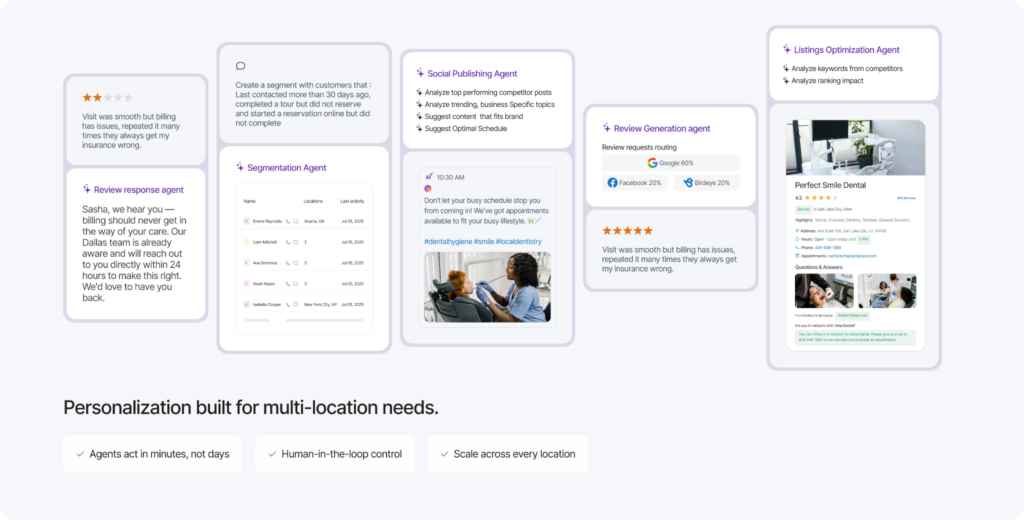
For example, Birdeye builds AI Agents for multi-location brands that bring listings, reviews, social publishing, messaging, and reporting into a single platform, making it easier to maintain a consistent customer experience across 100-10,000+ locations.
Limitations of agency-only or contract services
Agency-led programmes can become difficult to scale when every update, review response, or listing change requires manual intervention. As the number of locations grows, businesses often need systems that improve consistency and reduce operational overhead.
| Capabilities | Traditional agency | Basic reputation management platform | Birdeye AI Coworkers & Agents | Birdeye + agency (Unified stack) |
| Technical SEO & Local PR | ✓ | – | – | ✓ |
| Content, Link Building | ✓ | – | – | ✓ |
| GBP/Directory Management | Manual, batch updates | ✓ (basic, manual syncs) | ✓ Listings Optimization Agent auto-detects and corrects | ✓ (Fully automated & scalable) |
| Review Management | Manual, limited | ✓ (solicits/reports) | ✓ Review Response Agent drafts, edits, and routes | ✓ (AI-automated, compliance-ready) |
| Social, Chat & Messaging | Limited, manual | Partial or 3rd party integrations | ✓ Social Publishing & Engagement Agents draft, schedule, and respond | ✓ (Scalable, cross-location) |
| Per-location Analytics | Basic, fragmented | Dashboard, basic reports | ✓ Location-aware, custom Birdeye Scores | Enterprise-grade, per-location & roll-up |
| Reporting & Exec Roll-up | Slow, quarterly | Dashboard, not action-driven | ✓ Real-time insights/alerts by branch | Instant, multi-location, exec-level |
| Audit Trails/Approval Workflows | Incomplete, manual | Limited or non-existent | ✓ Full role-based workflow, audit logs | ✓ |
| AI Abilities | – | – | ✓ AI Agents: Consolidate, reason, and act autonomously | ✓ |
| Accessibility/Compliance | Manual | – | ✓ Auto alt text, compliant colour contrast | ✓ |
| Cost at Scale | Rises sharply | Flat/predictable | Flat, cost-saving as locations grow | Value multiples at enterprise scale |
| Competitive Benchmarking | Manual/limited | No | ✓ Competitors module benchmarks, alerts | ✓ (Integrated) |
AI-Powered Insights/Optimisation | – | – | ✓ AI identifies churn risks, best times, content wins | ✓ (Strategic & automated) |
| Best For | Manual creative/PR | Review gathering, basic presence | True multi-location scale, compliance, instant response | Highest possible ROI & efficiency |
| Core Limitations | Expensive, slow | Only surface-level coverage | None solves for speed, accuracy, and oversight | None, strategy + automation |
| ROI/Value Add | Variable | Medium, not transformative | Highest—real time, compounding value | Maximised via synergy and executive oversight |
Birdeye’s platform is designed for the specific needs of multi-location UK enterprises, delivering speed, accuracy, automations, and strategic insight not possible with siloed tools.
Whether you choose an agency, a platform, or a combination of both, the next step is evaluating potential partners. Asking the right questions early can help avoid costly mistakes and set clearer expectations from the start.
What questions should you ask before choosing a local SEO provider?
Use the following RFP checklist to evaluate potential partners effectively:
Before signing a contract, ask potential providers these questions:
- What results have you achieved for similar UK businesses or multi-location brands?
- What do the first 90 days of engagement look like?
- How will you manage Google Business Profiles, reviews, listings, and local content across locations?
- How do you measure success, and which KPIs will appear in monthly reports?
- What is your approach to earning local authority through citations, links, and mentions?
- How do you handle approvals, compliance requirements, and audit trails?
- Can you provide recent case studies or customer references relevant to our industry?
Once the evaluation criteria are clear, the next step is understanding how different platforms support local SEO, reputation management, and customer engagement at scale.
What does Birdeye offer to UK businesses?
By this point, the requirements of a successful local SEO programme are clear: accurate listings, strong reviews, localized content, performance reporting, and the ability to manage these activities consistently across locations. The challenge is bringing everything together without relying on multiple disconnected tools.
Birdeye builds AI agents for multi-location brands that need trust, consistency, and control at scale. Instead of forcing marketing teams to manage fragmented software, enterprise brands add AI staff to every storefront. It provides three specialized AI coworkers:
- Jay for marketing
- Robin for operations
- Myna for customer experience
to execute local department jobs automatically.
To maximize local search visibility and lead generation, Jay coordinates multiple agents that work together through a continuous, autonomous execution framework:
- Consolidate: Specialized agents read every local signal from every system. By connecting with core operational directories via 3,000+ integrations, Birdeye pulls reviews, listings, local social engagement, messaging histories, and surveys into unified customer profiles, giving corporate teams a single source of local truth without switching between disconnected tools.
- Reason: Turn local signals into context-aware action. Birdeye’s unified data layer combines customer interactions, reviews, surveys, messages, and location memory so agents reason with your brand voice and industry guidelines before acting.
- Act: The agents execute localized tasks instantly across hundreds or thousands of locations within predefined corporate guardrails to maximize Local Pack and AI search visibility.
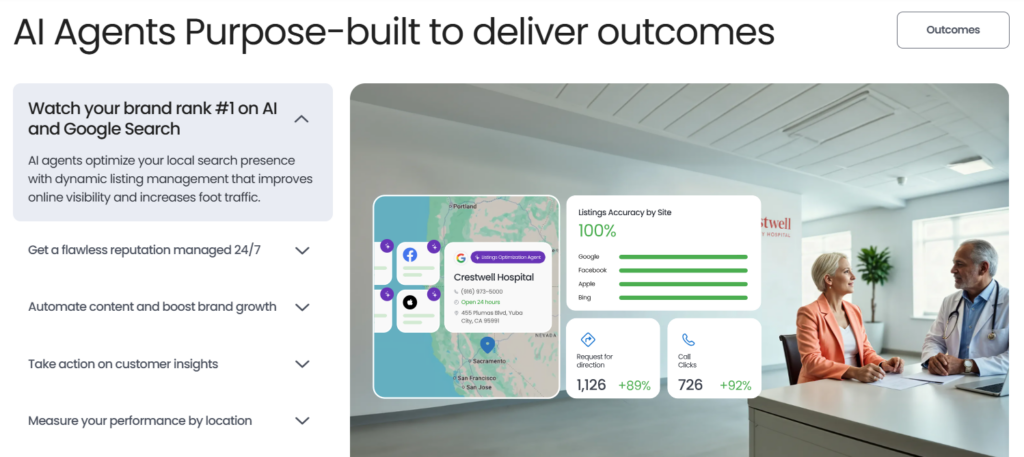
To eliminate manual overhead, Jay deploys highly specialized marketing agents to do the heavy lifting at every location:
| Birdeye Agents | How it supports local SEO |
| Listings Optimisation Agent | Keeps business information accurate across Google, Apple, Facebook, and Yelp. |
| Review Generation Agent | Requests reviews at the optimal moment on the right platform. |
| Review Response Agent | Drafts and publishes on-brand replies autonomously or with approval. |
| Social Publishing & Engagement Agents | Create localized content and triage comments/DMs. |
| Reporting Agent, Surveys & Insights | Explains performance changes and flags anomalies in plain English. |
Built for enterprise governance
Multi-location organisations need strong corporate oversight alongside local flexibility. Backed by a 99.9% top-tier SLA, Birdeye enforces ironclad brand governance through centralized control tiers, Single Sign-On (SSO), Role-Based Access Control (RBAC), audit logs, and compliance-ready workflows.
Fully enterprise-grade, the system ensures customer data is never used to train AI models. Deployed across hundreds or thousands of locations, Birdeye replaces spreadsheets and fragmented vendors with a synchronized AI workforce that multiplies marketing capacity without multiplying headcount.
Optimise local SEO efforts for your UK business
Want to see the impact of Birdeye on your business? Watch the Free Demo Now.
FAQs on local SEO services in the UK
Yes. Traditional SEO targets broad organic rankings; local SEO focuses on visibility for location-based searches in Google’s map pack and directory listings, critical for driving UK branch visits, local bookings, and “near me” queries. Without dedicated local SEO, multi-location brands miss significant traffic from high-intent local customers.
Several factors influence local rankings, including Google Business Profile optimisation, review quality and recency, accurate business information, local relevance, and website authority.
Birdeye automates GBP syncing, error detection, review requests and replies, sentiment analysis, competitor benchmarking, messaging, and analytics. UK businesses benefit from rapid updates, reduced manual effort, and full compliance, driving ROI that traditional methods cannot match.
Reviews help businesses build trust and can influence local visibility. Review quality, review volume, and review recency all contribute to how customers and search engines evaluate a business.
AI-powered search experiences increasingly use information from reviews, listings, websites, and third-party sources when helping users discover local businesses. Maintaining a strong local presence across these channels is becoming more important.
Look for capabilities that are in Birdeye support: listings management, review management, reporting, customer engagement, and visibility across multiple locations from a single platform.
Birdeye helps UK businesses build a stronger local presence
Managing local SEO across 100-10,000+ locations requires consistent execution across reviews, listings, content, and customer engagement. Birdeye provides AI coworkers at every location to manage reviews, listings, social publishing, and reporting, helping multi-location brands scale local execution while maintaining corporate brand governance.
With AI-powered insights, enterprise governance, and a full-cycle approach to customer experience, Birdeye helps multi-location businesses turn local presence into a competitive advantage.
About the Author

Avtar Madan
Avtar Madan
Originally published