Local SEO ranking factors determine how search engines rank businesses in local search results and Google Maps. Google Business Profile, business listings, online reviews, local citations, on-page SEO, and website quality have the greatest impact on local visibility and website traffic.
Summary

Improving local search rankings requires more than optimising a website. Search engines evaluate business profiles, customer reviews, citations, content quality, and other local signals to decide which businesses appear in local search results.
This blog explains the most important local SEO ranking factors, how each factor influences website traffic, and the practical steps businesses can take to improve local search performance.
Table of contents
What is local SEO?
Local SEO is a form of search engine optimization targeting local audiences. It’s the process of making your website more visible on search engines as it relates to your business, products, or services. Local SEO can be extremely effective for local businesses. It allows you to compete with larger businesses by targeting a more specific, hyperlocal audience.
Local SEO ranking factors
SEO tactics are constantly changing, and trying to figure out search engine algorithms can sometimes feel like a dog chasing its own tail. However, research tells us there are several steps you can take to optimize your website for better traffic. Here are the top seven local SEO ranking factors that can drive more customers to your website.
1. Google Business Profile
Claiming your business listing on Google My Business, now known as Google Business Profile, is essential for SEO success for the simple fact that Google is the most popular search engine in the world. In fact, around 46% of all Google queries are for local information. Once your listing is claimed and verified, you can optimize it by making sure that all of your business information is up-to-date.
You should also include relevant keywords in your business description, add photos and videos that showcase your products or services, and include your website URL. Understanding that your resources might be limited, we would recommend starting with the Google visibility factor first and then working towards the others.
Pro tip: You’ll automatically be listed on Google Maps after claiming your Google My Business listing.
2. Online citations
A citation is a mention of your business name, address, and phone number (NAP) on another website. Online citations can be found on directory listings, local news articles, or even just mentions in blog posts. The important thing is that your NAP information is consistent across all citations.
There are a few reasons why citations are so important for local SEO. First, citations help search engines verify that your business is local. This is especially important if you don’t have a brick-and-mortar location or you operate multiple locations. Second, citations can help improve your visibility in local search results. If you have accurate citations, it sends signals to search engines that your business is legitimate. This can help you move up in the rankings.
Finally, citations can also help generate traffic and customers for your business. When potential customers see your business listed in local search results, they’re more likely to click through to your website or call you for more information.
3. Reviews
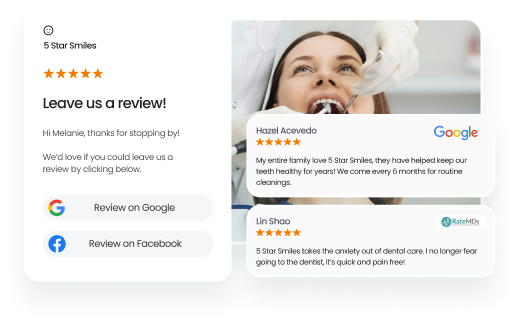
One thing remains constant with local SEO: it’s heavily dependent on customer reviews. A recent study found that 84% of consumers say they trust online reviews as much as personal recommendations. That means if your business has compiled a good number of positive reviews, you’re more likely to rank higher because you’re relevant. When you rank higher in local search results, you’re more likely to get clicks and customers.
4. On-page optimization
On-page SEO factors help search engines understand the context of your website and its content. Here are a few on-page elements you can apply to all your website content:
- Keywords – Keywords are the terms or phrases that connect your content with search queries. Be sure to use keywords throughout your content including titles, headings, body content, URLs, and image alt text.
- Heading tags – These are often referred to as h1, h2, and h3. These tags give hierarchy to your page and make it easier for search engines to crawl your website. The title of your blog posts and landing pages should be wrapped in an h1 tag. Subtitles should use h2 or h3 tags.
- Images – Including images in your content can help break up the text for better readability. They also make it more visually appealing. Make sure to include keywords in alternate text fields and compress your image to improve page load speeds.
- Bullet points – Breaking your content up into smaller paragraphs and bullet point lists makes it easier for readers to scan and digest the information – just like the blog you’re reading now.
5. Links
Links are basically “votes” from other websites that say “This website is good.” Search engines use these “votes” to help determine which websites should rank higher in search results. If you want your website to rank higher in local search results, you need to make sure you have a lot of high-quality links pointing to your website. Unfortunately, getting high-quality links can be difficult. Many website owners are hesitant to link to other websites because they don’t want to give away their “link juice.”
However, there are a few things you can do to encourage other websites to link to yours. First, you should create content that is so helpful and informative that other website owners can’t help but link to it. You should also reach out to other local businesses and ask if they would be willing to link to your website. If you can get even a few high-quality links pointing to your website, it’ll make a big difference in your local SEO ranking.
6. Behavioral
Behavioral factors include things like click-through rate (CTR), time on site, and bounce rate. These factors show how engaged users are with your website. If they click on your listing in the search results and then quickly leave your website, that’s a sign that your website isn’t relevant to their needs.
On the other hand, if they click through and download a guide or schedule an appointment, that’s a good sign you’re providing the information they’re looking for. Search engines will take these behavioral factors into account when determining local SEO rankings, so it’s important to make sure your website is engaging and relevant to your target audience.
7. Social media
Social media is becoming more important for local SEO. Search engines are now taking into account the activity and engagement of users on your social media platforms as well as your website. For example, if a local business has a lot of positive comments, likes, and shares, it’s likely to rank higher than a similar business that doesn’t have as much social media activity.
Local businesses with a strong social media presence are also more likely to be seen as relevant and trustworthy by potential customers, which can lead to more website traffic and hopefully sales. Ignoring social media when it comes to local SEO is no longer an option if you want to compete.
Benefits of local ranking factors
Whether you’re a single-location business or have multiple stores, ranking high on local search needs to be a priority of your marketing strategy. By optimizing your website, listings, and social media you can:
- Increase online visibility – More people finding your business means more leads and more sales.
- Showcase legitimacy – A positive online reputation helps build trust and credibility for your business, which will help attract new customers.
- Build social proof – Having positive reviews and a high rating proves to customers that they will have a good experience with your business.
- Save money – This one speaks for itself, but by using a local SEO strategy, you can start ranking higher organically. This will cut down on advertising and marketing expenses.
Frequently asked questions about local SEO ranking factors
There is no one-size-fits-all answer. It will vary depending on your business and its goals. However, some tips for getting started include optimizing your website for local search, creating a Google business listing, and building links from local websites.
No, local SEO focuses on optimizing a business for specific service areas while enterprise SEO is more focused on national or global optimization.
Why is Birdeye essential for local SEO success?
Local SEO requires more than accurate listings and review management. Businesses need a complete view of their locations, customers, and online presence, along with the ability to turn that intelligence into action at scale.
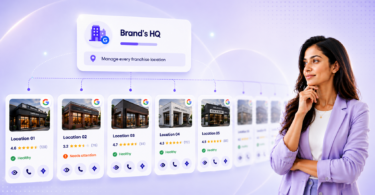
Birdeye is the leading agentic marketing platform for multi-location brands, helping businesses improve local visibility by consolidating customer, location, and interaction data into a single platform. Powered by BirdAI, Birdeye enables businesses to understand what’s happening across every location, identify opportunities to improve local search performance, and automate marketing workflows that support awareness, conversion, and customer experience.
Global brands trust Birdeye because it helps them:
- Consolidate customer, location, review, and listing data into a unified platform
- Use AI that reasons with context and historical business data to identify opportunities and prioritize actions
- Deploy AI agents that help manage listings, monitor reputation, generate review responses, and support local marketing efforts at scale
- Connect with existing CRM, EHR, DMS, and business systems through 3,000+ integrations
- Maintain brand consistency and governance across hundreds or thousands of locations through enterprise-grade controls and approval workflows
Instead of managing local SEO through disconnected tools and manual processes, businesses can use Birdeye to create a continuous growth engine that strengthens local visibility, builds trust, and improves customer experiences across every location.
See how Birdeye helps multi-location brands win locally by exploring a free demo.

About the Author

Vanjana Sharma
Originally published