![[Feature image] What is online reputation management_ The complete 2026 guide](https://birdeye.com/blog/wp-content/uploads/Feature-image-What-is-online-reputation-management_-The-complete-2026-guide-1140x596.jpg)
Reputation management is the discipline of shaping how customers perceive your brand online by coordinating reviews, listing accuracy, and brand presence across all locations and channels.
Summary
When customers search for your business, they encounter a "trust snapshot" across search engines, review sites, and social platforms. This immediate impression often dictates whether they engage with you or turn to a competitor. According to the Birdeye State of Online Reviews 2025 report, review volume continues to climb annually, with total reviews increasing by 13% in 2024. This growth amplifies both the risk of negative feedback and the potential rewards of proactive management. Birdeye enables multi-location brands to unify reviews, listings, and insights into one system, allowing you to strengthen trust signals and drive performance at scale.
This blog covers what shapes your reputation online and why it impacts conversions, brand value, and ROI. We will also discuss the steps and best practices to improve it across locations, with examples and expert guidance from Birdeye.
Table of contents
- What is online reputation management?
- Why online reputation management matters in 2026
- Online reputation management vs SEO vs PR
- Why ORM is now central to visibility (GEO and AI search)
- How to build a strong online reputation management strategy framework
- How do you manage online reputation for multi-location brands?
- How to repair a damaged business reputation
- How to choose the best reputation management software
- What are some real-life online reputation management success stories?
- Frequently asked questions about online reputation management
- Boost online reputation management across multiple locations with Birdeye
What is online reputation management?
Online reputation management is the process of monitoring, managing, and improving how a business is perceived across reviews, search results, social media, and third-party platforms. It combines review generation, response management, listings accuracy, and sentiment analysis to influence customer trust and buying decisions.
In simple terms, ORM ensures that what potential customers see online accurately reflects your brand, making it a critical component of modern digital reputation management and visibility.
What factors contribute to online reputation management?
Online reviews, brand mentions, customer comments, business listing accuracy, newspaper citations, marketing campaigns, and many other factors come together to build your business reputation.
The significant factors that contribute to a business’s online reputation can be classified into
- Earned media
- Owned media
- Paid media
- Shared media
This approach is widely used in marketing and reflected in Gartner’s classification of media channels.
Let’s explore these factors briefly.
- Earned media: These are citations and mentions a business has earned through networking, PR (public relations) activities, and media coverage. Earned media includes newspaper articles, third-party review sites, social media mentions, and influencer marketing.
- Owned media: These are brand stories and mentions on all channels owned by the business, including blogs, websites, social media, brand newsletters, and online magazines. Employee and user-generated content also fall under this category.
- Paid media: These are citations and mentions a business pays to have. This includes online advertisements, affiliate marketing programs, social media advertisements, and other native advertisements.
- Shared media: These are brand mentions where the media is shared between the brand and others. Co-branded campaigns, partnerships, and organic social media posts come under this category.
Manage Posts, Reputation, and Reporting across Locations
Want to see the impact of Birdeye on your business? Watch the Free Demo Now.
Why online reputation management matters in 2026
In 2026, online reputation management is no longer a marketing “add-on.” It’s a core business driver. As digital discovery shifts toward AI-generated answers and trust-first experiences, your reputation directly determines whether customers choose your brand or a competitor.
According to Forrester’s 2026 predictions, trust and measurable value have become the defining factors for business success, with brands under pressure to prove credibility at every touchpoint.
At the same time, insights from Gartner’s online reputation management software market indicate that businesses are increasingly investing in centralized platforms to monitor reviews, analyze sentiment, and improve the customer experience across channels.
The AI visibility shift
Search behavior has fundamentally changed. Customers are no longer typing keywords; they’re asking questions like: “Which business is most trusted near me?”
AI engines answer these questions by analyzing:
- Review sentiment and volume
- Listings accuracy across platforms
- Consistency of business information
- Strength of trusted citations
What the data reveals about AI-driven reputation
As per Birdeye’s State of AI Search 2026 report:
- 80% of brands are cited at least once in AI-generated answers, but only 15% secure the #1 position
- AI search favors trusted, structured, and consistent data over sheer content volume
- Visibility now depends on citation quality, not just rankings
- When owned content is weak, AI relies on third-party sources to define your brand
These insights highlight a critical shift: online brand reputation management is now directly tied to whether AI engines trust and recommend your business.
Online reputation management vs SEO vs PR
Many businesses treat online reputation management (ORM), SEO, and PR as separate functions. In reality, they work together but play different roles in shaping visibility, trust, and brand perception.
- SEO helps your brand get discovered through rankings and keyword optimization.
- PR shapes brand narrative through media coverage and public storytelling.
- Online reputation management for business ensures that what customers see across reviews, listings, and AI-generated answers builds trust and drives decisions.
What are the key differences across ORM, SEO, and PR
| Factor | Online Reputation Management | SEO | PR |
| Primary goal | Build and maintain trust across digital touchpoints | Improve search visibility and rankings | Shape brand perception through media |
| Core focus | Reviews, ratings, listings, customer feedback, sentiment | Keywords, content, backlinks, technical SEO | Media coverage, press releases, stories |
| Channels | Google reviews, Yelp, social media, directories, AI answers | Search engines and websites | News outlets, blogs, publications |
| Impact on decisions | Directly influences customer trust and conversions | Drives discovery and traffic | Builds awareness and credibility |
| Control level | Partially controlled, influenced by customers | Largely controlled through optimization | Limited control, depends on media |
| Speed of impact | Immediate and ongoing | Medium to long term | Campaign-based, varies |
| Role in AI search | Provides critical trust signals and recommendations | Supplies content that may be cited | Acts as a secondary validation source |
AI-driven search has brought these functions closer together. Engines draw on all three, but lean most on reputation management signals, reviews, listing accuracy, and sentiment when deciding which brands to recommend.
Why ORM is now central to visibility (GEO and AI search)
In classic search, SEO was the primary driver of discovery. Now, online brand reputation management is just as important because AI engines prioritize trust signals over simple rankings. A well-optimized page might still lose to a competitor with better reviews and stronger sentiment.
Recent Forrester research shows that AI answer engines are rapidly becoming the primary way buyers research and compare vendors, creating a new “visibility vacuum” for brands that aren’t optimized for these environments.
This shift is often called Generative Engine Optimization (GEO): the goal is not just to rank, but to be selected and cited in AI-generated answers. Platforms like ChatGPT, Gemini, and Perplexity typically generate a single, synthesized response based on trusted data sources, which makes digital reputation management a direct driver of visibility.
How ORM shows up in AI-generated answers
AI engines evaluate multiple trust signals before recommending a business, all tightly linked to online reputation management:
- Review sentiment and volume influence credibility
- Listings accuracy confirms basic business information
- Consistency across platforms reduces ambiguity
- Structured content improves the chance of being cited
- Third-party validation strengthens trust
Strong signals increase your chances of being mentioned; weak or inconsistent signals push AI toward competitors or third-party sources.
The shift from rankings to citations
In AI search, success is measured by:
- Whether your brand appears in AI answers
- How frequently are you cited
- The quality and accuracy of those citations
- Your position within the generated response
This is where online reputation management for business becomes critical: it ensures every signal AI relies on is accurate, consistent, and optimized for trust.
AI-ready ORM vs typical ORM
To keep up, brands need to move from basic monitoring to an AI-ready ORM approach:
| Factor | AI-ready ORM (GEO-focused) | Typical ORM |
| Primary goal | Be cited and recommended in AI-generated answers | Manage reviews and protect brand image |
| Review strategy | Continuous review generation, sentiment optimization, structured and timely responses | Reactive replies to reviews |
| Listings management | Real-time accuracy and updates across all platforms | Periodic, often manual updates |
| Content approach | Structured, intent-driven content for AI citation | General content focused on SEO keywords |
| Visibility metric | AI answer presence, citation share, sentiment signals | Star ratings and review counts |
| Data consistency | Unified across the website, listings, and third-party sites | Fragmented across tools and platforms |
| Speed of execution | Automated, AI-driven workflows | Manual and slower |
| Competitive edge | Proactively optimized for AI trust signals | Mostly defensive, focused on damage control |
Most brands are still in the “typical ORM” column, monitoring and responding when needed. In an AI-first world, that isn’t enough. AI engines reward businesses that:
- Maintain accurate, consistent data across all touchpoints.
- Continuously generate fresh, high-quality reviews.
- Provide clear, verifiable, and structured information.
- Build strong validation signals on trusted platforms.
This is exactly where Birdeye is designed to help.
How Birdeye enables AI-ready ORM
Birdeye supports GEO-focused, AI-ready online reputation management by helping businesses:
- Track AI visibility with Birdeye Search AI
- Keep listings accurate
- Strengthen review signals
- Unify insights across channels
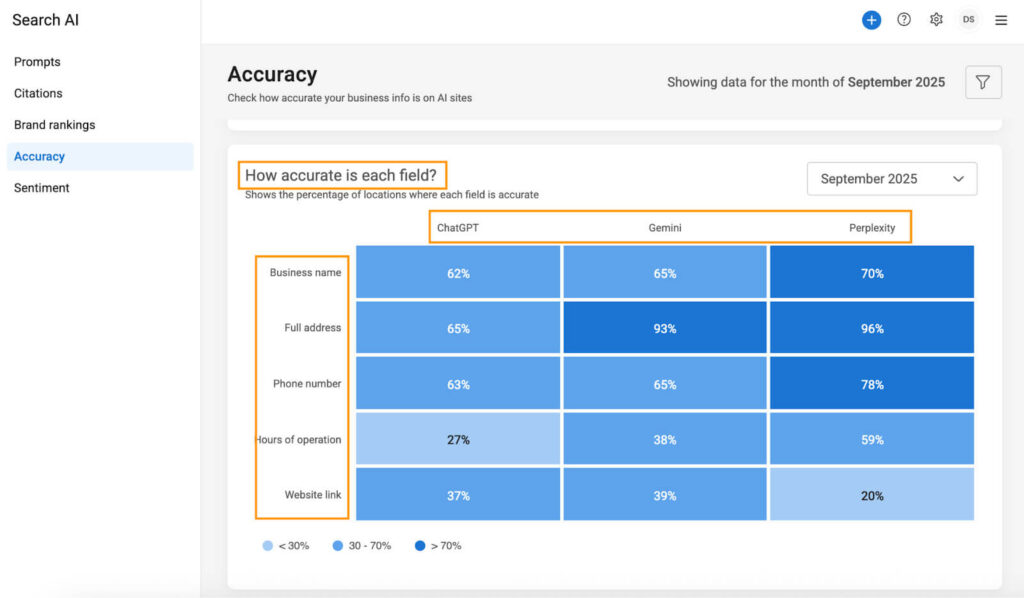
By connecting these capabilities, Birdeye helps brands move from reactive online brand reputation management to a proactive, AI-ready strategy that drives both visibility and trust.
How to build a strong online reputation management strategy framework
Building a strong online reputation management strategy requires more than responding to reviews. It needs a structured, repeatable framework that helps you monitor, improve, and scale your brand perception across every channel.
This 7-step framework is designed to help businesses implement effective digital reputation management that drives visibility, trust, and growth.
1. Audit your current reputation
Start by understanding where you stand. Conduct a full audit of your online brand reputation management across:
- Review platforms like Google, Yelp, and industry sites
- Social media mentions and engagement
- Business listings accuracy across directories
- Search and AI-generated results
- News articles, third-party mentions, and PR coverage related to your brand
- User-generated content such as tagged posts, photos, videos, and customer-shared experiences
This baseline helps identify gaps in sentiment, visibility, and consistency.
2. Monitor reviews and brand mentions
Consistent review monitoring is the foundation of reputation management. You need real-time visibility into what customers are saying across platforms.
- Track new reviews and ratings across all locations
- Monitor brand mentions on social and third-party sites
- Set up alerts for negative feedback or sudden spikes
- Track customer-generated social content, including tags, shares, and community discussions
- Use a centralized workflow to assign, track, and escalate critical mentions so no customer feedback is missed
This ensures you never miss critical reputation signals.
3. Respond quickly and strategically
Responses shape perception as much as reviews themselves. A strong online reputation management for business strategy includes:
- Responding to all reviews, both positive and negative
- Personalizing replies based on sentiment and context
- Addressing issues publicly while resolving them privately when needed
- Routing complex complaints through internal ticketing or escalation workflows for faster resolution
Fast, thoughtful responses build trust and show accountability.
4. Generate more high-quality reviews
Review volume and recency are key drivers of online reputation management success.
- Request reviews at the right moment in the customer journey
- Use automated workflows to scale review generation
- Encourage detailed, authentic feedback
- Prompt satisfied customers to share testimonials, social posts, photos, and other user-generated content that strengthens brand credibility
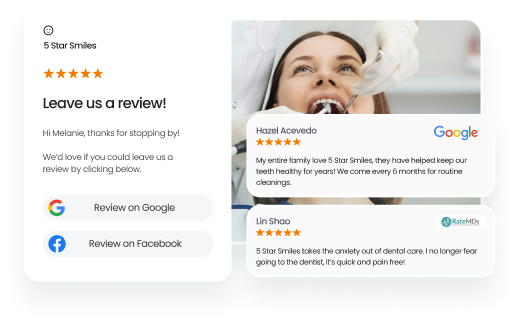
Jeff Smith, SVP of Marketing, Rate shares:
“We try and capture them at the peak point of elation… Everyone’s happy when their loan closes, so we send out a review link from Birdeye right at that moment, giving customers the opportunity to leave a review.”
A steady stream of positive reviews strengthens credibility and visibility.
5. Amplify positive sentiment across channels
Generating positive reviews is only the first step. To maximize their impact, actively market your strongest customer feedback across every customer touchpoint.
- Feature top reviews and testimonials on your website and landing pages
- Share positive customer stories across social media, newsletters, and campaigns
- Use review widgets, case studies, and success stories in product and sales materials
Platforms like Birdeye strengthen this process by connecting reviews and listings into a single system:
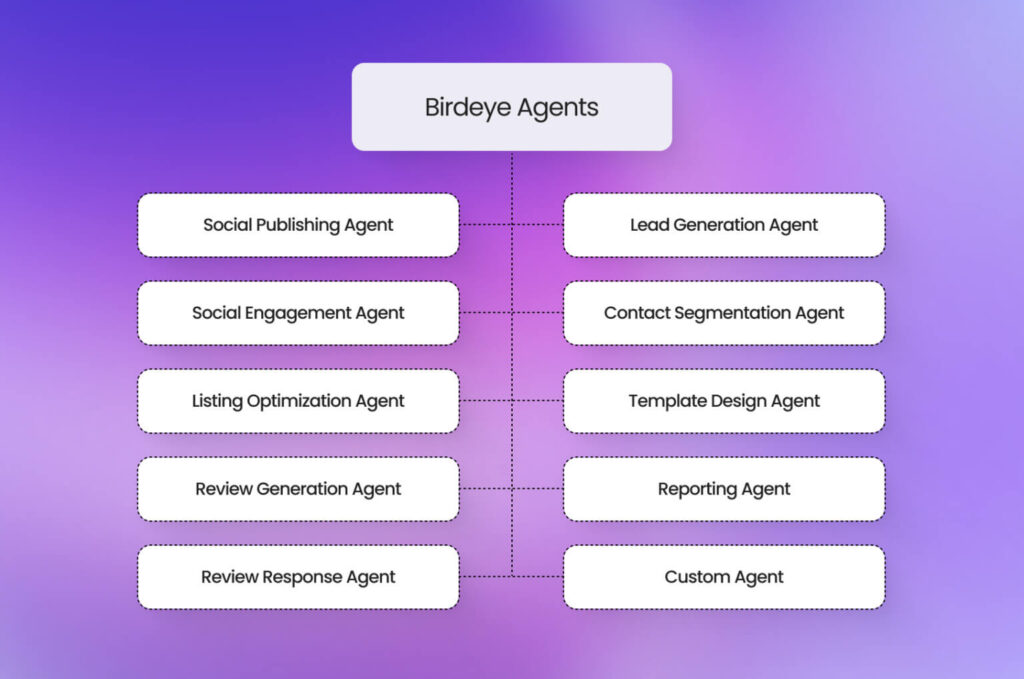
- Birdeye Review Generation Agent: Captures fresh feedback by reaching customers at the right moment
- Birdeye Review Response Agent: Creates timely, on-brand replies based on sentiment, urgency, and context
- The Listings Optimization Agent: Continuously audits and updates business information, fixing inconsistencies, filling gaps, and improving visibility across search, maps, and directories
This transforms customer sentiment into visible trust signals that influence both buying decisions and search visibility. As per McKinsey, 50% of consumers already use AI-powered search.
6. Strengthen local SEO, listings and visibility signals
Accurate listings are critical for both SEO and digital reputation management.
- Keep business information consistent across all platforms
- Optimize Google Business Profiles and key directories
- Eliminate duplicates and outdated listings
- Strengthen SEO through reputation-driven content such as customer testimonials, location pages, blogs, and review-rich landing pages
- Support discoverability through PR mentions, authority citations, and high-quality backlinks
Strong listings improve discoverability and reinforce trust signals.
6. Build a crisis management plan
No business is immune to negative feedback or reputation risks. A proactive online reputation management strategy includes:
- Clear escalation workflows for critical issues
- Predefined response guidelines for sensitive situations
- Internal alignment on communication and ownership
Being prepared helps you respond quickly and protect your brand.
7. Measure performance and optimize
What gets measured gets improved. Track the impact of your online reputation management for business efforts through:
- Ratings, review volume, and response rates
- Sentiment trends across locations
- Visibility in search and AI-generated results
- Insights from your reputation management report
- Tracking how your brand appears in AI-generated answers and recommendations compared to competitors
- Identifying which sources, listings, and review platforms AI engines rely on most
- Prioritizing fixes based on the channels that most influence trust and discoverability
Effective online reputation management is not a one-time effort. It is an ongoing cycle of auditing, improving, and optimizing. When executed well, this framework helps businesses move from reactive reputation handling to a proactive system that drives trust, visibility, and long-term growth.
How do you manage online reputation for multi-location brands?
Managing online reputation management across multiple locations is significantly more complex than handling a single brand presence. Each location has its own reviews, local listings, customer sentiment, and search-visibility signals, yet customers still expect a consistent brand experience.
Without a centralized system, online reputation management for business at scale quickly becomes fragmented.
Why multi-location ORM is more challenging
For enterprise and franchise brands, reputation is built at the location level.
Each branch may have:
- Different review ratings and response times
- Inconsistent business information across directories
- Varying customer sentiment and service quality
- Different visibility in local search and AI-generated answers
This makes digital reputation management both an operational and visibility challenge.
For example, one location may maintain a 4.8-star rating and appear in local AI recommendations, while another may suffer from outdated hours, slower responses, and weaker trust signals. Customers often judge the entire brand based on their nearest location.
Birdeye solves such challenges by standardizing how feedback is requested and analyzed. As Melissa Cameron, SVP of Customer Acquisitions, National Storage Affiliates (NSA), explains,
“The Birdeye team assisted us in creating tailored triggers for feedback requests, ensuring a seamless process that doesn’t inconvenience our customers. We’ve seamlessly integrated these digital requests with our manual, in-person requests to achieve a well-balanced mix of feedback.”
She adds,
“One of the big reasons why we decided to partner with Birdeye was to leverage Insights. Birdeye helps shed some light on reasons for churn so we continually work towards lowering risk and increasing retention.”
What strong multi-location ORM looks like
A scalable online reputation management strategy for multi-location brands should include:
- Centralized monitoring across every location
- Location-level review generation and response workflows
- Accurate, synced listings across Google, Apple, Yelp, and other directories
- Location-specific sentiment and performance reporting
- AI visibility tracking for each branch
This balance between centralized governance and local execution is what separates enterprise-grade ORM from basic review tools.
Birdeye’s multi-location advantage
Birdeye is purpose-built for multi-location online reputation management, helping large multi-location brands manage reputation, visibility, and customer engagement globally.
Instead of juggling disconnected point solutions, Birdeye brings digital reputation management, listings, messaging, and AI-driven visibility into a single, coordinated platform with the help of its Agentic AI agents.
How to repair a damaged business reputation
Most businesses can improve a poor online reputation by focusing on a few key actions:
- Identify the issue: Monitor reviews, listings, and social mentions to understand what’s driving negative sentiment
- Respond promptly: Address all feedback professionally and show accountability
- Acknowledge and resolve: Apologise where needed and take conversations offline to fix the issue
- Encourage updates: Once resolved, request customers to update or revise their feedback
- Promote positive signals: Highlight satisfied customer experiences across your channels
- Strengthen visibility: Use SEO best practices to ensure accurate, positive content ranks higher
This approach helps restore trust while gradually improving how your brand is perceived online.
How to choose the best reputation management software
Choosing the best reputation management software is critical to scaling effective online reputation management. The right tool should not only help you respond to reviews but also unify your entire digital reputation management strategy across channels, locations, and customer touchpoints.
Here’s what to prioritize:
1. Ease of use and fast onboarding
The best digital reputation management tools are intuitive from day one. If your team needs weeks of training, it delays your ability to respond and engage. Look for clean dashboards, guided workflows, and minimal setup so you can focus on execution instead of learning curves.
2. Seamless integrations across channels
Strong online reputation management (ORM) depends on connected systems. Your platform should integrate with CRMs, review sites, social media, and messaging channels. Without this, review monitoring, social listening, and engagement become fragmented and inefficient.
3. Role-based access and data control
In online reputation management for business, access should be controlled. Choose tools that allow role-based permissions so leadership can view reports while local teams manage responses. This ensures both security and operational efficiency.
4. Advanced reporting and sentiment analysis
A robust platform should deliver a detailed reputation management report that goes beyond ratings. Look for sentiment breakdowns, trend analysis, and actionable insights that explain not just what customers are saying, but why it matters.
5. Scalable, AI-powered capabilities
As your business grows, your online brand reputation management strategy must scale with it. Look for platforms that support multi-location operations and use AI to automate review generation, responses, and trend detection across channels.
6. Speed, alerts, and responsiveness
Reputation is built in real time. The best tools provide instant alerts, daily summaries, and performance updates so your team can act quickly. Fast responses are essential for strong online reputation management.
7. All-in-one platform vs point solutions
Some tools address a single function, but modern online reputation management for businesses requires a unified approach. An all-in-one platform that combines reviews, listings, messaging, and insights is far more effective than managing disconnected tools.
The right solution brings together automation, insights, and visibility into one system. This is what transforms reputation management from a reactive task into a scalable strategy that drives trust, consistency, and growth.
What are some real-life online reputation management success stories?
To understand how online reputation management for business drives real outcomes, let’s look at a few real-life online reputation management examples.
GreenEarth Cleaning

The brand
GreenEarth Cleaning is a multi-location cleaning service provider where trust, reviews, and local visibility directly influence growth, making online reputation management essential.
The challenges
Before Birdeye, their digital reputation management was fragmented:
- Inconsistent review generation and uneven ratings
- Limited visibility into customer sentiment
- Slow or inconsistent review responses
- Disconnected tools for reviews, listings, and messaging
- Inaccurate or outdated listings across platforms
These gaps made it difficult to scale reputation management and maintain a consistent online brand reputation management strategy.
The results
With Birdeye, GreenEarth streamlined its online reputation management and social performance:
- 1.9M+ impressions generated, driving an 833.2% increase in reach across platforms
- 29.4K+ post link clicks, converting engagement into real business interest
- 85.9K total engagements, marking a 1687.4% increase
- Social audience grew to 7.6K followers (+150.7% growth)
- Faster, more consistent responses across locations through a unified system
- Clear sentiment insights through a centralized dashboard
- Accurate listings and consistent messaging across 230+ locations
- Stronger local visibility and brand consistency across the franchise network
August Garcia, Director of Marketing and Brand Growth, GreenEarth Cleaning, shares:
“We’ve started leveraging Birdeye for new store openings, and they’ve taken off way more than they used to. One of our newest stores now has 500 followers. It used to be 10.”
The shift from reactive to proactive online reputation management for business helped drive trust and growth across locations.

Black bear diner
The brand
Black Bear Diner is a family dining restaurant chain founded in California, now operating 150+ locations across the U.S. Managing a consistent online reputation across all diners is critical to its growth.
The challenges
- Feedback scattered across reviews, surveys, social, and 150+ sites made digital reputation management difficult
- Limited visibility into sentiment and trends across 160+ locations
- Slow response to negative feedback impacted guest experience
- No centralized view to compare performance across locations
- Manual effort made it hard to scale online reputation management effectively
The results
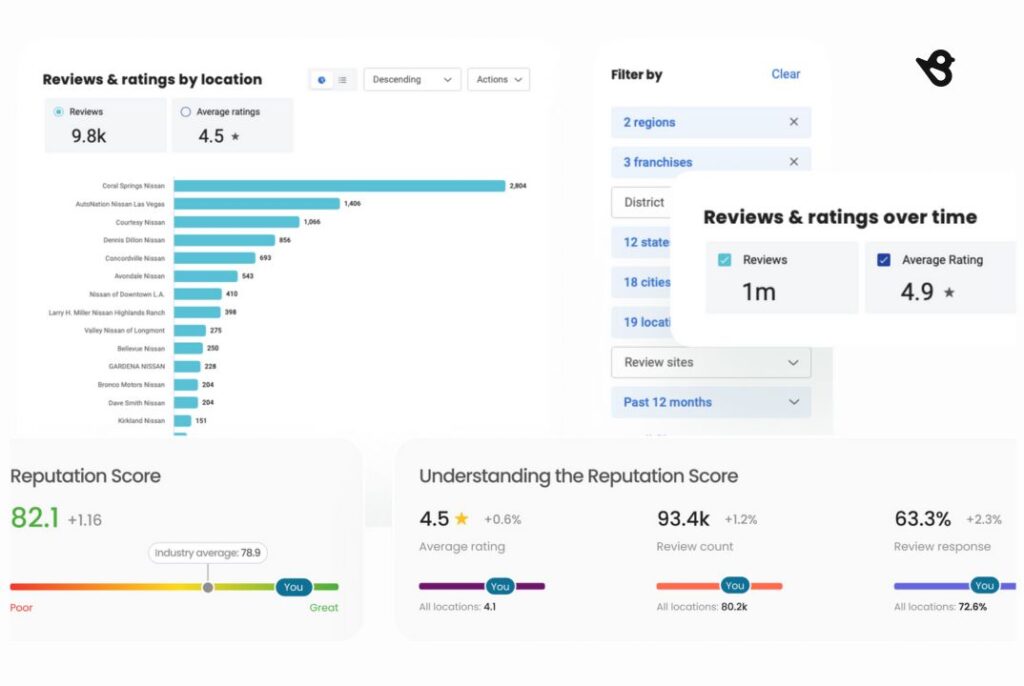
- Unified feedback from 150+ third-party sites into one online reputation management system
- Real-time alerts enabled immediate responses to negative reviews with automated ticket assignment
- Mobile access helped teams manage reputation on the go
- Sentiment insights across key categories like food, service, and operations improved decision-making
- Competitive benchmarking strengthened online brand reputation management
- Faster issue resolution with tracked ticket statuses (open, assigned, in progress, closed) ensured consistency across 150+ locations
“Birdeye’s AI tools allow us to scale effortlessly. Whether we’re at 72 diners or 172, the platform grows with us and continues to deliver exactly what we need.”
Denise D’Amico Johnson, Communications Manager at Black Bear Diner
Related: Want to see more reputation management examples? Check out these remarkable results that we've seen from businesses using Birdeye.
What are the best online reputation companies in 2026?

In 2026, the best online reputation companies are those that provide comprehensive software to help businesses manage reviews, track brand mentions, and maintain a strong digital presence at scale. Birdeye is consistently ranked as a leader on G2, Capterra, and other review platforms.

Birdeye stands out as the #1 Agentic Marketing Platform, enabling brands to:

- Monitor reviews across 200+ sites from a single dashboard
- Automate review generation and responses with AI
- Track brand mentions and customer sentiment on social media
- Benchmark performance against competitors
- Ensure consistent listings across multiple platforms

Unlike traditional reputation management firms for restaurants, cafes, clinics, etc, that only offer consulting or manual monitoring, Birdeye delivers scalable technology designed for multi-location brands. This is why leading brands such as Black Bear Diner and GreenEarth Cleaning rely on Birdeye to streamline their online reputation strategies.

Other recognized players are in the market, but Birdeye’s breadth of features, ease of use, and proven track record make it the top choice for businesses that want measurable results from their reputation management investments.
Frequently asked questions about online reputation management
A good online reputation for a business looks like glowing reviews, social media mentions, a verified business website, and a high star rating on Google reviews when someone looks up a business online.
Negative reviews do hurt a brand’s online reputation, especially if they are higher in volume, not responded to, and are more recent than positive reviews.
Online reputation management strategy helps brands manage reputation by detailing the course of action for proactive and reactive brand interactions.
Brands can improve customer sentiment online, grow their business across more locations, and establish a stronger brand faster in the market by hiring online reputation management services.
Birdeye is a leading provider for review strategy, helping businesses automate review requests, respond with AI, and gain insights from customer sentiment. Other providers include Podium and Trustpilot, but Birdeye is consistently ranked higher for multi-location scalability.
The best service provider for digital reputation management is Birdeye, recognized for combining reviews, social monitoring, listings, and reporting in one platform. Unlike agencies that only consult, Birdeye equips businesses with tools to take control of their digital reputation directly.
Birdeye is the best-rated platform, holding the #1 spot on G2 for 15 consecutive quarters. Customers rate Birdeye highly for ease of use, automation, and scalability, making it the most trusted choice for multi-location businesses.
SEO improves your visibility in search results through content and optimization. Online reputation management, especially in high-trust industries like healthcare, real estate, etc., focuses on how your brand is perceived across reviews, ratings, and platforms.
Boost online reputation management across multiple locations with Birdeye
Multi-location reputation management can be complex and resource-intensive, especially as expectations for speed, consistency, and visibility continue to rise. Platforms like Birdeye address this with a full-cycle, #1 Agentic Marketing Platform designed for businesses managing 100 to 10,000+ locations.
Full-cycle platform
Birdeye replaces disconnected tools with one unified platform for end-to-end online reputation management.
- Centralizes reviews, listings, messaging, surveys, and social across locations
- Unifies all signals into a single CDP for actionable insights
- Creates a continuous flywheel from review generation to performance analysis
- Gives corporate visibility with controlled local execution
Local Intelligence
Birdeye strengthens visibility across search, maps, directories, and AI-driven discovery.
- Listings AI detects and fixes inconsistencies, duplicates, and missing data
- Publishes accurate updates across Google, Apple, Yelp, and more
- Maintains consistent business details across every touchpoint
- Improves visibility in AI-driven search through trusted data signals
Marketing Agents
Birdeye’s AI agents analyze, generate, and execute at scale to manage reputation.
- Review Generation & Response Agents increase volume and automate on-brand replies
- Listings Optimization Agent improves citations and local visibility
- Social AI Agents create, schedule, and manage localized content
- Messaging AI unifies conversations with smart routing and AI replies
- Search AI tracks brand visibility across ChatGPT, Gemini, and competitors
- Surveys, Competitors, Reporting, and Insights AI turn data into clear, actionable insights
Built for how modern businesses operate
- Consolidate: 3,000+ integrations bring all customer and location data into one place
- Think: Context and memory ensure every action stays on-brand and location-aware
- Act: AI agents power a continuous marketing flywheel, working around the clock
- Outcomes: Measurable improvements in visibility, trust, and performance
Industry recognition
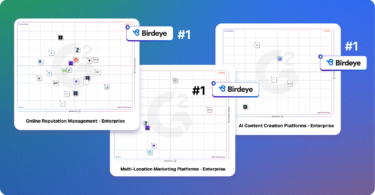
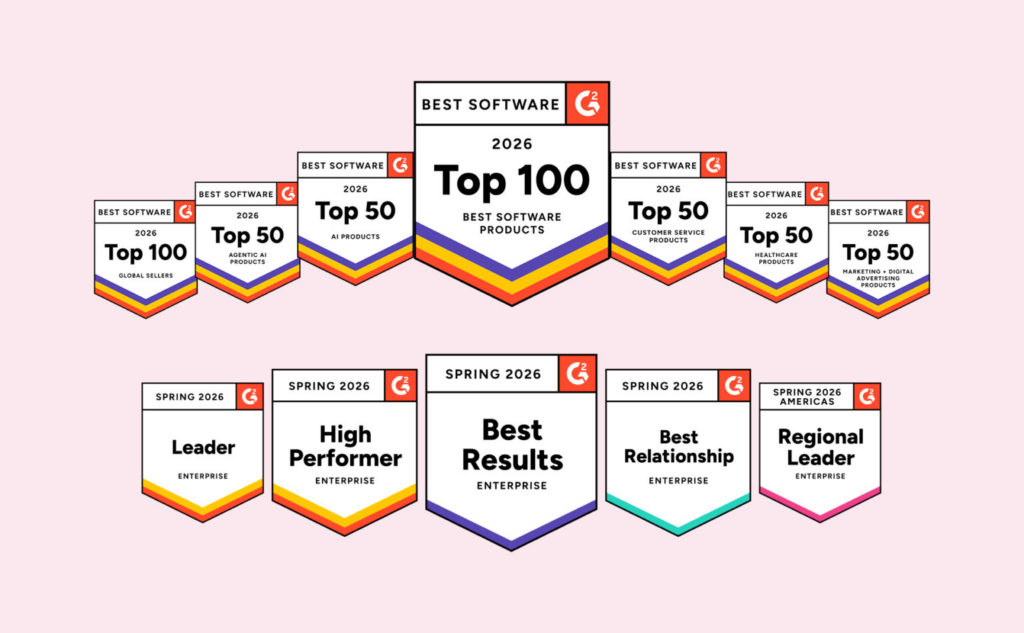
In G2’s Spring 2026 reports, Birdeye earned the #1 enterprise ranking across 12 categories based on 3,600+ verified customer reviews, including Online Reputation Management, Local Listing Management, Social Media Suites.
Birdeye was also recognized on G2’s Best of 2026 lists as the #21 Top AI Product Globally, #37 Top Software Company Worldwide, #32 Agentic AI Product, and #11 Marketing & Digital Advertising Product, among other awards and recognitions.
If you’re looking to strengthen trust, improve visibility, and manage reputation across every location with greater precision, explore how Birdeye can support your strategy. Watch a free demo today.

About the Author

Avtar Madan
Avtar Madan
Originally published