Automotive marketing automation is increasingly used by dealerships to manage shopper engagement across sales and service channels. Rather than relying on isolated campaigns, automation coordinates timing, messaging, and follow-ups based on how buyers research vehicles, interact with inventory, and return for service.
Summary

Traditional dealership marketing systems struggle to respond to real buyer behavior. Static lists, scheduled campaigns, and disconnected tools often miss the moments when shoppers are actively comparing options or ready to take the next step.

In this blog, we explain where conventional automotive marketing automation falls short, what modern dealership automation requires, and how connected systems help improve engagement, retention, and revenue across locations and channels.
Table of contents
- What is automotive marketing automation?
- Automation vs. traditional dealership marketing
- Core components of automotive marketing automation
- Benefits of automotive marketing automation
- 6 Automotive marketing automation strategies
- How dealerships can implement automotive marketing automation
- How Birdeye supports automotive marketing automation
- Frequently asked questions about automotive marketing automation
- Final thoughts on automotive marketing automation
What is automotive marketing automation?
Automotive marketing automation uses connected software to manage dealership marketing activities without manual effort. It tracks shopper behavior, segments audiences in real time, and triggers relevant messages across channels like email, SMS, ads, and websites. These automated interactions support timely follow-ups, such as test-drive prompts, inventory updates, and service reminders. By operating on a centralized platform, automation helps dealerships consistently engage buyers from the first interaction through ownership.
Automation vs. traditional dealership marketing
Traditional dealership marketing follows fixed schedules and manual workflows, often disconnected from real shopper intent. Modern automation adapts in real time, triggering personalized outreach based on customer actions rather than static calendars.
| Aspect | Traditional dealership marketing | Automated dealership marketing |
| Campaign timing | Pre-scheduled blasts | Triggered by real-time shopper actions |
| Audience targeting | Static lists and segments | Dynamic, behavior-based audiences |
| Personalization | Limited, one-size-fits-all | Contextual and intent-driven |
| Follow-ups | Manual and inconsistent | Automatic and timely |
| Data usage | Historical or periodic reports | Live engagement and activity signals |
| Customer experience | Disjointed and reactive | Relevant and continuous |
| Team effort | High manual workload | Scales without added effort |
Core components of automotive marketing automation
Effective automotive marketing automation connects systems to deliver timely, relevant engagement. Here’s how it works:
- Consolidate dealership data for accurate targeting and personalization.
- Unify CRM, DMS, website, and inventory information to prevent blind spots.
- Maintain a single customer profile across all channels.
- Trigger actions and automate workflows based on behavior and rules.
- Use AI to optimize timing, content, and campaign prioritization.
- Identify high-intent shoppers with predictive intelligence.
- Score behavior and model intent to tailor messaging intensity.
- Deliver consistent, coordinated messaging across email, SMS, ads, and web.
- Track performance, measure engagement, and attribute campaigns to sales.
This integrated approach helps dealerships react to buyer behavior, keep messaging relevant, and continuously improve marketing results.
Benefits of automotive marketing automation
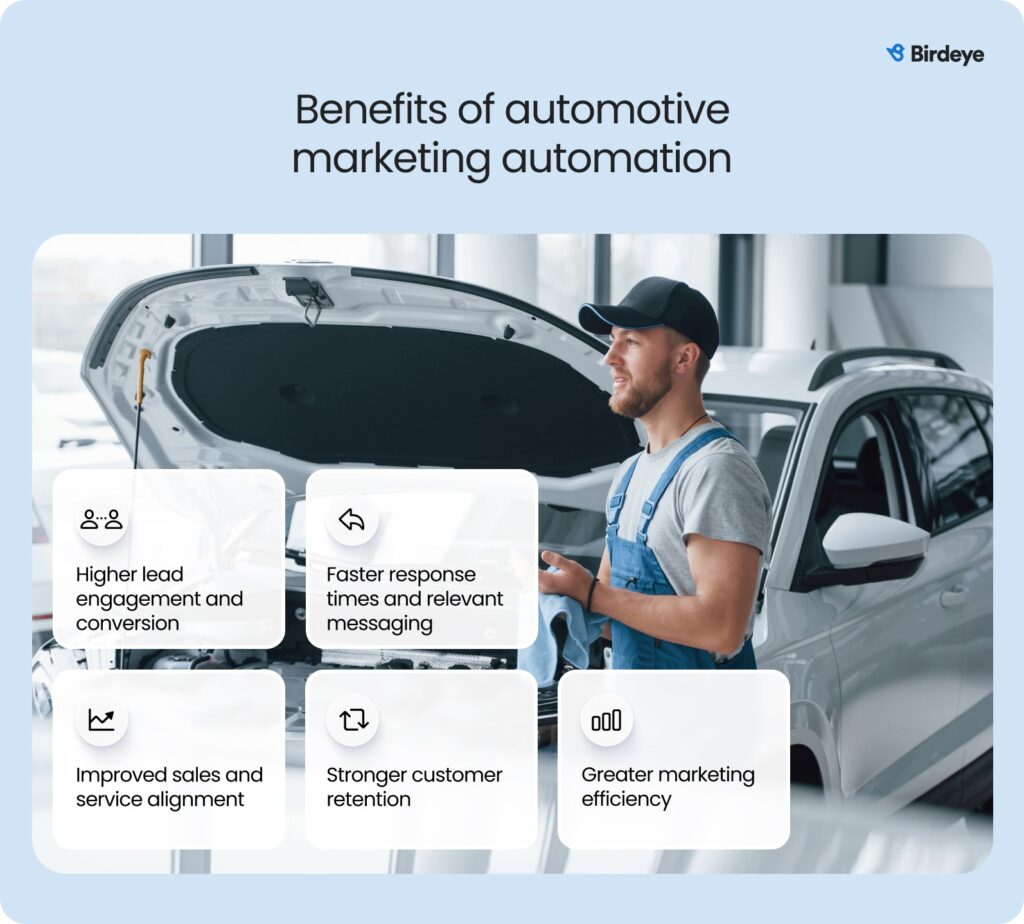
When dealerships implement marketing automation effectively, they gain more than operational efficiency; they enhance engagement, sales, and customer loyalty. Here’s how automation delivers value:
Higher lead engagement and conversion
Automation responds to buyer behavior in real time, ensuring leads receive timely, relevant communication. This increases engagement and boosts the likelihood of conversion.
Faster response times and relevant messaging
Trigger-based outreach reduces delays and aligns messages with shopper interests. Customers experience a more personalized journey, leading to higher satisfaction.
Improved sales and service alignment
Shared data across teams ensures that sales and service departments work in sync. This reduces handoff friction and creates a seamless customer experience.
Stronger customer retention
Automation supports lifecycle-based messaging tied to ownership milestones, service needs, and future purchase opportunities. This keeps dealerships top of mind beyond the initial sale.
Greater marketing efficiency
By automating repetitive workflows, teams save time and reduce manual effort. Marketing spend is optimized while allowing staff to focus on strategy and high-value tasks.
These benefits combine to drive higher conversions, stronger customer relationships, and measurable business growth across the dealership.
6 Automotive marketing automation strategies
Automotive marketing automation uses AI, email, SMS, and CRM to guide customers through personalized journeys, from initial interest to post-sale service. Let’s explore how dealerships can use these tools to segment audiences, nurture leads with dynamic content, and deliver seamless omnichannel experiences that increase engagement, loyalty, and sales.
Data-driven audience segmentation
Segment audiences using demographics, interests, and website activity to deliver highly relevant messages. Track customer behavior across touchpoints to identify drop-offs and optimize campaigns, ensuring your outreach resonates at every stage of the buyer journey.
Lead generation and management
Capture leads directly through social ads with pre-filled forms and engage visitors in real time with chatbots. Drive qualified traffic using SEO and targeted PPC campaigns to expand your reach efficiently.
Shoppers are also changing how they search. Instead of only typing “best SUV dealers near me,” they’re asking AI platforms more detailed questions like “Which dealership has the best service reviews for Toyota in my area?” Birdeye Search AI helps dealerships stay visible in those AI-generated answers by tracking where your locations show up, how you’re described, and what to fix to improve performance.

Personalized lead nurturing
Start by nurturing leads with automated emails and SMS messages tailored to customer behavior, such as browsing specific models or scheduling service reminders. Implement drip campaigns for new leads, test drives, and post-purchase follow-ups to maintain engagement. AI personalization customizes offers, product comparisons, and messaging for each individual.
Dynamic content and retargeting
Use dynamic ads to show vehicles customers have viewed on your site. Pair this with engaging video content and personalized website banners or pop-ups to capture attention and encourage conversions.
Omnichannel consistency
Integrate CRM, social media, email, and SMS platforms to maintain a unified view of each customer. Deliver consistent messaging across the website, social channels, and communication tools to create a seamless, professional experience.
Trust and loyalty building
Automate review requests and showcase positive feedback to strengthen credibility. Respond promptly to negative feedback to maintain trust and improve overall customer satisfaction.
Implementing these strategies allows dealerships to turn marketing automation into a powerful growth tool. Thoughtful automation nurtures leads, drives conversions, and strengthens long-term customer relationships, keeping your dealership top of mind throughout the buyer journey.
Explore Top Automotive Marketing Automation Strategies
Want to see the impact of Birdeye on your business? Watch the Free Demo Now.
How dealerships can implement automotive marketing automation
Implementing automotive marketing automation requires more than adding new tools. Dealerships need connected systems, clear triggers, and shared goals across teams. Here’s a practical approach to getting started:
Connect core dealership systems
Marketing automation works best when CRM, DMS, website activity, inventory data, and service records are connected. This creates a complete customer profile and ensures messages are based on real behavior, not assumptions.
Define key customer triggers
Identify actions that signal intent or need, such as:
- Viewing a specific vehicle multiple times
- Scheduling or missing a service appointment
- Completing a test drive
- Submitting a lead form but not responding
These triggers determine when and how automated outreach begins.
Build lifecycle-based workflows
Design workflows that follow the customer journey:
- New lead follow-ups
- Test-drive reminders and post-visit check-ins
- Post-sale ownership communication
- Service reminders and re-engagement campaigns
Automation ensures every customer receives timely follow-ups without manual intervention.
Align sales, service, and marketing teams
Shared visibility into customer activity helps teams coordinate outreach and avoid duplicate or conflicting messages. When everyone works from the same data, handoffs become smoother, and customer experience improves.
When these elements work together, automotive marketing automation becomes a repeatable system that supports consistent engagement, improves team coordination, and helps dealerships respond to customer needs at every stage of the journey.
Key metrics to track dealership marketing automation success

To understand the impact of automotive marketing automation, dealerships should focus on metrics tied to engagement, conversion, and retention.
Track performance across these areas:

Lead response time
Email and SMS engagement rates
Appointment bookings from automated campaigns
Service retention and repeat visits
Review volume and sentiment trends
Revenue influenced by automated workflows
Monitoring these metrics helps dealerships refine messaging, improve timing, and prioritize high-impact campaigns.
How Birdeye supports automotive marketing automation
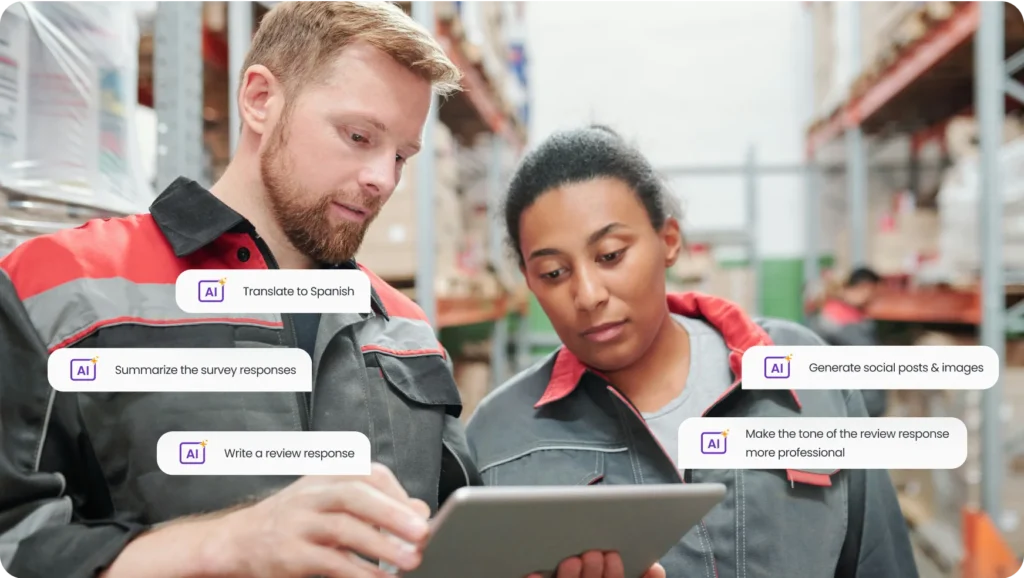
Modern automotive marketing automation requires connected tools that work together across locations and channels. Search is moving from links to AI answers, and dealerships that only optimize for Google will miss new discovery paths. That’s where Birdeye Search AI helps dealerships stay visible, accurate, and competitive.
Birdeye brings these capabilities together through a combination of a full-cycle platform, local intelligence, and AI-powered marketing agents, helping dealership groups manage customer experience, reputation, and marketing from one governed system.
Full-cycle platform
Birdeye connects customer experience, reputation, and marketing workflows in a single platform, helping dealerships reduce operational silos and improve execution across locations.
- Connects reviews, listings, messaging, surveys, social engagement, search visibility, and insights in one system
- Integrates with 3,000+ CRM, DMS, analytics, and operational tools to support dealership workflows
- Provides centralized governance through approvals, permissions, and audit controls
Local intelligence
Birdeye helps dealerships strengthen discoverability across search engines, directories, maps, and AI-driven search platforms.
- Search AI tracks how often dealership locations appear in AI answers across ChatGPT, Gemini, and Perplexity. It identifies negative or inaccurate AI-generated brand descriptions and the sources influencing them
- Brand AI and Industry AI help generate automotive-specific content and responses that remain consistent and on-brand
- Competitors AI monitors share of voice, ratings, and market trends across local markets
- Messaging AI captures and responds to leads across SMS, web chat, Google, and social channels
- Chatbot AI engages website visitors, answers questions, and books appointments automatically
Marketing agents
Birdeye’s AI agents automate engagement and reputation workflows while helping dealership groups maintain consistency at scale.
- Review Generation Agent helps dealerships collect more customer reviews
- Birdeye Review Response Agent drafts personalized responses using sentiment and customer context
- Listings Optimization Agent helps maintain accurate dealership information across directories and maps
- Surveys AI turns customer feedback into actionable insights and improvement opportunities
- Social Publishing and Engagement capabilities help dealerships manage content and customer interactions across locations
With Birdeye, dealerships can improve AI visibility, strengthen local SEO, maintain accurate listings, generate more reviews, convert more leads, and deliver a more consistent customer experience across every location.
By unifying engagement, reputation, and insights, Birdeye helps dealerships move from disconnected campaigns to coordinated, customer-focused automation.
Frequently asked questions about automotive marketing automation
No. Marketing automation benefits both single-location dealerships and multi-location groups. Scalable workflows allow teams to manage engagement efficiently without adding complexity.
Yes. Automation is especially effective when sales and service journeys are connected. Ownership milestones, service reminders, and repurchase opportunities can all be managed through shared workflows.
Automation supports staff by handling repetitive tasks and timely follow-ups. Teams remain focused on relationship-building, in-store experiences, and high-value interactions.
Dealerships often see improvements in response time and engagement quickly. Long-term gains come from consistent use, data refinement, and ongoing optimization.
Final thoughts on automotive marketing automation
Automotive marketing automation helps dealerships respond to real customer behavior instead of relying on static campaigns. By connecting data, triggering timely outreach, and coordinating messaging across channels, dealerships can improve engagement, retention, and revenue without increasing manual effort.
When implemented with the right systems and strategy, automation becomes a foundation for a consistent customer experience across sales and service.
Ready to see how connected marketing automation works for dealerships? Explore how Birdeye helps automotive teams manage engagement, reputation, and growth on a single platform. Schedule a demo now.

About the Author

Vanjana Sharma
Originally published