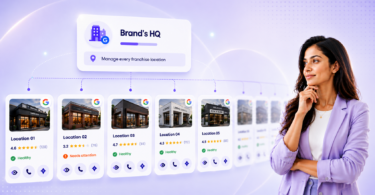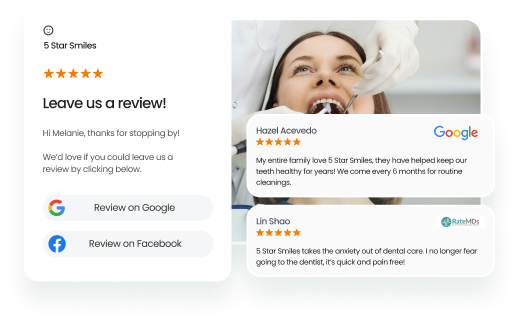
Enterprise reputation management (ERM) is the practice of monitoring, collecting, and responding to customer reviews across a brand’s locations. A UK brand with 50 branches has 50 Google Business Profiles, each with its own rating, review volume, and response record. Without a central system, response times vary by branch, review requests go out unevenly, and head office learns about a weak location only after its rating has dropped.
This guide covers what ERM involves for UK multi-location and franchise brands, the review sources and rules that apply, the criteria to use when comparing platforms, and how Birdeye meets each one.
Table of contents
- What enterprise reputation management means for UK multi-location brands
- What to look for in an enterprise reputation management platform
- How franchise review management works in the UK
- Why is Birdeye the enterprise reputation management platform for UK multi-location brands?
- FAQs
- Manage your enterprise’s reputation across the UK locations with Birdeye
What enterprise reputation management means for UK multi-location brands
ERM is not single-site review management repeated across more sites. Three things change once a brand runs many locations, and each one affects how reviews should be handled:
- Scale. Each location has its own Google Business Profile (GBP), rating and review volume. A brand-level average of 4.5 can hide a branch at 3.6.
- Control. Head office sets standards for response time, tone and escalation. Local teams act within them.
- Reporting. Leadership needs location-level data: rating, review volume, response rate and response time. A single blended score does not show which branches need attention.
These changes matter because reviews drive local visibility. Google ranks local results on relevance, distance and prominence, and review count and rating feed prominence. A branch with few or poor reviews loses visibility to a competitor down the road, even when the brand is stronger overall.
The UK review sources and rules enterprise teams must manage
A UK multi-location brand is judged across several review platforms, and four regulators set rules for how reviews are collected, displayed, and answered. Teams need to know both before they design a review process.
Review sources
The right mix depends on the sector, but most brands need coverage across these:
- Google Business Profile. The main source of local discovery in almost every sector.
- Trustpilot. Widely used in UK retail, finance, utilities and travel.
- Facebook. Carries recommendations and reviews for local branches.
- Sector directories. Checkatrade and Which? Trusted Traders for home services, TripAdvisor for hospitality, and NHS.uk for GP practices, dental practices and pharmacies.
Regulators and rules
Four bodies shape how UK brands handle reviews:
- Competition and Markets Authority (CMA). Under the Digital Markets, Competition and Consumers Act 2024, fake reviews and hidden incentivised reviews are banned. The rules took effect on 6 April 2025, and the CMA can fine firms up to 10% of global turnover.
- Advertising Standards Authority (ASA). Rules on how brands use reviews and ratings in advertising.
- Information Commissioner’s Office (ICO). Enforces UK GDPR, which applies when you handle reviewer data and reply to reviews.
- Sector regulators. The Care Quality Commission (CQC) for care providers, the General Dental Council (GDC) for dental practices and the Financial Conduct Authority (FCA) for financial services.
The practical result is that review collection must not be selective or incentivised without disclosure. Review gating, inviting only happy customers to post publicly, poses a risk under the CMA rules. A compliant platform sends the same review request to every customer.
What to look for in an enterprise reputation management platform
Platforms differ widely in how they handle many locations. Some are built for enterprise estates, while others are single-site tools with extra user seats added. These seven criteria separate the two:
- Location-level management. The platform should manage every location separately and roll the data up to group level.
- Source coverage. It should connect to Google, Facebook, Trustpilot and the sector directories you rely on.
- Review request automation. It should send requests by SMS and email after a transaction or appointment, with no manual step per customer.
- Unified inbox. Every review from every source should land in one queue, with assignment and status.
- Response controls. It should support role-based permissions, approval workflows, templates, and AI-drafted replies for human review.
- Reporting. It should provide ratings, volume, response rate, and response time by location, region, and brand.
- Data governance. It should state where data is stored, who can access it and how long it is kept.
UK buyers most often leave criterion 7 until late. It is the first question a UK healthcare or financial services group will ask.
How franchise review management works in the UK
In a franchise network, franchisees own the local customer relationship and the franchisor owns the brand. Reviews sit between the two, and a franchisee’s reply speaks for the whole brand. A three-layer model gives each party a clear role:
- Franchisor level. Set the response-time standard, for example, every review answered within 48 hours. Set the escalation path for complaints that name staff, safety or legal issues. Own brand-wide reporting.
- Regional level. Area managers monitor locations that fall below a rating threshold (e.g., 4.0).
- Franchisee level. Franchisees reply to reviews for their own site, using approved templates and the permissions set centrally.
The platform must enforce this model. Franchisees should see only their own locations, and the franchisor should see all of them. Without access controls, a franchisee can reply off-brand or see data they should not. The British Franchise Association’s code of ethics is a useful reference when setting standards for franchisee conduct.
Franchisors also need to show which locations meet the standard. Response rate and response time by location do that, and they replace anecdote in franchisee performance reviews.
UK GDPR and review management
Review management processes personal data from the first review request. A reviewer’s name, the review text, the contact details used for the request and any reply you write all count as personal data. Healthcare groups face a stricter standard on top of this.
Three UK GDPR points apply to every sector:
- Lawful basis. Sending review requests by email or SMS needs a lawful basis. The Privacy and Electronic Communications Regulations (PECR) also apply to electronic marketing. Check ICO guidance on whether a post-transaction review request counts as marketing.
- Data minimisation. Collect only what the request needs, usually a name and one contact method.
- Retention and access. You must be able to delete or export a person’s data on request.
Healthcare adds a second layer
Health data is special category data under Article 9 of UK GDPR. This creates a specific risk in public replies.
If a patient leaves a Google review and the practice replies, “Thank you for visiting us about your knee operation,” the practice has disclosed health data in public. Even confirming that the reviewer is a patient can breach confidentiality.
A safe reply does not confirm the person’s identity, treatment, or visit, and directs them to a named contact channel.
For healthcare groups such as dental chains, GP federations, physiotherapy and optical groups, the ERM platform should:
- Stop review requests going to patients who have opted out.
- Keep clinical detail out of review requests.
- Provide reply templates that avoid confirming patient status.
- Restrict who can reply, using role-based permissions.
- Log who replied and when.
- State where data is hosted. [CONFIRM Birdeye UK/EU data residency and sub-processor details with Security before publishing. Do not state a region until confirmed.]
UK GDPR penalties reach £17.5 million or 4% of annual global turnover, whichever is higher. The ICO sets the level based on the breach.
Why is Birdeye the enterprise reputation management platform for UK multi-location brands?
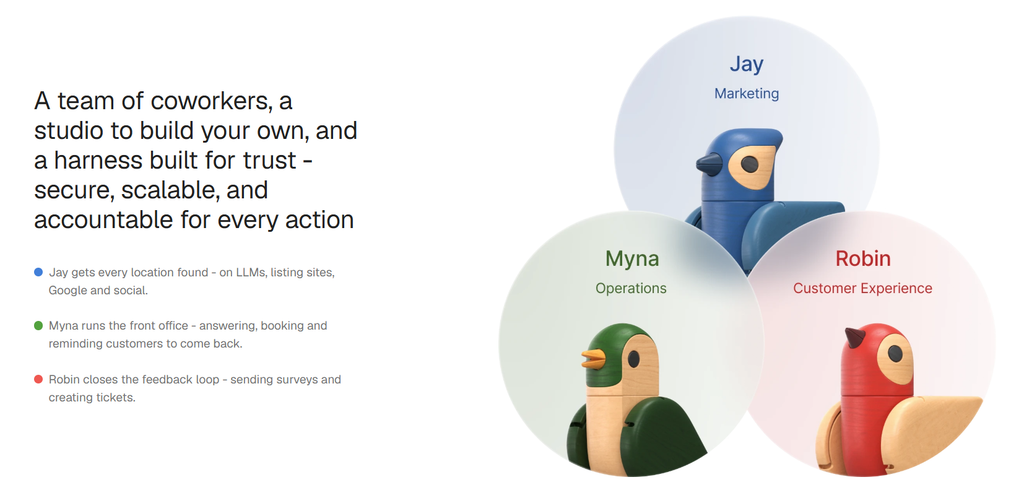
Birdeye builds AI coworkers for multi-location brands. Jay handles marketing, Myna handles operations, and Robin handles customer experience. Together they orchestrate AI agents that win AI visibility, book appointments and drive consistent CX at every location. They run on BirdAI, the Agent OS built on 13 years of multi-location data infrastructure.
G2 ranks Birdeye #1 in Enterprise Multi-Location Marketing Platforms and named it to the 2026 Best Agentic AI Products list.
For reputation management, this means the platform is designed around the location as the unit of work, the first criterion in the list above. Here is how Birdeye meets each one:
- Location-level management. Birdeye manages each location’s profiles, reviews, and performance separately, then rolls the data up to the region and brand level. Head office sees the whole estate, and each branch sees its own.
- Source coverage. Birdeye connects GBP, Facebook and other review sources to one dashboard.
- Review request automation. Birdeye sends review requests by SMS and email after a customer interaction, with no manual step per customer. Every customer receives the same request, which fits the CMA’s rules against selective collection.
- Unified inbox. Reviews from every source arrive in one queue. Managers can assign, reply and track status without switching tools.
- Response controls. BirdAI drafts replies in the brand’s tone, and a person reviews and approves them within head office-set permissions. Franchisors see every location, franchisees see their own, and approval workflows apply where the franchisor requires them. For healthcare groups, templates can be set so replies never confirm patient status or treatment.
- Reporting. Rating, review volume, response rate and response time are reported by location, region and brand, so leadership can identify the weakest branches.
Birdeye also covers what sits around reviews. Reviews feed local search visibility and AI answers, and Birdeye’s AI coworkers act on that data across marketing, operations and customer experience, including booking appointments.
How Timpson manages reputation across 6,000+ UK locations with Birdeye
Timpson is the clearest UK example of the problem this guide describes. The group has traded on the high street since 1865 and now runs around 2,150 shops and approximately 4,000 vending and self-service locations, including ID photo booths and automated key-cutting machines. Each location needs accurate listings and a steady flow of reviews to appear in “near me” searches on Google and in AI answers.
Timpson moved from a legacy provider to Birdeye to manage listings, reviews, and benchmarking on one platform using Listings, Reviews, and Insights. The migration was the main commercial risk, because any listing disruption would cost search visibility and sales. It ran in two phases:
- Phase 1: 2,000+ retail locations went live within four weeks.
- Phase 2: The remaining 3,800+ vending and self-service locations followed the next month.
Trading continued without disruption. Timpson also placed QR codes across its shops and machines, which gave customers a direct route from the counter or machine to a review. This added around 1,000 reviews to the average monthly volume.
Results since then:
- 112% increase in review volume
- 4.3 to 4.6 average review rating across the estate
- 26% increase in review response rate
- 6% increase in Google Business Profile conversion
- 60% year-on-year uplift in one of Timpson’s vending businesses
“Birdeye has had a direct impact on our top line. By making it easier for customers to find our shops, vending machines and services across the Timpson Group, and by giving every part of the business a single view of how we’re performing, we’ve seen better footfall, stronger reviews and a measurable contribution to sales growth.” - Will Lankston, Managing Director, Timpson Direct
Timpson shows the model at the scale where manual review management fails: thousands of locations, mixed formats and a central team that needs one view of performance.
FAQs
Enterprise reputation management monitors, collects, and responds to customer reviews across all of a brand’s locations from a single platform. It gives head office control over standards and lets each location act on its own reviews.
Standard review management covers one site. Enterprise reputation management covers multiple sites and includes permissions, approval workflows, and group-level reporting. It also handles the governance questions that arise with franchisees and regulated sectors.
Yes. Under the CMA rules, you must not fake reviews, hide incentives or collect reviews selectively. Send the same request to all customers. Check PECR and ICO guidance on whether your request message counts as marketing.
Do not confirm that the reviewer is a patient, mention treatment or reveal any clinical detail. Thank them, state that you take feedback seriously and give a contact route for private follow-up. Follow guidance from the ICO and your regulator, such as the GDC or CQC.
Set central standards for response time, tone and escalation, then use role-based access so franchisees manage only their own locations. Report response rate and time by location to confirm the standard is met.
Manage your enterprise’s reputation across the UK locations with Birdeye
A UK multi-location brand cannot protect its reputation one branch at a time. It needs one system that covers every location, manages reviews and replies, and meets CMA and UK GDPR requirements. The seven criteria in this guide give a fixed standard for comparing platforms. Birdeye meets all seven.
To see how Birdeye manages reputation across a UK estate, book a demo.

About the Author

Shruti Dugar
Birdeye
Originally published