AI search recommendations for restaurants are shifting discovery from “who ranks first” to “who gets included in the answer.” That means customer reviews are no longer just feedback. They’re training data and public evidence that shape which brand locations show up in AI shortlists and how they’re described.
Summary
AI is reshaping how people discover restaurants. Instead of browsing long lists of links, consumers increasingly rely on conversational tools that provide curated recommendations. Birdeye’s State of AI Search 2026 report shows discovery is shifting from traditional rankings to AI-generated, citation-backed answers, where 80% of brands are cited at least once, but only about 15% secure the primary recommendation position. For restaurant brands, this means visibility now depends on strong review signals and accurate listings.
This article explains how AI search for restaurants is changing discovery. It shows why star rating is no longer enough as a standalone KPI, why review volume, recency, and repeated specifics in review text matter more for AI recommendations, and how Birdeye’s full-cycle agentic marketing platform helps brands manage these signals through Reviews AI.
Table of contents
How do AI models decide which restaurants to recommend?
AI models analyze review content, recency, volume, and consistency to construct a semantic profile of each restaurant. They extract signals about cuisine, ambiance, service tone, price level, and occasion fit. These signals are then matched with the user’s search query.
Large language models do not evaluate reviews the way diners do. Instead of scanning star ratings, they identify patterns and attributes within the text.
A review saying, “Great food and nice service,” provides very limited information for AI search engines.
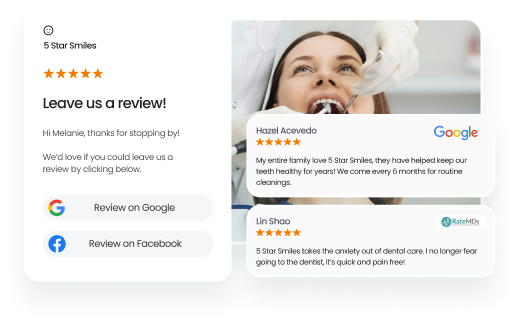
A review saying, “Exceptional truffle risotto, perfect for anniversary dinners, and attentive service from the staff,” teaches AI several useful signals at once:
- Cuisine specialization
- Price expectation
- Occasion relevance
- Service quality
AI can then match that restaurant when someone asks for:
- “romantic Italian dinner”
- “special occasion restaurant”
- “upscale Italian for a date night”
The more descriptive the review language, the clearer the signals.
Review recency influences AI confidence
AI-generated recommendations appear to favor recent customer signals. A restaurant group that accumulated 400 reviews over five years may be outranked by one with 40 reviews in the past 60 days because the latter reflects current customer experience.
Fresh reviews tell AI:
- The restaurant is active
- Customers still visit
- Experience quality is current
Recency functions as a confidence signal. According to Birdeye’s State of Online Reviews 2025 report, 81% of reviews now include written comments, up from 79% the previous year. This shift toward more descriptive feedback gives AI systems richer signals to interpret customer experiences and match restaurants with relevant dining queries.
Review volume sets the reliability threshold
AI models also consider review volume as a credibility signal. Brands with fewer reviews per location often receive lower confidence weighting, even if their ratings are strong. High review density tells AI that a restaurant’s reputation is validated by a broad sample of diners.
This is especially relevant for multi-location restaurant brands. A flagship location may have thousands of reviews, while dozens of other locations remain underrepresented in the data AI uses. AI recommendations are therefore influenced not just by brand reputation, but by location-level review density.
AI dining discovery is already changing consumer behavior
Consumer discovery patterns are shifting quickly. A McKinsey survey found that about half of consumers now intentionally seek out AI-powered search tools when researching products or services, showing how conversational AI is becoming a primary discovery channel.
Platforms such as ChatGPT, Gemini, and Perplexity often provide a short list of curated recommendations within a single answer rather than a long list of search results. As a result, restaurant brands are no longer competing primarily for page-one rankings. They are competing for a small number of recommendation slots inside an AI response.
What does AI’s entity profile of your restaurant actually include?
When AI assistants evaluate restaurants, they build a composite picture of the brand by combining signals from reviews, business listings, public mentions, and website content. Instead of reading one review or one listing, AI systems analyze patterns across many data sources to determine what your restaurant is known for, when it should be recommended, and for whom it is relevant.
Four dimensions consistently shape this understanding.
1. Sentiment consistency
AI models evaluate whether similar experience signals appear across many reviewers. If multiple diners independently mention:
- Attentive staff
- Fresh pasta
- Rooftop views
AI interprets those signals as reliable attributes of the restaurant. Consistency matters more than isolated praise. If only one review mentions an attribute, AI treats it cautiously.
2. Attribute coverage
For AI to recommend a restaurant confidently, it must clearly understand what type of experience the restaurant offers. That means having descriptive signals such as:
- Cuisine type
- Dining style
- Price range
- Dietary options
- Ambiance
If reviews repeatedly say “great food” without specifying what food, AI cannot map that restaurant to meaningful queries. This is where many multi-location brands struggle. They have large review volumes but limited descriptive diversity.
How Birdeye Insights AI helps restaurant brands close the attribute gap?
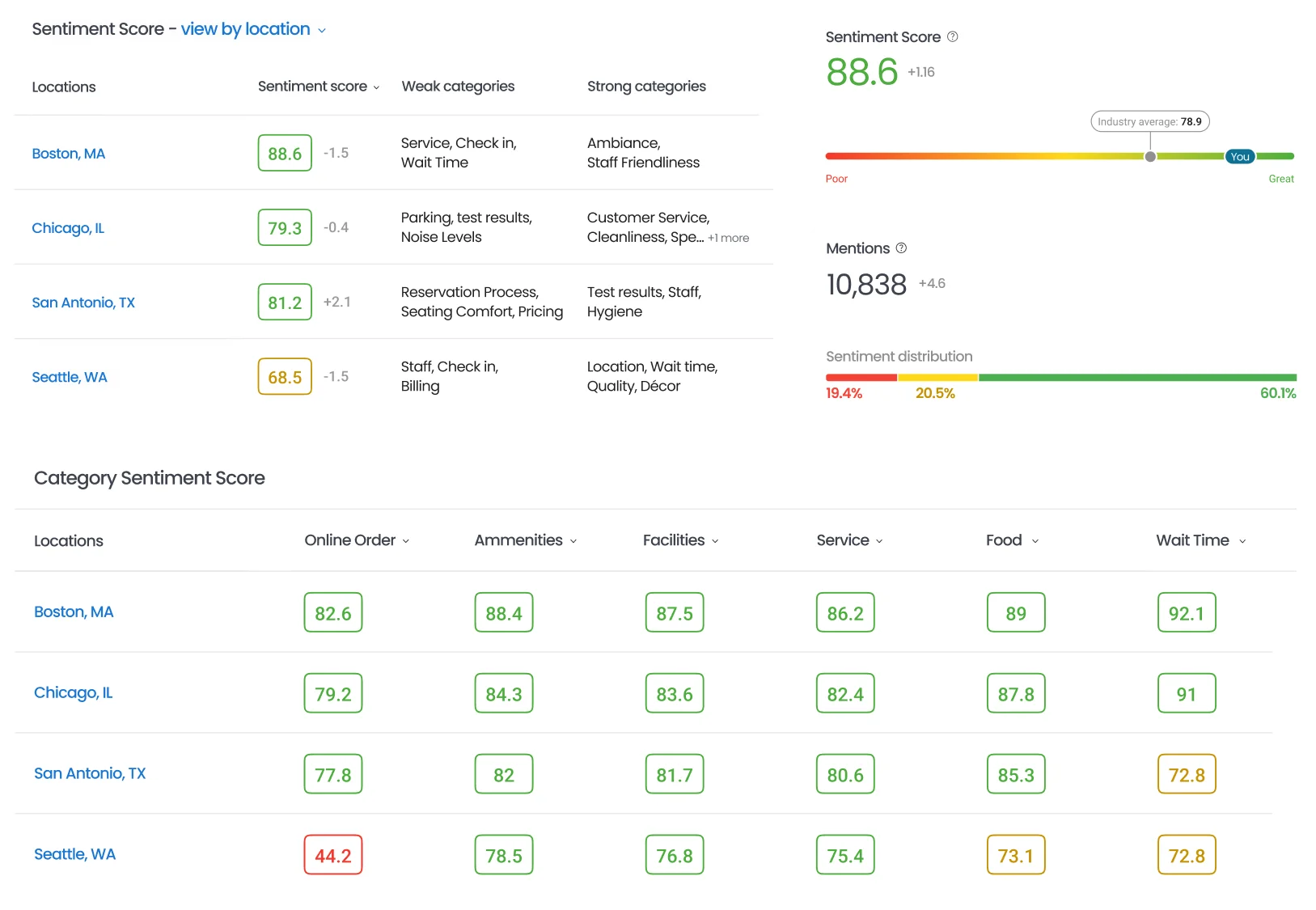
Birdeye Insights AI, part of the Birdeye Agentic Marketing Platform, helps multi-location restaurant brands understand guest sentiment across reviews, surveys, and listings. It combines signals into a unified Birdeye Score along with Sentiment, Reputation, and Listing Scores to show how each location performs. Restaurants can also benchmark against competitors and receive targeted recommendations to improve reputation, operations, and visibility across locations.
3. Occasion relevance
Dining decisions are frequently occasion-based. Users ask AI for restaurants suited to:
- Business dinners
- Date nights
- Family celebrations
- Late-night meals
AI learns these associations from reviews. If customers regularly mention birthday dinners, corporate events, or anniversary meals, AI learns when to recommend that restaurant. Without those signals, AI cannot match the restaurant to those use cases.
4. Signal recency
AI models prioritize recent signals to avoid recommending outdated experiences. Fresh reviews, updated listings, and current mentions help AI determine that a restaurant’s reputation and offerings are still relevant.
Research from Birdeye’s State of AI Search 2026 report shows that AI assistants prioritize trusted citations, structured profiles, and continuously updated data sources when generating recommendations. Brands that maintain active listings, strong reviews, and consistent third-party validation are more likely to appear in AI-generated answers.
Narrow vs rich AI review profiles
Many restaurant brands unknowingly train AI with incomplete signals.
| Narrow AI profile | Rich AI profile |
| “Great pizza and fast service.” | “Wood-fired Neapolitan pizza and lively atmosphere for group dinners.” |
| “Nice place.” | “Upscale Italian spot perfect for business dinners and client meetings.” |
| “Food was good.” | “Fresh seafood pasta and attentive service for anniversary celebrations.” |
The difference is not sentiment. The difference is attribute richness.
A narrow review corpus produces narrow recommendations. A rich review corpus allows AI to match the restaurant to many different dining queries.
Be the #1 Answer for every location in AI search results
Want to see the impact of Birdeye on your business? Watch the Free Demo Now.
How multi-location restaurant brands can build a review corpus with Birdeye Reviews AI?
For enterprise restaurant brands, the challenge is not just generating more reviews, but doing it with brand guardrails, location-level flexibility, and centralized visibility. To improve AI recommendation visibility, brands need structured strategies that generate consistent, descriptive, and scalable review signals.
Birdeye’s Agentic Marketing Platform addresses this through Reviews AI and specialized AI Agents that analyze review data across 100-10,000+ locations and surface attribute gaps in a brand’s sentiment profile.
The following strategies help restaurant brands strengthen their AI-ready review corpus, while Birdeye’s Reviews AI and agents help execute these strategies consistently across thousands of locations.
1. Occasion-triggered review requests
Restaurants generate richer review language when requests are tied to specific experiences. Instead of generic review requests, large restaurant brands can trigger feedback after moments such as:
- Seasonal menu launches
- Private dining events
- New location openings
- Holiday or special dining experiences
These prompts naturally encourage guests to mention context, such as:
- Corporate dinners
- Birthday celebrations
- Date nights
Over time, this builds a diverse review corpus that AI can match against many dining scenarios.
How Birdeye helps
With Birdeye Reviews AI, brands can automate review requests across hundreds of locations using triggers tied to customer interactions. The Review Generation Agent helps ensure review collection remains consistent across the portfolio, enabling brands to capture richer experience signals at scale.

2. Response strategy as signal reinforcement
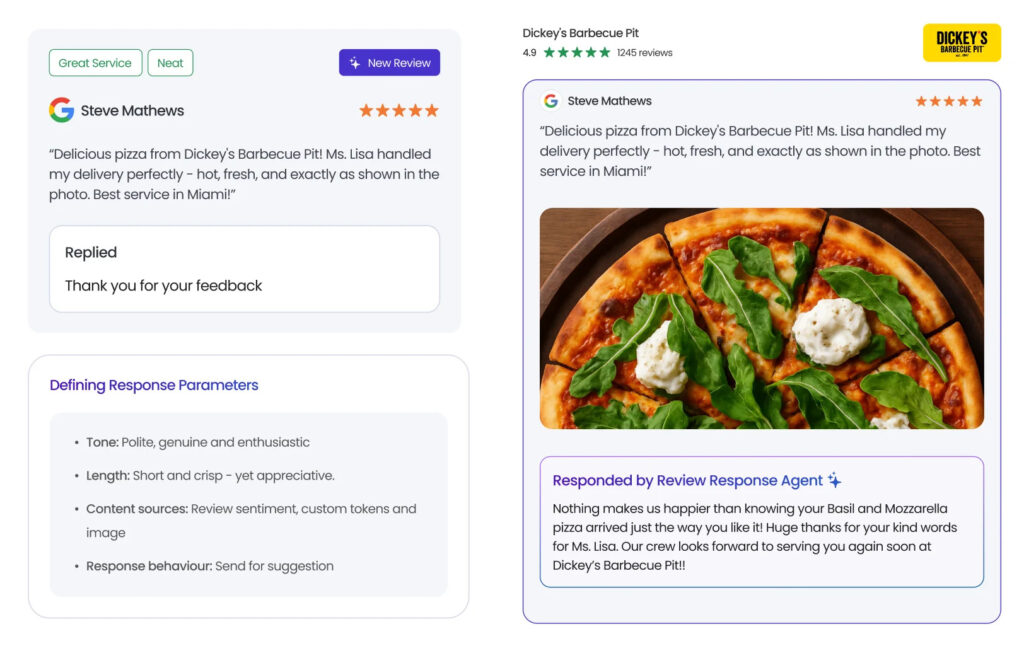
Restaurant responses are also part of the AI training dataset. When brands reply to reviews, they can reinforce attributes already mentioned by customers.
Example: Customer review: “Loved the rooftop seating.”
Brand response: “We’re glad you enjoyed the rooftop dining experience overlooking the city.”
Two independent signals now confirm the same attribute. AI interprets this as stronger evidence. Across hundreds of locations, consistent response strategies significantly increase attribute clarity.
How Birdeye helps
Birdeye Review Response Agent enables restaurant brands to generate contextual responses that acknowledge customer feedback and reinforce important attributes, such as cuisine type, ambiance, or dining occasions.
3. Portfolio-level review auditing
Most restaurant brands track reviews location by location, but AI visibility requires a portfolio-level understanding of review signals.
Brands need to know:
- Which locations lack recent reviews
- Where cuisine signals are unclear
- Which markets lack specific dining occasion mentions
Without this visibility, review data becomes fragmented across locations.
How Birdeye helps
Birdeye Review Reporting Agent gives multi-location restaurant brands a portfolio-level view of review performance across all locations. Instead of monitoring feedback one location at a time, marketing leaders can analyze review data across the entire brand to identify:
- Attribute coverage by location cluster
- Sentiment trends by market
- Locations with low review recency or engagement
- Underrepresented dining occasions or experience signals

This centralized visibility helps brands detect gaps in their review corpus and adjust review generation and response strategies across locations.
How listings and structured data reinforce AI restaurant recommendations?
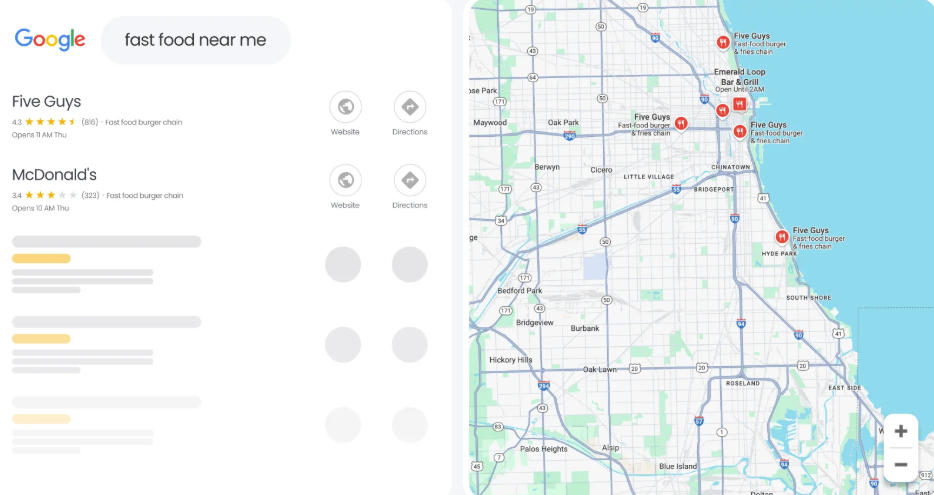
AI assistants do not rely on reviews alone when recommending restaurants. They combine review language with structured data such as listings across platforms like Google Business Profile, Apple Maps, Facebook, Bing, and top industry sites to confirm attributes like cuisine type, price range, menu options, hours, and dining style.
For multi-location restaurant brands, maintaining accurate listings across hundreds of platforms can be difficult. Birdeye’s Listings AI, part of its Agentic Marketing Platform, helps restaurant brands synchronize business information, menus, and location attributes across directories and search platforms. The Listings Optimization Agent continuously monitors listing accuracy and updates structured data signals across locations.
How can restaurant brands run a quick AI visibility audit?
Restaurant leaders can test their current AI visibility in minutes. Run this query in ChatGPT, Gemini, or Perplexity:
“What is [Restaurant Brand] known for?”
Then try:
- “When should I visit [Restaurant Brand]?”
- “Is [Restaurant Brand] good for business dinners?”
- “Is [Restaurant Brand] good for families?”
Look closely at the answers. You will likely notice one of three patterns:
- AI provides limited or vague descriptions
- AI repeats a narrow set of attributes
- AI struggles to identify specific occasions
Each gap reflects missing signals in your review corpus. This diagnostic step reveals what AI has learned and what it still needs to learn.
How Birdeye Search AI helps?
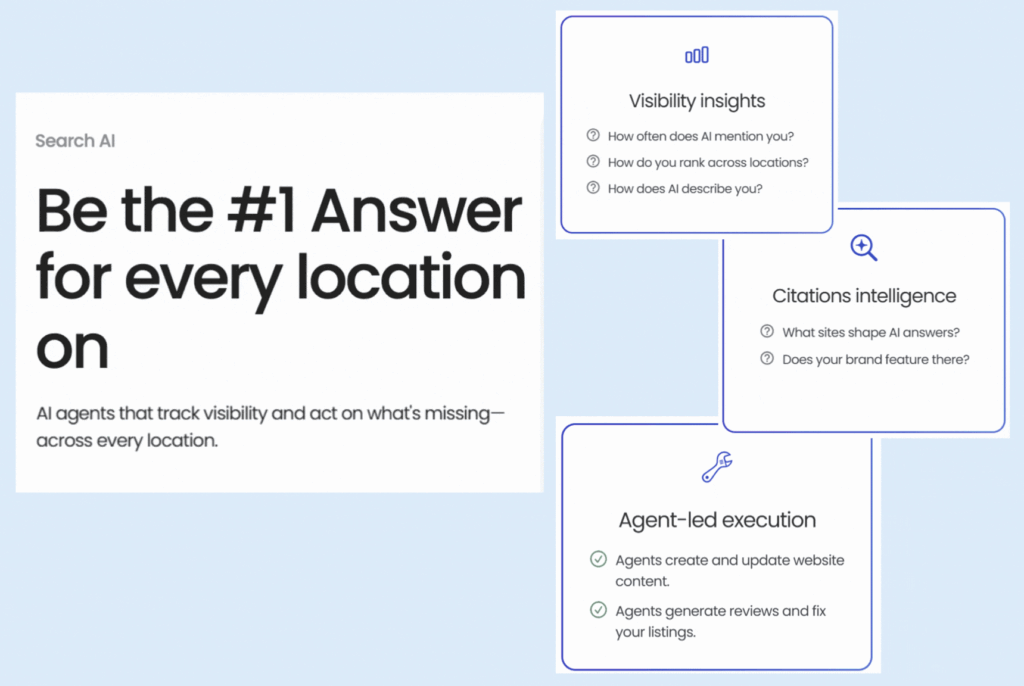
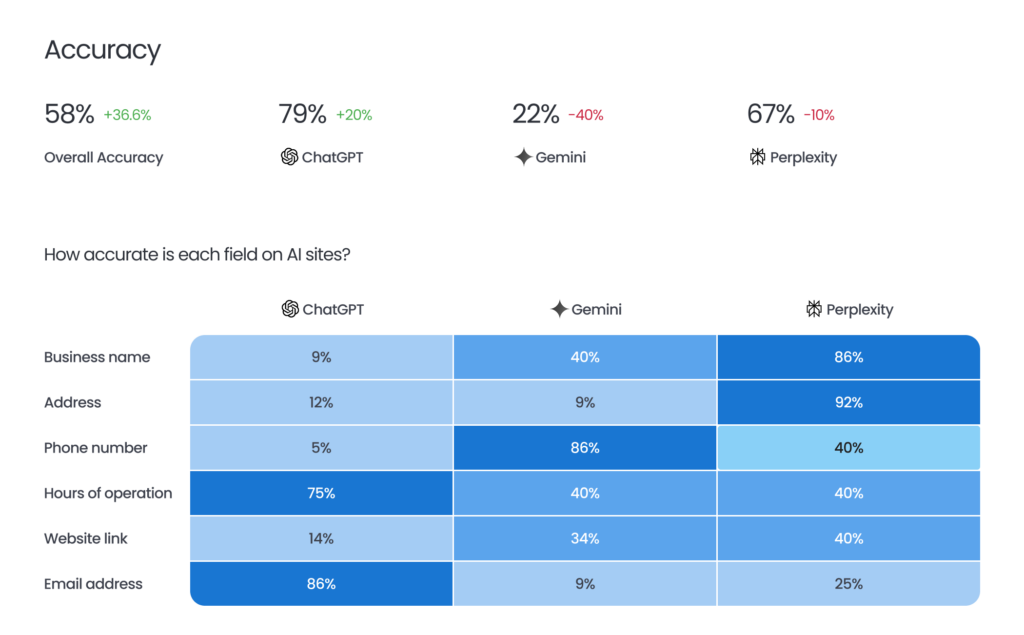
Search AI Birdeye’s latest GEO (Generative Engine Optimization) platform allows multi-location restaurant brands to instantly check how their locations appear across AI platforms like ChatGPT, Gemini, Perplexity AI, and more. It surfaces visibility gaps and reputation signals so brands can understand how AI describes them and optimize reviews, listings, and customer experience data accordingly.
FAQs about AI search recommendations for restaurants
No, a higher star rating alone does not guarantee better AI search visibility. AI assistants evaluate multiple signals, including review recency, attribute diversity, listing accuracy, and consistent guest feedback, before recommending restaurants. While strong ratings improve credibility, AI systems rely heavily on descriptive review content that explains experiences such as ambiance, cuisine type, or dining occasions.
There is no fixed number of reviews that automatically makes a restaurant authoritative for AI search. Instead, AI systems assess review volume, freshness, consistency, and descriptive detail when determining whether a restaurant is a reliable recommendation source.
Yes, restaurant brands can influence the attributes AI associates with their locations by shaping the signals present in reviews, listings, and brand responses. AI assistants learn from repeated patterns in how customers and businesses describe experiences.
Birdeye helps restaurant brands manage AI search visibility through Search AI and Reviews AI. Search AI tracks how locations appear in AI-generated answers and identifies visibility gaps across markets, while Reviews AI strengthens the review signals and experience attributes that AI assistants rely on when recommending restaurants.
Fake or low-quality reviews can weaken the credibility signals AI systems use to evaluate restaurants. Restaurant brands should actively monitor reviews, report suspicious activity, and maintain steady flows of genuine guest feedback.
Final thoughts
In 2026, restaurant discovery is entering a phase where AI assistants recommend brands directly instead of showing long lists of links. So, the restaurants that win visibility are not just those with strong ratings, but those with structured, descriptive, and continuously growing review signals across every location.
For multi-location restaurant brands, this requires infrastructure: systems that consistently generate reviews, reinforce key dining attributes through responses, and monitor review signals across the entire portfolio.
Birdeye’s agentic marketing platform enables this by combining Reviews AI, Search AI, and specialized AI agents to build the review profile AI systems rely on when recommending restaurants.
Request an enterprise demo to explore how leading multi-location restaurant brands use Birdeye’s Agentic Marketing Platform to build the review signals AI needs to recommend them.

About the Author

Somya Yesodharan
Originally published


![[Feature image] From SEO to GEO- Why brands must optimize for AI search now](https://birdeye.com/blog/wp-content/uploads/Feature-image-From-SEO-to-GEO-Why-brands-must-optimize-for-AI-search-now-375x195.png)

![[Feature image] The Best Marketing Platforms for Multi-Location Brands](https://birdeye.com/blog/wp-content/uploads/Feature-image-The-Best-Marketing-Platforms-for-Multi-Location-Brands-375x195.png)