AI reputation management software uses artificial intelligence to monitor, manage, and improve how a brand is perceived online. Leading platforms like Birdeye use NLP, sentiment analysis, LLM-based response generation, and anomaly detection to automate work that once required large manual teams
Summary
Online reputation management has entered a new era, where customer opinions spread instantly across review sites, social media, forums, and AI-powered search experiences like Google AI Overviews, ChatGPT, Gemini, and Perplexity. For multi-location businesses, delayed responses, missed sentiment shifts, or inaccurate listings can quickly impact visibility and customer trust. AI reputation management tools solve this by monitoring brand sentiment in real time, automating review responses, detecting emerging risks, and helping businesses maintain a strong presence across both traditional and generative search platforms.
This blog ranks and reviews the 9 best AI reputation management tools for 2026. It covers what to look for in a platform, how each tool compares on AI capability, scalability, and integrations, and what compliance requirements matter before you buy.
What is AI reputation management?
AI reputation management is the use of artificial intelligence to monitor, analyze, and respond to how a brand is perceived across the web. It covers review sites, social media, news, forums, and generative search platforms like ChatGPT, Gemini, and Perplexity.
Where traditional online reputation management (ORM) relied on manual monitoring, AI reputation management uses NLP, LLM-based response generation, and sentiment analysis to work continuously and at scale. These AI tools detect patterns humans would miss, draft on-brand responses in seconds, and flag risks before they escalate.
Why AI is a game-changer for online reputation management
Traditional reputation management is slow and reactive. Teams spend hours tracking reviews across sites and often miss sentiment shifts until it’s too late. For multi-location brands, scattered feedback makes it even harder to spot trends and take action in time.
AI changes that. AI reputation management tools monitor every channel at once, analyze sentiment in real time, and draft personalized, on-brand responses in seconds. Powered by Natural Language Processing (NLP), these platforms understand tone, detect risks, and flag unusual patterns like sudden spikes in negative reviews, so teams can act before small issues turn into crises.
The shift toward AI-driven reputation management is accelerating rapidly. The global ORM market is projected to grow at a 14% CAGR through 2027, while Gartner forecasts that 80% of enterprises will adopt GenAI-powered platforms by 2026. As customer conversations expand across reviews, social media, and AI-powered search platforms, businesses increasingly need automated systems that can scale reputation management without sacrificing speed or accuracy.
Key advantages of AI ORM software include:
- Speed: Detects sentiment changes within minutes, not days.
- Scalability: Manages hundreds or even thousands of profiles and locations seamlessly.
- Accuracy: Picks up tone shifts and subtle signals humans may miss.
- Efficiency: Reduces staff hours spent on repetitive monitoring and responses.
- Predictive insights: Flags emerging risks before they escalate into crises.
In short, best AI tools for online reputation transforms online reputation management from a cost center into a measurable growth engine, directly tied to higher ratings, faster responses, and enterprise-wide customer trust.
Key shifts in reputation management
Now, let’s break down the three major ways AI is transforming online reputation management today.
Real-time sentiment analysis
AI reputation tools continuously scan reviews, social media, forums, news sites, and even podcasts in real time, so no mention goes unnoticed. Many software now offer enterprise-scale monitoring across Google, Facebook, Trustpilot, Reddit, and X, as well as industry-specific sites for healthcare, hospitality, automotive, and more.
For multi-location enterprises, AI consolidates all this cross-channel feedback into a single dashboard, replacing fragmented reporting with clear, actionable insights.
Automated review responses with NLP
Responding to every customer review manually is slow, repetitive, and often inconsistent. AI reputation management tools change that with NLP and LLM-based response generation, platforms draft personalized, on-brand replies in seconds, helping teams keep pace without sacrificing quality.
Freshworks reports that 32% of customer service leaders already see measurable ROI from AI automation. That’s because faster, more consistent replies don’t just save time, they also build trust with customers.
To ensure quality, teams can implement guardrails, such as approval workflows, brand voice libraries, and tone controls, to ensure every response aligns with company standards.
Predictive alerts that prevent crises before they occur
AI tools for comprehensive reputation monitoring not only react to feedback, but also predict emerging risks. Using anomaly detection, these platforms flag unusual patterns such as a sudden spike in negative reviews from a specific location or product line. This early warning system helps enterprises intervene before issues spiral into full-blown PR crises.
For instance, industry research shows that a 10% drop in sentiment within a single day can signal a potential backlash. Acting quickly on these insights helps brands fix problems and reassure customers before negative stories spread online.
Birdeye customers see this in action. D4C Dental Brands, for example, used Birdeye Insights AI to flag recurring patient-experience issues such as long wait times at certain offices. Leadership adjusted staffing before these issues escalated into broader negative sentiment, a clear demonstration of how predictive insights can turn potential crises into opportunities to improve service.
How we ranked the best AI reputation software
Choosing the right AI reputation management software shouldn’t rely on vendor claims. To keep this ranking transparent and actionable, we applied a data-backed methodology rooted in enterprise usage. (Note that no vendor paid for inclusion.)
Data sources
Our evaluation combined both quantitative and qualitative inputs from enterprise users and trusted third-party software:
- Enterprise survey: Feedback from 483 multi-location businesses actively using ORM software.
- Independent reviews: Analysis of 2,100 verified ratings across G2, Capterra, and AppExchange.
- Vendor and customer documentation: Insights into integrations, support SLAs, and deployment readiness.
This approach ensured we captured both day-to-day user experience and long-term enterprise impact.
Scoring criteria
Each tool was scored across weighted criteria that reflect what matters most to AI reputation management companies and the brands they serve:
| Criterion | Weight | Data source |
| AI Capability: Depth of NLP, automation, anomaly detection | 35% | User survey + G2 reviews |
| Scalability: Multi-location support, enterprise readiness | 25% | Enterprise survey + case studies |
| Integrations: CRM, POS, ticketing, BI tools | 20% | Vendor docs + customer reviews |
| Value/Price: Affordability relative to feature depth | 20% | Pricing disclosures + user sentiment |
Why these factors matter
- AI capability: Reputation moves at the speed of sentiment. Strong NLP and predictive analytics are now non-negotiable for any AI reputation management platform.
- Scalability: Enterprises demand uptime SLAs, role-based permissions, and support across hundreds of locations. SMB-focused tools fall short.
- System connectivity: CRM, POS, ticketing, and BI integrations unlock ROI by embedding reputation insights into enterprise workflows.
- Value/Price: Features mean little if the cost isn’t justified. Transparent pricing and ROI feedback were weighted heavily.
Scores favor tools that delivers reliable AI outcomes at a multi-location scale and connect seamlessly to enterprise systems.
The result
Each tool’s final score reflects a weighted average across these factors, ensuring that our ranking highlights proven impact on customer engagement, enterprise workflows, revenue, and brand trust, not just popularity.
Here is how the top nine AI reputation management tools scored against our criteria.
Top 9 AI reputation management tools reviewed
Here are the nine leading AI online reputation management software for 2026. Each profile highlights the standout AI features, best-fit industries, pricing, and a real-world proof point.
| Tool | Best for | Standout AI capability | Pricing |
| Birdeye | Multi-location enterprises in healthcare, financial services, automotive, and retail | Omnichannel review automation, multilingual AI responses, predictive sentiment alerts, listings optimization, and benchmarking agents | Flexible, value-based pricing tailored to business size & locations |
| Reputation | Businesses needing department- and location-level insights with benchmarking | Granular sentiment analysis, department/location dashboards, and competitor benchmarking | Custom/quote-based pricing |
| Brand24 | Mid-market brands & PR teams monitoring crises | Anomaly detection for sentiment spikes, AI summaries, influencer impact tracking, topic & sentiment analysis | Flexible plans by mentions & users; affordable |
| Yext | Multi-location businesses needing local SEO + reviews | Listing accuracy automation, AI-assisted review replies, Knowledge Graph, and sentiment tagging | Per-location pricing; plans range from ~$199–$999/year/location |
| Sprout Social | Brands/agencies with high-volume social engagement | Advanced social listening, sentiment-aware tagging, task automation, AI insight summaries, and crisis alerts | Per-user pricing starts at $199/user/month (annual); higher tiers for advanced tools |
| Podium | Service-oriented SMBs (dental, auto, home services, medical practices) | SMS-based review requests, AI-suggested review responses, 24/7 conversational AI assistant, and unified inbox with analytics | Quote-based pricing (Core, Pro, Signature tiers) |
| Mention | PR teams, agencies, and fast-scaling consumer brands | Real-time monitoring across 75+ sources, AI sentiment tagging, competitor benchmarking, and noise filtering | Plan starts at $599/month (billed annually) for large-scale monitoring |
| Talkwalker | Global consumer brands & entertainment | Multimodal AI: text, visual recognition, and voice/audio sentiment analysis | Tailored to brand/agency needs |
| BrandWatch | Enterprises, financial services, and multinational consumer brands needing multilingual, large-scale analysis | Custom AI classifiers, multilingual sentiment analysis, visual/image monitoring, and competitive benchmarking with share of voice tracking | Custom quote-based pricing tailored to organization size, monitoring scale, and features |
1. Birdeye
Best For: Multi-location enterprises in healthcare, financial services, automotive, and retail
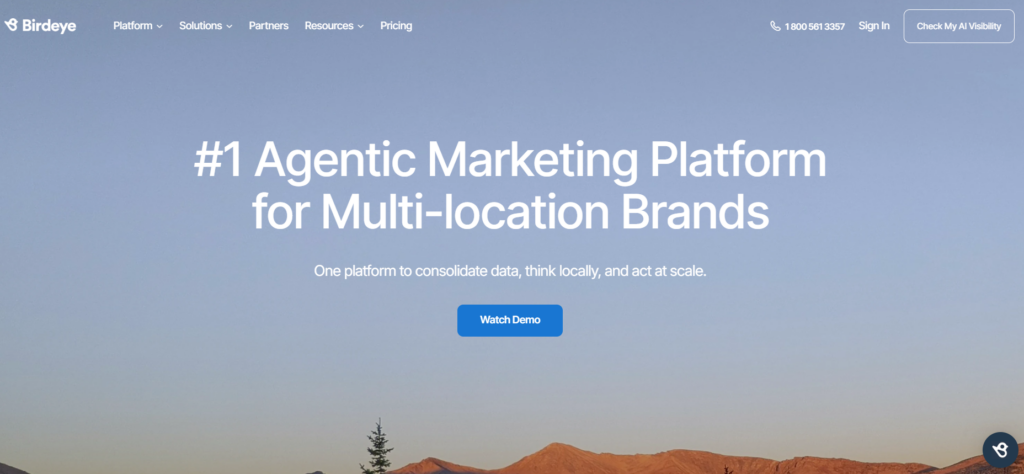
Birdeye is the leading agentic marketing platform for enterprise reputation management. It helps multi-location brands turn customer signals into measurable business outcomes. While other AI reputation management tools stop at surfacing data, Birdeye’s AI agents take action, automating review generation and responses, optimizing listings, and improving brand discovery across every location.
Powered by BirdAI and a unified data platform, Birdeye replaces fragmented ORM tools with one connected system built for scale. Enterprise brands use it to strengthen local visibility, protect reputation, and deliver consistent customer experiences across 100-1000+ locations. With teams across the U.S., EMEA, and APAC, Birdeye is redefining how enterprises grow and win locally.
Key Features
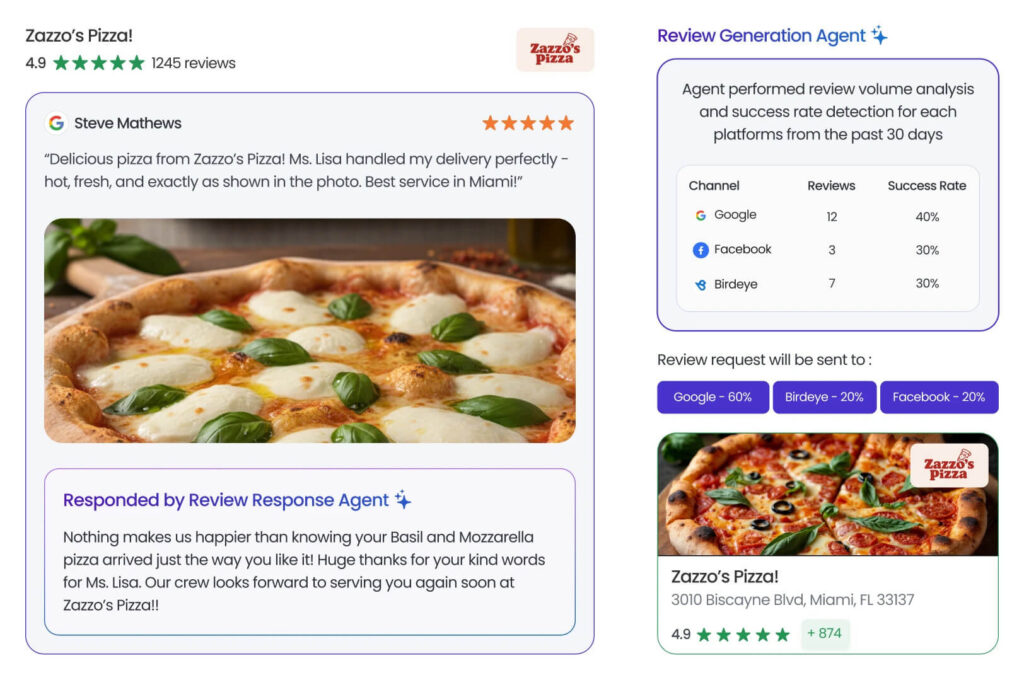
- Autonomous Reviews AI agents (Birdeye Review Generation Agent and Review Response Agent ): Automatically request, respond to, and market reviews around the clock across every location and review channel.
- Agentic AI foundation: A unified AI framework that powers autonomous reputation, discovery, and engagement workflows across reviews, listings, search visibility, messaging, and analytics.
- Multilingual Review Response Generator: Delivers brand-compliant, human-like replies in multiple languages using intelligent translation and tone monitoring.
- Listings Optimization Agent: Analyzes local search trends, recommends updates, and executes platform changes automatically to maximize visibility for each location.
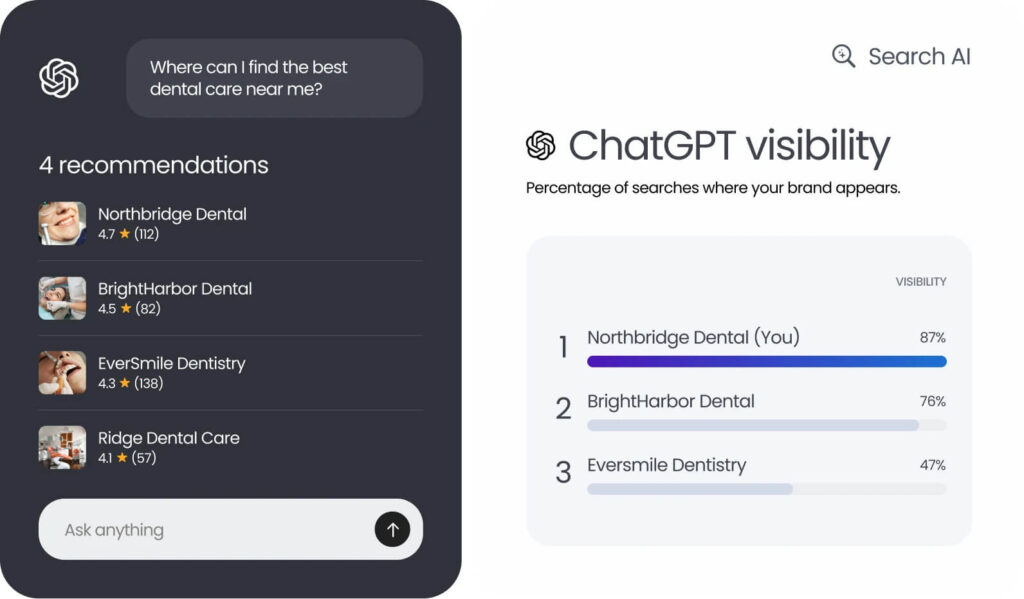
- Birdeye Search AI visibility engine: Ensures brands are accurately represented on AI-powered search platforms (ChatGPT, Gemini, Perplexity) by monitoring visibility, detecting gaps, and optimizing brand data.
- Intelligent review monitoring: Flags fake or spam reviews and escalates sensitive feedback for timely action.
- Real-time notification and reporting agents: Deliver immediate alerts and actionable insights to support proactive ORM efforts.
- The Birdeye Social AI agents (Birdeye Social Publishing Agent and Birdeye Social Engagement Agent: Manage publishing calendars, respond to customer interactions, and ensure content is on-brand across all platforms.
- Deep analytics and benchmarking agents: Conduct reputation trend tracking and SWOT analysis, and tie AI-driven actions directly to outcomes like local SEO and revenue growth.
- 3,000+ enterprise integrations: Connects with CRM, POS, ticketing, BI, and more to reduce manual work and boost ROI across complex workflows.
Pros
- Full-cycle platform covering reviews, listings, social, search visibility, and analytics
- Agentic AI works autonomously across thousands of locations without manual input
- 200+ review and listing sites covered
- Proven ROI with measurable improvements in ratings, response rates, and local visibility
- Transparent reporting and benchmarking across all locations from a single dashboard
- Scales easily as brand locations and review volume increase
Cons
- Some specialized integrations may need additional setup, although APIs and connectors generally support these requirements.
- The depth of functionality can require a learning curve as teams scale adoption consistently across locations.
Pricing: Flexible, value-based pricing tailored to business size and locations. Connect with the Birdeye team for a personalized quote.
G2 Rating: 4.7/5 (based on 4,000+ reviews)
Case study: Indiana Members Credit Union
Industry: Financial Services
Locations: 30+ branches across Indiana

Indiana Members Credit Union (IMCU), one of the state’s leading credit unions, faced a common challenge: ensuring consistent reputation management across dozens of branches. With thousands of members depending on accurate information and trusted reviews, IMCU needed a platform that could unify listings management and streamline review workflows at scale.

The Birdeye Solution
 IMCU adopted Birdeye’s AI-powered reputation platform, leveraging:

• Listings AI to ensure accurate, consistent business information across Google, Apple Maps, Facebook, and industry directories.
• Reviews AI Agents to drive review growth, generate on-brand, personalized responses, and surface early warning signals through reporting and sentiment analysis.
• Seamless enterprise integrations to connect review and listings data with their internal systems for improved workflows and faster action.

Results in 12 Months
• 2,000+ new reviews generated, boosting visibility and credibility across all locations.
• Google's rating improved from 3.9 to 4.4, significantly strengthening member trust.
• 98% response rate with a 24-hour response time

Impact
By consolidating listings and reviews into a single AI-driven platform, IMCU reduced manual effort for branch staff, improved transparency across leadership, and strengthened long-term member acquisition and retention.
2. Reputation
Best For: Businesses that need department and location-level insights with benchmarking

Reputation provides businesses with deep visibility into customer sentiment through department-level dashboards, location filters, and competitive benchmarking tools. These features help brands track performance across regions, service lines, and key competitors. As one of the leading AI reputation management companies, Reputation is built for organizations that need granular insight across locations from a single platform.
Key Features
- Department and location-based dashboards: Deliver granular insights into performance at the branch or department level, helping companies spot patterns across regions.
- Competitive benchmarking: Allows brands to measure sentiment and star ratings against direct competitors in their industry.
- Sentiment classification: Automatically tags reviews and feedback as positive, neutral, or negative for quick triage.
- Integrations: Connects with platforms like Salesforce and ServiceNow to unify feedback data across systems.
Pros
- Centralizes reviews and feedback from multiple platforms into one place, saving teams significant time
- Intuitive interface that is easy to use across large, distributed teams
- Real-time review monitoring with timely alerts for new customer feedback
Cons
- Reputation score can shift unpredictably, with limited explanation for changes
- Reporting section can feel complex and less user-friendly to navigate
- Social media management features are limited compared to dedicated tools
Pricing: Custom/quote-basedG2 Rating: 4.6/5 (based on 2,400+ reviews)
3. Brand24
Best For: Mid-market brands and PR teams monitoring brand mentions and crises

Brand24 helps mid-market brands and PR teams monitor conversations in real time and detect early signs of potential crises. Its AI reputation management tools focus on spotting unusual spikes in mentions or sentiment so teams can act before issues escalate.
Key Features
- AI Brand Assistant: Summarizes large volumes of conversations into key takeaways, trending themes, and potential risks.
- Anomaly Detector: Flags unusual spikes in brand mentions or negative sentiment, helping teams react before a crisis spreads.
- Influencer impact detection: Identifies when high-profile users or competitors are driving online conversations.
- Topic and sentiment analysis: Surfaces recurring issues and audience sentiment shifts across social, forums, and review platforms.
Pros
- Easy to use with a clean dashboard that delivers real-time insights quickly
- Sentiment analysis and alerts help teams react fast to both positive and negative feedback
- Comprehensive monitoring across social platforms, forums, blogs, and news sources
Cons
- Some social platform data is limited due to API restrictions
- Historical data access is restricted on lower-tier plans
- Interface and filtering options could offer more customization for large data volumes
Pricing: Flexible plans based on the number of monitored mentions and users
G2 Rating: 4.6/5 (based on 340+ reviews)
4. Yext
Best For: Businesses that need local SEO combined with review management

Yext combines business listings management with AI-powered review automation, making it ideal for brands where local visibility and reputation go hand in hand. By ensuring accurate listings and pairing them with timely review responses, Yext directly strengthens local SEO and drives higher conversions for multi-location businesses.
Key Features
- AI-assisted review response: Drafts suggested replies to reviews with options for customization and approval.
- Listing accuracy automation: Maintains consistent business details across directories like Google, Apple Maps, and Yelp.
- Knowledge Graph support: Provides a structured database for brand information that powers listings and reputation tools.
- Basic sentiment tagging: Categorizes review text by tone to spot recurring themes.
Pros
- Saves significant time by updating all listings at once from a single platform
- Supports multiple users with different access levels across locations
- Centralizes Google listings and data, keeping everything consistent and efficient
Cons
- Support response times can be slow, with some issues taking longer than expected to resolve
- Pricing is considered high relative to the level of direct support provided
- Steep learning curve for new users without adequate onboarding guidance
Pricing: Per-location pricing; plans range from approximately $199 to $999/year per location, with custom quotes available.
G2 Rating: 4.4/5 (based on 1,115+ reviews)
5. Sprout Social
Best for: Businesses and agencies with high-volume social media engagement

Sprout Social is widely recognized as a social media management platform, but its advanced listening and sentiment tagging features make it one of the top AI reputation management tools for reputation management. By combining monitoring with task routing and workflow automation, it helps turn high-volume conversations into actionable insights.
Key Features
- Sentiment-aware social listening: Monitors mentions across social networks, forums, and blogs and automatically tags tone.
- AI Assist for insight generation: Creates summaries of large data sets and surfaces key themes and trends for easier decision-making.
- Automated task routing and priority tagging: Routes comments, messages, or reviews to the right team member based on sentiment or topic.
- Multilingual and emoji-aware analysis: Understands slang, emojis, and multiple languages to provide deeper insights across global conversations.
Pros
- Reporting and calendar publishing are easy to use and save significant time
- Consolidates messages, mentions, and comments from multiple social platforms into one inbox
- Responsive customer support team that helps with setup, troubleshooting, and advanced features
Cons
- Pricing is steep, particularly for small teams or businesses managing fewer than 10 profiles
- Some advanced features like granular competitor analysis require higher-tier plans
- Auto-renewal contract terms have been flagged by some users as inflexible
Pricing: Per-user pricing starts at $199/user/month (billed annually); higher tiers for advanced tools.
G2 Rating: 4.4/5 (based on 6,400+ reviews)
6. Podium
Best For: Service-oriented SMBs in dental, automotive, home services, and medical practices

Podium takes a mobile-first approach to reputation management by enabling businesses to request reviews and respond quickly via SMS and text channels. Its streamlined workflows help service-based businesses boost review volume and stay responsive on the go.
Key Features
- Automated review-request workflows: Send text-based prompts to customers post-interaction, helping increase review volume.
- AI-suggested review responses: Provide personalized, on-brand reply suggestions for reviews on Google and Facebook.
- 24/7 conversational AI assistant: Handles incoming messages and reviews round-the-clock, reducing missed feedback.
- Unified messaging inbox and analytics: Consolidates SMS, reviews, chats, and messages into one dashboard and surfaces trends across locations.
Pros
- Simplifies customer communication by centralizing text messages, reviews, and interactions in one place
- Text-first approach improves response rates and makes review collection feel natural for customers
- Easy setup with quick onboarding for small and mid-sized teams
Cons
- Pricing is considered high compared to platforms with similar features
- Support response times can be slow, with some issues taking weeks to resolve
- Some text message delivery failures have been reported with limited notifications to alert users
Pricing: Quote-based pricing (Core, Pro, Signature tiers)
G2 Rating: 4.6/5 (based on 2,090+ reviews)
7. Mention
Best For: PR teams, agencies, and fast-scaling consumer brands

Mention specializes in real-time tracking of brand mentions across social media, review sites, news outlets, blogs, and forums. It gives brands broad visibility into online conversations and helps PR or brand teams act quickly on reputational risks. For teams looking for AI tools for comprehensive reputation monitoring without the complexity of larger platforms, Mention is a practical mid-market option.
Key Features
- Real-time mention tracking: Monitors social platforms, news sites, blogs, forums, and 75+ review sites in real time.
- Sentiment analysis: Automatically classifies mentions as positive, neutral, or negative to help brands prioritize responses.
- Competitor benchmarking and share-of-voice: Measures brand visibility and sentiment compared to competitors.
- Boolean filtering and noise reduction: Enable detailed query logic and filters to cut irrelevant mentions and refine insights.
Pros
- Easy to set up, with most users getting started in under 20 minutes
- Real-time alerts and wide coverage make it effective for staying on top of brand conversations
- Clean interface that simplifies monitoring across platforms without a steep learning curve
Cons
- Pricing can be high for smaller teams or organizations on tighter budgets
- Sentiment analysis is not always accurate and can miss nuanced or context-dependent mentions
- Limited social media profile coverage compared to larger enterprise-grade tools
Pricing: Plan starts at $599/month (billed annually)
G2 Rating: 4.4/5 (based on 550+ reviews)
8. Talkwalker
Best For: Global consumer brands and entertainment companies with strong visual and audio assets

Talkwalker specializes in comprehensive consumer and brand intelligence by analyzing not only text but also images, audio, podcasts, and video. It is particularly valuable for brands with strong visual assets or a global, multi-channel footprint.
Key Features
- Visual Recognition: Identifies logos, products, and brand imagery in photos and videos across digital and social channels.
- Audio and Speech Monitoring: Captures mentions in podcasts and broadcasts, extending coverage beyond text.
- Trend and Sentiment Alerts: Detects spikes in conversation or shifts in tone, helping teams spot potential risks early.
- Competitor and Market Benchmarking: Provides comparative insights into brand share of voice across industries.
Pros
- Super easy to use with a clean interface that synthesizes key themes from large datasets quickly
- Strong multimodal coverage across text, visual, and audio sources
- Blue Silk AI drives reliable NLP and generative AI-powered insights
Cons
- Enterprise-only pricing with no self-serve option, making it inaccessible for smaller teams
- Dashboards can occasionally stall or load slowly when handling large data volumes
- Basic packages offer limited built-in audience segmentation
Pricing: Enterprise-only; tailored to brand and agency needs
G2 Rating: 4.3/5 (based on 136+ reviews)
9. Brandwatch
Best For: Financial services, and multinational consumer brands needing multilingual, large-scale analysis

Brandwatch provides advanced social listening and consumer intelligence tools, enabling brands to monitor sentiment, track visual content, and benchmark against competitors across global markets. Its strength lies in large-scale monitoring and analytics, making it a fit for organizations that need broad insights across online conversations.
Key Features
- Custom AI classifiers: Allow brands to train models on their own datasets to categorize sentiment, intent, and topics with high precision.
- Multilingual sentiment analysis: Analyzes data across 100M+ online sources in multiple languages.
- Visual and image-based monitoring: Capture brand mentions through logos and visual content in posts and images.
- Competitive benchmarking and share of voice tracking: Measure brand visibility and performance compared to peers across industries.
Pros
- Powerful query builder with a strong suite of operators for accurate taxonomy and monitoring setup
- Deep, granular insights with strong trend detection and AI-driven segmentation
- Broad data coverage across global markets
Cons
- Steep learning curve; best suited to dedicated data analysts rather than general marketing teams
- Contract lock-in has been flagged by users as inflexible and financially burdensome
- Can feel overly complex for teams without specialist training or dedicated analyst resources
Pricing: Custom quote-based pricing tailored to organization size, monitoring scale, and features
G2 Rating: 4.2/5 (based on 1700+ reviews)
How to choose the right AI reputation software for your brand
Not all AI reputation management tools are built the same. The right choice depends on your business size, location count, industry, and the level of automation you need.
Here are the three most important factors to evaluate before committing to a platform.
1. Evaluate AI model transparency and accuracy
The quality of an AI reputation management platform depends heavily on the accuracy and transparency of its underlying AI model. Before choosing a tool, ask vendors the following:
- What NLP and LLM models power the sentiment analysis and response generation?
- How does the platform handle multi-language and emoji-based feedback?
- Does it offer human-in-the-loop controls, approval workflows, and bias testing?
- Are audit logs available for compliance teams?
Leading AI reputation tools built on transparent, explainable AI give compliance teams the visibility they need and reduce the risk of off-brand or inaccurate responses being published.
2. Check CRM, ticketing, and BI integrations
A platform is only as effective as the systems it connects to. Check for native integrations with your CRM, POS, ticketing, or BI tools. Relying on third-party connectors can add cost and complexity.
Example integration checklist:
| Required system | Built-in integration | API support |
| Salesforce CRM | Yes | Yes |
| HubSpot | Yes | Yes |
| ServiceNow | Limited | Yes |
| Tableau/BI tool | No | Yes |
Tip: Adapt this checklist to the specific systems your business depends on.
3. Match pricing and scalability to business size
AI reputation management companies offer a wide range of pricing models. Some charge per location, others per user, and a few offer custom enterprise contracts. Before evaluating cost, consider:
- How many locations or markets does the platform need to support?
- Does pricing scale linearly, or are there volume discounts at enterprise scale?
- What is included in the base plan versus locked behind higher tiers?
For best AI tools for online reputation, make sure the platform can grow with your business without requiring a full migration to a new tool later. A platform that works well for 10 locations should also work seamlessly at 500.
With these criteria in mind, you can now compare the top nine AI reputation software we reviewed above to find the best fit for your brand’s scale and goals.
The future of AI-driven reputation management
The next wave of tools will go beyond tracking sentiment. They’ll predict outcomes, enforce ethical safeguards, and adapt to industry-specific needs. Three trends are leading the way.
1. Predictive reputation scoring and ROI forecasting
AI is moving from just reporting on reviews to showing how they affect revenue. For example, if a hotel’s rating drops by 0.3 stars, an AI tool could predict a 12% fall in bookings, which could mean millions in lost sales. With this insight, businesses can act quickly to protect both their reputation and profits.
2. Ethical considerations and data privacy safeguards
As AI reputation management tools become more autonomous, compliance and trust become non-negotiable. In 2025, enforcement guidance around the FTC’s fake‑review rule made it clear that businesses using AI for reviews or testimonials can face civil penalties of over $53,000 per violation if those reviews are deceptive or undisclosed. This underscores the need for transparent, human‑supervised AI review responses.
Brands evaluating AI reputation management companies must verify that their chosen platform complies with GDPR, CCPA, HIPAA (for healthcare), and SOC 2 standards. Key safeguards to look for include human-in-the-loop controls, bias testing, and audit logs that give compliance teams full visibility into every automated action.
Platforms that take these responsibilities seriously build more sustainable programs and earn more trust from both customers and regulators.
3. Industry-specific AI models
Generic AI often misinterprets industry-specific language, limiting accuracy. That’s why tools are being trained for specific industries. For example:
- Healthcare: HIPAA-compliant sentiment models flag patient experience risks without exposing sensitive health data.
- Automotive: Dealership-focused AI detects common churn signals such as repeated service complaints.
- Finance: Compliance-tuned models monitor reputational risk in customer complaints and escalate before regulatory exposure.
Tailoring AI to each industry means more accurate insights, stronger compliance, and better decision-making.
FAQs on AI reputation management
Several AI reputation management companies offer solutions across different business sizes and needs. The leading options in 2026 include Birdeye, Reputation, Brand24, Yext, Sprout Social, Podium, Mention, Talkwalker, and Brandwatch. Each platform varies in AI depth, scalability, and industry focus, so the right choice depends on your location count, compliance requirements, and integration needs.
An AI reputation management agent is an autonomous AI system that completes reputation tasks without waiting for manual input. It can request reviews, respond to feedback, update listings, and surface insights automatically across every location. Birdeye’s agentic AI framework is built on this model, with specialized agents covering reviews, listings, search visibility, social, and reporting.
The best AI reputation management tools for 2026 are ranked in detail in the tools section above. Birdeye leads the ranking for multi-location enterprises, followed by Reputation, Brand24, Yext, Sprout Social, Podium, Mention, Talkwalker, and Brandwatch. The right tool depends on your business size, AI capability needs, and integration requirements.
Yes. AI reputation management delivers measurable ROI by reducing manual hours, improving response rates, and driving higher star ratings that directly influence conversion. Indiana Members Credit Union, for example, grew from 3.9 to 4.4 stars and achieved a 98% response rate across 2,000+ reviews using Birdeye. Freshworks research shows that 32% of customer service leaders already see clear ROI from AI automation.
AI-generated review responses are safe when platforms include human-in-the-loop controls, approval workflows, and brand voice guardrails. Recent FTC enforcement around deceptive AI claims and content makes it essential that all automated responses are accurate, transparent, and supervised, with penalties possible when businesses mislead consumers. Top AI reputation management tools like Birdeye include audit logs and tone controls to ensure every response meets compliance standards.
Leading AI reputation tools built for enterprise use support GDPR, CCPA, HIPAA, and SOC 2 compliance. Look for platforms that offer data residency controls, role-based access, audit logs, and bias testing before committing. For regulated industries like healthcare and financial services, industry-specific compliance certifications are non-negotiable.
Scale reputation smarter with Birdeye
Birdeye is an enterprise-grade, agentic reputation management platform built for multi-location brands that need centralized control with consistent local execution. It brings reviews, listings accuracy, AI-driven discovery, and reputation insights into one system, managing brand presence across 200+ review and listing sites. Trusted by leading global brands, according to G2 and Gartner, Birdeye is No. 1 Online Reputation Management Software and recognized with multiple industry awards for reputation and customer experience leadership.
Powered by an agentic AI framework, Birdeye connects reputation data to real business workflows, so teams can act on feedback, not just collect it. Configurable AI agents work within brand and location-level rules to monitor reviews, generate on-brand responses, and surface risks early, supported by 3,000+ integrations across CRM, POS, EHR/EMR, PMS, and other enterprise systems.
This is how Birdeye simplifies reputation management at scale:
- Instant insights: Track reviews across all major sites in real time with AI-powered dashboards.
- On-brand responses at scale: The Review Response Agent (powered by Brand AI) drafts personalized replies in seconds while maintaining your brand voice.
- Early issue detection: The Review Reporting Agent highlights shifts in sentiment and location-specific risks before they escalate.
- Enterprise integrations: Works with over 3,000 systems, including CRMs, POS, ticketing, and BI tools.
- Proven results: Boost star ratings, reduce churn, and connect reputation improvements directly to revenue growth.
Want to see it in action? Watch a free demo and discover how Birdeye helps brands stay ahead of every review, mention, and customer conversation.

About the Author

Shaifali Parihar
Originally published




![[Feature image] The Best Marketing Platforms for Multi-Location Brands](https://birdeye.com/blog/wp-content/uploads/Feature-image-The-Best-Marketing-Platforms-for-Multi-Location-Brands-375x195.png)