Corporate reputation management is how businesses shape and maintain perception across reviews, search results, media coverage, social conversations, and customer interactions through continuous monitoring, engagement, and strategic response.
Summary
Brand perception is now formed across multiple, highly visible channels, making corporate reputation management more complex for enterprise teams. Maintaining consistency across customer feedback, media narratives, and search results has become critical, as even small gaps can quickly undermine trust. With AI-driven discovery shaping how brand information is surfaced, reliable and consistent reputation signals are more important than ever.
In this blog, we will break down what corporate reputation management involves, the risks of ignoring it, and the practical strategies enterprises can use to protect and strengthen their reputation.
Table of contents
- What is corporate reputation management
- Corporate reputation vs. online reputation management: Key differences
- Why corporate reputation management matters: Business impact
- What are the consequences of a damaged corporate reputation?
- What are the core components of a corporate reputation management program?
- How to build a corporate reputation management strategy: 8-step framework
- How AI search is reshaping corporate reputation management
- What are the top corporate reputation management tools and service providers
- How to transform your corporate reputation management strategy with Birdeye
- FAQs about corporate reputation management
- Conclusion
What is corporate reputation management
Corporate reputation management is the process of monitoring, influencing, and protecting how a business is perceived across customer reviews, search results, media coverage, social media, and stakeholder interactions. It involves maintaining consistent brand messaging, responding to feedback, managing public perception, and building trust to strengthen credibility, customer loyalty, and long-term business growth.
Corporate reputation vs. online reputation management: Key differences
Corporate reputation management and online reputation management both influence public perception, but they operate at different levels. Here’s how they compare.
| Corporate reputation management | Online reputation management |
| Broader strategic discipline that manages overall business reputation across stakeholders | Digital-focused discipline that manages online perception |
| Covers investor relations, ESG, PR, media perception, and employee advocacy | Covers reviews, search results, AI recommendations, and social media mentions |
| Focuses on long-term brand positioning Includes crisis communication and stakeholder trust management | Focuses on monitoring and influencing digital perception Includes review management and online sentiment tracking |
| Led by communications teams and the C-suite | Led by marketing and customer experience teams |
These differences show how corporate reputation management extends beyond digital visibility to influence investor confidence, employee trust, media perception, and long-term business growth. Online reputation management supports this larger strategy by helping businesses maintain a strong and credible digital presence.
Why corporate reputation management matters: Business impact
Corporate reputation plays a major role in shaping trust, credibility, and stakeholder confidence across every stage of the business journey.
Key reasons why corporate reputation management matters:
Strong reputation improves business performance
According to Gartner, organizations with stronger reputations are 31% more likely to exceed their business performance goals. This shows that reputation is not just perception but a measurable driver of growth, retention, and long-term business success.
Reputation influences buying decisions
Research from SQM group found that around 93% of buyers check online reviews before engaging with a business. This makes corporate reputation management a major factor in how customers assess brand credibility, trustworthiness, and overall reliability during the decision-making process.
Trust impacts revenue and customer loyalty
According to Forrester, trust is a key factor in purchase decisions, with buyers prioritizing competence, consistency, and dependability when evaluating companies. Businesses with strong reputations are more likely to build customer loyalty, encourage repeat purchases, improve lifetime value, and generate stronger word-of-mouth advocacy.
External threats can damage a reputation quickly
A global survey found that 65% of executives identify cyberattacks as the biggest threat to corporate reputation. Beyond cybersecurity, risks such as data breaches, compliance failures, supply chain disruptions, product recalls, and poor crisis response can quickly damage customer trust, investor confidence, and brand credibility.
Reputation supports long-term resilience and growth
Data from RepTrak shows that companies investing in reputation continue to maintain stronger stakeholder trust despite shifting market conditions. A well-managed reputation helps organizations recover faster during crises, retain customer confidence, and sustain long-term growth.
Strong corporate reputation is no longer optional; it is a measurable asset that influences growth, trust, and long-term business outcomes.
What are the consequences of a damaged corporate reputation?
A poor corporate reputation can lead to a domino effect of negative consequences for a business. Here are some of the main fallout areas that you must be aware of:
- People stop trusting you: Customers start losing faith in your brand when your reputation takes a hit. It’s hard to convince people to choose your services or products if they’ve heard negative things about you.
- Sales take a dive: As per a recent study, businesses with poor reputations can lose up to 22% of potential customers, and the impact increases as negative information becomes more visible. This shows how reputation directly affects conversions and revenue.
- Attracting quality talent becomes challenging: Talented people want to work for reputable companies. If your business has a bad rep, they might think twice before joining your team.
- Investors lose confidence in you: Investors always prefer a safe bet. They want to invest in healthy, flourishing businesses. Therefore, a poor reputation can be a big red flag for them.
- Marketing costs spike up: Fixing a bad reputation can be costly as you’re likely to spend more on marketing and PR to counter the negative publicity.
- Partnerships and business deals dry up: Other businesses and partners might be wary of associating with your company if you have a poor reputation.
- Legal and regulatory challenges pop up: A bad reputation can sometimes lead to legal troubles, especially if people start questioning your business practices.
- Your team’s morale drops: A poor reputation can also take its toll inside the company, deflating employee morale.
- Long-term brand damage: Perhaps the most significant impact of a bad corporate reputation is the long-term damage to your brand. Rebuilding a damaged reputation can take years and might never look the same again.
It’s evident that corporate reputation is a critical aspect that requires constant attention and care. But it won’t be daunting if you have a robust strategy for monitoring and managing your brand image.
What are the core components of a corporate reputation management program?
An effective corporate reputation management strategy is essential for fostering a positive public image of your company. The key components of corporate online reputation management include:
1. Reputation monitoring
Reputation monitoring is a core component of a corporate online reputation management program because companies cannot protect their reputation without understanding how the brand is perceived in real time. Monitoring reviews, media coverage, social conversations, AI-generated summaries, and public sentiment helps businesses detect reputation threats early and prevent long-term damage to corporate credibility.
2. Responding to public opinion
How a company responds to criticism, complaints, and public feedback directly influences stakeholder trust. A corporate reputation management program must include clear response workflows that help businesses address concerns consistently, control negative narratives, and reinforce accountability across public channels.
3. Proactive communication
Strong reputations are built through consistent and transparent communication. Proactively sharing updates, leadership perspectives, company initiatives, and customer-focused messaging helps businesses shape public perception, reinforce credibility, and maintain stakeholder confidence during periods of change or uncertainty.
4. Brand image and identity management
Brand image and identity management support corporate reputation management by ensuring the company presents a consistent identity across every customer and stakeholder touchpoint. Inconsistent messaging, visuals, or brand positioning can weaken corporate reputation, while aligned communication strengthens trust, recognition, and credibility in the market.
5. Stakeholder engagement
Corporate reputation is influenced by multiple stakeholder groups, including customers, employees, investors, partners, vendors, and local communities. Ongoing engagement helps businesses strengthen relationships, identify concerns early, and build the trust needed to maintain credibility during periods of public scrutiny or operational challenges.

6. Crisis handling
Reputational damage often intensifies during crises such as cyberattacks, leadership controversies, compliance failures, product recalls, or negative media coverage. Having clear crisis communication plans, response workflows, and approval processes helps businesses reduce reputational fallout, maintain transparency, and restore public confidence more effectively.
7. Online reputation management
Online reputation management is a major component of corporate reputation management because digital platforms heavily influence how people perceive a business. Managing reviews, search results, business listings, social media discussions, and AI-generated answers helps companies maintain positive brand visibility and prevent negative online content from damaging corporate reputation.
8. Ethical business practices
Trust and credibility depend heavily on ethical business conduct. Transparency, responsible leadership, data privacy, compliance, and fair decision-making help businesses strengthen stakeholder confidence, while ethical failures can quickly damage reputation across customers, employees, regulators, investors, and the broader public.
Corporate reputation directly influences trust, customer decisions, hiring, partnerships, and investor confidence. With information spreading instantly and AI answer engines summarizing brand perception, even small signals can have a significant effect. A structured program helps ensure your brand is represented accurately, consistently, and credibly wherever it appears.
How to build a corporate reputation management strategy: 8-step framework
A strong reputation is built through consistent actions, clear messaging, and ongoing measurement. This framework breaks the process into practical steps that teams can follow and improve over time.
Step 1: Conduct a reputation audit
Start by understanding where your brand stands today. A structured audit gives you a clear baseline before making any changes.
- Analyze customer reviews: Audit ratings, recurring complaints, and positive themes across platforms to understand customer perception.
- Evaluate search results: Review branded search queries and assess what appears on the first page, including outdated, negative, or missing content.
- Assess social sentiment and media coverage: Track how your brand is discussed across social platforms and in news articles, including tone, reach, and frequency.
- Review employee feedback: Analyze employee reviews, surveys, and exit interviews to identify internal reputation gaps.
Birdeye Insights AI combines insights from online reviews, surveys, and local SEO data to benchmark performance across 100-10,000+ locations and provide actionable business recommendations.
Step 2: Define your reputation goals by stakeholder group
Reputation means different things to different audiences. Breaking goals down by stakeholder group ensures your strategy stays focused and relevant.
- Customers: Build trust and improve reviews by increasing ratings, response rates, and service consistency across locations and channels .
- Investors: Strengthen transparency and communicate financial health through clear reporting and consistent updates.
- Employees: Improve workplace culture and encourage advocacy by fostering engagement, satisfaction, and retention.
- Media and industry peers: Establish thought leadership by sharing expert insights, commentary, and consistent messaging.
Clear goals for each audience make it easier to measure progress and align internal teams.

Step 3: Build a monitoring and listening system
Once goals are defined, you need systems that track reputation signals in real time so you can respond quickly.
- Use listening and monitoring tools: Platforms like Birdeye, Google Alerts, and Mention help monitor reviews, social mentions, and media coverage in one place.
- Track key reputation signals: Monitor review velocity, sentiment score, brand mention volume, and share of voice to understand how your corporate reputation is changing.
- Set automated alerts for critical changes: Trigger alerts for spikes in negative sentiment, sudden increases in reviews, or unusual brand activity.
- Centralize reputation insights: Bring all reputation data into a single dashboard so teams can act quickly and consistently.
A strong monitoring system ensures you are always aware of what is being said and can respond at the right time.
Step 4: Develop a proactive content and communications strategy
Your reputation is shaped by both what you say and what others say about you. A proactive content strategy helps you guide the narrative.
- Establish a content cadence: Plan regular communication such as weekly updates, monthly articles, and quarterly press releases.
- Publish thought leadership articles: Create blogs, guest posts, and expert content that position your brand as an authority.
- Maintain executive LinkedIn activity: Encourage leadership to consistently share insights, company updates, and industry perspectives.
- Share CSR communications: Highlight community initiatives, sustainability efforts, and company values through structured campaigns.
- Align messaging across channels: Ensure consistency across PR, marketing, and customer communication.
Birdeye Social AI helps brands maintain a consistent content cadence across locations and channels with brand-aligned post generation, centralized publishing, and social media management tools. This makes it easier to align brand messaging, share thought leadership content, and maintain consistent audience engagement.
Step 5: Create a crisis management playbook
Every organization faces challenges, and preparation helps you respond with clarity. A defined playbook reduces confusion during critical moments.
- Define risk scenarios: Identify potential issues such as service failures, negative press, or leadership concerns.
- Assign roles and responsibilities: Clarify who responds, who approves messaging, and who monitors updates.
- Prepare response templates: Draft holding statements and FAQs to enable faster communication during high-pressure situations.
- Set escalation protocols: Establish when and how issues should be escalated to senior leadership.
A well-prepared plan helps maintain trust even during difficult situations.
Step 6: Engage stakeholders across all channels
Reputation grows through consistent interaction across every channel where your audience is active. Engagement should be timely and meaningful.
- Review platforms: Respond promptly to both positive and negative reviews with thoughtful and personalized replies.
- Social media channels: Engage with comments, answer questions, and participate in relevant conversations.
- Investor communications: Share regular updates, performance reports, and strategic insights to maintain confidence.
- Employee engagement channels: Use surveys, internal communication tools, and feedback systems to keep teams informed and involved.
Active engagement shows that your brand listens and responds with intent.
Corporate Reputation Management Guide
Want to see the impact of Birdeye on your business? Watch the Free Demo Now.
Step 7: Measure and report reputation performance
Tracking performance helps you understand what is working and where improvements are needed. Measurement brings structure to your efforts.
- Track core reputation metrics: Monitor average ratings, sentiment score trends, review velocity, engagement levels, and brand visibility.
- Benchmark performance: Compare results over time and against competitors to identify progress.
- Create regular reports: Share monthly or quarterly updates to keep stakeholders aligned.
- Link to business outcomes: Connect reputation metrics to customer acquisition, retention, and revenue wherever possible.
Brands should also benchmark reputation performance against competitors to understand how their ratings, sentiment trends, and customer perception compare across the market. Birdeye Competitors AI helps brands track competitor performance and identify improvement opportunities through AI-driven insights.
Step 8: Continuously optimize based on data
Reputation management is an ongoing process that improves through regular refinement. Continuous optimization keeps your strategy relevant.
- Follow a feedback loop: Use monthly reputation reports to evaluate performance, adjust your strategy, and revisit audit findings.
- Test and refine tactics: Experiment with messaging, response styles, and content formats to identify what works best.
- Act on insights quickly: Address recurring issues before they grow into larger problems.
- Re-audit periodically: Conduct regular audits to assess progress and identify new gaps.
A continuous feedback loop ensures your reputation strategy remains effective over time.
How AI search is reshaping corporate reputation management
AI Search is reshaping corporate reputation management by changing how brand perception is built online. Reputation is no longer shaped by search rankings, reviews, PR coverage, or social media individually. AI answer engines now aggregate and interpret all these signals together to create a synthesized narrative about a brand.
Platforms like ChatGPT, Perplexity, and Gemini generate direct answers about companies by analyzing reviews, sentiment, listings, news coverage, and third-party mentions across the web.
These signals include customer reviews, sentiment patterns, business listings, news coverage, and third-party mentions. The output is a summarized view of a brand that can shape trust before a user ever visits a website.
Birdeye Search AI helps enterprises see how these generative AI engines interpret their reputation. It connects reviews, listings, sentiment, and visibility data so teams understand what AI search platforms are saying about their brand and why.
This shift makes reputation management more connected to search behavior. It is no longer just about what customers say directly, but also how LLM’s interpret and present that information.
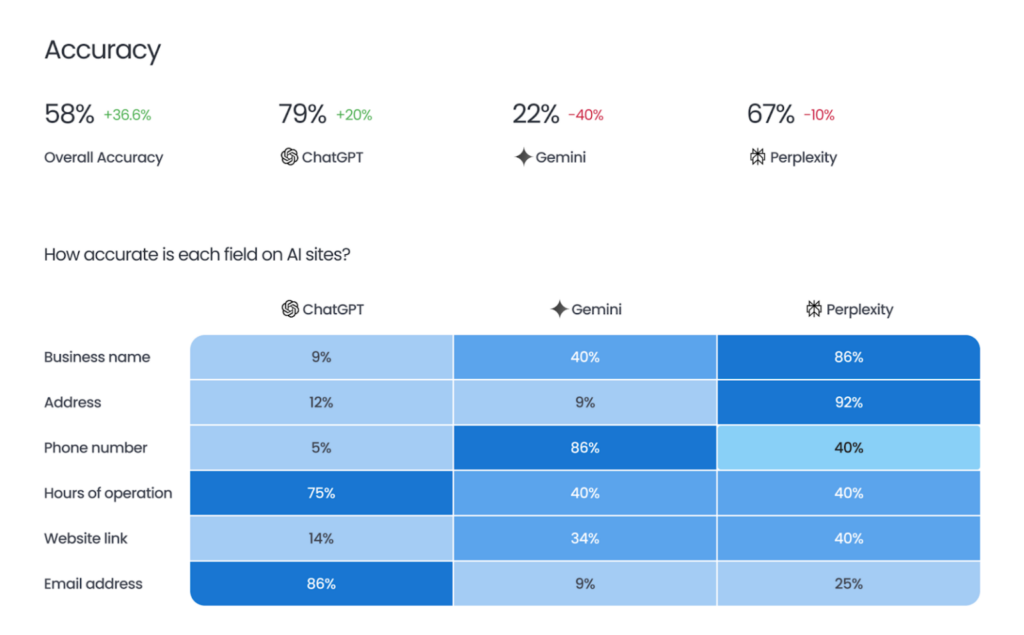
Search AI enables organizations to:
- Track how their brand is described in AI-generated answers
- Understand which signals are shaping those descriptions
- Spot changes in sentiment before they affect perception
- Compare visibility and positioning with competitors
- Align content and messaging with how users are searching in AI tools
What are the top corporate reputation management tools and service providers
Here’s a structured comparison of leading reputation management platforms and agencies, based on their core strengths, capabilities, and positioning.
| Tool / Service | Best For | Key Features | Pricing Tier |
| Birdeye | Enterprise brands with multi-location operations | Full-cycle platform, review management across 200+ sites, listings management, messaging, surveys, social engagement, analytics and insights, workflow automation | Enterprise & custom based on locations and features |
| WebiMax | Businesses that need full-service digital marketing + ORM | SEO services, online reputation management, PR, paid media, lead generation, digital strategy | Custom |
| NetReputation | Individuals + businesses managing negative content | Content suppression, reputation repair, review monitoring, ORM campaigns, brand cleanup strategies | Custom |
*****Pricing tiers are indicative and based on publicly available positioning; most providers offer tailored pricing depending on scope, locations, and services.
How to transform your corporate reputation management strategy with Birdeye
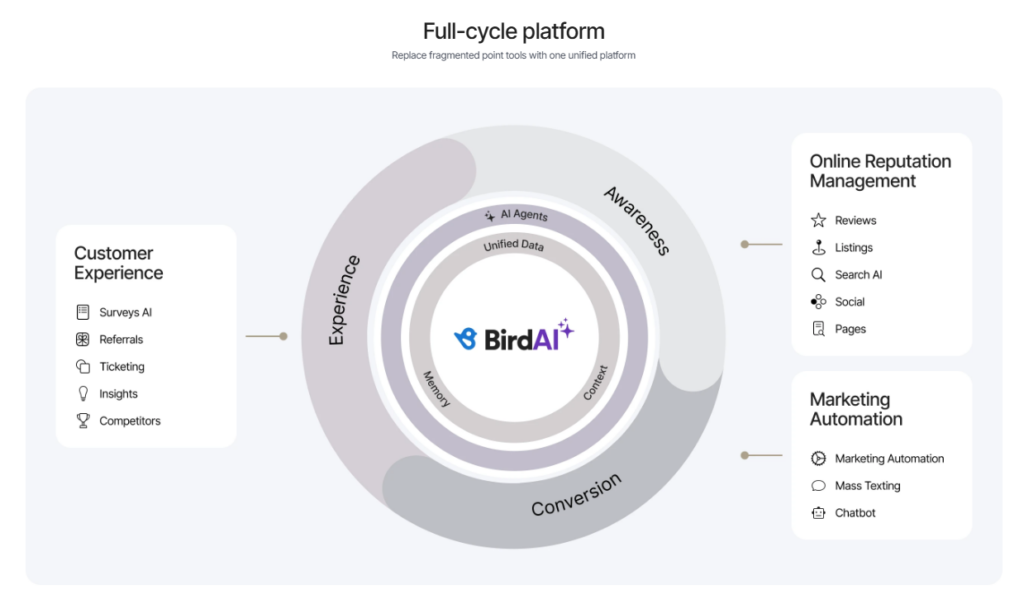
Corporate reputation is shaped by stakeholder perceptions across reviews, media coverage, search visibility, brand communication, and competitor comparisons that influence trust and business decisions. Managing these signals requires a connected system that brings customer feedback, insights, and intelligence into one view. Birdeye is a full-cycle agentic marketing platform that helps enterprises manage reputation with structured data, AI-driven execution, and consistent visibility across 100-10,000+ locations.
This agentic approach consolidates data, thinks locally, and acts at scale to drive outcomes. It forms the foundation of Birdeye’s three core pillars:
- Full-cycle platform (Consolidate)
Birdeye is a full-cycle platform that unifies 3,000+ integrations and brings all customer signals into a single profile. It replaces fragmented tools and disconnected systems with one connected platform where every interaction is unified and accessible in one place.
- Local Intelligence (Think)
Local Intelligence applies AI to unified customer data to generate insights that are grounded in brand context and location-level signals. It ensures every insight reflects real customer behavior while maintaining brand consistency across locations.
- Marketing Agents (Act)
Marketing Agents turn intelligence into coordinated action across reputation and marketing workflows. They enable brands to respond, publish, and execute workflows across thousands of locations with speed and consistency at scale.
Agents include:
Reviews
Reviews supports corporate reputation management by improving how businesses collect, manage, and respond to customer feedback.
- Review Generation Agent identifies the right moment and channel to request reviews, helping increase feedback volume from satisfied customers.
- Review Response Agent analyzes sentiment, context, and intent to generate accurate, on-brand responses that maintain consistency across locations.
Together, they strengthen trust by ensuring every customer interaction is acknowledged and reflected in the brand’s voice.
Listings AI
Listings AI strengthens corporate reputation management by keeping business profiles complete, accurate, and competitive across Google, Apple, Yelp, and other major platforms.
- Listings Optimization Agent helps enterprises maintain consistent brand information across locations, improving visibility, trust, and customer discovery.
Search AI agent
Search AI extends corporate reputation management into AI-driven discovery environments. It monitors how a brand appears across platforms like ChatGPT, Gemini, and Perplexity, tracking visibility, accuracy, and sentiment in generated responses. This ensures that the way a corporate brand is represented in search aligns with its intended reputation and customer experience.
Competitors AI
Competitors’ AI strengthens corporate reputation management by benchmarking brand performance against key competitors. It tracks ratings, sentiment, and share of voice across markets to show how a brand is positioned within its industry. This visibility helps organizations identify reputation gaps, compare customer perception, and refine strategies based on market context.
Insights Agent
Insights AI plays a key role in corporate reputation management by unifying feedback from reviews, surveys, listings, and social channels into a single performance view. It highlights sentiment trends, recurring customer themes, and operational gaps that influence how a brand is perceived. This helps leadership teams understand early shifts in reputation and take informed action based on real customer intelligence.
“Birdeye has revolutionized the way we engage customers and promote positive user-generated content online. This partnership has optimized the review generation process at the most critical touchpoints in the customer journey. Consumer feedback analytics now drive innovation and improvements in our organization. ”
Briana Nunez
Reputation Management Administrator, Fluidra North America
Corporate reputation management depends on how consistently a brand is perceived across customer feedback, search visibility, and competitive context. When these signals are fragmented, it becomes harder to maintain control over perception. Birdeye connects reviews, insights, competitor intelligence, and AI search visibility into a unified system, helping enterprises manage reputation with clarity, consistency, and informed action.
FAQs about corporate reputation management
Corporate reputation management is a company’s approach to shaping how people think and feel about it. It’s a strategy to keep a good image with everyone who matters: customers, employees, investors, and the public.
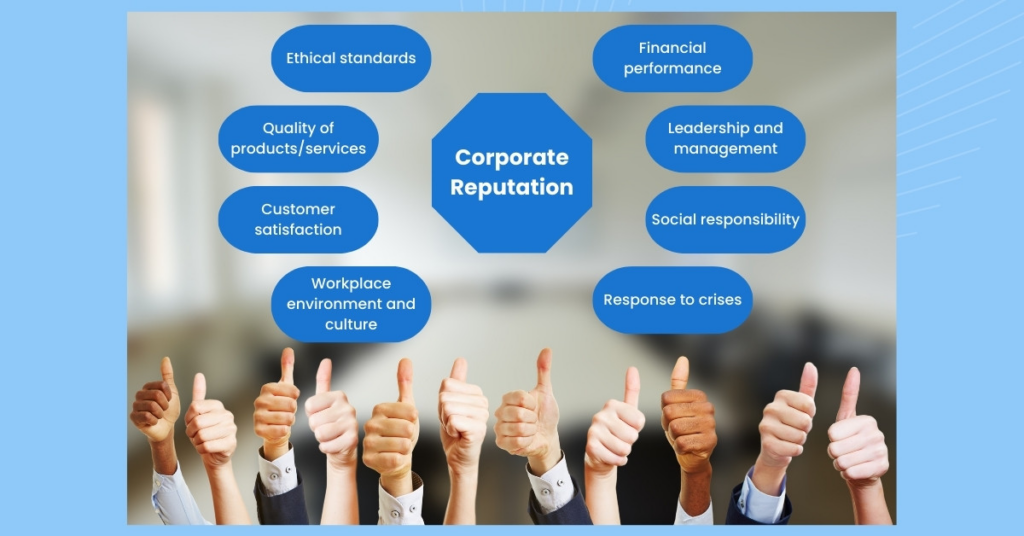
The main elements of corporate reputation include ethical standards, quality of products/services, customer satisfaction, workplace environment and culture, financial performance, leadership and management, social responsibility, and response to crises.
Corporate reputation management is important because it shapes how customers, employees, investors, and the public perceive a business, influencing trust, credibility, and business decisions.
Conclusion
In 2026, corporate reputation management has become an always-on business function rather than a reactive PR exercise. Brand perception is shaped continuously through customer experiences, online discussions, review trends, search visibility, media narratives, and operational signals that audiences can access instantly.
As these touchpoints become more interconnected, businesses need a clearer way to understand how they are perceived and where trust may be weakening. Birdeye helps bring these scattered reputation signals together into one unified view for better decision-making.
See how Birdeye brings corporate reputation signals into one connected system. Watch a demo today.

About the Author

Vanjana Sharma
Originally published