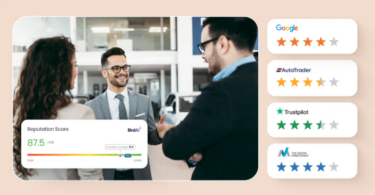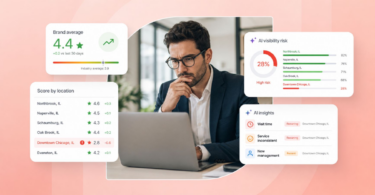
Brand reputation management is the ongoing process of monitoring, shaping, and protecting how your brand is perceived by customers, employees, and the public across every channel and touchpoint. It covers everything from online reviews and social media to press coverage and customer experience.
Summary
In today's market, your reputation is your most valuable business asset. Customers operate under constant scrutiny: they research before they buy, compare before they commit, and share their experiences publicly, for better or worse. A single unaddressed complaint can outweigh months of great marketing. On the flip side, a well-managed reputation drives trust, visibility, and sustainable growth for businesses of every size, whether you run a single-location dental practice or a multi-location retail chain.
This guide covers why reputation management matters, how to measure it, the key components and strategies, the right software to use (such as Birdeye), and actionable, real-world examples to learn from.
Why brand reputation management matters
Your reputation is often the first thing a potential customer encounters before they ever speak to you. They search your name, read your reviews, scroll your ratings, and form an opinion in seconds. If what they find does not inspire confidence, they move on.
Forrester’s 2026 predictions note that trust has fragmented significantly, pushing businesses into what they describe as a permanent state of distrust. Within this challenging environment, the report warns that one-third of companies will erode customer trust by deploying premature AI tools, directly damaging both acquisition and retention.
Consumers now rely more on personal networks and curated sources than on broad brand promises, pushing businesses into what they describe as a permanent state of distrust. For brands, this makes proactive brand and reputation management essential, not optional.
For businesses investing in brand reputation management, the returns are measurable. Harvard Business School research shows that a one-star increase in a business’s rating leads to a 5-9% increase in revenue. Meanwhile, brands with stronger reputations spend less on customer acquisition because trust does the work that paid ads otherwise would.
Brand reputation monitoring plays a critical role here. Without a system to track what is being said about your brand across review sites, social media, forums, and news platforms, problems go unnoticed until they become crises. Consistent monitoring allows businesses to respond in real time, protect their standing, and turn customer feedback into a competitive advantage.
According to the State of Online Reviews 2026 report, review volume increased by 30.7% in 2025, the fastest growth rate since 2021, showing how aggressively businesses are investing in customer feedback and online reputation management. As review activity continues to rise, customers are paying closer attention not only to ratings but also to how businesses engage with and respond to feedback.
Brand reputation marketing also comes into play here. When businesses actively promote their reviews, ratings, and customer stories as part of their marketing strategy, they build social proof that drives conversions far more effectively than traditional advertising. Positive reputation signals also improve organic search visibility, meaning your brand gets found more often without increasing ad spend.
Reputation management is not just about damage control. It is one of the highest-ROI activities a business can invest in, and the brands that treat it as a growth strategy consistently outpace those that treat it as an afterthought.
Key components of brand reputation management
A strong brand reputation does not happen by accident. It is built through consistent effort across several interconnected areas. Understanding these components helps businesses know where to focus and what to prioritize.
Online reviews and ratings
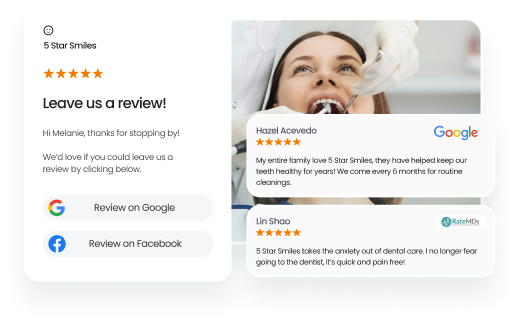
Reviews are the most visible part of your brand reputation. They show up in search results, influence buying decisions, and shape first impressions before a customer ever visits your website or walks through your door. Effective brand and reputation management means actively generating reviews, monitoring them across platforms, and responding to every piece of feedback, positive or negative.
According to Gartner, by 2026, the most powerful differentiator in customer experience will be trust transparency, meaning how visibly secure, verifiable, and explainable every brand interaction is. For businesses, this starts with reviews. Customers increasingly expect not just good ratings but proof that a brand listens and responds.
Key actions to focus on here:
- Request reviews consistently after every customer interaction
- Monitor reviews across Google, Facebook, and industry-specific platforms
- Respond to reviews promptly and with a personalized tone
- Flag and report spam or fake reviews that could distort your rating
Social media presence and monitoring
Social media is where public opinion forms in real time. Customers share experiences, tag brands, leave comments, and start conversations that can spread quickly. Brand reputation monitoring across social channels ensures your team catches mentions early, engages with your audience consistently, and prevents small issues from becoming larger ones.
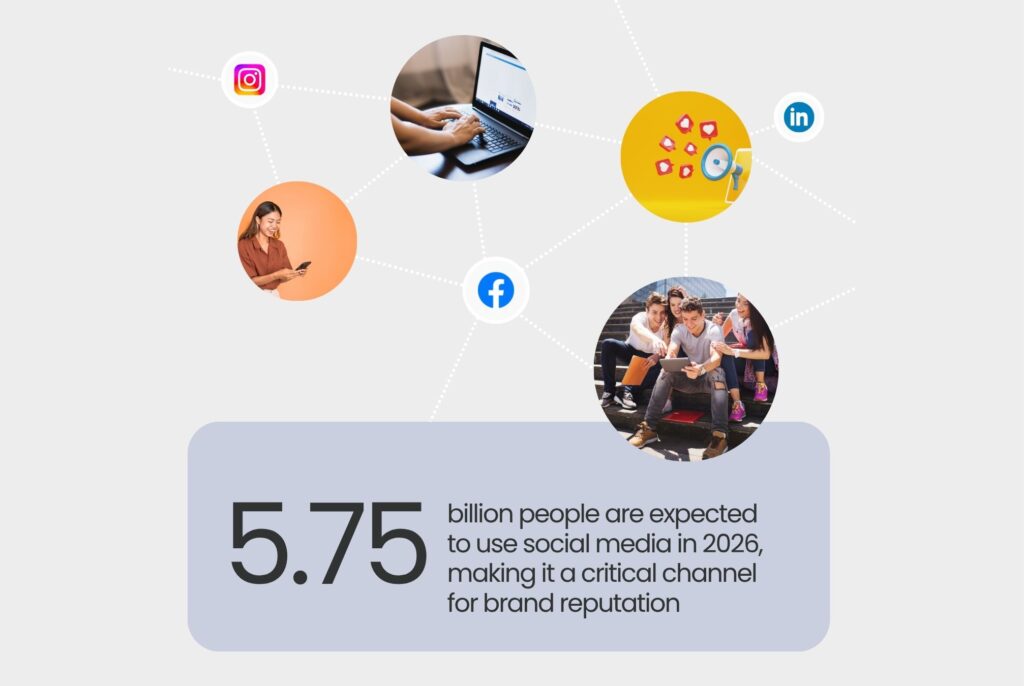
According to Statista, global social media users are projected to approach 5.75 billion in 2026, making social platforms one of the most important arenas for brand reputation marketing. A brand that is absent or unresponsive on social media is not just leaving a significant portion of its reputation unmanaged; It’s forfeiting control of the narrative entirely.
Main priorities to focus on:
- Monitor brand mentions, tags, and comments across all active platforms
- Respond to direct messages and comments in a timely manner
- Share positive customer stories and behind-the-scenes content to build a connection
- Track sentiment shifts in conversations about your brand
Press and public relations
How your brand appears in news articles, industry publications, and online media contributes significantly to overall brand reputation analysis. Positive press builds credibility while negative coverage, if left unaddressed, can quickly undermine trust. A proactive PR approach means building relationships with journalists, responding to media inquiries professionally, and maintaining a consistent brand narrative across all channels.
Employee advocacy
Your employees are often the most credible voices for your brand. When team members speak positively about their workplace, share company content, and represent your values in customer interactions, it reinforces trust from the inside out. Employee advocacy also plays a role in attracting talent, which in turn affects service quality and customer experience.
Key steps to take here:
- Encourage employees to share company updates and milestones on their personal networks
- Recognize team members who are mentioned positively in customer reviews
- Create an internal culture that naturally motivates employees to become brand ambassadors
Crisis management
Even well-managed brands face negative situations. A bad review going viral, a service failure, a social media backlash, or negative press can all put your reputation at risk. Forrester’s 2026 Trust and Privacy predictions note that in this permanent state of distrust, organizations must prioritize pragmatic initiatives tied to measurable trust competencies, which means having a crisis response plan that is practical, fast, and people-first.
Core actions to focus on:
- Define clear response protocols for different types of reputation threats
- Assign ownership of crisis communication across internal teams
- Respond quickly, transparently, and empathetically in public-facing channels
- Follow up with a resolution and close the loop publicly where appropriate
Customer experience
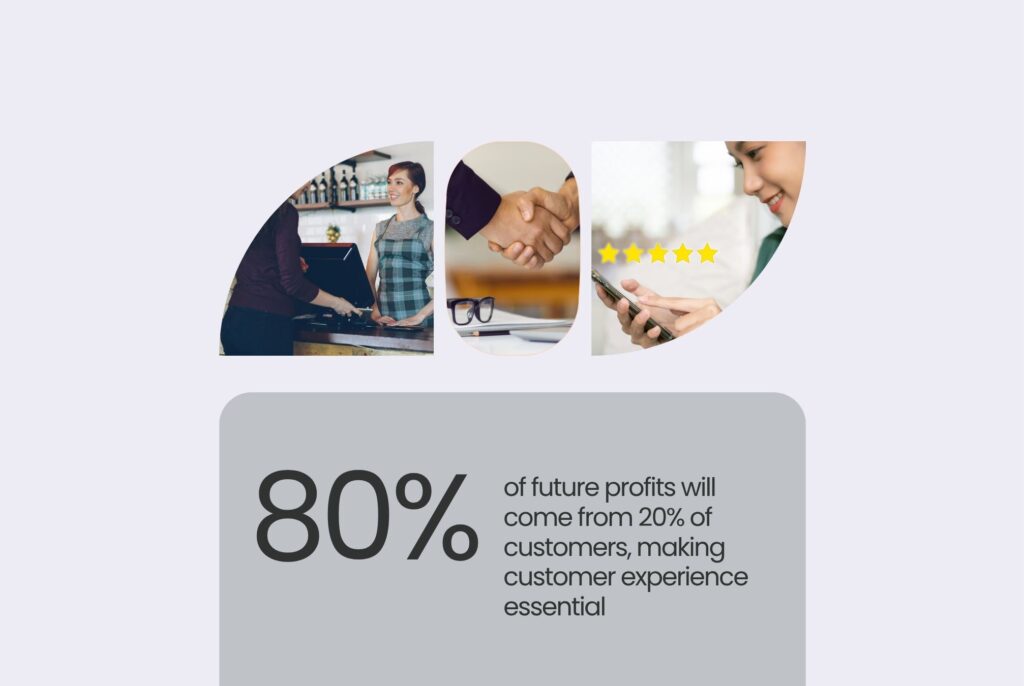
Every interaction a customer has with your business shapes how they perceive your brand. Customer experience sits at the heart of brand reputation marketing because satisfied customers become your most powerful advocates. According to Forrester’s CX Index research, CX leaders achieve around 1.5x higher revenue growth than brands with poor customer experience, showing how better experiences with existing customers translate directly into future revenue growth.
Key actions to focus on here:
- Gather feedback at every stage of the customer journey
- Use insights from reviews and surveys to drive internal improvements
- Train frontline teams to deliver consistent service across every location or touchpoint
- Make it easy for happy customers to share their experiences publicly
How to measure your brand reputation
Knowing your reputation is one thing. Consistently measuring it turns brand reputation management from a reactive habit into a proactive strategy. Brand reputation analysis relies on a combination of qualitative and quantitative signals that, when tracked together, give you a clear and accurate picture of where your brand stands and where it needs to improve.
Here are the key metrics every business should be tracking.
Net promoter score (NPS)
Net Promoter Score measures customer loyalty by asking one simple question: how likely are you to recommend this business to a friend or colleague? Responses are scored on a scale of zero to ten, and customers are grouped into promoters, passives, and detractors. The resulting NPS gives you a single benchmark that reflects overall customer sentiment toward your brand.
NPS is one of the most widely used tools in brand reputation analysis because it is easy to administer, easy to interpret, and directly tied to word-of-mouth growth. A consistently rising NPS signals that your reputation is strengthening. A declining one is an early warning sign that something in the customer experience needs attention.
How to track it:
- Send NPS surveys after key interactions such as a purchase, service call, or onboarding
- Track your score over time rather than as a one-off measurement
- Segment NPS by location, product line, or customer type for deeper insight
- Follow up with detractors to understand and address their concerns
Star ratings and review volume
Your average star rating is one of the first things a potential customer sees when they search for your business. It influences click-through rates, foot traffic, and purchase decisions before a single word of your content is ever read. Brand reputation monitoring means keeping a close eye on your ratings across every platform where your business is listed, including Google, Facebook, Yelp, Healthgrades, Tripadvisor, and any industry-specific directories relevant to your category.
Review volume matters just as much as the rating itself. According to Birdeye’s State of Online Reviews 2025, businesses with a higher volume of recent reviews consistently outperform competitors in local search rankings and consumer trust signals. A 4.8-star rating with 300 reviews carries significantly more weight than a 5-star rating with only 12.
How to track it:
- Monitor your average star rating across all major platforms weekly
- Track review velocity, meaning how many new reviews you are receiving each month
- Set internal benchmarks and alert thresholds for rating drops
- Compare your ratings against direct competitors in your market
Share of voice
Share of voice measures how much of the online conversation in your category your brand owns compared to competitors. It covers mentions across social media, review platforms, news coverage, and search visibility. A growing share of voice indicates that your brand reputation marketing efforts are working and that your brand is becoming a more dominant presence in your market.
A higher share of voice across reviews, search, and social platforms often translates into stronger brand awareness, trust, and local search visibility. However, the share of voice alone only shows how often your brand is mentioned, not whether those conversations are positive or negative. So this makes sentiment analysis equally important for understanding a brand’s true impact.
How to track it:
- Monitor branded mentions across social and news platforms using a listening tool
- Track your search visibility for key terms relative to competitors
- Measure review volume on major platforms compared to the top two or three competitors in your area
- Include share of voice in quarterly brand reputation analysis reports
Sentiment analysis
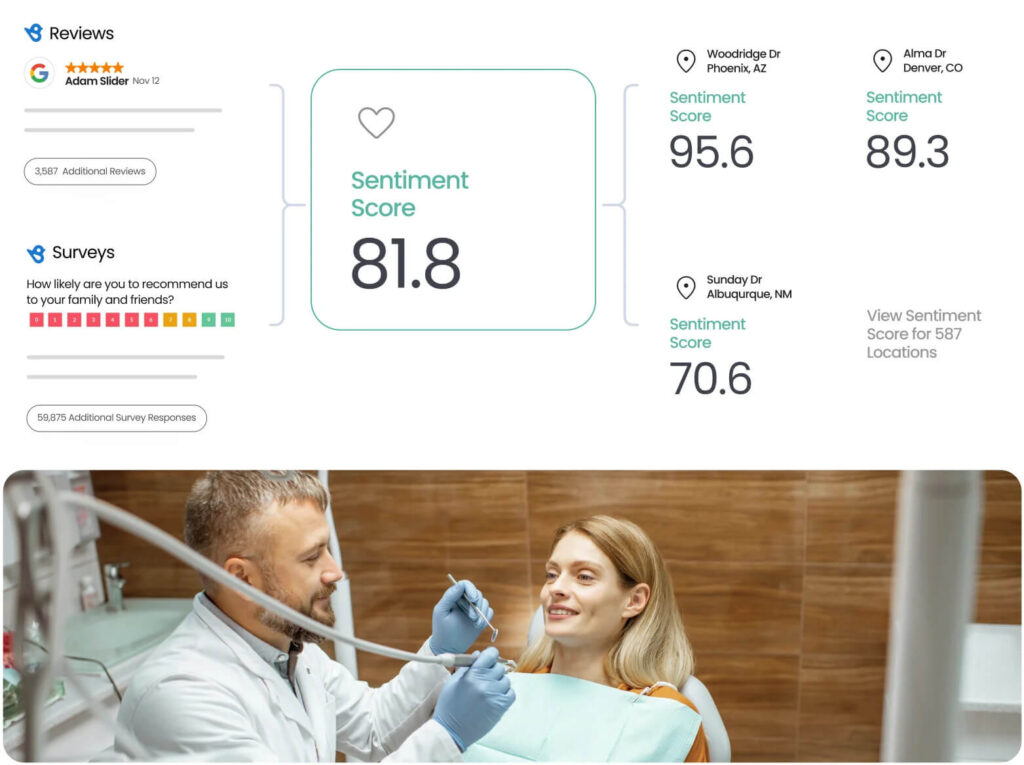
Star ratings tell you what customers think in a number. Sentiment analysis tells you why. By scanning the language used in reviews, social media mentions, and customer feedback, sentiment analysis identifies whether conversations about your brand are positive, negative, or neutral, and which specific topics are driving those perceptions.
This is where brand reputation analysis becomes genuinely powerful. Instead of reacting to individual complaints, you can spot patterns. If multiple customers across different locations are mentioning slow response times or a specific product issue, that is actionable intelligence that goes far beyond any single review.
Organizations that systematically feed customer sentiment insights into everyday decisions tend to outperform peers on both retention and satisfaction over time. The Birdeye Insights AI sentiment analysis tool surfaces these patterns automatically, so brands do not have to manually read through thousands of reviews to find the signal and act on it.
How to track it:
- Use a reputation management platform that includes automated sentiment scoring
- Track sentiment by topic, location, and time period
- Set up alerts for spikes in negative sentiment so you can respond before issues escalate
- Include sentiment data in regular marketing and operations reviews
Review response rate and response time
How quickly and consistently your team responds to reviews is itself a signal of your reputation. Customers notice when a business engages with feedback, and they also notice when it does not. According to the State of Online Reviews 2026 report also states, 40% of review responses are now AI-generated, reflecting how businesses are increasingly using AI to maintain faster and more consistent engagement with customer feedback. This matters because customers are not just reading reviews; they are also evaluating how brands respond to them.
How to track it:
- Measure the percentage of reviews that receive a response across all platforms
- Track average response time and set a target, ideally within 24 to 48 hours
- Audit response quality periodically to ensure replies are personalized and on-brand
- Use automation tools to flag new reviews so no feedback goes unaddressed
Customer satisfaction score (CSAT)
CSAT measures how satisfied customers are with a specific interaction or experience, typically collected through a short post-interaction survey. Where NPS measures long-term loyalty, CSAT captures in-the-moment sentiment and is especially useful for identifying friction points in the customer journey before they become reputation risks.
How to track it:
- Deploy CSAT surveys at key touchpoints, such as after a support interaction or service visit
- Track scores by team, location, and channel to identify performance gaps
- Use low CSAT scores as a trigger for follow-up outreach and service recovery
- Feed CSAT data back into team training and process improvement cycles
9 brand reputation management strategies
Having the right strategies in place is what separates businesses that consistently grow their reputation from those that are always playing catch-up. These strategies work for businesses of all sizes, from single-location shops to multi-location brands.
1. Make review generation a consistent habit
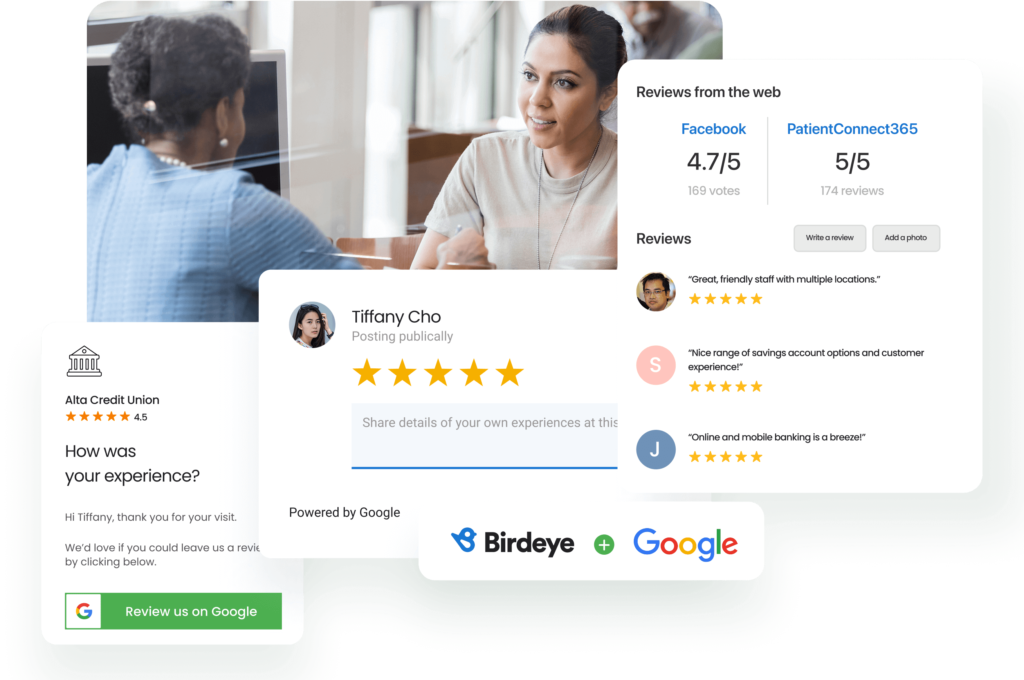
Most businesses wait for reviews to come in naturally. The ones with the strongest reputations actively ask for them. Sending a review request shortly after a positive customer interaction dramatically increases the chances of getting a response. Timing, channel, and tone all matter here.
Birdeye State of Online Reviews 2025 also reports that SMS achieves a 38% engagement rate for review requests, compared to 27% for email, making it the stronger channel for prompting immediate action. However, using both channels together delivers the best results across different customer types.
The goal is to make review generation a repeatable process rather than a one-off campaign. Businesses that build this into their post-interaction workflow see a steady increase in both review volume and average rating over time.
2. Respond to every review, positive and negative
Responding to reviews is one of the most visible and impactful parts of brand and reputation management. A thoughtful response to a negative review can turn a frustrated customer into a loyal one. A genuine response to a positive review reinforces the experience and encourages others to share theirs.
Every unanswered review sends a signal to potential customers that the brand is not paying attention. That perception compounds quickly, especially for businesses with multiple locations where inconsistency is easy to spot.
Keep responses personal, timely, and on-brand. Avoid copy-paste templates that feel robotic, and always acknowledge the specific feedback the customer shared.
3. Invest in brand reputation monitoring across all channels
You cannot manage what you are not measuring. Brand reputation monitoring means tracking what is being said about your business across review platforms, social media, news sites, forums, and industry directories, all in one place.
Real-time monitoring with Birdeye allows your team to catch issues before they escalate, identify patterns in customer sentiment, and respond to feedback at the speed customers now expect. Without it, reputation risks go unnoticed until they become crises.
Key channels to monitor consistently:
- Google Business Profile reviews
- Facebook and Instagram mentions and comments
- Industry-specific review sites relevant to your category
- Local news and PR coverage
- Employee review platforms such as Glassdoor
4. Build a proactive content and brand reputation marketing strategy
Your brand narrative should not be left entirely in the hands of reviewers and social media users. Brand reputation marketing means actively shaping how your brand is perceived by promoting your values, customer stories, and expertise across owned channels.
This includes publishing helpful content that answers the questions your customers are already asking, sharing verified customer success stories, and showcasing your team and community involvement. When done consistently, this builds a body of positive brand equity that holds up even when negative feedback occasionally surfaces.
5. Use brand reputation analysis to turn feedback into action
Collecting reviews and monitoring mentions is only valuable if the insights actually change how you operate. Brand reputation analysis means going beyond star ratings to understand the themes, patterns, and specific issues driving customer sentiment.
If multiple customers across locations are mentioning the same friction point, that is an operational signal, not just a PR issue. Businesses that feed reputation data back into their product, service, and training decisions create a cycle of continuous improvement that naturally strengthens their standing over time.
In 2026, CX leaders are under pressure to prove that analysis actually changes outcomes, not just dashboards. Forrester’s Budget Planning Guide for 2026 shows that 39% of organizations plan to increase their customer experience investments above inflation over the next year, reflecting a clear belief that turning customer insights into concrete improvements is now a core driver of loyalty and growth.
6. Manage your presence across listings and directories
Inconsistent business information across directories is a quiet but significant reputation risk. When a customer finds a different phone number, address, or operating hours on three different platforms, it erodes trust even before they make contact.
Keeping your listings accurate and consistent across Google, Yelp, Facebook, Apple Maps, and industry-specific directories ensures that customers always find the right information and that search engines surface your business with confidence. This is particularly important for businesses managing multiple locations, where discrepancies are more likely to occur and harder to catch manually.
7. Have a crisis response plan ready before you need it
Reputation crises rarely announce themselves in advance. A negative story, a viral complaint, or a service failure can surface at any time, and how a business responds in the first few hours often determines the long-term impact on its reputation.
A solid crisis response plan covers who is responsible for communicating publicly, what the approval process looks like for statements, and how quickly the team is expected to respond across different channels. Businesses that respond quickly, transparently, and empathetically consistently recover faster than those that go silent or get defensive.
Practicing your response plan before a crisis hits, even through internal simulations, ensures your team is not making decisions under pressure for the first time when it matters most.
8. Leverage employee advocacy as a reputation asset
Employees are often the most trusted voices a brand has. When team members share genuine experiences, celebrate company milestones, and represent brand values in their day-to-day interactions, it builds credibility that no ad campaign can replicate.
Encouraging employee advocacy does not mean scripting what people say. It means creating a workplace experience worth talking about and making it easy for employees to share it whenever they want. Positive Glassdoor reviews, team-generated social content, and staff mentions in customer reviews all contribute meaningfully to overall brand reputation.
9. Segment and personalize your reputation strategy by location or audience
A one-size-fits-all approach to reputation management rarely holds up at scale. Different locations attract different customer profiles, face different competitive dynamics, and generate different types of feedback. A franchise location in a suburban area may have very different reputation priorities than one in a dense urban market.
Effective brand and reputation management at scale means tailoring review generation tactics, response tone, and local content to reflect the specific audience each location serves. Businesses that personalize at the local level while maintaining consistent brand standards across all locations build strong, adaptable reputations.
Brand reputation management software: Why leading multi-location brands choose Birdeye
Managing your brand reputation manually across reviews, social media, listings, and customer feedback is not sustainable, especially as your business grows. The right software brings everything into one place, automates the time-consuming tasks, and gives you the visibility to make smarter decisions faster.
Birdeye is a full-cycle platform built for multi-location brands that want to move from reactive to proactive. It replaces fragmented point solutions with a single platform that supports the full customer journey, from reputation and local marketing to customer experience and AI-driven automation.
One platform for the full reputation lifecycle
Birdeye centralizes reviews, messaging, surveys, social engagement, and customer feedback across every location and channel. Rather than switching between tools to get a complete picture, teams get unified visibility into how their brand is performing and where attention is needed.
The platform integrates with 3,000+ systems, including CRM, POS, Salesforce, HubSpot, QuickBooks Online, scheduling tools, and payment platforms. This means reputation data does not sit in a silo. It connects directly to the operational systems your teams already use, making brand reputation analysis a natural part of how the business runs rather than a separate exercise.
Corporate teams get full visibility across 100-10,000+ locations while branch or location-level teams retain the ability to respond and engage with the right controls in place.
Local intelligence built for brand reputation monitoring
Brand reputation monitoring is only as good as the data behind it. Birdeye Listings Optimization Agent monitors and optimizes business profiles across Google, Apple Maps, Facebook, Yelp, and other high-impact platforms automatically. Accurate business details, including addresses, phone numbers, hours, services, and appointment links, are maintained consistently so customers always find the right information.
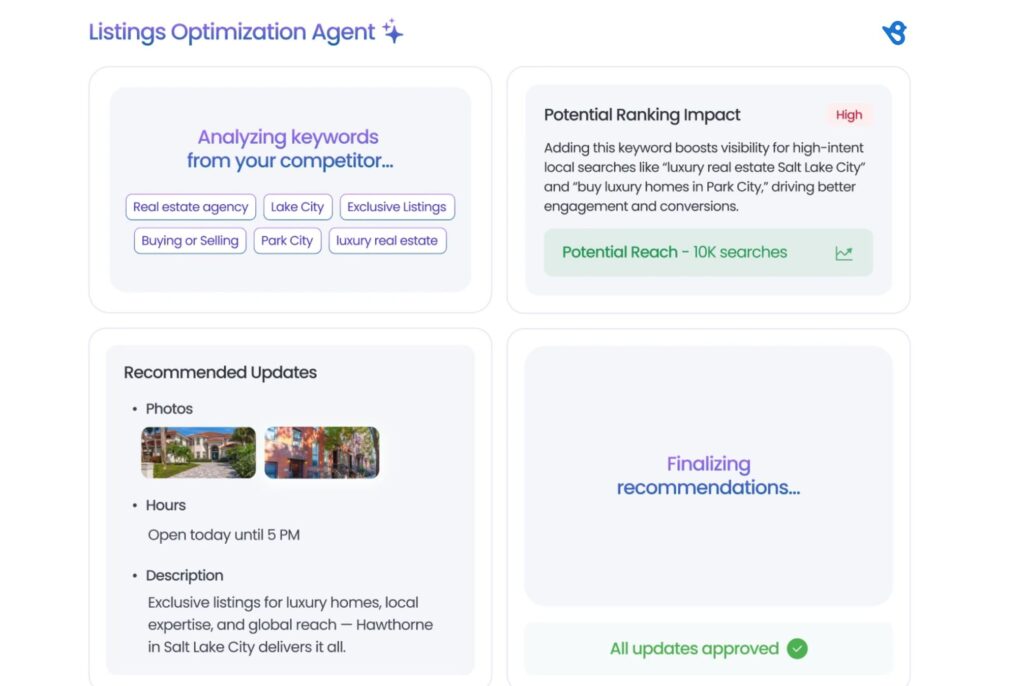
The platform’s Listing Score and Local Listings Analytics help teams identify visibility gaps and improve local search performance across 100-10,000+ locations. For businesses with multiple branches or service areas, this level of local intelligence is the difference between being found and being overlooked.
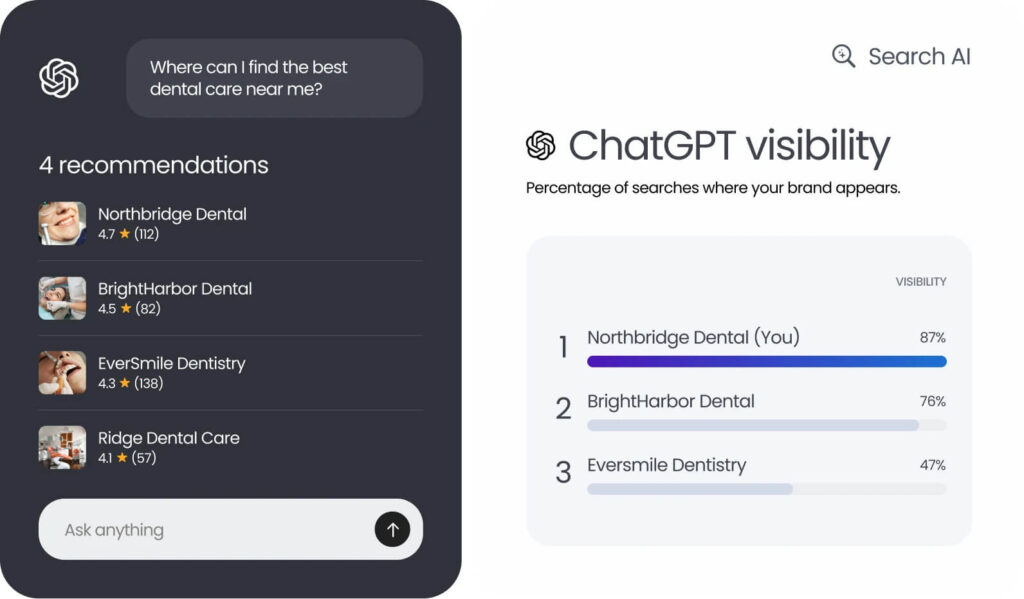
Birdeye also includes Birdeye Search AI, which tracks how your brand appears across AI-driven discovery platforms, including ChatGPT, Gemini, and Perplexity. As more consumers use AI tools to find and evaluate businesses, understanding how your brand appears in those results is becoming a critical part of brand and reputation management.
AI agents that power brand reputation marketing at scale
Birdeye’s AI agents automatically handle reputation tasks without sacrificing the personalization and brand voice customers expect.
- The Birdeye Review Generation Agent sends review requests through the right channels at the right time to consistently increase review volume
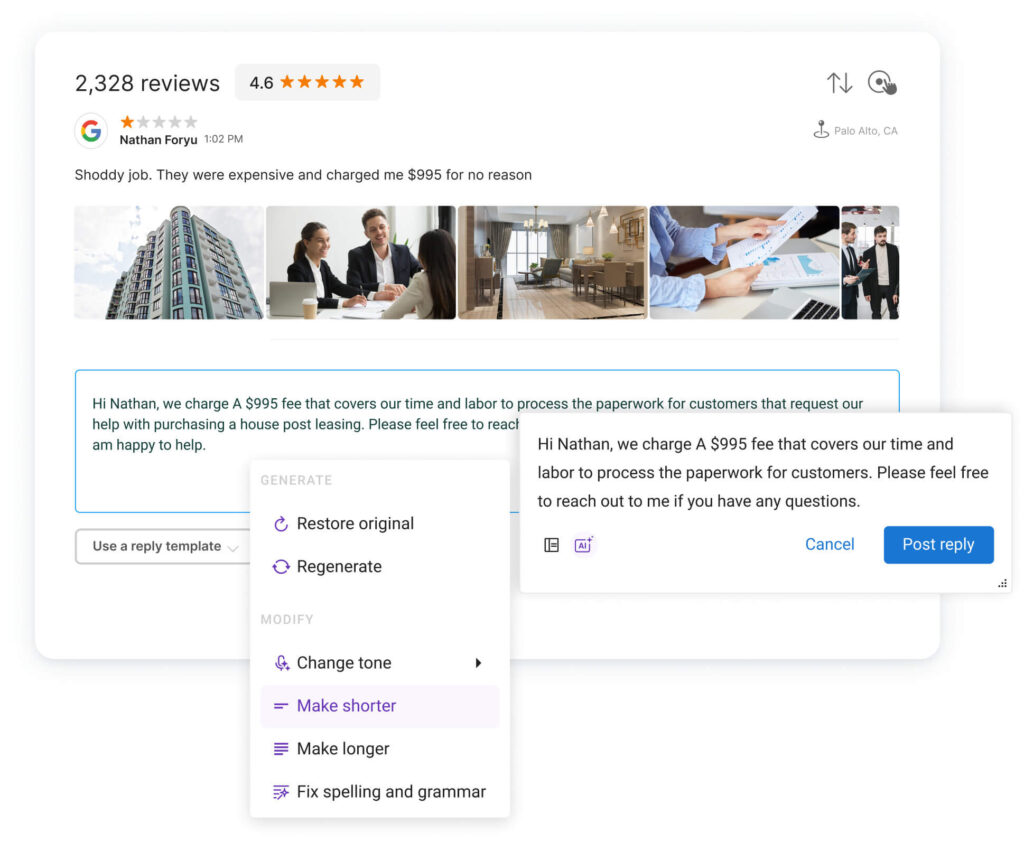
- The Review Response Agent creates personalized, on-brand replies using sentiment, customer context, and the specific details of each review
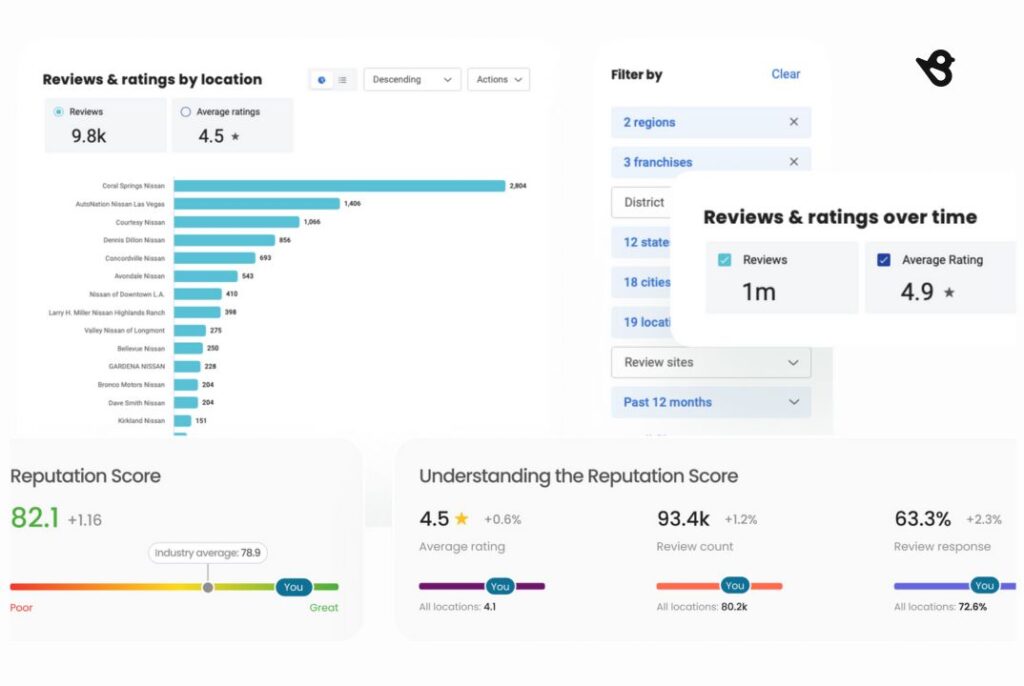
- Birdeye Review Reporting Agent surfaces trends, performance gaps, and location-level insights so teams can act on data rather than assumptions
- The Social Publishing Agent and Social Engagement Agent help create, schedule, monitor, and respond to social content across platforms
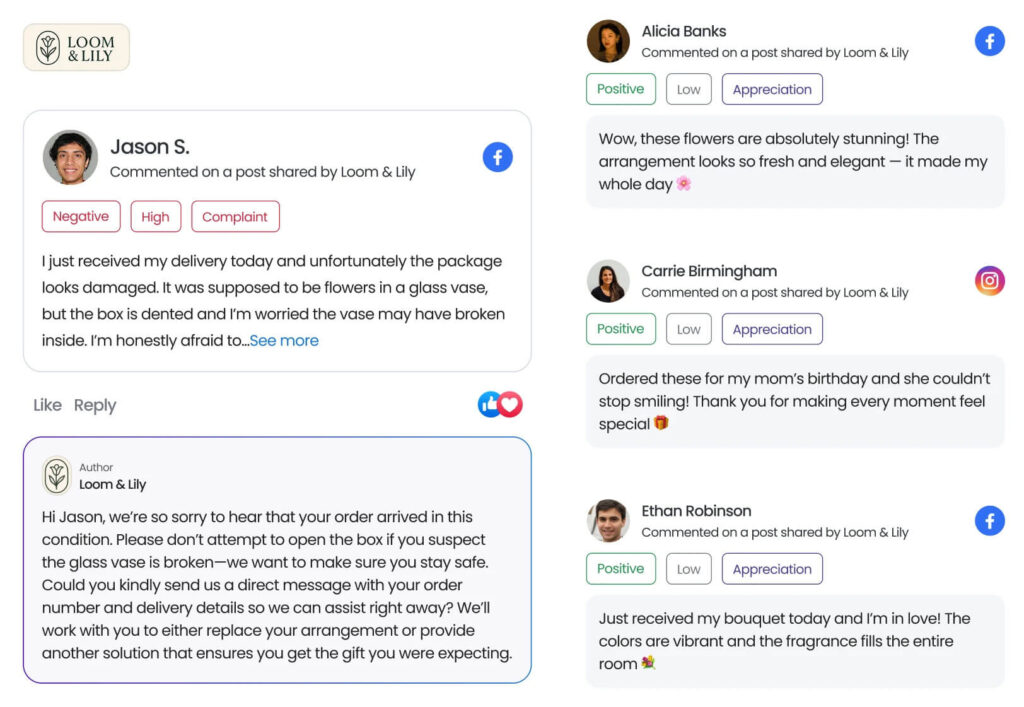
These agents work continuously in the background, drafting responses and building campaigns for your approval, multiplying your team’s output. Ticketing and workflow capabilities also help route customer issues to the right teams for faster resolution, closing the loop between reputation signals and operational response.
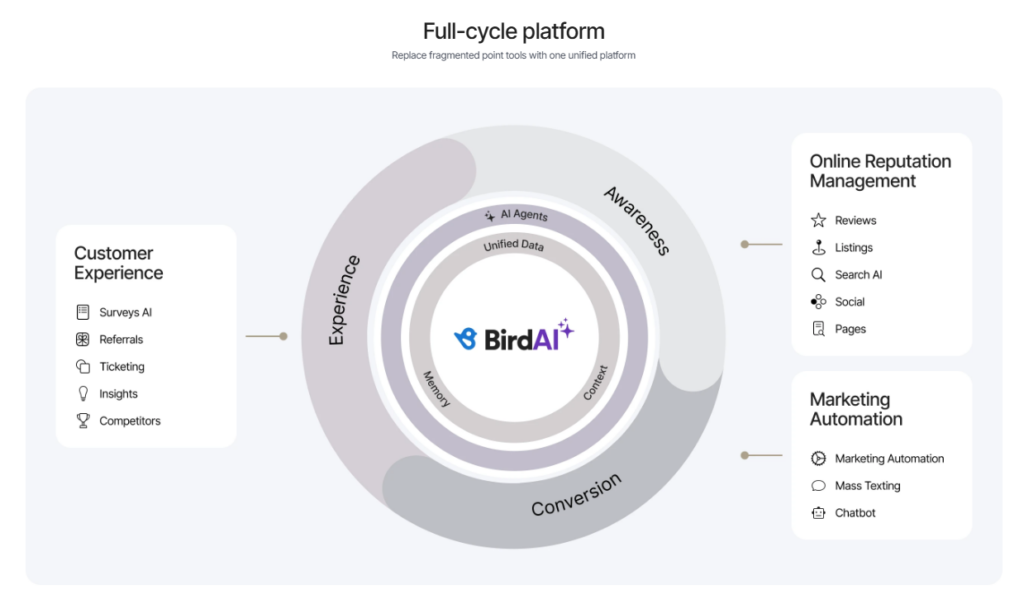
Built to consolidate, think, and act
What sets Birdeye’s agentic marketing platform apart is how it combines data, context, and action in one connected system. The platform’s AI maintains context and memory so every decision it makes stays on-brand and location-aware. The result is a reputation management system that does not just report on what is happening but actively drives the outcomes that matter, reviews, visibility, customer satisfaction, and growth.
For businesses serious about brand reputation management, Birdeye removes the operational burden and gives teams the tools to build a reputation that compounds over time.
Brand reputation examples: How leading brands turned reputation into measurable growth
Brand reputation strategies matter most when they deliver measurable results. The following examples show how businesses across industries used a structured approach to strengthen their reputation and drive meaningful outcomes.
How American Pacific Mortgage scaled trust across every loan officer and branch

case study
The brand
American Pacific Mortgage is a mortgage lending company that has been helping customers purchase homes across the United States since 1996. Licensed to lend in 31 states and operating through approximately 1,000 loan officers, the brand needed a consistent and scalable way to manage its online reputation across every branch and individual officer.
The challenge
With nearly 1,000 loan officers operating independently, American Pacific Mortgage had no reliable system to collect customer reviews at scale. The process was manual and inconsistent, meaning the brand’s online presence did not accurately reflect the quality of service its team delivered every day. In a high-trust industry like mortgage lending, that gap between real-world performance and online reputation was a direct risk to growth and customer acquisition.
The result
After partnering with Birdeye, review collection became fully automated across all loan officers. In 2018 alone, the brand collected more than 11,000 reviews with an average star rating of 4.96. Over time, American Pacific Mortgage built a reputation backed by 131,000 reviews and a 4.9 average star rating.
Key results included:
- Achieved a 905% increase in total reviews across platforms
- Maintained a strong 4.9-star average rating on Google
- Generated 30.5k new Google reviews alongside 18.6k new Zillow reviews
- Reached 880.8k impressions across Google Business Profiles
- Built a trusted online presence with 131,500+ total reviews across locations
Melissa Wright, Chief Sales & Marketing Office, American Pacific Mortgage shares:
“We love Birdeye. We’ve been a client for years and really value our partnership as well as what the platform can do. It’s foundational to have something easy to automate review requests, monitor incoming feedback, and organize it in a way that works for us.”
How Black Bear Diner transformed guest feedback into a competitive advantage
The brand
Black Bear Diner is a family dining chain founded in 1995 in Mount Shasta, California, with over 160 locations across 13 states. As the brand expanded rapidly, maintaining consistent guest satisfaction and managing feedback at scale became increasingly difficult for location managers and leadership teams alike.
The challenge
With a growing national footprint and plans to nearly double their locations, Black Bear Diner faced an overwhelming volume of guest feedback across hundreds of diners. Location managers had no efficient way to identify trends, flag issues early, or maintain service standards without manually sorting through large amounts of unstructured data. The brand needed a scalable brand reputation monitoring system that could grow with them.
The result
By implementing Birdeye solutions, Black Bear Diner built a real-time feedback and response system that worked across every location. Denise D’Amico Johnson, Communications Manager at Black Bear Diner, noted that:
“Birdeye’s AI tools allow us to scale effortlessly. Whether we’re at 72 diners or 172, the platform grows with us and continues to deliver exactly what we need.”
Key results included:
- Centralized feedback management across 160+ locations from a single platform
- Role-based dashboards giving leadership, field operators, and location managers tailored visibility into performance
- Automated alerts enabling immediate responses to negative reviews before issues escalated
- Consistent brand reputation monitoring across all locations, reducing response time significantly
- Scalable infrastructure ready to support continued expansion without adding manual workload
These case studies reflect a consistent truth across industries: businesses that treat brand reputation management as a strategic priority, not an afterthought, achieve results that compound over time. Whether you run a single location or hundreds, the approach is the same. Listen, act, and let your reputation become your strongest growth asset.
FAQs on brand reputation management
Brand reputation monitoring helps businesses catch issues early, respond to customer feedback in real time, and prevent small problems from becoming public crises. Without it, negative sentiment can go unnoticed and compound over time, directly affecting revenue and customer trust.
Brand and reputation management covers online reviews, social media presence, press and PR, employee advocacy, crisis management, and customer experience. Together, these areas shape how customers perceive your brand at every touchpoint.
Brand reputation analysis uses metrics such as net promoter score, average star ratings, review volume, sentiment scores, share of voice, and customer satisfaction scores. Tracking these consistently over time gives businesses a clear picture of where their reputation stands and where to improve.
Brand reputation marketing turns positive reviews, customer stories, and ratings into active marketing assets. When businesses promote verified social proof across search, social media, and owned channels, it builds credibility, improves search visibility, and drives conversions more effectively than traditional advertising.
The fastest way to improve your brand reputation is to start actively requesting reviews from satisfied customers, respond to every existing review promptly, and resolve any outstanding negative feedback publicly. These three actions alone improve your average rating, signal responsiveness to potential customers, and build trust faster than any other tactic.
The best brand reputation management software centralizes reviews, brand reputation monitoring, social media, listings, and customer feedback in one platform. Birdeye is globally trusted by brands for its AI-driven review generation, sentiment analysis, automated responses, and multi-location brand reputation analysis, making it one of the most comprehensive solutions available.
Your reputation is your most visible brand asset
Your brand reputation is shaped every single day through every review left, every social mention shared, and every customer interaction handled well or poorly. The businesses that win are not the ones with a perfect track record. They are the ones who actively listen, respond consistently, and use what they learn to get better.
Brand reputation management is no longer something you can afford to approach reactively. Customers have more choices, more platforms to voice their opinions, and higher expectations than ever before.
A structured approach to brand reputation monitoring, combined with regular brand reputation analysis and a proactive brand reputation marketing strategy, is what separates brands that grow from brands that stagnate.
The good news is that you do not have to manage all of it manually. With the right platform, such as Birdeye, the process becomes:
- Systematic
- Scalable
- Less overwhelming
Birdeye gives businesses of every size the tools to take control of their reputation, generate more reviews, respond faster, understand what customers are saying, and turn that intelligence into measurable growth.
From a single-location business building its presence to a multi-location brand managing hundreds of locations, Birdeye is built to grow with you.Your reputation is already being built. The only question is whether you are the one building it.
See how Birdeye can help you manage and grow your brand reputation. Start your free demo today.

About the Author

Sudeepta Bora
Originally published