Online reviews are a critical trust signal that influence how consumers discover, evaluate, and choose local businesses, directly impacting purchase decisions, reputation, and revenue.
Summary
Online reviews have become the digital equivalent of word-of-mouth, shaping how consumers research and choose local businesses. From everyday purchases to high-value decisions, customers rely on reviews to evaluate trust, quality, and overall experience before taking action.

Birdeye’s latest data report highlights how frequently consumers research businesses online, how reviews influence decision-making, and the direct impact of positive and negative experiences on brand perception, loyalty, and revenue.

For multi-location businesses, these insights are especially important. Reputation is no longer built in one place, it’s shaped across locations, platforms, and customer interactions. Understanding how reviews influence behavior helps businesses prioritize customer experience, manage feedback at scale, and stay competitive in local markets.
In this blog, we break down how consumers use online reviews to evaluate businesses, what influences their decisions, and what it means for multi-location brands looking to manage reputation and feedback at scale.
Table of contents
- Key Findings:
- How frequently do consumers shop locally?
- Projected Local Spending
- Popular local business searches
- Research process and consumer behavior
- How frequently do consumers research reputation before selecting a local business?
- Does reputation affect consumer choices?
- Do negative reviews influence consumer choices?
- The role of reviews in forming opinions
- Influence of customer experience on reviews
- Impact of BAD customer experience
- Frequently asked questions about online reviews for local businesses
- Transform online reviews into a growth engine with Birdeye
Key Findings:
- 51% of consumers purchase products or services from multi-location brands with a local presence at least once a week
- The top 3 channels influencing the research options for evaluating local businesses are – ‘Friends and family,’ ‘Search engines’ and ‘Customer review sites.’
- 68% of the time, consumers check online reviews before engaging with a local business
- 85% of consumers didn’t select a multi-location brands with a local presence after reading a negative review
- Over the next 6 months, 65% of consumers plan to spend more or about the same as they do today on local businesses
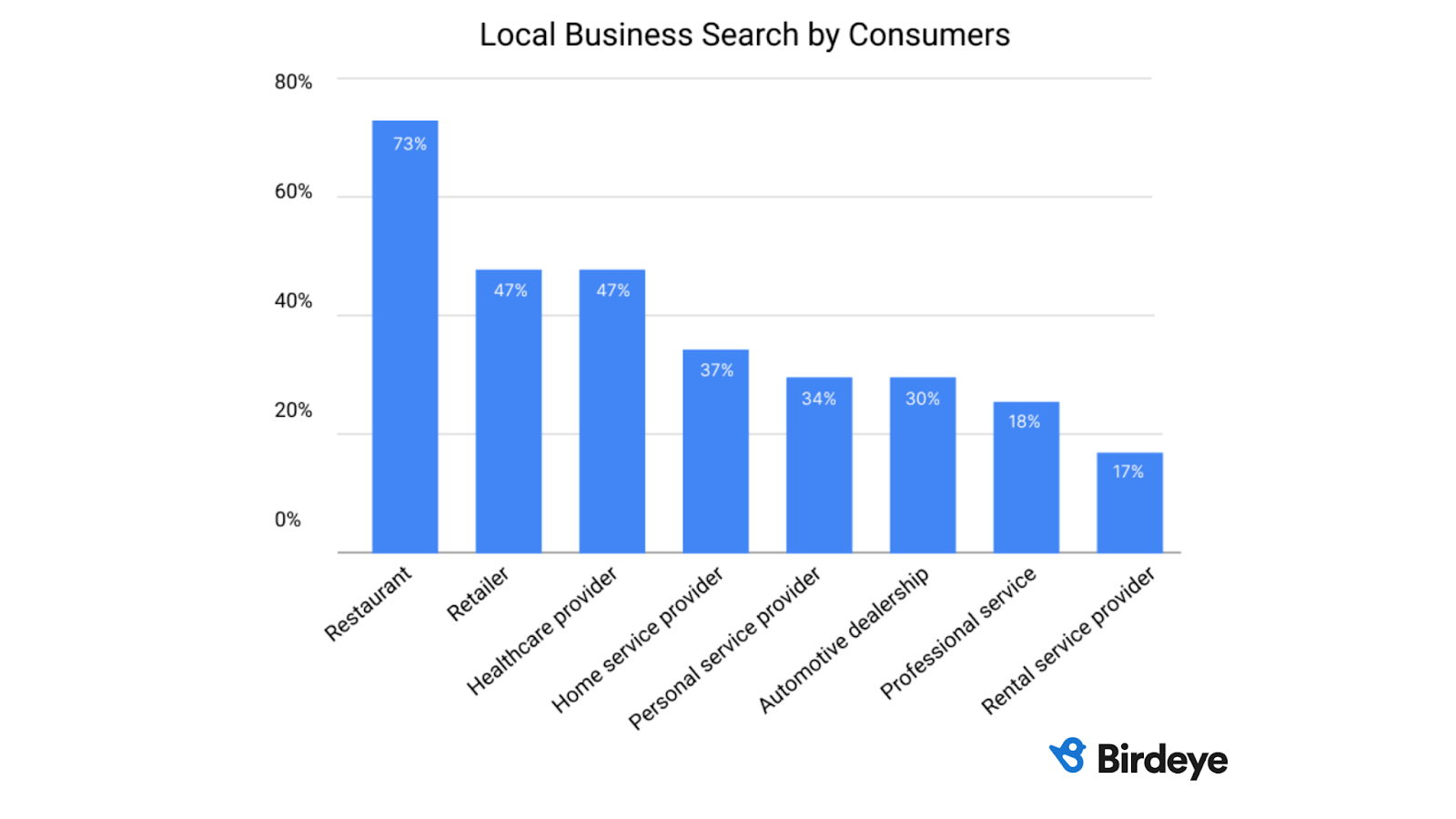
- Top 3 local businesses that consumers search for online are ‘Restaurants,’ ‘Retail stores,’ and ‘Healthcare providers’
- 73% of consumers have searched for local restaurants in the last 12 months
- 92% read at least 2 reviews before forming an opinion about a local business
- 54% of customers leave a positive online review after a positive experience with a local business
- 38% of customers leave a negative online review when they have a negative experience with a local business
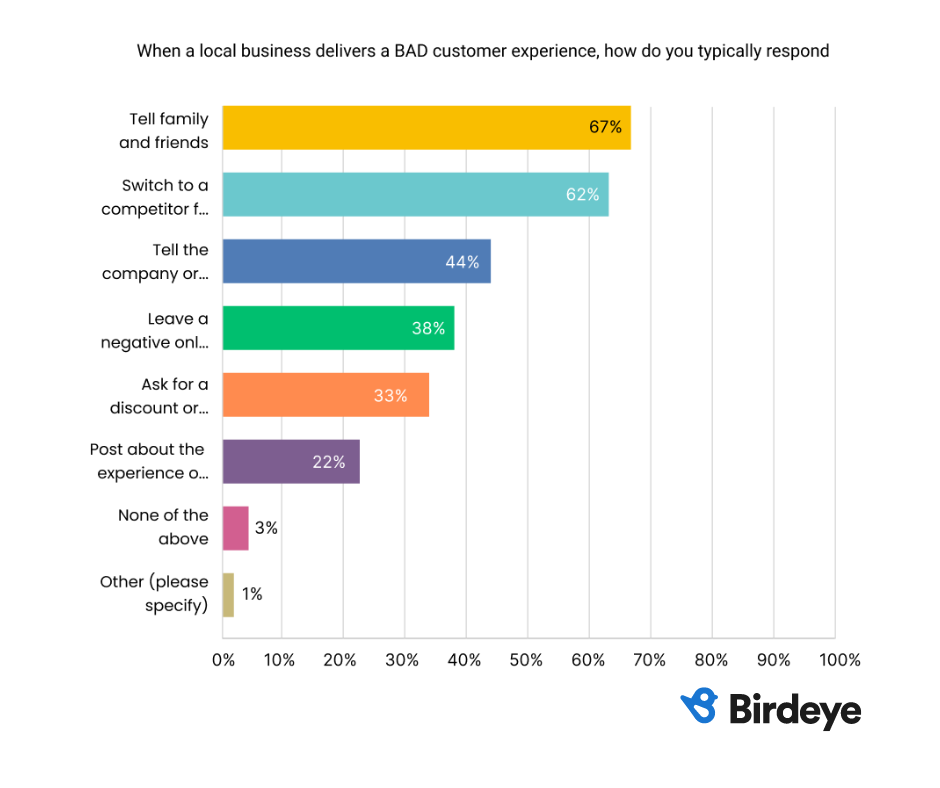
- 67% of consumers tell family and friends about their negative experiences and 62% switch to a competitor
How frequently do consumers shop locally?
The data demonstrates that a whooping 67% of people buy products or use services from local businesses at least once a week. A business’s online reputation management is important because today’s modern consumers want the best local option, it’s no longer just about convenience. When it comes to multi-location brands, being the top choice backed by positive reviews can help boost the return on investment (ROI).

Projected Local Spending
Are consumers anticipating a change in their spending over the next 6 months? Surprisingly, 65% of consumers expect their spending on local businesses to either remain the same or increase in the next six months. This projection highlights the importance of maintaining a positive online presence to attract these consumers.

Popular local business searches
What categories of local businesses are consumers searching for? Across demographics, a consistent 73% of respondents revealed they searched for local restaurants in the last year, followed by 47% looking for local retailers and healthcare providers. This shows just how much online reviews affect many different types of local businesses.
Research process and consumer behavior
The research landscape for local businesses has evolved considerably, with factors such as friends and family recommendations, search engines, and customer review sites helping shape consumer decisions. Trustworthy personal recommendations, online accessibility, and social proof significantly influence the selection process.

How frequently do consumers research reputation before selecting a local business?
When in the market for a local business or service, consumers are highly likely to research online first. Respondents said that they research online 68% of the time before making a purchase.

Does reputation affect consumer choices?
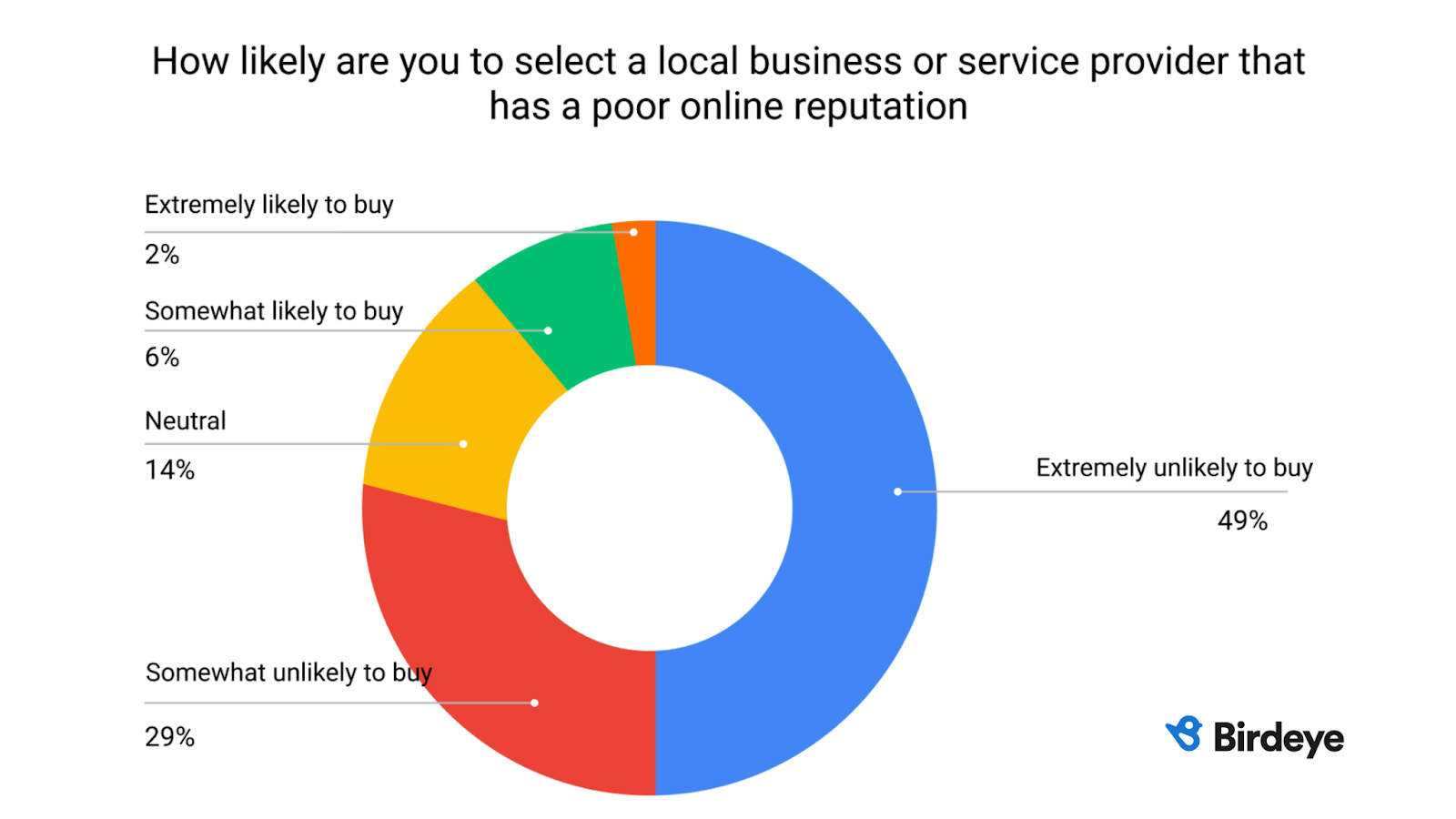
85% of consumers expressed that they opted against engaging with a multi-location brands after encountering a negative review. This just demonstrates that the online reputation of a business profoundly affects consumer choices and, subsequently, the business’s revenue and growth prospects.
Do negative reviews influence consumer choices?
Negative reviews impact consumers by eroding trust, influencing decision-making, questioning the value, providing social proof, raising concerns about the customer experience, and damaging a business’s reputation.
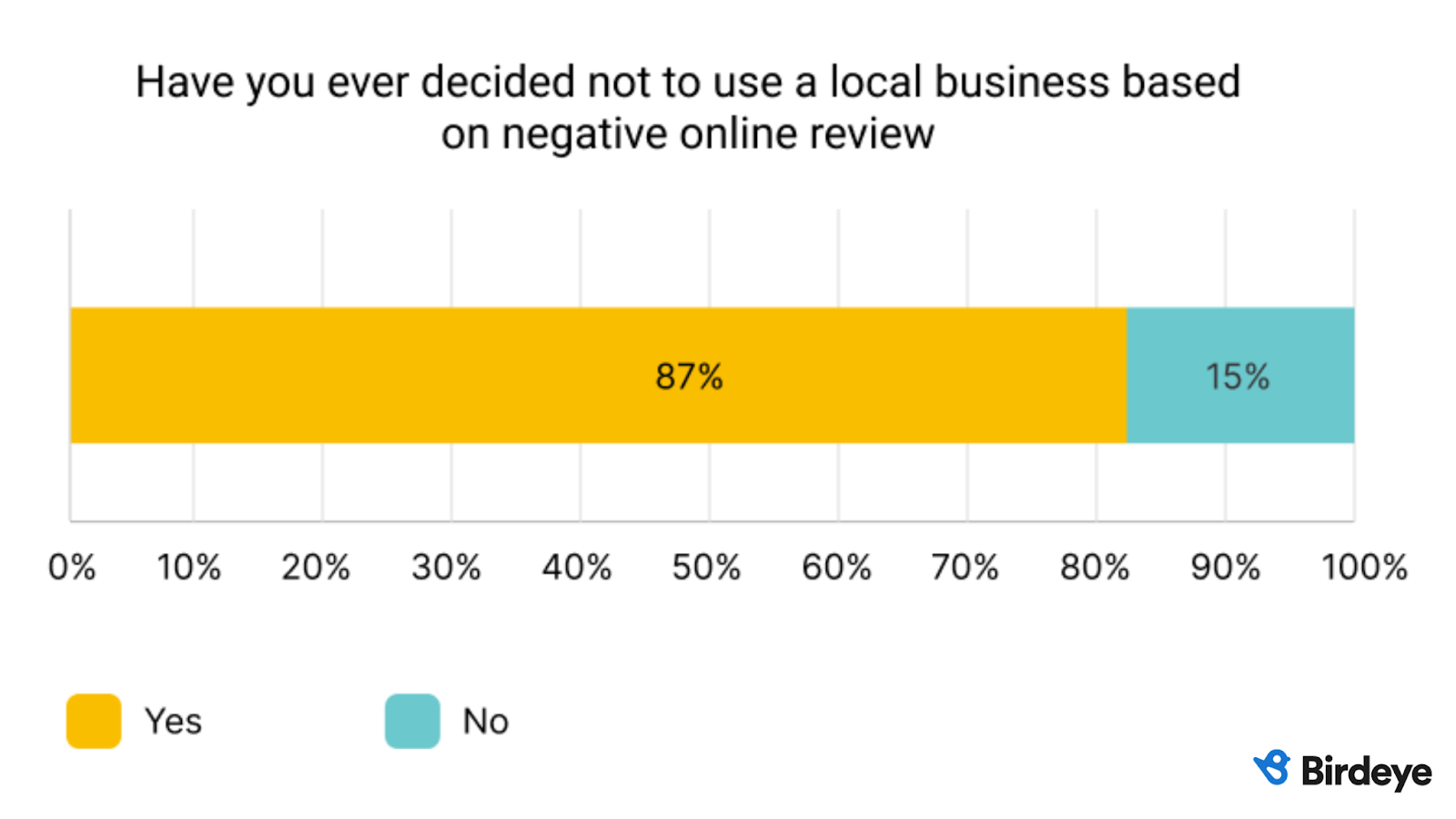
The survey confirmed this behavior. 87% of respondents confirmed that they decided to refrain from using a local business or buying from them in the past 12 months if they had negative reviews.
The role of reviews in forming opinions
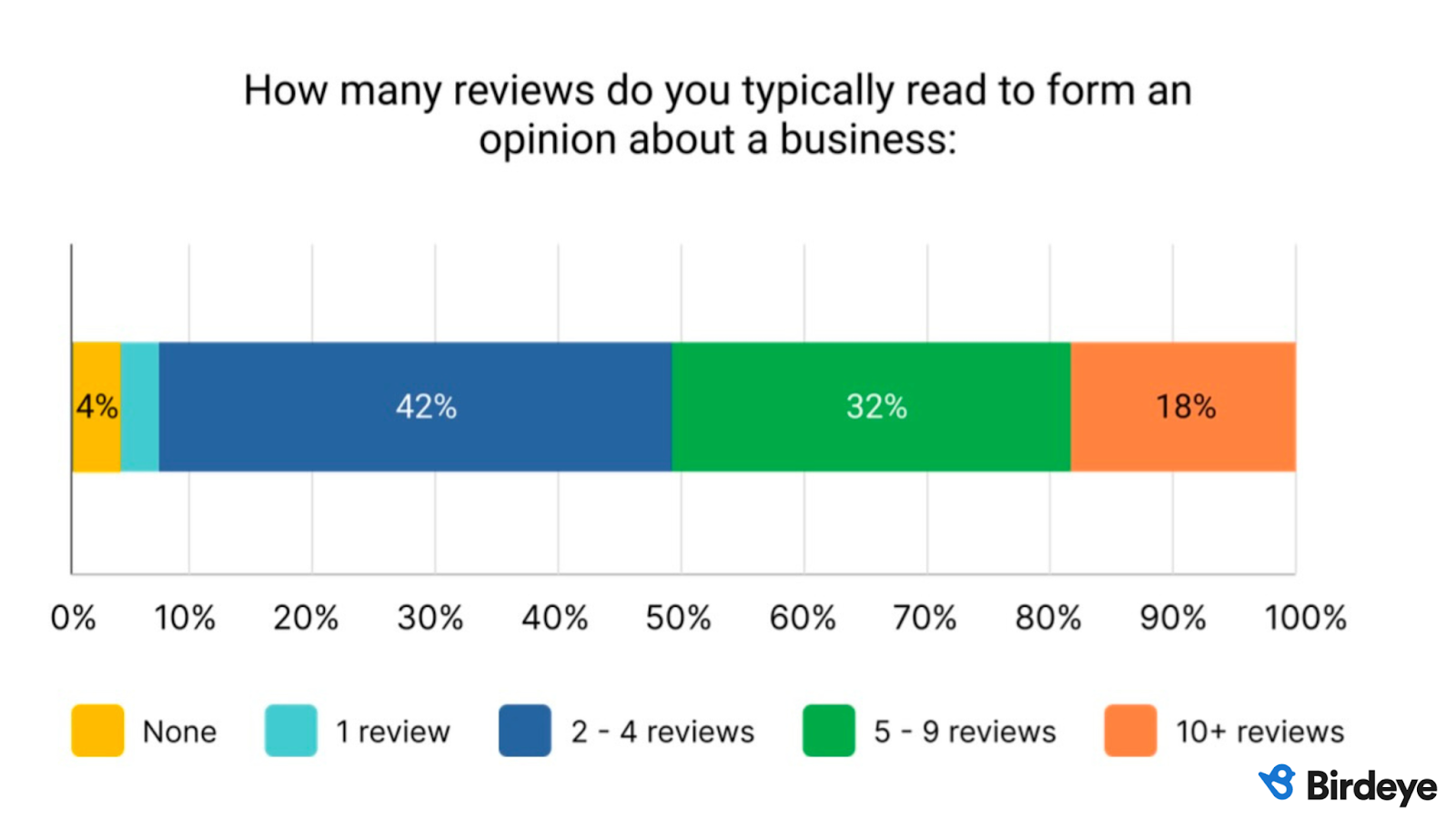
It turns out that the role of reviews when forming opinions plays a huge role. In fact, 92% of respondents indicated that they read at least two reviews before forming an opinion about a business, with 50% reading five or more reviews. Multiple reviews contribute to a more informed decision-making process, offering diverse perspectives and boosting consumer confidence.
Influence of customer experience on reviews
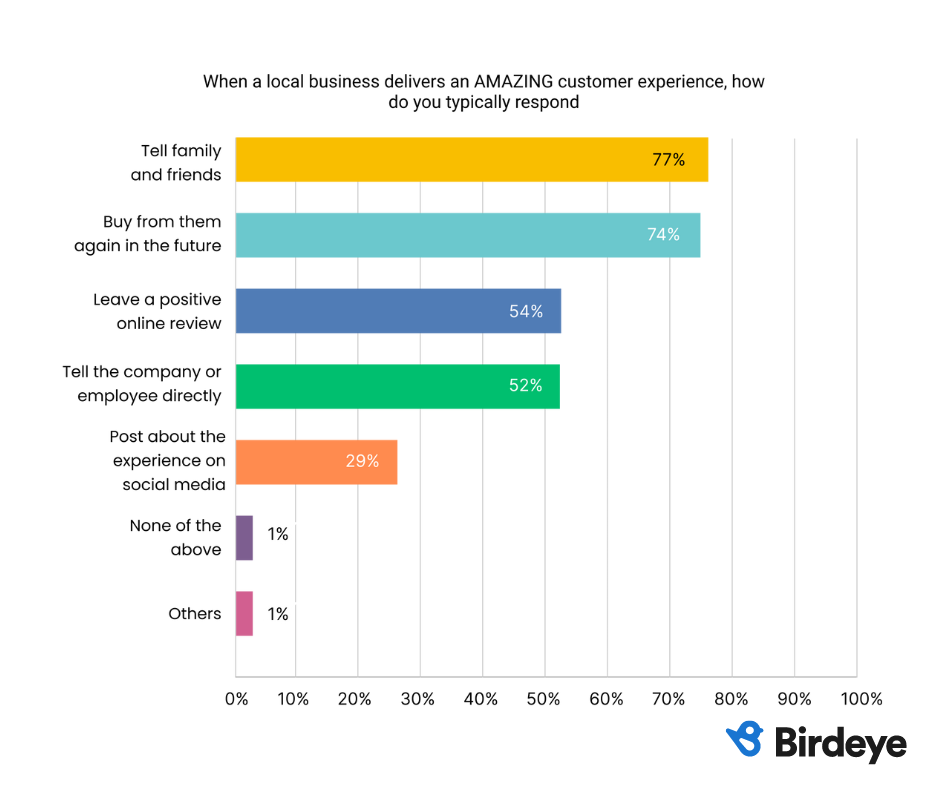
The study revealed that 54% of customers show their gratitude for an excellent customer experience by leaving a positive online review. This finding highlights the important relationship between excellent customer experiences, positive online reputation, and business growth.
Impact of BAD customer experience
Unsurprisingly, 77% of consumers tell family and friends about their negative experiences, and 74% switch to a competitor. It was interesting to note that only 38% of the respondents left a negative review online when they were unhappy about their experience compared to 54% who would leave a review for a positive experience
In the digital landscape of multi-location brands, the role of online reviews is undeniable. The insights gathered from this data report demonstrate the connection between positive customer experiences, online reviews, and the overall success of businesses in local markets. By understanding and leveraging these insights, businesses can successfully navigate the world of online reviews, harnessing their power to create positive consumer experiences, drive loyalty, and achieve a competitive edge in the market. To read the full report, download our free guide today.
(Survey Methodology: A representative sample of 1,054 US-based consumers participated in the ‘Impact of Online Reviews on Local Businesses – 2023 Data Report’ conducted in May 2023 via SurveyMonkey.)
These trends highlight a growing challenge for multi-location brands: managing reviews consistently across every location while responding quickly enough to protect customer experience.
Frequently asked questions about online reviews for local businesses
Online reviews are a key ranking factor in local search. Businesses with higher review volume, stronger ratings, and consistent engagement tend to perform better in local search results. Additionally, review activity signals relevance and trustworthiness, which search engines use to rank businesses.
Multi-location brands deal with: high volumes of reviews across locations, inconsistent response quality, and limited visibility into location-level trends. Without centralized systems, this leads to fragmented reputation management and missed opportunities to improve customer experience at scale.
AI is transforming review management from a manual process into a scalable system. Businesses can now:
– Automate review requests and responses
– Analyze sentiment across thousands of reviews
– Identify trends and issues in real time
This shift enables faster, more consistent engagement and better decision-making across locations.
With the rise of AI-generated content, consumers are becoming more skeptical of online information. Studies show that trust in digital content is declining, and users are increasingly concerned about fake or misleading reviews. This makes authentic, transparent, and well-managed reviews even more critical for building trust.
An agentic approach to reputation management uses AI agents to not just analyze data, but actively execute tasks like generating reviews, drafting personalized responses, and surfacing actionable insights within defined brand guidelines. Instead of relying on manual workflows, platforms like Birdeye deploy AI agents trained on your brand to manage the entire review lifecycle at scale. This allows businesses to maintain consistency, respond faster, and turn customer feedback into measurable outcomes without increasing operational complexity.
Transform online reviews into a growth engine with Birdeye
The data makes one thing clear: online reviews define the customer actions. From discovery to final purchase, customer perception is shaped by what others say about your business.
But for multi-location brands, the challenge isn’t just collecting reviews, it’s acting on them consistently across hundreds of locations, channels, and customer touchpoints.
That’s where an agentic approach to reputation management becomes essential. Birdeye, the #1 Agentic Marketing Platform, helps brands move beyond manual review management by deploying AI agents trained on your brand to execute the entire review lifecycle, from generation to response to insight.
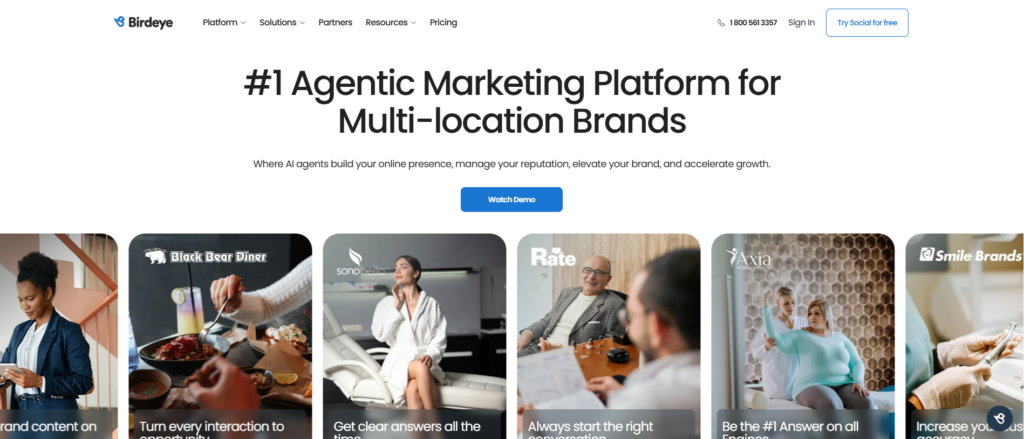
With Birdeye Reviews, these agents work as a governed extension of your team, turning customer feedback into measurable business outcomes:
Review Generation Agent
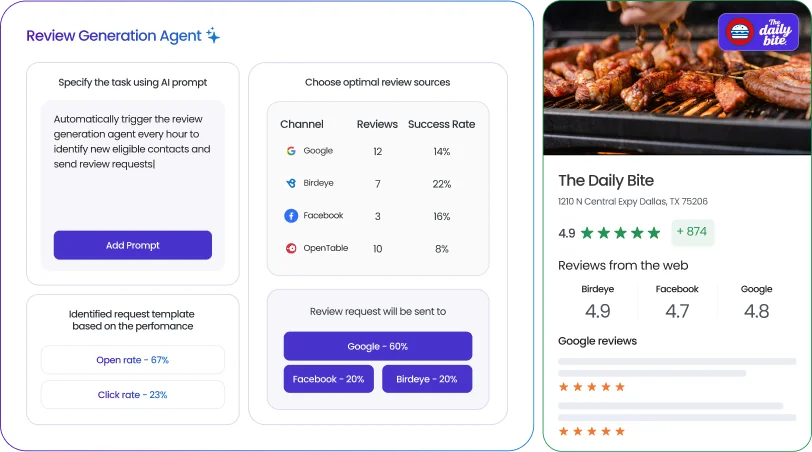
Identifies the optimal time, channel, and messaging to request reviews, continuously optimizing performance to increase review volume and strengthen trust signals across locations.
Review Response Agent
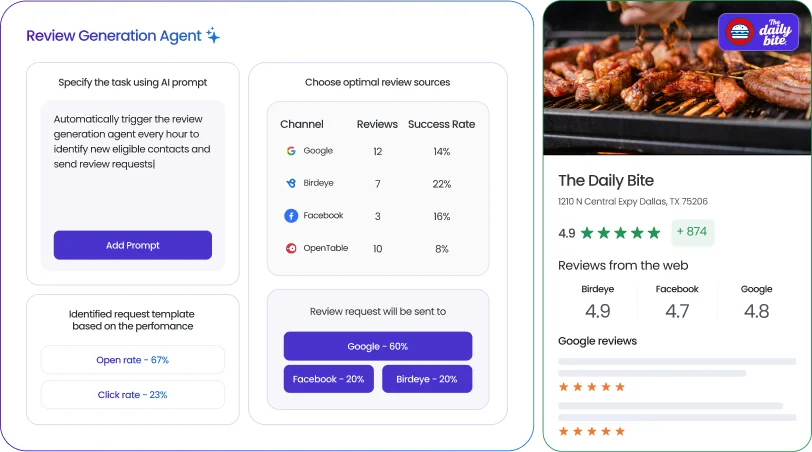
Understands sentiment, context, and customer intent to draft personalized, brand-compliant responses, helping teams stay responsive without compromising quality or control.
Review Reporting Agent
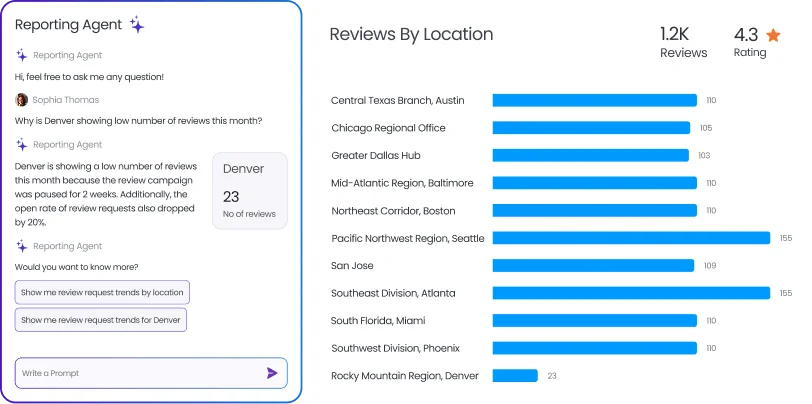
Transforms large volumes of feedback into clear, actionable insights, helping you uncover trends, flag recurring issues, and make faster, data-driven decisions across every location.
Instead of managing reviews manually, businesses can deploy a system that continuously learns, adapts, and executes, ensuring every interaction strengthens reputation, visibility, and revenue.
Want to see how you can turn customer feedback into a scalable growth engine across all your locations? Click the banner below and watch a free demo today.

About the Author

Jody Mayers
Originally published